The Geopolitical Vacuum: How U.S. Disengagement Under Trump Empowers Adversaries in Africa
Introduction
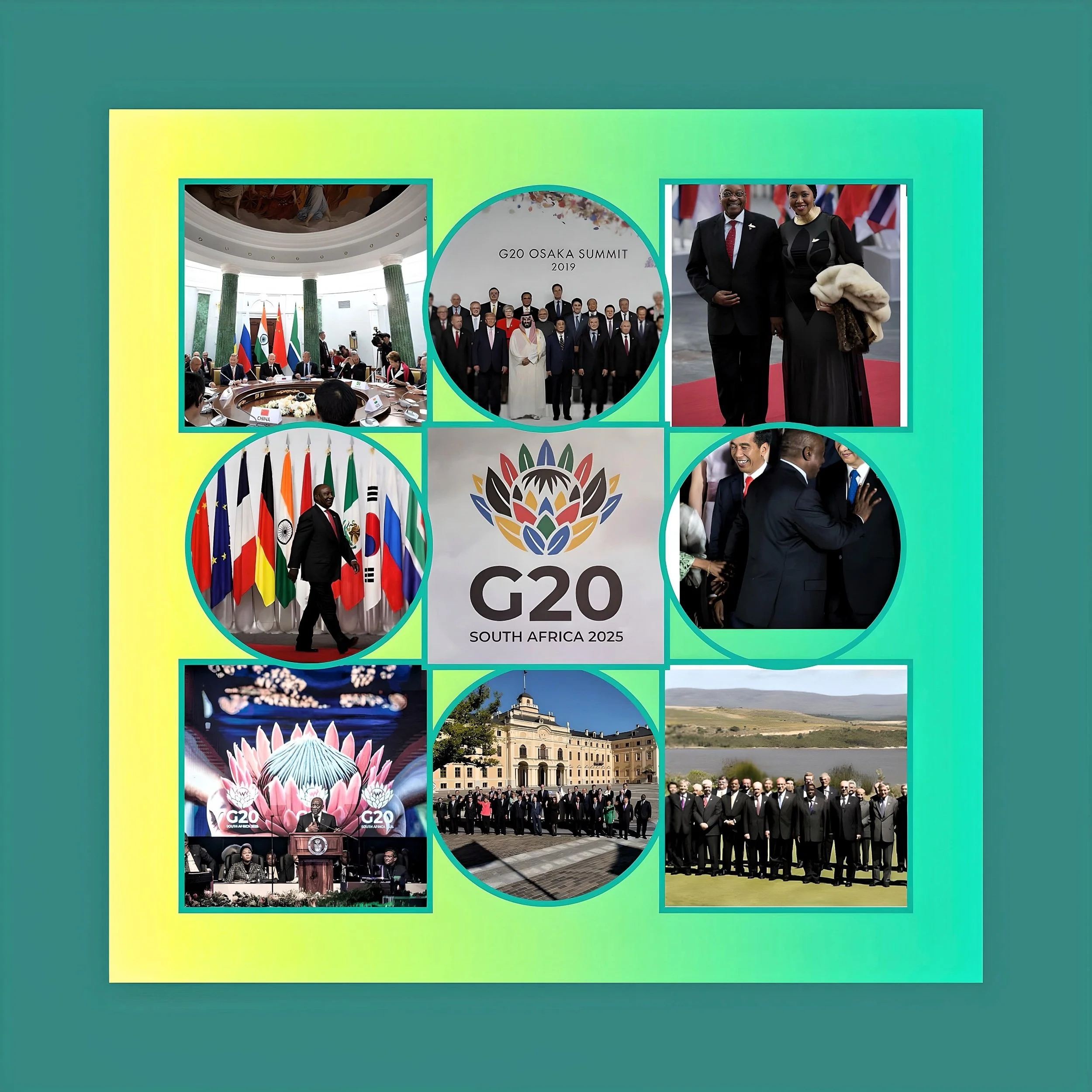
President Cyril Ramaphosa’s contentious 2020 White House visit—marked by public disagreements over trade imbalances and perceived diplomatic slights—epitomizes the strategic erosion of American influence across Africa under the Trump administration.
FAF, Africa.Media analysis shows that the disengagement has created openings for China, Russia, and regional powers to expand their political, economic, and military footholds, fundamentally reshaping Great Power competition on the continent.
Strategic Retreat and the “America First” Doctrine
Aid Cuts and Policy Vacuum
The Trump administration slashed development assistance to Africa by 30% between 2017-2021, including
50% reduction in Global Health Initiative funding ($6.3 billion to $3.1 billion)
Elimination of Feed the Future agricultural programs in 12 African nations
Withdrawal from UNFPA compromising maternal health initiatives
This retrenchment occurred as China increased African infrastructure investments to $155 billion (2018-2023) through Belt and Road projects.
The U.S. share of African trade plunged from 12% to 6% during Trump’s term, while China’s reached 15%.
Counterterrorism Myopia
Trump’s Africa policy narrowly focused on military interventions, with:
113% increase in drone strikes (2,243 in 2020 vs. 1,052 in 2016)
Withdrawal of 1,200 troops from Somalia despite Al-Shabaab threats
Public threats to cut Rwandan apparel exports over used clothing disputes
This militarized approach alienated governments seeking balanced partnerships, driving defense cooperation agreements with Russia from 19 to 27 countries (2017-2021).
China’s Ascendancy Through Strategic Investments
Infrastructure Diplomacy
Chinese state-owned enterprises built 75,000km of roads and 7,500km of railways (2018-2023), including:
$4.5 billion Lamu Port-South Sudan-Ethiopia Transport Corridor
$3.2 billion Mombasa-Nairobi Standard Gauge Railway
These projects lock in long-term economic dependencies, while U.S. Development Finance Corporation commitments to Africa stagnated at $2.9 billion (2020).
Digital Colonization
Huawei and ZTE now control 70% of Africa’s 4G infrastructure versus U.S. firms’ 14% share. China’s “Digital Silk Road” has installed:
50+ data centers across 35 countries
National fiber networks in 40 nations
This digital footprint enables surveillance capabilities and data governance influence that eclipse U.S. soft power initiatives.
Russia’s Opportunistic Security Alliances
Wagner Group Proliferation
The Russian paramilitary network expanded operations to 9 African states (2017-2023), providing:
Regime protection for leaders in CAR, Mali, Sudan
Control of gold/diamond mines generating $2.5 billion annually
Election interference capabilities through disinformation campaigns
U.S. sanctions failed to curb these activities due to lack of coordinated EU/African Union engagement.
Arms Diplomacy Surge
Russia increased African arms sales by 23% (2017-2021), including:
$4 billion in weapons to Algeria, Egypt, Angola
MiG-29 fighter jet sales to Ethiopia amid Tigray conflict
This military penetration undermines U.S. efforts to promote democratic governance norms.
Diplomatic Missteps and Leadership Perceptions
Personal Diplomacy Failures
Trump’s derogatory 2018 “shithole countries” remark damaged U.S. credibility, while:
14 African embassies operated without ambassadors in 2020
USAID missions in 8 countries lost permanent directors
African Union headquarters visits by U.S. officials fell 60%
Contrasting Engagement Models
While Trump hosted only two African leaders (Nigeria, Kenya), China’s FOCAC summits attracted 53 heads of state in 2021.
The U.S. trade deficit with Africa widened to $17.4 billion as Chinese imports grew 11% annually.
Long-Term Implications for U.S. Influence
Institutional Decay
Young African professionals (18-35) view China as development model: 63% vs. U.S. at 17% (Afrobarometer 2022)
31 African nations abstained from UN votes condemning Russia’s Ukraine invasion
African support for U.S.-led initiatives fell to 44% from 60% (2016-2021)
Climate of Distrust
The Trump administration’s skepticism of multilateralism accelerated:
19 African states joining China’s Space Information Corridor
37 nations signing onto BRI digital economy partnerships
Continental rejection of U.S. pressure on Huawei 5G contracts
Conclusion
The Strategic Cost of Disengagement
The Trump administration’s transactional approach ceded strategic terrain in Africa at precisely the moment when demographic trends (projected 2.5 billion population by 2050) and critical mineral reserves (30% of global deposits) make the continent indispensable to 21st-century geopolitics.
By prioritizing short-term gains over institution-building, the U.S. has weakened its capacity to shape Africa’s digital future, energy transition, and governance standards.
Reversing this trajectory requires reinvigorated diplomacy that acknowledges African agency—a lesson subsequent administrations must urgently internalize to prevent permanent eclipse by adversarial powers.