Supreme Court Authorizes Trump Administration’s Immigration Enforcement: A Comprehensive Analysis of the May 2025 Ruling and Its Implications
Introduction
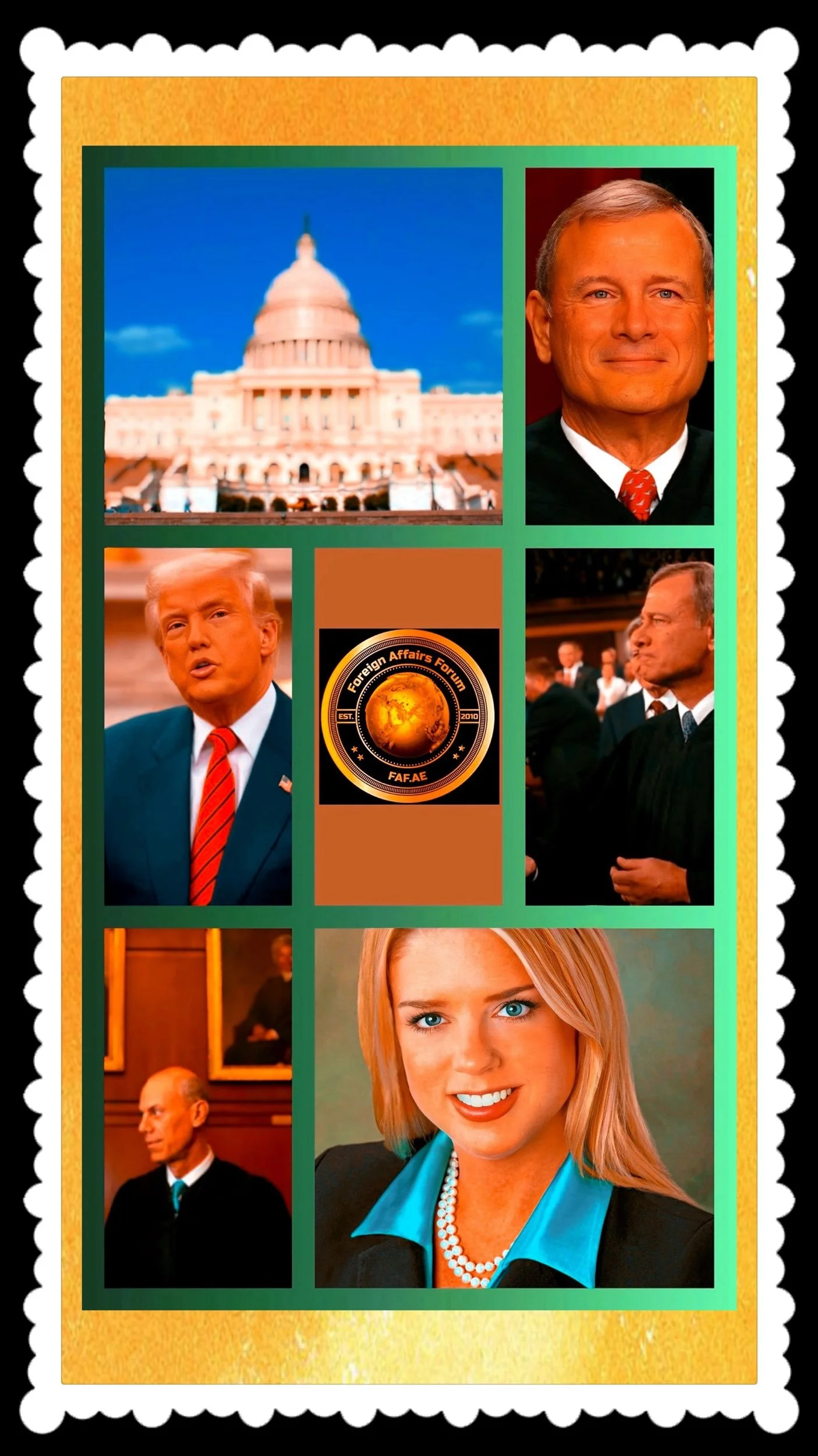
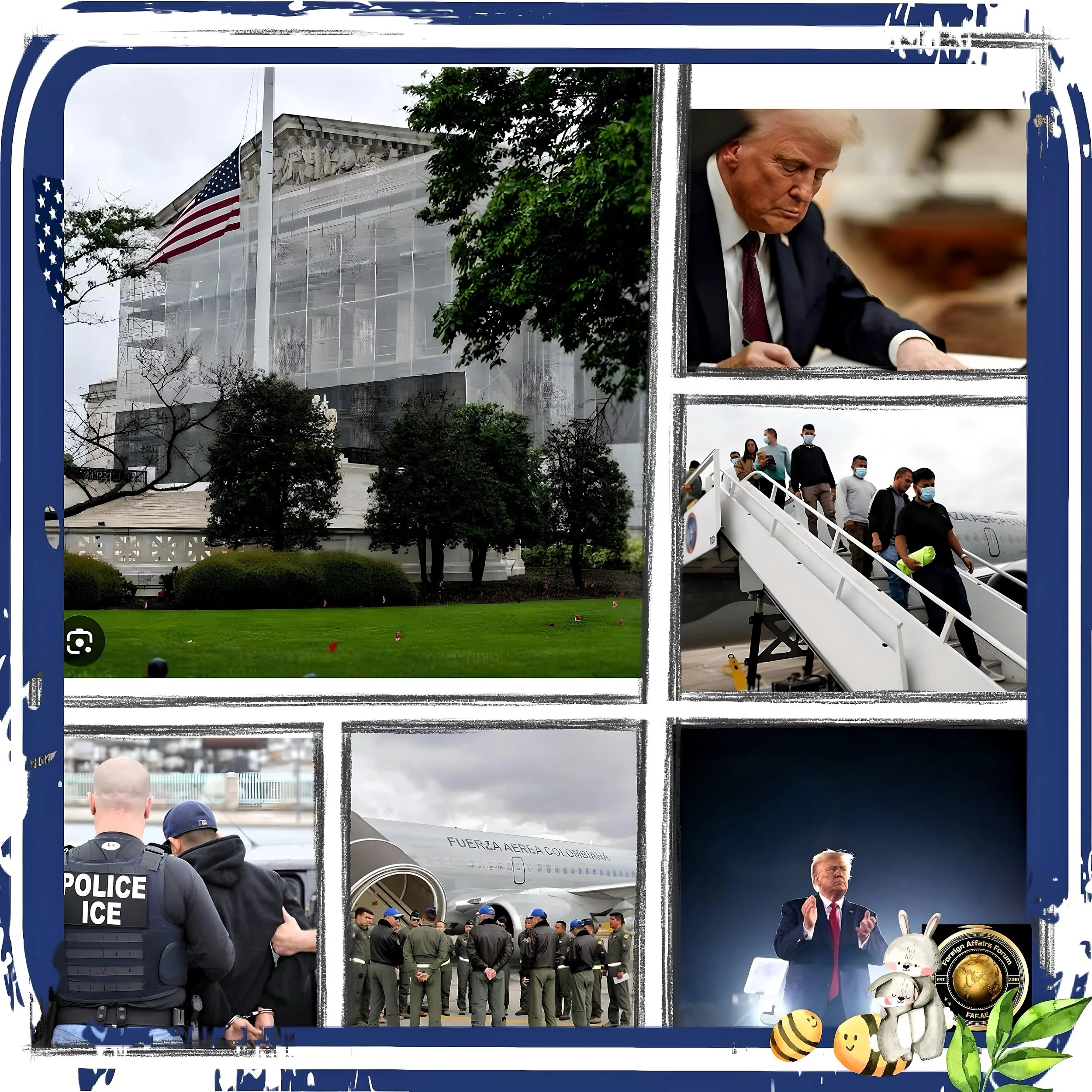
The Supreme Court’s decision on Friday, May 30, 2025, represents a significant victory for the Trump administration’s immigration enforcement agenda, allowing the termination of humanitarian parole protections for over half a million migrants while simultaneously exposing them to potential deportation.
This ruling, which came without explanation in a brief unsigned order, effectively suspends immigration parole granted to approximately 530,000 migrants from Cuba, Haiti, Nicaragua, and Venezuela, marking what immigration advocates describe as “the largest mass illegalization event in modern American history.”
FAF analysis that courts decision not only demonstrates the willingness to support the administration’s aggressive immigration policies but also signals a broader shift in how emergency immigration matters are adjudicated at the highest levels of the judiciary.
The Supreme Court’s Decision and Procedural Context
The Ruling’s Immediate Impact
The Supreme Court’s Friday ruling overturned a lower federal court decision temporarily blocking the Trump administration from implementing Secretary of Homeland Security Kristi Noem’s March 25, 2025, directive to terminate the CHNV (Cuba, Haiti, Nicaragua, Venezuela) parole programs.
The decision allows the Department of Homeland Security to revoke these migrants' protected status while legal challenges continue to move through the federal court system.
This represents the second major immigration victory for the Trump administration at the Supreme Court in recent weeks, following an earlier decision that permitted the termination of Temporary Protected Status for nearly 350,000 Venezuelan immigrants.
The Court’s order was notably brief and unsigned, not explaining the majority’s reasoning—a characteristic feature of the Court’s emergency docket that has drawn criticism from legal scholars and practitioners.
This procedural approach reflects the Court’s increasing willingness to make consequential decisions affecting hundreds of thousands of people without detailed justification or public deliberation.
The lack of explanation makes it difficult to assess the decision's legal reasoning and potential implications for future immigration cases.
Justice Jackson’s Dissenting Opinion
Justice Ketanji Brown Jackson authored a forceful eight-page dissent, joined by Justice Sonia Sotomayor, which provided the only detailed legal analysis of the Court’s decision.
Jackson criticized her colleagues for having “plainly botched” their evaluation of whether to grant the government’s request for a stay.
Her dissent emphasized that the standard for granting such emergency relief requires more than the government’s likelihood of eventual success on the merits—it demands a careful balancing of potential harms to all parties involved.
Jackson’s analysis highlighted the “catastrophic effects of allowing the Government to hastily disrupt lives and livelihoods of nearly half a million noncitizens while their legal claims are unresolved.”
She particularly criticized the majority’s failure to consider the irreversible harm that would befall the affected migrants, noting that they “now face two intolerable choices”: either departing the United States and facing dangers in their home countries along with family separation, or remaining and risking expedited removal proceedings.
Jackson’s dissent represents a rare public critique of the Court’s emergency docket practices and underscores the human costs of the majority’s decision.
The Humanitarian Parole Program and Its Termination
Origins and Structure of the CHNV Programs
The humanitarian parole programs targeted by the Trump administration’s termination order were established during the Biden presidency as part of a comprehensive strategy to manage immigration flows from countries experiencing political instability and economic crisis.
The program initially began with Ukrainian refugees following Russia’s invasion in April 2022, then expanded to include Venezuelans in late 2022, and finally encompassed Cubans, Haitians, and Nicaraguans in January 2023.
These programs allowed eligible migrants to fly legally to the United States, provided they had passed background checks and secured private sponsors willing to provide financial support.
The legal framework for these programs derives from the Immigration and Nationality Act’s provision granting the Secretary of Homeland Security discretionary authority to grant parole for “urgent humanitarian reasons or significant public benefit.”
This parole authority has historical precedent, having been used to admit nearly 200,000 Cubans during the 1960s and more than 350,000 Southeast Asians following the fall of Saigon.
The Biden administration’s innovation lay in creating systematic, large-scale programs that processed applications in advance rather than responding to ad hoc emergencies.
The Trump Administration’s Rationale for Termination
President Trump’s January 20, 2025, executive order “Securing Our Borders” directed Secretary Noem to “terminate all categorical parole programs that are contrary to the policies of the United States.”
The administration’s subsequent justification for ending the CHNV programs reflected broader ideological opposition to what they characterized as an expansive use of executive immigration authority.
In her March 25 Federal Register notice, Secretary Noem argued that the programs “have at best traded an unmanageable population of unlawful migration along the southwest border for the additional complication of a substantial population of aliens in the interior of the United States without a clear path to a durable status.”
Department of Homeland Security Assistant Secretary Tricia McLaughlin characterized the Biden-era programs as “disastrous,” claiming they had allowed “more than half a million poorly vetted aliens” to enter the United States and compete for American jobs.
This rhetoric reflects the administration’s broader narrative that previous immigration policies prioritized foreign nationals over American workers and national security concerns.
The administration’s approach represents a fundamental shift from viewing humanitarian parole as a tool for orderly migration management to perceiving it as an improper circumvention of normal immigration processes.
Legal Challenges and Lower Court Proceedings
The Massachusetts Federal Court Case
The legal challenge to the Trump administration’s termination order began in federal court in Massachusetts, where a coalition of affected migrants and their sponsors filed suit alleging violations of federal administrative law.
U.S. District Judge Indira Talwani issued a preliminary injunction on April 14, 2025, blocking the government from implementing the blanket termination of the CHNV programs.
Judge Talwani’s reasoning centered on the principle that federal immigration law requires parole terminations to occur “on a case-by-case basis, rather than collectively,” as noted in Justice Jackson’s dissent.
The district court’s analysis distinguished between the Secretary’s undisputed authority to grant or deny individual parole applications and whether that authority extends to categorical program terminations affecting hundreds of thousands simultaneously.
Judge Talwani determined that while courts generally cannot review individual parole decisions, the wholesale termination of an entire program category raised different legal questions about the scope of executive authority and compliance with administrative procedures.
This distinction proved crucial to the plaintiffs’ legal strategy but ultimately unsuccessful before the Supreme Court.
First Circuit Court of Appeals Review
Following Judge Talwani’s injunction, the Trump administration sought emergency relief from the U.S. Court of Appeals for the First Circuit, which rejected the government’s request to stay the district court’s order.
The First Circuit’s decision to maintain the injunction pending appeal reflected the appellate court’s assessment that the legal questions involved were sufficiently complex to warrant careful consideration rather than expedited resolution.
The court also agreed to fast-track its review of the underlying appeal, demonstrating recognition of the case’s urgency and national significance.
The First Circuit’s approach contrasted sharply with the Supreme Court’s ultimate decision to grant the government’s stay request.
This divergence illustrates the different standards and perspectives that can emerge as cases move through the federal judicial hierarchy, particularly in politically charged immigration matters.
The First Circuit’s more cautious approach may have reflected greater familiarity with immigration law’s technical requirements and the practical consequences of rushed decisions affecting many people.
Implications for Different Immigration Statuses
Impact on Humanitarian Parole Recipients
The Supreme Court’s decision creates immediate uncertainty for the approximately 530,000 migrants who entered the United States under the CHNV parole programs.
These individuals now face the loss of their work authorization and protection from deportation, potentially exposing them to what immigration experts describe as “expedited removal” proceedings.
Many of these migrants had established significant ties to American communities, with court filings noting that DACA recipients and other protected immigrants had “enrolled in degree programs, embarked on careers, started businesses, purchased homes, and even married and had children, all in reliance” on their protected status.
The practical consequences extend beyond the immediate deportation risk to encompass broader social and economic disruption.
Immigration expert David Bier of the Cato Institute noted that many affected migrants “had parole for two years, and if they haven’t applied for asylum, then there’s no basis for them to be in the country, and they start accumulating unlawful presence as soon as this decision takes effect.”
This observation highlights how the Court’s decision creates a cascading series of legal vulnerabilities that may be difficult for affected individuals to navigate, particularly given the administration’s suspension of asylum application processing.
Distinction from Other Immigration Programs
It is crucial to understand that the Supreme Court’s ruling addresses humanitarian parole programs and does not directly affect other forms of immigration status or protection.
The decision does not impact individuals with lawful permanent resident status, temporary worker visas, asylum grants, or other established immigration statuses.
However, the ruling’s broader implications may signal the Court’s willingness to defer to executive branch immigration enforcement priorities, potentially affecting future challenges to other immigration programs.
The Court’s decision also maintains the legal distinction between parole, which provides temporary permission to remain in the United States without formal admission, and other immigration statuses confer more permanent legal standing.
This technical distinction carries significant practical consequences, as individuals on parole generally have fewer procedural protections and more limited pathways to permanent status than those with other forms of legal presence.
DACA Program Status and Separate Legal Proceedings
Current DACA Litigation Landscape
The Deferred Action for Childhood Arrivals (DACA) program faces legal challenges distinct from the Supreme Court’s May 30, 2025 ruling on humanitarian parole.
On January 17, 2025, the U.S. Court of Appeals for the Fifth Circuit ruled that certain aspects of DACA are unlawful because they are inconsistent with federal immigration law.
However, the Fifth Circuit’s decision included significant limitations that preserve DACA’s core protections while the legal process continues.
The Fifth Circuit’s ruling specifically upheld the deportation protection component of DACA while questioning the benefits of work authorization.
The court limited the geographic scope of its decision to Texas only, meaning that DACA recipients in the other 49 states retain their full protections, including work authorization. At the same time, the case proceeds through the courts.
This geographic limitation reflects the court’s attempt to balance its legal conclusions with practical considerations about disrupting the lives of hundreds of thousands of DACA recipients nationwide.
DACA Recipients’ Continued Protections
Despite the Fifth Circuit's ruling, current DACA recipients can continue to renew their status on the regular schedule throughout the United States, including in Texas.
The court explicitly stated, “DACA currently remains in effect for all current DACA recipients in every state, including Texas.”
This stability assures the estimated 580,000 current DACA recipients who might otherwise face uncertainty about their legal status and work authorization.
The separation between DACA litigation and humanitarian parole cases reflects these programs' different legal foundations and procedural histories.
While both involve executive branch immigration policies that have faced legal challenges, DACA’s more extended operational history and previous Supreme Court review in 2020 provide a different legal context.
The Supreme Court’s 2020 decision that the Trump administration’s earlier attempt to terminate DACA was “arbitrary and capricious” under the Administrative Procedure Act established an important precedent that may influence future DACA litigation.
Countries and Populations Affected
Geographic Scope of the Ruling
The Supreme Court’s decision explicitly affects migrants from four countries: Cuba, Haiti, Nicaragua, and Venezuela.
These nations were selected for the CHNV parole programs due to their ongoing political instability, economic crisis, and limited ability to accept returning nationals safely.
Each country presents distinct challenges that initially justified humanitarian parole consideration under the Biden administration’s policy framework.
Cuba continues to experience severe economic difficulties and political repression that have driven sustained emigration flows toward the United States.
Haiti faces ongoing political instability, gang violence, and infrastructure collapse that make returns potentially dangerous for current U.S. residents.
Nicaragua’s authoritarian government has engaged in systematic persecution of political opponents and civil society organizations.
Venezuela’s economic collapse and political crisis have created one of the largest refugee situations in the Western Hemisphere, with millions of Venezuelans displaced throughout Latin America.
Demographic and Social Impact
The affected population, which includes over 530,000 individuals, represents diverse communities that have established significant roots in American society.
Court filings and advocacy organizations emphasize that many migrants have integrated into local communities, established businesses, enrolled in educational programs, and formed families.
The National Immigration Law Center and other advocacy groups estimate that the affected migrants include approximately 200,000 U.S. citizen children who could face family separation if their parents are deported.
The economic implications extend beyond the immediate families to encompass employers, schools, and communities that have invested in these individuals’ integration and success.
Business organizations previously filed briefs estimating that hiring and training replacements for DACA recipients alone would cost employers $6.3 billion, suggesting that similar economic disruption could result from the mass removal of humanitarian parole recipients.
These broader social and economic costs illustrate why Justice Jackson’s dissent emphasized the “far-reaching consequences” of the Court’s decision to allow immediate implementation of the termination order.
Conclusion
The Supreme Court’s May 30, 2025, decision represents a watershed moment in contemporary immigration law. It demonstrates the judiciary’s willingness to prioritize executive branch enforcement over individual due process protections and community stability.
By allowing the Trump administration to proceed with terminating humanitarian parole for over half a million migrants while legal challenges remain pending, the Court has effectively endorsed an “enforcement first” approach that may have lasting implications for how immigration policies are reviewed and implemented.
The decision’s unsigned nature and lack of explanation further diminish transparency and accountability in immigration adjudication, setting a troubling precedent for future emergency applications.
The ruling’s immediate human impact cannot be understated, as it exposes hundreds of thousands of individuals and families to potential deportation while simultaneously disrupting communities, employers, and institutions across the United States.
Justice Jackson’s dissent soberingly reminds us that judicial decisions carry real-world consequences far beyond abstract legal principles.
As the affected migrants face an uncertain future and the broader immigration system grapples with the implications of this ruling, the decision serves as a stark illustration of how changes in political leadership can rapidly transform the legal landscape for vulnerable populations.
The long-term effects of this decision will likely influence immigration policy and judicial review for years to come, potentially reshaping the balance between executive authority and individual protections in one of the most consequential areas of federal law.