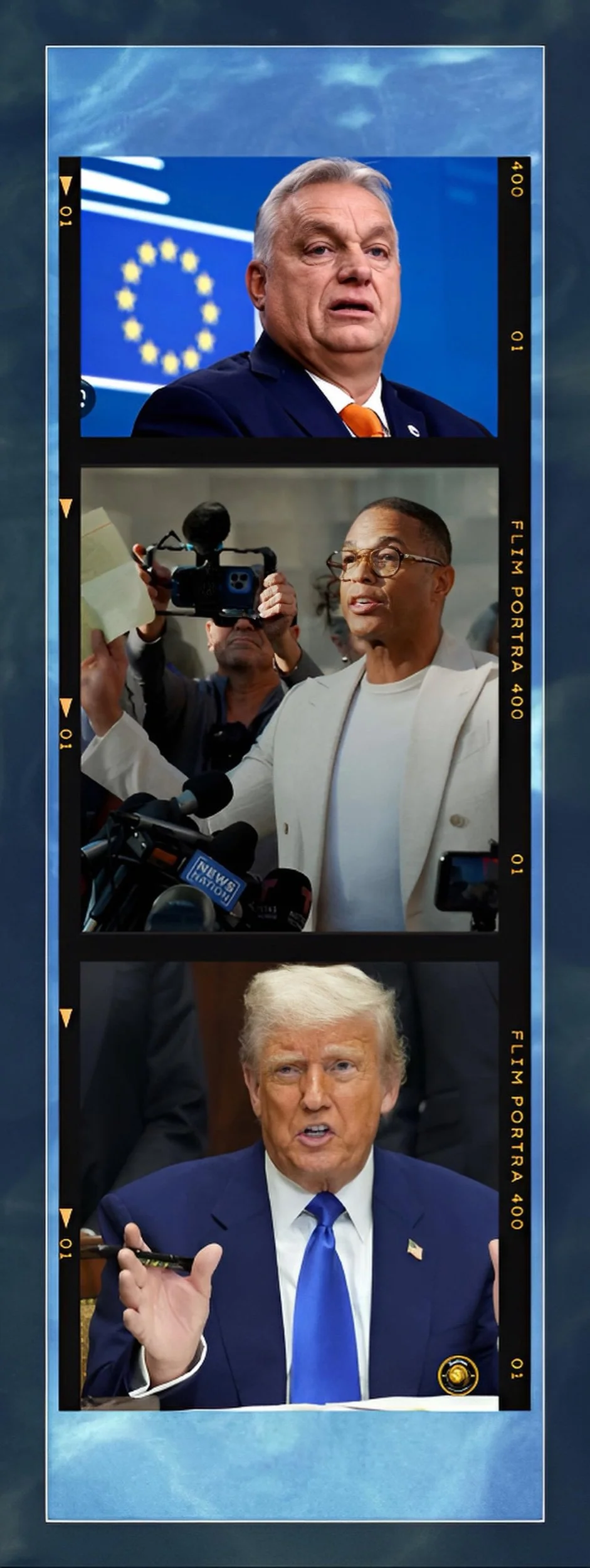
Don Lemon's Arrest and the Trump Administration's Authoritarian Playbook: Parallels with Viktor Orbán's Media Suppression Regime
Executive Summary
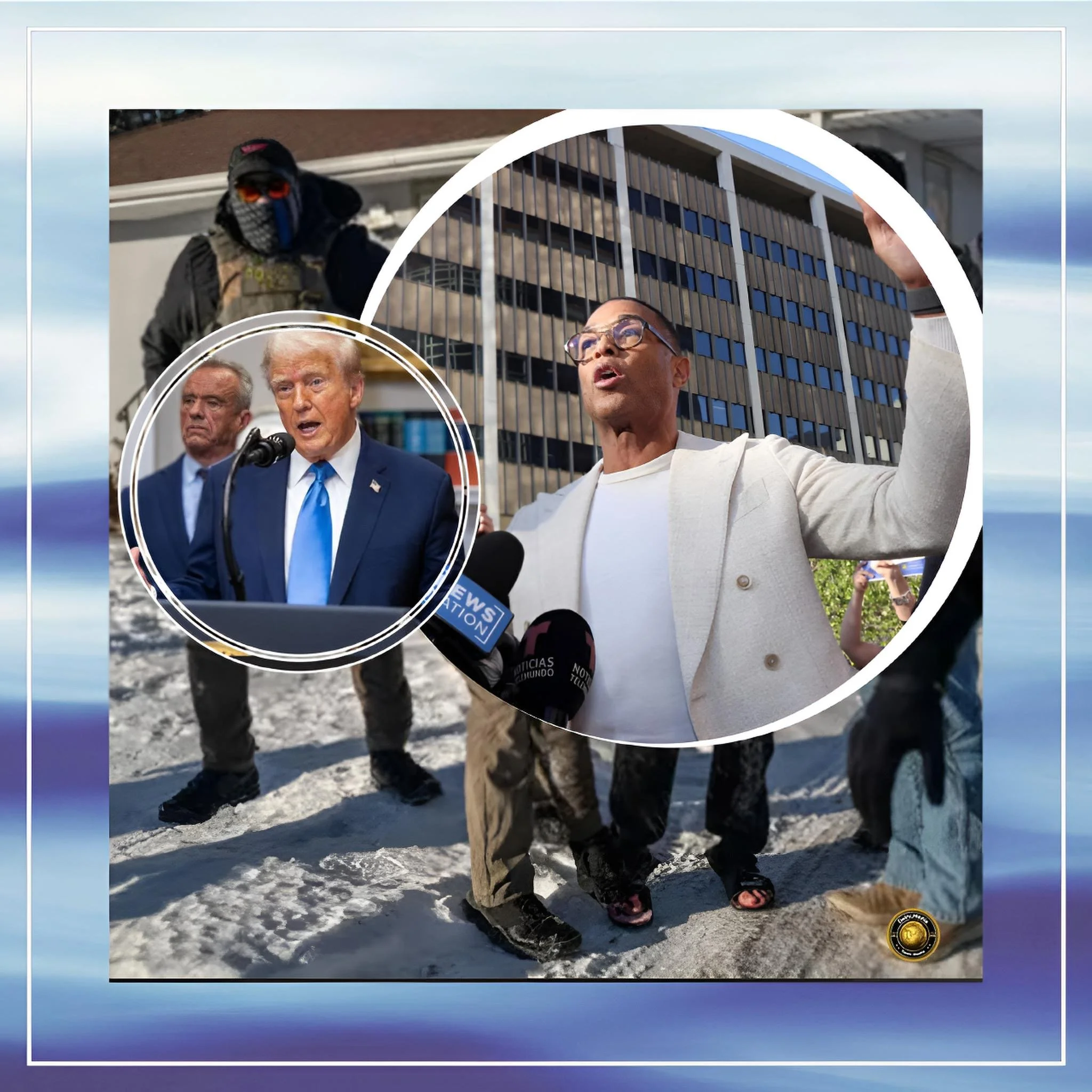
The arrest of Don Lemon, a veteran independent journalist, on 29 January 2026, in connection with his reporting on an anti-immigration enforcement protest at a Minnesota church represents a watershed moment in the erosion of press freedom in the United States.
Lemon, who spent 30 years as a journalist and is now an independent media producer, was apprehended by federal agents in Los Angeles while covering the Grammy Awards, charged with federal civil rights violations under the FACE Act and conspiracy statutes despite a federal magistrate judge's prior determination that the evidence was insufficient to support such charges.
The Trump administration's reversal of that judicial decision and its subsequent arrest of both Lemon and fellow journalist Georgia Fort instantiate a systematic campaign against freedom of expression that scholars of democratic decline have identified as mirroring the authoritarian playbook perfected by Hungarian Prime Minister Viktor Orbán.
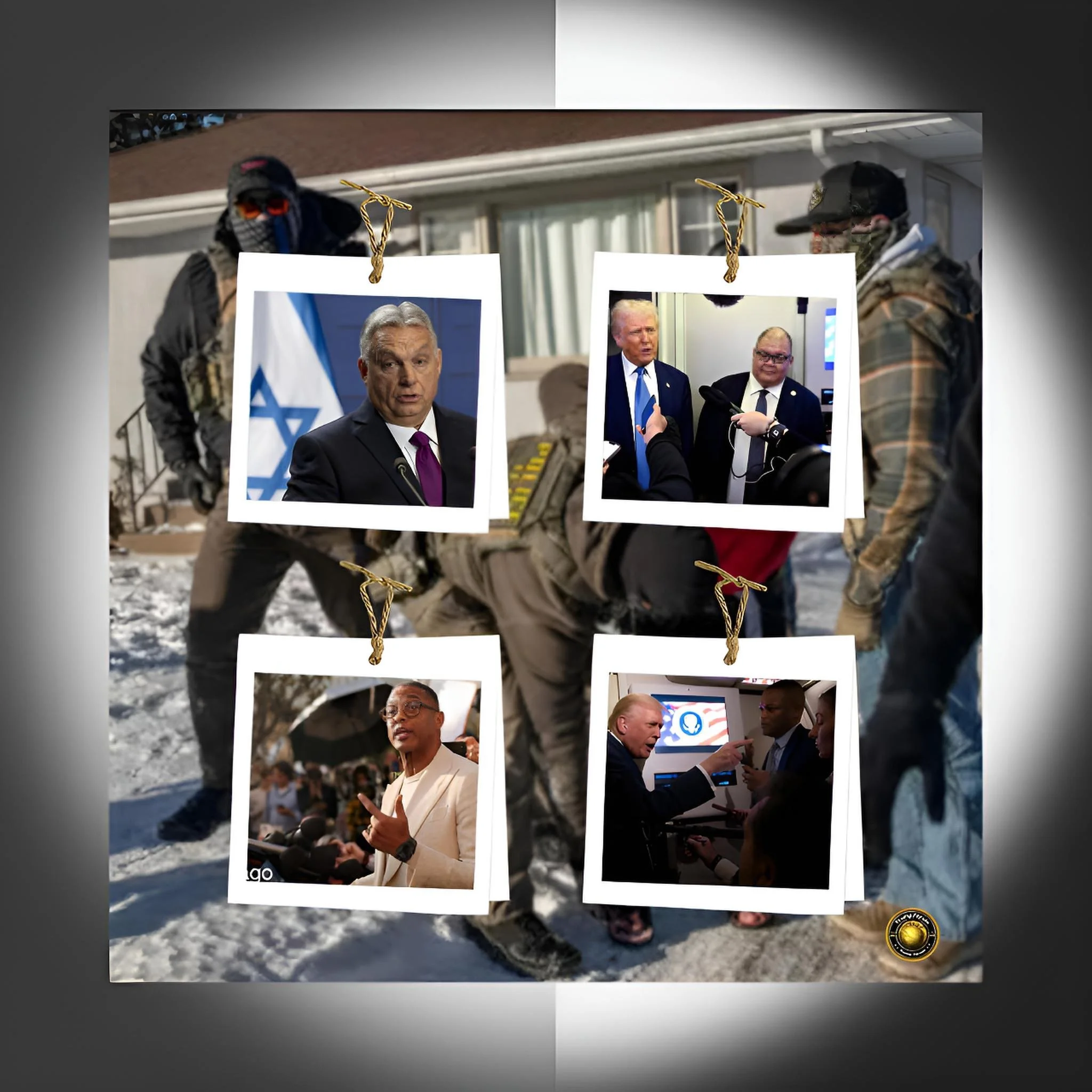
The parallels between Trump's assault on press freedom and Orbán's methodical dismantling of Hungarian media independence are increasingly striking and increasingly intentional. Trump has publicly praised Orbán as "fantastic" and indicated intellectual sympathy for Orbán's methods of consolidating power through media capture.
The mechanisms through which both leaders are achieving this goal—prosecutorial retaliation against journalists, regulatory pressure on broadcasters, financial coercion of media proprietors, delegitimization of critical outlets as "enemies of the people," and the cultivation of alternative state-aligned media ecosystems—constitute what scholars term an "electoral autocracy," a system that retains the formal procedural apparatus of democracy while hollowing out its substance through the systematic suppression of dissent and the suppression of independent information sources.
This trajectory represents a fundamental threat to American constitutional democracy. The First Amendment's protection of press freedom, rooted in the Enlightenment conviction that informed citizenry constitutes the prerequisite for self-governance, is under direct assault by an administration that has weaponized law enforcement, regulatory authority, and public denunciation to silence journalists, intimidate news organizations, and reshape the media landscape in ways consonant with executive preferences.
The Lemon arrest catalyzes a broader pattern: prosecutorial harassment of journalists covering federal law enforcement abuse, revocation or threatened revocation of broadcast licenses for networks that provide critical coverage, financial starvation of public media, exclusion of independent journalists from government events, and the deployment of federal regulatory power to coerce editorial decisions in ways that would be recognized as authoritarianism in any other geopolitical context.
Introduction
The Normalization of Authoritarian States Media Control in the United States
The Trump administration's approach to managing information and controlling dissent has evolved from crude public vituperation toward more institutionally sophisticated mechanisms that replicate patterns perfected in other declining democracies.
Where once Trump contented himself with labeling critical media outlets as "enemies of the people" or threatening broadcast stations with license revocation via social media, the administration has now graduated to deploying the machinery of federal law enforcement directly against journalists whose reporting displeases the executive.
The Lemon arrest exemplifies this escalation. Lemon was not arrested as a participant in the protest itself; federal magistrate judge determined the evidence was insufficient to charge him. Rather, he was arrested only after the Justice Department, in an extraordinary exercise of prosecutorial authority, petitioned a federal appeals court to override the magistrate's judgment and compel issuance of arrest warrants.
This procedural reversal signals a willingness to subordinate established judicial protections and due process norms to political imperatives. The message implicit in this action is unmistakable: journalists whose reporting embarrasses the administration will face criminal prosecution regardless of evidentiary insufficiency or judicial skepticism about the merits of charges.
This operational template mirrors precisely the mechanisms through which Viktor Orbán has achieved near-total dominance of Hungary's information environment. Orbán has not shuttered newspapers or sent journalists to prison in the manner of 20th-century totalitarianisms; rather, he has deployed regulatory authority, financial power, and prosecutorial discretion to achieve a form of media control that is simultaneously more subtle and more comprehensive than crude censorship.
The result, according to scholars of Hungarian democratic decline, is an "electoral autocracy" in which formal democratic institutions persist but operate within a constrained information environment that precludes meaningful public deliberation about governmental accountability.
History
The Long Campaign Against Media Independence
The Trump administration's assault on press freedom did not commence with the Lemon arrest; rather, that arrest represents a culmination of methodically escalating attacks on journalistic independence and the constitutional protections that undergird the practice of journalism. Understanding the trajectory is essential to grasping the broader significance of the Lemon case.
During his first term as president, Trump repeatedly threatened to revoke the broadcast licenses of news organizations whose coverage he deemed unfavorable.
These threats, while alarming to press freedom advocates, were constrained by the resistance of FCC leadership and the practical juridical obstacles to revoking licenses based on editorial content rather than genuine violations of broadcast regulations. However, Trump's appointment of Brendan Carr as FCC chairman in his second administration transformed these threats into actionable policy.
Carr has made explicit statements that broadcast licensees whose reporting displeases the administration should consider surrendering their licenses.
In a February 2025 speech at a Washington summit, Carr stated, "If you intend to hold a broadcasting license, it comes with the obligation to serve the public interest. If that isn't your goal, that's fine, I can provide you with the FCC's address. You are welcome to surrender your license and pursue podcasting or over-the-top content instead."
This formulation—ostensibly a reminder of regulatory obligations—functions as transparent coercion: comply with the administration's preferences regarding editorial content or face the prospect of regulatory revocation.
Simultaneously, the Trump administration has leveraged the full apparatus of federal regulatory authority to pressure media proprietors into aligning their editorial choices with administration preferences.
When ABC suspended late-night host Jimmy Kimmel after his critical remarks about Trump, the action followed explicit public pressure from Trump and regulatory threats from the FCC regarding broadcasting licenses. The fact that no formal regulatory action was taken is irrelevant; the threat was sufficiently credible that corporate proprietors acted preemptively to suppress critical speech.
CBS Networks faced analogous pressure following an editing decision in a 2024 interview with then-Vice President Kamala Harris. Trump announced a lawsuit against the network and threatened to revoke its broadcast license. CBS, facing the prospect of regulatory jeopardy and litigation, settled the lawsuit by payment and editorial concessions.
The settlement itself constitutes an act of capitulation by a major news organization, validating Trump's claim that presidential pressure could extort editorial compliance.
Viktor Orbán's consolidation of media control proceeded through similar channels, though operating within the institutional constraints of the Hungarian system.
After returning to power in 2010, Orbán systematically starved critical media outlets of state advertising revenue—the primary source of commercial viability for news organizations in Hungary given the fragmented advertising market. Simultaneously, pro-government businessmen purchased critical outlets, closed them, or transformed them into propaganda organs.
The process culminated in 2018, when nearly 500 media outlets were simultaneously donated to a foundation (KESMA) controlled by Orbán loyalists, creating an unprecedented consolidation of media ownership that gave the Fidesz party direct or indirect control of approximately 80 percent of Hungary's media market resources.
Current Status
The Assault on Journalistic Independence Intensifies
The Trump administration's assault on press freedom has taken multiple coordinated forms that collectively constitute a comprehensive strategy to reshape the information environment. The Lemon arrest represents one component of a broader pattern.
First, the administration has weaponized the Justice Department to prosecute journalists for routine reporting activities. In addition to Lemon and Georgia Fort, a Washington Post reporter had his home raided and electronic devices confiscated as part of a leak investigation, circumventing longstanding DOJ guidelines that protect journalists from such intrusions. These prosecutorial actions send a transparent message to the press corps: critical reporting exposes journalists to criminal liability.
Second, the administration has systematized restrictions on press access to official information and government officials. The Associated Press was excluded from White House events for editorial decisions regarding geographic nomenclature (the network continued to refer to the "Gulf of Mexico" rather than adopting Trump's preferred terminology, the "Gulf of America").
The Pentagon established new press access guidelines that prohibit journalists from soliciting, receiving, or publishing unauthorized information, effectively transforming the press corps into state communication apparatus. Nearly all major news organizations—AP, Reuters, NPR, the New York Times, Washington Post, and network broadcasters—surrendered their Pentagon press credentials in protest, effectively shutting down independent defense reporting.
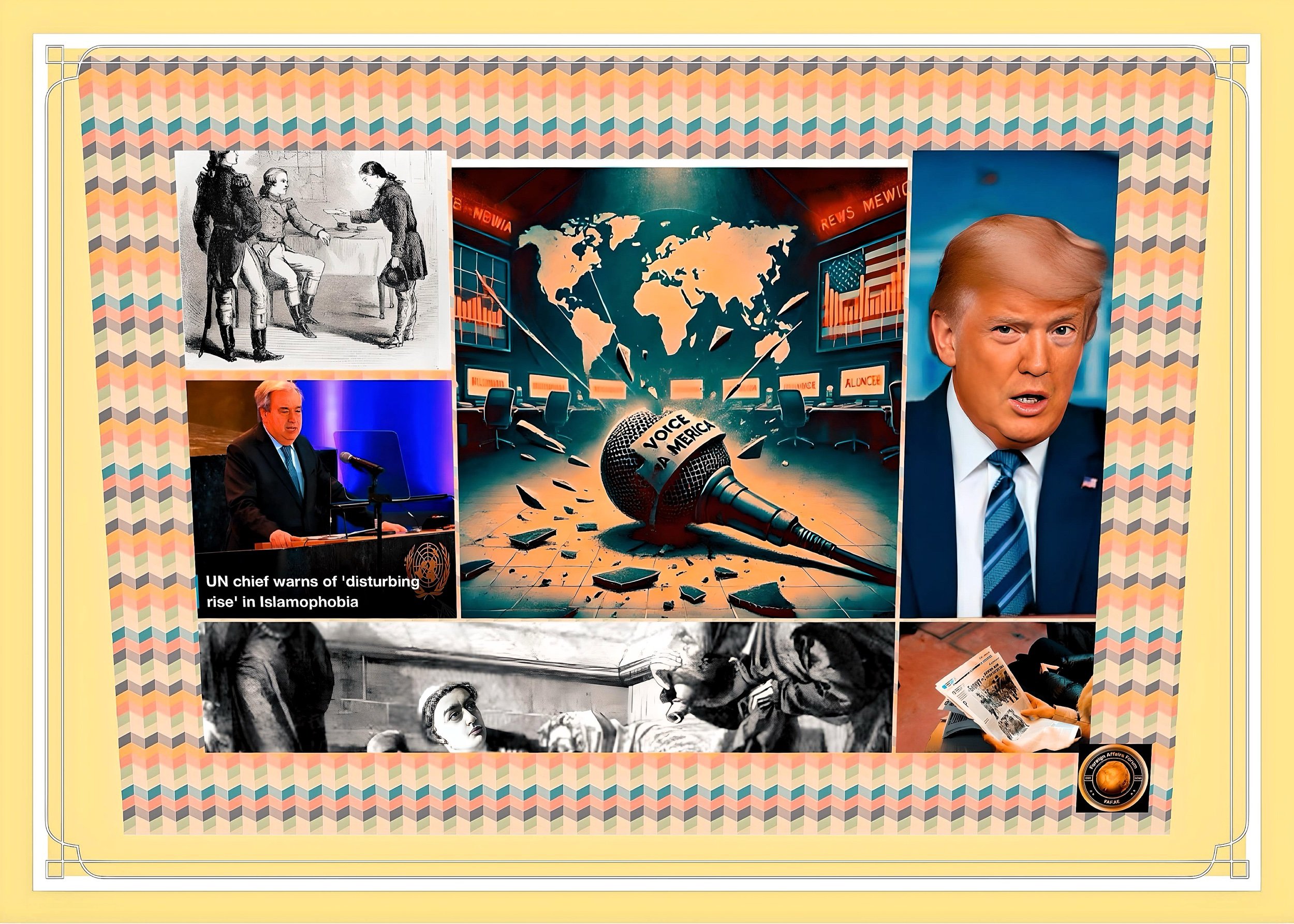
Third, the administration has defunded public media outlets that operate independently of executive control. Funding has been slashed for NPR, PBS, and Voice of America—institutions created specifically to provide information sources insulated from government control and, in the case of Voice of America, to counter propaganda from authoritarian governments.
The symbolic and practical significance of dismantling Voice of America is particularly stark: the administration is eliminating an institution whose core mission is to provide accurate information in regions where authoritarian regimes monopolize the information environment, precisely at a moment when Trump is implementing authoritarian information control tactics domestically.
Fourth, the administration has systematically delegitimized critical journalism through rhetorical campaigns that frame independent reporting as malicious opposition. Trump routinely characterizes entire newsrooms as "enemies of the people," "sick," or "fake news." He personally insults individual journalists, as when he told Bloomberg reporter Catherine Lucey to "Quiet, piggy."
These rhetorical attacks, while superficially merely political speech, function as intimidation tactics that increase the risks to journalists of engaging in critical reporting, while simultaneously validating physical harassment and threats against press personnel.
The operation proceeds according to a script recognizable from other declining democracies. Media proprietors, confronted with regulatory threats and the prospect of legal jeopardy, make individually rational decisions to capitulate to executive preferences.
The fact that no formal regulatory action is ultimately taken is immaterial; the threat is sufficiently credible that proprietors self-censor preemptively. Journalists confronted with prosecutorial harassment and public denunciation face increased risks of engaging in critical reporting. Sources become reluctant to speak with journalists given the prospect of leaks investigations and prosecutorial jeopardy.
Key Developments
The Systematic Campaign Crystallizes
The Lemon arrest crystallizes several key developments in the Trump administration's campaign against press freedom.
First, the arrest demonstrates the administration's willingness to override judicial determinations regarding the sufficiency of evidence and to subordinate law enforcement to executive political preferences. That a federal magistrate judge determined the evidence insufficient to support charges against Lemon was, in the normal operation of the criminal justice system, dispositive.
The Justice Department's subsequent petition to overturn the magistrate's determination and compel issuance of arrest warrants signals that prosecutorial decisions are now driven by political considerations rather than evidentiary sufficiency or prosecutorial judgment about the merits of charges.
Second, the arrest reveals the administration's interpretation of the FACE Act (Freedom of Access to Clinic Entrances Act) as a broadly deployable tool for criminalizing protest activity and journalism.
The FACE Act was enacted to protect access to medical clinics against extremist violence. The Trump administration's application of the statute to prosecute journalists covering protests at a church represents a dramatic expansion of prosecutorial authority and a creative (if legally questionable) interpretation of the statute's jurisdictional scope.
Third, the arrest instantiates a pattern of targeting Black independent journalists and media personalities. Lemon and Georgia Fort are both prominent figures in Black media and have both been explicit critics of the Trump administration.
The selection of Black journalists for prosecution, as noted by civil rights organizations, carries particular significance given the historical reality of selective prosecution as a tool of racial subordination and the contemporary role of independent Black media in documenting police and immigration enforcement abuses.
Fourth, the arrest occurs in the context of ongoing federal law enforcement operations in Minnesota involving Immigration and Customs Enforcement (ICE) and Customs and Border Protection (CBP) personnel who have reportedly engaged in violent confrontations with civilians.
The church that Lemon was covering is a sanctuary site for undocumented immigrants. Lemon's reporting documented federal law enforcement conduct that the administration wishes to suppress. By prosecuting the journalist covering federal abuses, the administration is suppressing documentation of governmental misconduct.
Latest Facts and Concerns
The Federal Magistrate's Rejection and DOJ Override
A federal magistrate judge in Minnesota initially rejected the proposed criminal complaint against Lemon and others on 22 January 2026, determining that the evidence did not establish probable cause for the crimes charged.
This judicial determination should have been dispositive. Instead, the DOJ petitioned a federal appeals court to overturn the magistrate's decision and compel issuance of arrest warrants. Though the appeals court ultimately denied the petition, the DOJ then proceeded to arrest Lemon on the basis of a subsequent federal grand jury indictment.
The procedural history is significant because it demonstrates that the charges against Lemon are not products of standard prosecutorial judgment but rather represent extraordinary exercises of prosecutorial authority driven by political imperatives.
A magistrate judge, having reviewed the evidence, determined its insufficiency. The DOJ's refusal to accept that determination and its escalation to alternative judicial authority reveals that the prosecution is politically motivated.
The Indictment's Characterization of Journalistic Activity
The federal grand jury indictment characterizes Lemon as part of a group that "engaged in acts of oppression, intimidation, threats, interference and physical obstruction" at the church. However, the prosecution itself concedes that Lemon was not documented engaging in the anti-ICE chants or disruptions that characterized the protest.
Rather, the indictment specifies that Lemon was live-streaming the event, conducted pre-operation meetings to coordinate coverage, interviewed participants, and conversed with the pastor.
These activities—live-streaming, conducting interviews, filming—are precisely the activities constitutive of journalism. By criminalizing these activities, the government is criminalizing the practice of journalism itself.
The indictment's allegation that Lemon "stepped away momentarily so his mic would not accidentally divulge certain" operational details is particularly revealing: the prosecution is characterizing editorial judgment regarding what information to broadcast as evidence of criminal conspiracy.
The Broader Pattern of Press Prosecution
The Lemon arrest occurs within a broader pattern of Justice Department prosecutions of journalists and media figures. A Washington Post reporter had his home raided and devices confiscated in connection with a leak investigation.
Federal agents have engaged in surveillance and intimidation of journalists covering immigration enforcement operations. The Pentagon's press access guidelines create criminal liability for journalists who publish unauthorized information, including information that is not classified and causes no genuine national security harm.
This pattern mirrors closely the authoritarian model practiced by Putin's Russia and Orbán's Hungary, in which journalistic activity is criminalized under the guise of national security, public order, or other ostensibly neutral legal categories that are applied selectively against critical journalists while ignored when applied to journalists sympathetic to the regime.
Cause-and-Effect Analysis
The Mechanics of Authoritarian Information Control
The Trump administration's assault on press freedom operates through a multifaceted causal chain that produces the suppression of critical information and the marginalization of independent journalism through mechanisms that are subtle yet comprehensive.
At the level of prosecutorial intimidation, the arrest of journalists like Lemon creates profound chilling effects throughout the press corps.
Journalists who observe that their peers face criminal prosecution for routine reporting activities will rationally assess the risks associated with critical coverage and will alter their behavior accordingly.
Some will avoid covering sensitive topics. Some will self-censor their reporting to remove critical angles. Some will exit the profession entirely. The cumulative effect is a press corps that is less adversarial, less questioning, and more deferential toward governmental authority than a genuinely independent fourth estate would be.
At the level of regulatory coercion, the administration's weaponization of the FCC creates compliance incentives for broadcasters. Media proprietors are acutely aware of their dependence on federal regulatory authorization to operate over-the-air broadcast networks. When the FCC chair threatens license revocation or suggests that licensees should surrender their licenses, proprietors take those threats seriously.
The result is self-censorship by media institutions, editorial decisions driven not by newsworthiness or the public interest but by calculations regarding regulatory jeopardy. Networks that depend on federal approval for mergers or regulatory compliance are particularly vulnerable to such pressure.
At the level of financial starvation, the administration's cuts to public media funding and its redirection of federal advertising revenue away from independent outlets and toward government-aligned media creates a new media ecosystem populated by outlets that depend on government favor for economic viability.
These outlets will inevitably align their editorial content with administration preferences because deviation from such preferences jeopardizes their financial survival.
At the level of delegitimization and polarization, the administration's rhetorical attacks on the press as "enemies of the people" have bifurcated the media landscape along partisan lines. Large segments of the population have been conditioned to dismiss critical reporting from mainstream media outlets as politically motivated disinformation.
This delegitimization serves a crucial function: it allows the administration to suppress information without appearing to do so. Because significant portions of the population have been convinced that mainstream media are dishonest, suppression of such outlets generates little public outcry.
The cumulative effect of these mechanisms is the hollowing out of press freedom without formal abolition of the First Amendment.
The right to free speech persists in law, but the institutional infrastructure through which speech is amplified—broadcast networks, major newspapers, news aggregators—is increasingly either controlled by the state or operating under state coercion. Independent journalists like Lemon, who attempt to operate outside these compromised institutions, face direct prosecutorial harassment.
Orbán's Hungary operates according to this identical playbook, though with greater institutional consolidation. Through direct control of 80 percent of media outlets via the KESMA foundation, through financial starvation of independent outlets, through regulatory pressure on broadcasters, and through prosecutorial harassment of dissenting voices, Orbán has created an information environment in which independent journalism is theoretically possible but practically marginal.
Critical coverage appears, but it reaches only a small fraction of the population. The majority of citizens consume media narratives controlled by the regime.
Future Steps
The Trajectory of Authoritarian Consolidation
The trajectory of authoritarian consolidation in the Trump administration is unlikely to reverse without significant institutional and political resistance. Several developments loom in the coming months.
First, the Senate Banking Committee and related oversight bodies will face choices about whether to constrain the FCC's regulatory power to revoke licenses and to reestablish norms around regulatory independence.
So far, Republican senators have largely acquiesced to the FCC's politicization. Without Congressional action to reassert regulatory independence, the FCC will remain an instrument of executive will.
Second, courts will face litigation regarding the constitutionality of various administration actions targeting press freedom.
Constitutional challenges to the Pentagon's press access guidelines, to prosecutions of journalists under the FACE Act, and to regulatory threats against broadcasters are already underway. Whether courts will genuinely enforce First Amendment protections or defer to executive claims about national security and public order will be determinative of whether constitutional guardrails remain functional.
Third, media proprietors and journalists will face ongoing pressure to capitulate to administration demands or face prosecutorial and regulatory jeopardy. The pattern established with CBS, ABC, and other broadcasters—capitulation followed by preferential regulatory or commercial treatment—will incentivize further compliance. Conversely, journalists who resist will face the treatment accorded to Lemon: criminal prosecution, public denunciation, and professional marginalization.
Fourth, the administration will likely accelerate efforts to consolidate control of the media landscape. Merger approvals for broadcast station owners will be conditioned on editorial compliance. Funding for public media will be further reduced or conditioned on conformity to administration narratives. Alternative media ecosystems aligned with the regime will be financially bolstered.
This trajectory, if unchecked, leads toward an information environment in which the formal apparatus of press freedom persists while its institutional substance is hollowed out. The result would be an "electoral autocracy" in which citizens are exposed primarily to government-aligned narratives, opposition candidates lack platforms to reach voters, and the public lacks the information necessary to make meaningful electoral choices.
Conclusion
Democratic Decay and Constitutional Erosion
The arrest of Don Lemon crystallizes the fundamental threat that the Trump administration poses to American constitutional democracy.
The First Amendment's protection of press freedom is rooted in the Enlightenment conviction that free speech is prerequisite to informed self-governance. An informed citizenry requires access to accurate, independent information sources capable of investigating governmental conduct and exposing abuses of power.
The Trump administration is systematically dismantling this infrastructure. Through prosecutorial harassment of journalists, regulatory coercion of broadcasters, financial starvation of public media, and delegitimization campaigns that frame critical reporting as dishonest, the administration is recreating the information environment characteristic of electoral autocracies.
The methods are those perfected by Viktor Orbán in Hungary: not crude suppression but sophisticated management of media through a combination of legal, financial, and regulatory mechanisms that achieve comprehensive control while maintaining the formal appearance of press freedom.
The Lemon arrest demonstrates that the administration is prepared to deploy federal law enforcement directly against journalists whose reporting displeases the executive. This represents a profound violation of First Amendment protections and a repudiation of the rule of law principle that the justice system should operate according to neutral principles rather than political imperatives.
Whether American institutions will withstand this assault depends on the resilience of constitutional norms and the willingness of courts, Congress, and civil society to defend press freedom.
The coming months will determine whether the United States remains a genuine democracy characterized by a free press and meaningful accountability for governmental conduct, or whether it follows the trajectory of Hungary and other declining democracies toward an electoral autocracy in which formal democratic institutions persist while their substance is systematically hollowed out by executive power.