Asia in Flux: The U.S., China and the Search for a New Equilibrium
Introduction
The Indo-Pacific region is experiencing unprecedented transformation as intensifying U.S.-China military competition fundamentally reshapes the regional security architecture.
This competition is driving the most significant military spending increases in over a decade and creating new patterns of alliance formation that challenge traditional multilateral frameworks.
Per FAF, this strategic rivalry has triggered a wave of militarization across Asia, with countries increasing defense expenditures by 46 percent from 2015 to 2024 as they respond to evolving threat perceptions and seek to hedge against great power competition.
The emergence of new multilateral partnerships such as AUKUS and the revitalized Quad, combined with growing uncertainty about U.S. commitment under Trump’s “America First” policies, has led Asian nations to pursue more autonomous defense capabilities while strengthening bilateral security relationships outside traditional hub-and-spoke arrangements.
Despite ongoing efforts to restore military-to-military communications between Washington and Beijing, the fundamental challenge remains to find a new equilibrium that manages escalation risks while addressing the core conflicting interests over Taiwan and the South China Sea that drive this competition.
The Transformation of Regional Security Architecture
The traditional security architecture of the Indo-Pacific, long dominated by the U.S.-led “hub-and-spokes” system of bilateral alliances established after the Korean War, is undergoing fundamental restructuring as great power competition intensifies.
This transformation reflects an evolution of existing arrangements and a comprehensive reimagining of how security is conceived and pursued in the region.
The emergence of China as a peer competitor has catalyzed this shift, challenging the foundational assumptions underpinning regional stability for decades.
Traditional multilateral frameworks, particularly those centered on ASEAN, are increasingly considered inadequate for addressing contemporary security challenges.
This leads to the proliferation of new cooperative formats that operate outside established institutional boundaries.
The concept of “Asianisation” of the regional security architecture has gained prominence as regional actors assume greater agency in shaping their security environment.
This process involves replacing American leadership and a more complex reconfiguration in which U.S. allies and partners gain increased significance. At the same time, new forms of cooperation emerge among Asian nations themselves.
The strengthening of relationships between countries like Japan, Australia, and India reflects this trend, as does the growing importance of bilateral partnerships that exist independently of formal alliance structures.
These developments suggest that the future security architecture will be more networked and decentralized, moving away from the rigid hierarchical arrangements that have characterized the region since the 1950s.
Emerging Minilateral Partnerships
The proliferation of multilateral security partnerships represents one of the most significant developments in the evolving regional architecture.
AUKUS, the trilateral security partnership between Australia, the United Kingdom, and the United States, exemplifies this trend by focusing on specific technological capabilities, particularly nuclear-powered submarines and advanced defense technologies.
Similarly, the revitalization of the Quad—comprising Australia, India, Japan, and the United States—demonstrates how like-minded democracies are seeking new formats for cooperation that can respond more rapidly to emerging challenges than traditional multilateral institutions.
These arrangements operate more flexibly than formal alliance structures while maintaining sufficient institutionalization to ensure long-term cooperation.
The appeal of multilateral partnerships lies in their ability to combine the intimacy and trust-building benefits of bilateral relationships with the enhanced capabilities of multilateral cooperation.
Unlike traditional alliances, which often require extensive consensus-building and can be constrained by the lowest common denominator among members, multilateral arrangements can pursue more ambitious objectives with partners with similar threat perceptions and strategic goals.
This has enabled rapid progress in technology sharing, joint military exercises, and coordinated responses to regional challenges that might have been difficult to achieve through larger multilateral forums.
Escalating Military Competition and Regional Militarization
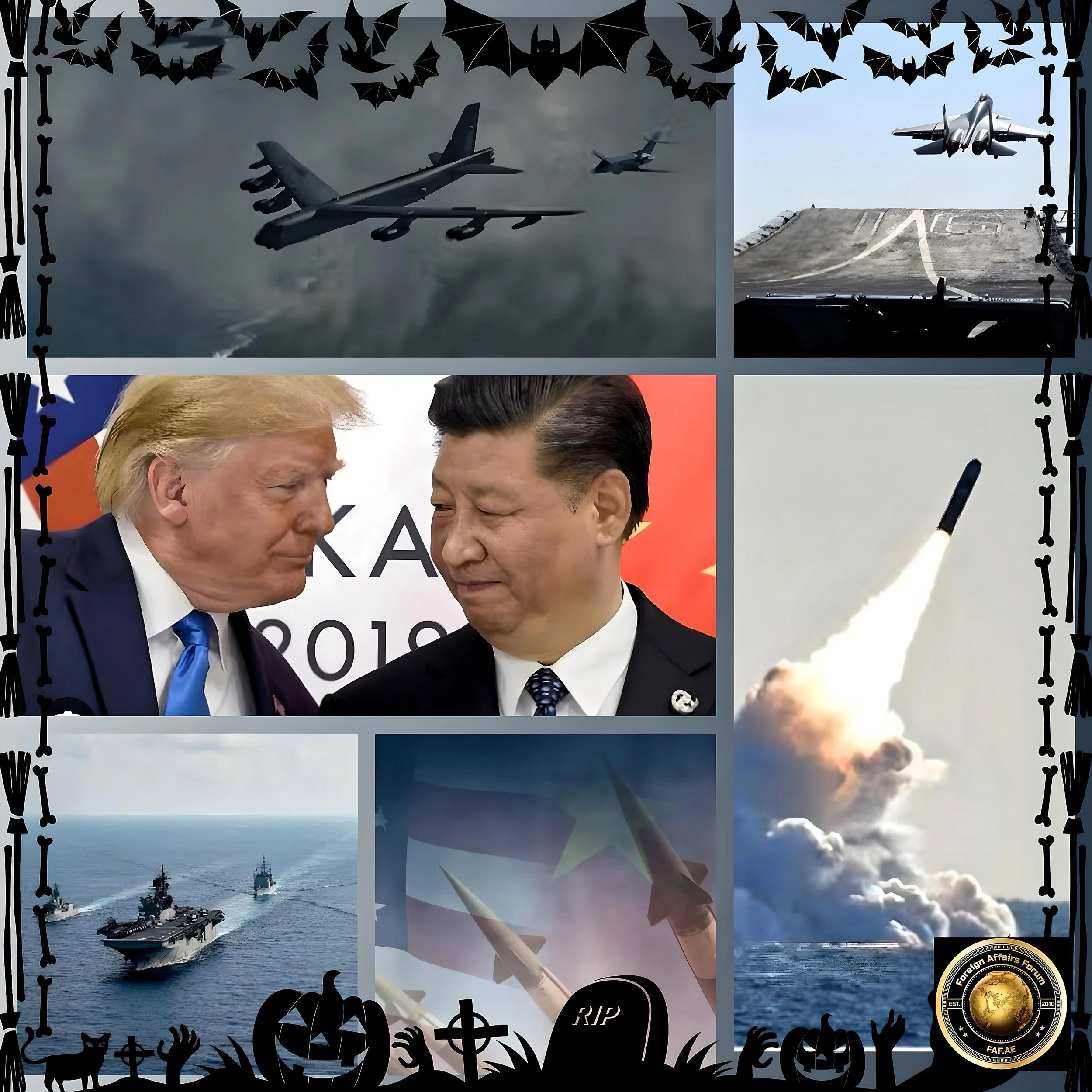
The intensifying military competition between the United States and China has become the defining feature of regional security dynamics. It has driven unprecedented increases in defense spending across Asia and fundamentally altered threat perceptions among regional powers.
China’s military modernization has been particularly dramatic. Defense spending increased by 59 percent over the decade from 2015 to 2024, reaching an estimated $314 billion in 2024—a 7.0 percent increase from the previous year.
This represents the most significant year-on-year percentage increase in Chinese military spending since 2015 and continues an unbroken streak of growth spanning three decades.
China’s military development has focused on creating what defense analysts term an “anti-access/area-denial” capability designed to prevent U.S. forces from operating effectively in the region during a potential conflict.
The regional response to China’s military buildup has been swift and comprehensive, with Asian countries increasing their defense expenditures at rates not seen since the end of the Cold War.
Military spending in Asia and Oceania reached $629 billion in 2024, representing a 6.3 percent increase from 2023 and a 46 percent increase from 2015.
East Asia alone saw military expenditure jump by 7.8 percent in 2024 to $433 billion, reflecting heightening tensions across the region.
This militarization trend extends beyond simple spending increases to encompass fundamental changes in defense postures, procurement priorities, and strategic doctrines as countries seek to adapt to the new security environment.
Country-Specific Military Buildups
Japan’s defense transformation has been particularly striking. Military spending reached $55.3 billion in 2024, a 21 percent increase from 2023 and the most significant annual increase since 1952.
This dramatic expansion reflects Japan’s shift toward developing long-range strike capabilities and enhanced air defense systems, departing from its traditionally defensive military posture.
The Japanese government has explicitly linked this military buildup to concerns about China’s growing assertiveness, particularly regarding Taiwan and the broader East China Sea region.
Japan’s defense spending increase to 1.4 percent of GDP represents the highest level since 1958, signaling a fundamental reorientation of the country’s approach to national security.
South Korea has similarly ramped up its defense capabilities, spending $47.6 billion on its military in 2024, a 30 percent increase from 2015. This gives it the highest military burden in East Asia, at 2.6 percent of GDP.
South Korea’s military modernization has focused particularly on developing preemptive strike capabilities, including ballistic missiles and F-35A combat aircraft, as part of its response to perceived threats from North Korea and broader regional instability.
Taiwan has also significantly increased its defense spending, reaching $16.5 billion in 2024—48 percent higher than in 2015—while continuing to procure U.S.-made weapons and develop domestic defense systems.
These investments reflect Taiwan’s urgent need to strengthen its defensive capabilities in the face of increasing military pressure from China.
U.S. Strategic Positioning and Alliance Management
The United States has sought to maintain its position as the dominant military power in the Indo-Pacific through increased military presence, strengthened alliance relationships, and the development of new partnership arrangements designed to counter China’s growing influence.
U.S. military spending reached nearly $997 billion in 2024, with significant portions allocated to capabilities designed explicitly for potential conflict in the Indo-Pacific region.
Key investments include $61.1 billion for F-35 stealth fighters and their combat systems, $48.1 billion for new naval vessels, and $37.7 billion for nuclear arsenal modernization—all capabilities crucial in any potential confrontation with China.
The Biden administration also invested heavily in transforming the U.S. military posture in the region toward what officials describe as a “more mobile, distributed, resilient and lethal” configuration.
However, the return of Donald Trump to the presidency has introduced significant uncertainty regarding the reliability and consistency of U.S. security commitments in the region.
Trump’s embrace of “America First” policies and his questioning of the value of traditional alliance relationships have created anxiety among U.S. partners and allies about whether Washington can be a reliable security guarantor.
This uncertainty has been compounded by Trump’s expansionist rhetoric regarding Greenland and the Panama Canal, which has led some observers to speculate about his broader vision for international order and the role of great powers in regional spheres of influence.
The administration’s imposition of sweeping tariffs on China and U.S. allies has raised questions about American priorities and commitment to regional partnerships.
Alliance Strain and Adaptation
The strain on traditional U.S. alliance relationships has become increasingly apparent as regional partners grapple with questions about American reliability while facing growing pressure from China.
Trump’s questioning of security commitments to Japan, South Korea, and Australia, combined with his apparent lack of interest in Taiwan beyond its semiconductor industry, has forced these countries to reconsider their strategic assumptions and develop more autonomous defense capabilities.
This dynamic has paradoxically led to closer cooperation among U.S. allies as they seek to reduce their dependence on American security guarantees while maintaining deterrent capabilities against potential Chinese aggression.
The challenge for U.S. alliance management has been further complicated by the administration’s trade policies, which have imposed tariffs on key partners, including Australia, and threatened similar measures against Japan and South Korea.
These economic pressures threaten to undermine the political foundations of security cooperation by creating tensions between trade and security interests.
As one analyst noted, “Tariffs affecting Australia, or any current or future tariffs—especially increases against Japan and South Korea—would be detrimental to fostering a strong partnership with these nations.”
The resulting uncertainty has led regional countries to hedge their bets by strengthening relationships with other partners and developing more independent defense capabilities.
China’s Regional Assertiveness and Strategic Objectives
China’s approach to regional security has become increasingly assertive as its military capabilities have expanded, reflecting what Beijing views as legitimate exercises of sovereign rights but what many regional countries and the United States perceive as destabilizing coercion.
Chinese actions in the South China Sea, including militarizing artificial islands and using coast guard vessels to challenge other claimants’ activities, exemplify this more aggressive posture.
China’s military modernization has focused on developing capabilities that would enable it to impose high costs on U.S. forces in any potential conflict along China’s periphery, including advanced missile systems capable of temporarily shutting down U.S. bases and blocking aircraft carriers from entering China’s near seas.
These developments represent a fundamental challenge to the U.S.-dominated regional order that has prevailed since World War II.
Beijing’s strategic vision for the region differs markedly from the current U.S.-led system.
Chinese President Xi Jinping calls for a regional security architecture “by Asians for Asians” and describes the existing hub-and-spokes system as a relic of the Cold War.
This vision reflects China’s broader objective of establishing regional primacy and reducing U.S. influence in what Beijing considers its natural sphere of influence.
China has backed this vision with concrete actions, including expanding bilateral security partnerships, increasing military exercises in disputed areas, and developing alternative economic institutions that could eventually provide the foundation for a Sinocentric regional order.
Economic Leverage and Gray Zone Operations
China’s regional strategy extends beyond traditional military capabilities to encompass economic leverage and what analysts term “gray zone” operations—activities that fall below the threshold of armed conflict but serve to advance Chinese strategic objectives.
Economic pressure against countries that resist Chinese preferences has become a recurring pattern, as seen in various trade disputes and investment restrictions imposed on countries that have taken positions contrary to Chinese interests.
China’s economic integration with ASEAN countries has created dependencies that Beijing can potentially exploit to discourage opposition to its regional ambitions.
At the same time, it is difficult for these countries to align too closely with U.S. strategic objectives.
The gray zone operations have been particularly evident in the South China Sea. China has used coast guard vessels, fishing fleets, and maritime militia to assert its claims while avoiding direct military confrontation that might trigger alliance responses.
These tactics have proven effective in gradually altering facts on the ground while remaining below the threshold that would justify a military response from the United States or its allies.
The cumulative effect of these actions has increased Chinese control over disputed areas while demonstrating the limitations of existing deterrent mechanisms and alliance commitments.
Regional Responses and Security Adaptations
Asian countries have responded to intensifying great power competition through military modernization, diplomatic hedging, and the development of new security partnerships that provide alternatives to exclusive alignment with either the United States or China.
ASEAN countries, in particular, have found themselves in an increasingly difficult position as they seek to maintain profitable economic relationships with China while addressing security concerns arising from Chinese assertiveness in the South China Sea.
This has led to significant increases in defense spending across Southeast Asia, with countries like Indonesia, Thailand, Malaysia, and the Philippines all substantially expanding their military budgets and procurement programs.
The response pattern has varied significantly across the region, reflecting different threat perceptions, geographic positions, and economic relationships with the competing powers.
Countries with direct territorial disputes with China, such as the Philippines and Vietnam, have been more willing to strengthen security ties with the United States and other partners.
In contrast, countries like Indonesia and Malaysia have pursued more balanced approaches that avoid explicit alignment with either side.
Despite its small size, Singapore has emerged as a significant defense spender, reaching $11 billion in defense expenditure as it seeks to maintain its strategic position in an increasingly uncertain environment.
The Arms Trade and Technology Transfer
The changing security environment has also transformed the region's patterns of arms trade and technology transfer, with traditional suppliers challenging their positions and new opportunities emerging for middle powers.
Russia, which was historically the largest arms supplier to ASEAN with sales of $11 billion between 2000 and 2020, has seen its position severely weakened by the Ukraine conflict and associated sanctions.
This has created opportunities for other suppliers, particularly South Korea, which has become an attractive alternative for many Asian countries seeking advanced military capabilities at competitive prices.
South Korea’s defense exports increased by 12 percent, with significant sales to Poland, the Philippines, and India.
The shift in arms trade patterns reflects broader changes in how regional countries approach defense procurement, with many seeking to diversify their supplier relationships to avoid excessive dependence on any single country.
Despite being the world’s largest arms importer, India has increasingly emphasized domestic defense production, with 75 percent of its capital outlay earmarked for domestic procurement.
This trend toward defense indigenization reflects concerns about supply chain reliability and the desire for greater strategic autonomy in an uncertain international environment.
The technology transfer requirements associated with these procurement decisions also reshape industrial relationships and create new forms of defense cooperation that extend beyond traditional alliance structures.
Communication Channels and Diplomatic Efforts
Despite the intensifying competition between the United States and China, both countries have recognized the importance of maintaining communication channels to prevent misunderstandings and manage the risk of unintended escalation.
The restoration of military-to-military communications, which had been severed following then-House Speaker Nancy Pelosi’s visit to Taiwan in August 2022, represents a crucial step in this direction.
High-level meetings between defense officials from both countries resumed in January 2024 with the China-U.S. defense policy coordination talks at the Pentagon, marking the first formal in-person encounter between the two militaries since January 2020.
These diplomatic efforts have yielded some concrete results, including establishing new communication protocols and resuming regular exchanges between military commanders.
U.S. Defense Secretary Lloyd Austin and his Chinese counterpart Dong Jun met in Singapore in May 2024.
They agreed to resume telephone conversations between military commanders “in the coming months” and established plans for a “crisis-communications working group” by the end of the year.
Admiral Samuel Paparo of U.S. Indo-Pacific Command and General Wu Yanan of the People’s Liberation Army’s Southern Theater Command held talks via video conference, marking an essential step in restoring operational-level communications.
Challenges to Sustained Dialogue
However, these diplomatic efforts face significant obstacles from fundamental disagreements over core issues such as Taiwan and the South China Sea.
Chinese officials have made clear that military-to-military relations cannot be fully normalized while these underlying political disputes remain unresolved.
Chinese defense spokesman Wu Qian noted that “it was not possible for Beijing and Washington to solve all bilateral problems in one meeting.”
The Taiwan issue remains particularly contentious, with China viewing it as a “pure internal affair.”
At the same time, the United States maintains its commitment to providing defensive weapons to Taiwan and preserving the cross-strait status quo.
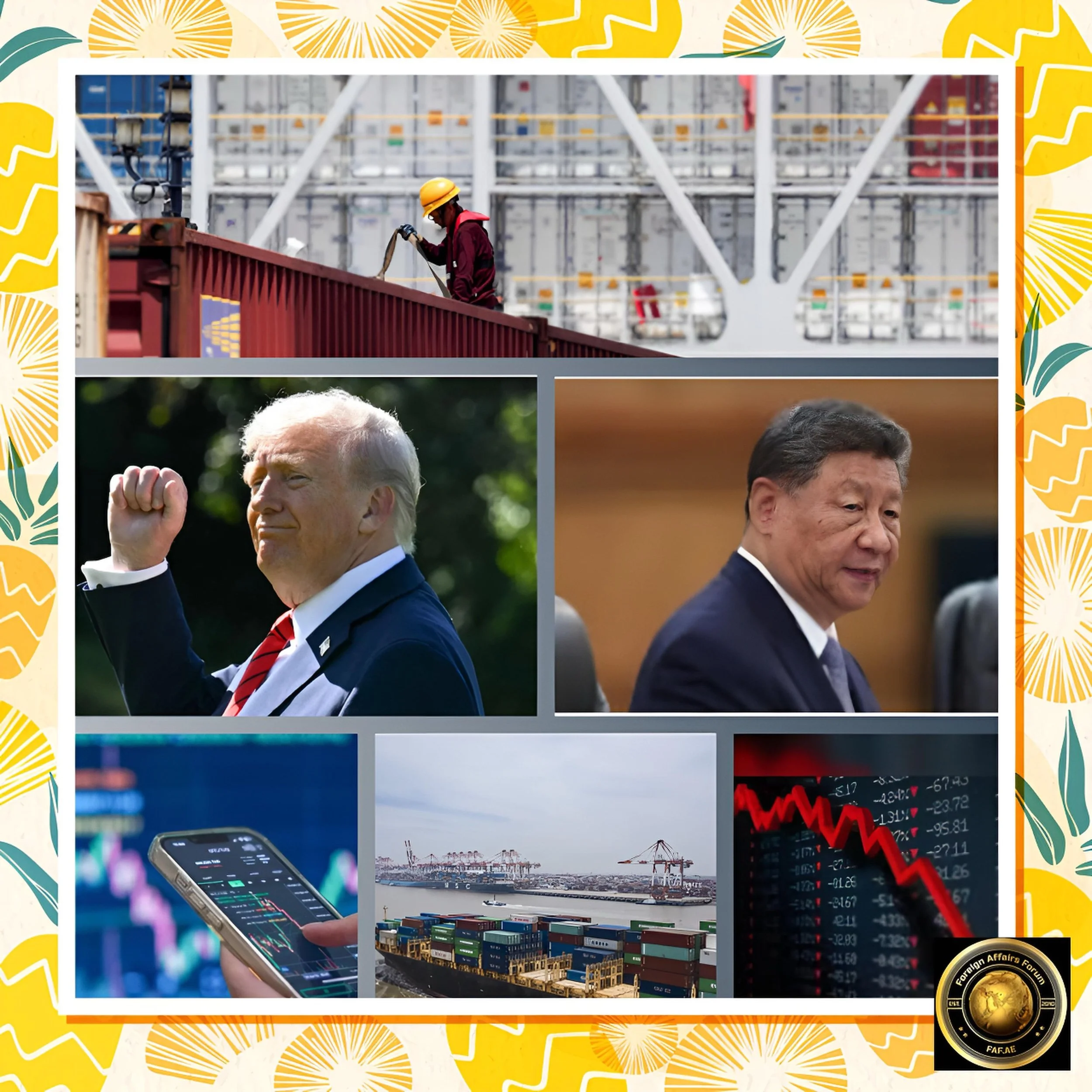
Economic tensions have also complicated diplomatic efforts, particularly Trump’s imposition of sweeping tariffs on China and U.S. allies on what the administration termed “liberation day.”
These trade measures have created additional friction that makes military-to-military cooperation more difficult to sustain, even as both sides recognize the importance of preventing military incidents that could spiral into broader conflict.
Both countries must compartmentalize their competition sufficiently to allow for meaningful cooperation on crisis management while pursuing their broader strategic objectives in the region.
Economic Dimensions of Security Competition
The security competition between the United States and China has increasingly extended into the economic realm, with both countries using trade policy, investment restrictions, and technology controls as tools of strategic competition.
The Biden administration’s Indo-Pacific Economic Framework (IPEF) attempted to provide an economic counterweight to China’s growing influence in the region, though its exclusion of Taiwan highlighted the complex political calculations involved in economic diplomacy.
The framework aimed to strengthen supply chain resilience, promote clean energy transitions, and enhance digital connectivity among participating countries.
However, it was criticized for lacking the market access provisions that would make it truly attractive to potential partners.
Trump’s return to the presidency has introduced additional uncertainty into the economic dimensions of regional competition.
His administration’s imposition of tariffs on both China and U.S. allies has created new tensions that complicate alliance relationships.
The trade measures have forced regional countries to navigate between their security relationships with the United States and their economic interests, which often favor continued engagement with China despite security concerns.
This dynamic has been particularly challenging for countries like Australia, which has faced economic pressure from China in recent years but also faces U.S. tariffs on key exports.
Technology Competition and Supply Chain Security
The competition for technological advantage has become a central feature of U.S.-China rivalry, with implications that extend far beyond bilateral relations to affect the entire regional economy.
Both countries have sought to secure advantages in critical technologies such as semiconductors, artificial intelligence, and advanced manufacturing while simultaneously attempting to deny these capabilities to their competitor.
The AUKUS agreement, which includes provisions for sharing advanced submarine technology and artificial intelligence capabilities, exemplifies how security partnerships are increasingly focused on technological competition.
Regional countries are under pressure to take sides in this technological competition, which can have consequences for their economic development and integration into global supply chains.
The emphasis on supply chain security has led many countries to reconsider their economic relationships and pursue greater diversification to reduce vulnerabilities arising from excessive dependence on any single supplier.
This has created opportunities for middle powers to enhance their economic positions by providing alternative sources of critical goods and technologies while increasing the costs and complexity of international trade.
The long-term implications of this trend toward economic fragmentation remain unclear. Still, it appears likely to result in a more regionalized global economy with distinct spheres of economic influence aligned with security partnerships.
Conclusion
The transformation of the Indo-Pacific security architecture represents one of the most significant geopolitical developments of the 21st century, with implications that extend far beyond the region and affect global stability and prosperity.
The intensifying competition between the United States and China has unleashed forces reshaping alliance structures, driving unprecedented military buildups, and creating new patterns of cooperation and conflict that challenge traditional approaches to international security.
The resulting militarization of the region, evidenced by the 46 percent increase in military spending from 2015 to 2024, reflects deep-seated concerns about the sustainability of existing security arrangements and the reliability of outstanding power commitments.
The search for a new equilibrium in this transformed environment requires careful management of escalation risks while addressing the legitimate security concerns of all regional actors.
Restoring military-to-military communications between the United States and China is an important step in this direction.
Still, much more will be required to establish stable patterns of competition that avoid the risk of catastrophic conflict.
Regional countries will continue to pursue hedging strategies that combine enhanced defense capabilities with diversified partnerships, creating a more complex but potentially more resilient security architecture than the bipolar arrangements that characterized the Cold War period.
The ultimate success of efforts to establish a stable regional order will depend on the ability of the United States and China to find ways to compete without undermining the foundational interests that both countries share in regional stability and prosperity.
This will require not only the development of better crisis management mechanisms but also a broader recognition that the costs of uncontrolled competition far exceed any benefits that might be gained from regional dominance.
For smaller regional countries, the challenge will be to maintain sufficient agency to protect their own interests while contributing to the collective effort to prevent the current competition from escalating into open conflict.
The stakes could not be higher, as the failure to manage this transition effectively could have consequences that extend far beyond the Indo-Pacific to affect global security and economic prosperity for decades to come.