China’s Challenge to U.S. Extended Deterrence in the Indo-Pacific: Erosion of America’s Security Architecture
Introduction
The Indo-Pacific region is witnessing an unprecedented challenge to the foundation of American security guarantees as China employs an increasingly sophisticated strategy to undermine U.S. extended deterrence commitments to its allies.
Beijing.Forum reports by combining gray zone tactics, economic coercion, diplomatic pressure, and military provocations, Beijing is systematically working to decouple the United States from its regional partners while testing the credibility of Washington’s security promises.
This comprehensive assault on extended deterrence represents not merely tactical harassment but a fundamental challenge to the post-World War II security architecture that has underpinned regional stability for decades.
The deployment of advanced U.S. missile systems to the Philippines and China’s vigorous response exemplifies how this strategic competition is escalating, with profound implications for regional security, alliance relationships, and the broader balance of power in the Indo-Pacific.
The Historical Foundation and Evolution of Extended Deterrence
Extended deterrence emerged as a cornerstone of U.S. foreign policy during the early Cold War when the United States faced the challenge of protecting numerically inferior Western European allies against Soviet conventional forces.
The concept, defined as “a commitment to deter and, if necessary, to respond across the spectrum of potential nuclear and non-nuclear scenarios in defense of allies and partners,” has served both to deter potential aggressors and provide reassurance to allies, partly to prevent them from developing nuclear weapons of their own.
In the Asia-Pacific context, U.S. extended deterrence has been operationalized through bilateral security treaties established in the 1950s, including agreements with Japan, South Korea, Australia, the Philippines, and Thailand.
This “hub and spokes” system fundamentally differs from NATO’s collective defense framework, relying primarily on bilateral relationships rather than multilateral institutions.
The United States maintains approximately 100,000 forward-deployed personnel in the region, backed by the full range of capabilities available to U.S. Pacific Command.
The forward deployment of nuclear weapons, visible strategic asset deployments, and regular high-level consultations with allies enhanced the credibility of extended deterrence during the Cold War.
However, the post-Cold War era brought significant changes to this posture.
The United States withdrew most nuclear weapons from the region and retired systems like the Tomahawk nuclear sea-launched cruise missile, adapting to what appeared to be a more benign security environment.
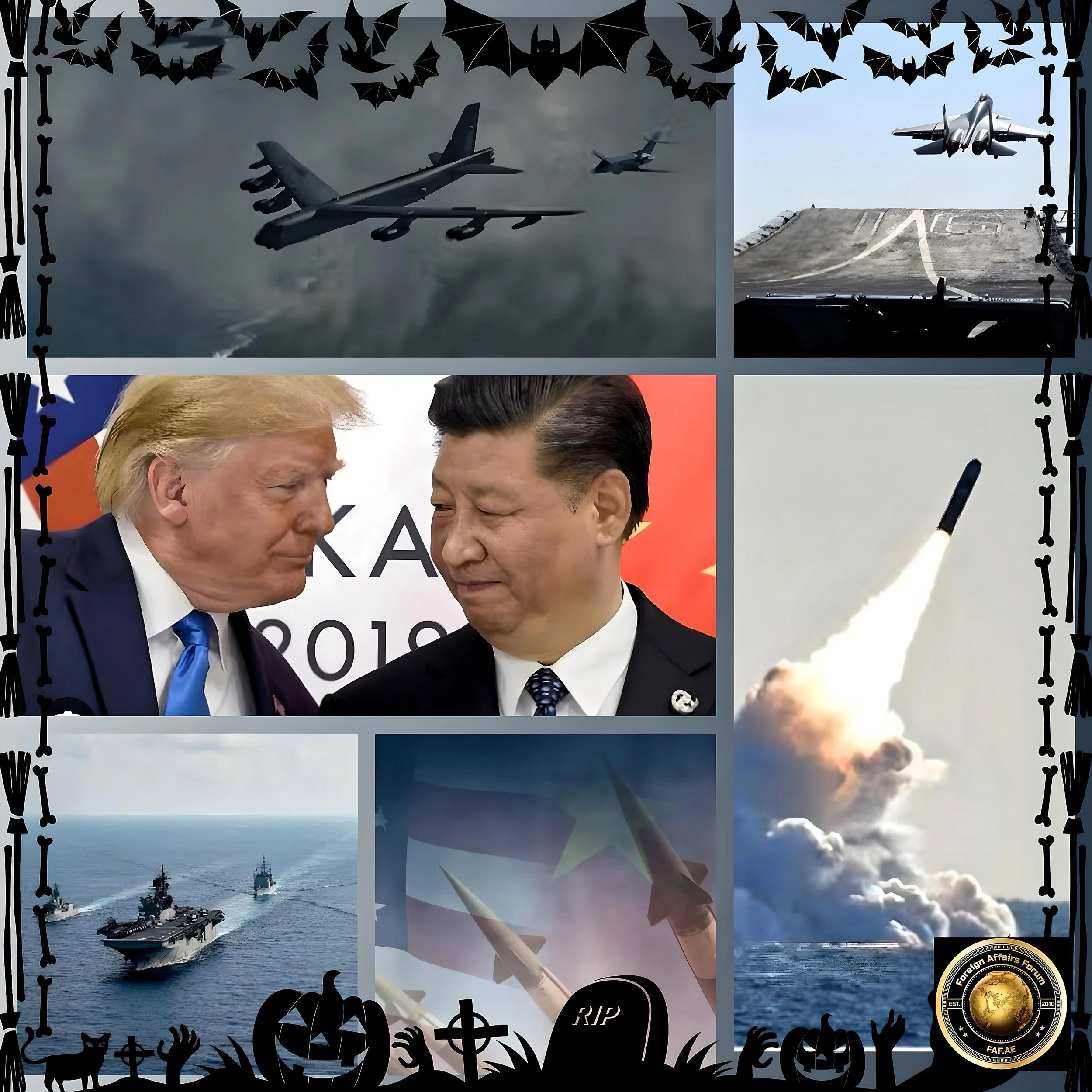
Unlike Europe, where U.S. tactical nuclear weapons remain deployed in several NATO countries, the Indo-Pacific relies primarily on “shows of force” through strategic bomber missions, ballistic missile submarine port visits, and forward positioning of nuclear-capable aircraft.
China’s Multi-Pronged Challenge to U.S. Extended Deterrence
Gray Zone Tactics and Maritime Coercion
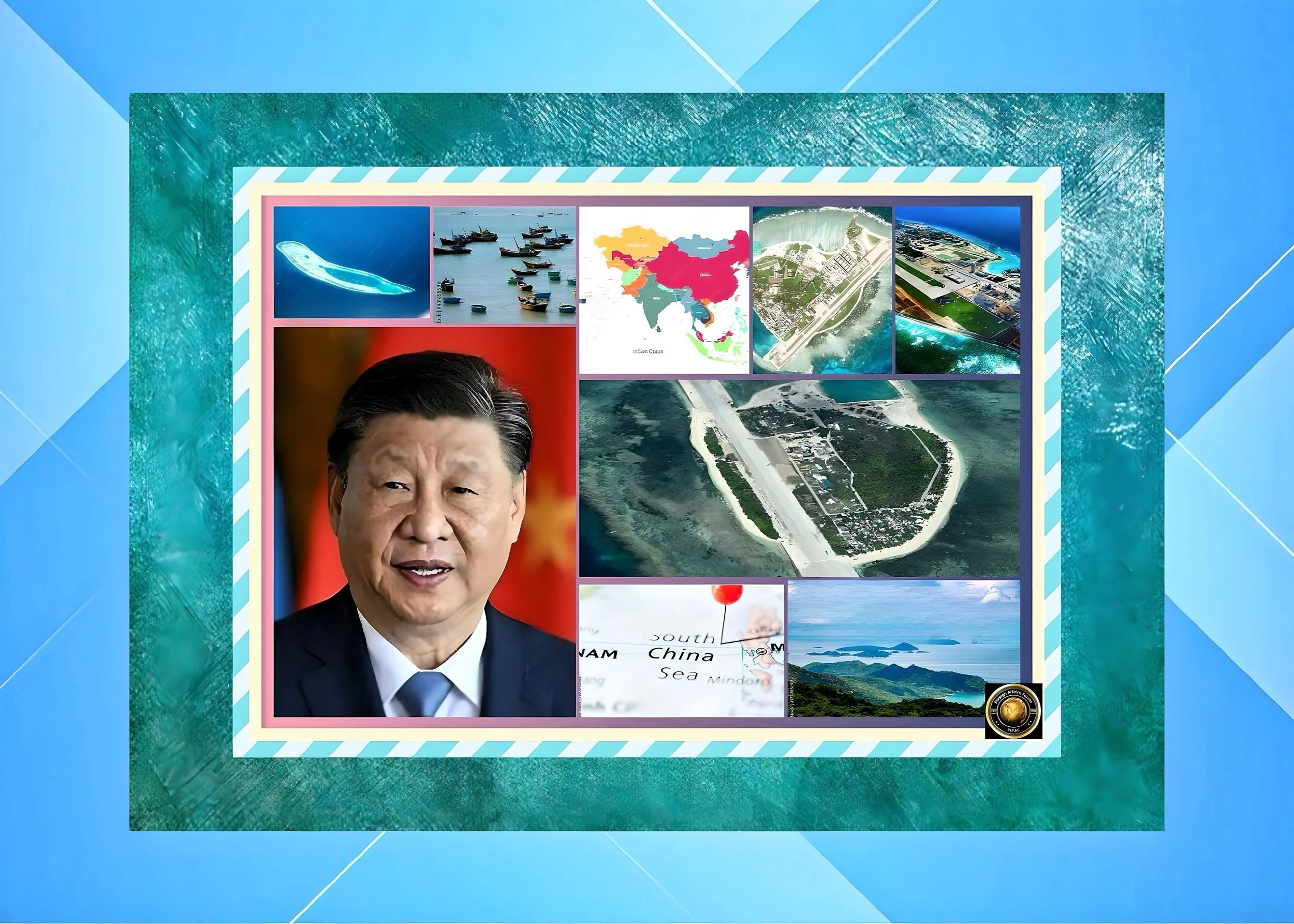
China has developed a sophisticated repertoire of gray zone tactics to achieve strategic objectives without triggering conventional military responses.
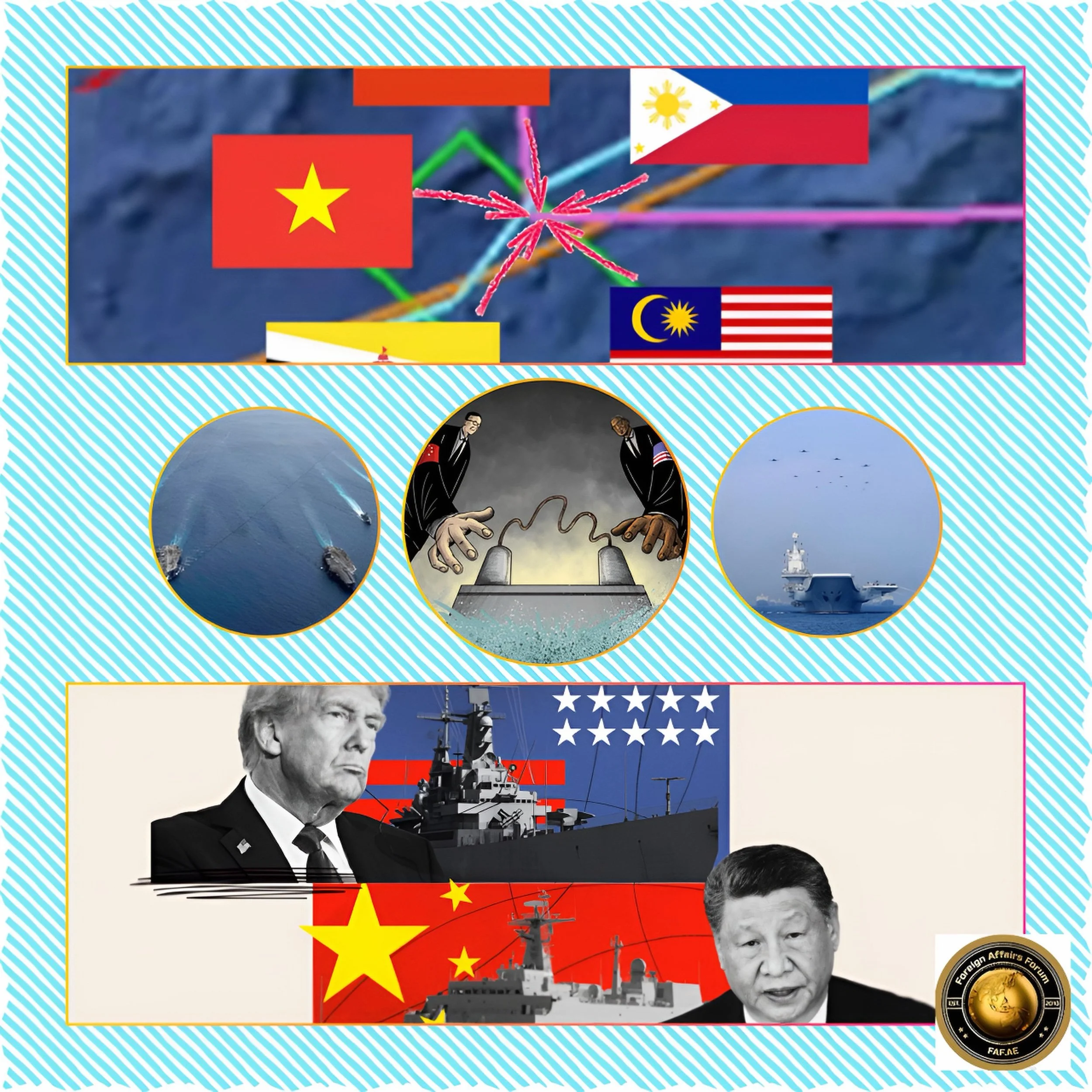
In the South China Sea, Chinese forces employ what analysts have identified as 18 core tactics, including bow-crossing, blocking, swarming, ramming, water cannoning, and the use of sonic and optical weapons.
These tactics enable Beijing to “gradually force other actors out of waters claimed by China while simultaneously avoiding all-out armed conflict.”
The systematic nature of these operations is evident in China’s approach to the Philippines, where “Chinese ships have consistently clashed with Philippine vessels in the South China Sea, at times using water cannons that resulted in injuries to crew members.”
Chinese law enforcement vessels, maritime militia, and civilian fishing fleets coordinate with People’s Liberation Army forces available “just over the horizon.” Still, they are typically not employed as direct instruments of coercion.
This approach allows China to establish “localized PRC advantages that can be sustained over time without precipitating an acute crisis.”
Economic Leverage and Coercion
China’s economic relationship with regional countries provides another avenue for undermining U.S. extended deterrence.
The Philippines exemplifies this vulnerability. China is its largest trading partner, importing $29.4 billion of goods in 2021, while the Philippines exported only $11 billion to China, creating an $18 billion trade deficit.
This asymmetric relationship gives Beijing significant leverage. Analysts warn that “China has a history of using trade as a weapon,” citing the 2012 banana import restrictions during the Scarborough Shoal dispute.
The challenge for U.S. allies is particularly acute because “China’s dominance as a manufacturing powerhouse makes it difficult for Philippine businesses to find alternative supplies.”
This economic dependence creates what experts describe as a risk of “economic coercion,” where Beijing can leverage trade relationships to pressure allies to distance themselves from U.S. security commitments.
Diplomatic and Narrative Warfare
China has intensified its diplomatic efforts to delegitimize U.S. extended deterrence arrangements.
Beijing has increased its efforts to undermine NATO’s nuclear deterrent as part of a broader campaign against U.S. security guarantees, including publishing reports accusing the United States and NATO of violating the Treaty on the Non-Proliferation of Nuclear Weapons.
Chinese officials consistently portray the United States as “a destabilizing influence in the region” and attempt to “sway American allies through economic incentives and sanctions.”
This narrative campaign extends to broader questions about the legitimacy of U.S. presence in the region.
Chinese leaders frame U.S. extended deterrence “not as a defensive strategy but part of a broader effort by the United States to contain and even roll back China’s rise,” dismissing the idea that extended deterrence exists because U.S. allies want it.
Instead, Beijing characterizes Washington’s strategy as “an imposition on Australia, Japan, South Korea, and others that, in Beijing’s view, belong in China’s rightful sphere of influence”.
The Typhon Deployment and Escalating Tensions
Strategic Significance of the Typhon System
The deployment of the U.S. Army’s Typhon intermediate-range missile system to the Philippines in 2024 represents a significant escalation in the U.S.-China strategic competition.
The Typhon system, capable of launching Tomahawk cruise missiles with a range of approximately 2,000 kilometers and SM-6 interceptors, can cover “not only the entire Luzon Strait but also reach the Chinese coast and various People’s Liberation Army bases in the South China Sea” from its position in northern Luzon.
This deployment marked “the first occasion since the Cold War’s conclusion that the U.S. provided such significant military equipment to an ally,” representing a fundamental shift in U.S. force posture in the region.
The system was initially deployed as part of the Salaknib 2024 joint military exercises, where Philippine troops were trained to handle and maintain the missile system.
However, it was not used in live-fire exercises.
China’s Vigorous Response
China’s reaction to the Typhon deployment has been swift and uncompromising.
Chinese Foreign Ministry spokesperson Guo Jiakun stated that China “will not sit idly by when its security interests are harmed or threatened,” warning that “countries in the region will by no means accept this move that goes against the trend of the times.”
Beijing characterized the deployment as severely damaging “peace and stability in the region” and harming “the legitimate security interests of other countries.”
The Chinese response goes beyond mere diplomatic protests.
Officials have warned that China would “not remain passive” if the Philippines did not dismantle the system, explicitly threatening consequences for Manila’s cooperation with U.S. military deployments.
China’s foreign ministry argued that the Philippines was “placing its national security and defense in the hands of others and introducing geopolitical confrontation and risk of the arms race into the region.”
Philippine Strategic Calculations
Philippine President Ferdinand Marcos Jr. has attempted to leverage the Typhon deployment as a bargaining chip with China.
He stated his willingness to withdraw the missiles if Beijing ceased its aggressive behavior in the South China Sea. “Let’s make a deal with China: Stop claiming our territory, stop harassing our fishermen and let them have a living, stop ramming our boats, stop water cannoning our people, stop firing lasers at us, and stop your aggressive and coercive behavior, and I’ll return the Typhon missiles.”
This approach reflects the complex position of U.S. allies, who are caught between their security dependence on the United States and their economic relationships with China.
The Philippines must balance maintaining its security partnership with the United States and managing Chinese retaliation's economic and diplomatic costs.
Credibility Gaps and Allied Concerns
Divergent Allied Perspectives
U.S. allies in the Indo-Pacific exhibit varying levels of confidence in American extended deterrence commitments.
Japan appears “relatively comfortable with the current environment,” while South Korea “feels vulnerable and requires increased assurance that the United States will uphold its extended deterrence commitments.”
These perspectives reflect threat perceptions and historical experiences with U.S. security guarantees.
South Korean concerns are particularly acute following recent North Korean provocations.
Many South Koreans “have concluded that deterrence has failed,” pointing to incidents like the sinking of the Cheonan and the shelling of Yeonpyeong Island as evidence that “if deterrence had been effective, the DPRK would not continue with its aggressive provocations.”
Some South Koreans question whether it is possible to deter North Korea at all since “they already seem to be able to do whatever they want to.”
The Taiwan Challenge
The U.S. policy of strategic ambiguity regarding Taiwan creates additional credibility challenges for extended deterrence in the region.
While the United States provides Taiwan with defensive capabilities, including over $2 billion in arms sales in 2024, it lacks the explicit political commitment that characterizes formal alliance relationships.
This ambiguity “muddies the credibility of US extended deterrence in the region” as “allies like Japan and South Korea see a lack of clarity regarding Taiwan and may question US commitments to their defense.”
Senior Japanese leaders have sought to reinforce U.S. commitments to Taiwan, with former Prime Minister Shinzo Abe stating that “a Taiwan emergency is a Japanese emergency, and therefore an emergency for the Japan-US alliance.”
However, the policy of strategic ambiguity creates uncertainty about whether Japan could be “counted on to support US efforts in a Korean conflict if faced with North Korean attempts at nuclear coercion.”
Nuclear Dimension Concerns
The credibility challenge extends to the nuclear dimension of extended deterrence.
Many South Koreans “doubt the credibility of US extended deterrence guarantees and do not believe that the United States would ever use a nuclear weapon,” pointing out that “the United States has not used a nuclear weapon in over 66 years and claim that it is unlikely that any would be used in defense of the ROK”.
The changing nuclear balance in the region exacerbates these concerns.
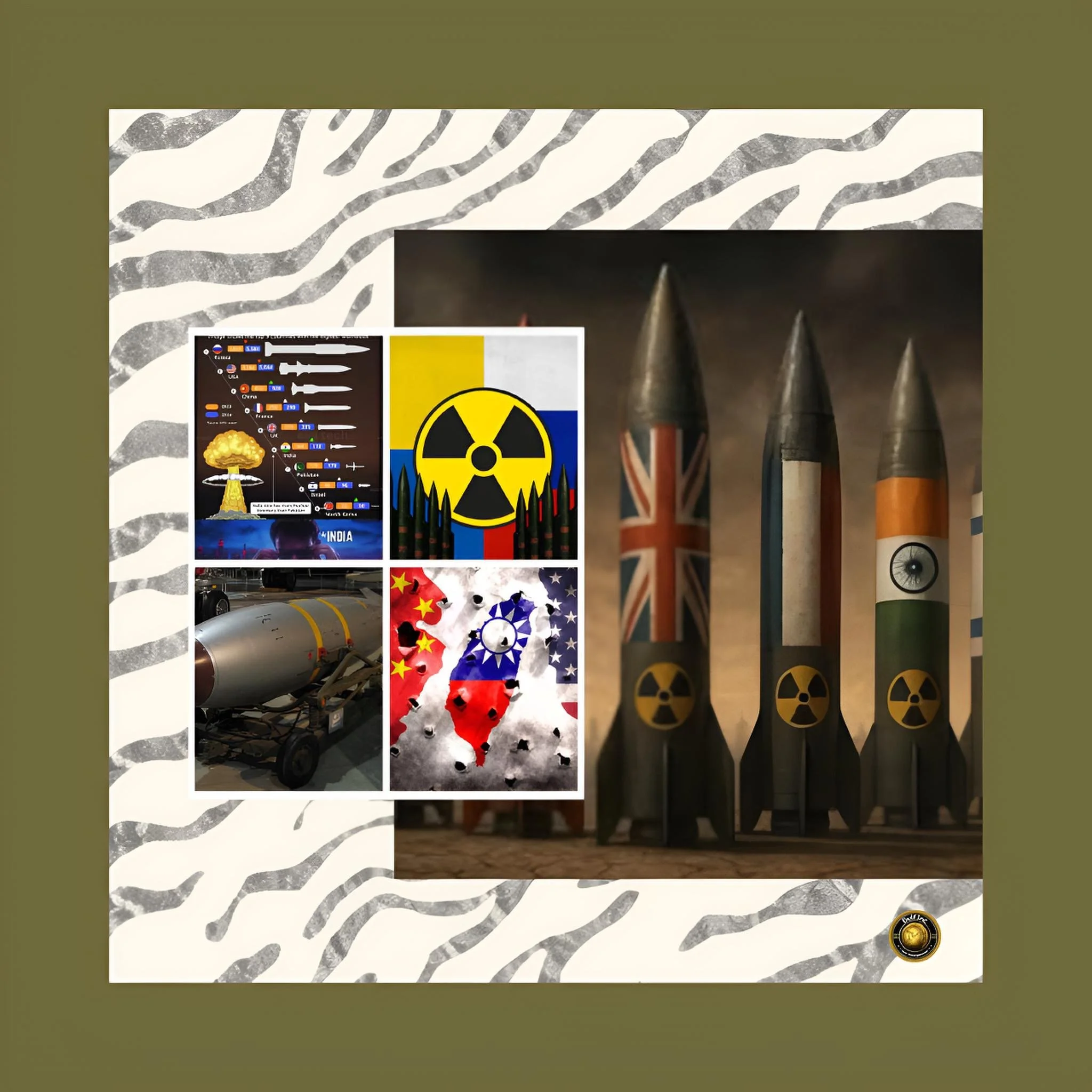
The U.S. Department of Defense estimates that “China could more than triple the size of its nuclear arsenal by 2035,” while North Korea continues to develop more sophisticated nuclear weapons technologies.
The “increasing alignment between nations like China, Russia, and North Korea is testing the foundations of U.S. extended deterrence, particularly in the Indo-Pacific.”
Strategic Implications and Response Options
Conventional Capabilities Enhancement
The United States is pursuing multiple approaches to strengthen extended deterrence credibility.
The Pacific Deterrence Initiative represents a key component of these efforts. With the fiscal year 2025 budget request of $9.9 billion, it proposes “targeted investments that enhance U.S. force posture, infrastructure, presence, and readiness as well as the capacity and capabilities of U.S. Allies and partners, specifically in the Indo-Pacific region.”
These investments include ballistic missile defense activities that contribute to developing an integrated Joint Missile Defense System for Guam's defense against ballistic, hypersonic, and cruise missile threats.
The initiative also emphasizes military construction improvements, logistical support operations, and enhanced communications throughout the region.
Collective Deterrence Framework
Experts increasingly advocate for moving beyond bilateral frameworks toward a more collective approach to deterrence.
The United States Studies Centre and Asan Institute workshop on “Allied Extended Deterrence” brought together experts from Australia, South Korea, Japan, and the United States to explore how these countries could “develop a more effective and integrated framework for extended deterrence in the Indo-Pacific.”
Key recommendations from this effort include demonstrating allies’ “latent capacity to host US tactical nuclear weapons” as a means of reinforcing extended deterrence without complete redeployment and considering NATO’s nuclear sharing arrangements as a potential model for the Indo-Pacific.
The experts emphasized that when properly coordinated, collective deterrence capabilities could “exceed the sum of their parts.”
Addressing Gray Zone Challenges
Responding to China’s gray zone tactics requires developing new approaches that address activities falling “below conventional thresholds of retaliation” that don’t “fit cleanly into existing laws or doctrines.”
The challenge is that these ambiguous activities “make it difficult for the US and its partners to coordinate a clear and unified response.”
Effective responses must balance deterrence with escalation management, ensuring that measures taken to strengthen deterrence align with the ultimate goal of preventing war.
This includes enhancing communication and consultation mechanisms with allies, as “clear and consistent communication with allies is crucial to reassure them of the US commitment to their defense.”
Conclusion
China’s challenge to U.S. extended deterrence in the Indo-Pacific represents a fundamental test of the post-World War II security architecture.
Through sophisticated gray zone tactics, economic leverage, and diplomatic pressure, Beijing is systematically working to undermine the credibility of American security guarantees while avoiding direct military confrontation.
The deployment of advanced U.S. missile systems like the Typhon to allied countries has intensified this competition, creating new flashpoints for U.S.-China tensions.
The success of China’s strategy depends mainly on its ability to exploit the inherent tensions in extended deterrence relationships, where allies must balance their security dependence on the United States with their economic relationships with China.
The varying confidence levels among U.S. allies in American commitments reflect these complex calculations and the changing strategic environment.
Moving forward, the United States must adapt its extended deterrence strategy to address new threats while maintaining alliance cohesion.
This requires enhancing military capabilities and force posture, developing new approaches to gray zone challenges, and strengthening the political and economic dimensions of alliance relationships.
The ultimate test will be whether the United States can maintain the credibility of its security guarantees in an era of great power competition while avoiding the escalation that both sides ostensibly seek to prevent.
Failure to meet this challenge could fundamentally reshape the Indo-Pacific security order, with profound implications for regional stability and American influence in the world’s most economically dynamic region.