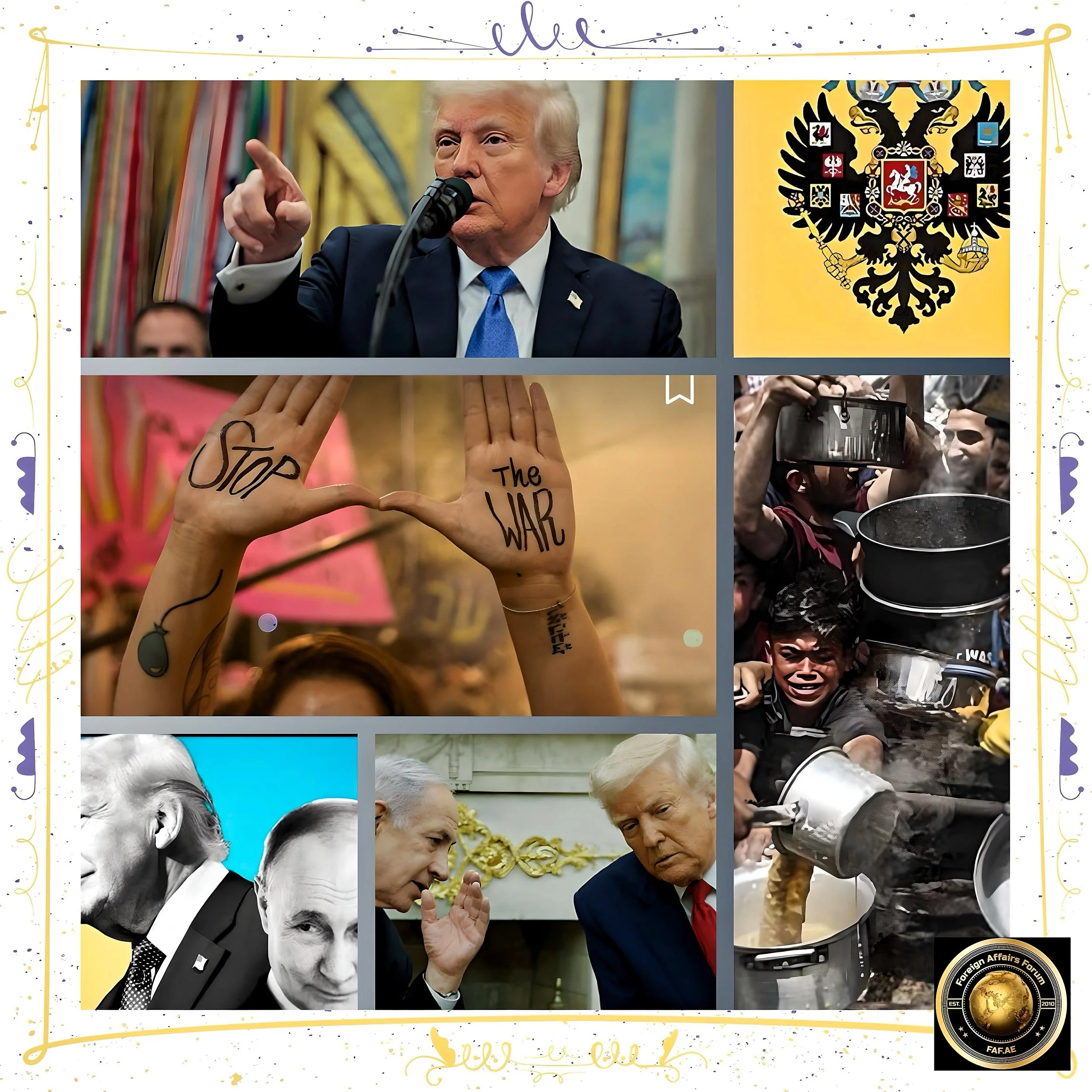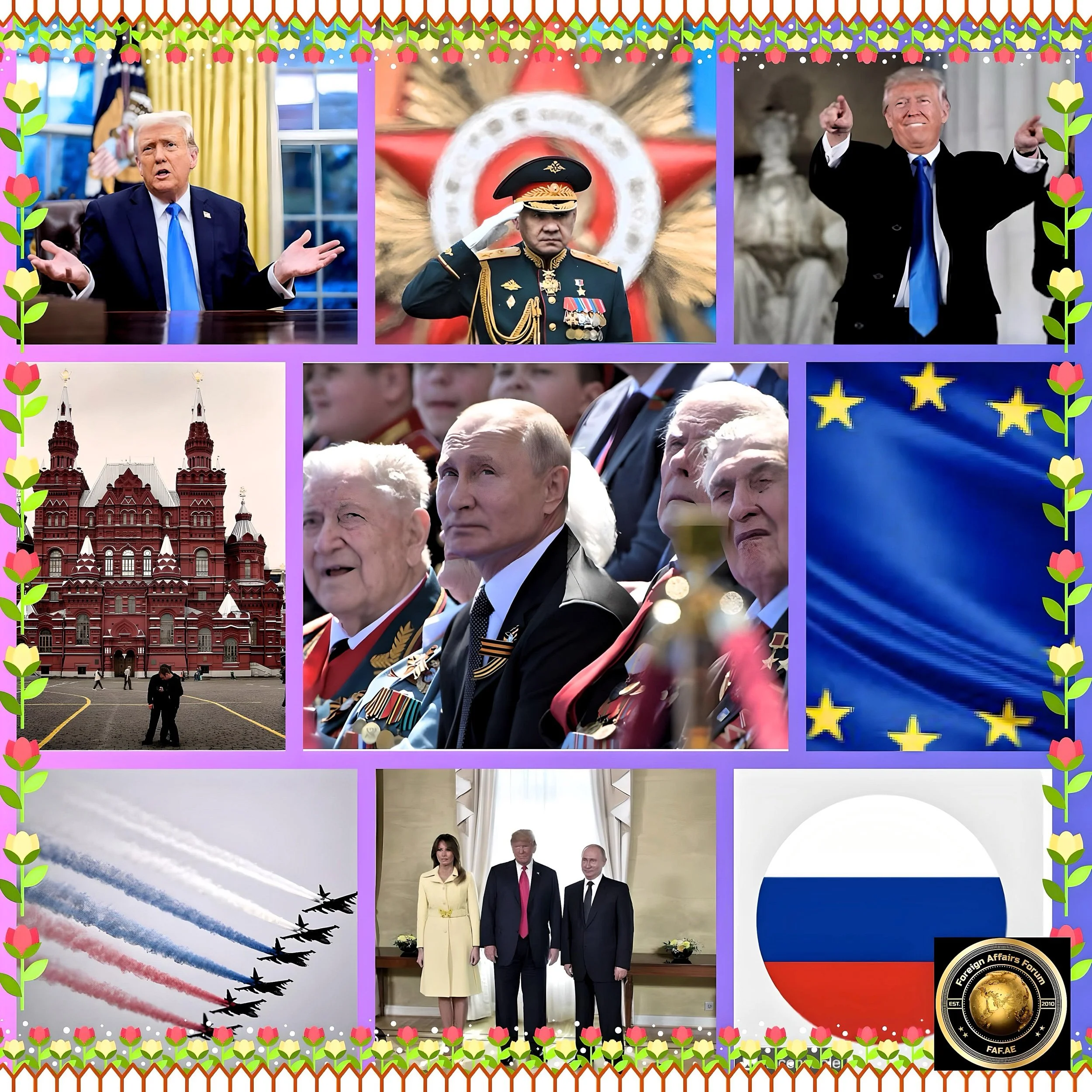
Contesting Russia: The Geopolitical Shift in US-Russia Relations During Trump’s Second Term
Introduction
The first months of Donald Trump’s second presidency have witnessed a dramatic realignment in US-Russia relations, characterized by direct diplomatic engagement, controversial peace initiatives for Ukraine, and shifting power dynamics in Europe.
The administration has departed significantly from conventional US foreign policy, pursuing a pragmatic but contentious rapprochement with Moscow while simultaneously implementing transactional deals that have alarmed traditional allies and raised questions about America’s strategic objectives.
This complex diplomatic dance has created opportunities and tensions as Russia responds cautiously to American overtures while pursuing its long-standing strategic goals.
Trump’s Strategic Recalibration of Russia Policy
The Trump administration has fundamentally “flipped previous policy toward Russia on its head” during its first 100 days in office, breaking Russia’s previous isolation from the West in pursuit of a new diplomatic framework.
This shift represents a deliberate strategic calculation rather than mere ideological affinity, with China emerging as the central factor driving this reorientation.
Trump’s approach to Russia is deeply rooted in his transactional worldview, which perceives China as the more significant threat to American hegemony.
One analysis notes, “He considers China a more significant threat to US hegemony than Russia, a perspective rooted in his business-oriented mindset.
Trump perceives China as a significant economic competitor, exploiting trade agreements and intellectual property rights and directly affecting American businesses and interests. “
This perspective has driven the administration to pursue a strategy different from its predecessors.
The underlying logic appears that continued antagonism toward Moscow only strengthens the Sino-Russian partnership, which presents a more formidable challenge to US interests.
“By offering diplomatic and economic incentives to Russia, the Trump administration aims to weaken this partnership and prevent Beijing from leveraging Moscow’s resources in a future confrontation with the United States.”
This pragmatic approach significantly departs from the dual containment strategy that has characterized US foreign policy toward Russia and China for decades.
From Confrontation to Conditional Engagement
Despite this strategic pivot, the administration has pressured Russia through various means. Trump has indicated that “additional sanctions on Russia could be on the table if President Vladimir Putin does not agree to negotiate an end to the ongoing war with Ukraine.”
This suggests that while seeking improved relations, the US still uses economic leverage to influence Russian behavior.
The Ukraine Conflict: Central to US-Russia Negotiations
The war in Ukraine has become the primary focus of early US-Russia diplomatic engagement under Trump’s second term.
On February 18, 2025, American delegates led by Secretary of State Marco Rubio met with Russian counterparts led by Sergey Lavrov in Riyadh, Saudi Arabia, to discuss “improving Russia–United States relations and plans to end the war in Ukraine.”
This summit, which notably excluded Ukrainian and European representatives, followed a phone call between Trump and Putin on February 12, 2025.
Trump has progressively modified his campaign promise to end the war “in 24 hours,” setting a new goal to resolve the conflict within 100 days of taking office.
However, the approach has generated significant controversy, particularly regarding Ukraine’s role in negotiations about its future.
The Controversial Path to Peace
Several peace proposals have emerged from Trump’s circle.
Vice President J.D. Vance presented a plan to “freeze the conflict along current lines, creating a heavily fortified demilitarized zone, offering security guarantees to Ukraine and assuring Moscow that Ukraine would not join NATO.”
Other reports indicate that Trump’s approach involves “pressuring Kyiv to cede the annexed Ukrainian territories to Russia,” a position that has alarmed Ukrainian leadership.
The Washington Post reported that Trump’s proposal involves “pressuring Kyiv to cede the annexed Ukrainian territories to Russia,” indicating a willingness to accept Russia’s territorial gains as part of a peace settlement.
This approach has created tension with President Zelenskyy, with sources noting that “public disagreements between President Trump and President Zelenskyy have cast a shadow over these developments.”
The US-Ukraine Mineral Deal
A New Transactional Approach
The administration recently concluded a mineral rights deal with Ukraine, exemplifying Trump's transactional foreign policy.
Under this arrangement, “Washington and Kyiv will split all profits from licenses for new oil, gas and minerals mining in Ukraine in a mutual fund”.
While Ukraine contributes through mineral profits, the US can optionally allow Ukraine to purchase weapons through the fund, though there is no requirement to do so.
The deal has been characterized by Republican supporters as a “masterstroke” making “Ukraine a permanent partner to the United States”.
However, Russia has strongly criticized the arrangement, with Russian Security Council Deputy Chairman Dmitry Medvedev sarcastically praising Trump for making “the country that is about to disappear… use its national wealth to pay for military supplies”.
Russia’s Strategic Response
Calculated Cooperation
Moscow’s reaction to Trump’s overtures has been measured and strategic.
The Kremlin is “playing along with Washington’s ceasefire diplomacy, hopes for a rapprochement, and deep skepticism of allies and partners”.
However, this cooperation appears to be driven by specific strategic objectives rather than genuine alignment with American interests.
Russia aims to achieve “two long-standing, strategic goals-dominion over Ukraine and the weakening of US power, especially in Europe”.
Putin sees an opportunity in the current diplomatic environment, where “the United States creates geopolitical shockwaves in Europe”.
By engaging with Trump’s peace initiatives, Russia can pursue these objectives while potentially gaining relief from sanctions.
Shift in Russian Media Narrative
One notable development has been the dramatic shift in Russian state media coverage of the United States. “Once denounced as the enemy of Russia, the United States is now being celebrated” in Russian media.
High-profile commentators are highlighting “Donald Trump’s Common Sense approach” and believe “Europe is now isolated over Ukraine”.
This 180-degree turn in rhetoric has sparked anger among Russian hardliners.
A political analyst described “genuine shock among Russian hardliners” and noted that while there would be “anger,” “misunderstanding,” and “protest,” such dissent would likely remain “in kitchens and private conversations” rather than manifesting as public protest.
Implications for European Security Architecture
Trump’s Russia policy has created significant tensions with European allies.
The administration has “hinted at a broader retrenchment from Europe, helping plunge the transatlantic partnership-which has been the bedrock of US strategy toward Russia and its Soviet predecessor for the past eighty years-to new lows”.
European leaders fear that Trump views the war in Ukraine as “just one part of a bigger picture” in which he “wants to drastically improve US relations with Russia while forcing Europe into a subordinate position”.
There are concerns that Trump aims to make “European countries directly serve the interests of the United States” through increased defense spending, purchasing more American goods, and even surrendering territory deemed strategically important by Washington.
Russia’s European Security Ambitions
Russia is making demands similar to those at the outset of the Ukraine war in 2022, “including the withdrawal of US troops from NATO’s eastern border and the recognition of a Russian sphere of influence in its near abroad”.
For European officials, this is “terrifyingly compatible with Trump’s own desire to spend fewer American resources ensuring the security of Europe”.
Putin’s recent offer of talks in Istanbul may be an attempt to capitalize on these tensions. The BBC reports that “by suggesting direct talks in Istanbul, President Putin is signaling to the White House: ‘I am a proponent of peace,’” while also noting this may be an effort to “create a rift between the US and Europe”.
Energy Politics
A Critical Dimension
Energy issues remain a central component of US-Russia relations.
On January 1, 2025, Russia’s energy giant Gazprom “halted the flow of natural gas to Europe through a long-standing pipeline that has carried Soviet and Russian gas through Ukraine for nearly six decades” after a key agreement expired.
This move affected several European countries that still rely on Russian gas, including “Austria, Hungary, Slovakia, and several Balkan countries”.
Meanwhile, the Trump administration has demanded “US control over a crucial pipeline passing through Ukraine that’s used to send Russian gas to Europe” as part of negotiations with Kyiv.
This reflects Trump’s broader energy ambitions, as he “has constantly advocated achieving energy dominance for the US,” which “could pave the way for heightened competition with Russia” in global energy markets.
Conclusion
A Precarious New Equilibrium
The evolving relationship between the United States and Russia under Trump’s second term represents a significant departure from post-Cold War norms.
While Trump pursues a pragmatic engagement with Moscow primarily aimed at countering China’s rise, Russia is strategically leveraging this shift to advance its own objectives regarding Ukraine and European security.
The current diplomatic dance carries both opportunities and risks.
If successful in achieving a ceasefire in Ukraine, it could reduce immediate suffering and potentially create space for broader diplomatic engagement.
However, the terms of such a peace may come at Ukraine’s expense and further erode European confidence in American security commitments.
As Putin remarked, “There is ongoing fighting war. We’re proposing to resume talks that were interrupted and not by us. What’s wrong with that?”
This seemingly reasonable position masks deeper strategic calculations as Russia continues to pursue its long-term goals while adapting to America’s changing approach.
Whether Trump’s transactional diplomacy can achieve lasting results where previous efforts failed remains to be seen, as the complex interplay of military pressure, economic incentives, and geopolitical maneuvering continues to shape this contested relationship.