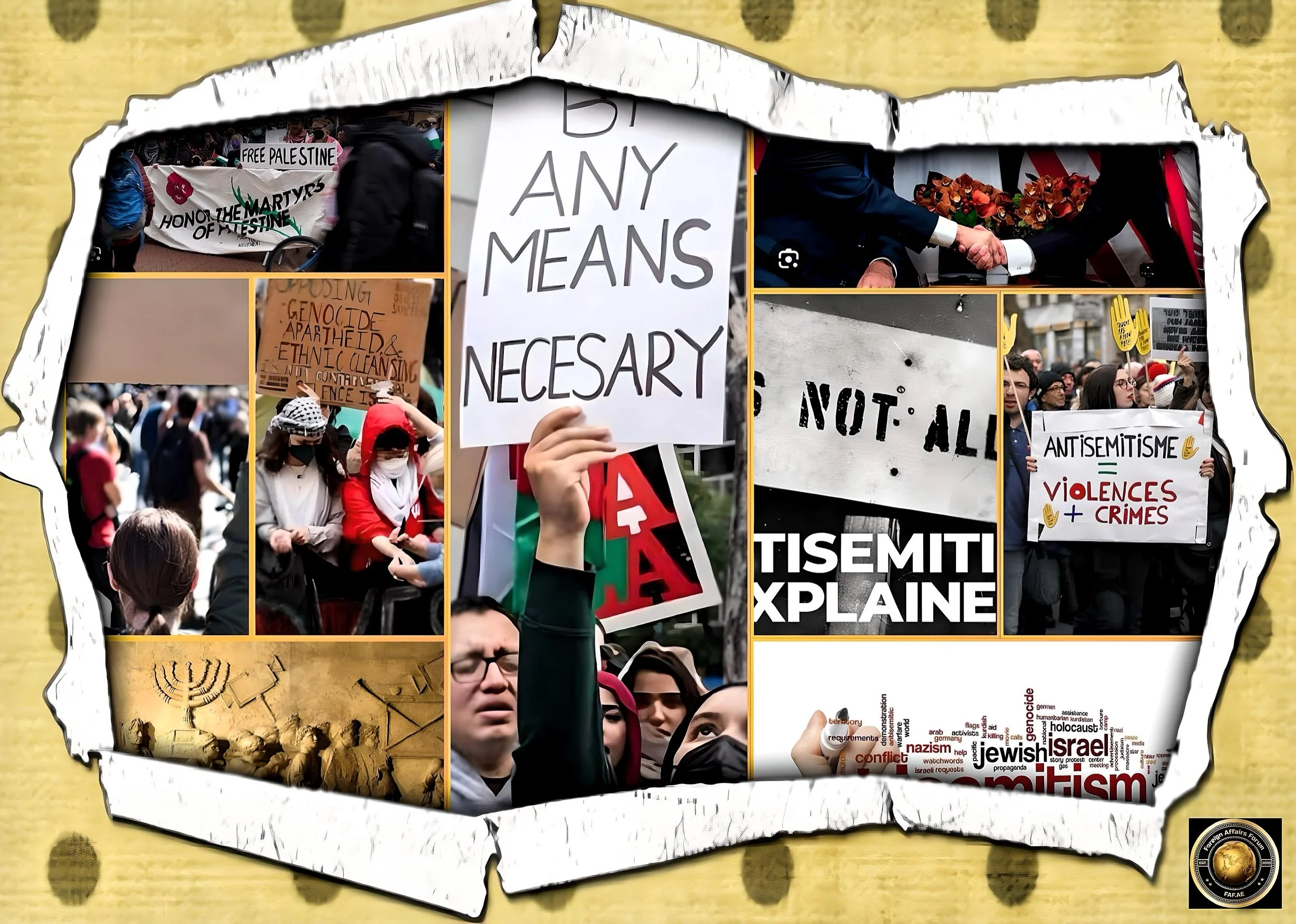
Understanding Antisemitism and Discrimination in America: Historical Trends and Current Challenges
Introduction
The assertion that antisemitism hasn’t been a significant issue in America over the past 35 years contradicts substantial evidence.
While discrimination against various groups has followed different patterns through changing administrations, recent years have seen unprecedented documented increases in antisemitism alongside ongoing challenges for other marginalized communities.
Historical Trends in Antisemitism and Discrimination
Contrary to the suggestion that antisemitism hasn’t been a significant issue in the US until recently, data shows it has been a persistent concern.
The FBI has been tracking hate crimes since 1991, with anti-Jewish bias consistently representing a disproportionate percentage of religiously-motivated hate crimes.
In 2023, despite Jews comprising only 2% of the US population, they were targeted in 68% of all reported religion-based hate crimes.
While discrimination against people of color has indeed been a persistent issue throughout American history, the data doesn’t support the notion that antisemitism is new or suddenly manufactured.
According to the ADL’s tracking system, which began in 1979, antisemitic incidents have fluctuated over decades but recently reached unprecedented levels.
The post-9/11 period did see a significant wave of discrimination and hate crimes against Arabs, Muslims, and those perceived to be Arab or Muslim.
As documented by Human Rights Watch, “Arabs and Muslims in the United States, and those perceived to be Arab or Muslim, such as Sikhs and South Asians, became victims of a severe wave of backlash violence.
The hate crimes included murder, beatings, arson, attacks on mosques, shootings, vehicular assaults and verbal threats”.
Recent Surge in Antisemitism
Recent years have seen a dramatic increase in documented antisemitism.
The Anti-Defamation League identified 9,354 antisemitic incidents in 2024, representing a 5% increase from 2023 and a staggering 926% increase since tracking began in 1979.
The FBI reported that in 2023, antisemitic hate crime incidents rose to 1,832, a sharp 63% increase from 2022 and the highest number ever recorded since the FBI began collecting this data.
Much of the recent surge has been connected to reactions following the October 7, 2023 Hamas attack on Israel.
According to the ADL, there were over 10,000 antisemitic occurrences since the attacks by Hamas on October 7, representing “the highest tally of such incidents recorded in a single year since the organization began monitoring in 1979”.
There is a growing concern among many American citizens regarding the recent developments in the Israel-Palestine conflict, particularly the situation in Gaza and the West Bank.
Reports indicate significant displacement of Gazans, leading to a humanitarian crisis that demands urgent attention.
The events of October 7, 2023, were indeed tragic, and the subsequent actions taken in response by Israel have resulted in substantial loss of life, with many casualties being women and children.
The human toll is alarming, and the number of individuals unaccounted for only heightens this concern.
There appears to be a heightened sense of global awareness and advocacy for the people of Palestine, although responses from world leaders have varied widely.
The complexities of this issue undoubtedly affect individuals connected to both sides, and tensions continue to rise as different perspectives are voiced.
It is essential that we engage in a thoughtful dialogue toward a peaceful resolution that prioritizes the well-being and dignity of all affected individuals.
Post-9/11 US Foreign Policy
US actions in Afghanistan, Iraq, and Libya following 9/11. The invasion of Afghanistan in 2001 was directly linked to the September 11 attacks, as the Taliban refused to hand over Osama bin Laden.
The 2003 invasion of Iraq was justified by the Bush administration based on claims about weapons of mass destruction and alleged ties to terrorist organizations, though these justifications have been contested. No evidence was found.
The connection to Libya is less direct, as major US military involvement there came much later (2011) and was related to the Arab Spring uprisings rather than 9/11 directly. Libya was pulled down on same grounds as Iraq by CIA.
Legislative Responses to Antisemitism
Recent legislative efforts like the Antisemitism Awareness Act direct the Department of Education to use the International Holocaust Remembrance Alliance’s (IHRA) definition of antisemitism when investigating antisemitic incidents on college campuses.
This bill passed the House with bipartisan support in 2024 but stalled in the Senate. With Republican majorities expected in both chambers of Congress in 2025, it’s anticipated the bill will pass.
The claim that there are no laws protecting people of color is inaccurate.
Various civil rights laws, including the Civil Rights Act of 1964 and its Title VI (which prohibits discrimination based on race, color, and national origin in programs receiving federal funding), provide legal protections for people of color.
The Antisemitism Awareness Act doesn’t create new protections but rather directs how existing civil rights laws should be interpreted regarding antisemitism.
US Support for Israel and Global Implications
US support for Israel has been a consistent feature of American foreign policy across multiple administrations, though with varying approaches.
President Biden has affirmed an “ironclad commitment to Israel’s security,” particularly following the October 7, 2023 Hamas attack.
However, this support has created tensions both domestically and internationally.
Gallup polling indicates shifting American attitudes, with sympathy for Israelis reaching a 25-year low in early 2025, though still higher than sympathy for Palestinians (46% vs. 33%).
This indicates a complex domestic landscape regarding Middle East policy.
Campus Tensions and University Funding
The controversy surrounding universities has intensified since October 2023. Harvard University’s adoption of the IHRA definition of antisemitism in January 2025 came after “bipartisan Congressional scrutiny against Harvard and other American universities since October 2023 for their students’ advocacy for Palestine”.
Student protests have included encampments “condemning universities’ complicity in the Gaza genocide and demanding they divest from Israeli companies and U.S. weapons manufacturers”.
Some advocates have called for funding cuts to universities perceived as inadequately addressing antisemitism.
In the Harvard settlement, one plaintiff rejected the agreement, promising to continue legal battles “to ensure Harvard’s endowment is taxed, its funds are withheld, and its faculty are properly disciplined”.
Current Public Perception of Religious Groups
Research shows Americans generally hold more positive than negative views toward Jews (35% favorable vs. 6% unfavorable), though this doesn’t capture the full experience of antisemitism.
A 2020 survey of Jewish Americans found perceptions of rising antisemitism in the United States, which aligns with the statistical increases reported by the FBI and ADL.
Conclusion
Rebuilding Trust and Addressing Discrimination
The path to rebuilding domestic and global confidence requires recognizing and addressing all forms of discrimination while maintaining balanced foreign policy.
The data shows that both antisemitism and discrimination against other groups remain significant challenges that must be addressed simultaneously rather than positioned in opposition to each other.
Moving forward, policymakers face the challenge of protecting Jewish Americans from rising antisemitism while also ensuring that efforts to combat antisemitism don’t infringe on free speech or ignore other forms of discrimination.
Similarly, in foreign policy, the administration must balance support for Israel’s security with humanitarian concerns in Gaza and broader regional stability.
The evidence doesn’t support a narrative of suddenly manufactured concern about antisemitism, nor does it suggest that focus on antisemitism has come at the expense of addressing other forms of discrimination.
Rather, the data points to genuine increases in antisemitic incidents that require serious attention alongside ongoing efforts to combat all forms of prejudice and discrimination.