Trump’s Self-Defeating Trade Policies: Modern Echoes of the Confederate Cotton Embargo
Introduction
In the brief months since President Donald Trump returned to office, his administration has implemented the most aggressive tariff regime in over a century, raising the US trade-weighted average tariff from 2% to an estimated 24%.
This dramatic shift in trade policy has drawn comparisons to historical protectionist measures, most notably the Confederate cotton embargo of 1861. This self-defeating policy undermined the very interests it sought to protect.
As Trump’s tariff war escalates, mounting evidence suggests his trade policies are similarly working against his stated economic objectives, creating a cascade of unintended consequences that threaten American businesses, consumers, and global economic standing.
Historical Parallels
The Confederate Cotton Embargo and Trump’s Tariff Strategy
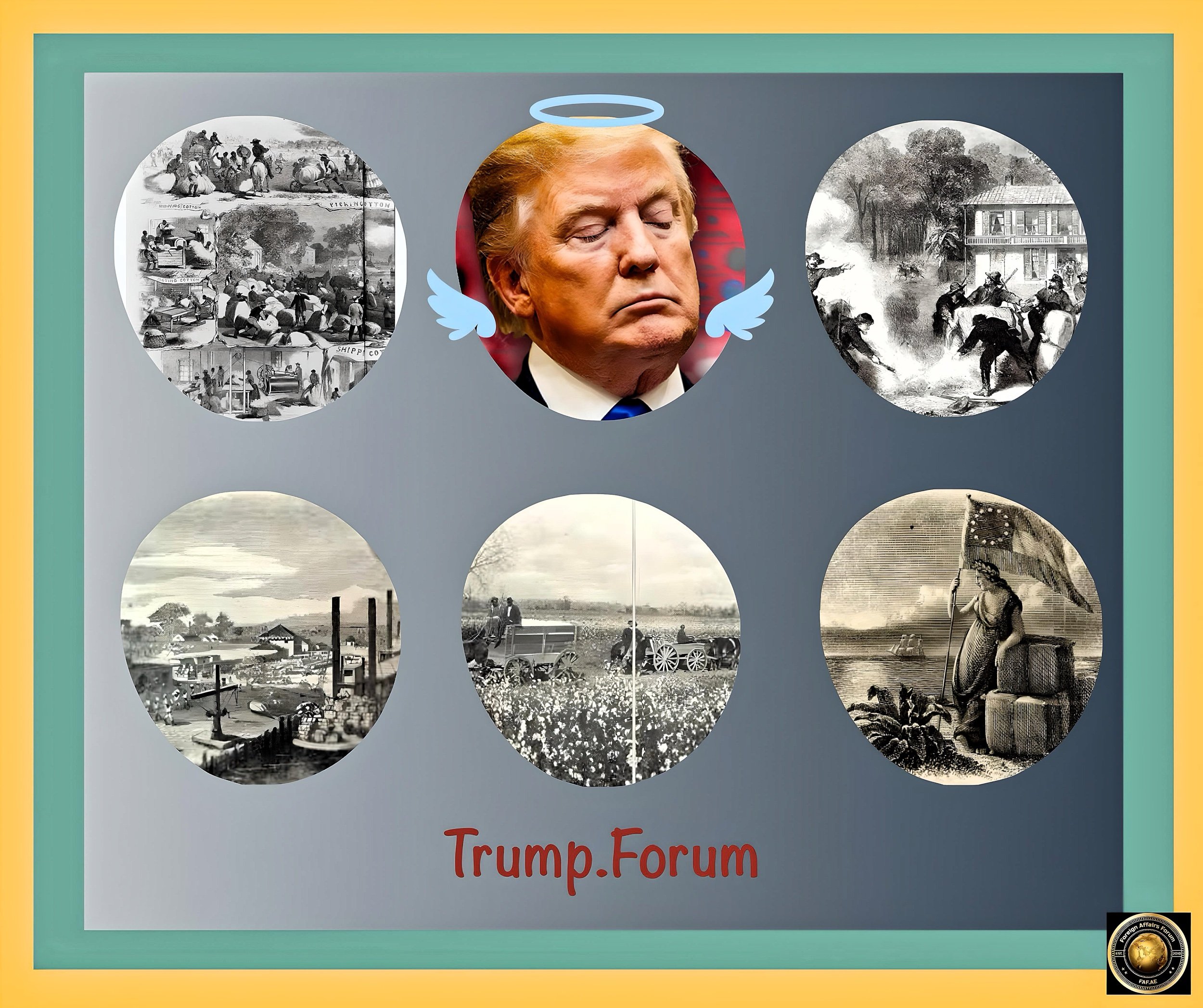
During the American Civil War, the Confederacy implemented what became known as “cotton diplomacy,” an attempt to coerce Great Britain and France into supporting their war effort by embargoing cotton exports.
Southern leaders, believing in the supremacy of “King Cotton,” were convinced that European dependence on Southern cotton would force diplomatic recognition and possibly military aid.
As Senator James Hammond declared in 1858, “No power on earth dares to make war upon it.
Cotton is king”. However, this strategy spectacularly backfired. Rather than compelling European support, the embargo accelerated the development of alternative cotton supplies in India, Egypt, and Brazil.
The self-embargo ultimately restricted the Confederate economy without achieving its diplomatic objectives.
Today’s tariff policies bear striking similarities to this historical miscalculation.
Trump has wielded tariffs with unprecedented breadth and aggression under the conviction that “tariffs are about making America rich again.”
Since January 2025, his administration has imposed a minimum 10% tariff on imports from all countries, escalated tariffs on Chinese goods to an effective 245%, and implemented 25% tariffs on steel, aluminum, and automobiles.
Like the Confederate leaders, Trump appears to be overestimating America’s economic leverage while underestimating the ability of trading partners to retaliate and adapt.
The Contradictory Logic of Trump’s Tariff Strategy
Conflicting Economic Objectives
President Trump’s tariff policy contains fundamental contradictions that undermine its effectiveness.
His goals include reducing trade deficits, protecting domestic industries, recovering manufacturing jobs, generating government revenue, and balancing the fiscal deficit. However, these objectives frequently conflict.
For instance, Trump has declared that tariffs will “make our country a fortune” through increased revenue.
Yet if tariffs successfully encourage domestic production as intended, Americans would purchase fewer imported goods, inevitably resulting in decreased tariff revenue.
This illustrates a fundamental tension in the policy’s design – it cannot simultaneously maximize domestic production and tariff revenue.
Similarly, during his campaign, Trump promised lower prices and a manufacturing revival, yet his tariff policy undermines both efforts.
Tariffs contribute to elevated prices, with major retailers warning of higher costs that will disproportionately impact lower-income Americans – ironically, a demographic that swung significantly toward Trump in the 2024 election.
Shifting Rationales and Implementation
The administration’s justifications for tariffs have been inconsistent and ever-changing.
Initially framed as measures to compel China, Mexico, and Canada to combat drug trafficking and illegal immigration, the tariffs were later justified to protect national security, reduce trade deficits, and create a “reciprocal” trading system.
This shifting rationale has created significant policy uncertainty, which economists identify as harmful to business investment and economic growth.
The implementation has been equally erratic.
On April 9, Trump announced on Truth Social that reciprocal tariffs above 10% would be paused for 90 days for all countries except China, just hours after they had taken effect.
This sudden reversal came after stock markets showed signs of crashing, suggesting the administration had not fully anticipated market reactions to its policies.
Such unpredictability further undermines the credibility and effectiveness of the tariff strategy.
Case Studies in Self-Defeating Trade Policies
The Boeing Debacle
Perhaps no example better illustrates the self-defeating nature of Trump’s tariff war than its impact on Boeing, America’s largest manufacturing exporter.
In response to Trump’s escalating tariffs, Chinese authorities ordered the country’s airlines not to place new orders for Boeing aircraft and to seek government approval before taking delivery of already-ordered planes.
The size of this blow is significant – industry analysts calculate that China’s orders amount to 5-6% of Boeing’s overall international order book.
With about 80% of Boeing’s production going overseas, the company is especially vulnerable to trade disruptions.
This development hit Trump particularly hard, prompting him to complain on Truth Social that China had “just reneged on the big Boeing deal.” The irony is that Trump’s tariff policy directly provoked the outcome he laments.
Steel Tariffs: Protecting the Few at the Expense of Many
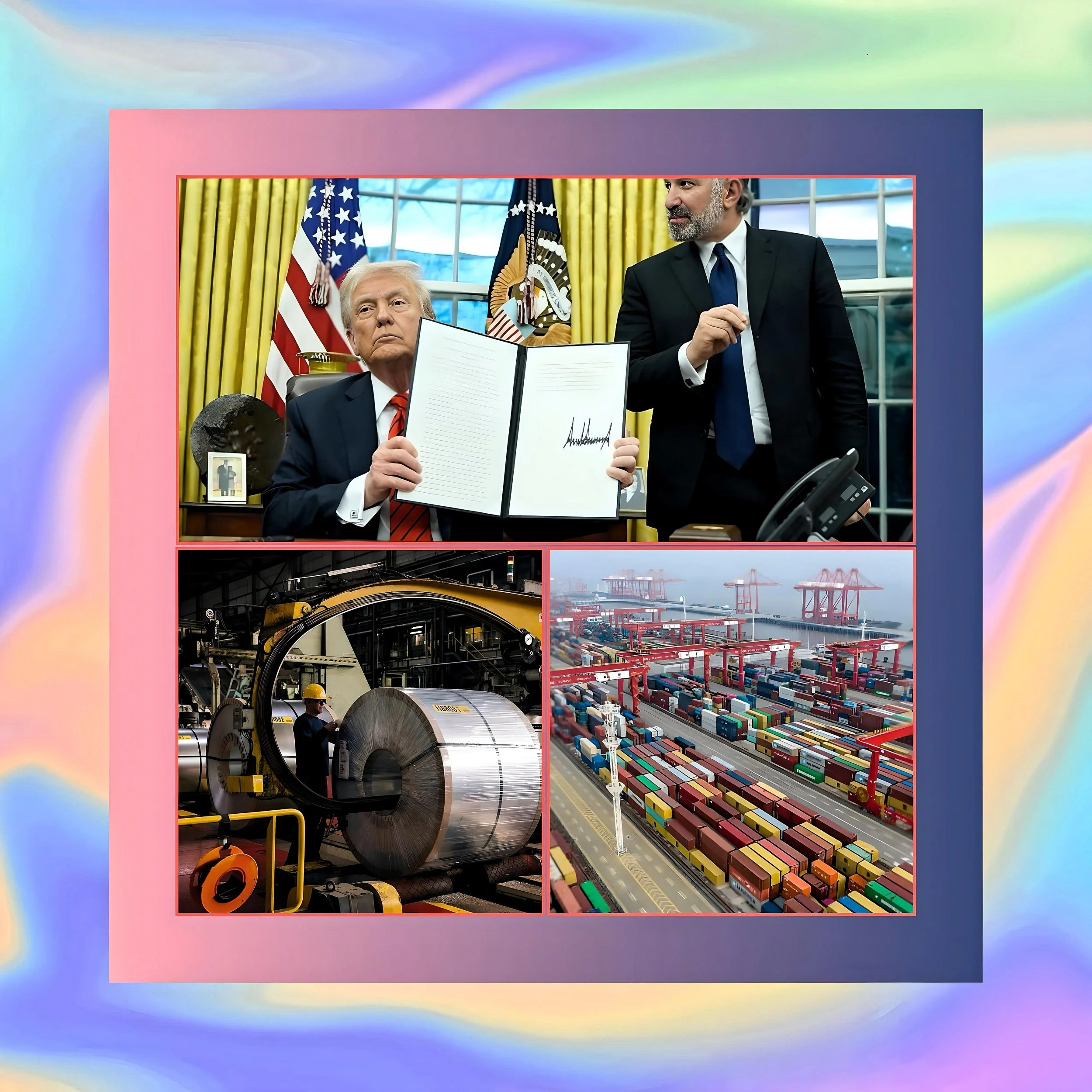
Trump’s global levies on steel and aluminum exemplify how tariffs intended to protect specific industries can harm the broader economy.
His similar 2018 tariffs created just 1,000 steel jobs and cost 75,000 jobs in steel-using industries.
The new, more comprehensive tariffs may boost US steel producers, supporting approximately 80,000 jobs, but they threaten a portion of 12 million jobs in industries that use steel and aluminum.
This imbalance illustrates a classic trade policy problem – concentrated benefits for a visible few versus diffuse costs spread across many.
While steel producers may benefit visibly from protection, the much more significant negative impacts on downstream industries receive less attention despite their greater economic significance.
Lumber Tariffs and Housing Costs
On March 1, 2025, Trump signed an executive order directing an investigation under Section 232 to determine if lumber imports threaten U.S. national security.
This investigation could lead to additional duties impacting imports of lumber products, a critical component in housing and construction.
Given that housing costs remain a primary public concern, tariffs on construction materials could significantly backfire.
The American softwood lumber industry reportedly has the practical capacity to supply 95% of 2024 U.S. consumption.
However, restricting imports would likely lead to price increases, further straining an already challenging housing market.
This illustrates how tariffs designed to protect one segment of the economy can have cascading adverse effects that undermine broader economic goals.
Economic Impact and Market Response
Market Volatility and Economic Uncertainty
The announcement of Trump’s tariff policies triggered significant market volatility.
Following the initial announcements, equity markets dropped rapidly, consumer and business confidence plummeted, and analysts cut growth forecasts.
When Trump later suspended some tariffs, stocks surged within minutes, with the S&P 500 rising more than 7%.
However, analysts remain skeptical about the economic outlook.
Citi warned, “We do not see the scenario as being as encouraging as markets do,” noting that the remaining tariffs still represent a substantial burden.
Despite the partial rollback, analysts at Bloomberg Economics estimated the US’s average effective tariff rate would still rise to 24% from 22% the previous year.
Pacific Investment Management maintained its estimate of a 50/50 chance of U.S. recession “even if the 90-day reprieve turns into a longer stint”.
Rising Inflation and Consumer Costs
Economists broadly agree that Trump’s tariffs – taxes paid by U.S. businesses and consumers – will lead to higher prices and slower growth.
Tariffs are already contributing to elevated prices, with long-term inflation expectations spiking to a three-decade high. This contradicts Trump’s campaign promise to lower prices for American consumers.
The impact will be particularly pronounced for everyday consumer goods. The BBC reports that the 245 % charge on some Chinese goods would take the cost of a $10 product to $34.50.
While the administration has exempted some electronics, such as smartphones and computers, from the reciprocal tariffs, they still face a 20% tariff if imported from China.
Foreign Responses and Global Repercussions
Retaliatory Measures
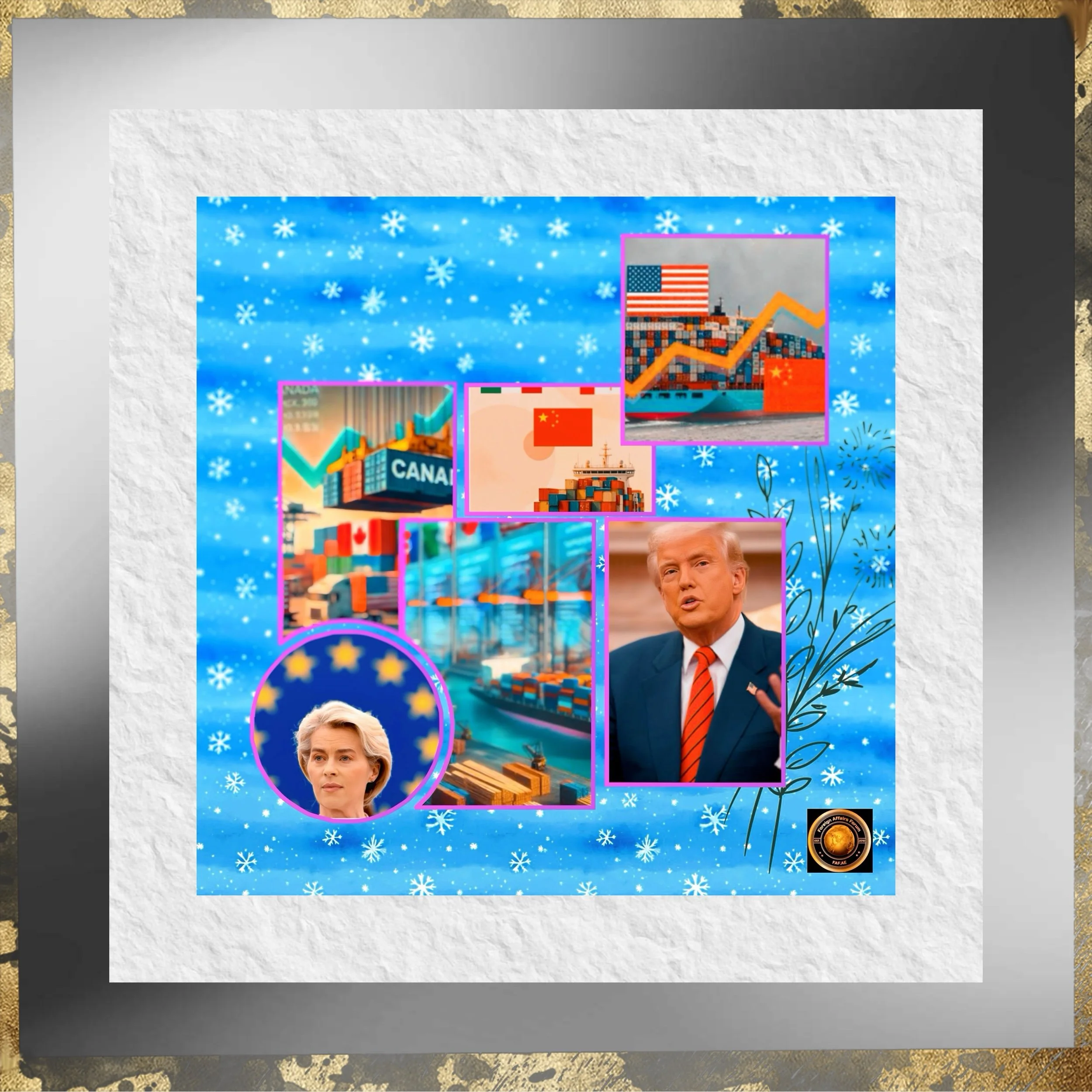
As economic theory predicts, major trading partners have responded to Trump’s tariffs with their retaliatory measures. China has imposed tariffs of up to 125% on US products.
The European Union voted to impose a 25% tariff on selected US products valued at approximately $23 billion.
Canadian Prime Minister Justin Trudeau announced tariffs on more than $100 billion of American goods, while Mexico also promised retaliatory measures.
These countermeasures target key US exports, particularly agricultural products. China imposed up to 15% tariffs on key U.S. farm exports and announced a 15% tariff specifically on U.S. chicken, wheat, corn, and cotton.
This echoes China’s targeting of American farmers during the previous trade war in Trump’s first term.
Shifting Global Trade Patterns
An unintended consequence of Trump’s China-focused tariffs is redirecting trade flows in ways that may not benefit the United States.
Oxford Economics noted, “There are strong incentives for Asian economies to export more to the U.S. given that China may be forced to vacate many U.S. import markets.”
This would increase these economies’ trade surpluses with the United States.
Among the biggest winners are “Singapore, Italy, Japan, South Korea, and Germany” – precisely some countries that Trump had previously criticized for maintaining trade imbalances with the United States.
This illustrates how tariffs targeting one country can shift trade patterns rather than address underlying structural issues.
The Neo-Mercantilist Doctrine
Trump’s approach represents a revival of mercantilist economic thinking, treating international trade as a zero-sum competition rather than a mutually beneficial exchange.
His trade policy aims to establish a “new global normality” defined by a U.S.-centered economic order. This doctrine elevates bilateral power plays over multilateral cooperation and national trade surpluses over global efficiency.
This shift introduces systemic uncertainty for global markets. Traditional macroeconomic signals become blurred as narratives diverge, and currency pricing becomes increasingly sensitive to political messaging, trade threats, and retaliatory actions.
The long-term consequence may be a fundamental revaluation of global risk perceptions.
Conclusion
The Price of Protectionism
President Trump’s trade policies are working cross-purposes with his stated economic goals.
Like the Confederate cotton embargo of 1861, these policies overestimate America’s economic leverage while underestimating both the costs to domestic interests and the ability of trading partners to adapt and retaliate.
The result is a strategy that threatens to destabilize the world economy without achieving its stated objectives.
The contradictions are increasingly apparent. Tariffs supposed to generate revenue are triggering market downturns that threaten economic growth.
Policies intended to protect American jobs harm industries that employ far more workers than those that are protected. Measures designed to pressure trading partners instead prompt retaliatory actions that close markets for American exporters.
As the Confederate leaders learned with their cotton embargo, economic coercion often backfires when trading partners have alternatives or can develop them.
Today’s global economy offers even more flexibility and adaptability than the 19th-century trade system.
While the full consequences of Trump’s tariff strategy are still unfolding, the historical parallel suggests caution about overestimating trade leverage and the wisdom of imposing self-defeating economic constraints.