Restoring Traditional American Values in an Era of Change: A Historical and Contemporary Perspective
Introduction
America’s journey from its founding to the present day has been shaped by specific core values and led by presidents who have, at their best, embodied these principles.
Many Americans today share concerns about perceived socio-economic and political instability domestically and globally.
This sense of unease has sparked reflection on traditional American values and the question of whether returning to these foundational principles might provide stability in uncertain times.
The Core of Traditional American Values
Throughout American history, specific values have been considered foundational to the nation’s identity and success. These values have evolved somewhat over time but maintain central themes many consider quintessentially American.
Individualism and Self-Reliance
Perhaps the most distinctive American value is individualism—the belief that everyone is unique and should be free to pursue their goals and dreams.
Americans have traditionally been trained early in life to see themselves as separate individuals responsible for their situations and destinies rather than primarily as members of a close-knit, interdependent family, religious group, or other collective.
This individualism has led to a strong sense of independence and willingness to take risks.
The counterbalance to this freedom is self-reliance—the understanding that true freedom requires personal responsibility.
As described in “Vintage American Ways,” “We cannot be truly free if we cannot care for ourselves and be independent.” This connection between rights and responsibilities forms a key part of the American social fabric.
Equality and Democratic Principles
The Declaration of Independence’s assertion that “all people are created equal” represents another cornerstone of American values.
While the nation has sometimes failed to live up to this ideal, particularly in matters of interracial relationships, Americans maintain a deep faith that, fundamentally, all people are of equal value.
This belief in equality translates to the value of equal opportunity—the idea that everyone should have the same chance to succeed regardless of their background.
In the traditional American value system, the price for this opportunity is competition. When everyone has an equal chance for success, competition becomes the natural mechanism for determining outcomes.
Faith, Family, and Hard Work
Religious faith has historically played a significant role in American values. The phrase “In God We Trust” forms part of what some call the “American Trinity of values,” alongside “Liberty” and “E Pluribus Unum” (from many, one). For many Americans, faith provides moral guidance and social cohesion.
Family values remain essential to many Americans, with surveys identifying respect for parents, responsibility for one’s actions, faith in God, and commitment to marriage as “clearly traditional” family values that many Americans support.
The “American Dream”—the opportunity for a better life and higher standard of living—is paired with the value of hard work.
Traditionally, Americans have believed that anyone can improve their circumstances through diligent effort.
Great American Presidents as Embodiments of National Values
Throughout history, certain presidents have come to represent the highest ideals of American values and leadership.
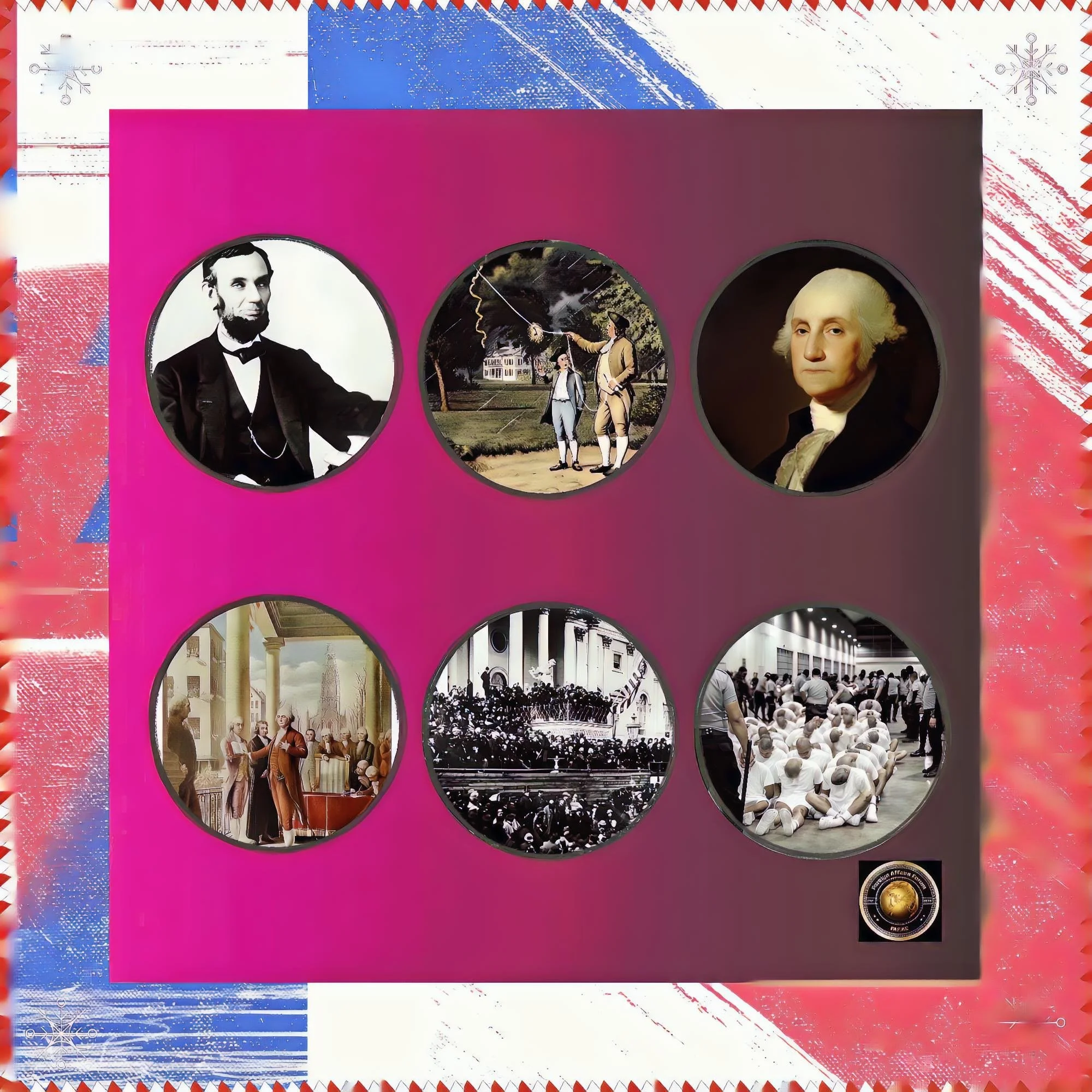
George Washington: The Foundation of American Leadership
George Washington, often called the “Father of His Country,” established crucial precedents shaping American governance. As commander of the Continental Army, he secured independence from British rule.
His presidency (1789-1797) set necessary standards, particularly his voluntary relinquishment of power after two terms, establishing a peaceful transition tradition that defined American democracy.
Washington’s leadership style prioritized creating a strong federal government while respecting states’ rights, helping establish the constitutional framework.
His Farewell Address, warning against political divisions and foreign entanglements, revealed his commitment to national unity and long-term stability.
Abraham Lincoln: Preserving the Union Through Crisis
Abraham Lincoln, widely regarded as America’s greatest president, led the nation through its most profound crisis—the Civil War.
Lincoln’s leadership preserved the Union at its moment of greatest peril while also advancing the cause of freedom through the Emancipation Proclamation.
Lincoln’s commitment to equality, as expressed in his Gettysburg Address with its vision of “government of the people, by the people, for the people,” reinforced core American democratic values when the nation was divided.
Current Challenges to Traditional Values
Recent polls and studies suggest significant shifts in American values over the past several decades, creating tension between traditional perspectives and emerging priorities.
Changing Social Values
A poll by NORC at the University of Chicago found that the share of Americans who value patriotism, religion, and having children has declined significantly over the past two decades.
Fewer Americans than previous generations believe in the value of traditional family structures, hard work, and the free market.
This shift represents a significant departure from principles that have long been central to American identity, raising questions about what values will define the nation in the future.
Political Instability and Polarization
After approximately fifty years of relative political stability, American politics has entered a more volatile phase.
Incumbent presidents who once commonly secured re-election now face more significant challenges, and the fundamental beliefs and alliances of the two major parties have undergone considerable changes.
56% of Americans see the ability of Republicans and Democrats to work together as a “very big problem,” indicating widespread concern about political polarization.
This division makes it difficult to address other challenges facing the nation.
Economic Concerns
Economic issues dominate Americans’ concerns about the nation. According to a 2025 Pew Research Center survey, Americans see inflation (63%), the affordability of health care (67%), the federal budget deficit (57%), and poverty (53%) as “huge problems” facing the country.
These economic anxieties create additional pressure on traditional values, as financial instability can make it harder for individuals to focus on other priorities.
Perspectives on Restoring Traditional Values
Various perspectives exist on whether and how traditional American values might be restored or renewed in contemporary circumstances.
Cultural Renewal Through Institutions
Some advocates for traditional values argue that cultural institutions play a crucial role in preserving and transmitting values.
Roger Kimball, editor of The New Criterion, suggests that restoring American culture requires “rescuing vital examples of cultural achievement” from neglect.
He points to educational programming like Leonard Bernstein’s Young People’s Concerts as examples of cultural works that could inspire renewed appreciation for Western artistic traditions.
This perspective sees the “long march through the institutions” undermining traditional values by reorienting schools, churches, and other cultural institutions away from traditional principles. Reversing this trend would require reclaiming these institutions.
Return to Core American Principles
Others advocate for a renewal based on returning to fundamental American values while adapting them to contemporary needs.
This approach emphasizes individualism, equality, democracy, freedom, and opportunity while acknowledging that implementing these values might look different today than in the past.
This perspective doesn’t seek to return to a specific historical period but rather to restore “dignity, respect, honor, and the pursuit of happiness” as guiding principles for American society.
It recognizes both the progress made on issues like civil rights while cautioning against abandoning traditional moral frameworks.
Faith-Based Restoration
Some see religious faith as essential to American values and believe spiritual renewal is necessary for cultural renewal. This view emphasizes the role of faith in providing moral guidance and social cohesion.
The Heritage Foundation’s Project 2025 represents one approach to restoring traditional values through explicitly religious frameworks. It aims to “infuse every aspect of federal government with Christian nationalism” and place family and religious devotion at the center of American life.
Balancing Traditional and Progressive Values
A more moderate approach recognizes value in both traditional and newer perspectives.
Surveys on family values have found Americans support both “clearly traditional” values (respecting parents, responsibility for actions, faith in God) and “newer, more expressive values” (emotional support, respect for individuality, better communication).
This blended approach suggests that preserving traditional values while incorporating newer emphases on emotional well-being and personal growth may provide a path forward that addresses contemporary needs while maintaining a connection to conventional strengths.
Conclusion
Navigating Between Tradition and Change
Whether America can return to traditional values is complex, with no simple answer. The nation has always experienced tension between preserving tradition and embracing change, between individual liberty and collective responsibility.
Examining these perspectives reveals that many Americans continue to value core principles like individual freedom, equality of opportunity, faith, family, and hard work, even as their expression and relative importance evolve.
Rather than simply returning to the past, the path forward may involve reinterpreting and renewing these values for contemporary circumstances.
The presidents who have best embodied American values throughout history have typically found ways to apply timeless principles to the unique challenges of their era.
Similarly, addressing today’s socio-economic and political challenges may require not abandoning traditional values but finding new ways to express them and speak to current concerns while preserving their essential wisdom.
As the country continues to navigate between tradition and change, the ongoing conversation about values reflects one of America’s greatest strengths—the capacity for self-reflection and renewal in pursuit of what Abraham Lincoln called “the better angels of our nature.”