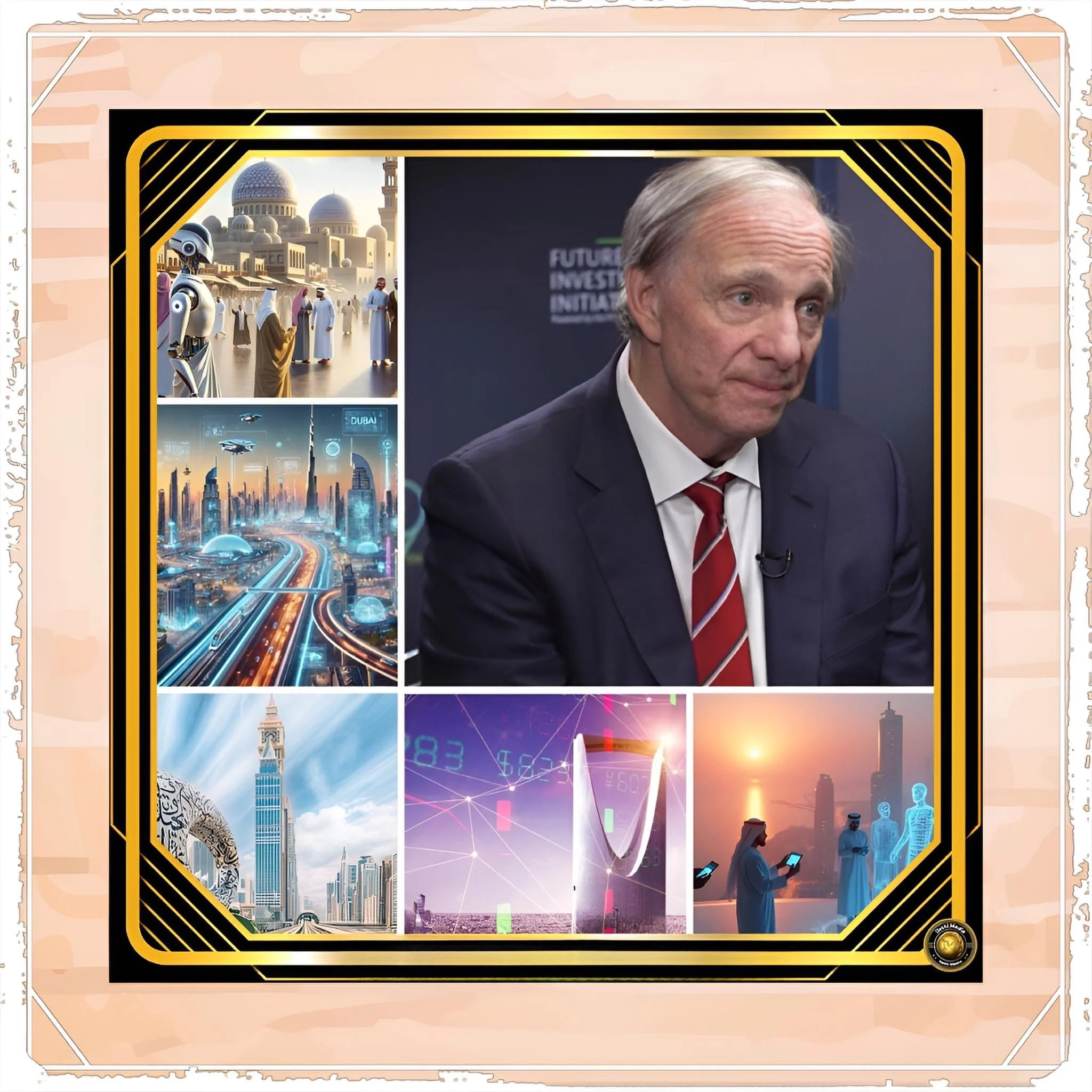
The New Capital Frontier: Ray Dalio and the Gulf’s Billion-Dollar Ambition
Executive summary
Ray Dalio’s assertion that the Middle East is becoming a “Silicon Valley of capitalists” captures a real structural shift: Gulf monarchies, especially the UAE and Saudi Arabia, are attempting to convert hydrocarbon wealth and sovereign funds into enduring influence over the global AI and technology stack.
In Dalio’s telling, Abu Dhabi, Dubai, Riyadh and Doha are evolving into a magnet for capital allocators, technologists and infrastructure builders analogous to how Silicon Valley became a magnet for software entrepreneurs in the late twentieth century.
This transformation rests on three pillars
First, sovereign wealth funds such as Saudi Arabia’s Public Investment Fund (PIF) and Abu Dhabi’s G42-led ecosystem are underwriting multibillion‑dollar investments in cloud regions, hyperscale data centers and AI compute campuses, including a planned Google Cloud–PIF AI hub near Dammam and the Stargate UAE complex in Abu Dhabi.
Second, Gulf governments have moved decisively to position AI and digital infrastructure at the heart of their national strategies, from Saudi Arabia’s National Strategy for Data and AI and Vision 2030 to the UAE’s dedicated AI ministry and its aspiration to be the “world’s factory of intelligence.”
Third, a steady influx of global financial and technological talent, combined with low taxes and liberalized business regimes, has turned Dubai, Abu Dhabi and Riyadh into emerging hubs for hedge funds, private capital and fintech.
Dalio’s optimism is tempered by his macro‑prudential warning that the world is already in an AI‑driven asset bubble “by nearly all metrics,” with fragile debt dynamics, political polarization and tight monetary conditions creating the preconditions for a deflationary correction.
Michael Burry, whose credibility rests on his early call of the 2008 housing crisis, similarly argues that the AI boom could unwind within roughly two years, echoing the trajectory of the dot‑com bubble, where equity prices peaked long before underlying tech investment crested.
The Gulf’s accelerated AI build‑out is thus taking place precisely as some of the most prominent market diagnosticians warn of overvaluation, crowding and leverage in the very sector on which the region is betting.
The result is a highly consequential experiment: can Gulf states use their balance sheets and regulatory agility to buy a central role in the next general‑purpose technology, or are they at risk of anchoring themselves to the crest of an AI bubble whose eventual deflation could reverberate through sovereign portfolios and domestic politics?
Introduction & Foreward
Dalio’s “Silicon Valley of capitalists”
In his CNBC interview, Dalio describes the Gulf—above all the UAE and Saudi Arabia—as “fast emerging as one of the world’s most powerful AI hubs” and “a kind of Silicon Valley for capitalists,” highlighting the fusion of vast sovereign wealth and imported talent.
He emphasizes that, after three decades of visiting Abu Dhabi, he views the UAE as “a paradise in a troubled world,” praising its stability, leadership and long‑term planning as advantages in attracting capital and entrepreneurship.
The analogy is deliberate: where Silicon Valley aggregates venture capital and start‑ups around software and platforms, the Gulf is aggregating sovereign capital, global asset managers and infrastructure‑heavy AI ventures.
Dalio’s thesis rests on the observation that technological revolutions and financial bubbles tend to be intertwined; he explicitly notes that “all bubbles occur during periods of significant technological transformation.”
His argument is not that investors should flee AI, but that they must distinguish between foundational infrastructure and speculative froth, and watch for the “pricking” event—typically tighter money or forced liquidations—that turns exuberance into unwind.
Against this backdrop, the Gulf’s drive to become an AI and capital hub is both an expression of long‑running diversification strategies and a high‑beta play on one of the most capital‑intensive technological shifts in decades.
Historical context: from oil exporters to systemic capital providers
For much of the post‑1970s era, Gulf monarchies were treated in global finance as high‑saving, commodity‑dependent states recycling petrodollars into Western assets.
Their core role was as marginal suppliers of capital and swing producers of oil.
Over the past two decades, that role has been reconfigured.
First, sovereign wealth funds have accumulated enormous balance sheets: estimates put Middle Eastern sovereign wealth assets at over 4 trillion dollars, making the region the third‑largest financial bloc after North America and East Asia.
Second, policy has shifted from passive portfolio allocation to activist, strategic investing aimed at acquiring technological capabilities, deal flow and political leverage.
Saudi Arabia’s Vision 2030 reframes hydrocarbons as a bridge to a diversified, technology‑enabled economy, while the UAE has long used Dubai and Abu Dhabi as platforms for global logistics, finance and aviation.
By 2025, the Middle East’s combined banking assets have been estimated at more than 5.5 trillion dollars, led by the UAE, Saudi Arabia and Qatar, with hedge funds and alternative asset managers increasingly setting up regional bases in Dubai’s DIFC and Abu Dhabi’s ADGM and Riyadh’s growing financial district.
The region is no longer merely a peripheral capital provider; it is becoming an architect of financial intermediation, using its own regulatory jurisdictions, exchanges and free zones to attract and deploy capital in its own right.
The current AI push is best understood as the digital and infrastructural extension of this financial renaissance.
Key initiatives: AI infrastructure as a new strategic asset class
The centerpiece of the “Silicon Valley of capitalists” narrative is the Gulf’s aggressive move into AI‑specific infrastructure: hyperscale data centers, cloud regions, power‑hungry GPU clusters and sovereign‑backed compute campuses.
(1) One anchor is the partnership between Google Cloud and Saudi Arabia’s Public Investment Fund to build an advanced AI hub near Dammam.
The agreement, signed at the Future Investment Initiative (FII8), envisages a roughly 10‑billion‑dollar investment into a “world‑class” AI center equipped with Google’s latest tensor processing units, GPUs and the Vertex AI platform, with dedicated work on Arabic‑language generative models such as Gemini.
Research commissioned by Google Cloud suggests that this AI hub could contribute around 71 billion dollars cumulatively to Saudi GDP over eight years and create thousands of highly skilled jobs, aligning with the kingdom’s ambition to expand its ICT sector by 50 percent.
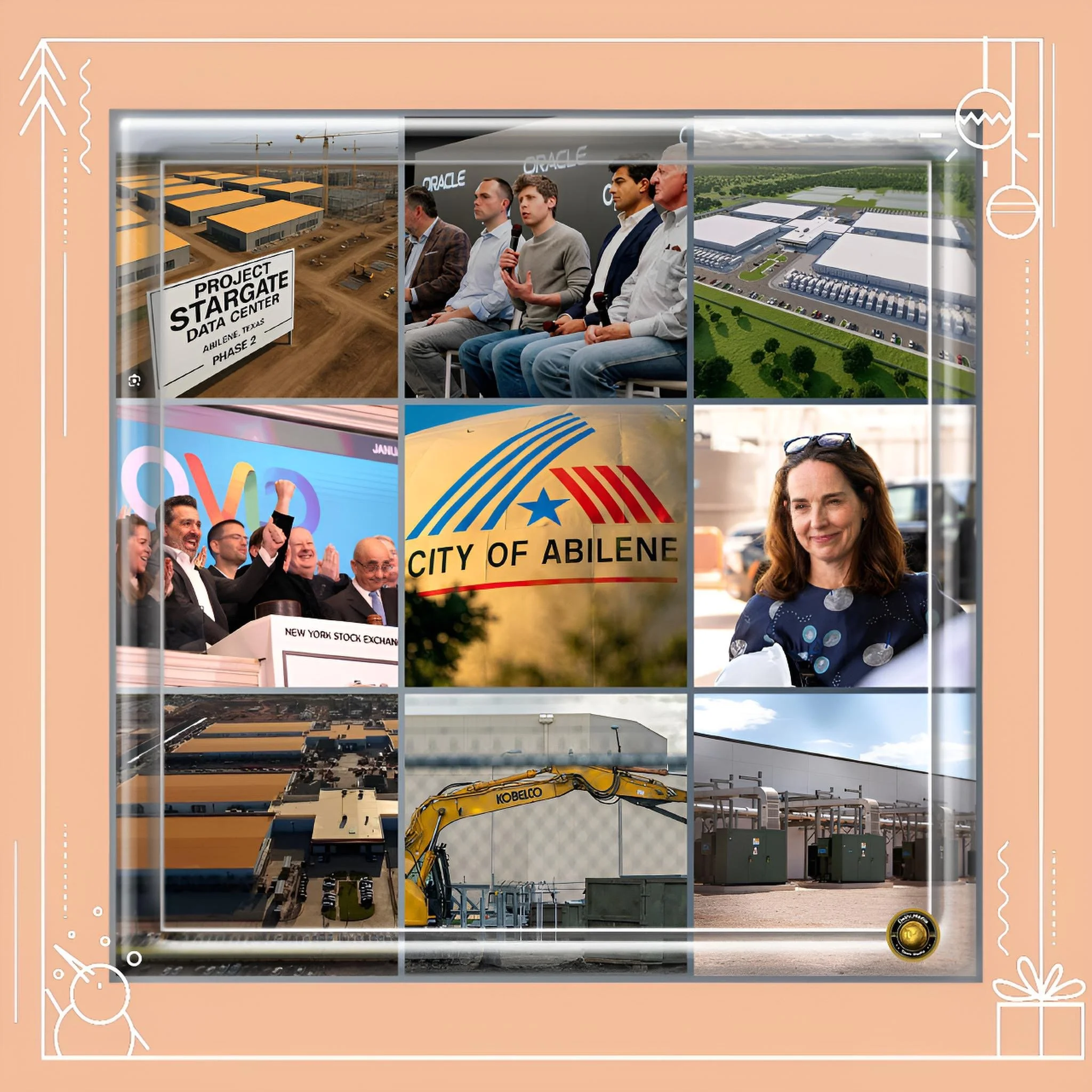
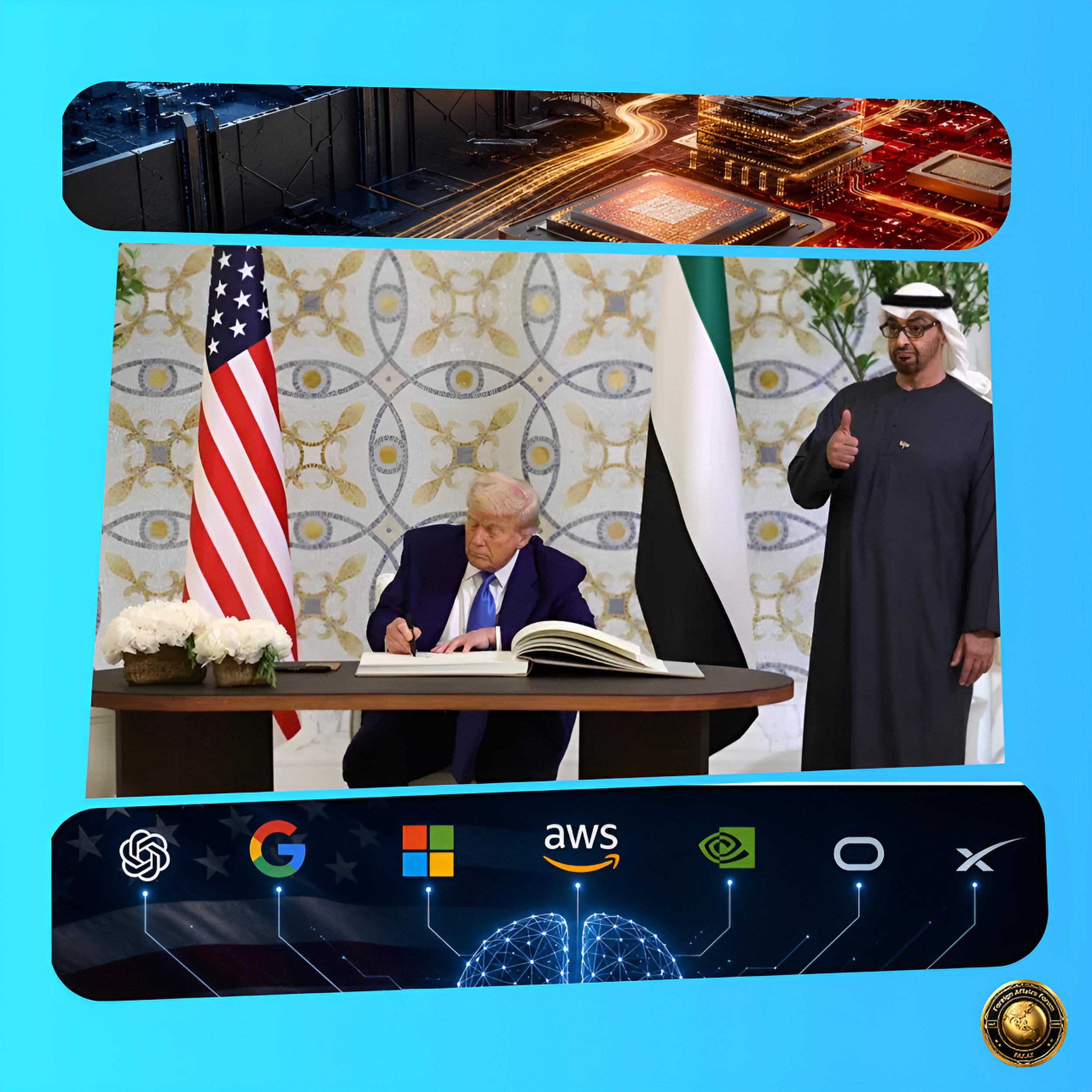
(2) A second anchor is Stargate UAE, a joint AI infrastructure project in Abu Dhabi that brings together Emirati firm G42 and US and Japanese technology champions including OpenAI, Oracle, Nvidia, SoftBank and Cisco.
The project envisions a 10‑square‑mile campus with up to 5 gigawatts of AI compute capacity, making it the largest AI campus outside the United States.
The first phase involves a 1‑gigawatt cluster using Nvidia’s latest Blackwell systems, with Oracle handling major elements of the cloud backend and Cisco and SoftBank providing connectivity and networking.
The rhetoric around Stargate is revealing. Nvidia’s CEO Jensen Huang calls AI “the most transformative force of our time” and says that with Stargate UAE “we are building the infrastructure to power the country’s bold vision.”
Oracle’s Larry Ellison describes the deployment as setting “a new standard for digital sovereignty,” while SoftBank’s Masayoshi Son characterizes the UAE as “the first nation beyond America to embrace this sovereign AI platform—proof of its bold ambition and global leadership.”
Cisco’s Chuck Robbins emphasizes “secure, energy‑efficient networks” to turn “intelligence into impact at global scale.”
Complementing these flagship projects are additional Gulf initiatives
Saudi partnerships to deploy hundreds of megawatts of AI infrastructure with firms such as AMD and Humain, domestic sovereign‑backed AI campuses embedded within mega‑projects like NEOM, and substantial data center investments that have delivered double‑digit returns, outpacing traditional real estate.
The cumulative effect is to make AI compute and data infrastructure a core component of Gulf development strategies, nested alongside green energy, logistics and tourism.
Stated visions: what global and regional leaders are actually saying
Dalio’s remarks slot into a broader chorus of elite statements about the Gulf’s AI ambitions and its role in the next phase of globalization.
From the Saudi side, Yasir Al‑Rumayyan, governor of PIF, frames the Google Cloud partnership as a proof point of long‑term strategic intent: “We are delighted to welcome this new Google Cloud AI hub to Saudi Arabia.
This partnership demonstrates PIF’s dedication to fostering an AI‑friendly environment through investments in human capital and technology, upskilling thousands with cutting‑edge tools to support our sustainable and innovative infrastructure goals.
Saudi Arabia is a prime location for global tech partners as PIF brings both sector expertise and a long‑term approach to investment.”
Ruth Porat, president and chief investment officer of Alphabet and Google, in turn highlights that the partnership will “accelerate the adoption of AI in the local language and across industries” and that Google is “committed to creating highly skilled jobs and enabling businesses to thrive with cloud‑driven growth” across Saudi Arabia, the Middle East, Africa and beyond.
Saudi officials present the National Strategy for Data and Artificial Intelligence as a pillar of Vision 2030, targeting at least 20 billion dollars in AI‑related investment by the end of the decade and training around 2,000 Saudi data and AI specialists.
Commentaries on the strategy stress that by 2030 AI is expected to contribute “tens of billions of dollars” to Saudi GDP and position the kingdom as a global AI hub, with NEOM and related mega‑projects serving as large‑scale testbeds.
From the UAE, Omar Sultan Al Olama, Minister of State for Artificial Intelligence, Digital Economy, and Remote Work Applications, articulates a more philosophical doctrine: that governments must look past short‑term cycles and embrace emerging technologies as the “digital foundation of tomorrow’s economy.”
He underscores that the UAE’s approach is to be the best jurisdiction in the world for frontier technologies, whether blockchain or AI, and insists that “our stance has not and will not change. We believe this is a revolutionary technology, and we want to support it.”
In a separate forum, he describes AI as “the new lifeblood” for governments and the private sector, predicting that more countries will appoint AI ministers as the technology becomes embedded in governance and commerce.
The UAE’s AI ambitions are increasingly quantified.
The minister has referred to plans to generate roughly 60 trillion artificial intelligence tokens via the Stargate data center, in pursuit of the goal of making the Emirates “the world’s factory of intelligence,” with around 60 percent of global production.
Though such figures are aspirational, the political signal is clear: the UAE intends to sit at the center of global AI compute and model production.
Overlaying these regional voices are the pronouncements of global technology CEOs already mentioned and of Western political leaders.
The Trump administration has framed the Stargate initiative and related AI agreements with Saudi Arabia and the UAE as part of a broader strategy to build a distributed network of AI data centers to reinforce US leadership in critical technologies, with American firms like Google, Oracle, Nvidia and AMD as central actors. For Washington, then, Gulf AI projects are not just commercial deals but geopolitical infrastructure.
Dalio’s macro warning and Burry’s AI bubble thesis
Dalio’s enthusiasm for the Gulf’s AI‑capital nexus coexists with his long‑standing concern that global markets are in the late stages of a debt and asset cycle.
In his CNBC remarks, he argues that “we are in a bubble according to nearly all these indicators,” citing strains in private equity, venture capital and refinancing markets, and drawing explicit comparisons with the 2000 tech bubble (while distinguishing it from 1929).
He identifies three overlapping cycles: high and rising public and private debt burdens, intensifying domestic political conflict in the US ahead of the 2026 elections, and escalating geopolitical tensions.
Dalio reiterates that the AI sector itself is in bubble territory but cautions against exiting solely on valuation grounds.
The relevant question, he suggests, is when and how bubbles burst—typically when monetary conditions tighten or when entities loaded with short‑term obligations are forced to liquidate assets, causing contagion.
The fact that AI infrastructure is capital‑intensive and often debt‑financed, with returns pushed into the future, amplifies vulnerability to such macro shocks.
Michael Burry’s perspective is even more pointed.
In a recent interview and public commentary, he has warned that the AI‑led equity boom could unwind within about two years, noting that in the dot‑com era “you were halfway done with the capital expenditure” when stocks peaked.
He argues that many hyped AI companies, including some prominent names, are essentially high‑priced consulting businesses whose valuations are difficult to justify, and that the dominance of passive index funds concentrated in AI names could make any correction broader and more prolonged.
In other comments, Burry predicts that a crash in AI and tech stocks could rival or exceed the 2000 bust and has directed investors’ attention toward less fashionable sectors such as health care.
Dalio and Burry thus converge on the idea that the AI theme is in a speculative phase, even as they differ in timing and prescription.
For Gulf policymakers committing enormous capital to AI infrastructure, these are not merely market opinions but variables that could shape the risk‑return profile of their national transformation plans.
Cause and effect: why the Middle East is so central to the AI build‑out
The convergence of sovereign wealth and AI infrastructure is not coincidental; it is the product of structural forces on both the demand and supply side.
On the supply side, AI models at frontier scale require huge quantities of specialized hardware, power and cooling, with individual clusters drawing hundreds of megawatts and campus‑level projects targeting gigawatt‑scale capacity.
Existing data center ecosystems in North America and Europe were not designed for such intensity, and local communities increasingly resist energy‑hungry facilities.
The Gulf, by contrast, offers abundant land, access to relatively cheap energy (increasingly including solar), and governments willing to reconfigure grids, zoning and incentives to accommodate AI campuses.
On the capital side, AI infrastructure demands up‑front multibillion‑dollar commitments with long payback periods—natural territory for sovereign wealth funds with high risk tolerance and long horizons.
PIF’s and Abu Dhabi’s balance sheets give them the capacity to absorb the scale and illiquidity that would strain typical corporate balance sheets or private equity funds.
On the demand side, Western technology companies face intense pressure to secure and expand compute capacity to meet exploding AI workloads, but they are constrained by their own balance sheets, regulatory scrutiny and domestic limitations on energy and land.
Partnering with Gulf sovereigns through structures such as the PIF–Google Cloud AI hub or Stargate UAE allows them to offload some capital intensity, diversify geopolitical exposure, and gain political goodwill in strategically important states.
Finally, on the geopolitical side, US policymakers are increasingly concerned about ceding AI infrastructure dominance to China.
Positioning allied or partner nations such as Saudi Arabia and the UAE as preferred locations for large AI campuses offers a way to expand the “friendly” geography of compute while keeping control of the underlying chips and software in Western hands.
This logic meshes neatly with Gulf ambitions to be central nodes in a multipolar global order.
The effect is a reinforcing loop: sovereign wealth enables AI infrastructure; AI infrastructure deepens the region’s role in global technology value chains; that role attracts more global capital and talent; and the resulting ecosystem vindicates Dalio’s characterization of a “Silicon Valley of capitalists.”
Concerns and vulnerabilities: bubbles, governance and dependency
Despite the impressive momentum, there are substantive concerns.
(1) There is the classic risk of over‑investment at the top of a cycle, especially when large pools of capital chase a narrow set of themes.
Dalio notes that fractures are already visible in private equity and venture markets as cheap debt rolls into higher‑rate refinancing, which could pressure valuations in AI‑adjacent portfolios.
If Burry’s anticipated AI unwind materializes, Gulf‑backed funds and infrastructure projects could face write‑downs, delayed utilization or reduced pricing power.
(2) Concentrating national development strategies around AI raises governance and capability questions.
Skeptics point out that building or hosting data centers does not automatically create indigenous innovation or world‑class universities and research ecosystems.
Without sustained investment in education and local R&D, there is a risk that the Gulf becomes a high‑capital, low‑intellectual‑property node in the AI value chain, with the highest returns accruing to foreign IP owners.
Saudi plans to train thousands of AI specialists and embed AI across sectors directly address this concern, but execution will take time.
(3) Digital sovereignty and data governance are sensitive.
Projects like Stargate are explicitly marketed as enhancing “sovereign AI” capabilities for the UAE, yet they rely on US firms for foundational models, chips and core cloud architectures.
That interdependence gives Washington leverage over AI compute flows, while also raising questions in Europe and elsewhere about data protection, surveillance and export controls. The Gulf’s alignment choices—between US, Chinese and other providers—will be scrutinized.
(4) There are political‑economy risks.
Dalio warns that high debt and political polarization in the US are feeding populism on both left and right, with “irreconcilable differences” constraining the ability to raise taxes or cut spending.
Analogous dynamics, though different in form, exist in the Gulf: large youth populations, expectations of rising living standards, and a social contract historically anchored in state employment and subsidies.
If AI investments fail to deliver broad‑based employment or if an external AI shock impairs sovereign fund returns, domestic discontent could rise.
Steps ahead: what to watch
Several trajectories will determine whether Dalio’s “Silicon Valley of capitalists” framing proves durable.
One axis is technological and commercial
The pace at which AI moves from hype to scaled, profitable deployment across real‑economy sectors.
If enterprises in energy, logistics, finance, health and government actually adopt and pay for AI services at scale, Gulf AI campuses and hubs will enjoy robust demand, justifying their capex and entrenching the region as indispensable infrastructure.
If, however, AI adoption stalls—because of regulatory constraints, lack of business cases or societal resistance—the region could find itself with overbuilt, underutilized capacity.
A second axis is macro‑financial
The path of global interest rates, inflation, and credit spreads will shape both valuations in AI equities and the cost of financing data center build‑outs.
A sharp tightening, recession or disorderly deleveraging in private markets would validate Dalio’s and Burry’s concerns and force repricing across the AI complex.
Gulf sovereigns with deep pockets might be able to buy distressed tech assets; but they would also confront mark‑to‑market losses and domestic budget pressures.
A third axis is human capital
Initiatives to train thousands of Saudi and Emirati AI specialists, attract world‑class researchers and create genuine innovation ecosystems will be decisive.
Without them, the region risks being seen primarily as a financier and infrastructure host, not an originator of cutting‑edge AI models or applications.
A fourth axis is geopolitics
The Gulf’s AI strategy depends on maintaining access to US technology, especially advanced chips, while hedging via partnerships with other players where feasible.
Escalating US–China technology rivalry, export controls, or political frictions over human rights, security or oil policy could complicate this balancing act.
At the same time, the Gulf’s leverage as a crucial node in AI infrastructure may give it additional bargaining power with all sides.
Conclusion
Dalio’s description of the Middle East as a “Silicon Valley of capitalists” is less hyperbole than a stylized summary of overlapping transformations: sovereign wealth funds becoming system‑level allocators, Gulf governments elevating AI and digital infrastructure to national priority status, and Western technology companies turning to the region as a partner of necessity in the capital‑intensive race for compute.
Major projects such as the PIF–Google Cloud AI hub in Saudi Arabia and the Stargate UAE campus in Abu Dhabi, backed by figures like Yasir Al‑Rumayyan, Ruth Porat, Jensen Huang, Larry Ellison and Masayoshi Son, give this narrative concrete institutional form.
Statements by Gulf AI and digital ministers underscore a long‑term vision of their economies as platforms for the next wave of technological globalization, rather than mere exporters of oil.
Yet this entire experiment is unfolding against a backdrop of elevated asset valuations, heavy debt loads, and political fragility. Dalio’s warning that markets are in a bubble “by nearly all metrics,” and Burry’s forecast of an AI unwind within a couple of years, function as cautionary counterpoints to the exuberance of AI‑campus press releases and sovereign strategy documents.
The same dynamics that make the Gulf such an attractive partner—its willingness to deploy enormous capital rapidly and to reorient policy—also increase its exposure to the vicissitudes of the AI cycle.
If Gulf states can convert today’s AI infrastructure bets into diversified, innovation‑rich economies with strong human capital and resilient institutions, Dalio’s metaphor will look prescient.
If, instead, the AI bubble deflates before such capabilities are built, the “Silicon Valley of capitalists” could prove to have been a high‑stakes wager at the apex of a global boom.