The New Cold War on Wheels: How Tariff Barriers Are Fragmenting Global EV Markets Into Competing Blocs
Executive Summary
The evolution of the electric vehicle industry in the United States and China over the past fifteen years presents a striking study in strategic contrasts: two nations pursuing fundamentally different approaches to industrial development, each reflecting distinct institutional capabilities and geopolitical objectives.
China has pursued a prolonged, coordinated state-directed industrial policy since 2009, investing approximately $231 billion in cumulative subsidies and infrastructure support while deliberately exposing its manufacturers to competitive pressure from foreign entrants, including Tesla. This strategy has culminated in extraordinary outcomes—nearly half of all vehicles sold in China in 2025 are electric or plug-in hybrid models, representing more than 13 million annual units, establishing China as the uncontested global leader in EV manufacturing and controlling nearly 70% of global battery production capacity.
By contrast, the United States pursued a more fragmented, tax-incentive-based approach, concentrated heavily in 2022-2025 through the Inflation Reduction Act, only to reverse course catastrophically with the elimination of federal EV tax credits in September 2025. The American market remains early-stage, with electric vehicles capturing approximately 10.5 percent of new vehicle sales in 2025, while legacy automakers have explicitly retreated from EV expansion strategies, refocusing capital investment on hybrid and internal combustion engine vehicles.
The divergence reflects fundamentally different assessments of market necessity, industrial capability, and the state's role in managing technological transitions. China’s market faces an imminent consolidation crisis driven by chronic overcapacity, yet maintains the institutional mechanisms to manage forced exits and mergers. The American market confronts demand uncertainty and policy collapse at precisely the moment when sustained commitment would be necessary to establish domestic manufacturing competitiveness.
The geopolitical implications extend beyond automotive competition: China’s vertical integration of battery supply chains and technological sophistication in autonomous driving systems have created structural dependencies that constrain Western policy options and accelerate the fragmentation of global markets along geopolitical lines.
Introduction
The global automotive industry has entered a period of sectoral transformation whose ultimate outcomes remain genuinely uncertain. The transition from internal combustion engines to electric powertrains, driven by environmental imperatives and advancing battery technology, represents a fundamental reset of competitive advantage within the industry—a moment when established hierarchies can be overturned, and nations that successfully navigate the transition can establish commanding positions in the world’s largest manufacturing sector.
The United States and China have chosen starkly different pathways through this transition, each reflecting institutional capacities, ideological preferences, and strategic assessments. These divergent choices, made over more than 15 years, have begun to produce measurable differences observable in 2025, with profound implications for global automobile supply chains, energy security, and the evolving structure of great power competition.
This analysis examines the parallel evolution of EV markets in both nations through an integrated framework that encompasses historical development, current competitive positioning, policy mechanisms, and future trajectories. The central inquiry concerns not merely which nation produces more electric vehicles—a question settled decisively in China’s favor by any measure—but rather the strategic logic that produced these divergent outcomes, the vulnerabilities embedded within each approach, and the implications for the global automotive industry of a world divided into protectionist blocs competing for technological advantage in mobility and energy systems.
Historical Development: Contrasting Theories of Industrial Transformation
The historical arc of electric vehicle development in each nation reveals fundamentally different institutional approaches to managing industrial transformation. China’s entry into the EV sector occurred deliberately and systematically beginning in 2009, when central authorities designated electric vehicles a national strategic priority explicitly motivated by the desire to achieve technological parity in a domain where China remained subordinate to established manufacturers.
The Chinese government recognized a strategic opportunity: rather than competing directly with superior Western manufacturers in internal combustion engine technology—a domain where Western manufacturers possessed decades of accumulated advantage—China could establish leading positions in an emerging technological paradigm where incumbent manufacturers possessed no inherent superiority.
The initial policy framework coordinated multiple policy instruments. Purchase subsidies ranging from $10,000 to $20,000 per vehicle, combined with central government rebates and provincial and municipal supplements, create consumer incentives among the most generous globally. Simultaneously, the government granted a decade-long exemption from the standard 10% sales tax on electric vehicles, effectively subsidizing purchase prices by an additional amount.
Beyond demand-side incentives, the government invested billions in charging infrastructure development, battery research and development, and capital support for manufacturing facilities. Critically, the government allocated substantial resources to battery manufacturers, including CATL and BYD, recognizing that battery technology represented the fundamental constraint on EV adoption.
Local governments, incentivized by employment and tax revenue considerations and encouraged by the central government’s strategic designation of the sector, invested billions in establishing manufacturing capacity with minimal scrutiny of commercial viability or market demand validation. The cumulative fiscal commitment from 2009 through 2023 reached approximately $231 billion—an extraordinary mobilization of state resources comparable in magnitude to major military programs or space initiatives.
The United States followed a markedly different trajectory. The American EV industry emerged organically through private sector initiative rather than government orchestration. Tesla, founded in 2003 as a startup without government support, established a manufacturing presence and gradually developed technology that achieved genuine market appeal beginning in the early 2010s. For the first decade after Tesla’s founding, government involvement in the American EV sector remained limited: a 2009 stimulus provision offered a $7,500 federal tax credit for EV purchases, but this credit ran out in 2014, leaving a gap in federal support.
The Obama administration invested modestly in battery research and charging infrastructure, but the United States never deployed subsidies on a scale comparable to China’s during the same period. State-level incentives filled some of the gap, but the overall support environment remained substantially less coordinated than China’s national strategy.
This fragmentation reflected different institutional structures. The American federal system allocates significant authority to states, and state governments adopted heterogeneous EV incentive regimes rather than implementing a unified national policy.
No central authority orchestrated manufacturing facility location, battery supply chain development, or charging infrastructure deployment. Instead, these emerged through dispersed private investment decisions constrained by state regulations concerning emissions standards and fuel economy. When the federal government finally engaged more comprehensively with EV industrial policy, it was in 2022, through the Inflation Reduction Act—13 years into China’s coordinated national effort and at a moment when China had already achieved six-fold greater EV manufacturing scale.
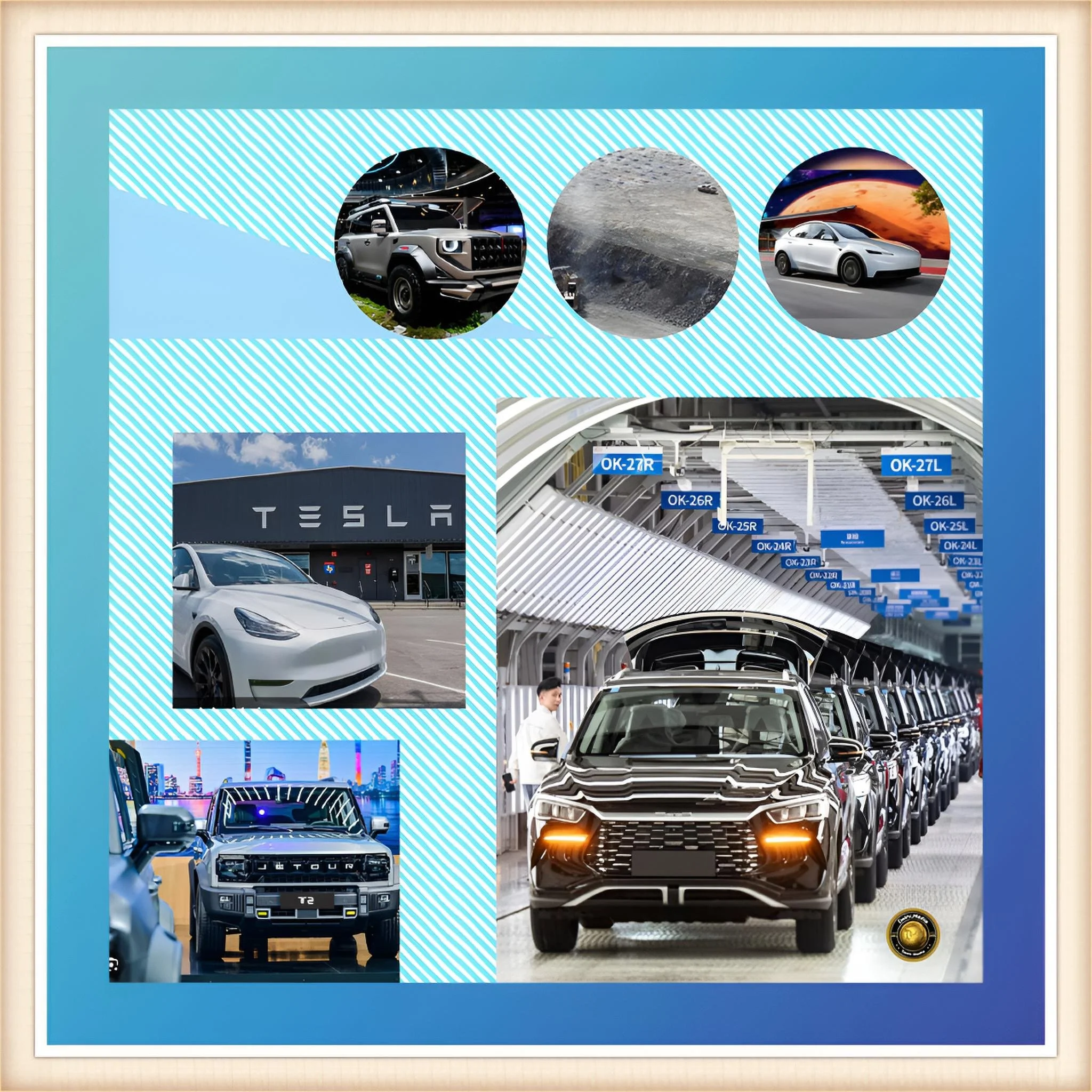
A critical strategic divergence emerged in 2018 when the Chinese government permitted Tesla to establish a wholly foreign-owned manufacturing facility in Shanghai—an unprecedented waiver from the longstanding joint venture requirement that had governed foreign automaker entry into the Chinese market.
This decision, initially appearing to violate the conventional logic of protecting domestic manufacturers from superior international competitors, reflected sophisticated strategic thinking. The government deliberately exposed domestic manufacturers to the maximum competitive pressure from the world’s most advanced EV competitor, recognizing that this pressure would accelerate technological upgrading and organizational transformation more effectively than any directive or subsidy could.
The Shanghai Gigafactory, completed in record time, achieved production exceeding 950,000 vehicles by 2024 and set new benchmarks for manufacturing efficiency that Chinese competitors felt compelled to match or exceed.
The Tesla effect catalyzed a fundamental reorganization of the Chinese EV industry. Consumer expectations shifted dramatically as Tesla demonstrated superior battery range, software sophistication, and manufacturing quality. The low-speed, low-cost electric vehicles that had dominated early phases of Chinese electrification became economically unviable.
Hundreds of marginal manufacturers, lacking technological capability or capital to compete with rising standards, exited the market between 2018 and 2025. Surviving firms undertook aggressive research and development investment, increasing annual R&D spending by more than 35% over the 2020-2024 period. Product portfolios shifted rapidly toward technological sophistication, with more than eighty percent of newly released models incorporating advanced driver assistance systems and autonomous driving capabilities by 2024.
In the United States, by contrast, government policy remained largely permissive of Tesla’s dominance and made limited demands on legacy automakers regarding the pace of electrification. Fuel economy standards under the Corporate Average Fuel Economy program established objectives for fleet-wide efficiency but created substantial compliance flexibility. When the Obama administration tightened these standards to achieve 54.5 miles per gallon equivalent by 2025, the Trump administration subsequently rolled them back, effectively eliminating pressure on manufacturers to accelerate electrification.
The Inflation Reduction Act, passed in 2022 under the Biden administration, finally deployed substantial fiscal resources to EV manufacturing—approximately one hundred billion dollars in subsidies and tax credits across battery manufacturing, vehicle assembly, and consumer purchases—but this came too late to establish early manufacturing positions in emerging EV supply chains.
The consequence of these divergent historical paths became apparent by 2024. China had created a comprehensive EV ecosystem spanning raw materials, battery manufacturing, vehicle assembly, and charging infrastructure. Approximately 85% of global lithium-ion battery cell manufacturing capacity resided in China, with CATL and BYD together controlling approximately 55% of global battery supply. By 2024, Chinese manufacturers will have produced more than 11 million electric vehicles and plug-in hybrids annually, representing 70% of global EV production. The American EV industry, despite Tesla’s dominance, remained substantially dependent on imported battery components and critical minerals processed in China.
American manufacturing of battery cells was nascent, with only a handful of facilities operational as of 2024, and none approaching the manufacturing sophistication of Chinese operations. The American market penetration of electric vehicles reached merely 4.8 percent by 2022 and 10.5 percent by the third quarter of 2025, in sharp contrast to China’s near-fifty percent penetration by that date.
Current Market Status: Saturation Versus Uncertainty
The Electric Vehicle Divergence: Strategic Contrasts Between America and China’s Competing Visions
The quantitative dimensions of the two EV markets in 2025 reveal the magnitude of China’s market dominance and offer crucial insight into the structural challenges underlying each nation’s trajectory. China’s market had reached genuine saturation, with electric and plug-in hybrid vehicles capturing nearly fifty percent of total new vehicle sales by late 2025. In September 2025, the penetration rate reached 49.7 percent, a historic threshold at which the electrified powertrain achieved essential parity with the internal combustion engine in a significant vehicle market.
The absolute sales volumes reinforced this trajectory: during the first eight months of 2025, Chinese automakers delivered 9.6 million new energy vehicles, representing year-on-year growth of 36.7 percent. Monthly sales had reached record levels of approximately 1.6 million units in September 2025, with battery-electric vehicles alone surpassing 1.058 million units. Annual sales were projected to exceed 13 million units for the first time in 2025, consolidating China’s position as accounting for 70% of global EV production.
The market penetration rate of nearly fifty percent represented a momentous achievement: for perhaps the first time in automotive history, a new powertrain architecture had achieved market parity with established technology in a major economy within the span of a single decade and a half. This trajectory occurred despite the absence of any internal combustion engine that could match the Chinese EV market’s structural advantages—the ICE technology offered by legacy manufacturers remained technically mature, substantially cheaper than electric powertrains, and supported by well-established supply chains and consumer familiarity.
The achievement thus testified to the extraordinary power of sustained government industrial policy, the rapid learning capabilities of Chinese manufacturers, and the strength of Chinese battery technology as a competitive advantage.
However, this quantitative achievement masked a profoundly different structural crisis. China’s automotive manufacturing capacity had expanded to approximately 55.6 million vehicles annually, while actual sales in 2024 reached only 27.5 million units, indicating structural overcapacity of roughly fifty percent across the entire sector. For electric vehicles specifically, installed production capacity exceeded 20 million units annually, while actual sales remained approximately 13 million units, indicating structural overcapacity of roughly 50% in the EV segment alone.
This fundamental imbalance between productive potential and actual market demand created devastating economic dynamics characteristic of capacity-constrained industries: manufacturers competed aggressively on price to maintain production utilization, recognizing that marginal sales, even at depressed prices, generated contribution margins that recovered fixed costs.
The financial consequences of structural overcapacity manifested across the entire industry but proved particularly revealing for dominant competitors.
The Chinese automotive industry’s average net profit margin contracted to 4.3 percent in 2024 from 5.0 percent in 2023, dramatically below the ten percent margins achieved in North America and approximately half the profitability metrics required to sustain long-term capital investment. For BYD, the market leader commanding roughly 28 percent of domestic EV sales, the deterioration proved particularly notable: while the company increased revenue by 23.3 percent in the first half of 2025 to approximately 51 billion U.S. dollars, gross profit margins contracted to 16.3 percent, a 3.8 percentage-point year-on-year decline. Net profit declined 29.9 percent in the second quarter of 2025—the first profit decline in more than three years.
The irony was stark: the company with structural cost advantages over all competitors, commanding dominant market share, and benefiting from vertical integration of battery supply chains, nonetheless experienced accelerating margin compression as the market shifted toward pure price competition.
By contrast, the United States market in 2025 occupied a fundamentally different position—early-stage development constrained by policy uncertainty and demand sensitivity to incentive structures. The third quarter of 2025 recorded a market share of 10.5 percent, a record high but reflecting primarily the artificial surge in demand driven by consumers seeking to capture federal EV tax credits before they expired on September 30, 2025.
The preceding quarters showed far more modest growth trajectories: the second quarter of 2025 recorded 7.2 percent market share, and the year-on-year comparison showed barely visible progress. The absolute volume of EV sales in Q3 2025 reached 437,487 units, but this represented a market substantially smaller than China’s monthly sales and was completely insufficient to support the development of an independent manufacturing ecosystem.
The American market demonstrated acute sensitivity to policy incentives. When federal EV tax credits expired on September 30, 2025, the policy environment shifted abruptly. The Trump administration simultaneously eliminated the federal EV tax credit, including the $7,500 credit for new vehicles, the $4,000 credit for used cars, and the tax credit for charging infrastructure installation.
The administration also eliminated the 25 percent tariff reduction on battery manufacturing and imposed severe restrictions on tax credits for battery manufacturing. More fundamentally, the administration rolled back corporate average fuel economy standards, effectively eliminating the regulatory pressure that had begun encouraging electrification. The combination of removing incentives, rolling back standards, and introducing uncertainty regarding future policy created an environment in which manufacturers responded with explicit scaling back of EV investment.
General Motors announced a $1.6 billion charge on EV strategy, including $1.2 billion in non-cash charges related to capacity adjustments. Ford shifted emphasis from the underperforming F-150 Lightning truck to smaller electrified vehicles and hybrid options. Stellantis, the American and European conglomerate, announced $13 billion in investments in gasoline vehicle production while scaling back EV initiatives.
The contrast between the two markets extended to market structure. China’s market, despite numerous competitors, showed an increasingly concentrated structure, with BYD commanding approximately 28% share. However, the company’s share had contracted from thirty-seven percent in the prior year as competitors, including Geely, achieved rapid growth through aggressive pricing and feature differentiation.
Tesla, despite its brand dominance, had contracted to approximately 5% market share in China by mid-2025, with minimal year-on-year growth, losing ground to domestic competitors with superior software integration and autonomous driving capabilities. The American market revealed very different concentration dynamics: Tesla maintained approximately 41% of EV market share in the third quarter of 2025, but its share had eroded substantially from its historical dominance, exceeding 70%.
Legacy automakers, including General Motors, Ford, and others, had begun ramping EV production, but all remained substantially smaller than Tesla. More significantly, all legacy automakers demonstrated declining commitment to EV expansion in 2025, with Ford’s EV sales down despite the overall market surge and all three of the American Big Three announcing substantial investments in hybrid technology rather than pursuing accelerated electrification.
Key Strategic Developments and Market Evolution
The two markets underwent fundamentally different transformations during the 2020-2025 period, driven by competing strategic logics and policy environments. China’s market had transitioned from government-sponsored, subsidy-driven growth to market maturation, characterized by overcapacity-induced consolidation.
The government, having achieved its objective of establishing an indigenous EV manufacturing capability that rivaled international competitors, began explicitly shifting toward consolidation. In October 2025, the central government released its fifteen-year development plan, excluding electric vehicles from the list of strategic emerging industries for the first time in more than a decade. This omission signaled explicit policy recognition that overcapacity had created unsustainable economic dynamics and that the government's priority should shift from capacity expansion to industrial consolidation.
The consolidation trajectory implied in official statements and analyst forecasts was extraordinary in magnitude. Consulting firm AlixPartners estimated that of the 129 electric vehicle brands operating in China, only fifteen would achieve financial viability by 2030, implying the elimination or consolidation of 114 manufacturers. Approximately 400 EV companies had already exited the market between 2018 and 2025, resulting in massive capital destruction and employment disruption.
The remaining consolidation phase would require forced exits, mergers, and potentially government intervention to manage the social and employment consequences of industry rationalization. Yet the Chinese government possessed institutional mechanisms to manage this process that did not exist in democratic market economies: the ability to direct capital allocation through state-owned enterprises, to impose mergers without elaborate stockholder approval processes, and to provide support to workers in affected regions through centralized industrial policy.
The American market had transitioned in precisely the opposite direction—from nascent government support toward government withdrawal, coupled with legacy automaker retreat. The Inflation Reduction Act, passed in 2022, represented the most aggressive federal EV industrial policy in American history, with approximately $100 billion in tax credits and manufacturing support. Yet this fiscal commitment was explicitly reversed in 2025, when a new administration eliminated tax credits and rolled back efficiency standards.
The response of legacy automakers suggested fundamental skepticism regarding the viability of profitable EV manufacturing under American cost structures and labor arrangements. General Motors, Ford, and Stellantis—the three most prominent American manufacturers—announced in 2025 that they would refocus capital investment on hybrid technology rather than continue pursuing aggressive EV expansion. The implicit message was unambiguous: without government subsidies to overcome cost disadvantages relative to internal combustion alternatives, the business case for electric vehicles in the American market remained insufficiently compelling to justify capital investment at the scale required to establish manufacturing independence from imported components.
The international dimension of each market’s evolution deserves particular emphasis. China became the world’s largest auto exporter in 2024, surpassing Japan, with exports reaching 5.86 million units. Approximately twenty-two percent of these exports were electric vehicles, representing an unprecedented volume in global automotive trade. BYD alone exported 464,000 cars in the first eight months of 2025, a 128 percent year-on-year increase. The company’s announced strategy included establishing manufacturing facilities in Hungary, Turkey, Brazil, and South Africa, each with a capacity of 150,000 to 600,000 vehicles annually. These projects required an estimated capital investment of five billion to ten billion U.S. dollars across all locations, supplemented by additional billions for charging infrastructure development.
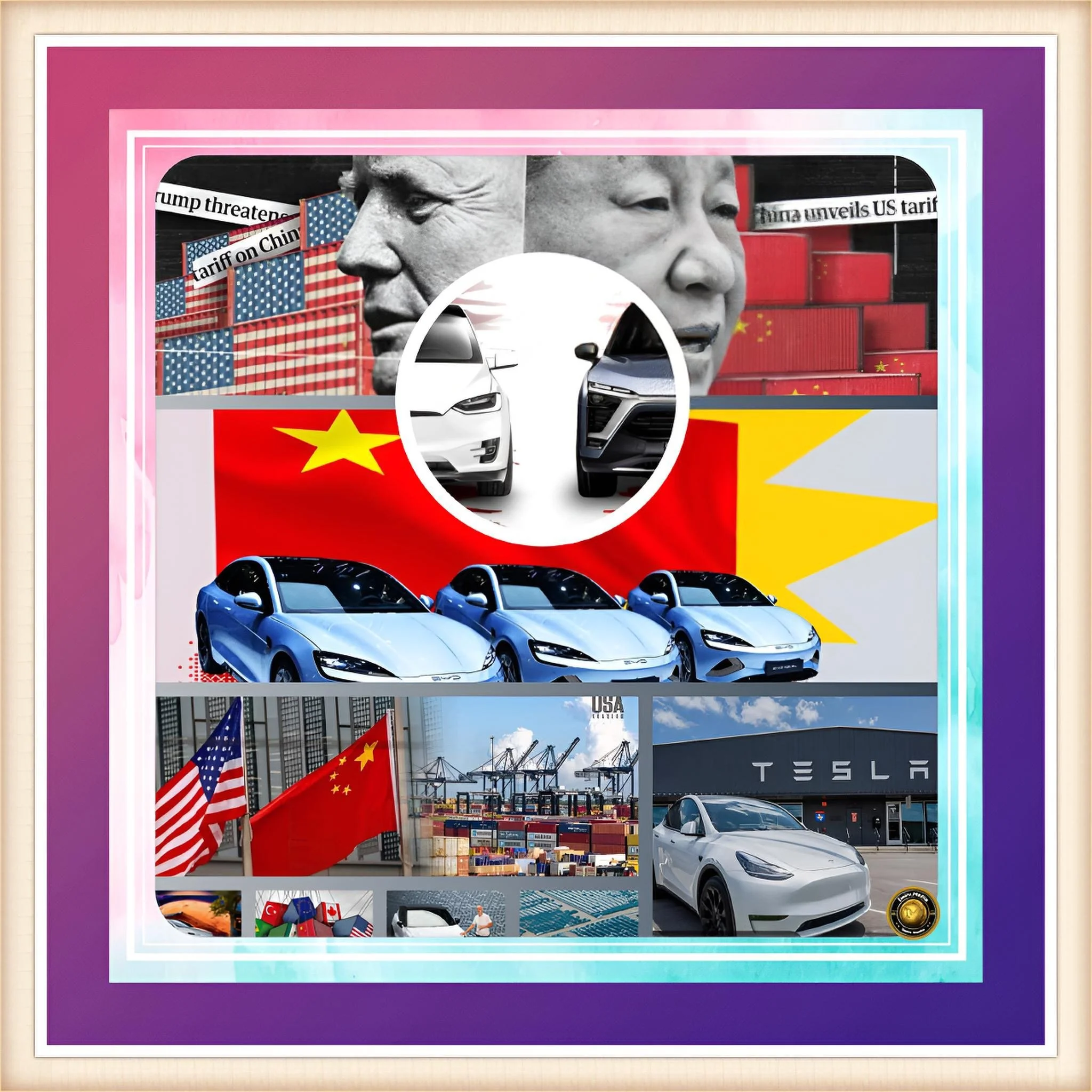
However, international expansion encountered substantial protectionist barriers that foreclosed the possibility that Chinese manufacturers could resolve domestic overcapacity through expanded exports to developed economies. The European Union imposed additional tariffs ranging from 17.0 percent to 35.3 percent on major Chinese manufacturers beginning in October 2024, supplementing the standard ten percent import tariff and creating practical barriers to market entry at competitive prices. The United States had implemented even more aggressive protection through tariffs exceeding 100 percent on Chinese electric vehicles, effectively excluding them from the American market except through circumvention strategies involving Mexican assembly facilities.
These trade barriers reflected explicit policy decisions to fragment the global automotive market along geopolitical lines, prioritizing strategic autonomy and domestic industrial protection over efficiency or consumer benefit.
The American automotive market, by contrast, had no international export presence in electric vehicles comparable to China’s. Tesla had established manufacturing in Shanghai and Berlin, but these facilities primarily served regional markets. Ford and General Motors maintained modest European operations, but these were integrated with European supply chains rather than serving as export platforms for American-manufactured vehicles. No American EV manufacturer possessed the manufacturing or competitive capability to access major export markets, partly because of tariff barriers but more fundamentally because American production costs and vehicle positioning were uncompetitive against Chinese alternatives in emerging markets where price sensitivity dominated purchasing decisions.
Cause-and-Effect Analysis: Why Divergent Trajectories Emerged
The divergent outcomes observable in 2025 emerge from a chain of causal mechanisms that can be traced through strategic choices, institutional capabilities, and economic fundamentals. The causal logic is not mysterious but reflects the interaction of several reinforcing factors.
China’s decision to pursue a comprehensive state-directed industrial policy for electric vehicles rested on rational strategic calculation. Central authorities recognized that the automotive sector, historically a domain of Chinese subordination to Western manufacturers, offered a unique opportunity: the transition from internal combustion to electric powertrains created a moment when technological incumbency conferred minimal advantage and established supply chains became largely irrelevant. Rather than competing for the next incremental improvement in internal combustion engines, China could demonstrate leadership in an emerging technology paradigm. The government’s decision to deploy massive subsidies—exceeding two hundred billion dollars over fifteen years—was economically rational given the goal of rapidly developing manufacturing capability: manufacturing experience cannot be purchased on open markets and must be developed through accumulated production.
Subsidies reduced the financial penalty for learning, enabled manufacturers to invest in capacity and R&D that would otherwise appear excessively risky, and created demand sufficient to allow economies of scale in battery manufacturing.
Critically, the Chinese strategy included mechanisms to address market failures that plague uncoordinated private-sector development. Battery technology represented a classic bottleneck: companies developing electric vehicles required reliable access to increasingly sophisticated battery supply, yet battery manufacturers faced enormous fixed costs and needed demand certainty to justify capital investment.
The government solved this coordination problem by directly subsidizing both vehicle manufacturers and battery suppliers, ensuring that demand existed to justify supply-side investment. The decentralized structure of subsidies—distributed through provincial and local governments—created redundancy and competition rather than top-down planning, allowing experimentation and local adaptation while maintaining overall alignment with national strategic objectives.
The decision to permit Tesla’s Shanghai Gigafactory, despite the risk of exposing domestic manufacturers to superior competition, reflected an even more sophisticated strategic calculation. The government recognized that subsidies alone could create capacity without creating competitiveness. Only through competitive pressure could Chinese manufacturers be forced to upgrade technology, improve quality, reduce costs, and reorganize organizational structures.
Tesla’s entry created this pressure precisely: consumers responded to Tesla’s superior product by shifting preferences, forcing domestic manufacturers to invest aggressively in technological upgrading or face market exit. This mechanism proved more effective than any directive could have been.
The vertical integration that Chinese manufacturers achieved in battery supply chains emerged from these dynamics. BYD, initially a battery manufacturer before entering vehicle production, developed deep expertise in battery chemistry and manufacturing. The government’s subsidization of both vehicles and batteries created incentives for integration: a vehicle manufacturer controlling battery supply could capture both margins, reduce supply chain risk, and optimize vehicle-battery integration for superior performance. Other manufacturers followed this model, creating an ecosystem in which the largest-volume producers maintained in-house battery production.
This vertical integration granted these companies decisive cost advantages as the market matured: external battery suppliers faced paying margins to vehicle manufacturers, while integrated manufacturers captured the complete margin structure. Cost comparisons estimated that Chinese EV manufacturers achieved production costs approximately 50% below those of European equivalents, a gap that reflected both labor cost differences and supply chain integration advantages.
The American trajectory, by contrast, emerged from a fundamentally different institutional structure and strategic assessment. The absence of a centralized industrial policy reflected both ideological commitments to market-driven development and the fragmented federal structure, which limited central government authority. Private-sector innovation through Tesla, while producing genuine technological breakthroughs, did not create ecosystem-wide manufacturing capability because Tesla’s success occurred in isolation from broader industrial development.
Tesla established manufacturing competency but did not solve the broader American industry's battery supply chain problem. The company largely imported battery cell technology and components or developed supply relationships with limited domestic content. For other manufacturers to create independent EV production, they would require their own battery supply chains—a requirement that entailed billions of dollars in capital investment with uncertain returns, given unclear consumer demand in a market where internal combustion vehicles remained cheaper and more established.
The government’s delayed engagement with EV industrial policy, through the Inflation Reduction Act in 2022, sought to address this structural problem by providing subsidies for battery manufacturing and vehicle assembly. However, this intervention came thirteen years into China’s coordinated effort and at a moment when Chinese manufacturers had already achieved overwhelming scale advantages.
More fundamentally, the American incentive structure emphasized consumer tax credits rather than coordinated ecosystem development. Subsidizing consumer purchases of EVs was economically rational from a demand perspective, but it created no incentive to develop the manufacturing supply chain in regions without existing EV manufacturing capacity. Ford and General Motors could achieve market share gains by importing battery components, assembling vehicles domestically, and capturing consumer subsidies. This approach maximized near-term market share without creating long-term manufacturing independence.
The reversal of federal EV support in 2025 reflects distinct political-economic dynamics.
The American political system faces substantial uncertainty about major fiscal commitments when control of government shifts between parties with divergent priorities. The Inflation Reduction Act, passed with narrow Democratic majorities, was reversed by a Republican administration explicitly skeptical of EV policy and influenced by political constituencies opposing electrification on ideological grounds. No institutional mechanism existed to make EV industrial policy sufficiently durable to justify the multi-year capital investments required for manufacturing independence. By contrast, Chinese policy, while subject to tactical shifts, maintains consistency regarding the strategic importance of vehicle manufacturing as a national priority. Party control does not shift, and policy reversals of this magnitude do not occur.
The market structure evolution reflects these policy environments. China’s market, driven by declining subsidies and increasing price competition, naturally selected for manufacturers with cost advantages—particularly those with vertical integration providing structural cost leadership. BYD’s dominance reflected not market preference but economic inevitability: given equivalent consumer preferences, the lowest-cost manufacturer captures market share, and vertical integration combined with scale granted BYD decisive cost advantages.
Competitors that achieved success did so through differentiation (Geely through premium positioning) or rapid expansion (Xiaomi through brand strength in technology categories). Tesla, despite superior technology, faced inevitable margin compression as competitors achieved technological parity and undercut pricing.
The American market, by contrast, remained shaped by Tesla’s overwhelming brand dominance and the absence of cost pressure that incentivized serious competitor escalation. General Motors and Ford, despite increases in EV production, did not face decisive market pressure to achieve cost leadership because government subsidies partially offset cost disadvantages and consumer preferences for American legacy brands remained meaningful, particularly in truck and SUV segments. The expiration of tax credits and policy reversal in 2025, however, rapidly shifted dynamics: without subsidies offsetting cost disadvantages, manufacturers confronted the reality that their cost structures made EVs uncompetitive against internal combustion alternatives.
The logical response, already evident in 2025, was to retreat from aggressive EV expansion and refocus on hybrids—powertrain architectures that offered partial fuel economy improvements without requiring the extraordinary manufacturing reorganization that pure EV production entailed.
Future Trajectories: Consolidation Versus Contraction
The structural evolution of both markets suggested markedly different futures for the 2026-2030 period, with implications extending beyond automotive competition to broader questions of energy security and industrial capacity.
China’s market appeared destined for a consolidation trajectory whose magnitude would dwarf comparable industrial reorganizations in developed economies. The mathematics of overcapacity left no alternative: even if total EV sales expanded toward eighteen to twenty million units annually by 2030—a growth rate substantially exceeding historical precedent and requiring continued electrification acceleration—this would still leave meaningful excess capacity. The government had explicitly acknowledged this reality through its October 2025 policy statement excluding EVs from strategic industries, signaling that the priority had shifted from expansion toward consolidation. The consolidation process would require elimination of approximately one hundred fourteen manufacturers through exit or merger. For context, the American automotive industry had consolidated from hundreds of manufacturers in the 1920s to three major domestic producers by the 1980s, a process occurring over approximately sixty years with substantial social disruption and government intervention. China was attempting analogous consolidation over a five-year period.
The consolidation would likely proceed through multiple mechanisms. Financially weakest competitors would face bankruptcy or forced acquisition by stronger rivals. BYD, despite margin compression, remained substantially better positioned than competitors because of its cost structure and vertical integration. The company had explicitly announced international expansion as a strategic response to domestic overcapacity, effectively exporting the consolidation problem. Government-backed state-owned enterprises including SAIC would likely absorb weakened competitors to maintain employment and tax revenues in politically significant regions. Geely and other differentiated competitors might survive through premium positioning or specialized niches, but numerous mid-tier competitors would disappear.
The transition period—presumably 2025-2030—would entail substantial financial losses for numerous manufacturers, potential employment disruption despite government mitigation efforts, and deteriorated financial performance across the sector.
The profitability outlook for Chinese manufacturers appeared grim regardless of consolidation success. Even with substantial capacity elimination, the remaining manufacturers would likely operate in an environment where competitive pressure constrained margins. The government’s implicit acceptance of this reality—through the policy shift excluding EVs from strategic support—suggested recognition that further government subsidization was economically irrational and that manufacturers must achieve profitability through cost reduction and market access rather than through expanded government support.
The most likely scenario involved Chinese manufacturers maintaining global dominance through cost advantages while operating at compressed margins, generating adequate returns to sustain ongoing investment in technology and capacity but insufficient returns to reward the capital investment that developed this manufacturing base.
Internationally, Chinese manufacturers would pursue aggressive expansion into emerging markets where protective tariff barriers did not exist and Chinese cost advantages exercised decisive impact. BYD had explicitly targeted Latin America, Southeast Asia, and Africa as priority expansion regions, acknowledging that developed markets would remain constrained by protectionist barriers.
This geographic reorientation would likely succeed in establishing market dominance in emerging markets but would leave developed-economy markets fragmented along geopolitical lines. American and European manufacturers would retain their domestic markets through protection; Chinese manufacturers would dominate emerging markets; Japanese manufacturers would occupy secondary positions through established brand strength. The global market would fragment into largely separate trading blocs pursuing strategic autonomy rather than efficiency, a development that would elevate vehicle prices for consumers across all regions.
Autonomous driving technology offered a potential frontier where competitive advantage remained contestable. China had approved Level 3 autonomous driving vehicles in December 2025, substantially ahead of developed-economy regulatory approvals. Chinese manufacturers had accumulated massive datasets on driving behavior through fleet deployments, creating potential advantages in training machine learning algorithms. Should Chinese manufacturers achieve Level 4 autonomous driving capability (limited self-driving in defined conditions) before developed-economy competitors, this could establish decisive technological advantages. However, this possibility remained speculative; autonomous driving development proceeded slowly across all manufacturers, and no timeline for Level 4 deployment was certain.
The American market trajectory appeared substantially less clear but suggested potential contraction following the 2025 tax credit spike. The expiration of federal incentives, rollback of efficiency standards, and explicit retreat of legacy automakers from aggressive EV expansion created conditions for potential demand contraction in 2026-2027. Analysts projected that American EV market share would decline toward approximately five to seven percent of new vehicle sales once artificial tax credit-driven demand had dissipated. This contraction would reduce manufacturing investments and potentially force capacity rationalization, but would occur more gradually than consolidation dynamics in China.
The American market faced a critical decision point regarding manufacturing independence. If development of domestic battery manufacturing and supply chains proceeded successfully, American manufacturers could potentially establish independent EV production capability by the early 2030s. However, this required sustained government support that appeared politically uncertain following the 2025 policy reversal. More likely, American manufacturers would continue relying on imported battery components and would focus on market segments—particularly trucks and large SUVs—where American manufacturers retained brand strength and where electrification remained economically marginal. This approach would maintain market share in protected American markets but would abandon any pretense of global competitiveness in EVs.
The absence of an American manufacturing ecosystem for battery cells represented the most critical vulnerability. Even if government policy reversed again toward EV support, the establishment of competitive battery manufacturing capacity required three to five years of construction and ramp-up. Chinese battery manufacturers, particularly CATL and BYD, had created structural cost advantages through scale and integrated supply chains that American manufacturers would struggle to match. The realistic scenario for 2030 involved American manufacturers dependent on imported battery components, competing in protected domestic markets through government-mandated regulatory standards, but remaining uncompetitive in price-sensitive global markets.
Conclusion
The electric vehicle markets of the United States and China in 2025 represent fundamentally different industrial trajectories reflecting divergent strategic choices, institutional capabilities, and political economy dynamics.
China’s achievement of near-50 % market penetration, combined with control over 70% of the global battery supply and established manufacturing dominance, reflects the extraordinary power of sustained state-directed industrial policy applied to an industry transition offering a strategic opportunity.
The government’s coordinated deployment of subsidies, infrastructure investment, and international competitive exposure created conditions enabling Chinese manufacturers to achieve scale advantages, cost leadership, and technological sophistication that enabled them to establish global dominance within fifteen years. However, this achievement contains within it the seeds of its own complications: the overcapacity crisis emerging in 2025 represents the cost of achieving rapid scale without precise calibration of market demand. The consolidation crisis now inevitable in China reflects not industrial policy failure but rather the natural market outcomes when government-subsidized capacity exceeds actual demand growth.
The American trajectory, by contrast, reflects both the advantages and limitations of market-driven development supplemented by selective government intervention.
The extraordinary success of Tesla in establishing a competitive EV manufacturer demonstrated that private sector innovation remained possible even within a fragmented policy environment. The Inflation Reduction Act represented legitimate effort to establish manufacturing ecosystem development. However, the reversal of these policies in 2025, coupled with the explicit retreat of legacy automakers from aggressive EV expansion, suggests fundamental skepticism regarding the viability of profitable EV manufacturing at American cost structures without sustained government support.
The market penetration of 10.5 percent in 2025, fifteen years after China reached 6.3 percent penetration, suggests an trajectory that will reach Chinese current penetration rates only in the mid-2030s under optimistic assumptions.
The geopolitical implications of these divergent trajectories extend beyond automotive competition. China’s control over battery supply chains, coupled with dominance in EV manufacturing, creates strategic dependencies that constrain Western policy options.
The fragmentation of global markets along geopolitical lines—with developed economies pursuing protectionist barriers while Chinese manufacturers dominate emerging markets—represents a partial reversal of the globalization dynamic that characterized the prior thirty years. The consequence for global decarbonization and energy transition remains ambiguous: Chinese dominance in EV manufacturing potentially accelerates electrification in emerging markets through lower costs, but protectionist barriers in developed economies delay transition and elevate consumer costs.
For decision-makers in government and industry, the critical implication involves the persistence of strategic choice regarding industrial policy. China’s experience demonstrates that sustained state resources, coordinated ecosystem development, and competitive pressure applied systematically over fifteen years can establish global dominance in emerging industries. The American reversal of EV policy in 2025 suggests recognition that such persistence remains politically uncertain in democratic systems dependent on electoral cycles. Yet the alternative—accepting permanent subordination in an industry that will dominate global manufacturing in the coming century—carries costs that future generations may judge as extraordinarily expensive.
The window for establishing American EV manufacturing independence remains open but narrowing; choices made in 2026-2027 regarding government policy and industry investment will largely determine whether American manufacturers remain globally competitive in the industry’s next phase.