Elon Musk’s Allegations of Unaccounted Funds and Fraud at the U.S. Department of Treasury
Introduction
In February 2025, Elon Musk, leading the Department of Government Efficiency (DOGE) under the Trump administration, ignited a national controversy by alleging systemic financial mismanagement and fraud within the U.S. Treasury Department.
Musk claimed that $50 billion in annual entitlement payments were being distributed to individuals without valid Social Security Numbers (SSNs) or temporary IDs, with half of these payments representing “unequivocal and obvious fraud”.
These assertions followed a federal judge’s temporary injunction blocking DOGE’s access to Treasury payment systems, which handle trillions of dollars in Social Security, Medicare, and tax refund disbursements.
The allegations have sparked legal battles, congressional scrutiny, and debates over government transparency, cybersecurity, and the limits of executive authority.
DOGE’s Authorization and Access to Treasury Systems
Political Context and Initial Access Grants
The Trump administration granted DOGE, a non-governmental efficiency task force led by Musk, access to the Treasury’s central payment systems in early February 2025.
This system processes over $6 trillion annually, including critical payments for federal employees, veterans, and Social Security recipients.
Secretary Scott Bessent authorized the access, overriding objections from career officials like David Lebryk, who was placed on administrative leave and later retired after resisting DOGE’s infiltration. Musk, operating as a Special Government Employee (SGE), framed the initiative as a necessary audit to eliminate waste, but critics argued the move bypassed congressional oversight and violated privacy safeguards.
Legal Challenges and Judicial Intervention
Nineteen Democratic state attorneys general, led by New York’s Letitia James, filed a lawsuit alleging that DOGE’s access violated federal laws protecting sensitive data.
U.S. District Judge Paul Engelmayer issued a preliminary injunction on February 8, 2025, blocking DOGE from accessing systems containing Americans’ SSNs, bank details, and Medicare information until a February 20 hearing.
The ruling highlighted concerns about “irreparable harm” from potential data breaches and unauthorized payment freezes. A separate ruling by Judge Colleen Kollar-Kotelly limited DOGE-linked personnel to “read-only” access, though reports later revealed that at least one staffer, Marko Elez, had temporary “read-write” privileges, enabling code modifications.
Allegations of Financial Mismanagement and Fraud
Musk’s $50 Billion Fraud Claim
Musk’s central allegation—publicized via social media—centered on $100 billion in annual entitlement payments to individuals lacking SSNs or temporary IDs. He cited unnamed Treasury employees who estimated 50% ($50 billion) of these payments as fraudulent, equating to “$1 billion per week” in waste. Musk attributed the fraud to systemic failures, including incomplete payment categorization codes and lax enforcement of the “Do-Not-Pay” list, which flags entities linked to terrorism or mismatched congressional appropriations. He criticized prior Treasury management for ignoring fraud risks to avoid complaints from ineligible recipients, stating, “People who don’t receive money (especially fraudsters) complain very loudly”.
Scrutiny of USAID and Congressional Appropriations
DOGE’s scrutiny extended to the U.S. Agency for International Development (USAID), which Musk and Trump targeted for perceived inefficiencies.
Internal sources revealed that DOGE sought to halt USAID payments entirely, contradicting Treasury’s public assurances that their access was limited to auditing.
Democratic lawmakers, including Senators Elizabeth Warren and Ron Wyden, accused DOGE of withholding congressionally approved funds to advance political agendas, prompting an audit by the Treasury’s Office of Inspector General.
Legal and Judicial Responses
State Lawsuits and Separation of Powers Concerns
The multistate lawsuit argued that DOGE’s access violated the Privacy Act, the Administrative Procedure Act, and constitutional separation of powers.
Connecticut Attorney General William Tong likened the incident to “the largest data breach in American history,” emphasizing risks to retirees and veterans reliant on federal payments.
The Treasury’s Inspector General launched an audit of payment system security controls, reviewing two years of transactions to verify Musk’s fraud claims.
Congressional Investigations and Transparency Demands
Senator Wyden accused the Treasury of misleading Congress about DOGE’s “read-only” access after reports surfaced of Elez’s “read-write” privileges.
Wyden demanded logs of all system changes, warning that “politically motivated meddling” threatened the economy.
House Democrats separately questioned Musk’s compliance with conflict-of-interest laws, citing his companies’ $3.3 billion in federal contracts with NASA and the Defense Department.
Operational Reforms Proposed by DOGE
Payment Categorization and Auditability
Musk outlined reforms to improve financial oversight, including mandatory payment categorization codes and rationales for all transactions.
He noted that 90% of outgoing payments lacked these codes, rendering audits “almost impossible”. DOGE also advocated for weekly updates to the Do-Not-Pay list, which previously took up to a year to modify, and stricter ID verification for entitlement recipients.
Implementation by Career Treasury Staff
Musk emphasized that reforms were being executed by long-term Treasury employees, not DOGE personnel, to ensure continuity. However, critics argued these measures were superficial and failed to address root causes of fraud, such as understaffed oversight agencies.
Political and Security Implications
Cybersecurity Risks and Unauthorized Access
The resignation of Marko Elez—a 25-year-old DOGE affiliate with racist social media posts—highlighted security vulnerabilities.
Elez briefly had code-editing privileges before his access was revoked, raising alarms about untrained personnel handling sensitive systems. Former Treasury officials like Jacob Leibenluft warned that DOGE’s actions demonstrated a “genuine lack of awareness” of cybersecurity protocols.
Conflicts of Interest and Ethical Concerns
Musk’s dual role as a federal efficiency czar and CEO of SpaceX, Tesla, and X prompted accusations of conflicts of interest.
Democrats cited 18 U.S.C. § 208, which bars SGEs from influencing matters tied to their financial interests, and demanded investigations into whether Musk’s companies benefited from DOGE’s actions.
Public and Media Reaction
Support for Anti-Waste Measures
Conservative outlets like Fox Business amplified Musk’s claims, framing DOGE as a necessary check on “Deep State” inefficiencies. Palantir CEO Alex Karp praised Musk’s efforts to hold “sacred cows” accountable, reflecting broader Republican support for reducing federal spending.
Fact-Checking and Rebuttals
Forbes and PBS debunked Musk’s claims about USAID, noting a lack of evidence for money laundering or improper payments to figures like Samantha Power. The AP reported that USAID’s humanitarian work countered Chinese and Russian influence, undercutting Trump’s characterization of the agency as wasteful.
Recent update to confirm
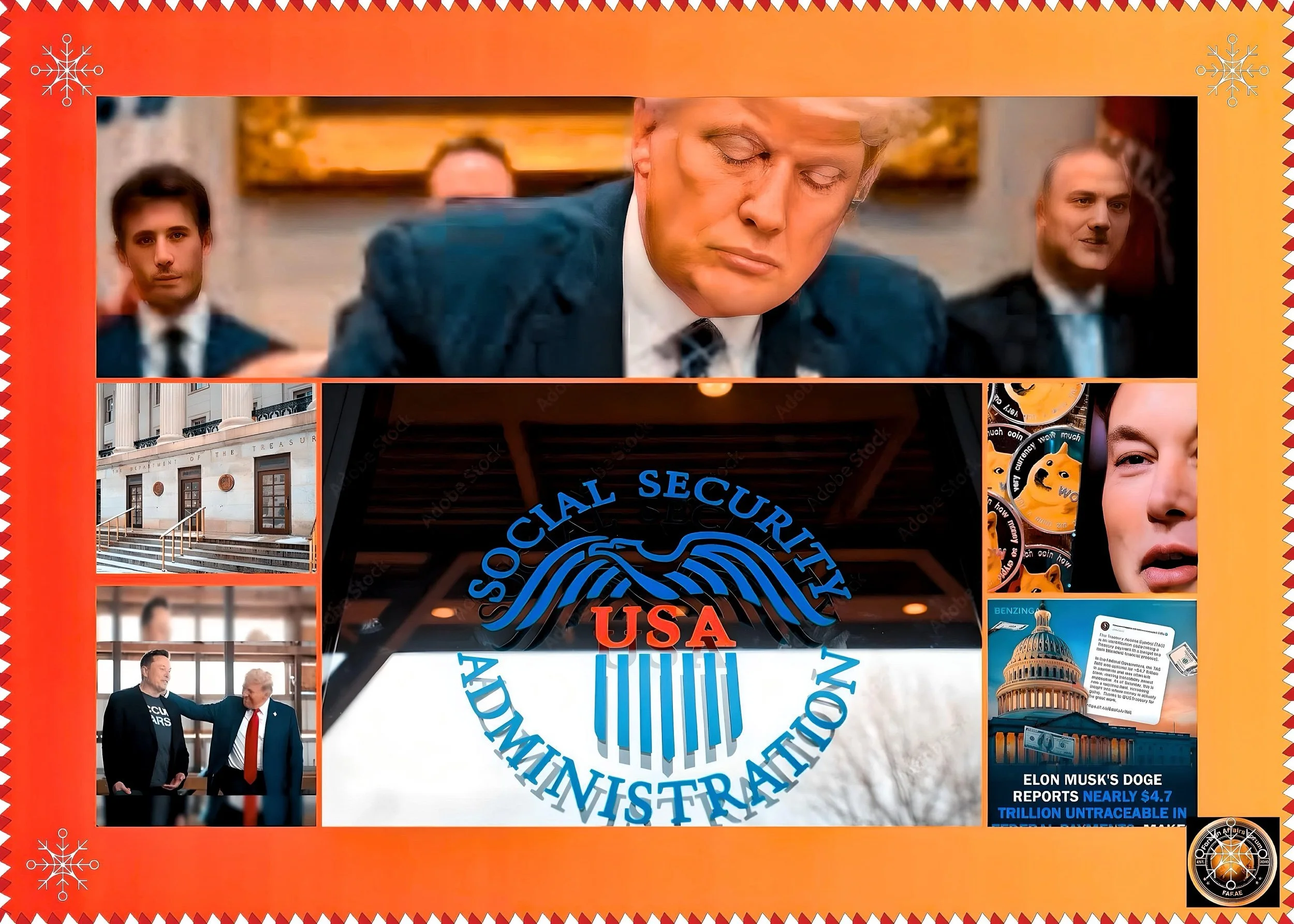
Recent communications on platform X have drawn attention to the fact that the U.S. Treasury Department has been unable to trace approximately $4.7 trillion in payments. This is largely attributed to the optional Treasury Account Symbol (TAS) field frequently being left empty within their systems. This predicament has been characterized as a systemic failure that has persisted for several years, with no specific timeframe provided; however, its emergence was notably highlighted in February 2025. The magnitude of this oversight has initiated discussions regarding the necessity for significant reforms in governmental accounting practices.
Nonetheless, it is essential to view these posts from platform X as reflective of prevailing sentiment rather than as definitive proof in isolation.
Conclusion
Elon Musk’s allegations of unaccounted funds at the Treasury Department have exposed deep fissures in federal oversight mechanisms.
While his claims of $50 billion in annual fraud remain unproven, they have catalyzed debates over government transparency, executive overreach, and the balance between austerity and public welfare.
The ongoing audits, lawsuits, and congressional inquiries will determine whether DOGE’s interventions yield meaningful reforms or exacerbate risks to data security and democratic accountability.
As the February 20 court hearing approaches, the outcome may redefine the boundaries of public-private partnerships in government efficiency efforts.