Gaza’s Fragile Ceasefire: Current Status, Scholarly Analysis, and Geopolitical Outlook
Introduction
Latest Ceasefire Status
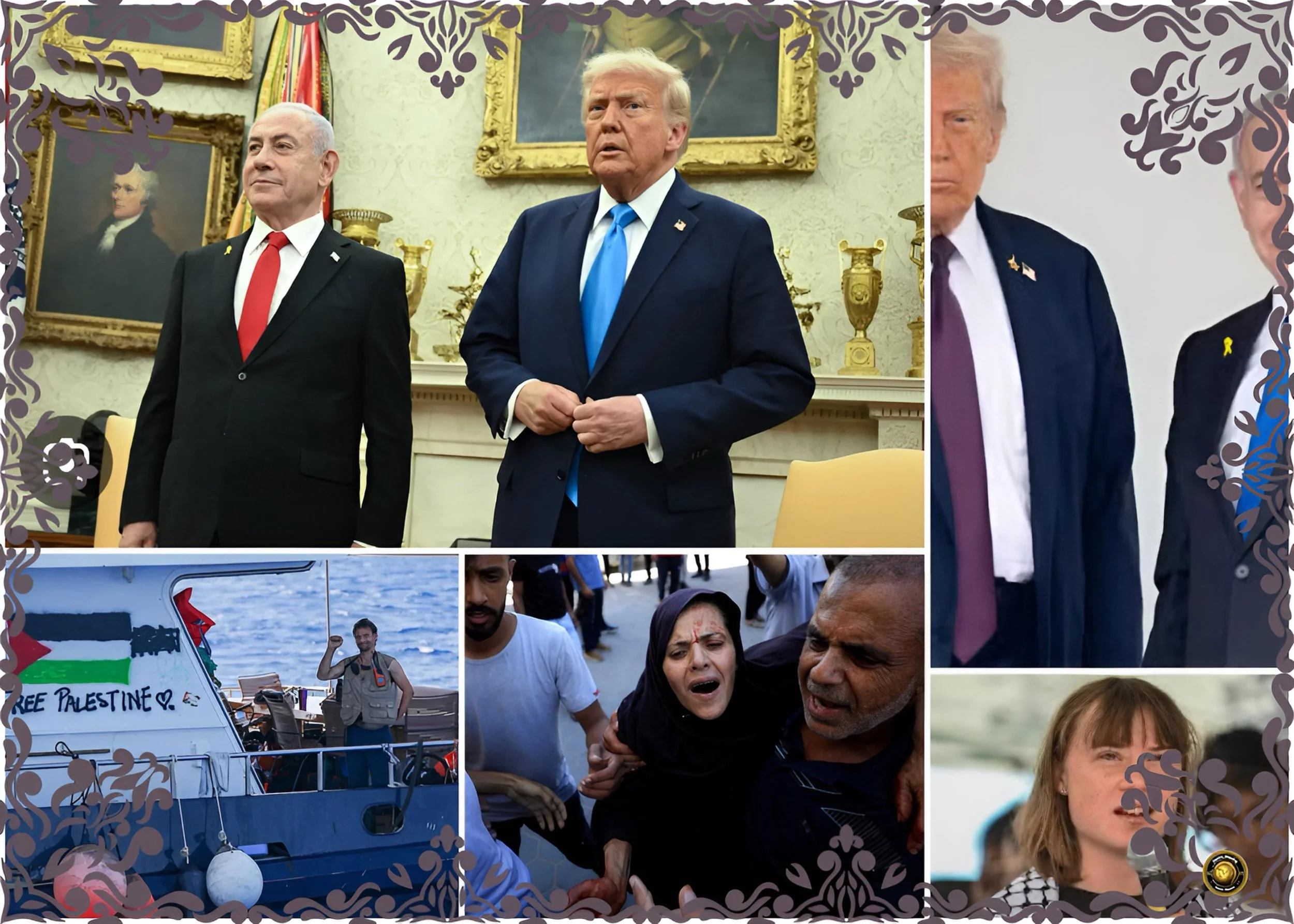
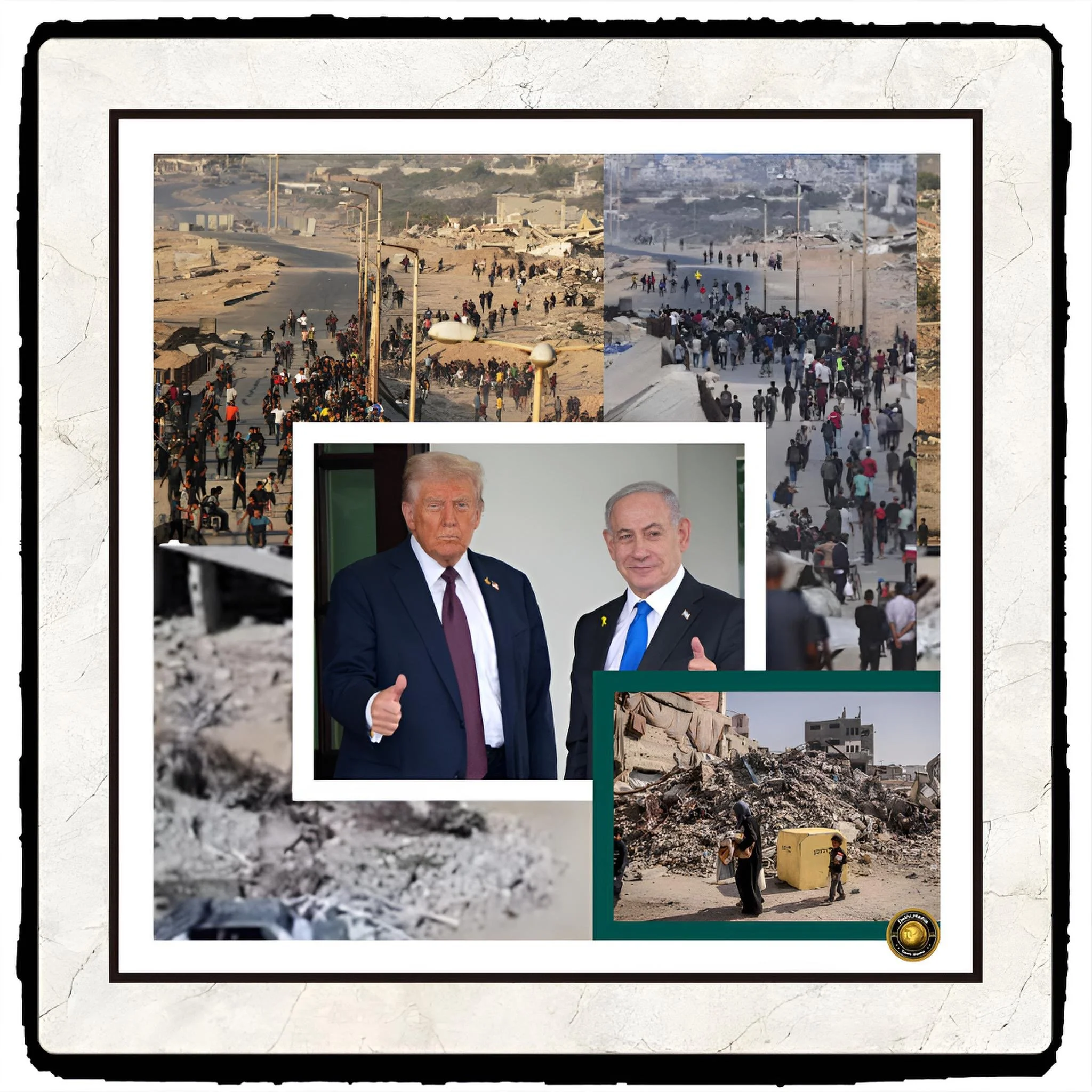
A precarious ceasefire between Israel and Hamas has been in effect since October 10, 2025, following the implementation of the first phase of President Trump’s 20-point peace plan, which was formally signed in Egypt on October 9, 2025.
However, the situation remains highly volatile and structurally unstable.
Current situation regarding hostage recovery and civilian casualties: As of November 8-9, 2025, Hamas has released 20 living Israeli hostages (completed by October 13) and handed over 25 of the 28 deceased hostages promised under the ceasefire agreement.
Five deceased hostages remain in Gaza—four killed during the October 7, 2023, attack and one soldier from a 2014 conflict—with Hamas claiming that locating bodies in extensive rubble requires “significant efforts and specialized equipment.”
Israel has accused Hamas of deliberately delaying body retrieval and has linked all progress to Phase 2 negotiations on the release of these remains.
The human cost remains staggering: Israel has killed more than 69,000 Palestinians (according to Gaza health authorities), primarily women and children, with over 170,600 injured since October 2023.
According to more recent U.S. estimates cited in scholarly sources, approximately 60,000 Palestinians had been killed by August 2025, including over 17,000 children, with 87,000 receiving critical care.
Israel’s Continued Military Operations Against Lebanon
Yes, Israel continues active military operations against Hezbollah in southern Lebanon despite a November 2024 ceasefire agreement.
Between October 27 and November 2, 2025, the Israeli Defense Forces conducted intensive operations, including airstrikes, drone strikes, artillery bombardments, and ground activities across 21 Lebanese locales.
These operations killed at least six Hezbollah operatives and several unidentified persons.
Israel’s stated rationale: Israeli officials claim that Hezbollah is systematically rebuilding its military infrastructure north and south of the Litani River in violation of the ceasefire terms, posing what they characterize as an imminent threat to Israeli security.
The Israeli Security Cabinet has discussed intensifying operations in response to what it views as Hezbollah’s “regeneration efforts” and “restoration of offensive capabilities.”
The fundamental problem: The Lebanon-Israel ceasefire, mediated by the United States and taking effect in November 2024, required Israel to cease offensive actions and gradually withdraw, while Hezbollah was to relocate heavy weaponry north of the Litani River.
However, this agreement lacks robust verification mechanisms and enforcement provisions. Israel continues targeting sites in Lebanon while alleging Hezbollah violations, claims the group rejects.
Lebanese President Joseph Aoun has directed the Lebanese Armed Forces to “interdict any Israeli penetration,” yet has limited capacity to enforce this against Israeli military operations.
Scholarly Analysis: Which Side Is “On the Wrong Side”?
This is the most complex dimension of our analysis, and it requires acknowledging that serious academic and legal scholarship presents competing but substantively different frameworks for analyzing responsibility and culpability.
There is no single “non-biased” analysis because the fundamental interpretive frameworks themselves embody different value hierarchies.
However, rigorous scholarship does identify specific factual and legal questions rather than reducing the conflict to moral binaries.
International Law Perspectives on Palestinian Self-Determination and Occupation
The mainstream international legal position recognizes that prolonged military occupation violates the right to self-determination.
Multiple UN resolutions and international legal instruments affirm that self-determination is a foundational principle of international law, emerging prominently after World War II as the legal basis for decolonization.
Under this framework:
The Israeli occupation of Palestinian territories (West Bank, Gaza Strip) since 1967 is analyzed by legal scholars as a “continuing armed attack” against the Palestinian people.
If this interpretation is accepted, Palestinian armed resistance could theoretically constitute legitimate self-defence against this continuing occupation rather than unprovoked aggression.
A Yale International Law journal article examining this through a “Third World Approach to International Law” (TWAIL) argues that international law has historically been applied asymmetrically, supporting colonial and settler-colonial projects (including the Israeli one) while denying colonized peoples the right to self-determination.
Key scholarly argument
Even as self-determination became entrenched in international law post-WWII, the Zionist movement actively colonized Palestine with imperial support, “in direct opposition to Palestinians’ demands for self-determination.” The Palestinian Nakba (1948) involved the forcible expulsion of 750,000-1 million Palestinians and the killing of at least 15,000, and international law failed to prevent this asymmetry.
Counter-legal arguments emphasize that the Oslo Accords (1993) established a framework for negotiated resolution rather than unilateral Palestinian action, and that the interpretation of occupation as “continuing armed attack” is non-standard and rejected by most states’ legal positions.
Some scholars argue that Israel’s security concerns legitimately constrain Palestinian self-determination and that other peoples (particularly post-WWII states) have accepted territorial constraints on self-determination for security reasons.
The October 7 Attack and Proportionality Questions
Academic consensus acknowledges facts, though assessments differ
The October 7, 2023, Hamas attack killed approximately 1,200 Israelis and took 251 hostages.
Scholars universally recognize this attack as intentional targeting of civilians, constituting a war crime under international humanitarian law, regardless of the political context.
However, scholarly analysis diverges sharply on the consequential question
Did Israel’s subsequent military response observe proportionality requirements?
One prominent Cairo Review analysis argues that Hamas created an “ethical trap” for Israel: “Its initial attack was ethically obnoxious and was roundly condemned by the international community, yet it succeeded in provoking Israel into a counterattack that appears to know no ethical boundaries.”
This analysis notes that Israel’s campaign killed 60,000+ Palestinians by mid-2025 (compared to ~1,200 Israelis died on October 7), making the body count ratio approximately 50:1.
International humanitarian law (IHL) requires that even legitimate military operations must be proportional—the expected military advantage must outweigh anticipated civilian harm.
Numerous international law scholars argue that destroying over 60,000 lives (mostly civilians) to eliminate Hamas, which remains politically supported in surveys, violates this proportionality requirement.
Conversely, Israeli military analysts and some Western security scholars argue that Hamas’s deliberate embedding of military infrastructure within civilian populations creates genuine military necessity, that Hamas sources inflate casualty figures, and that Israel has attempted (though controversially) to minimize civilian harm through warnings.
The Structural Dilemma of Asymmetric Conflict
A crucial scholarly insight that transcends simple blame-assignment is the recognition that the Israeli-Palestinian conflict presents a structural asymmetry of power and historical grievance that makes “neutral” positions analytically problematic.
As one scholarly source notes:
The Palestinian right to self-determination has been systematically denied through international law that has paradoxically been applied to enable decolonization elsewhere while being suspended for Palestine.
Meanwhile, Israel faces genuine security threats from many Iran-backed allies explicitly committed to its destruction.
These are not equivalent moral positions, but they are both grounded in legitimate grievances and security concerns.
The scholarly consensus, to the extent one exists, suggests that both sides bear responsibility for choices that have perpetuated rather than resolved the conflict:
Palestinian side
The refusal to accept partition proposals in 1947 and multiple subsequent offers; the delegation of armed struggle to groups like Hamas that explicitly reject negotiated settlements; the October 7 attack, which, while militarily dramatic, strategically set back Palestinian interests by justifying comprehensive Israeli retaliation.
Israeli side
Continued settlement expansion in the West Bank; political divisions within Israeli society that have prevented coherent peace negotiations; the maintenance of a blockade and occupation regime that fuels Palestinian grievance; the scale of military response that, even if militarily justified by individual operations, collectively achieves a casualty profile that damages Israel’s long-term strategic position.
Why a Ceasefire-to-Peace Transition Appears Unlikely
FAF observation not seeing a ceasefire coming, turning into peace, reflects the assessment of serious scholarly analysts and is supported by structural evidence:
Phase 2 Negotiations: The Critical Bottleneck
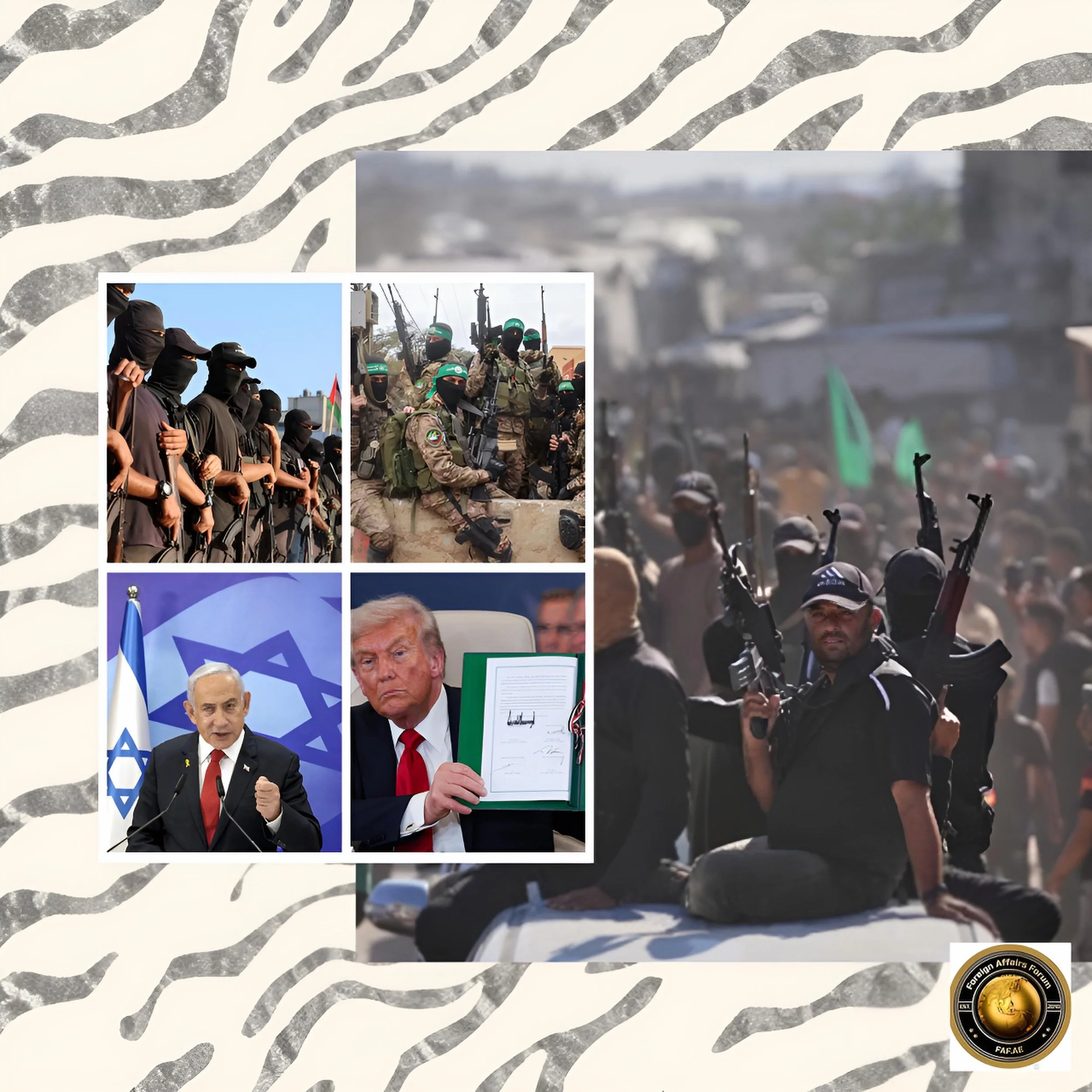
The Trump plan’s second phase requires Hamas’s complete disarmament and removal from Gaza’s governance, yet Hamas explicitly rejects this demand.
On November 9, 2025, Hamas’s Al-Qassam military wing declared they “will not surrender” and rejected Israel’s ultimatums, stating that surrender is “against their principles.”
Israeli Prime Minister Netanyahu has stated that “in the second phase of the deal, Hamas will be disarmed, and the Gaza Strip will be demilitarized.
It will happen either diplomatically, according to the Trump plan, or militarily, by us.”
Trump similarly stated, “If they don’t disarm, we will disarm them quickly and potentially forcefully.”
The structural problem
Hamas will not voluntarily disarm because disarmament means political annihilation.
The group has no incentive to transition from military force to civilian governance while facing potential prosecution for war crimes.
The Trump plan envisions forcing disarmament through an International Stabilization Force (ISF) comprising approximately 20,000 troops.
The ISF as an International Occupation
The Trump administration is seeking UN Security Council approval for a resolution establishing an ISF with a two-year mandate (through the end of 2027) to govern Gaza alongside a “Board of Peace” chaired by Trump.
This force would be empowered to “use all necessary measures” to fulfill its mandate, including enforcing Hamas disarmament.
Why is this unlikely to produce lasting peace?
No Arab troop commitments despite claims
While Trump has claimed many countries are volunteering, Arab diplomats have privately stated they do not want to send their troops if it means clashing with Hamas.
Countries including Indonesia, Azerbaijan, Egypt, and Turkey have shown “willingness to contribute,” but formal commitments remain unclear.
The ISF would likely be primarily Western forces (U.S., UK, Canada, Australia, France, Spain, Denmark, Germany), which Palestinians and the broader Arab world would perceive as external occupation rather than neutral stabilization.
Palestinian governance under tutelage
The plan establishes a “Board of Peace” led by Trump (with Tony Blair as another member) that would supervise a Palestinian “technocratic committee” of unelected administrators.
This governance model, while potentially technically competent, lacks democratic legitimacy and could be perceived as neo-colonial administration rather than Palestinian self-governance.
Hamas’s reassertion of control
As Israeli forces have withdrawn in Phase 1, Hamas has reasserted authority in evacuated areas, carrying out retribution executions against those perceived as collaborators.
This suggests that once Phase 1 stabilizes, Hamas will resist disarmament and will mobilize against the ISF, requiring the force to conduct active counterinsurgency operations—precisely the military operations that would recreate conflict conditions.
Unresolved political questions
The plan does not address the West Bank, where Israeli settlements continue expanding and where the Palestinian Authority remains fractured and unrepresentative.
Any durable Gaza settlement that does not resolve the broader Palestinian question will be unstable.
Public Opinion Hardening
Survey data reveal that conflict has hardened rather than softened political positions:
In Gaza
An early 2025 survey found that the war has strengthened rather than weakened Gazan maximalist political goals, while offering virtually no support for binational solutions or coexistence frameworks.
In Israel
Only 26% of Jewish Israelis believe a way can be found for Israel and a Palestinian state to coexist peacefully; 50% say it’s impossible.
By July 2025, only 23% of Jewish Israelis supported a two-state solution, compared to 82% of Arab Israelis.
International public opinion
American skepticism toward Israel has increased substantially, with 39% saying Israel is “going too far” (up from 27% in late 2023) and 59% holding unfavorable views of the Israeli government.
The Question of “Lost Land of Palestine” Under Full Occupation
FAF framing of potential Palestinian territorial loss touches on a deeply contested scholarly and political question.
Further rigorous analysis requires disaggregating several claims:
Current Legal Status of Palestinian Territories
Under international law, the West Bank remains designated as “occupied Palestinian territory” despite Israeli settlements.
The International Court of Justice, in a 2024 advisory opinion, affirmed that the Israeli occupation is illegal and that Israel has obligations to Palestinian self-determination.
Multiple countries (France, UK, Canada, Australia, Belgium, Ireland, Norway, Spain) have announced or pledged support for Palestinian statehood recognition. However, many have attached conditions regarding demilitarization, elections, and exclusion of Hamas from governance.
However, there is no scholarly consensus on whether this support translates into enforceable political change.
As one CFR analyst noted, these announcements appear to be “virtue signaling” responding to domestic pressure rather than reflecting genuine policy shifts that would alter conditions on the ground.
Scenarios for the Palestinian Political Future
Scholarly analysis identifies several potential trajectories
Scenario 1
Indefinite Occupation with Limited Autonomy
Israel continues administrative control of the West Bank with Palestinian self-governance limited to municipal functions, the Israeli military maintains security authority, and settlements continue expanding.
Under this scenario, formal Palestinian “statehood” would be declaratory but substantively powerless. This appears to reflect the preferences of the Netanyahu government.
Scenario 2
International Administration and Gradual Reform
The Trump plan for Gaza potentially becomes a template for broader Palestinian administration under international supervision.
Over the years, Palestinian technical capacity and governance reforms might enable transition to autonomous governance. This assumes successful ISF deployment and Hamas disarmament—both uncertain.
Scenario 3
Palestinian Authority Reforms and Two-State Emergence
The Palestinian Authority undergoes substantial institutional reform, becomes more representative and effective, and negotiates a final status agreement recognizing Palestinian statehood with defined borders and limited sovereignty constraints. Israeli settlement activity halts or reverses.
This is the scenario advocated by international peace processes but remains furthest from current trajectories.
Scenario 4
Fragmentation and De Facto Territorial Partition
The West Bank becomes administratively partitioned into Israeli-controlled zones (roughly following current Settlement bloc areas) and Palestinian-administered zones, with neither achieving full sovereignty or territorial contiguity.
Palestinians exercise self-governance in fragmented territories while Israeli security and resource control remain paramount.
The Scholarly Debate on Palestinian Statehood
One controversial argument—made in a source aligned with right-wing Israeli perspectives—argues that Palestine does not currently meet the legal criteria for statehood under international law (defined government, defined territory, recognized population, capacity to enter diplomatic relations).
Under this argument, Palestinian “statehood” remains conditional on institutional development and international recognition.
The counter-argument, rooted in anti-colonial international law scholarship, holds that this criterion itself is colonial in origin—applied to newly independent African and Asian states but not to Israel, despite similar institutional uncertainties in 1948—and that requiring Palestinians to “prove” statehood before exercising self-determination reverses the proper legal sequence.
What Comes Next: Geopolitical Implications
Immediate Outlook (Months)
The critical flashpoint is Phase 2 negotiations regarding Hamas disarmament.
If these fail (which appears more likely than success based on current positions), one of three escalatory paths emerges:
Israel unilaterally reoccupies Gaza and resumes military operations against Hamas remnants, likely destroying the ceasefire and restarting intensive conflict.
The ISF deploys and attempts forced disarmament, leading to international military operations against Hamas in Gaza—effectively shifting the combatant from Israel alone to global forces, which may reduce international political support for continued operations.
A “frozen conflict” emerges where Phase 1 stabilizes, but Phases 2-3 negotiations stall indefinitely, leaving Gaza under ISF control but Hamas politically viable, creating a long-term garrison state.
Medium-Term Outlook (1-3 Years)
If the ceasefire holds without complete Phase 2 implementation
Gaza could stabilize as a territory under international administration with partial Palestinian self-governance. Israel would maintain a security perimeter and veto power over Palestinian governance.
This would de facto acknowledge Palestinian territorial claims without formally recognizing Palestinian statehood—a status that might be called “permanent interim status.”
Regional implications: Such an outcome would set a precedent for international administration in Middle Eastern conflict zones, potentially embolden other regional actors to seek similar interventions, and likely embed U.S. strategic interests in Gaza for years (given the Trump administration's central role).
Why Full Palestinian Statehood Appears Structurally Unlikely in This Framework
Power asymmetries
Israel retains military dominance and can override Palestinian preferences through force. International guarantees of Palestinian statehood depend on continued U.S. commitment, which fluctuates with administrations.
Settlement expansion
The Trump administration has indicated support for Israeli settlement activity in the West Bank, contradicting the Oslo framework that promised a settlement freeze.
If settlements continue expanding, Palestinian territorial viability for statehood becomes increasingly marginal.
Palestinian political fragmentation
The absence of a unified Palestinian political authority (Hamas-Fatah split, lack of elections since 2006 for the PA, declining Hamas popularity, yet lack of alternative leaders) means no Palestinian entity has the legitimacy or capacity to negotiate binding final status agreements.
Absence of Arab state pressure on Israel
Regional powers (Saudi Arabia, UAE, Egypt) have normalized or partially normalized relations with Israel and lack incentive to pressure Israel on Palestinian statehood.
The Arab League’s traditional coalition around Palestinian causes has fractured.
Conclusion
The ceasefire of October 2025 represents a tactical pause rather than a political transition. It achieves humanitarian gains (aid flow, reduced bombardment) and hostage recovery but does not resolve the underlying political antagonism.
The Trump plan’s architecture—with international administration, forced Hamas disarmament, Palestinian governance reforms—may produce a more stable Gaza than existed in 2023, but it does not produce Palestinian self-determination in the form of independent statehood.
Regarding our unbiased question about whether “one party is on the wrong side”: Rigorous scholarship suggests this framing oversimplifies a conflict where both historical injustice (Palestinian dispossession) and legitimate security concerns (Israeli vulnerability) are real, but where power asymmetries mean that the Palestinian side bears the disproportionate cost of conflict continuation.
The question is not primarily moral blame but rather structural inequality in bargaining power and the absence of enforcement mechanisms capable of holding Israel to the commitments it makes.
Without these, Palestinian territorial rights remain perpetually negotiable rather than guaranteed—a condition international law designates as incompatible with genuine self-determination.