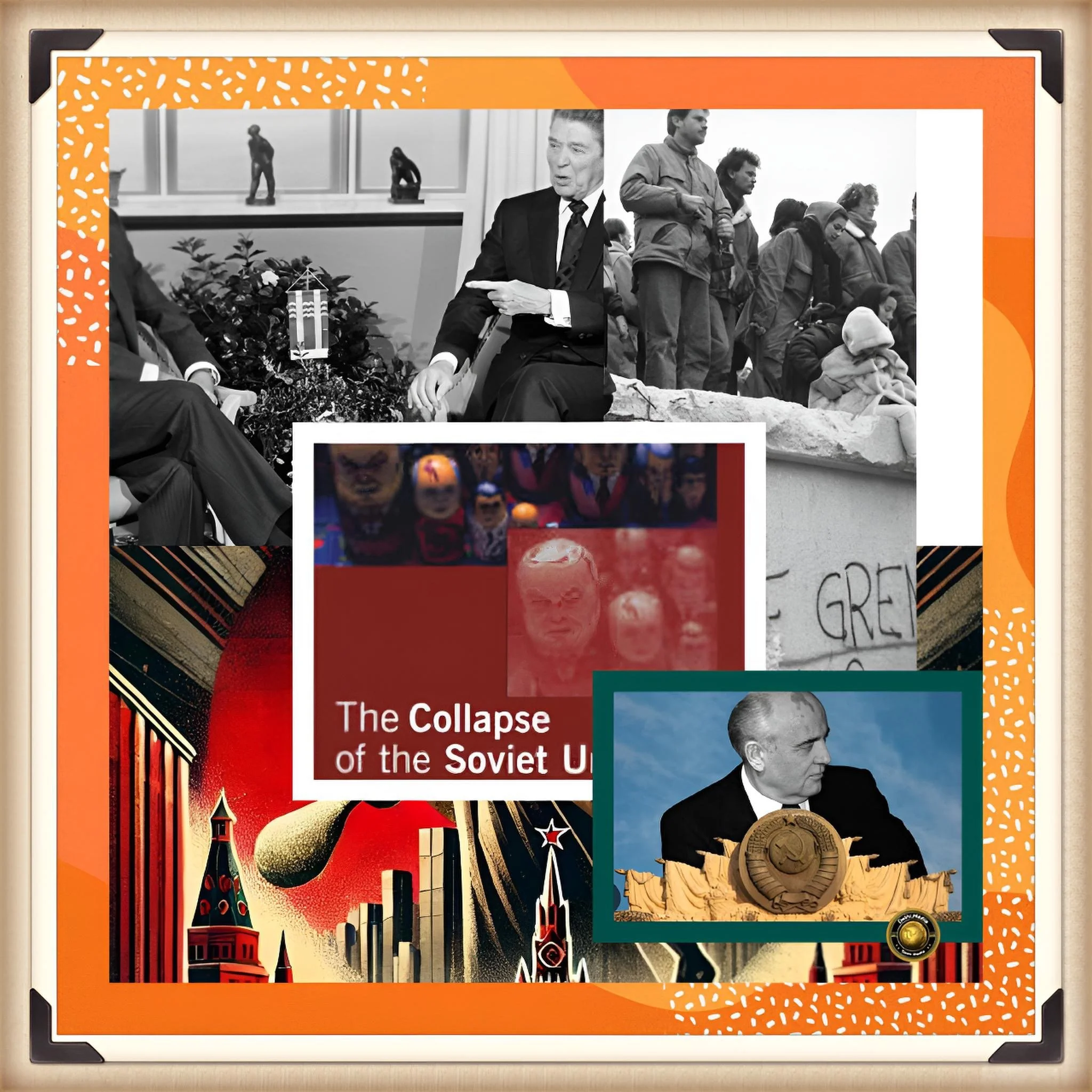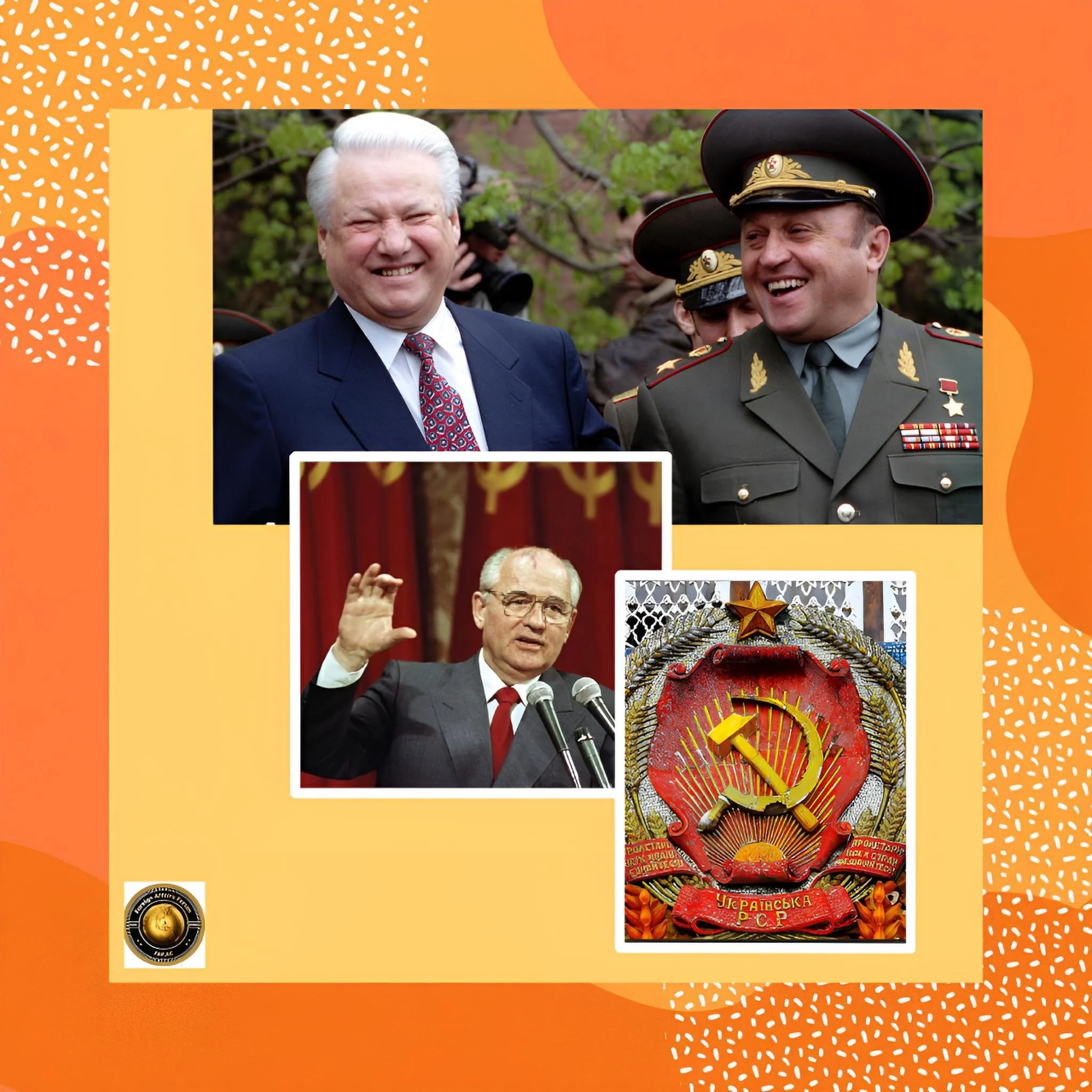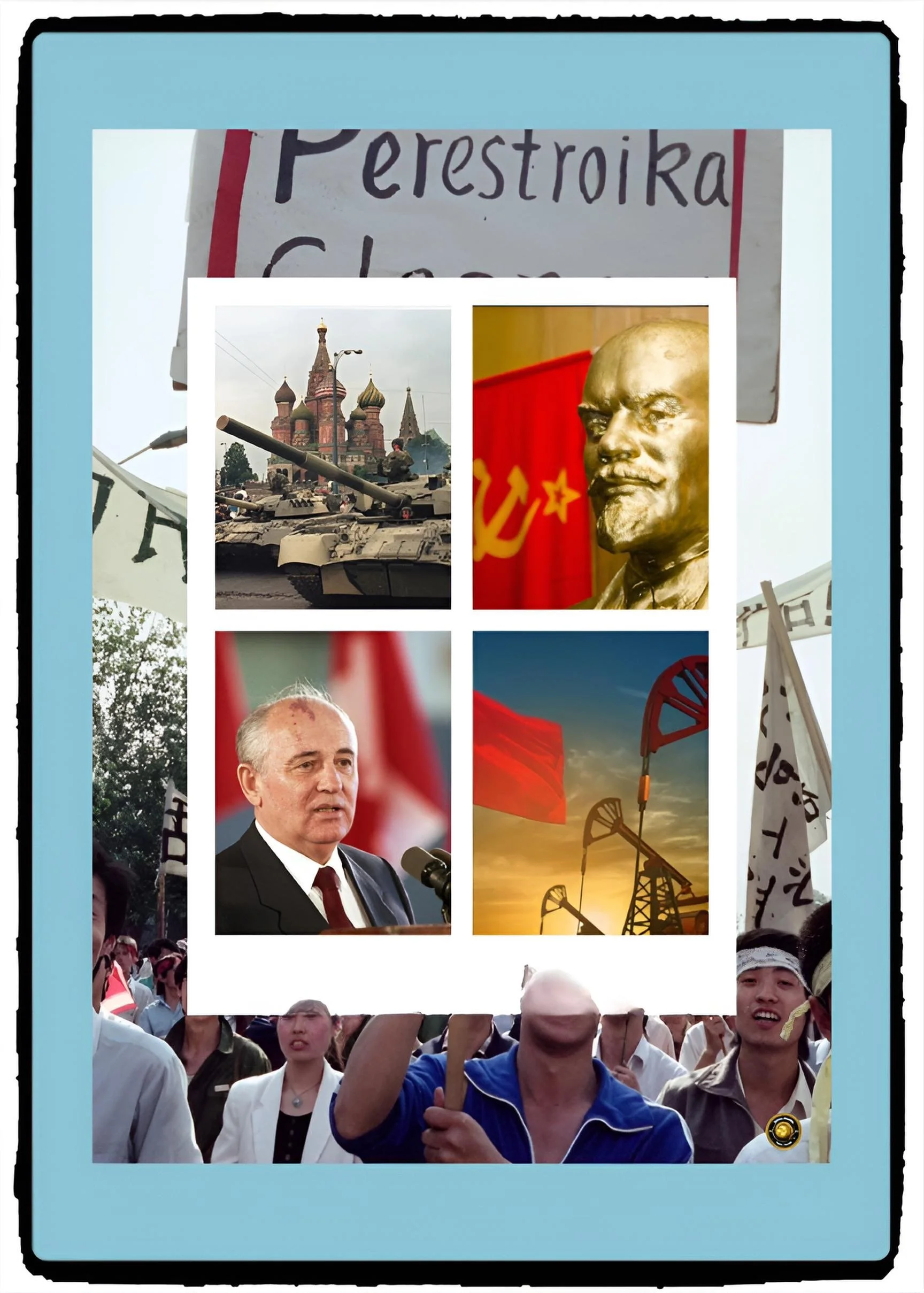
Inside the Collapse: The Hidden Economics of Soviet Dissolution - Part II
Executive Summary
Economic Collapse and Systemic Failure: The Decline and Dissolution of the Soviet Union
The collapse of the Soviet Union in 1991 resulted from a convergence of interconnected economic pathologies that developed throughout the 1970s and 1980s. Rather than a singular catastrophic event, the dissolution emerged from the structural exhaustion of central planning, the debilitating burden of military expenditure, technological stagnation relative to Western economies, and the devastating impact of declining oil revenues.
The crisis deepened when Mikhail Gorbachev’s perestroika reforms inadvertently destabilised the residual mechanisms that had maintained macroeconomic order, triggering hyperinflation and complete loss of consumer confidence.
The evidence demonstrates that the Soviet Union’s economic trajectory was fundamentally unsustainable well before 1985, with the critical exogenous shock of oil price collapse serving as the decisive catalyst that accelerated terminal decline.
Introduction
The dissolution of the Union of Soviet Socialist Republics on 26 December 1991 represents one of history’s most consequential geopolitical transitions, yet its underlying economic causes remain subject to interpretative debate. Contemporary observers and subsequent scholars have advanced competing explanations: some emphasise ideological exhaustion and political reform failure, others highlight technological obsolescence, whilst a third school attributes primacy to commodity market dynamics.
This analysis synthesises evidence across these domains to demonstrate that the Soviet collapse was fundamentally rooted in economic dysfunction—specifically, the simultaneous failure of central planning mechanisms, unsustainable military commitments, technological regression, acute resource misallocation, and severe external vulnerability to commodity price movements.
The confluence of these structural weaknesses created conditions in which systemic remediation became impossible, rendering the regime’s final years an inexorable descent into financial chaos and institutional dissolution.
The Central Planning Mechanism: Structural Stagnation and Quota-Driven Inefficiency
The Soviet command economy, despite achieving substantial industrialisation during the interwar and immediate postwar periods, exhibited a fundamental structural limitation that became increasingly apparent from the early 1970s onward. The centralised planning apparatus, originally designed to mobilise resources for heavy industrial construction and military production through administrative mandate, proved incapable of managing the complexity of a mature industrial economy comprising approximately 24 million distinct commodities and production inputs. This administrative saturation created cascading problems throughout the economic structure.
Soviet productivity growth, which had averaged 4.5 percent annually between 1950 and 1975, decelerated to merely 2 percent between 1975 and 1987. This slowdown reflected not temporary cyclical weakness but the permanent exhaustion of the model’s productive capacity. The quota-driven system created perverse incentives that systematically discouraged productivity enhancement and technological innovation.
Enterprise managers, assessed solely on their capacity to meet quantitative production targets, deliberately understated productive capacity to establish realistic quotas and avoided implementing new technologies that threatened production disruption. The ratchet effect—wherein successful overproduction resulted in proportionally increased quotas for subsequent planning cycles—ensured that managerial initiative became economically irrational. A manager who successfully introduced efficiency-enhancing technology faced only the penalty of permanently elevated targets without corresponding reward, thereby transforming innovation from incentive to liability.
The information asymmetry inherent in central planning proved insurmountable. Planners located in Moscow, isolated from ground-level operational realities, received distorted data filtered through multiple bureaucratic layers and inflated by enterprise management seeking to obscure capacity constraints. As the Soviet shadow economy (informal second economy) expanded to represent over 10 percent of official GDP by the late 1980s, the divergence between statistical reality and actual material availability widened catastrophically.
Chronic shortages of basic consumer goods became routine, with hoarding and black market acquisition representing primary mechanisms of household provisioning. This dislocation between theoretical plan and actual distribution created a hidden tax on economic efficiency, as productive resources were diverted into shadow channels beyond central monitoring and control.
Energy Dependence and the Oil Price Catastrophe
From the mid-1970s onward, the Soviet Union’s economic stability rested upon a deceptively fragile foundation: oil exports.
Following the discovery of vast oil reserves in Western Siberia, combined with the global oil price surge triggered by the 1973 OPEC embargo and the 1979 Iranian Revolution, the Soviet leadership became systematically dependent on petroleum revenues for hard-currency acquisition. During the late 1970s and early 1980s, when global oil prices averaged between $30 and $40 per barrel, this arrangement appeared stable and provided crucial resources for maintaining both military expenditure and grain imports.
The collapse in global oil prices during the 1980s constituted the most severe exogenous shock to the Soviet economy. Beginning from approximately $35 per barrel in 1980, prices declined precipitously to below $10 per barrel by 1986—a decline of more than 70 percent in nominal terms. For an economy producing 12 million barrels daily and exporting approximately 3 million barrels for hard-currency revenue, this price collapse translated into the loss of approximately $20 to $21 billion in annual hard-currency earnings. This represented a fiscal shock equivalent to a 1 percent reduction in overall GDP growth, sufficient to push a stagnating economy toward absolute contraction.
More critically, this revenue loss directly undermined the Soviet Union’s capacity to import grain from international markets, creating an acute food security crisis that intersected with chronic agricultural inefficiency.
The strategic dimension amplified the economic catastrophe. Soviet leadership, interpreting the price collapse as a temporary market fluctuation, had committed substantial additional oil revenues to the Afghanistan military intervention in the 1970s, predicated upon the assumption that prices would remain permanently elevated.
This policy miscalculation proved catastrophic: the USSR was locked into unsustainable military expenditure precisely when oil revenues began their irreversible decline. As the economist Yegor Gaidar subsequently analysed, the Soviet collapse fundamentally reflected the interaction between structural economic weakness—insufficient agricultural productivity, inadequate grain reserves, non-competitive manufacturing sectors—and commodity market exposure. Only abundant oil revenues had temporarily masked these underlying deficiencies; their withdrawal exposed the complete unviability of the system.
Military Expenditure: The Persistent Drain on Productive Capacity
Soviet military spending constituted one of the most significant structural drains on the civilian economy throughout the Cold War period, becoming progressively more burdensome as overall economic growth decelerated. Official Soviet figures understated actual defence expenditure by a factor of between 2 and 4, claiming defence represented only 8 percent of GNP when Western intelligence and subsequent Russian revisions established the actual figure at between 15 and 20 percent of GNP.
This constituted a vastly disproportionate military burden relative to the competing superpower: whilst the United States allocated approximately 5 percent of its vastly larger GDP to defence, the Soviet Union was forced to divert one-third of its economic output to sustain military parity.
The structural consequence of this allocation was the creation of what contemporary analysts termed a “dual economy”: a capital-intensive military-industrial complex producing advanced weapons systems, whilst the consumer economy deteriorated through chronic underinvestment. Within the command economy, the military-industrial complex exercised monopolistic control over the most advanced production technologies, research facilities, and skilled technical personnel. Scientific innovations and production improvements achieved in military research remained systematically locked within classified laboratories, with minimal technological diffusion to civilian sectors.
The result was paradoxical: the Soviet Union excelled in narrow domains of military-technological competition (space programs, advanced weapons systems) whilst remaining decades behind Western economies in consumer technologies and productive efficiency.
The Afghanistan military intervention (1979-1989) exemplified this pathology. The war consumed enormous material resources, tied down over 100,000 troops, and generated mounting fiscal deficits at precisely the moment when oil revenues began declining. Rather than serving as a strategic success that secured geopolitical interests, the intervention accelerated economic exhaustion by consuming irreplaceable hard-currency reserves and labour resources needed for civilian economic maintenance.
The war became iconic of Soviet strategic overreach: military capability that was strategically obsolete and economically unsustainable, pursued in the absence of any realistic exit mechanism.
Technological Obsolescence and the Information Revolution Gap
The Soviet Union’s technological trajectory after the early 1970s represented not merely relative stagnation but absolute regression relative to advancing global standards. Whilst the Soviet economy had achieved parity with Western industrial economies in heavy industry production—by the 1980s the USSR produced 80 percent more steel, 78 percent more cement, and 42 percent more oil than the United States—this industrial dominance became economically irrelevant.
The decisive technological competition of the late twentieth century shifted from heavy industry to information technology, a domain in which the Soviet Union proved utterly incapable of competing.
Soviet computer science, despite early achievements and substantial state investment, fell catastrophically behind Western development.
By the 1980s, Soviet microelectronics technology lagged Western standards by a minimum of five years, with the Soviet Union dependent on covert technology acquisition (espionage and theft) for between 25 and 75 percent of microelectronic components depending on device category. Rather than developing indigenous computing capabilities, the Soviet system shifted to wholesale copying of Western designs, creating technological lock-in and perpetual dependency on Western innovation.
The personal computer revolution of the late 1970s and early 1980s, which fundamentally restructured productive capacity and competitive advantage in developed economies, bypassed the Soviet Union entirely. The centralised planning system’s risk aversion, combined with the absence of competitive pressure and private capital formation, made technological entrepreneurship structurally impossible within the Soviet framework.
This technological gap manifested acute economic consequences. The Soviet Union could not transition from industrial to information-age production methods, thereby remaining trapped within a manufacturing paradigm that was becoming economically obsolete. Enterprise-level productivity gains that Western economies achieved through computerisation, networked communication, and decentralised information processing remained unavailable to Soviet firms.
By 1985, when Gorbachev assumed power, the Soviet economy was not merely stagnant but technologically regressing relative to global standards, unable to compete in emerging sectors and locked into declining industries.
Consumer Market Collapse and the Inflation-Shortage Paradox
The Soviet pricing system created one of economic history’s most perverse distortions: the simultaneous existence of inflation and persistent shortages, combined with the systematic degradation of living standards despite theoretical full employment.
The mechanism operated as follows: the Soviet state maintained artificial price controls on consumer goods to constrain official inflation measurements, whilst simultaneously expanding money supply through wage increases and public expenditure without corresponding increases in consumer goods production. This created conditions of repressed inflation, wherein nominal wages exceeded purchasing power due to insufficient goods availability.
Between 1965 and the late 1980s, retail price subsidies—designed to keep consumer prices stable—expanded from 4 percent of state budget expenditure to 20 percent. Simultaneously, the share of household savings that represented “forced savings” (money accumulated because no goods were available to purchase) increased from 9 percent in 1965 to 42 percent by 1989.
Soviet citizens accumulated monetary holdings that bore no correspondence to purchasable goods, creating conditions of potential hyperinflation once price controls were relaxed. Long queues at retail establishments, empty shelves, and chronic shortages of routine consumer items (basic foodstuffs, clothing, hygiene products, consumer durables) became defining characteristics of late-Soviet daily life.
This shortage economy generated cascading inefficiencies. Managerial decisions focused on acquiring goods through informal channels rather than optimising production. The opportunity cost of acquiring consumer necessities—time spent in queues, resources allocated to black market acquisition—represented an invisible tax on productive activity. The system’s inability to provide reliable consumer incentives meant that wage increases ceased to motivate improved labour productivity.
By the late 1980s, as economist analysis noted, additional unspendable money had become economically inert; workers understood that wage growth would not translate into increased consumption, thereby eliminating the primary mechanism linking income to productivity incentive.
Agricultural Dysfunction and Grain Dependency
Soviet agriculture represented a perpetual source of systemic dysfunction throughout the Soviet period, originating in Stalin’s collectivisation policy and persisting as an unresolved structural problem through the regime’s final decade. Collectivised agriculture exhibited systematically lower productivity than private cultivation, attributable to the absence of direct incentive linkage between producer effort and personal benefit, combined with the inadequacies of centralised coordination in managing complex seasonal agricultural operations.
The Soviet Union, despite possessing vast agricultural territory and substantial mechanisation investment, remained structurally unable to produce sufficient grain for domestic consumption, thereby necessitating substantial grain imports throughout the 1970s and 1980s.
This agricultural import dependency created critical economic vulnerability. The Soviet Union could only finance grain imports through hard-currency earnings, which derived almost exclusively from oil exports. As oil prices collapsed during the 1980s, the capacity to import grain—already constrained by declining export revenues—disappeared entirely.
The system entered a vicious cycle: declining agricultural output necessitated imports; declining oil revenues eliminated the capacity to finance imports; and import restrictions further degraded living standards and agricultural morale. The agricultural sector thus became a critical weak link through which the broader economic system’s fragility transmitted into immediate civilian hardship.
The Gorbachev Perestroika: Reform as Accelerant to Collapse
When Mikhail Gorbachev assumed power in March 1985, he inherited an economy exhibiting all the symptoms of systemic exhaustion: stagnant growth, technological obsolescence, unsustainable military expenditure, agricultural dysfunction, and consumer market deterioration. Gorbachev’s response—the perestroika (restructuring) and glasnost (openness) programs—represented an attempt to revitalise the Soviet system through limited marketisation whilst maintaining state ownership and central direction. This approach proved catastrophically misconceived.
Perestroika’s initial phase (1985-1987), termed “acceleration,” attempted to stimulate economic growth through intensified labour discipline and improved technology acquisition.
These measures produced no improvement; GNP growth actually decelerated from 4.7 percent annually in 1980-1985 to 2.9 percent in 1986-1990. The second phase (1987-1990) introduced partial market mechanisms: enterprise directors received increased autonomy in production methods, hiring, and input sourcing, whilst price controls nominally remained in place.
This hybrid structure—combining residual central planning with incipient market elements—created the worst of both systems: enterprise directors used newfound autonomy to acquire equipment and labour, incurring costs that state subsidies papered over with “ad hoc loans and subsidies,” whilst price controls prevented market-clearing mechanisms from alleviating shortage conditions.
The consequences proved immediately destabilising. Gorbachev’s anti-alcohol campaign, intended to improve labour productivity, reduced state revenues from alcohol taxation at the critical moment of declining oil income, exacerbating fiscal deficits.
Attempted acceleration of capital investment without corresponding financial basis created additional imbalances. By 1990, the internal contradictions of perestroika became unmistakable: economic output fell, repressed inflation created lengthening queues and increasingly empty shelves, and popular dissatisfaction accelerated. Gorbachev’s approval rating plummeted from 52 percent in 1989 to 21 percent by 1990, whilst labour unrest intensified as promised improvements failed to materialise.
The fundamental error was structural: Gorbachev attempted to maintain state ownership, quantitative production targets, and price controls whilst simultaneously introducing market elements that required precisely the institutional prerequisites he refused to establish (private property rights, profit-based incentives, market-clearing prices). The resulting hybrid economy functioned as neither planned nor market system, creating pathological incentives that accelerated economic dissolution.
Cause-and-Effect Analysis: The Interaction of Structural Factors
The Soviet collapse resulted not from any single factor but from the malign interaction of structural weaknesses that eliminated every potential escape pathway. The central planning mechanism had exhausted its productive capacity by the mid-1970s, evident in the deceleration of growth rates and the systematic failure of innovation. This stagnation would have been economically unsustainable in any major economy, but the Soviet system faced additional structural constraints that eliminated adaptive capacity.
The defence burden—15-20 percent of GNP—was sustainable only at higher growth rates. When growth decelerated to 2 percent by the 1980s, the military claim on resources became absolutely unsustainable without either reducing living standards catastrophically or abandoning military parity with the United States. The Soviet leadership chose neither option, instead attempting to maintain both, which was impossible.
Oil export dependency, created by the agricultural sector’s chronic inability to feed the population without grain imports, constituted the critical vulnerability. Whilst oil prices remained above $30 per barrel, this dependency was manageable; the moment prices collapsed below $10 per barrel, hard-currency revenues disappeared and import capacity vanished. The timing was particularly catastrophic: oil prices fell just as Gorbachev’s reforms were destabilising the residual mechanisms of central planning, eliminating any possibility of managed adjustment.
Technological stagnation prevented the Soviet Union from competing in emerging high-value sectors, meaning that the economy lacked alternative sources of export revenue or productivity improvement. Agricultural dysfunction meant that the primary domestic use of hard currency (grain imports) was inelastic—consumption could not be postponed or reallocated. Military expenditure could not be rapidly reduced without undermining national security perceptions. The result was an economy with no viable adjustment mechanisms.
Gorbachev’s perestroika, rather than providing remediation, actively destabilised the surviving elements of central planning before establishing market alternatives. This created an unprecedented conjunction of system failures: central planning partially destroyed, markets not yet formed, price controls nominally in place but operationally ineffective, money printing accelerating as governments attempted to cover fiscal deficits, and hard-currency reserves depleting.
By 1990-1991, the economy had entered complete systemic collapse, with the regime lacking both the financial resources to maintain itself and the legitimacy to impose the necessary austerity.
Conclusion
The Inevitability of Systemic Failure
The economic collapse of the Soviet Union, culminating in dissolution in December 1991, represented not an improbable accident or the unintended consequence of reform efforts, but rather the inevitable terminal consequence of structural economic exhaustion.
The command planning system had achieved its maximum productive potential by the 1970s; subsequent decades witnessed only stagnation and decline. This stagnation, combined with unsustainable military expenditure, technological obsolescence, and acute agricultural dysfunction, created a system incapable of meeting the basic requirements of its population whilst maintaining its geopolitical position.
The oil price collapse of the it 1980s, raTher than causing the collapse, merely accelerated an already terminal trajectory by eliminating the temporary financial relief that elevated petroleum revenues had provided.
Gorbachev’s reform efforts, undertaken with the intention of system revitalisation, instead removed the last residual mechanisms of economic order before establishing functional alternatives, converting managed stagnation into chaotic dissolution.
The Soviet experience provides conclusive evidence of the long-term incompatibility between centralised economic planning and sustained growth in mature industrial economies. The system’s initial successes in rapid industrialisation could not be sustained beyond the point at which economies achieved sufficient complexity to exceed the cognitive and informational capacity of centralised planners.
The gap between system requirements and system capacity widened inexorably from the mid-1970s onward, with each attempted reform widening the gap further. By 1991, the regime’s dissolution represented not merely political failure but the completion of economic bankruptcy.