The U.S. ACA Subsidy Crisis Exposes Everything Wrong With Washington
Executive Summary
When Government Stopped Governing: The Inside Story of the ACA Crisis
The United States faces a critical healthcare policy juncture as enhanced Affordable Care Act (ACA) premium tax credits expire on December 31, 2025, with less than one week remaining for consumers to enroll in 2026 coverage before the December 15 deadline.
Without Congressional action, approximately 22 million Americans currently receiving subsidies will experience catastrophic premium increases averaging 114 percent, rising from an average of $888 annually to $1,904 in 2026.
The Congressional Budget Office projects that 2.2 million individuals will immediately lose health insurance coverage in 2026, with cumulative losses reaching 3.8 million annually through 2034 if no permanent extension occurs.
Beyond the human cost, the expiration threatens to cost states $34 billion in gross domestic product, eliminate 286,000 jobs, and generate significant political consequences for the Trump administration, whose approval ratings have already declined to 36 percent amid broader economic dissatisfaction.
The failure of both Democratic and Republican legislative proposals in the Senate on December 11, combined with House Republicans’ refusal to include subsidy extensions in their healthcare package unveiled on December 13, indicates that the crisis will likely materialize unless last-minute bipartisan action materializes in the final week of 2025.
Introduction
The Crisis Trump Inherited But Could Have Prevented
The anticipated expiration of enhanced premium tax credits represents one of the most consequential healthcare policy decisions facing the Trump administration and Congress.
These credits, first introduced through the American Rescue Plan Act in 2021 and subsequently extended through the Inflation Reduction Act, fundamentally expanded access to affordable insurance coverage.
The enhanced framework eliminated income caps previously set at 400 percent of the federal poverty level and reduced the percentage of household income individuals must contribute toward benchmark plans from 9.5 percent to 8.5 percent.
This expansion transformed the healthcare landscape, enabling millions of middle-income Americans, self-employed individuals, small business owners, and early retirees to access coverage previously unaffordable for their economic circumstances.
The impending deadline creates a collision between competing policy philosophies, political calculations, and the material welfare of millions of Americans.
Democracy’s Healthcare Failure: An Inflection Point for Trump’s Second Term
The Trump administration finds itself navigating contradictory following pressures
(1) The conservative Republican base adamantly opposed to sustaining what they characterize as a foundational Obama-era entitlement program
(2) The moderate Republicans from swing districts facing electoral vulnerability
(3) The Democrats demanding extension without conditions
(4) The broader electorate increasingly focused on healthcare affordability as a defining issue.
This convergence of factors—combined with measurable deterioration in public approval of the administration’s economic stewardship—transforms the subsidy question from a technical policy matter into a high-stakes political gamble with profound implications for the 2026 midterm elections.
Key Developments and Current Status
The Week Healthcare Failed America: Inside the ACA Subsidy Collapse
The path to the current crisis reveals persistent institutional dysfunction and ideological rigidity.
Throughout 2025, Republican leadership consistently resisted extending the subsidies, viewing them as costly entitlements incompatible with broader fiscal conservatism and antipathy toward the Affordable Care Act itself.
House Republicans passed the “One Big Beautiful Bill Act” in their reconciliation package, which not only failed to extend enhanced credits but implemented additional ACA marketplace restrictions that the Congressional Budget Office estimates would cause 3 million current enrollees to lose coverage.
Policy Paralysis at the Brink: How Indecision Becomes Catastrophic Policy Choice
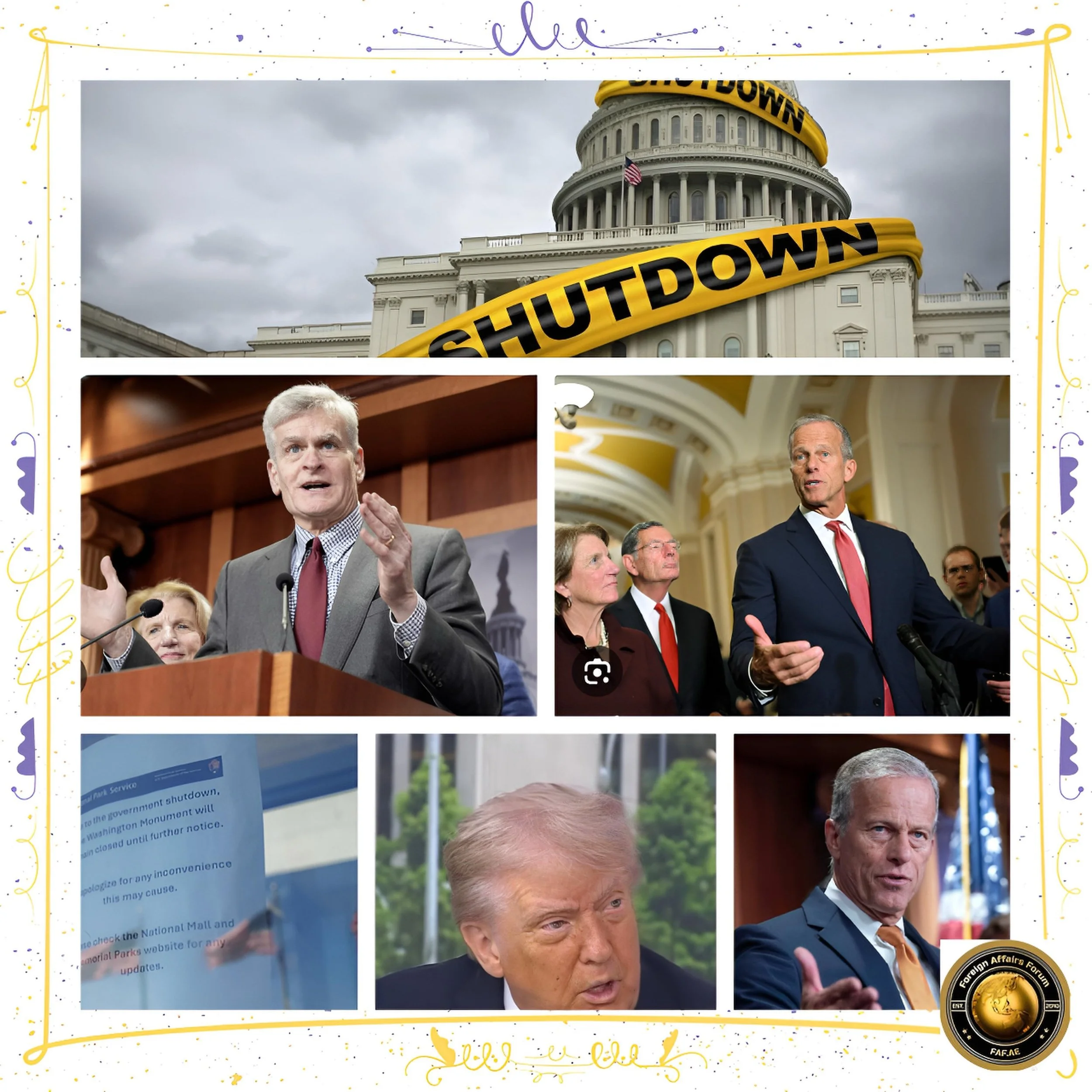
Congressional Democrats, recognizing the political potency of healthcare affordability, initiated a government shutdown in October 2025 partly to secure a commitment from Republican leadership for a Senate vote on subsidy extension.
December 11, 2025
This negotiated compromise resulted in scheduled votes on December 11, 2025—with the December 15 enrollment deadline looming just four days earlier.
The Senate rejected
(1) The Democratic proposal for a three-year extension
(2) The Republican alternative establishing health savings accounts, each failing on a 51-48 vote that fell far short of the 60-vote threshold required for passage.
Notably, four Senate Republicans—Susan Collins of Maine, Josh Hawley of Missouri, and Alaska Senators Lisa Murkowski and Dan Sullivan—broke ranks to support the Democratic measure, indicating fissures within the party despite leadership opposition.
The House response proved similarly unproductive.
December 12, 2025
On December 12, House Speaker Mike Johnson convened leadership, centrist Republicans, and hardliners to forge consensus.
December 13, 2025
The resulting package, unveiled on December 13, addressed
(1) Association health plans.
(2) transparency in pharmacy benefit manager practices.
(3) Cost-sharing reductions for certain ACA enrollees—conspicuously omitting any extension of enhanced tax credits.
This decision sparked open rebellion among approximately two dozen moderate Republicans representing swing districts, who have employed discharge petitions—a rare procedural mechanism bypassing committee and leadership structures—to force votes on two separate extension proposals.
Trump’s Missing Plan: While Congress Scrambles, President Offers Only Vague Promises
Representative Brian Fitzpatrick of Pennsylvania and Democratic colleague Jared Golden collaborated on a two-year extension framework, while Representative Kiggans of Virginia partnered with Representative Josh Gottheimer of New Jersey on a one-year extension, each proposal generating support exceeding 20 co-sponsors.
The administration’s position has oscillated throughout this crisis.
In late November, Politico reported the Trump administration was developing a proposal to extend subsidies for two years while implementing new income caps at 700 percent of federal poverty level and establishing minimum monthly premium payments of approximately five dollars.
The White House subsequently disavowed this reporting, with spokesperson Karoline Leavitt insisting the president was “not considering a straightforward two-year subsidy extension.”
Trump himself has indicated willingness to “look into” possibilities with conditions acceptable to Republicans, though he has not articulated a specific proposal or applied pressure on congressional leadership to resolve the matter.
Facts and Concerns: The Scale of Anticipated Impact
Why Republicans Are Walking Into a Healthcare Massacre
The quantitative dimensions of this policy failure warrant detailed examination.
The population dependent on enhanced subsidies represents approximately 22 million Americans, representing nearly 10 percent of the total U.S. population and approaching one-third of all Americans with private health insurance.
Meet the Americans About to Lose Affordable Healthcare: Their Stories Will Shock You
These individuals span multiple demographic and socioeconomic categories.
According to analysis from the Kaiser Family Foundation, 48 percent of ACA marketplace enrollees either work for small businesses or are self-employed.
The distribution by income shows 45 percent earning between 100 and 150 percent of federal poverty level, with significant populations at higher income levels who became eligible under the expanded framework.
The financial magnitude of anticipated premium increases will be severe and differentiated by income level.
While the national average increase of 114 percent obscures crucial distributional aspects, specific examples illuminate the consequences.
A 59-year-old single widow earning $63,000—just above the previous income cap of 400 percent of poverty—will see her annual premium payment for a silver-tier plan increase from approximately $5,355 with enhanced credits to $14,213 without them, representing nearly 23 percent of her gross income.
An individual earning $28,000 annually will experience an increase from approximately $325 to $1,562 in annual premiums, nearly fivefold growth.
For households with incomes below 200 percent of federal poverty level, seventy percent report inability to afford even a three-hundred-dollar annual increase necessary to maintain silver-plan coverage.
How the ACA Collapse Will Hit Small Towns Hardest
Rural areas face disproportionate impacts.
The analysis conducted by researchers affiliated with Rural Minds indicates rural residents will experience premium increases of 107 percent, compared to 89 percent in urban areas, representing an additional 28 percent burden.
Rural communities simultaneously confront limited insurer participation, fewer plan options, and overwhelmingly low rates of employer-sponsored coverage.
In non-Medicaid expansion states—Alabama, Florida, Georgia, Kansas, Mississippi, South Carolina, Tennessee, Texas, Wisconsin, and Wyoming—the Commonwealth Fund and George Washington University researchers estimate the ten non-expansion states would experience 70 percent of total job losses, approximately 194,000 positions, alongside $23 billion in lost GDP.
The market structural consequences of adverse selection present perhaps the most technologically challenging policy problem.
When subsidies decline, low-risk individuals with fewer healthcare needs disproportionately exit the insurance market, leaving a risk pool increasingly concentrated among higher-cost individuals requiring more intensive utilization.
This adverse selection dynamic drives premium increases beyond the direct impact of subsidy reduction, as insurers must raise prices to cover elevated expected costs, further accelerating exit of healthier enrollees.
Provider Catastrophe: How Revenue Collapse Will Force Hospital Layoffs and Closures
The Congressional Budget Office projects ACA marketplace enrollment will decline from an estimated 22.8 million in 2025 to 18.9 million in 2026, declining further to 15.4 million by 2030 absent extension. This trajectory suggests a market spiral potentially leading to instability in rural and economically distressed regions.
Provider institutions, particularly rural hospitals and community health centers that have expanded capacity predicated on enhanced insurance coverage rates, face revenue pressures that could precipitate facility closures.
The Commonwealth Fund research notes hospitals and providers would likely experience notable revenue declines, particularly in rural areas and regions relying heavily on marketplace and Medicaid coverage.
Uncompensated care burdens would increase, potentially forcing difficult choices regarding service maintenance and staff retention.
Cause and Effect Analysis: The Genesis and Escalation of Crisis
Worse Than 2013: How the ACA Crisis Dwarfs Previous Healthcare Controversies
Understanding how this crisis developed requires examination of both structural policy factors and political decisions. The enhanced subsidies represented temporary policy measures enacted through pandemic relief legislation.
The American Rescue Plan Act introduced the expansion in 2021, structured as a temporary measure contingent on Congressional renewal.
The Inflation Reduction Act extended these benefits through December 31, 2025, but Democrats did not secure permanent authorization despite multiple legislative efforts.
This temporal limitation created a built-in deadline that required affirmative Congressional action to continue benefits—a higher political bar than maintaining existing policy through simple failure to act.
Ideology Over Evidence: How Republican Dogma Could Destroy Healthcare System
The Republican Party’s ideological opposition to the Affordable Care Act fundamentally shaped the context. Despite a decade of existence and transformation into functional healthcare infrastructure, the ACA retained deep partisan polarization.
Conservative Republicans portrayed subsidy extension as entrenching the Obama-era law and expanding government expenditure, estimating permanent extension would cost approximately $335 billion over ten years according to Congressional Budget Office analysis.
This fiscal argument, while technically accurate, obscured the underlying tradeoff: approximately $335 billion in subsidy costs versus 2.2 to 4 million newly uninsured individuals, reduced economic activity of approximately $34 billion, and elimination of 286,000 jobs.
Trump’s Broken Promise: Will He Save Obamacare to Save His Presidency
Trump’s second-term political position complicated matters further.
The president had campaigned extensively on promises to dismantle the Affordable Care Act, having pursued repeal during his first term without ultimate success.
Approving extension risked appearing to abandon this commitment and mobilizing the conservative base against compromise.
Simultaneously, Trump’s approval ratings—measuring 36 percent nationally and declining to near historic lows—reflected public dissatisfaction with healthcare costs and economic conditions generally.
The administration faced pressure from moderates suggesting that allowing premiums to surge during an election year would prove politically catastrophic. This created a genuine policy dilemma with no path satisfying all constituencies.
Congressional Republicans revealed internal fracture lines, particularly between ideological purists opposing any subsidy extension and pragmatists representing swing districts where healthcare affordability dominated constituent concerns.
The discharge petitions filed by multiple moderate Republicans indicate willingness to defy leadership, recognizing that 2026 electoral prospects depend on distancing themselves from premium increases.
House Democrats maintained consistent messaging that Republicans would be held responsible for premium hikes, positioning healthcare as a central 2026 campaign issue.
The December 15 enrollment deadline accelerated pressure, as consumers required certainty about 2026 costs to make rational plan selection decisions.
The ambiguity surrounding subsidy extension created rational incentives for individuals to delay enrollment or abandon the marketplace entirely in anticipation of either favorable developments or necessity to select catastrophic plans.
Multiple news reports documented consumer hesitation and confusion about proceeding given political uncertainty.
Cause and Effect: Political and Economic Ramifications
Watch: 22 Million Americans Wake Up to a Healthcare Nightmare
The failure to extend subsidies carries cascading consequences extending beyond individual premium payments.
The Commonwealth Fund analysis projects expiration would cost states $34 billion in gross domestic product as lost spending ripples through state economies, reduce state tax revenues by more than $2 billion, and eliminate 286,000 jobs.
The employment loss would concentrate heavily in healthcare, as reduced insurance coverage would result in lower provider demand, facility closures in vulnerable communities, and reduced capacity for behavioral health and primary care services.
The effect on public health and healthcare access would be measurable and lasting.
Individuals losing affordable coverage face incentives to delay or forgo necessary medical care, particularly preventive services that reduce long-term complications and costs.
The mental health consequences specifically merit attention, given that rural areas already face severe psychiatric provider shortages and that cost represents a leading barrier to care-seeking among individuals with mental illness.
Enhanced insurance coverage has been critical to sustaining rural behavioral health infrastructure; loss of subsidies would likely precipitate additional service reductions in regions least capable of absorbing them.
The political consequences appear more immediate and potentially more disruptive. Trump’s approval ratings have already declined to levels historically associated with significant midterm election losses for the president’s party.
The Congressional quarterly analysis indicates approval falling below 45 percent triggers electoral vulnerability, with historical patterns suggesting substantial House seat losses and potential Senate erosion.
Trump’s Healthcare Time Bomb: How a Premium Hike Could Blow Up His 2026 Agenda and Fracture the GOP
Healthcare represents Trump’s weakest issue among voters, and allowing preventable premium increases would provide Democrats with powerful messaging for 2026.
Republican swing-district representatives correctly recognize this dynamic; their rebellion against leadership on this issue indicates they prioritize electoral survival over party cohesion.
The Trump administration’s broader legislative agenda could suffer collateral damage. With Congress increasingly fractious and trust between moderate Republicans and leadership already strained over healthcare, other initiatives including
(1) Government funding.
(2) Debt ceiling resolution.
(3) Potential tax legislation would proceed amid heightened acrimony.
The capacity for compromise on complex issues may be permanently degraded if healthcare subsidy failure creates lasting resentment among moderates.
Future Steps and Unresolved Uncertainties
Tell Congress: Fix the Healthcare Crisis Before It’s Too Late
The most immediate policy question involves whether any legislative action will occur before December 31, 2025.
The December 13 House GOP package requires a floor vote, currently scheduled for “next week” according to leadership statements.
The package as currently formulated lacks subsidy extension but presumably faces amendment votes on proposals to add such extensions.
Given that 218 signatures on discharge petitions would force a floor vote, and that approximately 24 moderate Republicans have publicly indicated support for extension, sufficient votes may exist for amendment adoption despite leadership opposition.
Should amendment votes pass, the House would forward legislation including subsidy extension to the Senate.
Senate passage remains uncertain given the December 11 failed votes, but the four Republicans who voted for the Democratic proposal suggest a coalition potentially reaching 60 votes remains mathematically possible if negotiations address Republican concerns regarding income limits, minimum premium payments, or other policy modifications.
Trump’s Solo Shot: Can Executive Action Save ACA Millions from Premium Hell
The Trump administration’s position would prove crucial; Trump’s active endorsement of a bipartisan framework would substantially increase likelihood of Senate passage, particularly among Republicans viewing support for his position as politically protective.
Alternatively, Congress could allow subsidies to expire and subsequently address the crisis through supplemental legislation in 2026.
This approach would expose millions to premium increases and coverage losses for weeks or months, generating acute political damage and healthcare access disruption, but would allow Congress to ultimately reverse course after the immediate fiscal and political costs became apparent.
The precedent of previous ACA policy reversals suggests this remains possible, though the interim period would impose real suffering on millions.
The Trump administration could unilaterally implement policy actions within existing statutory authority. The administration could expand cost-sharing reductions, though these are statutorily limited in scope.
The administration could potentially expand eligibility for certain existing programs or modify existing regulations to extend subsidies through alternative mechanisms, though legal authority appears limited.
The explicit authorization for enhanced premium tax credits through December 31, 2025, provides no mechanism for unilateral extension absent Congressional action.
Conclusion
Insurance Market Faces Unprecedented Destabilization as Subsidies End
The Affordable Care Act subsidy crisis represents a convergence of healthcare policy dysfunction, partisan polarization, and political miscalculation with profound consequences for millions of Americans and the Trump administration’s political prospects.
The technical policy question—whether subsidies should be extended—has straightforward answers from a public health perspective, economic efficiency standpoint, and cost-benefit analysis.
The 22 million individuals currently receiving assistance include substantial populations of working Americans, small business owners, self-employed individuals, and early retirees who would suffer significant hardship from premium increases.
The 286,000 projected job losses and $34 billion in lost economic activity represent unambiguous resource waste from pure economic standpoint.
Who Gets Blamed? The ACA Crisis Sets Stage for Brutal 2026 Blame Game
The political question proves more complex. Congressional Republicans face constituency pressures pushing toward extension; Trump faces competing demands from ideological conservatives and pragmatists concerned about electoral prospects.
Democrats possess strong incentives to allow the crisis to materialize and position Republicans as responsible, providing powerful 2026 campaign messaging.
The window for action has compressed to days; December 15 passes in less than 48 hours from this writing, creating enrollment uncertainty that may trigger permanent marketplace destabilization.
The administration’s handling of this crisis will meaningfully influence Trump’s approval ratings and 2026 midterm prospects.
Allowing premiums to increase while the administration controls the legislative process would strengthen Democratic messaging that Republicans prioritize ideology over constituent welfare.
Approving extension would require Trump to accommodate the law he promised to dismantle, potentially disappointing his ideological base.
The political mathematics suggest that avoiding blame matters less than addressing the substantive problem; public acceptance of healthcare cost increases is limited, and responsibility for such increases attaches to whoever controls government at the moment increases manifest.
The Presidential Hail Mary: Trump’s Only Path to Avoid Healthcare Catastrophe
The ACA subsidy deadline represents an inflection point in the Trump presidency’s second term.
The resolution—or failure to resolve—will shape healthcare policy trajectory, demonstrate whether the fractured Republican coalition can govern effectively on contentious issues, and influence the electoral dynamics of 2026.
The humanitarian stakes, political implications, and policy precedent all converge on an issue where indecision and delay constitute policy choices with measurable consequences for millions of Americans.