US Federal Government Shutdown: Current Crisis and Political Standoff
Executive Summary
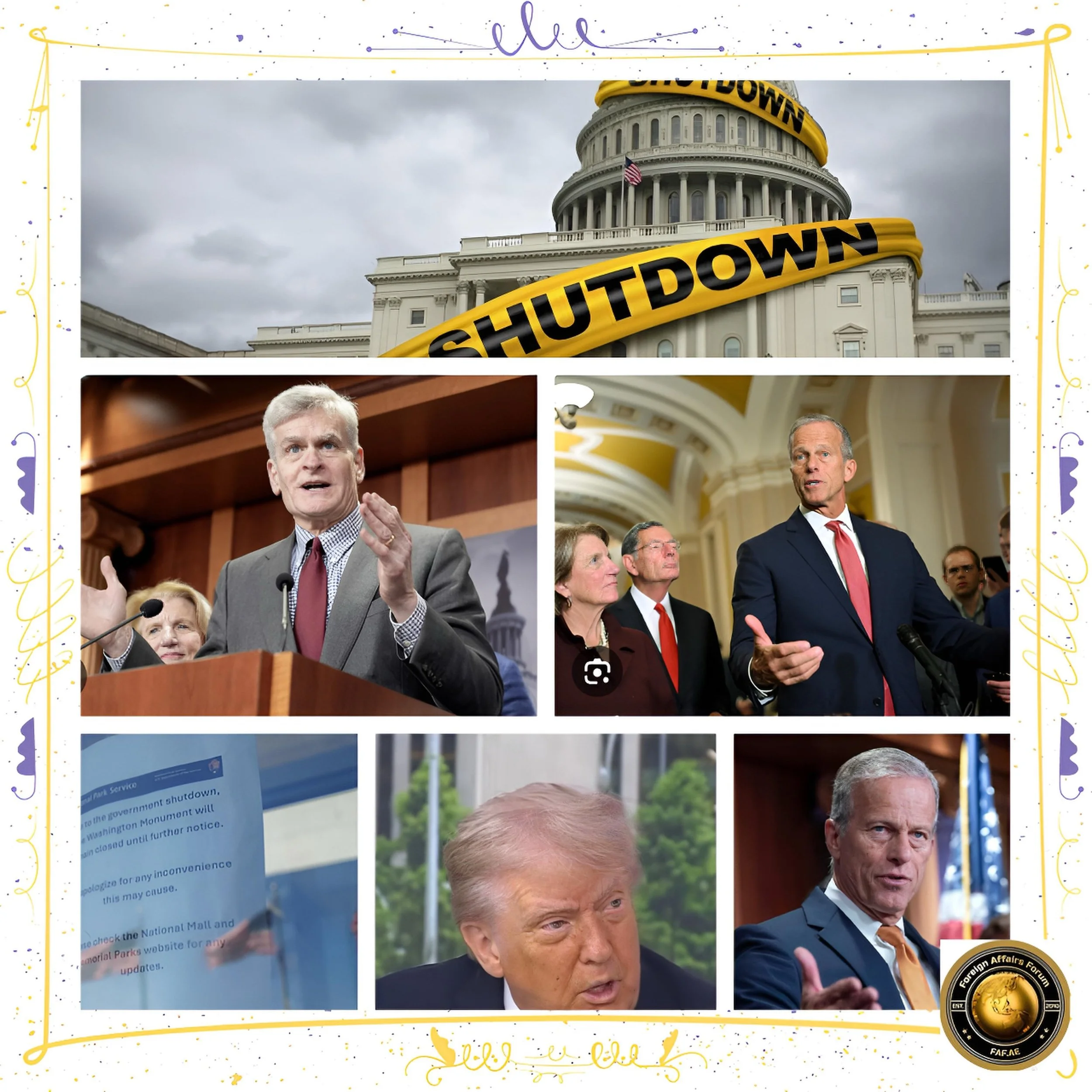
US Federal Government Shutdown: An ongoing political crisis marked by a standoff between Congress and the Executive Branch over budget allocations and policy disagreements.
This deadlock has led to the temporary closure of numerous federal agencies, affecting government services, federal employees, and national operations.
Key issues fueling the crisis include disputes over funding levels for military and domestic programs, budget deficits, and ideological conflicts on policy priorities, most important being health insurance for Americans, which runs a risk of cut drastically or lost.
Introduction
The United States federal government shut down at 12:01 AM on October 1, 2025, marking the first complete shutdown since 2019.
This crisis has ignited intense partisan battles between Republicans and Democrats over healthcare funding and government spending priorities, with each side blaming the other for the impasse.
The Core Issue
The shutdown happened because Congress failed to pass a crucial continuing resolution (CR) to fund the government for fiscal year 2026.
At the heart of the conflict are the upcoming expiration of enhanced Affordable Care Act (ACA) subsidies at the end of 2025 and broader disagreements over healthcare policy and financial priorities.
Republican Position
House Republicans have proposed a "clean" seven-week continuing resolution to keep the government funded at current levels through November 21.
According to House Speaker Mike Johnson, they argue that healthcare policy should be tackled separately from government funding and contend that extending ACA subsidies is a December issue, not a September one.
Republicans criticize Democrats for refusing to pass basic funding bills and accuse them of making healthcare demands that are partisan and unrelated to keeping the government open.
Democratic Demands
Democrats remain firm that any funding bill must include an extension of the enhanced ACA subsidies that assist over 22 million Americans afford health insurance.
They also seek to reverse Medicaid cuts from Trump's "One Big Beautiful Bill Act," which was passed in July 2025. These cuts could cause 10 million people to lose their health coverage.
Democrats argue that allowing healthcare costs to spiral out of control is unacceptable, with Senate Minority Leader Chuck Schumer emphasizing the deep disparities over healthcare and budget priorities.
As the nation faces this unprecedented shutdown, the fight over healthcare and spending reveals the stark divide between the parties and the urgent need for a compromise.
The Healthcare Stakes
The increased ACA subsidies, introduced during the COVID-19 pandemic, have driven record enrollment in ACA plans, rising from 11 million in 2020 to over 24 million in 2025.
If these subsidies end
Premium costs could nearly double, with an average increase of 114%, from $888 this year to $1,906 in 2026.
About 4 million people might lose their health insurance entirely.
Healthcare providers could face a revenue loss of $32.1 billion in 2026, with uncompensated care rising by $7.7 billion.
Senate voting has repeatedly fallen short of the 60-vote majority needed to pass funding measures.
The Republican Continuing Resolution (CR) votes were 55-45, failing to meet the requirement.
Support came from 52 Republicans, 2 Democrats (John Fetterman of Pennsylvania, Catherine Cortez Masto of Nevada), and 1 Independent (Angus King of Maine).
The opposition consisted of 43 Democrats, 1 Republican (Rand Paul of Kentucky), and 1 Independent.
The Democratic proposal was voted down 47-53 along party lines.
Only three Democrats—Fetterman, Cortez Masto, and Independent Angus King—supported the Republican funding bill, citing concerns that a shutdown would empower Trump to harm federal institutions and adversely affect their constituents.
Trump's Escalatory Threats
President Trump is taking a hard-line stance amid the shutdown, threatening unprecedented actions against the federal workforce.
He has warned of looming mass layoffs, implying that federal employees who don't align with his priorities could face permanent termination—a stark departure from previous shutdowns.
Officials suggest these layoffs could happen within one or two days, signaling an alarming escalation.
In addition, the administration has already frozen $26 billion in funding for Democratic-led states, which will impact vital initiatives like climate projects and New York transportation.
Trump sees the shutdown as a strategic opportunity to reshape the federal government, famously stating, "When you shut it down, you have to do layoffs."
As tensions mount, the future of federal employees and vital services hangs in the balance.
Where the Shutdown is Heading
Immediate Outlook
The Senate has adjourned until Friday in observance of Yom Kippur, with additional voting sessions anticipated throughout the weekend.
To achieve the requisite sixty-vote threshold, Republican members must secure at least seven additional votes from Democratic senators; however, no further Democrats have indicated a willingness to alter their positions.
Both parties remain firmly committed to their respective stances, with minimal indications of forthcoming compromise.
Escalation Risks
President Trump's threats of widespread federal layoffs represent an unprecedented utilization of shutdown authorities, which could cause lasting damage to government operations.
The administration's strategy of freezing funding in Democratic-led states introduces a retaliatory element not observed in previous government shutdown scenarios.
Healthcare enrollment for the year 2026 commences on November 1, thereby increasing pressure surrounding the Affordable Care Act subsidy discussions.
Conclusion
As of October 2, 2025, the shutdown has furloughed roughly 750,000 to 900,000 federal employees, with another 700,000 working without pay.
The Democratic Party faces internal pressure from progressive constituents to uphold their healthcare policy commitments, whereas moderate Democrats express concern regarding the potential impacts of a government shutdown.
Conversely, Republican officials believe they can pressure additional Democratic members to defy party lines as the effects of the shutdown become more pronounced.
Both political parties are actively engaged in positioning themselves for blame attribution, with the White House implementing a "shutdown clock" that attributes responsibility to Democrats.
Meanwhile, Democrats contend that the Republican Party bears full responsibility for the shutdown.
The likelihood of the shutdown persisting at least through the upcoming weekend remains high, with considerations of an extended standoff due to fundamental disagreements over healthcare policy.
Additionally, President Trump appears willing to utilize the crisis as an opportunity to further his agenda of reducing the size and scope of the federal government.
The unprecedented nature of threatened permanent layoffs and targeted funding freezes suggests that this shutdown could result in more enduring consequences than previous budget impasses.