The Illusion of Relief: Why Trump’s $12 Billion Farmer Bailout Won’t Cure a Trade War Wound”
Executive Summary
When the Cure Becomes Part of the Disease: Inside the Paradox of Trump’s Farm Bailout
The Trump administration’s announcement of a $12 billion aid package for American farmers represents a critical acknowledgment of the devastating impact his trade policies have inflicted on the agricultural sector.
Unveiled on 8th December 2025, this relief initiative—the Farmer Bridge Assistance program—allocates $11 billion in direct payments to row crop producers and an additional $1 billion for specialty crops through the Department of Agriculture.
While presented as a solution drawn from tariff revenues, the bailout fundamentally addresses the symptom rather than the underlying disease: the ongoing trade conflict with China, retaliatory tariffs on American agricultural exports, and the structural deterioration of the farm economy itself.
Farm bankruptcies have surged to their highest levels since 2021, commodity prices remain depressed far below historical norms, input costs continue their upward trajectory, and critical export markets have been deliberately shuttered by trading partners in response to American tariff impositions.
The financial relief, though substantial, will arrive too late for many operations already facing insolvency, will likely benefit larger consolidated agricultural enterprises disproportionately, and promises only temporary respite from an escalating crisis that threatens the viability of American agriculture as a whole.
Bankruptcies filed in U.S. in Agri-sector
In 2025, U.S. farm bankruptcies—measured as Chapter 12 filings—surged dramatically, reaching at least 259 by mid-year (through July), already exceeding the full-year total of 216 recorded in 2024.
The first half of the year (January–June) saw 181 nationwide filings, a 57% increase over the same period in 2024, with some reports citing 361 though the 181 figure predominates across sources.
Concentrated in agricultural heartlands like Iowa, Wisconsin, Minnesota, Kansas, and Indiana, these bankruptcies have hit dairy and row crop operations (soybeans, corn) hardest amid trade disruptions, depressed commodity prices, soaring input costs, and farm debt climbing to a projected $591.8 billion.
Current trends point to a full-year total approaching or exceeding 500–1,000 filings by December 2025, though final U.S. Courts Q4 data remains pending.
Introduction
Pawns in the Game: American Farmers Caught Between Trade Wars and Hollow Promises”
The American agricultural sector finds itself ensnared in a deepening economic crisis that extends far beyond the immediate operational challenges of the 2025 growing season.
While the Trump administration has announced a $12 billion bailout package ostensibly funded from tariff revenues, this intervention serves primarily as a policy acknowledgment that the aggressive trade strategy implemented during the president’s second term has generated consequences neither anticipated by administration officials nor manageable within the existing framework of agricultural support mechanisms.
The historical precedent established during the first Trump administration, when the government provided an estimated $23 billion in emergency assistance to farmers between 2018-2019, suggested that policymakers understood the potential agricultural fallout from tariff-based trade strategies.
Yet the current crisis appears to rival or exceed that earlier period in scope and severity, compounded by structural weaknesses in the farm economy that predate the most recent tariff announcements and intensified by deliberate retaliation from China and other trading partners who have weaponized agricultural procurement as a mechanism to pressure the American administration toward trade concessions.
Historical Context and the Farm Economy’s Fragile State
Understanding the current agricultural crisis requires acknowledging the precarious financial position in which American farmers operated even before the implementation of the tariffs that characterize Trump’s second presidential term.
The farm economy has endured a prolonged period of commodity price depression that extends back to 2016, when prices for corn and soybeans declined sharply from their 2012 peaks.
Corn prices have fallen approximately 50% from their 2022 highs, while soybean prices have contracted roughly 40 % during the same interval.
This persistent price pressure, combined with rising costs for essential inputs including fertilizers, seeds, and equipment, created a structural squeeze on farm profitability long before the arrival of Trump’s reciprocal tariffs and global tariff initiatives in 2025.
The pre-existing fragility of American agriculture became evident in the bankruptcy statistics compiled across the farm sector.
In 2024, family farm bankruptcy filings totaled 47 in the final quarter, but this figure doubled to approximately 93 filings in the first quarter of 2025, and has continued climbing through subsequent months, with filings tracking toward levels not witnessed since 2021.
Cumulative data from the first half of 2025 documented farm bankruptcy filings that had nearly doubled compared to the same period in 2024, indicating a trajectory toward levels that characterized the depths of the 2018-2019 trade war period.
The American Soybean Association, speaking in August 2025, characterized farmers as standing at “a trade and financial precipice” while enduring “extreme financial stress” from commodity price volatility and elevated input costs.
Additionally, total farm debt has escalated to record levels, projected to reach $561.8 billion dollars in 2025 according to the Department of Agriculture.
This indebtedness represents the accumulated burden of years during which farm operating costs have exceeded commodity revenues, forcing producers to access credit markets at elevated interest rates to finance basic operational continuity.
Net farm income, which had reached nearly $182 billion in 2022 contracted to approximately $147.2 billion dollars in 2024, representing a decline exceeding twenty-two percent within a 2 year period.
The Federal Reserve’s survey of farm financial conditions documented that weaker income had substantially reduced liquidity for farming operations, while roughly 30-50 % respondents across various Federal Reserve districts reported declining loan repayment rates compared to the previous year, indicating a systematic deterioration in the capacity of farms to service their debt obligations.
The Tariff Strategy and Its Agricultural Consequences
President Trump’s approach to trade policy during his second administration, formalized through a series of executive orders beginning in April 2025, fundamentally altered the competitive landscape for American agricultural exports.
The implementation of reciprocal tariffs, initially announced as a thirty percent rate on Chinese goods with variations for other major trading partners, sought to address what administration officials characterized as longstanding unfair trading practices and to rebalance the American trade deficit.
Agriculture Secretary Brooke Rollins, in her initial public statements regarding these policies, enthusiastically endorsed the tariff strategy as a mechanism that would “completely realign the American economy around putting America first” and would establish conditions for “unprecedented prosperity” for American farmers by opening new markets and creating incentives for domestic production expansion.
However, the theoretical benefits articulated by Trump administration officials proved divorced from the actual market dynamics that emerged following tariff implementation.
China, which historically served as the primary purchaser of American soybean exports and accounted for approximately half of all United States soybean exports valued at nearly $25 billion dollars annually in 2024, responded to American tariff impositions by systematically ceasing purchases of American agricultural products.
The Chinese government imposed a 20 percent retaliatory tariff on American soybeans, rendering them prohibitively expensive compared to soybeans sourced from Brazil and Argentina.
Beginning in May 2025, China halted virtually all pre-orders of American soybeans for the upcoming harvest, effectively implementing an embargo that would persist through the end 2025 growing season and into the early stages of two thousand twenty-six.
The consequences for American soybean farmers proved catastrophic.
With their largest and most economically significant market deliberately shuttered, farmers confronted the prospect of harvesting a bumper crop with no established buyers, declining commodity prices as global supplies increased without corresponding demand reduction, and the necessity to store unsold grain at substantial cost or liquidate production at depressed prices.
By mid-autumn 2025, American soybean farmers had not received a single purchase order from China for the entire harvest season, an unprecedented development in modern agricultural commerce.
Simultaneously, tariffs imposed on inputs essential to agricultural production elevated operating costs further.
Steel and aluminum tariffs, for example, prompted John Deere, the nation’s largest agricultural equipment manufacturer, to announce anticipated losses of approximately $600 million during 2025, as the company faced the impossible choice of absorbing tariff costs or passing them to farmers already under severe financial strain.
The Shift to Alternative Suppliers and the Restructuring of Global Agricultural Trade
The Chinese government’s strategic decision to redirect soybean procurement from the United States to alternative suppliers represents a deliberate reorientation of global agricultural trade patterns that extends far beyond the immediate tariff dispute.
Brazilian soybean production, projected to reach a record $168.3 million tons during the 2024-2025growing season, positioned that nation as the logical alternative supplier to fulfill Chinese demand that American producers could no longer satisfy.
In April 2025, Chinese Vice Minister of Agriculture Zhang Zhili led a delegation to Brazil specifically to discuss expanded agricultural trade, while Brazilian Agriculture Minister Carlos Favero announced intentions for Brazil to become the primary alternative supplier of beef and other agricultural products to China following the restrictions on American suppliers.
The structural implications of this trade reorientation proved immediately apparent.
In the first half of 2025, Brazil accounted for approximately 65% of Chinese soybean imports, consolidating its position as the dominant supplier of this critical commodity to the world’s second-largest economy.
Argentina, having recently eliminated export taxes on soybeans and other essential crops, simultaneously expanded its market share, with the nation positioning itself to supply approximately twenty shiploads of Argentine soybeans to China within a compressed two-day period.
By late 2025, analysts projected that Brazil and Argentina would effectively replace the United States as China’s primary soybean suppliers through the remainder of 2025-2026, during what had historically constituted the American export window.
Brazilian crushers, anticipating sustained demand for domestic processing driven by biodiesel mandates and feed requirements, simultaneously expanded processing operations to approximately 57 million tons, further tightening the balance between available supplies and competing demands.
This reorientation created structural consequences extending beyond the immediate two thousand twenty-five season.
The re-establishment of supply relationships, the development of logistics and transportation infrastructure facilitating soybean movement from South America to China, and the commercial relationships solidified through sustained trade during the American supply disruption all created barriers to the rapid restoration of United States market share once trade disputes were resolved.
Historical experience from the first Trump administration, during which trade tensions persisted from 2018-2021, demonstrated that lost agricultural markets did not rebound quickly or automatically upon the cessation of tariff policies.
American farmers required years to recover market share previously surrendered to competitors, during which time Chinese buyers had developed confident supply relationships with alternative sources.
The risk that the 2025 market disruption would prove not a temporary anomaly but the beginning of a fundamental restructuring of soybean trade patterns posed profound implications for the long-term viability of American soybean agriculture.
The Twelve Billion Dollar Bailout: Structure, Timing, and Limitations
Bankruptcy, Boycotts, and Band-Aids: Why Farmers Say the Bailout Falls Short
On 8th December 2025, President Trump announced the Farmer Bridge Assistance program, a $12 billion relief package designed to provide immediate financial assistance to farmers facing the consequences of trade-related disruptions and commodity price depression.
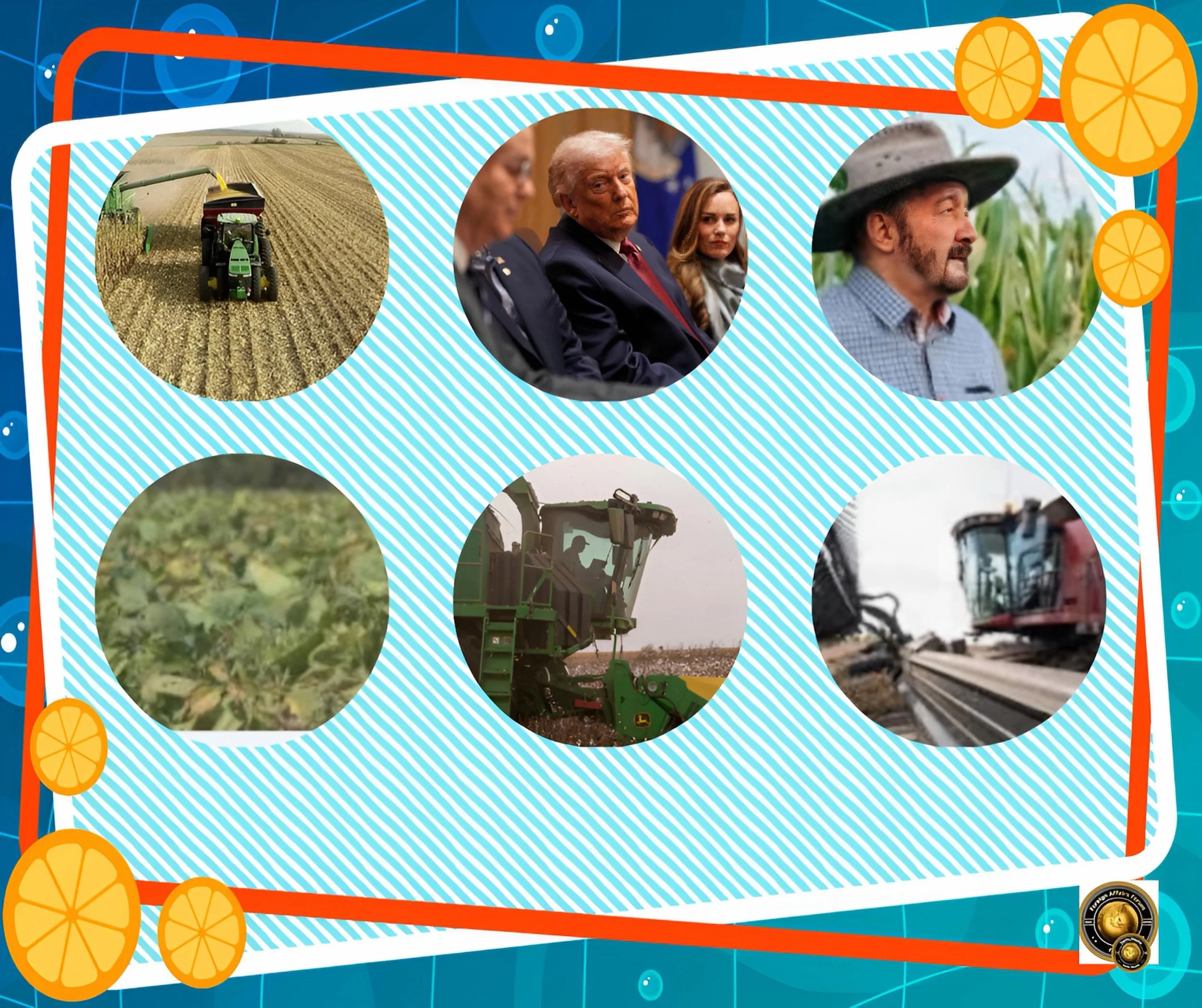
The announcement came during a White House roundtable attended by farming representatives, Secretary of Agriculture Brooke Rollins, and congressional agricultural leaders including Senate Agriculture Committee Chair John Boozman.
Trump described the package as allocating “a small portion of the hundreds of billions of dollars we receive in tariffs” toward agricultural support, while asserting that the initiative represented an expression of his administration’s commitment to farmers, noting “we love our farmers.”
The allocation structure designated $11 billion for direct payments to row crop farmers—those cultivating commodities including corn, soybeans, cotton, sorghum, wheat, and rice—through the Department of Agriculture’s bridge payment program.
An additional $1 billion was reserved for specialty crops and other agricultural products not covered by the primary payment mechanism.
The administration projected that farmers would receive these payments by the end of February 2026, providing financial relief during the critical period when farmers typically financed operations for the approaching growing season and confronted the necessity of covering storage costs for unsold commodity inventories.
However, substantial legal and logistical obstacles complicated the expeditious deployment of these funds. The administration initially proposed drawing resources from tariff revenues, though legal experts noted significant restrictions on this mechanism.
Section 32 of the Agricultural Adjustment Act, the statutory authority traditionally invoked for emergency farm relief, limited direct payments to farmers to a maximum of $350 million dollars, with the remainder of revenues required to support child nutrition programs.
Alternative funding mechanisms would require congressional authorization, with Trump administration officials hoping lawmakers would incorporate approval for tariff revenue allocation into the omnibus appropriations package nominally due by 21st November but then pushed toward year-end consideration.
This congressional requirement meant that distributions to farmers would likely not commence until early 2026, several months after the announcement and well into a period when farmers would already have endured significant financial distress during the fall harvest and early winter season.
Additionally, agricultural economists noted that the bailout represented a fundamentally temporary measure incapable of addressing underlying structural problems.
Stephen Censky, Chief Executive Officer of the American Soybean Association, observed that government assistance funds tend to be “capitalized” over longer time horizons, meaning that initial payments become incorporated into lending decisions, property valuations, and cost-of-production calculations, ultimately providing limited sustained relief as landlords and input suppliers adjusted their expectations and pricing to reflect anticipated government support.
The bailout thus functioned primarily as a stopgap that would temporarily ameliorate farmers’ immediate cash flow challenges while leaving unresolved the fundamental problem that export markets had been deliberately closed and commodity prices remained fundamentally depressed relative to production costs.
Global Leaders’ Statements and the Negotiating Stalemate
The diplomatic dimension of the agricultural crisis proved equally consequential to its economic manifestations.
Chinese government officials, particularly Commerce Ministry spokesman He Yadong, articulated clear conditions for the resumption of Chinese soybean purchases: the United States must “take positive action to cancel the relevant unreasonable tariffs to create conditions for expanding bilateral trade.”
This positioning converted agricultural trade into an explicit instrument of negotiating pressure, with Chinese officials signaling that soybean purchases would not resume until American tariff policies were fundamentally altered.
Chinese leadership appeared confident in the capacity to rely on Brazilian and Argentine suppliers through the short term while American producers faced financial ruin, giving the Chinese government substantial leverage in negotiations.
President Trump, for his part, attributed the soybean market disruption directly to China.
In comments to reporters in September 2025, Trump asserted that China was “using our soybean farmers as pawns in trade negotiations,” while simultaneously pledging that his administration would prioritize soybeans as “a significant topic” during planned meetings with Chinese President Xi Jinping.
The characterization implicitly acknowledged that China had deliberately weaponized soybean procurement decisions to exert pressure on the Trump administration’s trade negotiating position, yet it simultaneously suggested the president’s confidence that negotiations would ultimately produce favorable outcomes that would justify the pain inflicted on farmers during the interim period.
Brazilian government officials navigated a more complex diplomatic position.
Having benefited substantially from Chinese demand for Brazilian soybeans displaced from American sources, Brazilian Agriculture Minister Carlos Favero and other officials recognized the opportunity to expand market share at American expense.
Simultaneously, Brazil maintained concern about United States tariff policies that affected its own exports.
In the context of Chinese-directed trade missions and explicit discussions regarding the expansion of Brazilian agricultural exports to China, Brazil positioned itself to serve as the alternative supplier while potentially maintaining some level of cordial relations with the American administration through various trade discussions and market access initiatives.
Mexican government officials, responding to Trump’s threats of a five percent additional tariff over alleged violations of the 1944 Water Treaty governing Rio Grande water sharing, adopted a more defensive posture.
While Mexico’s economy ministry did not immediately respond to Trump’s tariff threats with public statements, the positioning suggested that Mexico was attempting to navigate between Trump administration demands for enhanced water deliveries and the practical hydrological constraints limiting available supplies.
The threats of additional tariffs on an already heavily tariffed neighbor created additional pressure on the Mexican agricultural sector while highlighting the administration’s willingness to employ tariff threats across multiple domains simultaneously.
Structural Concerns: Farm Consolidation and Rural Economic Distress
When the Cure Becomes Part of the Disease: Inside the Paradox of Trump’s Farm Bailout
The agricultural bailout and the broader context of trade-disrupted commodity markets created conditions that, based on historical precedent, would likely accelerate the consolidation of American agriculture into fewer, larger operations.
Analysis by the non-profit Food and Water Watch organization documented that during the first Trump administration’s trade war period from 2018-2021 farm bankruptcies had surged, particularly affecting the smallest operations.
Farms with one to nine acres of acreage experienced a 14% reduction from 2017-2022, while farms generating between $2.5 million to $5 million in annual revenue more than doubled.
This pattern reflected the reality that larger operations, particularly those with diversified income streams and greater financial reserves, possessed greater capacity to absorb financial losses during disrupted trade periods.
Smaller, specialized farming operations, by contrast, lacked the resources to endure extended periods of depressed commodity prices and closed export markets.
The current crisis threatened to replicate this consolidation pattern on a potentially even more extensive scale.
With farm debt reaching record levels, farm bankruptcies climbing substantially, and credit conditions tightening as lenders recognized elevated default risks, smaller and mid-sized farming operations faced disproportionate pressure.
The American Bankers Association’’s 2024 agricultural lender survey documented that only 58 % of farm borrowers were projected to remain profitable in 2025, a sharp decline from 78% in 2023.
Banks, facing this deteriorating portfolio risk, tightened lending criteria, reduced credit availability, and demanded enhanced collateral security, effectively reducing the financial flexibility available to farmers already operating on compressed margins.
The geographic dimension of this consolidation threat concentrated pain in rural communities historically dependent on agricultural income.
Midwest states including Illinois, Iowa, Minnesota, and Indiana, where soybean production represents a substantial component of farm income, confronted particularly severe challenges.
Senator John Thune of South Dakota observed that approximately 60 % of South Dakota’s soybean exports were historically directed to China, and that market closure created circumstances “likely to encounter significant challenges in rural areas concerning trade and market access.”
The rural economic consequences extended beyond farm operations themselves to encompass rural banks, agricultural service providers, equipment dealers, and the broader constellation of businesses dependent on farm income and spending.
The Administration’s Claims and Their Questionable Foundation
The Trump administration’s assertion that the $12 billion bailout would be funded from tariff revenues merits careful examination.
In multiple public statements, Trump and administration officials claimed that the United States was “taking in so much money with the tariffs” that allocating a portion toward farmer relief represented an efficient utilization of revenue.
This framing implicitly suggested that tariff revenues would be abundant and that farmer assistance could be provided without sacrificing other policy objectives or increasing federal deficits.
However, the actual fiscal implications proved more complex.
The bailout funds, if drawn from tariff revenues, would not represent net additional federal resources available for farmer support but rather a reallocation of funds that would otherwise have reduced the federal deficit or funded alternative policy initiatives.
Simultaneously, tariff revenues themselves remained subject to significant uncertainty, as the actual tariff-generated revenues depended upon import volumes that would respond to tariff impositions through both reduced import demand and potential economic contraction.
Administration officials appeared to be making optimistic assumptions regarding the magnitude of tariff revenues while simultaneously proposing to allocate a substantial portion of these uncertain resources toward a temporary bailout program rather than toward more sustainable agricultural policies.
The legal complexities of funding mechanisms further complicated the administration’s position.
The necessity of congressional authorization for drawing general tariff revenues on a sustained basis meant that the initial bailout, while announced with considerable fanfare, would require legislative approval that might not be forthcoming in the form the administration preferred.
The restrictions on Section 32 funds, limiting direct payments to farmers to $350 million without additional statutory authorization, created a gap between the announced $12 billion figure and the actually available funds.
This reality suggested that the bailout, while substantial, might prove smaller than announced, might arrive later than indicated, or might require congressional action that could prove politically contentious if legislators concluded that farmer relief should be paired with trade policy modifications.
The Path Forward: Remaining Uncertainties and Unresolved Tensions
Tariff Casualties: The $12 Billion Question the Trump Administration Won’t Answer
The fundamental tension underlying the current agricultural crisis remains unresolved: the Trump administration maintains commitment to tariff-based trade policies while simultaneously acknowledging that these policies have inflicted substantial pain on American farmers, one of the president’s crucial political constituencies.
Agriculture Secretary Rollins, who had enthusiastically endorsed tariffs as mechanisms for enhancing American prosperity, pivoted to describing the $12 billion bailout as “a very elegant solution” to the problem that her earlier tariff endorsements had helped create.
This rhetorical repositioning attempted to present the bailout as compatible with continued tariff policy while avoiding acknowledgment that the trade strategy required continuous government intervention to prevent catastrophic economic losses for the agricultural sector.
The American Soybean Association, represented by President Caleb Ragland, articulated the fundamental preference of farmers themselves: they sought market access rather than government payments.
Ragland stated that “soybean farmers cannot wait and hope any longer” and called on Trump and his negotiating team to “prioritize securing an immediate deal on soybeans with China.”
This position reflected the reality that bailout payments, however substantial, represented inferior alternatives to the restoration of profitable export markets.
A farmer receiving government payments faced uncertain long-term viability, while a farmer able to sell soybeans profitably in functioning export markets possessed sustainable economic conditions independent of government support.
The Trump administration’s negotiating strategy remained opaque regarding the timeline and mechanism for resolving the Chinese trade dispute.
Trump’s assertion that soybeans would become a “significant topic” in planned discussions with President Xi suggested forthcoming negotiations, yet no public timeline for such talks was announced as of December 8th 2025.
This ambiguity left farmers uncertain whether the $12 billion bailout represented a bridge toward rapidly resolved trade disputes or a placeholder commitment during an extended period of trade conflict.
The experience from the first administration suggested that trade disputes could persist for years, implying that farmers might require sustained government support rather than short-term relief.
Conclusion
When the Cure Becomes Part of the Disease: Inside the Paradox of Trump’s Farm Bailout
The Trump administration’s $12 billion Farmer Bridge Assistance program represents a significant acknowledgment of agricultural sector distress and a substantial commitment of resources toward farmer relief.
However, this bailout functions primarily as a palliative addressing symptoms of a deeper malady rather than a comprehensive solution to the multifaceted challenges confronting American agriculture.
The trade dispute with China that has shuttered crucial export markets remains unresolved, with no publicly articulated timeline for negotiations or resolution.
Commodity prices remain depressed relative to production costs, reflecting both the trade disruption and longer-term oversupply conditions in global agricultural markets.
Farm bankruptcies continue their upward trajectory, farm debt has reached record levels, and credit conditions remain tight, creating an environment in which even the twelve-billion-dollar bailout provides only temporary respite from financial stress.
The bailout’s temporal limitations—with distributions likely beginning only in early 2026, months after announcement—mean that farmers will endure substantial hardship before relief arrives.
Additionally, the political dynamics of agricultural consolidation suggest that the bailout will likely prove more beneficial to larger operations with greater capacity to survive the interim period, accelerating the concentration of American agriculture into fewer, larger enterprises at the expense of the smaller and mid-sized farms that have historically characterized American rural communities.
The fundamental contradiction at the heart of Trump administration policy remains: the administration has implemented trade policies known from the first administration to harm American farmers, promised that these policies would ultimately benefit them, and now finds itself compelled to allocate substantial financial resources to compensate for the intermediate damage while maintaining commitment to the policies that created the damage in the first place.
Whether the trade negotiations ultimately succeed in restoring export markets and justifying the pain inflicted on farmers, or whether the agricultural sector will endure years of disrupted trade and dependency on government support, remains uncertain.
What appears certain is that American farmers have not escaped the consequences of the trade war but have merely received temporary assistance while the underlying conflict persists.