Deng Xiaoping: The Architect of Modern China - Part I
Introduction
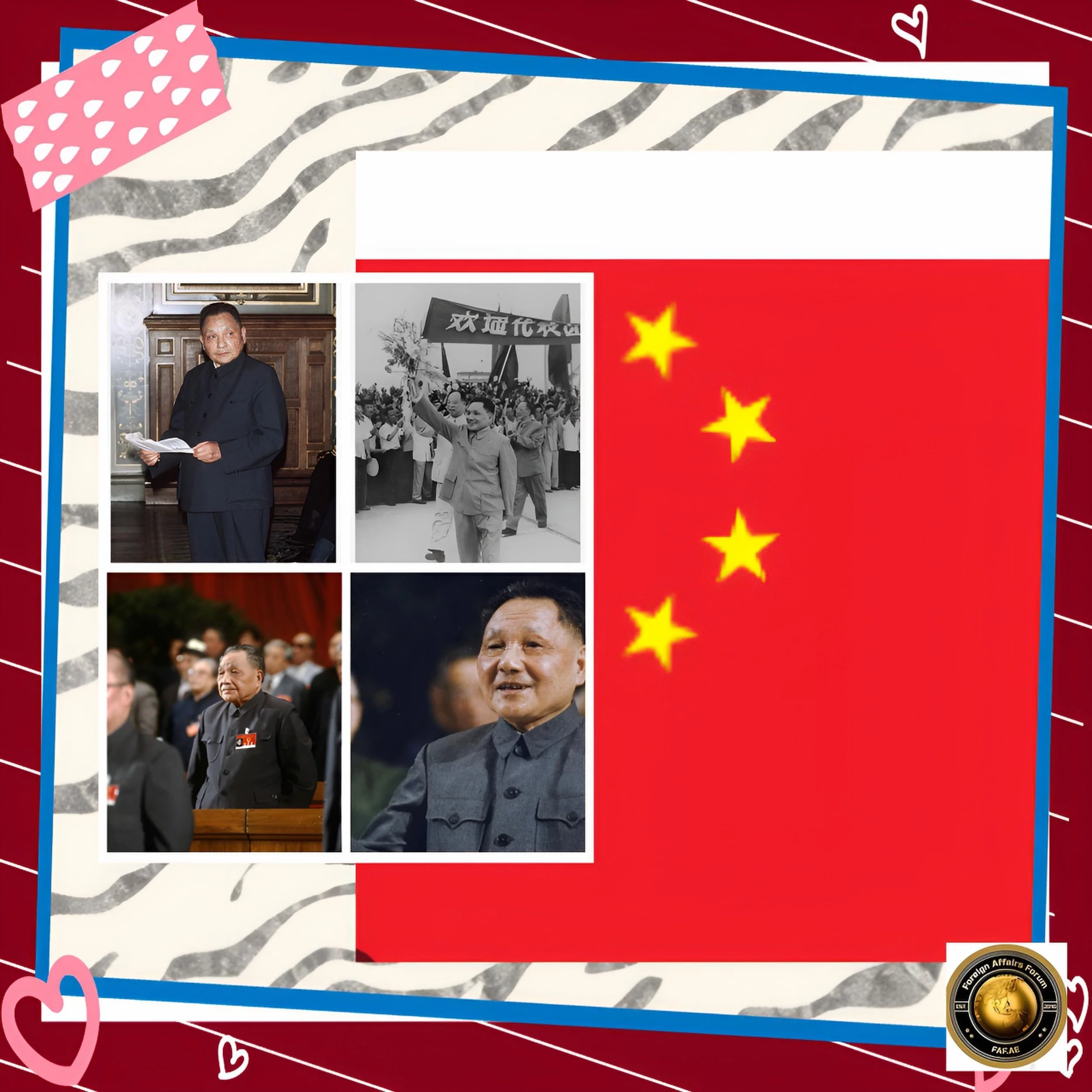
The most prominent Chinese leader after World War II who laid the foundation of modern China starting the 21st century was Deng Xiaoping (1904-1997).
Serving as China’s paramount leader from 1978 to 1989, and remaining highly influential until his death in 1997, Deng fundamentally transformed China from an isolated, impoverished nation into a rising economic powerhouse.
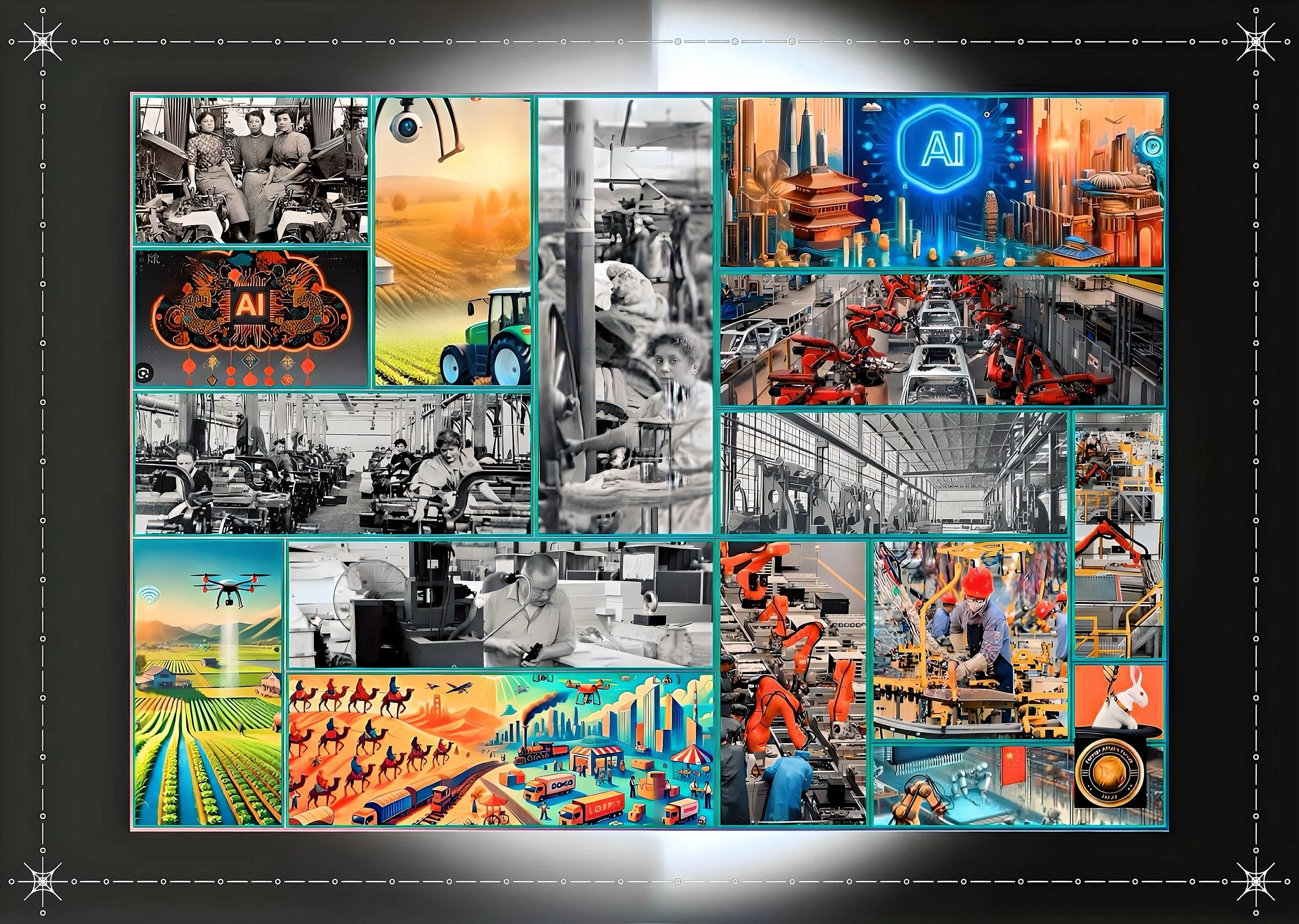
His comprehensive reforms in economic, social, scientific, and political spheres created the institutional and policy framework that enabled China’s emergence as a global superpower in the 21st century.
The Context: Rising from Political Purges
Deng’s path to leadership was marked by resilience and political survival. During Mao Zedong’s Cultural Revolution (1966-1976), Deng was purged twice as the party’s “number two capitalist roader” and exiled to work in a tractor factory for four years.
After Mao’s death in 1976, Deng was rehabilitated in July 1977 and officially became China’s paramount leader in December 1978 at the Third Plenary Session of the 11th Central Committee of the Chinese Communist Party.
Boluan Fanzheng: Setting Things Right (1977-1982)
Deng’s first major contribution was the Boluan Fanzheng (“Eliminating chaos and returning to normal”) program, which began in September 1977.
This far-reaching reform initiative sought to correct the mistakes of the Cultural Revolution and restore institutional order.
Key Achievement’s
Rehabilitation of Victims: Between 1977 and 1984, Deng oversaw the rehabilitation of millions who had been persecuted since the Anti-Rightist Campaign of 1957.
By 1984, around 4.4 million “landlords” and “rich farmers” had been rehabilitated, with over 20 million people receiving rectification of their social status.
Restoration of Intellectuals and Scientists
In March 1978, Deng emphasized at the National Science Conference that intellectuals were part of the working class and that “science and technology are primary productive forces”
Shift from Ideology to Economics
Deng fundamentally shifted the Communist Party’s focus from Mao’s “continuous class struggles” to “economic construction” and modernization.
The Four Modernizations: A Blueprint for Development (1978-2000)
At the Third Plenary Session in December 1978, China formally adopted the Four Modernizations as the country’s highest priority, with all other tasks subordinated to economic development.
These four areas were.
Agriculture
Industry
National Defense
Science and Technology
Deng declared at the 1978 National Science Conference: “The key to the four modernizations is the modernization of science and technology.
Without modern science and technology, it is impossible to build modern agriculture, modern industry, or modern national defense”.
Agricultural Revolution: The Household Responsibility System (1979-1984)
Timeline and Implementation
1978
18 households in Xiaogang, Anhui Province pioneered a new arrangement where each household was responsible for their own profit and losses.
April 1980
Deng Xiaoping endorsed the household responsibility system for underdeveloped regions.
1981
51% of households in Southeast provinces had adopted the system.
December 1981
The National Agricultural Work Meeting emphasized letting people choose their production systems.
1982
The Central Committee’s “No. 1 document” officially established the household responsibility system.
1983
Individual farming was officially permitted.
1984
Complete dissolution of communes.
Impact
This reform fundamentally changed Chinese agriculture by shifting from collective farming to family-based production.
Villagers could take long-term leases on government-owned land, sell surplus on private markets after fulfilling state quotas, and make their own production decisions.
Agricultural output increased dramatically, and poverty was cut in half between 1981 and 1987.
Special Economic Zones: Opening to the World (1979-1984)
Key Dates
April 1979: Deng approved the concept of “special zones” after hearing proposals from Guangdong officials.
July 15, 1979
The proposal for four special zones was approved.
August 26, 1979
Four Special Economic Zones officially established.
August 1980
Shenzhen, Zhuhai, and Shantou in Guangdong Province designated as SEZs.
October 1980
Xiamen in Fujian Province added.
January 1984
Deng’s inspection tour to Shenzhen endorsed the zones.
1984
SEZs expanded to 14 coastal cities.
Contribution
The SEZs attracted foreign investment through tax incentives, relaxed regulations, and market-oriented policies.
Shenzhen’s transformation was particularly dramatic—local output increased by 29 times between 1980 and 1984, with local GDP per capita reaching 20 times the national average by the mid-1980s.
By 1981, the four zones accounted for 59.8% of total foreign direct investment in China.
Industrial Reforms: The Dual-Track Pricing System (1985)
Implementation
In 1985, Deng officially established the dual-track pricing system, which allowed state-owned enterprises and collective enterprises to fulfill compulsory output plans while using additional capacity to produce for market sale.
Impact
This system created the basic conditions for market-based production activity.
Private companies could purchase production materials and sell finished products through the market track, while planned quotas stabilized agricultural output and protected peasants from market price fluctuations.
The dual-track system facilitated China’s gradual transition from a command economy to a market economy without causing the economic shock experienced by other post-socialist states.
Township and Village Enterprises: Rural Industrialization (1980s)
Growth
1978
Only 1.5 million TVEs existed.
March 1984
State Council officially used the term “Township and Village Enterprises”
1985
Over 12 million TVEs.
1978-2003
Number increased by 20% per year.
1978-early 1990s
Rural industrial output grew at 21% per annum.
Contribution
TVEs became the most vibrant part of China’s economy during the 1980s and early 1990s.
They provided market-oriented alternatives to state-owned enterprises, efficiently utilized excess rural labor, processed agricultural products, and produced consumer goods for domestic and export markets.
Deng himself characterized their emergence as “an army suddenly coming to the fore”.
Social Policy: One-Child Policy (1980)
Timeline
Late 1978
Voluntary program encouraging families to have one or two children.
1979
Growing demand for one-child limit.
September 25, 1980
Official start of the nationwide one-child policy through a public letter from the Central Committee.
Impact
The policy was implemented to address China’s rapid population growth (969 million in 1980 from 540 million in 1949). The fertility rate declined below two children per woman by the mid-1990s.
While controversial and criticized for social consequences, the policy was viewed by Deng as essential for economic modernization.
Education: Nine-Year Compulsory Education (1986)
Implementation
April 12, 1986
The Fourth Session of the Sixth National People’s Congress adopted the “Compulsory Education Law of the People’s Republic of China”
1992
The 14th National Congress set the goal of universalizing nine-year compulsory education and eradicating illiteracy among middle-aged and young groups by 2000
Impact
This law established free, mandatory education for all school-age children regardless of gender, nationality, race, or family property status.
By 2002, the net enrollment rate of primary school-age children reached 98.58%, and 97.02% of primary school graduates continued to junior secondary schools.
Science and Technology: The 863 Program (1986)
Timeline
March 3, 1986: Four scientists (Wang Daheng, Wang Ganchang, Yang Jiachi, and Chen Fangyun) sent a letter proposing a high-tech research and development program.
Within 2 days
Deng Xiaoping approved the program.
August 1986
The program outline was passed by the State Council.
October 1986
The Politburo approved the outline and allocated 10 billion RMB over 15 years.
November 18, 1986
State Council formally issued the notice, launching the “863 Program”
Focus Areas
The program initially focused on seven key technological fields: biotechnology, space, information technology, laser technology, automation, energy, and new materials. Telecommunications (1992) and marine technology (1996) were later added.
Impact
Named after its March 1986 establishment date, the 863 Program stimulated advanced technology development to render China independent of foreign technologies.
By 2001, it had produced over 2,000 patents and 47,000 theses, with an accumulated output value of 56 billion yuan and indirect benefits worth 200 billion yuan.
Political Reforms: Constitutional Term Limits (1980)
Implementation
On August 18, 1980, Deng delivered an important speech titled “On the Reform of the System of Party and State Leadership” proposing political reforms and systematic constitutional revision.
Key Principles
Protection of civil rights.
Separation of powers.
Collective leadership with “one man, one vote” among senior leaders to avoid dictatorship.
1982: China amended its constitution, limiting the presidency to two five-year terms.
Contribution
These reforms aimed to decentralize authority, regularize political life, and check dictatorial power.
They introduced fixed terms of office, term limits, mandatory retirement ages, and delegated authority from the Communist Party to government agencies.
These institutional changes provided stability that lasted until Xi Jinping’s removal of presidential term limits in 2018.
Capital Markets: Stock Exchanges (1990-1992)
Timeline
November 26, 1990
Shanghai Stock Exchange re-established.
December 19, 1990
Shanghai Stock Exchange began operations with 30 bonds and 8 stocks.
December 1, 1990
Shenzhen Stock Exchange founded.
January 1992
Deng’s Southern Tour saved China’s capital markets.
July 1997
State Council affirmed stock exchanges’ legitimate role in socialist market economy.
Deng’s Support
In 1990, when the stock exchanges were politically controversial, Deng rhetorically asked: “Are securities and the stock markets good or bad? Do they entail dangers? Are they peculiar to capitalism?
Can socialism make use of them?” He contended China must try them out and reserve judgment.
The Southern Tour: Reigniting Reform (January 1992)
Context
After the 1989 Tiananmen Square crackdown, economic reforms had stalled, and conservative forces sought to reverse market-oriented policies. Economic growth slowed from the 1980s levels.
The Tour
From January 17-23, 1992, Deng visited Wuhan, Changsha, Shenzhen, Zhuhai, and Shanghai, holding carefully planned informal conversations with local officials.
He warned against excessive bureaucracy and caution, speaking of the need to “try bold experiments and blaze new trails”.
Impact
Although state media did not report on the journey in real-time, Deng’s message spread through official reports submitted to Beijing.
At the 14th Party Congress in October 1992, General Secretary Jiang Zemin officially endorsed Deng’s vision of a “socialist market economy”.
Real GDP growth jumped from 3.9% in 1990 to 14.3% in 1992.
The Southern Tour became a landmark event that irreversibly committed China to market-oriented reforms.
Hong Kong Handover
One Country, Two Systems (1984-1997)
Timeline
Early 1980s
Deng Xiaoping formulated the “one country, two systems” principle during negotiations over Hong Kong.
December 1984
Sino-British Joint Declaration signed, committing to Hong Kong’s return on July 1, 1997.
1997
Hong Kong became China’s first Special Administrative Region.
Key Principles
Under “one country, two systems,” Hong Kong would maintain its capitalist economic system, own currency, legal system, human rights, and legislative system separate from mainland China for 50 years.
Contribution
This innovative approach demonstrated Deng’s pragmatic flexibility in managing reunification while maintaining stability.
The principle was also proposed for Taiwan and applied to Macau’s return in 1999.
Economic and Social Outcomes (1978-2000)
GDP Growth
1978
GDP of 368.48 billion yuan.
1979-2018
China’s annual real GDP averaged 9.5%.
1978-2002
Average per capita GDP growth of 8.1%.
1984
Historic high of 15.2% GDP growth.
1978-1997
China doubled the size of its economy in real terms approximately every eight years.
Poverty Reduction
1978
More than 700 million people (97.5% of rural population) lived below the poverty line.
1981-1987
Poverty cut in half
2002
Rural poverty reduced to 28.2 million (88.7% reduction from 1978)
1980s
China contributed to 167 million of the world’s 98.3 million reduction in poverty population—a contributing rate exceeding 100% (compensating for increases elsewhere)
2016
Poverty incidence dropped to 4.5%
Trade and Foreign Investment
1978
Foreign investment stood at $1 billion.
1978
Export volume was approximately $10 billion.
2001
China joined the World Trade Organization, culminating Deng’s opening-up strategy.
2002
Export volume reached $325.6 billion (32 times 1978 levels).
2017
Foreign direct investment rose to $136.3 billion
Foundation for 21st Century Leaders
Jiang Zemin and Zhu Rongji (1989-2002)
Deng selected Jiang Zemin as his successor after the 1989 Tiananmen incident.
Following Deng’s death in 1997, Jiang and Premier Zhu Rongji continued and expanded Deng’s reform agenda.
Socialist Market Economy
Jiang officially introduced this term at the 14th CCP National Congress in 1992, accelerating reform and opening up.
WTO Accession
Jiang and Zhu led the decade-long effort resulting in China’s 2001 WTO membership.
State-Owned Enterprise Reform
Between 2001-2004, state-owned enterprises decreased by 48%
Economic Growth
China maintained consistent 8%+ growth throughout the 1990s
Xi Jinping and Contemporary China (2012-Present)
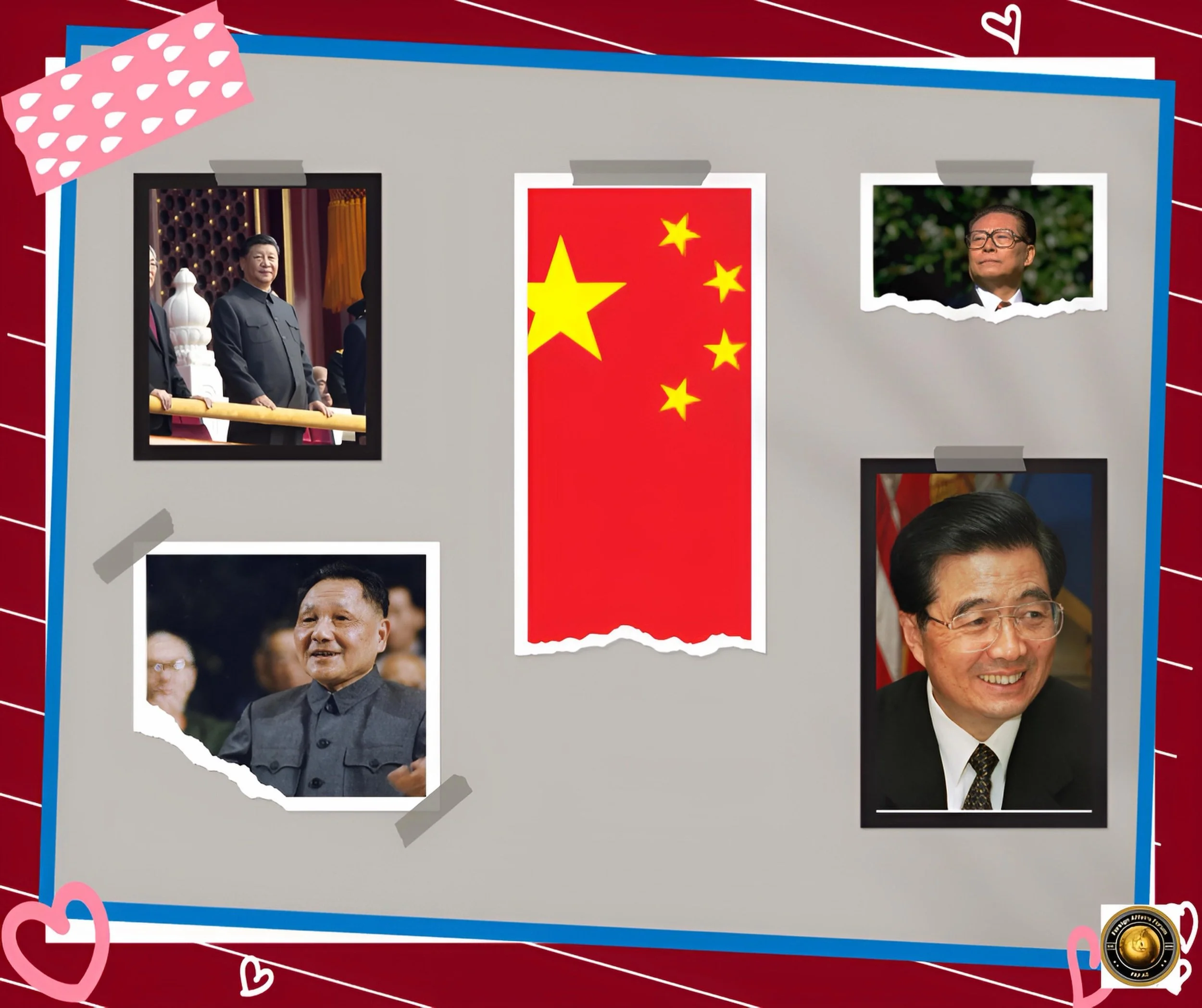
Xi Jinping explicitly positions himself as continuing Deng’s legacy while adapting to new circumstances:
2012
Xi’s first symbolic visit as leader was to Deng Xiaoping’s statue in Shenzhen.
August 2024
Xi emphasized that “the best way to honor Comrade Deng Xiaoping is to continue advancing the cause of socialism with Chinese characteristics that he initiated”.
Continued Framework
Xi operates within Deng’s basic framework of market-oriented reforms, though with increased state control and centralization.
Enduring Institutional Framework
Deng’s contributions created the fundamental framework that all 21st-century Chinese leaders have built upon:
Economic Model
The socialist market economy combining state ownership with market mechanisms.
Opening to the World
Foreign investment, trade liberalization, and global economic integration.
Special Economic Zones
Ongoing model for regional economic experimentation.
Science and Technology Priority
Continued emphasis on innovation and technological self-reliance.
Pragmatic Governance
Deng’s famous statement “It doesn’t matter if a cat is black or white, so long as it catches mice” established pragmatism over ideology.
Conclusion
Deng Xiaoping’s comprehensive reforms from 1978-1997 fundamentally transformed China from an isolated, impoverished nation into the foundation of a 21st-century superpower.
His contributions spanned agriculture (household responsibility system), industry (dual-track pricing, SEZs, TVEs), social policy (one-child policy, compulsory education), science and technology (863 Program), political institutions (term limits, collective leadership), and international integration (opening up, WTO path, Hong Kong handover).
The economic results were unprecedented: GDP growth averaging over 9% annually, lifting nearly 800 million people out of poverty, and establishing China as a major global economic power.
Time magazine named him Person of the Year twice (1978 and 1985), recognizing his transformative impact.
While Deng’s legacy includes controversies—particularly the 1989 Tiananmen Square crackdown and the one-child policy—his policies indisputably laid the foundation that enabled China’s rise in the 21st century.
Every Chinese leader since Deng, from Jiang Zemin to Hu Jintao to Xi Jinping, has operated within the basic framework he established, making him the most consequential Chinese leader in creating the conditions for modern China’s emergence as a global power.