Has Chinese Power Peaked in Asia? The Paradox of Assertiveness and Structural Limits
Introduction
Beijing’s Paradoxical Position: A Scholarly Reassessment
China’s contemporary posture in Asia epitomizes a profound paradox: it is simultaneously the region’s most formidable economic and military power, yet its influence is increasingly circumscribed by deepening anxieties among neighboring states and mounting structural constraints.
Empirical evidence indicates that while China’s material capabilities have not yet reached their zenith, the trajectory of its regional ascendancy is being impeded by a confluence of economic headwinds and the strategic costs associated with the abandonment of Deng Xiaoping’s doctrine of disciplined restraint.
The Strategic Inflection: From “Hide and Bide” to “Dare to Fight”
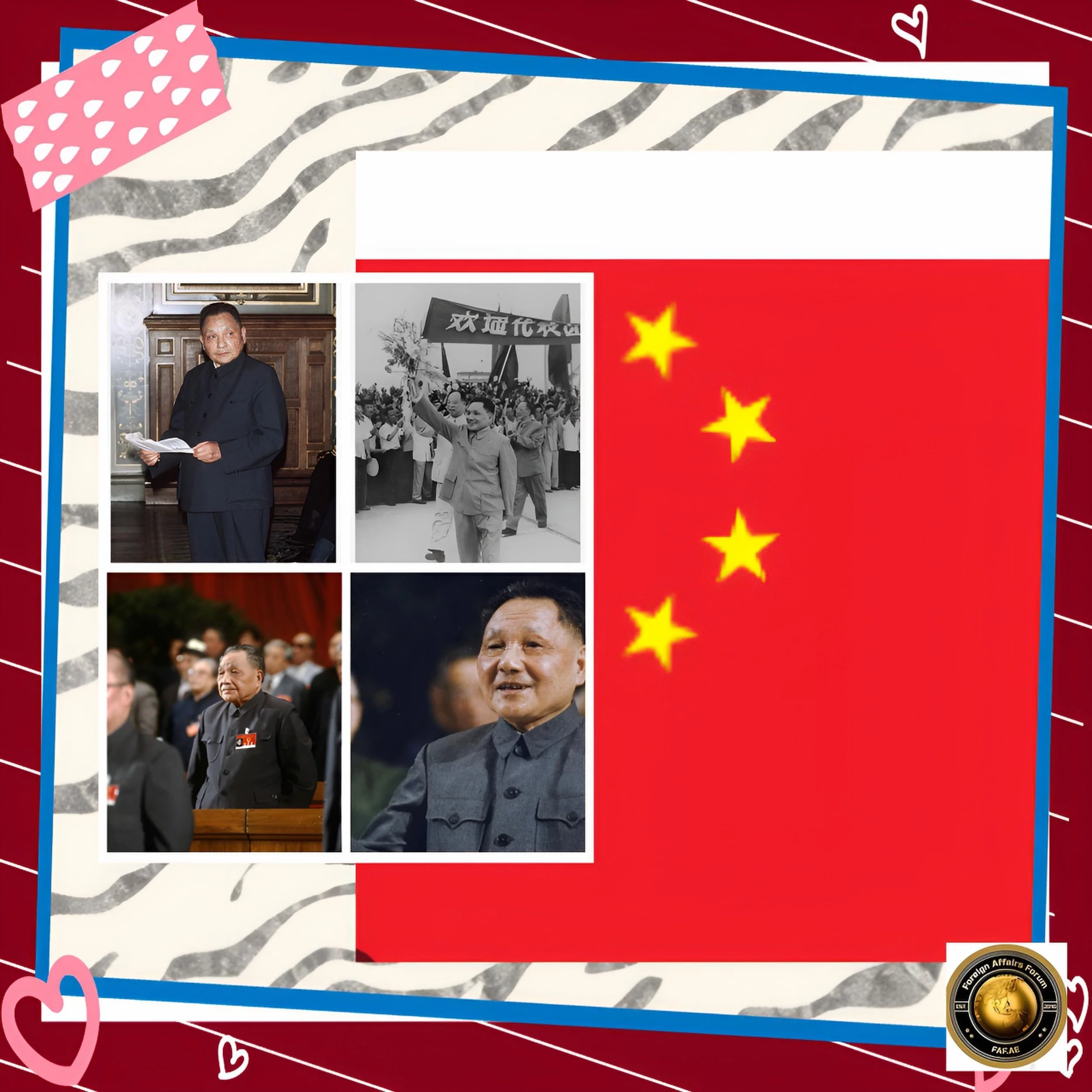
The transition from Deng’s “tao guang yang hui” (“hide strength and bide time”) to the more assertive posture adopted under Hu Jintao and Xi Jinping represents a pivotal inflection in Chinese grand strategy.
Deng’s approach was not simply a tactical pause but a strategic recognition that unchecked dominance—without reassurance—would inevitably provoke countervailing coalitions among regional actors.
By the conclusion of Hu Jintao’s tenure (2004–2012), Beijing had decisively moved away from this posture.
In 2009, Hu articulated a new guideline emphasizing “actively accomplish something,” signaling that China perceived a decisive shift in the regional balance of power, particularly in the wake of the 2008 global financial crisis.
This transformation was further institutionalized under Xi Jinping, who in 2023 formally replaced the old doctrine with a 24-character formula that explicitly includes the directive to “dare to fight.”
This was not an abrupt reversal but the culmination of a strategic trajectory already set in motion.
The Antecedents of Hu-Era Assertiveness
Recent scholarship underscores that the assertiveness commonly attributed to Xi Jinping has deep roots in the Hu Jintao era.
The Belt and Road Initiative’s foundational port projects in Pakistan, Sri Lanka, Myanmar, and Malaysia were initiated under Hu’s “going out” policy, which sought to expand China’s overseas economic footprint.
The Asian Infrastructure Investment Bank (AIIB), proposed by the Central Party Research Office in 2009, was discussed and conceptualized before Xi assumed power.
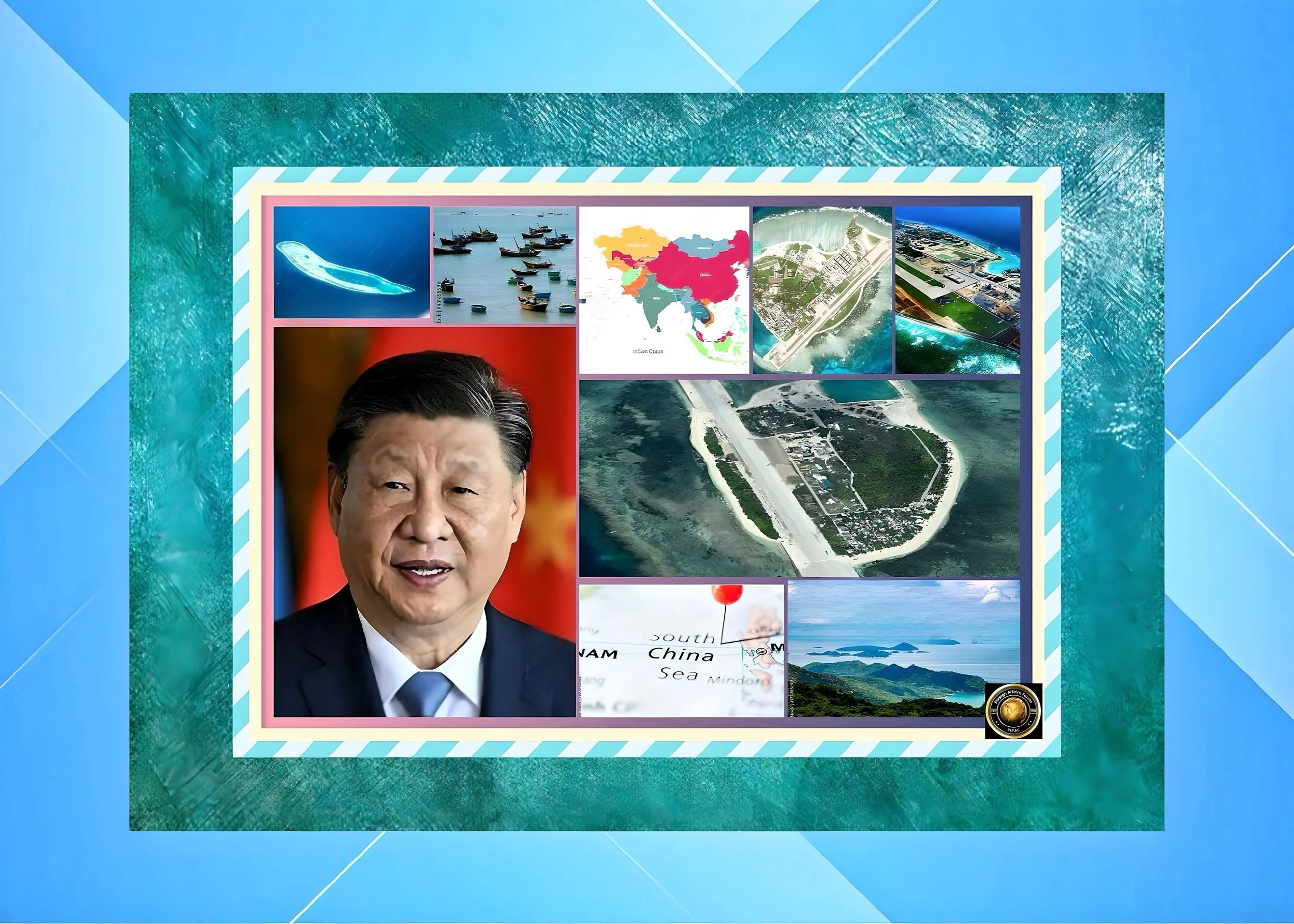
Maritime assertiveness also intensified during Hu’s tenure, exemplified by the 2010 Sino-Japanese vessel collision and the aggressive positioning in the South China Sea, culminating in China’s effective control of Scarborough Shoal by 2012.
Ideologically, the framing of “national rejuvenation” that underpins Xi’s entire project originated in Hu’s rhetoric, not as a novel innovation but as a continuation of evolving strategic narratives.
The Costs of Assertiveness: Anxiety, Hedging, and Narrowing Margins
The strategic gamble of assertiveness has yielded precisely the outcomes Deng Xiaoping anticipated.
Regional hedging has become the norm: despite China’s economic dominance in Southeast Asia, ASEAN states such as Vietnam, Singapore, Malaysia, and Indonesia now actively diversify their partnerships, engaging with Japan, the United States, and the European Union to mitigate overdependence.
Economic coercion—such as the bans on Australian coal, Philippine agricultural imports, and Japanese rare earths—has eroded trust in Chinese supply chains and accelerated third-country reshoring initiatives.
Soft power, once cultivated through reassurance, has been undermined by Xi’s “Wolf Warrior” diplomacy, aggressive South China Sea posturing, and military intimidation, leading regional states to perceive China as a power to be balanced rather than accommodated.
The Economic Dimension: Structural Deceleration
China’s geopolitical assertiveness is unfolding amid structural economic deceleration.
Its share of global GDP has contracted for four consecutive years, declining from 75% of U.S. GDP in 2021 to approximately 67% by 2025.
Productivity growth has been negative by several metrics since Xi’s ascension, diverging sharply from U.S. performance.
Official 2024 growth figures of 4.8% obscure underlying weakness, with independent analysts estimating actual growth at 2.4%–2.8%, and projections for 2025 at 4.5% or below.
The real estate sector’s contribution to GDP has fallen from 24% to 19%, representing roughly $18 trillion in wealth destruction.
Demographically, China’s workforce is projected to shrink by 8% by 2040, and India has already surpassed its population.
As Capital Economics observes, “The era in which China’s share of global output was surging has ended.”
This creates a time-compression problem: Beijing’s assertive regional strategy was predicated on sustained rapid growth, an assumption that no longer holds.
Beijing’s Precarious Position: Triadic Constraints
China faces a triadic constraint: material dominance without reassurance, ideological rigidity, and narrowing strategic windows.
By virtue of its size and contiguity, China will remain influential in Asia, but the absence of Deng’s disciplined restraint has generated zero-sum competition rather than mutually beneficial accommodation.
Xi’s ideological framework—centered on “national rejuvenation,” “core interests,” “mutual political trust” (interpreted as deference to Chinese preferences), and “dare to fight”—is fundamentally incompatible with the non-interference and respect for sovereignty that Southeast Asian states value.
As economic growth decelerates and demographic challenges mount, Beijing faces pressure to act decisively on contested issues such as Taiwan and the South China Sea before relative military advantages erode, increasing the risk of miscalculation.
The Exhaustion of the “Aggressive Assertion” Model
A sophisticated Brookings analysis argues that Beijing’s assertiveness was inevitable, rooted in profound structural changes in perceived power balances rather than individual leadership.
However, this assertiveness carries mounting costs without commensurate gains.
China’s territorial assertiveness has not deterred U.S. alliance strengthening; instead, it has accelerated defense partnerships among Japan, Australia, India, and the Philippines.
Economic coercion has prompted supply chain diversification and protectionist responses. Ideological rigidity over “core interests” precludes the soft-power investments necessary to sustain regional leadership.
The World Bank and other analysts project that, absent substantial stimulus, China’s growth trajectory will remain in the 3–4% range—insufficient to outpace U.S. productivity gains or offset demographic decline.
Under these conditions, the assertion of regional primacy through military demonstration and economic pressure becomes less credible, as neighbors perceive China’s relative power as contracting rather than expanding.
What “Peaked” Means
Chinese power has likely peaked not as an absolute measure—China remains militarily the strongest power in Asia and economically indispensable to regional trade—but as a trajectory.
The assumption that underpinned post-2008 assertiveness—that global power was irreversibly shifting eastward—has collapsed.
China faces slowing growth that undermines its ability to simultaneously modernize its military, service debt, and offer economic inducements.
Rising regional vigilance prevents the translation of economic dependence into political compliance.
Narrowing strategic windows that incentivize risk-taking precisely when structural vulnerabilities are mounting.
Ideological commitment to non-negotiable positions that foreclose the compromises necessary to address regional anxieties.
Deng recognized that the paradox of rising power is that strength must be coupled with restraint to avoid triggering encirclement.
Beijing abandoned that wisdom by misreading 2008 as confirmation of inevitable Western decline.
It now faces a region increasingly structured around hedging against Chinese hegemony—not from ideological opposition but from elementary great-power balancing.
The precariousness of Beijing’s position is not that it lacks power, but that it wields that power in ways that generate the very coalitions Deng sought to prevent.
This is the strategic trap of abandoned wisdom: power untempered by reassurance reproduces the insecurity it aims to prevent.
Conclusion
China’s trajectory in Asia since the late 2000s reflects a fundamental reorientation of grand strategy, marked by a decisive shift away from Deng Xiaoping’s doctrine of “hide strength and bide time” toward an assertive posture of engagement.
This shift, catalyzed by the perceived geopolitical opportunities following the 2008 financial crisis, was not merely a product of Xi Jinping’s leadership but a culmination of structural changes in China’s self-perception and the international balance of power.
The resulting assertiveness—manifested in infrastructure diplomacy, institutional innovation, maritime expansion, and ideological framing—was predicated on the assumption that China’s economic momentum would continue to accelerate, enabling both regional dominance and the soft power necessary to secure acquiescence.
However, the evidence suggests that this strategic calculus has encountered significant headwinds.
Economic deceleration, demographic decline, and the erosion of productivity growth have undermined the material foundations of China’s regional ambitions.
Simultaneously, the abandonment of strategic restraint has provoked precisely the countervailing coalitions that Deng sought to avoid: regional hedging, accelerated U.S. alliance-building, and the diversification of economic partnerships.
Beijing’s willingness to weaponize trade and its rigid ideological framing of “core interests” have further eroded trust and soft power, rendering its influence increasingly zero-sum rather than mutually beneficial.
The paradox of Chinese power today is not its absence but its application.
China remains the preeminent military and economic competitor in Asia, yet its influence is constrained by the very anxieties its assertiveness has generated.
The narrowing of strategic windows—driven by slowing growth and mounting structural vulnerabilities—has heightened the risk of miscalculation, as Beijing faces pressure to act decisively before relative advantages erode. Ideological rigidity, meanwhile, forecloses the compromises necessary to address regional concerns, perpetuating a cycle of insecurity.
In sum, Chinese power has likely peaked not in absolute terms but in terms of trajectory.
The era of unchecked expansion is over, replaced by a period of constrained influence and heightened regional vigilance.
The strategic trap of abandoned wisdom—power untempered by reassurance—has reproduced the insecurity Beijing sought to prevent, underscoring the enduring relevance of Deng’s insight: that true strength lies not merely in material dominance, but in the ability to temper ambition with restraint.