The DC National Guard Shooting and Operation Allies Welcome: Political Implications and Context
Introduction
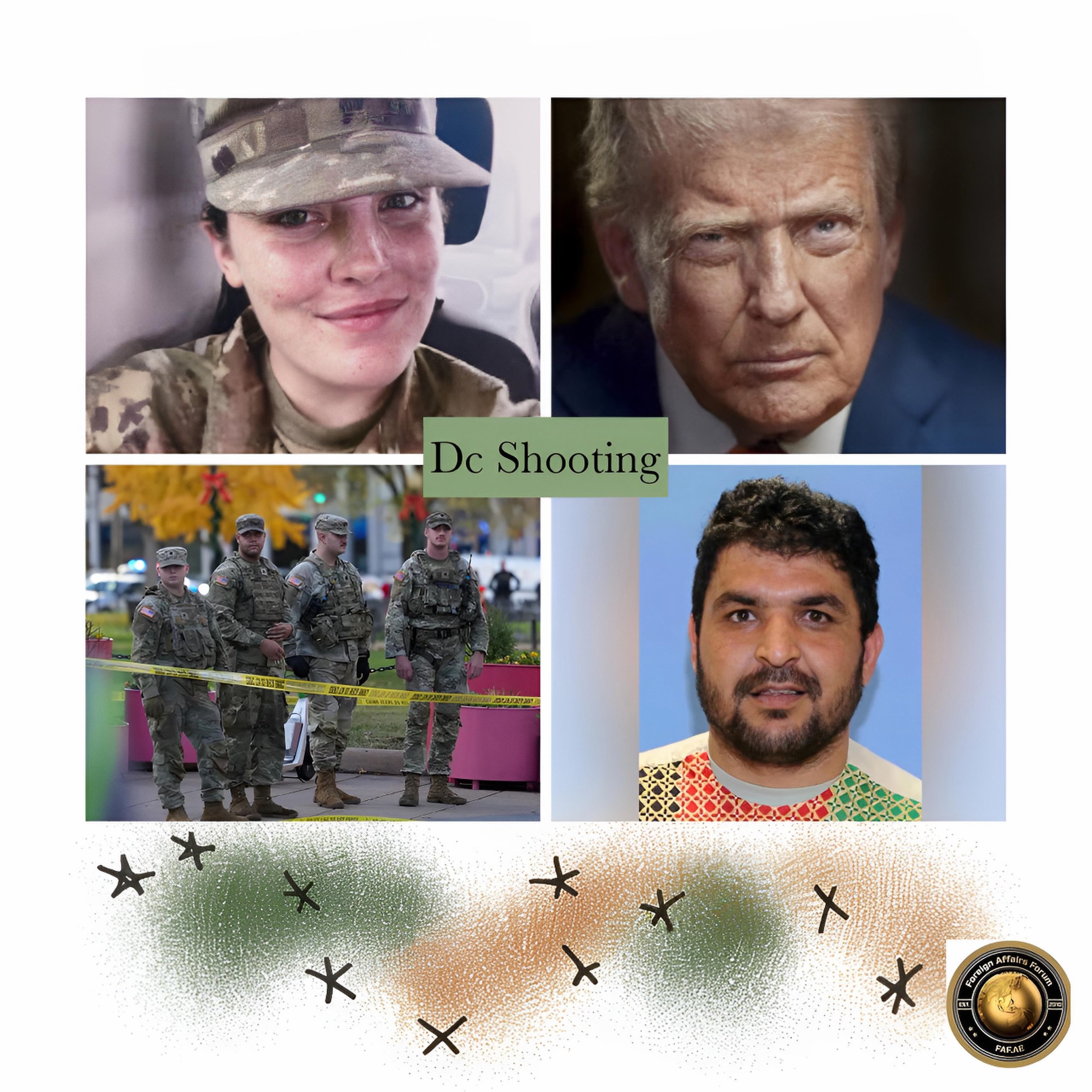
On November 26, 2025, a 29-year-old Afghan national named Rahmanullah Lakanwal opened fire on two National Guard members near the White House in Washington, D.C., killing 20-year-old Army Specialist Sarah Beckstrom and critically wounding 24-year-old Air Force Staff Sergeant Andrew Wolfe.
This incident, occurring just before Thanksgiving, has immediately ignited substantial political controversy surrounding Operation Allies Welcome—the Biden-era resettlement program that facilitated Lakanwal’s entry into the United States in September 2021.
The shooting has become a pivotal moment in American political discourse surrounding immigration policy, national security vetting, and the broader implications of the chaotic 2021 Afghanistan withdrawal.
Key Points: The Incident and Program Context
The Shooting and Suspect Profile
Lakanwal, who had previously collaborated with United States military and CIA personnel as a member of partner forces in Kandahar during the Afghanistan conflict, entered the country as part of Operation Allies Welcome.
According to investigators, he drove from his residence in Bellingham, Washington, to the nation’s capital with deliberate intent to target National Guard members.
The attack occurred at the Farragut West metro station, where Guard members were conducting high-visibility patrols as part of the Trump administration’s deployment strategy in the capital.
FBI Director Kash Patel characterized the investigation as “an ongoing investigation of terrorism,” indicating federal authorities are examining potential extremist motivations.
Investigators have suggested that Lakanwal may have suffered from paranoia and mental health challenges, including beliefs that authorities sought to deport him from the United States.
Additionally, according to a former Afghan commando interviewed by law enforcement, Lakanwal was deeply disturbed by the death of a close friend and fellow Afghan commander in 2024, who had unsuccessfully sought asylum in the U.S.
Operation Allies Welcome: Program Origins and Scale
Operation Allies Welcome was established by the Biden administration in August 2021 following the Taliban’s rapid reassertion of control over Afghanistan.
The program was designed to provide humanitarian protection and resettlement for approximately 76,000 vulnerable Afghan nationals, many of whom had worked alongside American military personnel, diplomats, and intelligence agencies during the two-decade conflict.
These individuals faced substantial risk of Taliban reprisals due to their collaboration with Western forces.
The program offered two-year humanitarian parole grants, which did not confer permanent immigration status. Rather, participants were expected to pursue alternative pathways to remain in the country, such as asylum applications.
Importantly, while roughly forty percent of Afghan evacuees qualified for Special Immigrant Visas (SIVs) due to the significant risks they had undertaken, the remainder entered through the broader humanitarian resettlement initiative.
Vetting Procedures and Critique
The Department of Homeland Security has maintained that evacuated Afghans underwent “rigorous” vetting procedures involving approximately 400 personnel from various U.S. agencies conducting “biometric and biographic screenings performed by intelligence, law enforcement, and counterterrorism experts.” This process included fingerprinting, iris scans, comprehensive background checks, interviews, and risk assessments.
However, the vetting process itself has become subject to intense scrutiny.
A 2024 Office of Inspector General report acknowledged certain failings, including data inaccuracies in some Afghan evacuees’ files, though the FBI ultimately flagged potential threats effectively in most cases.
Notably, the report identified 55 individuals from Afghanistan who subsequently appeared on terrorism watch lists, though the majority of evacuees were not deemed security risks.
The Political Response: Immediate Actions
Following Wednesday’s shooting, the Trump administration took swift action on immigration policy. U.S. Citizenship and Immigration Services announced an indefinite suspension of all immigration applications from Afghan nationals pending “further review of security and vetting protocols.”
Additionally, the Trump administration announced it would conduct comprehensive reviews of all asylum cases approved under the Biden administration and green cards issued to citizens of 19 “high-risk” countries.
President Trump ordered the deployment of an additional 500 National Guard troops to Washington and sought an emergency court order to maintain the Guard’s presence in the capital.
Analysis: Political Dimensions and Contradictions
The Temporal Paradox
A critical point of contention has emerged regarding responsibility and accountability. While the Trump administration has attributed Lakanwal’s presence in the country entirely to “Biden’s reckless policies” and alleged vetting failures, documented evidence reveals significant complications in this narrative.
Lakanwal entered the country in September 2021 under the Biden administration, but he applied for asylum in December 2024 and was granted asylum in April 2025—after the Trump administration assumed office in January 2025.
This timeline raises substantial questions regarding when and how asylum approval authority was exercised and by which administration.
FBI Director Kash Patel asserted that the suspect benefited from “thousands” who entered “without any background checks or vetting,” yet CIA Director John Ratcliffe acknowledged that Lakanwal had actually undergone vetting procedures due to his CIA collaboration.
Polarized Narratives on Vetting
The incident has crystallized differing assessments of vetting adequacy.
Trump administration officials have characterized the process as inadequate and blamed Biden-era approaches, while refugee advocates and some law enforcement officials have defended the rigor of screening procedures.
The complexity of emergency evacuations—involving 124,000 individuals evacuated within two weeks—creates tension between procedural thoroughness and operational necessity.
Critics emphasize that no vetting system, regardless of rigor, eliminates all risk, particularly when addressing psychological deterioration that may occur years after admission.
Immigration Policy as Political Leverage
Trump’s immediate politicization of the shooting—within hours of the incident—reflects broader patterns in contemporary American politics where security incidents become focal points for pre-existing policy agendas.
Trump had already planned to review Operation Allies Welcome participants before the shooting occurred, suggesting the incident served to accelerate and legitimize policies under consideration.
Senior White House adviser Stephen Miller characterized the response as “historic and courageous,” indicating this event has become central to the administration’s immigration enforcement narrative.
Deployment Context and National Guard Vulnerability
The shooting has also raised questions about the wisdom and necessity of deploying National Guard troops to Washington, D.C., a policy Trump initiated as part of broader domestic law enforcement militarization efforts.
Democrats and civil liberties advocates have questioned whether the Guard deployment was appropriately resourced or strategically sound, particularly following this attack on Guard members themselves.
This tragic incident may ultimately undermine Trump’s argument for expanded Guard deployment, despite his immediate response of requesting additional troops.
Mental Health and Radicalization Dimensions
Investigators are reportedly examining whether Lakanwal’s actions reflect extremist radicalization—potentially related to ISIS or other jihadist organizations—or whether they represent a response to personal trauma, mental health deterioration, and specific grievances regarding his immigration status.
The distinction carries significant political implications, as terrorism narratives support broader immigration restrictionism, while mental health or personal grievance explanations might suggest the need for different policy responses, such as improved mental health services for vulnerable populations or clearer immigration processing for those with pending cases.
The Broader Afghan Community Impact
The suspension of all AfThe ghan immigratiaffectications affects thousands of Afghans still awaiting processing or resettlement.
Advocacy organizations, including Afghans For A Better Tomorrow, have condemned the blanket suspension, arguing that blaming an entire refugee population for the actions of one individual is unjust and fails to acknowledge the U.S. government’s responsibility for creating the conditions that necessitated evacuation through nearly two decades of conflict.
Conclusion
The November 2025 shooting in Washington, D.C., represents a convergence of tragic violence, complex administrative questions, and intense political contestation over immigration policy and national security.
While the incident has been immediately weaponized by the Trump administration to advance existing immigration restrictionist objectives, the actual facts reveal substantial complexity: the suspect entered under a Biden program but received asylum approval under the Trump administration; he underwent vetting procedures and held employment with U.S. government agencies; and the underlying motivations may reflect mental health deterioration and personal grievance rather than ideological radicalization.
The shooting’s political significance extends beyond the immediate facts. It has accelerated the Trump administration’s review of Afghan immigrants and provided rhetorical ammunition for broader immigration enforcement initiatives.
However, the incident also raises uncomfortable questions for the Trump administration regarding asylum approvals granted under its watch, the adequacy of the National Guard deployment it ordered, and whether security concerns might have been addressed through alternative mechanisms than the comprehensive suspension of an entire nationality’s immigration processing.
Ultimately, this tragedy illustrates the tension in contemporary American politics between legitimate security concerns and the political imperative to use incidents as justification for pre-existing policy preferences.
The full investigation into Lakanwal’s motivations, psychology, and any potential extremist connections will likely shape political discourse for months, particularly as it bears on both immigration policy and the broader question of how the United States integrates refugees and vulnerable populations who have assisted American military efforts abroad.