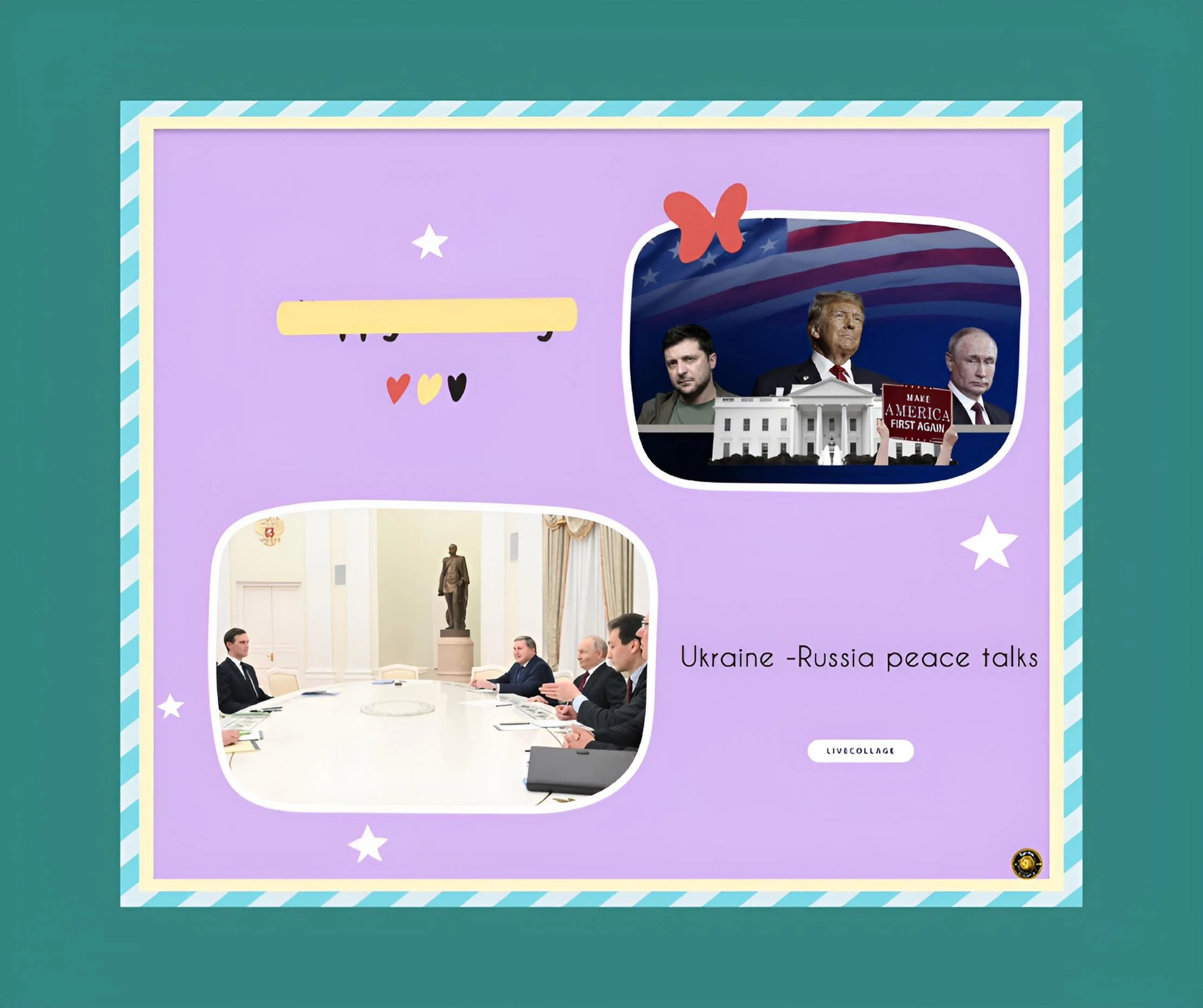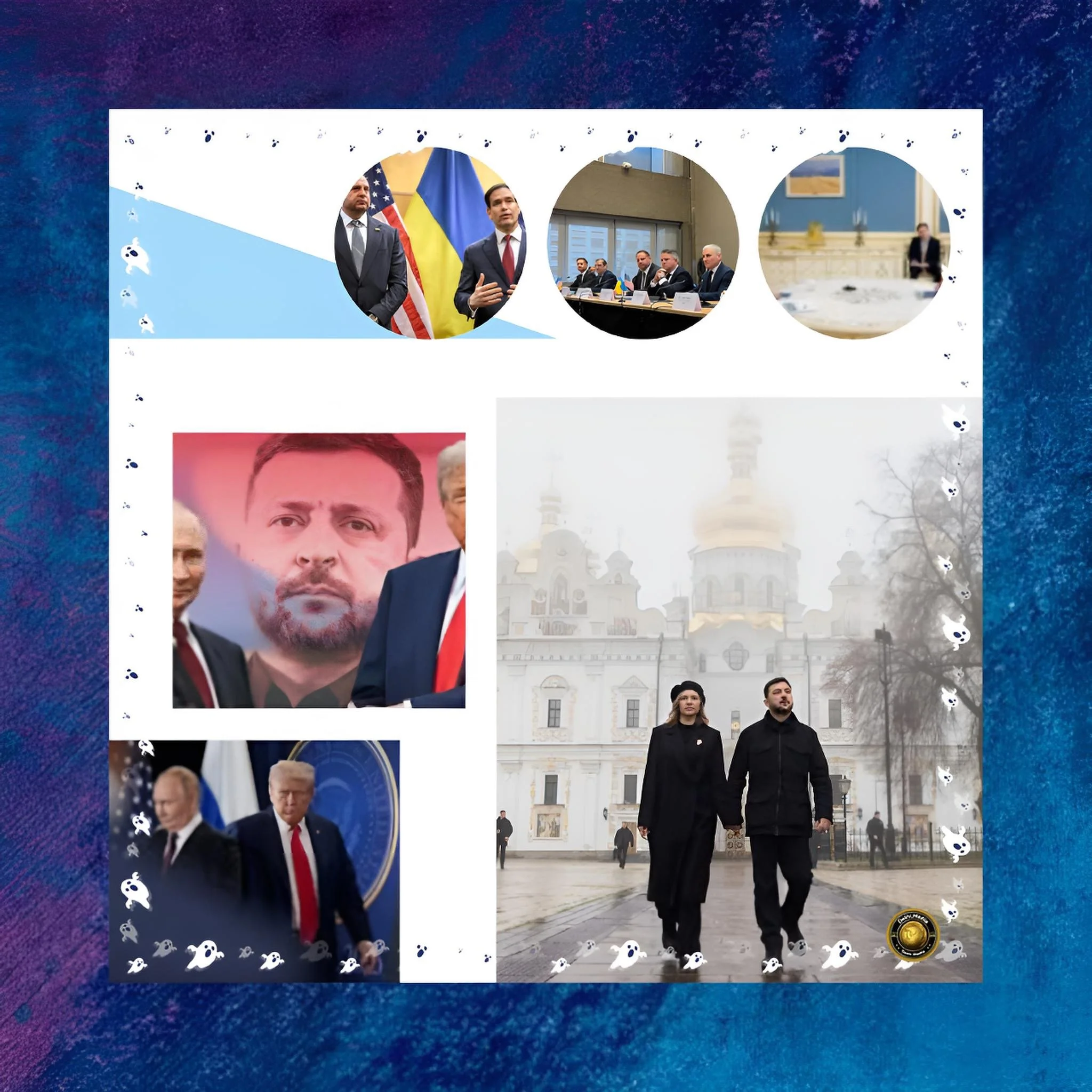
Trump’s 28-Point Ukraine Peace Plan has been refined into a 19-Point Proposal: An Overview of the Current Status and a Thorough Analysis.
Introduction
Current Status: Proposed Framework Under Active Revision
The Trump administration’s peace initiative for the Ukraine conflict remains in active negotiation rather than finalized.
As of Monday, 24 November 2025, the original 28-point proposal has undergone substantial revision and has been condensed to a 19-point framework following intensive discussions in Geneva.
This evolution reflects the dynamic nature of diplomatic engagement, with the plan characterised as a “living, breathing document” that undergoes continuous modification based on input from all parties.
Secretary of State Marco Rubio characterised the Geneva discussions held over the weekend as “arguably the most productive and meaningful” diplomatic session in recent months.
Whilst progress has been documented, the parties have explicitly affirmed their commitment to “continue intensive work on joint proposals in the coming days,” indicating that finalisation remains pending.
Discussions in Geneva
Representatives from the United States, Ukraine, Germany, France, the United Kingdom, and the European Union convened in Geneva on 22-23 November 2025 for high-stakes negotiations.
U.S. Secretary of State Marco Rubio led the American delegation, accompanied by House envoy Steve Witkoff and Army Secretary Daniel Driscoll, whilst Ukraine’s chief of staff Andriy Yermak headed the Ukrainian contingent.
European national security advisors from Germany, France, Italy, and the United Kingdom also participated.
According to Ukrainian First Deputy Foreign Minister Sergiy Kyslytsya, both delegations expressed optimism regarding the refined framework, though contentious issues remain unresolved and require direct presidential-level discussions between Trump and President Volodymyr Zelenskyy.
Comprehensive Overview of the 28-Point Proposal and Key Modifications
The original 28-point framework addressed sovereignty, territorial arrangements, security guarantees, economic reconstruction, and implementation mechanisms.
The subsequent 19-point revision incorporates significant modifications reflecting Ukrainian and European concerns.
Critical Modifications from the Original 28-Point Plan
Territorial Provisions
The initial proposal required Ukraine to cede Crimea, Luhansk, and Donetsk as de facto Russian territory, with Kherson and Zaporizhia frozen along existing lines of contact.
This remained contentious, with these matters now deferred to presidential-level negotiations.
Military Limitations
The original plan stipulated reducing Ukraine’s armed forces by approximately one-third.
The revised framework establishes a cap at 800,000 personnel—substantially higher than initially proposed—and removes the blanket reduction requirement.
War Crimes Amnesty
The original 28-point plan granted unconditional amnesty for all wartime actions.
The revised version eliminates blanket amnesty and now addresses “the grievances of those who suffered in the war,” representing a significant concession to Ukrainian concerns regarding accountability.
NATO Deployment
The original proposal included European fighter jet deployment to Poland as a security guarantee.
This provision was removed from subsequent iterations following European concerns.
Military Guarantees
The plan maintains provisions for “a decisive coordinated military response” should Russia reinvade Ukraine, though specific implementation mechanisms remain unspecified.
Sanctions and Economic Integration
The framework contemplates phased sanctions relief and the eventual reintegration of Russia into the global economy, including potential reinstatement to the Group of Eight, though sanctions would be lifted on a case-by-case basis.
Ukraine’s Reconstruction
Both versions include provisions for substantial reconstruction funding—approximately $200 billion from combined American and European sources, supplemented by investment of frozen Russian assets.
The plan envisions establishment of a Ukraine Development Fund focused on high-growth sectors including artificial intelligence, technology, and mining operations.
Nuclear Provisions
The framework mandates Ukraine’s status as a non-nuclear state under the Nuclear Non-Proliferation Treaty, whilst the Zaporizhzhia Nuclear Power Plant would operate under International Atomic Energy Agency oversight with electricity shared equitably between Russia and Ukraine.
Timeline
Ukraine would be required to conduct national elections within 100 days of reaching agreement.[pbs]
Statements from International Leadership
President Trump
Trump characterised the proposal as “not my final offer,” leaving room for further negotiation.
He subsequently demonstrated optimism regarding Geneva discussions, posting on social media: “Is it really possible that big progress is being made in Peace Talks between Russia and Ukraine???”.
However, Trump also publicly criticised Ukraine for demonstrating “zero appreciation” for American military support, whilst notably refraining from criticism of Russia.
President Zelenskyy
Zelenskyy articulated profound ambivalence regarding the proposal, stating that Ukraine faces “one of the most difficult moments in our history” and may encounter “a very difficult choice—either losing our dignity or the risk of losing a key partner”.
In his Friday televised address to the nation, Zelenskyy vowed: “Either complicated 28 points, or an extremely tough winter—the toughest—and further risks. A life without freedom, without dignity, without justice. They said: either this, or nothing. Either you sign this, or you will simply be eliminated. We did not betray Ukraine then; we will not do it now.”
Following Geneva discussions, Zelenskyy expressed that the revised plan now contains “correct” elements, though sensitive matters require further discussion with Trump.
President Putin
Putin indicated that the 28-point proposal could “serve as a basis” for a final peace settlement, noting that the plan incorporated discussions from his Alaska summit with Trump in August 2025.
Putin stated: “I believe that it could also form the basis for a final peace settlement, but this text has not been discussed with us in detail.”
However, Putin subsequently threatened that should Ukraine reject the proposal, Russia would pursue its objectives “through military means, through armed struggle”.
More recently, Putin expressed that numerous European amendments introduced during Geneva discussions were “not acceptable” to Moscow.
Chancellor Friedrich Merz (Germany)
Merz declared that “wars cannot be ended by major powers over the heads of the countries affected” and emphasised that Europe must be involved in any peace negotiations.
He asserted during G20 discussions that “an end to war can be achieved with the unconditional consent of Ukraine” and subsequently indicated Trump’s openness to “a jointly developed Ukraine peace plan”.
President Emmanuel Macron (France)
Macron characterised the proposal as a useful starting point but cautioned that it requires substantial European involvement and cannot constitute “simply an American proposal”.
He emphasised: “any initiative that moves toward peace is good,” whilst warning that the plan necessitates strengthening to avoid leaving Ukraine vulnerable.
Macron warned that Russia would “betray” any promises made and insisted upon involvement of European negotiators.
European Commission President Ursula von der Leyen
Von der Leyen articulated three essential elements for a just and lasting peace.
(1) borders must not be altered by force
(2) Ukraine’s military must not be capped
(3) European Union must play a central role in ensuring Ukraine’s peace.
She reiterated the principle of “nothing about Ukraine without Ukraine”.
Prime Minister Keir Starmer (United Kingdom)
Starmer highlighted the inconsistency between Russia’s claims regarding peace and its continued military operations.
Secretary of State Marco Rubio
Rubio categorically rejected assertions that the proposal represented a “Russian wish list,” insisting that “the peace proposal was authored by the U.S.” and incorporated input from both Russian and Ukrainian representatives.
Polish Prime Minister Donald Tusk
Tusk stated that whilst there is agreement among European leaders regarding pursuit of peace, “there’s little reason for hurrah-like optimism” and that “some [of the 28 points] are unacceptable”.
Scholarly Analysis
The Trump peace framework represents a fundamental departure from the Biden administration’s doctrine of unconditional military and financial support for Ukrainian victory.
The proposal reflects Trump’s conviction that the Biden administration’s provision of weaponry without sufficient encouragement of diplomatic settlement created an intractable military stalemate.
This philosophical reorientation prioritises expedited conflict termination over maximalist Ukrainian objectives regarding territorial restoration.
The Asymmetry of Concessions
The framework disproportionately disadvantages Ukraine, necessitating territorial concessions of approximately 20 percent of its territory, substantial military constraints, permanent renunciation of NATO membership, and acceptance of amnesty for Russian military and political actors accused of war crimes.
In exchange, Ukraine receives security guarantees of ambiguous enforceability—the proposal stipulates “a decisive coordinated military response” to future Russian invasion, yet fails to specify whether such response would involve American military engagement or constitute merely a diplomatic formulation.
Conversely, Russia yields minimal substantive concessions.
The framework permits Russia to retain all currently occupied Ukrainian territory, precludes Ukrainian NATO membership (thereby insulating Russia from collective defence obligations), and envisions gradual sanctions relief and economic reintegration, potentially including G8 reinstatement.
The European Dimension
The participation of European allies in Geneva negotiations reflects their profound anxiety regarding a bilateral American-Russian settlement concluded without substantive consultation.
European leaders fear that Ukraine’s security, which they characterise as intrinsically linked to European security, might be sacrificed on the diplomatic altar of American-Russian accommodation.
The emergence of a reduced 19-point framework reflects European pressure to eliminate provisions deemed incompatible with Ukrainian sovereignty and European security interests.
The Political Economy of Implementation
The plan’s provision for approximately $200 billion in reconstruction funding and $100 billion from frozen Russian assets evidences recognition that sustainable peace requires substantial economic inducement.
However, this economic framework presupposes successful implementation of territorial arrangements and amnesty provisions—precisely the elements most contested by Ukrainian domestic constituencies and European security establishments.
Temporal Constraints and Strategic Coercion
Trump’s original Thanksgiving deadline for Ukrainian acceptance, subsequently extended, exemplifies what international relations scholarship designates as “ultimatum bargaining”—the imposition of temporal constraints designed to render capitulation preferable to continued conflict.
Zelenskyy’s public articulation that Ukraine confronts a choice between “dignity” and American partnership constitutes a poignant illustration of the coercive dynamics operative within this framework.
The Amnesty Dilemma
The revised framework’s modification regarding war crimes accountability represents a profound tension.
Ukrainian and European insistence upon accountability for alleged Russian war crimes, documented extensively by international investigative bodies, confronts the diplomatic imperative that comprehensive amnesty often characterises conflict termination.
Yet the inclusion of amnesty provisions generates substantial domestic Ukrainian opposition, particularly among constituencies from regions subjected to Russian occupation and alleged atrocities.
Conclusion
The framework remains emphatically provisional. Multiple iterations—from the initial 28-point proposal, to intermediate versions, to the current 19-point formulation—evidence the dynamic nature of the negotiations.
Critical issues including final territorial arrangements, NATO’s role, and the constitutional prohibition on Ukrainian NATO accession remain deferred to direct presidential discussions.
The Russian Kremlin’s expressed dissatisfaction with European amendments to the proposal suggests that achieving unanimous multilateral consensus constitutes a formidable diplomatic obstacle.
Should Moscow and Kyiv reach preliminary accord, implementation mechanisms overseen by Trump-chaired Peace Council remain speculative, raising questions regarding enforceability and sustainability.
The peace initiative remains, in substantive terms, a framework for negotiation rather than a finalised accord.
Whilst significant progress has been documented and the revised 19-point proposal reflects meaningful accommodation of Ukrainian and European concerns, the absence of Russian acceptance, combined with enduring disagreement regarding territorial sovereignty and constitutional arrangements, renders premature any designation of this framework as either finalised or definitively accepted by all belligerents.