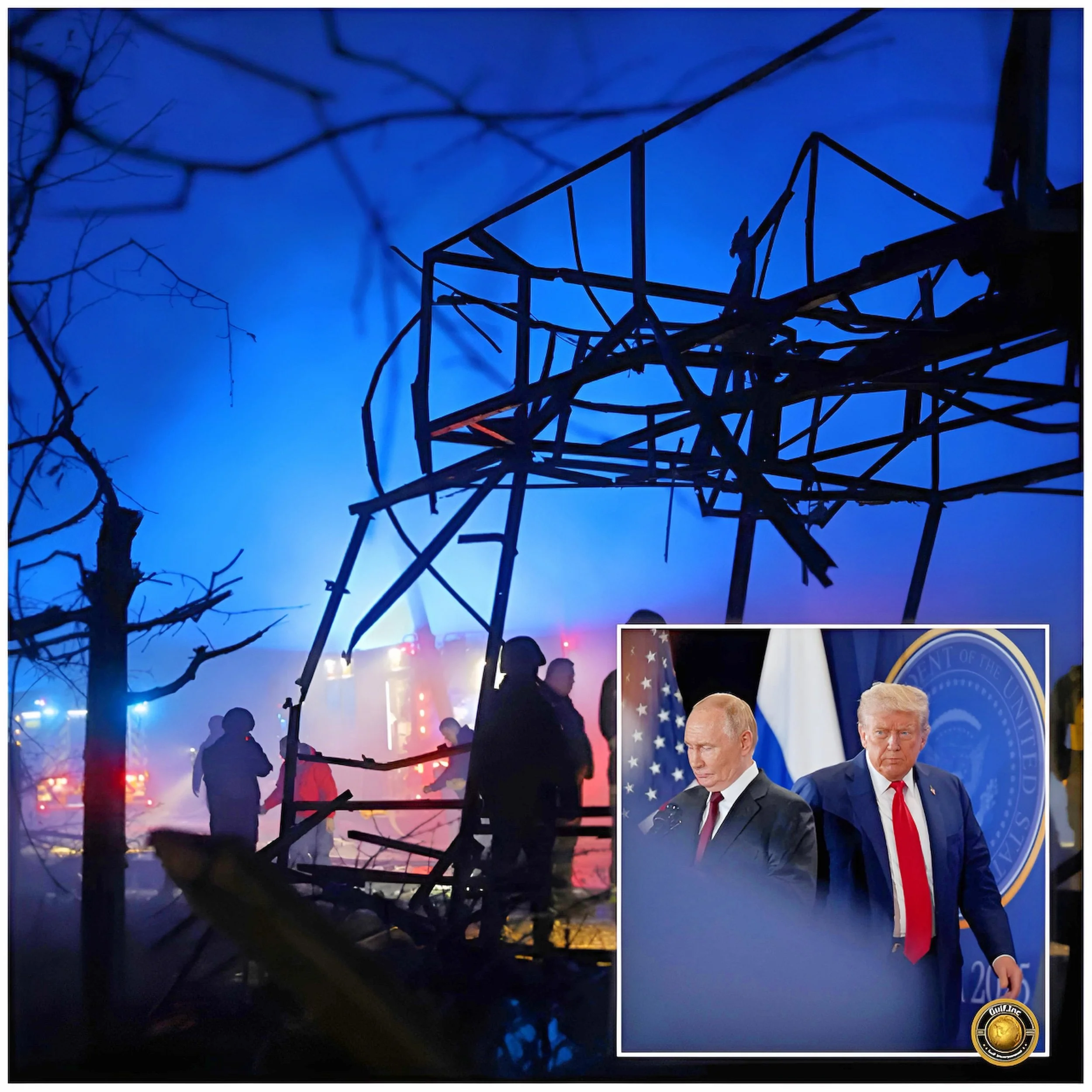
Nigeria’s Mass School Abductions: A Deepening Institutional Crisis and the Shocking Niger State Kidnapping
Introduction
Foundational Context: The Successive Kidnappings Within a Single Week
The Nigerian security landscape has experienced an acute deterioration in educational safety, exemplified by two significant mass abductions occurring within a four-day interval in November 2025.
On Monday, November 17, gunmen attacked Government Girls’ Comprehensive Secondary School in Maga, Kebbi State, abducting 25 female students while fatally shooting Vice Principal Yakub Makuku.
Critically, this incident was rapidly superseded by a substantially larger incident: on Friday, November 21, armed assailants invaded St. Mary’s Catholic School in Papiri, Agwara Local Government Area of Niger State, abducting 215 students and 12 teachers—the largest school kidnapping since the notorious 2014 Chibok abduction of 276 girls by Boko Haram.
Concurrently, a tertiary incident occurred on Monday, November 18, wherein gunmen attacked Christ Apostolic Church in Kwara State, killing two worshippers and abducting 38 others, with ransoms demands of 100 million naira ($69,000) per person.
The temporal clustering of these three sequential assaults—spanning merely four days—represents what security analysts characterize as a synchronized offensive against state authority, signaling either coordinated operational planning among criminal networks or, alternatively, opportunistic proliferation of kidnapping operations exploiting demonstrated security vulnerabilities.
The Development Story: Trajectories of Institutional Collapse
Decadal Progression Toward Systemic Failure
The contemporary kidnapping crisis represents not an aberrant deviation from normalcy but rather the culmination of a decade-long trajectory of deteriorating state capacity and institutional fragmentation.
Since the 2014 Chibok abduction by Boko Haram—which seized 276 schoolgirls and catalyzed international outcry—Nigeria has experienced approximately 1,500 documented school-based abductions across the northern regions.
The disaggregation of perpetrator attribution reveals a critical structural distinction: whereas the 2014 Chibok incident involved the Islamist militant organization Boko Haram, contemporary abductions are predominantly perpetrated by amorphous criminal bandit networks operating within north-central and northwestern Nigeria for distinctly economic motives rather than ideological objectives.
The current crisis exhibits unprecedented severity parameters.
UNICEF and the UN humanitarian coordination framework document that approximately 18 million children across Nigeria lack access to formal education, with 66 percent of these children concentrated in the insecurity-afflicted north-western and north-eastern regions.
Within conflict-affected zones, 60 percent of internally displaced (IDP) children lack any educational access, whilst over 1,125 schools across northwestern Nigeria remain shuttered due to security threats.
The accumulation of these factors has generated what educational and humanitarian institutions characterize as an existential crisis for educational provisioning in northern Nigeria.
Bandit Network Evolution and Sophistication
Critically, criminal bandit organizations have underwent pronounced operational sophistication since their initial emergence as reactive-violent criminal enterprises in the mid-2010s.
Contemporary bandit networks demonstrate characteristics that previously distinguished jihadist militant organizations, including
Centralized intelligence gathering and coordinated planning
The Niger State government explicitly acknowledged that St. Mary’s School received “prior intelligence warning of heightened threats,” yet school proprietors elected to ignore state-mandated closure orders.[bbc +2]
Motorcycle-based rapid mobility units
Approximately 68 percent of armed group operations now employ motorcycle cohorts for assault and withdrawal operations, enabling temporal compression of kidnapping operations.
Encrypted communications infrastructure
Encrypted communications utilization among bandit networks increased by 215 percent since 2020, enabling coordination across geographically dispersed units.
Commercial drone surveillance
Since 2022, commercial drone reconnaissance has been documented in 12 percent of sophisticated bandit operations, enabling pre-assault terrain familiarization and security force positioning identification.
Additionally, evidence suggests that jihadist groups have begun transferring specialized operational knowledge to bandit organizations regarding mass kidnapping execution and ransom negotiation protocols.
While formal ideological integration between jihadist and bandit networks remains limited—as jihadists seek bandit cooption without substantive success—tactical convergence is pronounced.
The bandit organizational structure remains fundamentally decentralized, with approximately 30,000 bandits distributed across 100 gangs, yet the largest gangs now exercise de facto warlord authority over substantial territorial zones, conducting extortionate “tax” extraction from civilian populations.
Immediate Precipitating Factors: The St. Mary’s School Breach and Institutional Negligence
The St. Mary’s School abduction exemplifies a critical pattern: willful institutional non-compliance with state security directives.
The Niger State government had explicitly mandated temporary closure of all boarding schools within specified zones following credible intelligence regarding heightened threat conditions.
School proprietors, however, elected to recommence academic activities without obtaining governmental clearance or notifying security authorities.
This institutional failure likely reflects a rationalization calculus wherein school administrators concluded that temporary academic suspension would generate unacceptable economic consequences through lost tuition revenue and reduced parental enrollment, thereby outweighing security considerations.
However, the decision proved catastrophic: the early morning assault at approximately 02:00 hours local time overwhelmed the limited security infrastructure (only community volunteers were deployed), enabling the rapid abduction of 215 students aged 12-17 and 12 staff members.
Survivors and eyewitnesses documented the operational mechanics of the kidnapping, revealing the coordinated nature of the assault.
Armed assailants, operating in coordinated squads, first neutralized perimeter defenses, then proceeded to dormitory buildings where they systematically extracted students from sleeping quarters.
Some students escaped into nearby homes, whilst others were forcibly marched deeper into forest environments beyond pursuit capability of overstretched security formations.
Governmental Response: Between Symbolic Gesture and Substantive Action
Presidential Mobilization and Diplomatic Consequence
President Bola Tinubu’s response to the successive kidnappings comprised both symbolic and substantive dimensions.
The president suspended his participation in the Group of 20 summit in Johannesburg—a diplomatically significant gesture signaling prioritization of security crisis resolution over international economic engagement.
Tinubu directed security agencies to “act swiftly” and “intensify efforts” for victim rescue, whilst simultaneously postponing all foreign state visits pending resolution.
However, this presidential mobilization occurred largely ex post facto to kidnapping occurrence, rather than constituting preventive security architecture.
The substantive gap between rhetorical commitment and institutional capacity remains profound.
Structural Shortcomings: Capacity-Capability Divergence
Nigerian security force capacity exhibits systematic structural deficiency across multiple dimensions.
The Chief of Army Staff, Lieutenant General Waidi Shaibu, declared that “success is not optional” whilst simultaneously directing intelligence-driven operations and “relentless day-and-night pursuit”—language reflecting reactive posturing rather than proactive prevention. Yet such directorial imperatives encounter formidable operational constraints:
Insufficient force size and geographic dispersion
Nigerian military and police forces are numerically insufficient to maintain continuous protective presence at thousands of dispersed schools across insecurity-afflicted regions.
The Kebbi State incident involved ostensible deployment of “tactical units” at the school location, yet attackers nonetheless successfully completed abduction operations, suggesting either inadequate force positioning or temporal coordination failures enabling assault during minimal-oversight periods.
Intelligence-operations synchronization failure
Despite prior warning signals regarding heightened threat conditions, conversion of intelligence into operational prevention remains consistently ineffective.
Community members report that “local residents and community sources” conveyed specific warnings to security authorities, yet responsive mobilization did not occur at sufficient proximity to school locations.
Corruption and weapons supply asymmetry: Analysts and residents consistently attribute persistent abduction cycles to “rampant corruption that limits weapons supplies to security forces while ensuring a steady supply to the gangs”.
This corruption-driven asymmetry enables criminal networks to maintain military-grade weaponry—including anti-aircraft guns and sophisticated rifles—whilst authorized security forces operate with inadequate armament.
Absence of prosecution and impunity
A critical enabling factor for bandit proliferation and recidivism inheres in the virtual absence of successful prosecutions.
Only a negligible fraction of identifiable bandit leaders have been captured or killed despite years of military operations.
This impunity architecture creates perverse incentive structures wherein gang membership and criminal kidnapping generate profitable returns absent meaningful prospect of legal sanction.
Systemic and Structural Drivers: The Deep Underlying Pathology
Resource Scarcity, Communal Conflict, and Criminal Opportunism
The contemporary bandit phenomenon derives substantially from resource competition exacerbated by climate-induced environmental degradation.
Former herders, confronting pastoral resource depletion consequent to extended droughts and climatic volatility, have increasingly transitioned to predatory violence against farming communities.
This ecological-criminological nexus—wherein environmental scarcity catalyzes communal conflict—provides the foundational recruitment pool from which bandit networks draw operatives.
The resultant criminal networks, however, have transcended simple opportunistic raiding to constitute sophisticated ransoms-based enterprises.
Kidnapping for ransom operates as a lucrative revenue-generation mechanism enabling not merely individual enrichment but organizational sustainability and territorial control consolidation.
A single large-scale school abduction can generate ransom revenues exceeding legitimate employment opportunities by orders of magnitude, thereby creating powerful pecuniary incentives for organizational proliferation and operational expansion.
Education System Fragility and Protective Infrastructure Deficiency
The UNICEF assessment reveals that merely 37 percent of schools across ten states in insecurity-affected regions maintain early warning systems or rudimentary threat identification capabilities.
This profound protective infrastructure deficit reflects both budgetary constraint and institutional disorganization.
Rural boarding schools—disproportionately vulnerable to attack due to geographic isolation, limited security presence, and concentrated vulnerability of dormitory-housed student populations—operate without adequate lighting, perimeter fortification, or communication redundancy to enable timely emergency response.
The security architecture gap is exacerbated by administrative compartmentalization, wherein local school authorities, state government security formations, and federal military units frequently operate without effective operational coordination.
The St. Mary’s incident exemplifies this coordination failure: state government intelligence warnings were not effectively translated into school-level security upgrades or enforcement of closure directives.
Internal Displacement and Educational Access Collapse
The ongoing instability has precipitated mass displacement phenomena, with 2 million children in Borno, Adamawa, and Yobe (BAY) states alone displaced from educational access.
Within IDP camps, educational provisioning has collapsed, with 60 percent of camp-resident children lacking any formal schooling access and host community schools unable to accommodate increased enrollment pressures.
This displacement dynamic generates long-term human capital destruction consequences, as generations of children accumulate educational deficits that compound across lifespan trajectories.
School closure cascades generate secondary vulnerability pathways, wherein children absent from educational institutional protection confront elevated risks of child labor, early marriage, trafficking, and malnutrition.
UNICEF data indicate that one-third of children under five in Nigeria experience food poverty, with 12 million evidencing malnutrition indicators. The convergence of educational access deprivation with nutritional insufficiency generates multiplicative vulnerability trajectories.
Governmental Countermeasures: Reactive Closure Rather Than Preventive Capacity-Building
School Closures as Crisis Management Proxy
The substantive governmental response to successive abductions has centered upon school closures rather than security force augmentation.
Katsina and Plateau states issued directives mandating immediate closure of public boarding schools, whilst federal authorities closed 41 Federal Unity Colleges.
The 41 Federal Unity College closure edict represents de facto admission that the state possesses insufficient protective capacity to guarantee educational institution security.
This closure strategy, whilst operationally simplistic, generates profound negative consequences for educational access and human capital accumulation.
Extended school shutdowns prevent skill acquisition, exacerbate already-acute out-of-school child populations, and create conditions enabling child trafficking and forced labor exploitation.
Search and Rescue Operations: Capacity Limits
Military and security force responses have included coordinated search operations utilizing military helicopters, ground units, and community vigilante organizations.
However, the operational geography—with vast forest reserves and porous borders enabling cross-boundary movement into Cameroon and Niger—presents formidable logistical challenges.
The Kebbi State incident’s single escapee—15-year-old Hawau Usman—demonstrated that survivors’ testimony regarding direction of travel and hideout location remains one of the primary available intelligence sources for rescue operations.
Intelligence-driven rescue operations utilizing survivor testimony and decentralized vigilante network surveillance remain operationally uncertain, with historical precedent suggesting protracted captivity periods averaging 6-24 months pending ransom negotiation completion or rescue achievement.
The 2021 Kaduna abduction yielded release only after 14 months and substantial ransom payments.
International Dimension and Geopolitical Imbrications
American Policy Interventions and Religious Framing Controversy
Former U.S. President Donald Trump characterized kidnappings targeting Christian-affiliated schools as evidence of systematic “persecution of Christians in Nigeria,” announcing intentions to deploy American military forces to Nigeria “guns a-blazing” if abductions continued.
The Nigerian government categorically rejected this characterization, emphasizing that most kidnapping victims in Nigeria’s Muslim-majority north are Muslim, and that kidnappings constitute criminal extortion rather than religiously-motivated persecution.
The international framing dispute reflects broader geopolitical contestation regarding religious narrative construction.
Whilst St. Mary’s Catholic School does serve a Christian student population, the abduction phenomenon is substantially broader, encompassing non-denominational government schools and Muslim-majority institutions alike.
Criminal bandit networks engage in non-discriminatory victim selection, targeting whichever institutions generate ransomable populations independent of religious affiliation.
Humanitarian and Development Consequences: Educational System Collapse
Cascading Effects on Human Capital Formation
The contemporary abduction crisis cannot be analytically disaggregated from the broader educational access collapse.
The convergence of school closures, teacher displacement, infrastructure destruction, and student abductions has generated what the UN Humanitarian Coordination Framework characterizes as an acute education emergency.
Since 2012, more than 600 teachers have been deliberately killed and 19,000 forcibly displaced through attacks targeting educational institutions.
This pedagogical workforce attrition generates multi-decade consequences for cohorts experiencing interrupted schooling trajectories.
Children displaced from education experience cumulative cognitive development deficits, with longitudinal research indicating that each year of schooling interruption corresponds to approximately 0.4 standard deviations of long-term earnings reduction.
The education access collapse disproportionately affects female students, for whom educational deprivation correlates with elevated probabilities of early marriage, reduced reproductive autonomy, and intergenerational poverty transmission.
UNICEF emphasizes that girls constituting 8.9 million of the 17.8 million out-of-school children nationwide confront particularly acute vulnerability to trafficking and gender-based violence during displacement phases.
Structural Analysis: Governance Capacity and State Legitimacy Erosion
The Legitimacy Vacuum and Warlordization
Contemporary bandit organizations increasingly exercise de facto governance functions—taxation, dispute adjudication, security provision (protection from rival gangs)—within territorial zones beyond effective state authority.
This warlordization phenomenon represents a fundamental erosion of state monopoly over legitimate coercion, creating alternative authority structures that civilian populations partially accommodate through extractive compliance.
The St. Mary’s abduction exemplifies this legitimacy erosion: state government directives regarding school closures were disregarded by school proprietors, suggesting that institutional actors no longer perceive state directives as sufficiently credible or enforceable to justify economic sacrifice.
Simultaneously, security force incapacity to provide protective assurance creates conditions wherein civilian populations calculate risk acceptance as preferable to protective relocation costs.
Corruption, Capacity, and Institutional Fragmentation
The systematic capacity deficiency reflects not merely budgetary constraint but institutional fragmentation and pervasive corruption.
Nigeria’s 2025 governance structures manifest acute civil-military coordination failure, inter-agency compartmentalization, and corruption-driven resource misallocation.
The assertion that “governors blame Abuja, Abuja blames local authorities” encapsulates a responsibility diffusion dynamic wherein accountability mechanisms remain ineffective.
Corruption specifically distorts security force resource allocation, with defense expenditures misappropriated through contracting fraud, inflated procurement, and direct embezzlement.
Simultaneously, weapons supply chains to security forces operate under stringent constraints whilst criminal networks access military-grade armament through transnational trafficking networks.
This corruption-driven asymmetry perpetuates security force numerical and material disadvantage relative to organized criminal adversaries.
Conclusion
Pathology and Trajectory Assessment
The successive abductions of November 2025 represent not isolated security incidents but rather symptomatic manifestations of fundamental state institutional collapse across Nigeria’s northern geopolitical zones.
The 227-person abduction (215 students plus 12 teachers) constitutes the largest kidnapping since 2014, yet this magnitude reflects not unprecedented criminality but rather systematic deterioration of protective state capacity.
The deeper issue manifests across six interdependent dimensions.
(1) environmental resource scarcity catalyzing criminality among economically desperate populations
(2) bandit network sophistication enabling coordinated large-scale operations beyond reactive counterinsurgency capacity
(3) institutional non-compliance with security directives reflecting erosion of state legitimacy
(4) military capacity insufficiency precluding effective protective presence across dispersed vulnerable population concentrations
(5) corruption-driven asymmetry enabling criminal armament whilst constraining security force resourcing
(6) educational system fragmentation generating humanitarian catastrophe through access deprivation.
Presidential postponement of international commitments and rhetorical affirmation of rescue operations constitute necessary but insufficient responses.
Structural remediation requires comprehensive institutional reconstruction encompassing.
(1) security force augmentation and decentralized deployment in vulnerable zones
(2) anticorruption mechanisms governing defense procurement and weapons supply.
(3) prosecution infrastructure development enabling deterrent incapacitation of identified bandit leadership.
(4) coordinated multi-state operations transcending geographical compartmentalization.
(5) resource provisioning addressing ecological scarcity drivers of criminality.
Without such comprehensive structural interventions, abduction cycles will persist as endemic phenomena rather than episodic crises, with educational systems progressively deteriorating and human capital accumulation suffering irreversible intergenerational damage.