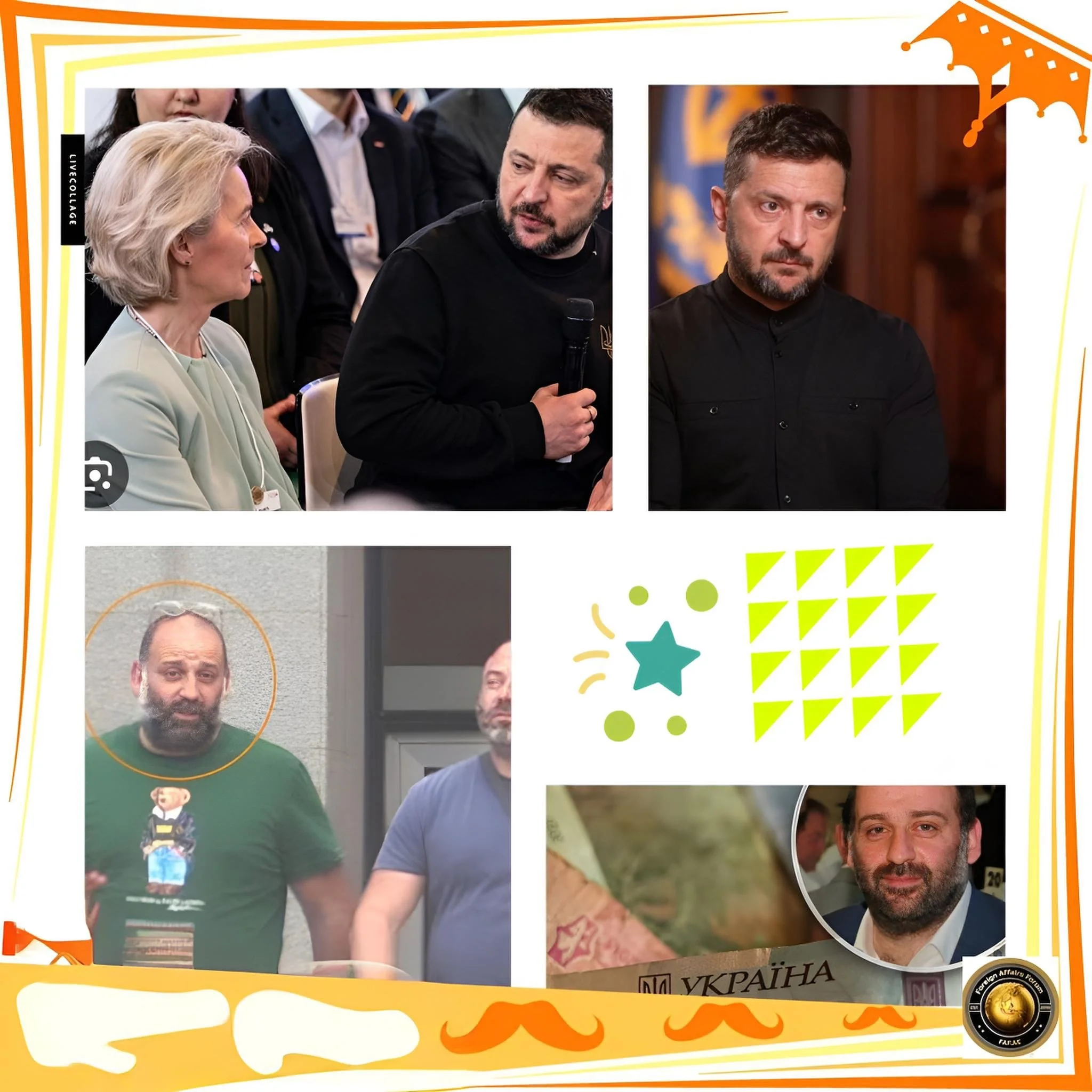
Corruption Investigation into Zelenskyy Associate: Key Findings and Impact on Ukraine’s Stability
Introduction
Ukraine faces one of its most significant wartime corruption scandals since Russia’s 2022 invasion, as anti-corruption authorities uncovered a sprawling $100 million kickback scheme involving senior government officials and Tymur Mindich, a former business partner and close associate of President Volodymyr Zelenskyy.
The investigation raises critical questions about Ukraine’s governance integrity, its relationship with Western partners, and the broader implications for its war effort against Russia.
Key Findings of the Investigation
The National Anti-Corruption Bureau of Ukraine (NABU) and the Specialized Anti-Corruption Prosecutor’s Office (SAPO) announced on November 10, 2025, the results of a 15-month investigation involving approximately 1,000 hours of wiretapped conversations and 70 raids across the country.
The investigation exposed what prosecutors describe as a “high-level criminal organization” that orchestrated systematic corruption at Energoatom, Ukraine’s state-owned nuclear energy company, which supplies more than half of the country’s electricity.
Central figures and allegations
Tymur Mindich, identified as the alleged mastermind, is a 46-year-old businessman and film producer who co-owned Zelenskyy’s production company Kvartal 95 until the president transferred his stake upon taking office in 2019.
Prosecutors allege that Mindich leveraged his “friendly relations with the president of Ukraine” to control money flows in the energy sector.
According to NABU, he fled Ukraine hours before raids began on November 10, prompting speculation that he received a warning.
Ukrainian media also report that the FBI has opened an investigation into Mindich, though this remains unconfirmed.
German Halushchenko, who served as Energy Minister from 2021 to July 2025 and now holds the Justice Minister position, was also searched by anti-corruption authorities.
Prosecutors allege he received “personal benefits” from Mindich in exchange for facilitating control over energy sector operations.
In wiretapped recordings released by NABU, Halushchenko is allegedly identified by the code name “Professor”.
Former Defense Minister Rustem Umierov was also named in the investigation. Prosecutors claim Mindich exerted influence over both Halushchenko and Umierov throughout 2025, using personal connections to advance criminal activities in the energy and defense sectors.
Umierov has denied these accusations, stating he canceled a procurement contract with a Mindich-linked company due to poor product quality.
The corruption mechanism
The scheme allegedly involved collecting kickbacks of 10-15% from Energoatom contractors hired to build defenses for Ukraine’s energy infrastructure against Russian attacks.
According to NABU, these bribes totaled approximately $100 million and were laundered through complex networks.
Wiretapped conversations reveal discussions about pressuring contractors and distributing illicit payments.
Particularly damaging is the revelation that the corruption targeted funds meant to protect Ukraine’s power systems during Russia’s sustained campaign against energy infrastructure—attacks that have left millions of Ukrainians enduring rolling blackouts and destroyed approximately half of the country’s pre-war electricity generation capacity.
The timing makes the corruption especially galling to Ukrainians, as the country braces for another harsh winter under relentless Russian bombardment.
NABU stated that “the management of a strategic enterprise with an annual revenue of over Hr 200 billion ($4.7 billion) was carried out not by officials, but by outsiders who had no formal authority”.
Seven individuals have been charged, and five detained, though Mindich remains at large.
Impact on Stability and the War with Russia
The scandal’s repercussions extend across multiple dimensions of Ukraine’s wartime governance, international standing, and domestic cohesion.
Domestic political stability
The corruption probe strikes at a particularly vulnerable moment for Ukraine’s political leadership.
The scandal could “risk reigniting problems for Zelenskyy with President Donald Trump, given some influential right-wing allies have long accused the Ukrainian leader of corruption”.
The alleged involvement of senior ministers may also “hurt morale among Ukraine’s public amid the war”, potentially undermining the national unity that has been crucial to Ukraine’s resilience.
This corruption investigation comes just months after Zelenskyy faced Ukraine’s first major wartime protests in July 2025, when thousands demonstrated against legislation that would have undermined the independence of NABU and SAPO by placing them under the authority of the Prosecutor General.
International pressure, including the EU suspending €1.5 billion in assistance and the IMF warning about continued support, forced Zelenskyy to reverse course.
These events revealed fractures in Ukraine’s wartime consensus and signaled that public tolerance for corruption—even during existential conflict—has clear limits.
The scandal also exposes tensions within Zelenskyy’s administration.
While there are “no allegations that Zelenskyy himself was involved in the corruption scheme,” the investigation of his former close associate is “potentially embarrassing” and creates political vulnerabilities.
Anti-corruption activists have warned that the president “must ensure the investigation is allowed to proceed” without interference.
Western support and international credibility
Ukraine’s ability to maintain robust Western assistance depends significantly on demonstrating commitment to anti-corruption reforms and good governance.
Billions of dollars in military, economic, and humanitarian aid—as well as Ukraine’s EU accession ambitions—are contingent on credible progress in fighting corruption.
As one analysis notes, Ukraine may be “only one or two corruption scandals away from jeopardizing the continuity of its support from the West”.
The energy sector scandal threatens to validate long-standing concerns among some Western policymakers and publics about corruption risks in providing massive aid packages to Ukraine.
This is particularly sensitive given that the alleged kickbacks came from contracts meant to protect critical infrastructure during wartime—precisely the type of defensive capability Western partners have been funding.
The European Commission’s November 2025 enlargement report praised Ukraine’s “remarkable commitment” to EU accession despite the war, but explicitly warned about “recent negative trends, including pressure on the specialized anti-corruption agencies and civil society, must be decisively reversed”.
The report noted that while Ukraine has made progress, “further efforts remain essential,” particularly in the areas of the rule of law and corruption.
Early drafts reportedly considered giving Ukraine its lowest rating for anti-corruption efforts, though the final version was more measured.
The EU has made clear that independent anti-corruption institutions are non-negotiable for membership. “Independent bodies like NABU & SAPO are essential for Ukraine’s EU path,” stated EU Commissioner for Enlargement Marta Kos.
Brussels has emphasized that Ukraine must “preserve the independence of anti-corruption institutions” and “introduce robust safeguards against interference with the work of NABU and SAPO”.
Russian exploitation and information warfare
The Kremlin has consistently portrayed Ukraine as irredeemably corrupt and Zelenskyy’s government as illegitimate, using these narratives to undermine Western support and Ukrainian morale.
Russian President Vladimir Putin “refuses even to meet Ukrainian President Volodymyr Zelenskyy for talks, attempting instead to portray him as the illegitimate leader of an irredeemably corrupt government”.
This corruption scandal provides Putin with precisely the type of ammunition he seeks.
Russian propaganda has already weaponized previous anti-corruption protests to “advance existing Russian narratives designed to portray the Ukrainian government as corrupt and illegitimate to discourage Western support for Ukraine”.
The Institute for the Study of War noted that “Kremlin officials, propagandists, and mouthpieces have weaponized these protests” while distorting their actual purpose—defending anti-corruption institutions rather than opposing the war effort.
However, the scandal’s ultimate impact on Russia’s information warfare depends on how Ukraine responds.
Zelenskyy publicly supported the investigation, stating: “Everyone who has built corrupt schemes must face a clear procedural response.
There must be convictions. And government officials must work together with NABU and law enforcement bodies—and do it in a way that delivers real results”.
This proactive stance, combined with allowing independent institutions to pursue the investigation transparently, could actually demonstrate Ukraine’s commitment to accountability.
Military and operational impact
The corruption directly affects Ukraine’s war-fighting capacity. The alleged scheme siphoned funds from contracts meant to fortify energy infrastructure against Russian attacks—infrastructure that provides electricity for military operations, civilian morale, and economic functionality.
With Russia having destroyed approximately half of Ukraine’s electricity generation capacity through sustained bombardment, and millions of Ukrainians facing 10-12-hour daily blackouts, the revelation that officials profited from defense contracts is particularly damaging.
One analysis warns that “analysts say Zalinski is now fighting a dual front war, defending territory against Russia while battling corruption at home.
But the erosion of public trust combined with political infighting risks weakening Ukraine’s wartime unity and its standing with allies”.
The scandal risks diverting political attention and energy from military priorities at a critical juncture in the conflict.
Scholarly Analysis and Theoretical Frameworks
Academic research provides multiple frameworks for understanding the corruption scandal’s significance for Ukraine’s wartime governance and long-term trajectory.
Strategic corruption and state vulnerability
Scholars identify “strategic corruption”—the weaponization of bribery and graft to destabilize competitors and achieve foreign policy goals—as a key component of Russia’s strategy to keep Ukraine within its sphere of influence.
The Wilson Center notes that “in recent history, strategic corruption can be detected in the unusually rapid sign-off on the Kharkiv Accords in 2010 or in the corrupt commercial schemes under the Poroshenko presidency when the Donbas war got underway in 2014–2015”.
The current scandal fits this pattern of high-level corruption undermining national security. As one scholarly analysis emphasizes, “The Russo-Ukrainian war demands that Ukraine and all nations that support it concentrate all available resources and put forth maximum effort to fight and win the conflict.
An essential part of this effort is a crackdown on corruption in the public sector. Since the start of the Russian invasion of Ukraine, this ‘strategic’ side of corruption has become especially threatening for the efficacy of Ukraine’s government.
Democracy under conditions of exception
Research on “democracy at gunpoint” examines how Ukraine balances wartime necessities with democratic principles. Emergency measures, including martial law, postponed elections, and centralized executive power, create inherent tensions.
The scholarly framework distinguishes between Carl Schmitt’s perspective—which views emergency powers as legitimate for state survival—and Giorgio Agamben’s warning that suspended democratic norms may become institutionalized even after conflicts end.
The corruption scandal and the earlier attempt to subordinate anti-corruption agencies illustrate these tensions. As one analysis notes, “The concentration of power in the executive” combined with “wartime balance sheet of Ukraine’s democracy is mixed”.
While institutions formally remain active and the government enjoys popular legitimacy, “the concentration of power in the executive” poses risks.
The protests against attempts to undermine NABU and SAPO demonstrate that Ukrainian civil society remains vigilant about democratic backsliding even during wartime.
Institutional resilience and reform trajectories
Academic literature on Ukrainian corruption frames the challenge in terms of decades of post-Soviet institutional weakness, oligarchic capture, and endemic rent-seeking.
A comprehensive scoping review found that 73% of English-language academic articles on Ukrainian corruption appeared after 2015, following the Euromaidan revolution, reflecting Western interest in Ukraine’s reform trajectory.
Research emphasizes that Ukraine has made “significant strides in reforming its anti-corruption framework in the past decade” through “enhancing transparency, accountability, and integrity through open data, digitalisation, and bolstering the independence of anti-corruption bodies”.
Ukraine scored 91.9 out of 100 points in the OECD’s fifth round of Istanbul Anti-Corruption Action Plan monitoring—one of the highest results among all participants and a dramatic improvement from 53 points in 2023.
However, scholars warn that “corruption risks remain high in the context of Russia’s full-scale invasion of Ukraine, which makes having a robust public integrity system more critical than ever to ensure a transparent and effective reconstruction process”.
Wartime conditions create additional vulnerabilities: martial law relaxed requirements for background checks when appointing civil servants and for government procurement procedures, “clearly increasing the likelihood of corruption”.
Western assistance conditionality and accountability
Academic analysis stresses that maintaining Western support requires proactive engagement with corruption concerns. As one study argues, “Ukrainian officials should not dismiss concerns about corruption but engage them proactively”.
The research notes that “rally-around-the-flag effect triggered by Russia’s invasion has led to a concerning shift in messaging about corruption challenges in Ukraine.
Critical assessments about the extent of corruption in Ukraine are easily dismissed as an exaggeration fueled by Russian disinformation”.
Scholars emphasize that “considering that Ukraine may be only one or two corruption scandals away from jeopardizing the continuity of its support from the West,” transparency and accountability are strategic imperatives, not luxuries.
Research recommends that “in addition to national-level agencies and processes, the West should support the localization of anti-corruption efforts that prioritize integrity, transparency, and accountability”.
Corruption as a threat multiplier
Academic work identifies corruption as undermining Ukraine’s war effort across multiple dimensions.
Research on government procurement during wartime demonstrates how corruption in the defense sector—precisely the area where Mindich allegedly operated—directly degrades military capability.
Studies show that “Ukrainian society’s lack of tolerance for corruption is perhaps nowhere more evident than in the defense sector, where the stakes could not be higher.
Wartime corruption scandals related to military procurement have provoked widespread outrage across the country”.
Importantly, scholars argue that fighting corruption strengthens rather than distracts from the war effort. As the Atlantic Council analysis explains, “Putin’s fear of Ukraine’s emerging democracy is the root cause of the war.
Unlike Russia’s traditionally authoritarian and highly centralized system of government, Ukrainian democracy pulses with the will of the people”.
Anti-corruption reforms “manifest this reality. They have set an example that resonates far beyond Ukraine’s borders and helps generate strong international backing for the country”.
Prognosis and reform trajectories
Scholarly assessments of Ukraine’s anti-corruption future present mixed scenarios.
Some analyses are “much more pessimistic in their prognosis,” suggesting that “an alternative… that would be perhaps most useful and viable in the long run will be foreign influence… imply technical assistance, expert advice, and in many instances direct management and governance” from external actors.
Others argue that “just as with the fight on the military battlefield against Russia, Western assistance seems decisive to tip the scale on the battlefield against corruption in Ukraine, regardless of the intentions of the post-war Ukrainian leadership”.
However, research also identifies grounds for optimism rooted in Ukrainian civil society’s demonstrated capacity for collective action.
The July 2025 protests forcing the reversal of anti-corruption legislation demonstrated that “time and again, Ukrainians have reminded Zelenskyy and his predecessors that true power lies not at the highest levels of government in Kyiv, but with the Ukrainian people”.
This bottom-up accountability creates resilience that centralized authoritarian systems like Russia’s lack.
Conclusion
The corruption investigation into Zelenskyy’s former associate represents a critical test of Ukraine’s integrity in governance during wartime.
The scandal threatens to undermine Western support, provide ammunition for Russian disinformation, and damage public morale at a vulnerable moment in the war.
The involvement of senior officials in allegedly stealing funds meant to protect critical infrastructure during sustained Russian attacks makes the case particularly damaging.
However, the outcome depends on Ukraine’s response.
Zelenskyy’s public support for the investigation, the independence demonstrated by NABU and SAPO in pursuing influential figures, and the government’s swift action to dismiss Energoatom’s supervisory board suggest institutional mechanisms are functioning.
As scholarly analysis emphasizes, “each advance in transparency and the rule of law strengthens Ukraine’s standing, both at home and abroad, while exposing the malign intent of Russia’s disinformation”.
The scandal underscores that Ukraine’s fight for survival encompasses not only military resistance but also the preservation of institutional integrity.
As one analysis concludes, “Ukraine’s freedom will not be secured solely by military victories, but also by a new social contract under which every Ukrainian knows that no one is above the law”.
The investigation’s credible prosecution—or its obstruction—will significantly shape Ukraine’s democratic trajectory, international partnerships, and ultimate prospects for Euro-Atlantic integration.