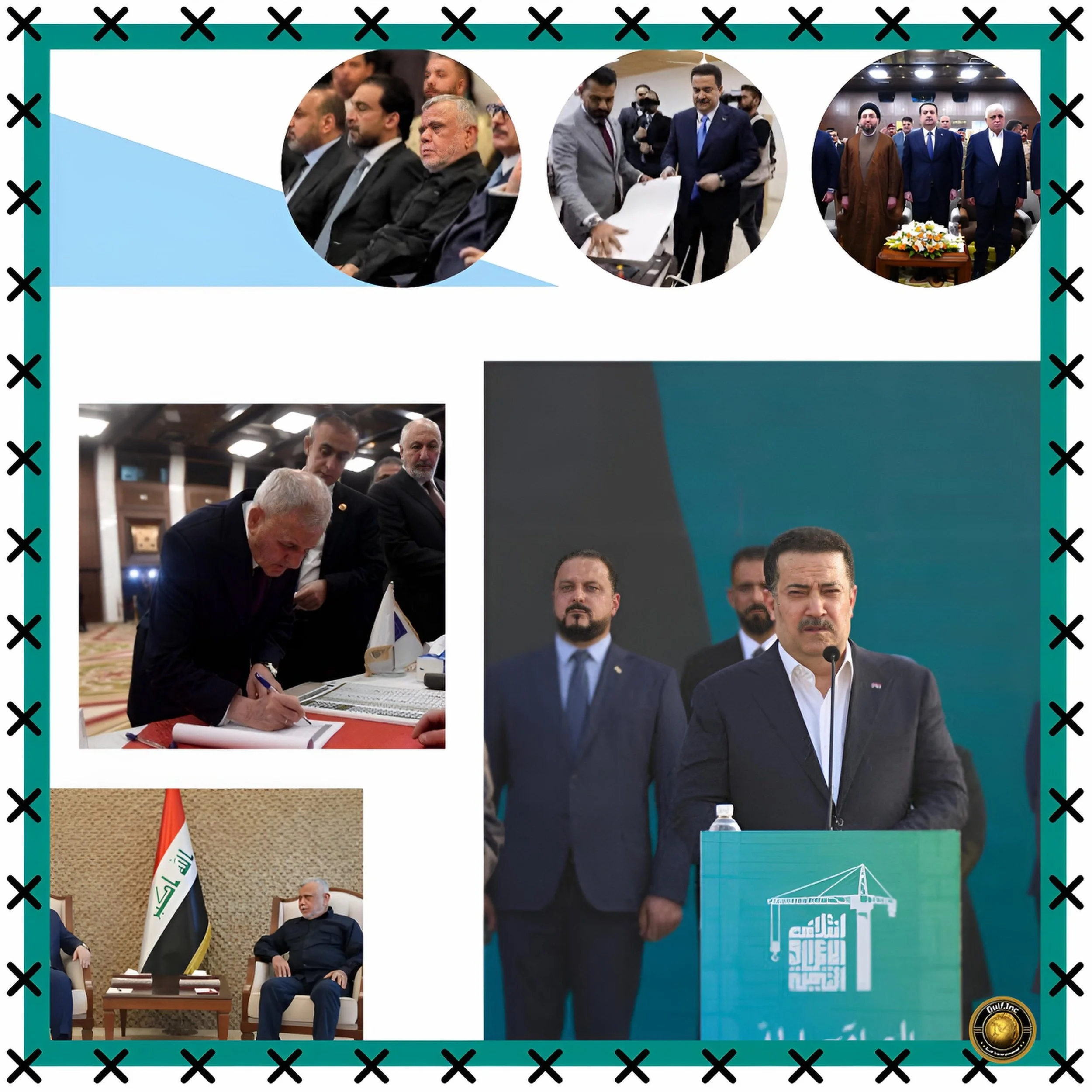
Iraq’s 2025 Parliamentary Elections: Al-Sudani’s Bid for a Second Term and the Perpetuation of Sectarian Governance
Executive Summary
Iraq held its sixth parliamentary election since the US-led invasion of 2003 on November 11, 2025, in an electoral environment characterized by profound voter apathy, entrenched elite dominance, and the absence of meaningful reform despite two decades of democratic experimentation.
Prime Minister Mohammed Shia al-Sudani seeks a second term through his newly formed “Reconstruction and Development Alliance” coalition, currently projected to secure approximately 29% of parliamentary seats (~95 of 329 seats).
However, the structural fragmentation of Iraq’s political landscape, combined with weakened coalition cohesion and competing interests among Shia parties, makes al-Sudani’s path to continued premiership uncertain despite leading electoral performance.
This analysis examines al-Sudani’s record, the historical trajectory of Iraqi elections, competing political actors, voter expectations, and international positioning to assess the implications of Iraq’s 2025 electoral cycle.
Part I: Historical Context—Six Elections and the Persistence of Sectarian Governance
The Post-2003 Electoral Trajectory
Iraq has conducted six parliamentary elections since the 2003 US-led invasion that ousted Saddam Hussein.
Each election represents both a formal exercise in democratic procedure and a ritualistic power redistribution among established sectarian and ethnic elites.
The trajectory of Iraqi elections reveals a system that, despite competitive processes and changing electoral mechanics, has produced remarkably consistent patterns of elite power retention and systematic corruption.
The first Iraqi parliamentary election in December 2005 marked the post-Saddam political system’s foundation, held amid international optimism and domestic hopes for representative governance.
Nearly 80% of eligible voters participated—the highest turnout in Iraq’s post-2003 history.
This participation reflected “national euphoria” and the belief that elections could create a meaningful new political order distinct from Saddam’s authoritarian structure.
However, this initial enthusiasm rapidly deteriorated.
By 2010, turnout had dropped to approximately 62%, reflecting growing public recognition that elections would not substantially alter Iraq’s sectarian power-sharing arrangement or address endemic corruption.
The 2014 election (held amid ISI/ISIS territorial consolidation) attracted 60% of eligible voters.
The 2018 election marked a significant inflection point: turnout fell below 50% for the first time, declining to approximately 44%, signaling a qualitative shift from declining enthusiasm to active disengagement.[shafaq]
The most dramatic collapse occurred in 2021, when turnout reached its lowest recorded level: 41% of eligible voters participated.
This 2021 election precipitated an unprecedented political crisis that lasted eleven months, during which Muqtada al-Sadr’s movement (which won the largest bloc with 73 seats) attempted to form a nationalist government excluding Iran-aligned Shia parties, triggering violent street protests and institutional blockade.
The Coordination Framework—a coalition of Iran-aligned Shia parties including the PMF-affiliated Fateh faction—ultimately prevailed through coalition mathematics, nominating al-Sudani as prime minister despite al-Sadr’s electoral plurality.
The Electoral System as Mechanism of Elite Entrenchment
Iraq’s electoral law has undergone multiple transformations, each ostensibly designed to address specific reform objectives, yet consistently producing outcomes that strengthen rather than diminish elite control.
The system has transitioned from nationwide proportional representation to single non-transferable vote (SNTV) in multi-member constituencies (2021) back to proportional representation with modified Webster/Sainte-Laguë divisor of 1.7 (2025).
Importantly, the 2025 electoral system reverses key 2021 reforms that had been introduced during the 2019 Tishreen protests demanding anti-corruption and nationalist governance.
The 2019 protest movement—which mobilized hundreds of thousands of Iraqis and resulted in numerous extrajudicial killings—successfully pressured parliament to adopt the single non-transferable vote system, theoretically creating stronger links between voters and representatives and reducing advantages of large established parties.
However, parliament reversed this reform in 2024, returning to proportional representation with a divisor of 1.7—a technical modification that mathematically advantages larger blocs while disadvantaging independents and smaller lists.
Only 75 independent candidates are contesting the 2025 election compared to significant independent blocs in 2021.
This represents a deliberate re-entrenchment of the party-dominated system against populist or reformist challenges.
Part II: Prime Minister Al-Sudani’s Record and Political Trajectory
Appointment and Initial Position
Mohammed Shia al-Sudani became Iraq’s prime minister on October 27, 2022, following the 11-month political crisis that paralyzed Iraq’s government formation process after the 2021 elections.
He was nominated by the Coordination Framework (CF)—a coalition of Shia parties including the Iran-aligned Popular Mobilization Forces (PMF) faction, the Islamic Dawa Party, and the Islamic Supreme Council—despite lacking significant independent parliamentary representation of his own.
Al-Sudani’s initial position was considerably weakened by political dynamics.
Unlike prime ministers who emerged from electoral plurality (as occurred in 2021 with al-Sadr or in 2018), al-Sudani was a compromise candidate selected by elite coalition negotiators to depute factional disputes among larger CF components.
Critics characterized him as a “general manager” rather than a prime minister—effectively an administrator implementing decisions made by more powerful Shia militia and party leaders.
His government program was explicitly structured as two-part: first, his own service-delivery objectives; second, political agreements negotiated among CF, Sunni, and Kurdish blocs.
“Services Government” Performance Record
Al-Sudani deliberately framed his administration as a “services government,” prioritizing visible infrastructure development, poverty reduction, unemployment mitigation, and energy independence—dimensions traditionally neglected by previous Iraqi governments consumed by sectarian conflict and corruption.
This strategic rebranding intended to shift political discourse from sectarian and militia politics toward technocratic governance focused on citizen welfare.
Economic and Poverty Metrics:
Poverty reduction
Decreased from 23% to 17.6%, representing approximately 2 million people lifted above poverty threshold.
Unemployment
Reduced from 16.5% to 14.4%, with approximately 600,000 to 1,000,000 new government and private sector positions created.
Inflation control
Declined from 4.9% to 3%, indicating macroeconomic stabilization[thenewregion]
Social protection expansion
85% increase in families receiving social protection (reaching 7.6 million people)
Student grants
More than 2 million individuals received student grants[rudaw]
Infrastructure Development
School renovation and construction
Over 2,000 schools renovated or constructed.
Transportation infrastructure
Extensive road and highway construction programs, particularly in Baghdad and high-traffic pilgrim routes[thenewregion]
Housing projects
Major housing initiatives announced to address residential unit shortages[thenewregion]
Reduced transportation accidents
Improved road conditions contributed to documented accident rate reductions in key corridors[thenewregion]
Energy Independence Achievements
Power generation
Reached 27,000 megawatts for the first time in Iraqi history[rudaw]
Associated gas utilization
Increased from previously wasted flaring to 67% utilization rate[rudaw]
Fuel independence
Gasoline production increased to 28 million liters daily with imports declining to minimal levels; plans to achieve complete diesel self-sufficiency by early 2025.
Gas-for-oil barter with Iran
Signed agreement reducing exposure to summer electricity shortages.
Economic Restructuring
Non-oil revenue growth: Increased 6% during tenure.
Electronic payment systems
Expanded to 7.6 trillion dinars annually (vs. 2.4 trillion in early 2023), reducing cash-based corruption opportunities[thenewregion]
Three-year federal budget
Passed unprecedented multi-year budget providing investment continuity ($153 billion combined for 2023-2024 with approximately $38 billion allocated for developmental investment)
Approval Ratings and Public Perception
Al-Sudani’s services-focused approach initially generated significant public approval. A 2023 survey recorded a 69% approval rating, substantially higher than previous prime ministers’ ratings during comparable tenures.
However, this approval rating declined to 64% by September 2025, suggesting diminishing enthusiasm as the election approached or reflecting public skepticism regarding substantive systemic reform.
Polling data from November 2025 revealed that among Iraqi respondents, al-Sudani ranked second only to Muqtada al-Sadr in personal favorability ratings, with no other major politician achieving ratings above 30%.
This suggests that while al-Sudani enjoys significant personal approval, broader public confidence in Iraq’s political system remains severely compromised.
Structural Limitations and Unresolved Systemic Problems
Despite documented policy achievements, Carnegie Endowment scholars have argued that al-Sudani’s “services government” approach has fundamentally failed to address the underlying institutional corruption and sectarian power-sharing that generates poor governance in Iraq.
The muhasasa (quota-based sectarian power-sharing) system remains institutionally intact, with al-Sudani constrained by coalition agreements requiring elite representation across major sectarian and factional blocs.
The most critical unresolved issue involves the Popular Mobilization Forces (PMF)—a coalition of approximately 230,000 armed militia personnel organized into 67 distinct militias, many with autonomous command structures and economic enterprises entirely separate from state control.
Although formally placed under Iraqi military command in 2016, PMF factions operate with substantial autonomy, control strategic portions of the Iraqi economy through affiliated companies, and exercise influence over state institutions through political entities embedded within the Coordination Framework.
Al-Sudani pledged during his 2022 government formation to integrate PMF units fully within Iraqi military command structures and subordinate them to civilian control.
However, two years of tenure revealed minimal substantive progress toward this objective.
The PMF has consolidated rather than diminished its institutional power, establishing building companies, controlling commercial enterprises, and embedding militia leaders within government structures.
The Trump administration explicitly made PMF disarmament a precondition for continued US military and financial support to Iraq, creating a direct contradiction between al-Sudani’s coalition commitment to PMF integration and US pressure for PMF subordination.
This contradiction lies at the heart of al-Sudani’s political vulnerability. He cannot simultaneously satisfy Iran-aligned coalition partners committed to PMF autonomy and the United States, which increasingly demands that Iraq subordinate militia power to state authority.
Carnegie analysis suggests that absent meaningful PMF reform, al-Sudani’s services-delivery achievements will ultimately be constrained by the same elite power dynamics that plagued his predecessors.
Part III: The 2025 Election—Competitors, Projections, and Political Fragmentation
Al-Sudani’s Strategic Break and Coalition Formation
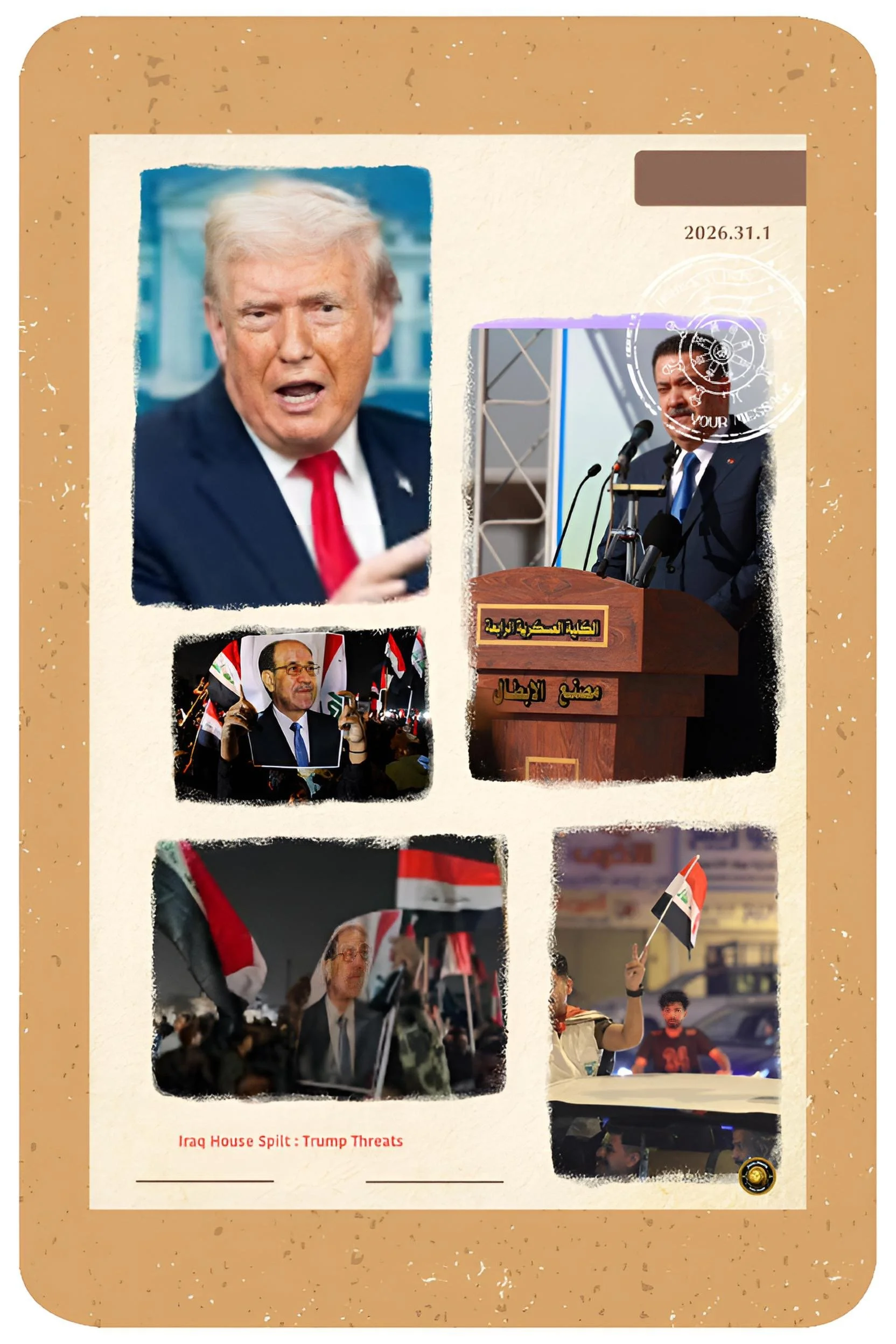
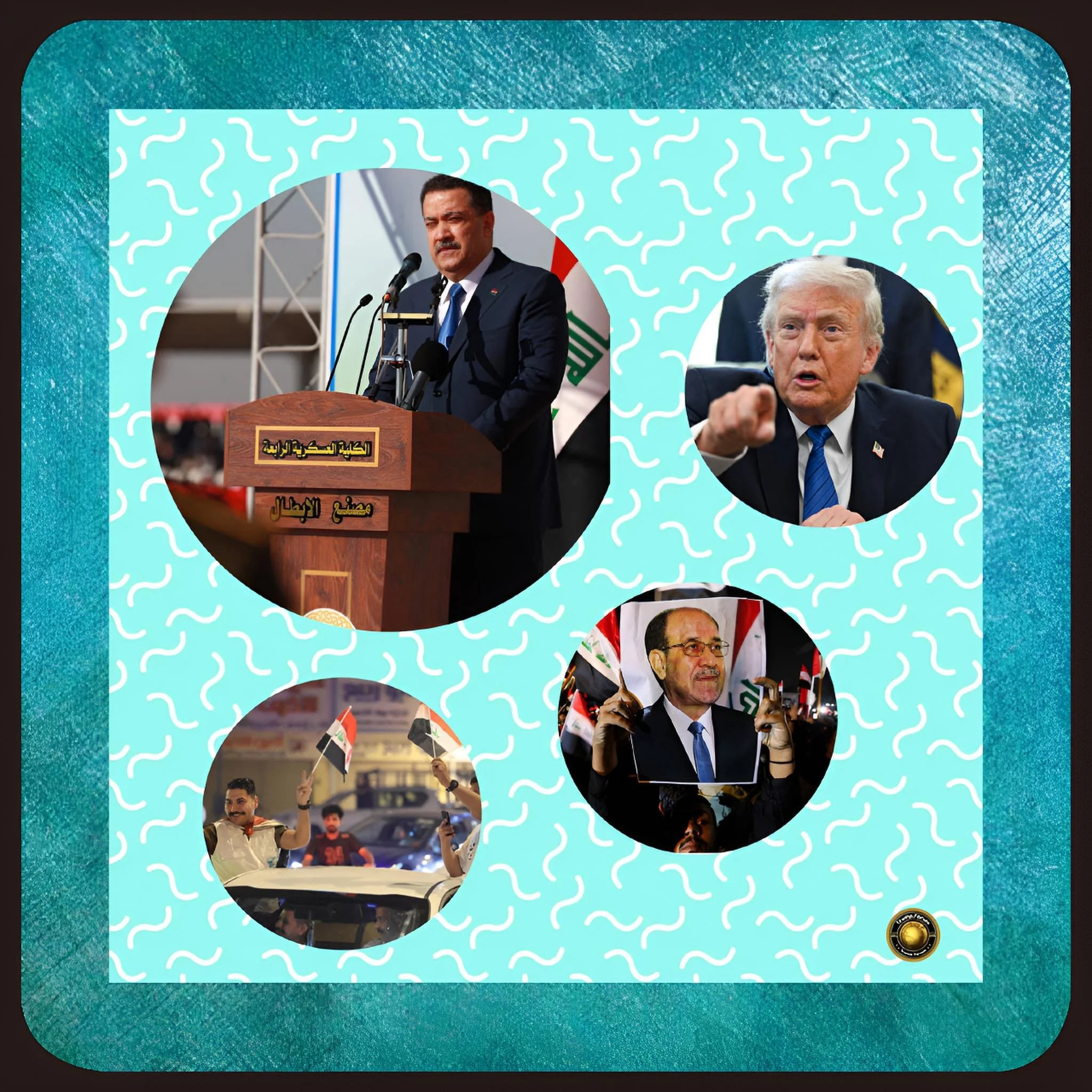
Recognizing his precarious position within the Coordination Framework (where rival leaders such as Nouri al-Maliki, head of the Islamic Dawa Party, retain significant influence), al-Sudani took the unprecedented step in May 2025 of forming his own separate electoral coalition: the “Alliance for Reconstruction and Development”.
This coalition comprises seven distinct political entities, including.
Al-Sudani’s own party, Al-Furratain Current (the smallest component).
Faleh al-Fayyad, head of the Popular Mobilization Forces.
Approximately 53 sitting MPs previously aligned with the Coordination Framework or independents.
Prominent tribal leaders (sheikhs) from central and southern Iraq.
Influential figures from provincial governance structures.
This strategic pivot represented a significant break with CF political convention.
Al-Sudani essentially declared independence from the CF coalition that had nominated him, instead attempting to build a distinct political base capable of competing against traditional Coordination Framework establishments.
However, observers noted that Al-Furratain Current—technically al-Sudani’s own party—remained institutionally weak, and al-Sudani’s coalition’s apparent electoral strength masked the integration of borrowed candidates rather than genuine party development.
The defection of over 53 MPs from CF frameworks to al-Sudani’s coalition simultaneously weakened the broader CF’s projected seat count while fragmenting Shia party unity.
This fragmentation was intentional: al-Sudani calculated that a divided CF would be more vulnerable to post-election coalition pressures, whereas unified CF dominance would subordinate his premiership to more powerful party leaders.
Al-Sudani’s Reconstruction and Development Alliance: Projected to secure approximately 29% of parliamentary seats (~95 seats), making it the largest single bloc.
Polling shows consistent frontrunner status with 29% of projected seats according to the Independent Institute of Administration and Civil Society Studies.
Taqaddum Alliance (Sunni bloc led by Mohammed al-Halbousi)
Projected to capture approximately 14% of seats (~46 seats), consolidating Sunni representation.
Al-Halbousi, former parliament speaker (2018-2021), remains Iraq’s most prominent Sunni political figure and is expected to secure the parliamentary speaker position in post-election coalitions.
State of Law Coalition (led by former Prime Minister Nouri al-Maliki)
Projected at 11% of seats (~36 seats). Al-Maliki, who served as prime minister 2006-2017 and presided over the US withdrawal and subsequent ISIS insurgency, has repeatedly attempted comebacks and faces significant rivalry with al-Sudani within the CF.
Other Coordination Framework Parties
Approximately 15% of seats (~49 seats) distributed among Islamic Dawa Party subsidiaries, Islamic Supreme Council of Iraq, and smaller CF component organizations.
Kurdish Democratic Party and Patriotic Union of Kurdistan (combined Kurdish blocs)
Projected at approximately 16% of seats (~52 seats).
Kurdish parties historically secure ministerial positions as part of formal power-sharing arrangements despite their electoral representation being disproportionate to Iraq’s Kurdish population concentration in northern Iraq.
Sunni and Independent Parties (excluding Taqaddum)
Approximately 15% of seats (~49 seats), representing fragmented Sunni representation outside al-Halbousi’s dominant coalition and rare independent candidates contesting under reformed electoral law barriers.
Muqtada al-Sadr’s Absence
The most significant absence is Muqtada al-Sadr, who won the largest bloc (73 seats) in 2021 but withdrew from parliament amid coalition negotiations failures.
In July 2025, al-Sadr announced a boycott of the 2025 elections, calling them “flawed” and asking his supporters to abstain from voting.
This boycott removes Iraq’s most significant populist, nationalist, and anti-Iran political force from electoral competition, simplifying coalition mathematics for Shia establishment parties while reducing overall electoral legitimacy.
Likelihood of Al-Sudani’s Second Term
Despite leading in seat projections, Atlantic Council analysts concluded that al-Sudani’s path to a second term as prime minister is “highly unlikely,” primarily due to deep divisions within the Coordination Framework itself.
The analysis identified three critical obstacles
Coordination Framework Fragmentation
The very schism that al-Sudani created by forming his own coalition simultaneously weakens CF cohesion and undermines his ability to command unified Shia party endorsement for continued premiership.
Traditional CF partners including al-Maliki, Islamic Supreme Council, and Dawa Party factions may collectively prefer a different premier who would more reliably serve their factional interests
Absence of Two-Thirds Majority
Iraqi constitutional procedures now require a two-thirds parliamentary majority to select the president, who appoints the prime minister.
No single coalition or reasonable coalition combination appears capable of assembling the 219 votes necessary for two-thirds majorities.
This creates extraordinary bargaining power for minority blocs and potential for extended post-election deadlock comparable to 2021.
International Factors
Both Iran and the United States exercise decisive influence over acceptable government outcomes in Iraq, yet neither has explicitly endorsed continued al-Sudani premiership.
Iran appears increasingly frustrated with al-Sudani’s attempts to balance Iranian and American interests, perceiving him as insufficiently committed to Iranian strategic objectives.
Simultaneously, the Trump administration has made PMF subordination a precondition for future cooperation, directly conflicting with al-Sudani’s coalition commitments.
The most realistic post-election scenario involves al-Sudani’s coalition securing the largest bloc, then negotiating a broader coalition with Sunni blocs (led by al-Halbousi), Kurdish parties, and other Shia factions.
However, even this scenario might result in al-Sudani being sidelined in post-election negotiations in favor of a different premier who could better satisfy competing coalition partners
Part IV: Voter Turnout and Electoral Engagement
The Precipitous Decline in Voter Participation
The most quantifiable indicator of Iraqis’ declining faith in democratic institutions is voter turnout, which has experienced systematic erosion across all six post-2003 elections.
Beginning with extraordinary participation rates in 2005 (approximately 79% of eligible voters), the electorate has progressively disengaged, declining to 41% in 2021 and now projected to fall to 30-40% in 2025.
This consistent downward trajectory reveals several critical dynamics.
First, it demonstrates the failure of democratic institutions to deliver substantive improvement in governance quality or reduction in corruption.
Second, it indicates growing public recognition that elections function to redistribute power among established elites rather than create accountability mechanisms or responsive governance.
Third, it suggests that the younger generation—which comprises approximately 60% of Iraq’s population yet exhibits lower voter registration rates—has fundamentally abandoned faith in electoral mechanisms as vehicles for political change.
2025 Turnout Expectations
Current projections estimate that 2025 voter turnout will range between 30-40%, with some analysts predicting turnout as low as 30%—below 2021’s historically low 41%. Several factors support this projection of continued decline:
Structural Disenfranchisement
Only 21.4 million of approximately 29-32 million eligible Iraqis possess valid biometric voting cards.
This represents a decline from 24 million registered voters in 2021, meaning that 9 million eligible citizens are systematically excluded from electoral participation.
This exclusion reflects a combination of administrative barriers, displacement, and deliberate non-registration.
Muqtada al-Sadr’s Boycott
The explicit boycott by al-Sadr—who commanded approximately 73 seats and a substantial popular constituency in 2021—will depress turnout among Sadrist supporters.
While al-Sadr’s political organization has not explicitly instructed supporters to abstain, the boycott signals that meaningful political change through elections is impossible, likely suppressing enthusiasm among populist and anti-corruption voters.
Youth Disengagement
Iraq’s youth (approximately 60% of population) exhibit substantially lower voter registration rates and even lower turnout rates than older cohorts.
Young Iraqis have grown up under the post-2003 political system, experiencing corruption, patronage, unemployment, and inadequate services without meaningful institutional reform.
Their disillusionment with electoral mechanisms is particularly acute.
Public Corruption Perception
Surveys indicate that Iraqi citizens overwhelmingly associate elections with elite power redistribution rather than accountability mechanisms.
The muhasasa system is explicitly understood as a mechanism for elites to divide spoils rather than serve citizen interests.
Sahwat Era Frustrations
The 2019 Tishreen (October) protests demonstrated both the possibility of popular mobilization and the inability of electoral mechanisms to implement desired reforms.
While those protests pressured parliament to adopt the 2019 electoral law (subsequently reversed in 2024), they also revealed that street pressure can be repressed more effectively than electoral reform can be implemented.
Part V: International Perspectives and Geopolitical Dimensions
United States Position and Trump Administration Priorities
The Trump administration has explicitly prioritized Iraq’s political trajectory through multiple mechanisms.
Most significantly, Trump appointed Mark Savaya as Special Envoy to Iraq in 2025, with Savaya issuing statements emphasizing that Iraq must remain “free from malign foreign interference, including from Iran and its proxies.”
This framing represents explicit pressure on any future Iraqi government to constrain Iranian influence and particularly to subordinate the PMF to state control.
The United States has indicated that future military assistance, counterterrorism cooperation, and financial support depend on Iraq’s willingness to disarm Iran-aligned militias and reduce Iranian influence over Iraqi institutions.
However, the Trump administration’s stated opposition to West Bank annexation (discussed in the previous Macron-Abbas context) creates potential ambiguity regarding the administration’s commitment to other regional positions.
Some analysts have questioned whether the emphasis on Iranian constraint in Iraq reflects enduring Trump administration commitment or tactical positioning ahead of broader Middle East realignments.
Critically, the Trump administration did not issue explicit endorsement of al-Sudani’s reelection, suggesting either neutrality or subtle preference for a different premier capable of more reliably implementing US-mandated PMF constraints.
Iranian Positioning and Strategic Interests
Iran faces unprecedented regional vulnerabilities after 2024-2025 strategic reversals: the collapse of the Assad regime in Syria in December 2024 eliminated Iran’s western land bridge to Lebanese Hezbollah; Israeli strikes in 2024 damaged Iranian nuclear and military installations; and the fall of Hezbollah’s influence in Lebanon reduced Iran’s Mediterranean-facing leverage.
Iraq now represents Iran’s primary remaining strategic foothold outside its immediate borders.
The Popular Mobilization Forces constitute Iran’s most reliable military asset in Iraq, with direct command relationships to Iran’s Islamic Revolutionary Guards Corps (IRGC).
Iran thus prioritizes maintaining PMF autonomy and influence within any future Iraqi government, directly contradicting US positions.
However, Iran’s leverage is constrained. While Iran-aligned Coordination Framework parties remain the largest Shia bloc, al-Sudani’s strategic independence and attempt to balance between Iranian and American interests have complicated Iranian influence.
Diplomats indicate that Iran increasingly views al-Sudani as insufficiently committed to Iranian strategic interests. Iran might prefer a more pliant premier, potentially supporting alternative candidates during post-election coalition negotiations.
European Perspectives
European powers, particularly France (given Macron’s leadership on Palestinian statehood recognition), have maintained more limited engagement with Iraqi electoral processes compared to US-Iran competition.
European observers have emphasized hopes for continued security stabilization and concern regarding militia proliferation and PMF autonomy.
The European Union has deployed international election observers, but European statements regarding 2025 elections have been notably subdued compared to 2021 observations, reflecting diminished European confidence that elections will produce meaningful governance improvements.
Part VI: Scholarly Analysis—Why Turnout Will Likely Decline Rather Than Increase
The fundamental scholarly consensus regarding 2025 voter turnout indicates continuing decline rather than increased participation.
Multiple structural and behavioral factors support this assessment:
Historical Trajectory and Declining Marginal Returns
The declining turnout trajectory across six elections reflects cumulative disillusionment. Iraq’s political system has experienced:
Persistent corruption despite anti-corruption promises in every government formation.
Sectarian violence and institutionalized sectarianism despite elections promised to reduce sectarianism.
Unemployment and poverty expansion for most of the post-2003 period despite elections emphasizing development.
Militia proliferation despite security-focused governments.
Institutional capture by political parties preventing independent candidates and civil society participation.
Each election in which promised reforms fail to materialize reduces the expected value of voting.
Rational voters increasingly recognize that elections select which elite faction will manage state resources but do not constrain elite prerogatives or force accountability.
The Muhasasa System as Structural Barrier
The muhasasa (sectarian quota system) explicitly allocates all major government positions and substantial portions of state resources according to ethnic and religious identity rather than merit, competence, or citizen preference.
Iraqis understand that regardless of electoral outcomes, Shia parties will dominate key security and economic ministries, Sunni parties will control parliament speakership and other secondary positions, and Kurdish parties will secure the presidency and certain ministerial portfolios.
This institutionalized sectarianism means that elections essentially determine which sectarian faction occupies which position, not whether sectarian governance itself will continue.
For reform-minded voters seeking to end sectarian governance, elections offer no viable mechanism for change.
Generation Z Political Socialization
Young Iraqis have grown up exclusively within the post-2003 political system.
Unlike older cohorts who remember Saddam-era authoritarianism and thus might view electoral flaws as preferable to dictatorship, Generation Z has no comparative reference point.
For this generation, the muhasasa system is the only governance model they have experienced.
Surveys indicate that young Iraqis perceive elections as mechanisms through which older elites perpetuate corruption and divide oil revenues rather than accountability instruments.
This generational skepticism is not correctable through messaging or performance; it reflects structural recognition that the system is designed to exclude their participation in governance despite numerical majority representation.
Electoral System Design Reinforcing Elite Control
The 2024 decision to revert to proportional representation with a high first divisor (1.7) and elimination of out-of-country voting explicitly disadvantages independents and small parties while advantaging established factions with existing organizational infrastructure.
This systemic choice communicates to potential voters that institutional reform is impossible, as even technical electoral reforms designed to increase competition are reversed when they threaten elite control.
PMF Boycott Implications
While Muqtada al-Sadr called for boycotts, he has not mobilized sustained organizational capacity to prevent voting the way his movement historically mobilizes supporters for direct action.
However, his explicit statement that elections are “flawed” legitimizes abstention among his supporter base without requiring active mobilization against voting.
This permissive boycott could reduce turnout by 2-3 percentage points, pushing overall participation toward 30-35% range.
Part VII - Why are Iraq election important for geopolitics
Iraq’s 2025 parliamentary elections are geopolitically significant because the country remains a crucial arena for competition between the United States and Iran, as well as a barometer for the stability and trajectory of a Middle East experiencing unprecedented flux since October 2023.
The outcome will shape not only Iraq’s domestic governance but also its positioning within regional alliances and its ability to manage external pressures from both East and West.
Iraq as a Geopolitical Battleground
Iraq sits at the intersection of competing regional and global interests. For the United States, a stable and relatively independent Iraq that limits Iranian influence is a strategic objective, especially as the U.S. seeks to consolidate its political and security investments since 2003.
Conversely, Iran views Iraq as its most vital regional anchor—a market for goods, a conduit for sanctions evasion, and a buffer against hostile neighbors—especially after setbacks in Syria and constraints on Hezbollah in Lebanon.
The election’s results will determine whether Baghdad leans closer to Tehran or Washington, or attempts to maintain a delicate balance between the two.
Regional Dynamics and External Influence
The election occurs amid a Middle East reshaped by the Gaza conflict, fluctuating U.S. engagement, and Turkey’s increasing assertiveness.
Gulf states, especially Saudi Arabia and the UAE, as well as Turkey, also have stakes in Iraq’s political trajectory, each backing different factions and pushing their own economic and security interests.
A government in Baghdad that consolidates authority and reduces sectarianism could emerge as a bridge between rival powers, moderating regional tensions. Conversely, political fragmentation in Iraq risks renewing instability that could spill over into the wider region.
Domestic Fragmentation and International Stakes
Iraq’s internal divisions—between Shiite, Sunni, and Kurdish factions—are magnified by external interference, complicating coalition-building and governance after the vote.
The ability of the next government to address corruption, deliver services, and balance central and regional authority will influence Iraq’s long-term stability and its capacity to act as a reliable partner internationally.
For the U.S., the election is a test of whether decades of investment can yield a more resilient, less Iran-dependent Iraq; for Iran, it is about maintaining regional depth and deterrence in a challenging environment.
Strategic Outcomes and Potential Shifts
If the election produces a stable, reform-minded government, Iraq could play a moderating role in the Middle East and leverage its energy resources for greater geopolitical influence.
However, persistent dysfunction or a government perceived as overly indebted to Tehran could trigger renewed U.S. pressure and possibly regional countermeasures.
The election is thus not merely a domestic event, but a hinge moment for the balance of power in the Middle East, with implications for global energy markets, counterterrorism, and the future of U.S.-Iran rivalry.
Iraq’s 2025 election matters for geopolitics because its outcome will influence the balance of regional power, the viability of U.S. and Iranian strategies, and the prospects for stability in a volatile Middle East.
The country’s capacity to govern itself amid external competition will be a bellwether for whether the region edges toward cooperation or renewed confrontation.
Conclusion
Elections as Elite Ritual Without Democratic Substance
Iraq’s 2025 parliamentary elections represent a formal continuation of democratic procedures without substantive democratic transformation.
Prime Minister Al-Sudani has compiled a measurable record of service delivery improvements—poverty reduction, unemployment mitigation, infrastructure development, energy independence—that should theoretically support his reelection.
However, these achievements remain isolated from the underlying sectarian power-sharing and corruption that structure Iraqi governance.
Al-Sudani is likely to lead the electoral returns with approximately 29% of parliamentary seats, yet achieve a second term as prime minister faces significant obstacles due to Coordination Framework fragmentation, absence of supermajorities, and competing international pressures from both the United States (demanding PMF constraint) and Iran (demanding PMF autonomy preservation).
Regarding voter turnout
The scholarly assessment strongly indicates that 2025 turnout will decline to the 30-40% range rather than increase. This reflects:
Cumulative systemic failure
Each failed election cycle reduces expected value of voting participation
Muhasasa system transparency
Iraqis increasingly understand that elections determine elite faction dominance, not governance quality
Generational disconnection
Young Iraqis lack faith in electoral mechanisms as vehicles for change
Electoral system reversion
Technical choices reverting to party-advantaging systems communicate that institutional reform is impossible
Structural disenfranchisement
9 million eligible voters lack biometric registration; youth registration lags; diaspora voting eliminated
Boycott legitimization
Al-Sadr’s statement that elections are “flawed” normalizes abstention
The expected outcome is turnout in the 30-35% range—lower than 2021’s 41%, continuing the trajectory of systematic voter disengagement that has characterized Iraq’s two decades of democratic experience.
This declining participation paradoxically strengthens elite control by reducing electoral legitimacy while simultaneously reducing any mechanism through which popular mandate could constrain elite autonomy.
Iraq faces a governance dilemma: the political system designed to ensure elite power-sharing has succeeded in preventing the concentration of power that would enable reform, yet simultaneously prevented the accountability that would generate citizen engagement in electoral mechanisms.