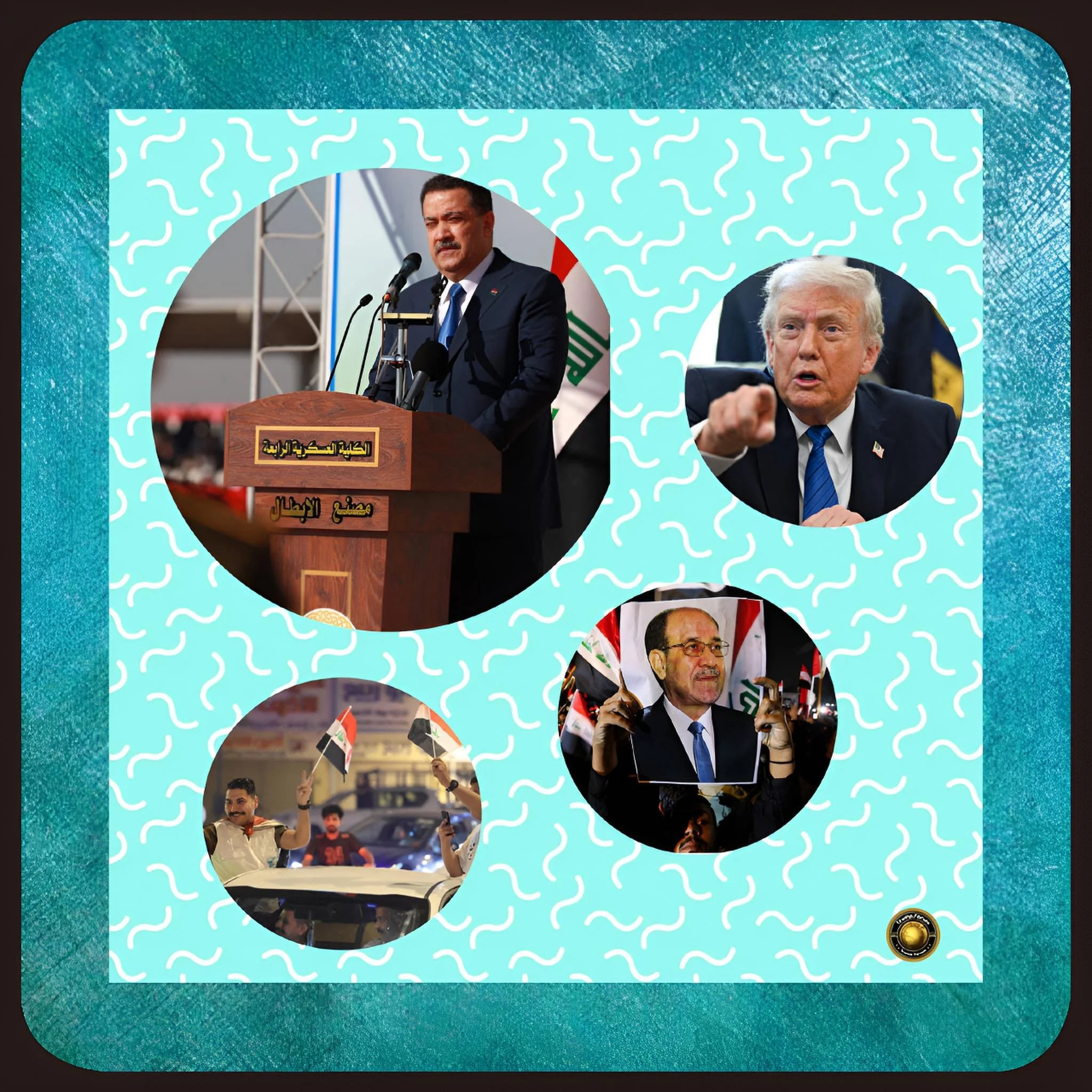
A House Divided: Iraq's Internal Conflicts and Why They Matter for Foreign Policy in 2026
Summary
Iraq faces an unprecedented crisis in January 2026. The nation's government is fractured by internal power struggles, Iran-backed militias control significant military forces within state institutions, and the Trump administration is directly threatening to withdraw American support unless Iraq's political leadership meets specific demands.
At the same time, the collapse of Syria's government has created a security vacuum that allows ISIS to regroup.
To understand Iraq's foreign policy today, we must first understand the internal battles tearing the country apart and how these battles make Iraq vulnerable to pressure from both the United States and Iran.
Why Internal Divisions Matter for Foreign Policy
Iraq's foreign policy is not decided by coherent national leaders making strategic choices.
Instead, it is decided by competing factions fighting for power within a system designed to divide authority along religious and ethnic lines.
Since 2003, Iraq's government has been built on what is called "muhasasa"—a quota system that guarantees specific leadership positions to different groups.
Shiite political parties receive executive authority; Sunni Arabs receive parliamentary seats; Kurds receive regional autonomy.
This system was supposed to prevent any single group from dominating.
Instead, it created 67 separate militia factions that answer to Tehran rather than Baghdad. It fragmented authority so completely that Baghdad cannot speak with 1 voice on major decisions. This is the core problem.
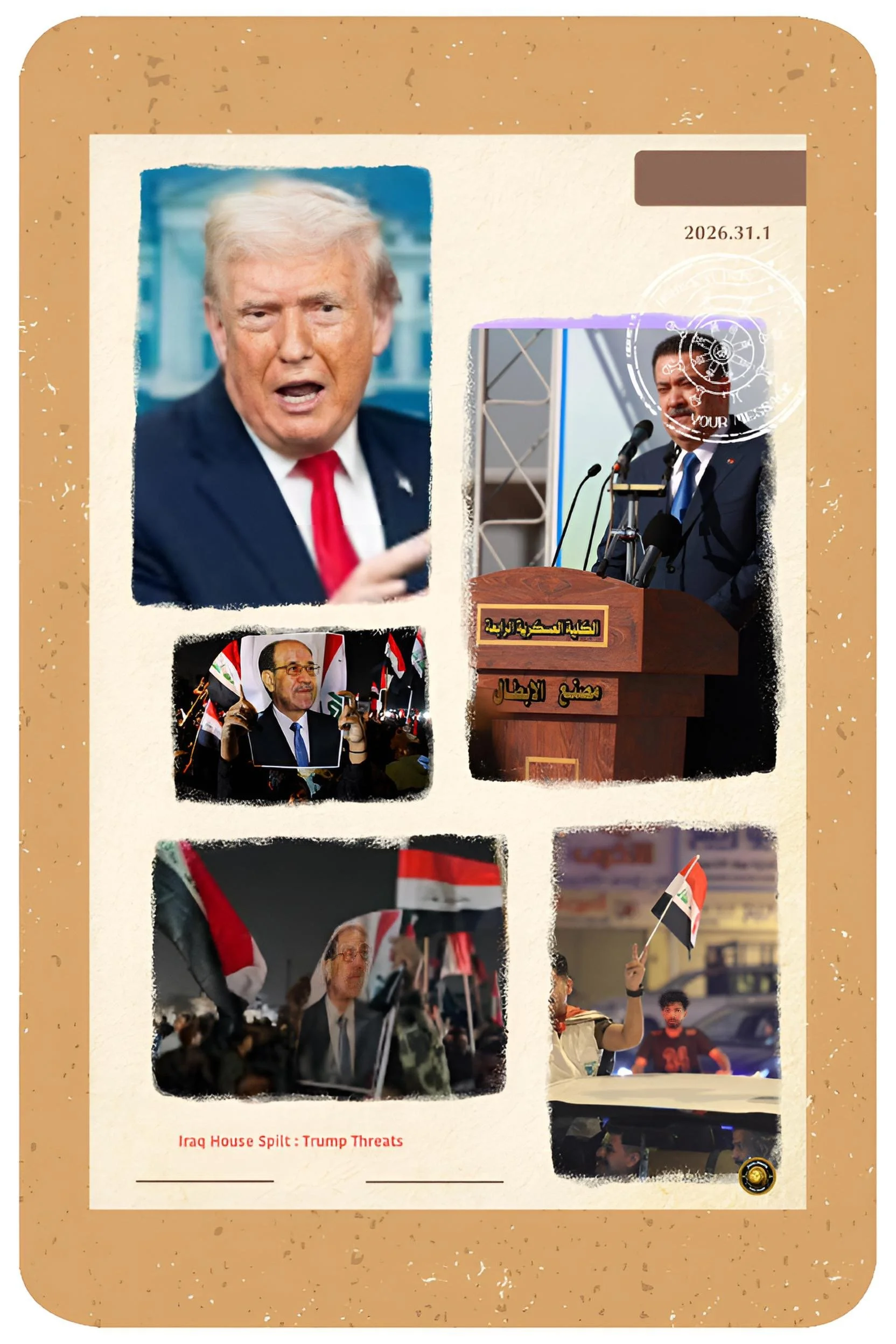
When the Trump administration threatened on January 26, 2026, to withdraw all American support from Iraq unless former Prime Minister Nouri al-Maliki is excluded from power, there was no unified Iraqi government able to reject this demand based on national interest.
Instead, different factions responded differently. Some welcomed American pressure as a way to block their rivals. Others resented it as foreign interference. None could present a united front.
The Key Power Struggle: Who Controls Iraq's Future?
3 main factions are competing for control of Iraq's government in 2026.
1st is the Coordination Framework—a coalition of Shiite political parties and military organizations that are backed by Iran.
This group controls 238,000 militia fighters organized under the name Popular Mobilization Forces (PMF), which has a budget of $3.6 billion annually. These militias were originally formed in 2014 to fight ISIS, but they never disbanded. Instead, they grew larger.
Today, these militias are permanent institutions within Iraq's state security apparatus, but they actually answer to Iran's Supreme Leader, not Iraq's Prime Minister.
Within the Coordination Framework, Nouri al-Maliki—who was Prime Minister from 2006 to 2014—emerged in 2025 as the candidate to lead the next government.
Al-Maliki's previous term was marked by sectarian favoritism against Sunnis and Kurds, which many analysts believe contributed to the conditions that allowed ISIS to rise in 2014.
When Trump learned of al-Maliki's nomination in January 2026, he issued an explicit threat: "If elected, the United States of America will no longer help Iraq."
The 2nd major faction is centered around Prime Minister Mohammed Shia al-Sudani. Al-Sudani broke away from the Coordination Framework in late 2025 to run his own political ticket, hoping to challenge the Framework's control. However, al-Sudani lacks the military resources and political organization that the Framework commands.
He attempted to gain support from Muqtada al-Sadr—a prominent Shiite cleric and militia leader—but al-Sadr has boycotted Iraqi politics since 2022 and called for an end to the sectarian system altogether.
The 3rd major faction is the Tripartite Alliance, which al-Sadr led in the 2021 elections.
This alliance included Sunnis and Kurds in addition to some Shiites, representing a non-sectarian approach to governance.
However, the Coordination Framework defeated this alliance through political maneuvering and implicit threats of civil conflict. Al-Sadr's movement has essentially withdrawn from active politics.
What These Factions Actually Represent
This is the critical point: these factions do not simply represent different policy preferences. They represent different loyalty networks.
The Coordination Framework's 67 militia factions officially answer to Iraq's government but actually answer to Iran's Revolutionary Guards Corps.
In January 2026, approximately 5,000 Iraqi Shiite militants crossed into Iran to help the Iranian government suppress pro-democracy protests. This demonstrates that Iraq's state militia forces operate as instruments of Iranian state policy, not Iraqi state policy.
The Trump administration wants to limit Iran's influence in Iraq. Accordingly, it threatened al-Maliki's return because al-Maliki is viewed as aligned with Iran. However, al-Maliki responded by accusing Trump of interfering in Iraq's sovereignty. Iraq's government issued an official statement rejecting "foreign interference" in Iraqi affairs.
This created an ironic situation: Trump was trying to prevent Iranian domination of Iraq by threatening to withdraw support, but this threat itself constituted the very foreign interference in Iraqi politics that Iraq was rejecting.
The American Military Withdrawal and Why It Matters
For more than 20 years, the United States maintained military bases in Iraq.
These bases served 2 primary purposes: they provided a counterweight to Iranian influence in Iraqi security institutions, and they provided air power and intelligence support to help Iraq combat ISIS.
In January 2026, the Trump administration withdrew from al-Asad Air Base in Iraq's Anbar Province, which had housed American forces for over 2 decades.
Only 250 to 350 American advisers remain in the Kurdish region, and all American forces are scheduled to depart by September 2026.
This withdrawal creates a dangerous security problem. The collapse of the Assad regime in Syria in December 2024 created a security vacuum in the region.
As Syrian government forces advanced, the Kurdish-led military forces that were guarding ISIS detention facilities were forced to retreat.
Security collapsed at al-Hol camp, which houses tens of thousands of ISIS-affiliated individuals.
Approximately 2,500 ISIS fighters remain active in Syria and Iraq, and intelligence assessments suggest that ISIS attacks will double during 2026.
Exactly when ISIS is growing stronger and security vacuums are expanding,
American military capacity to respond is being withdrawn. This timing creates an acute vulnerability for Iraq.
The Balance Between Washington and Tehran
Iraq's government has attempted what it calls a "good neighbor" policy—maintaining engagement with both Washington and Tehran while not becoming dependent on either.
However, this balance is becoming impossible. Iraq imports 55 to 60% of its goods from Russia, but more importantly, it depends on Iran for approximately 40% of its electricity and natural gas.
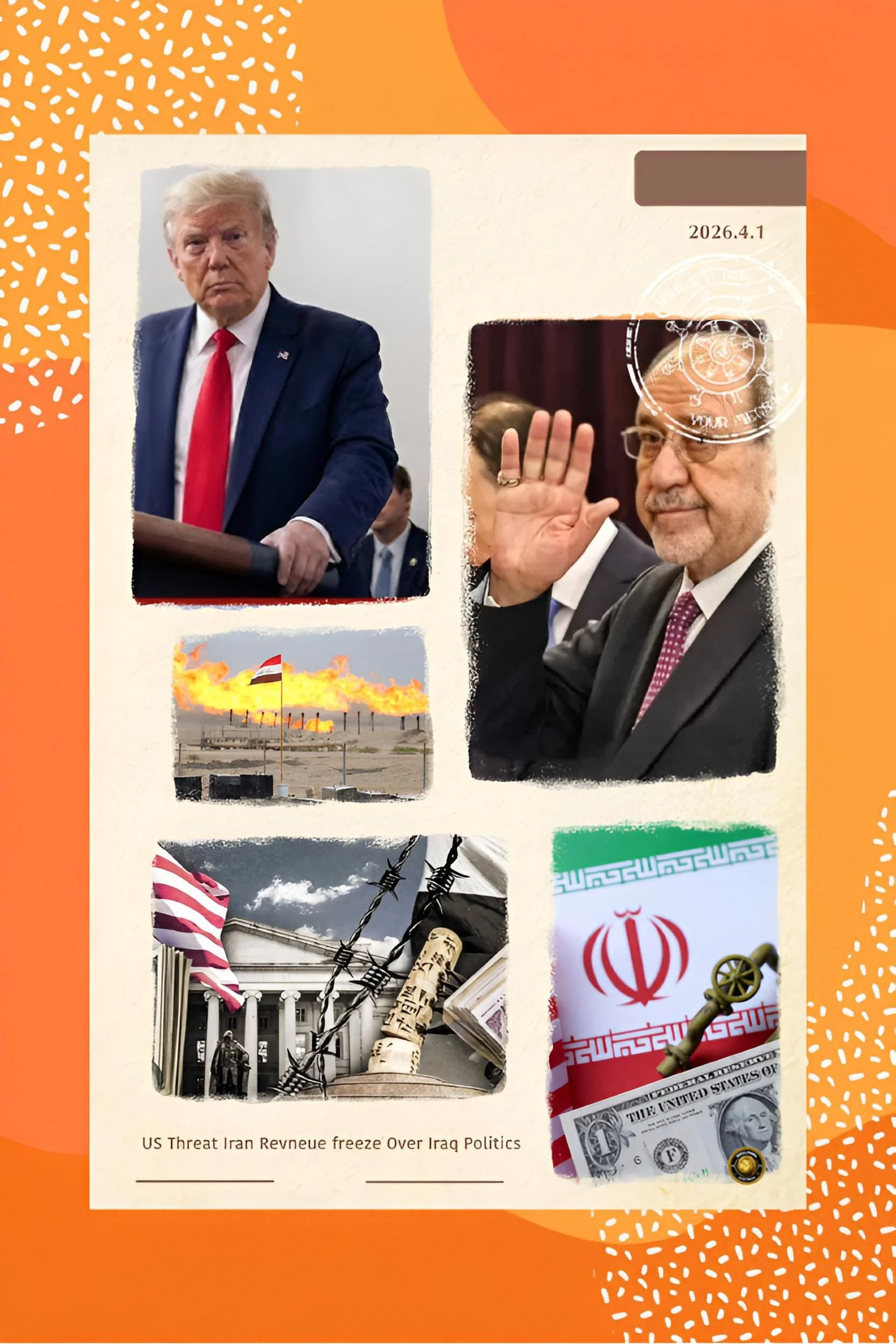
Iraq trades approximately $13 billion annually with Iran. At the same time, Iraq's oil export revenues—which constitute 90% of government income—flow through American-controlled banking systems.
The Trump administration has imposed a 25% tariff on any nation that conducts significant trade with Iran. This creates direct economic pressure on Iraq regardless of political choices.
Why Iraq's Government Cannot Solve This Problem
The fundamental challenge is that Iraq's government lacks institutional coherence.
With power distributed across multiple competing factions—some backed by Iran, some willing to listen to American pressure, and none commanding loyalty from state security forces—there is no unified "Iraq" that can make strategic decisions.
The Prime Minister nominally holds executive authority, but the Coordination Framework controls the militia forces that provide actual security. The militias receive orders from Iran.
This means that Iraq's state security apparatus operates under divided command authority: nominal loyalty to Baghdad, actual loyalty to Tehran, and vulnerability to American pressure.
Until Iraq reconstructs its state institutions to create genuine unified command authority, Iraqi foreign policy will remain a function of competing factional interests rather than coherent national strategy.
The current government cannot credibly commit to either Washington or Tehran because factions within the government maintain different external loyalties.
What Needs to Change
For Iraq to develop genuine foreign policy capacity, several institutional changes are necessary.
1st, the muhasasa quota system must be reformed to reduce sectarian determinism of political outcomes. Merit-based recruitment into security forces would reduce Iranian-backed militia dominance, but this requires leaders willing to challenge organizations commanding military assets.
2nd, the PMF militias must be integrated into regular security institutions on subordinate terms rather than as coequal power centers.
3rd, rogue militia factions designated as terrorist organizations by the United States must be either integrated into state hierarchies or disarmed.
These reforms require political leadership willing to challenge the very organizations upon which their security depends. Iraq's currently fragmented political class appears unable to satisfy this requirement.
Conclusion
Iraq's Difficult Future
Iraq will continue attempting to balance between Washington and Tehran, but that balance will remain unstable and conditional until Iraq develops state institutions coherent enough to execute independent foreign policy.
The next 9 months—until September 2026—are critical as American military withdrawal proceeds precisely when regional security threats are increasing.
Iraq faces a choice: either reconstruct its state institutions to assert genuine authority over security forces and militia organizations, or accept continuing subordination to whichever external power—Iran or the United States—proves more willing to provide short-term support.
The institutions required for genuine Iraqi independence do not currently exist.
Building them will require political leadership that prioritizes national coherence over factional survival. Until that leadership emerges, Iraq will remain a house divided, vulnerable to external pressure and internal contradiction.