Critical Analysis: Belgium’s Molenbeek’s Security Challenges, the Paris Attacks Legacy, and Europe’s Counter-Terrorism Response
Introduction
Belgium’s Connection to the Paris Attacks and Its Security Implications
The November 13, 2015 Paris attacks, which killed 130 people and injured over 400, exposed critical security vulnerabilities in Belgium that continue to reverberate a decade later.
The attacks were meticulously planned in Syria and organized by a terrorist cell based in Belgium, with the Belgian municipality of Molenbeek serving as both a home and operational base for several perpetrators.
This connection was not coincidental—Belgium had earned the dubious distinction of having the highest reported number of foreign terrorist fighter recruits per capita in Western Europe.
French police reports revealed that the attacks were coordinated in real time from Brussels, demonstrating the sophisticated nature of the terrorist network operating from Belgian soil.
The ringleader, Abdelhamid Abaaoud, was a Belgian national from Molenbeek who had established extensive connections with extremist organizations across Europe and the Middle East.
Of the 20 men charged in the Paris attacks, seven either resided in or had strong ties to Molenbeek.
Molenbeek: A Decade of Transformation and Persistent Challenges
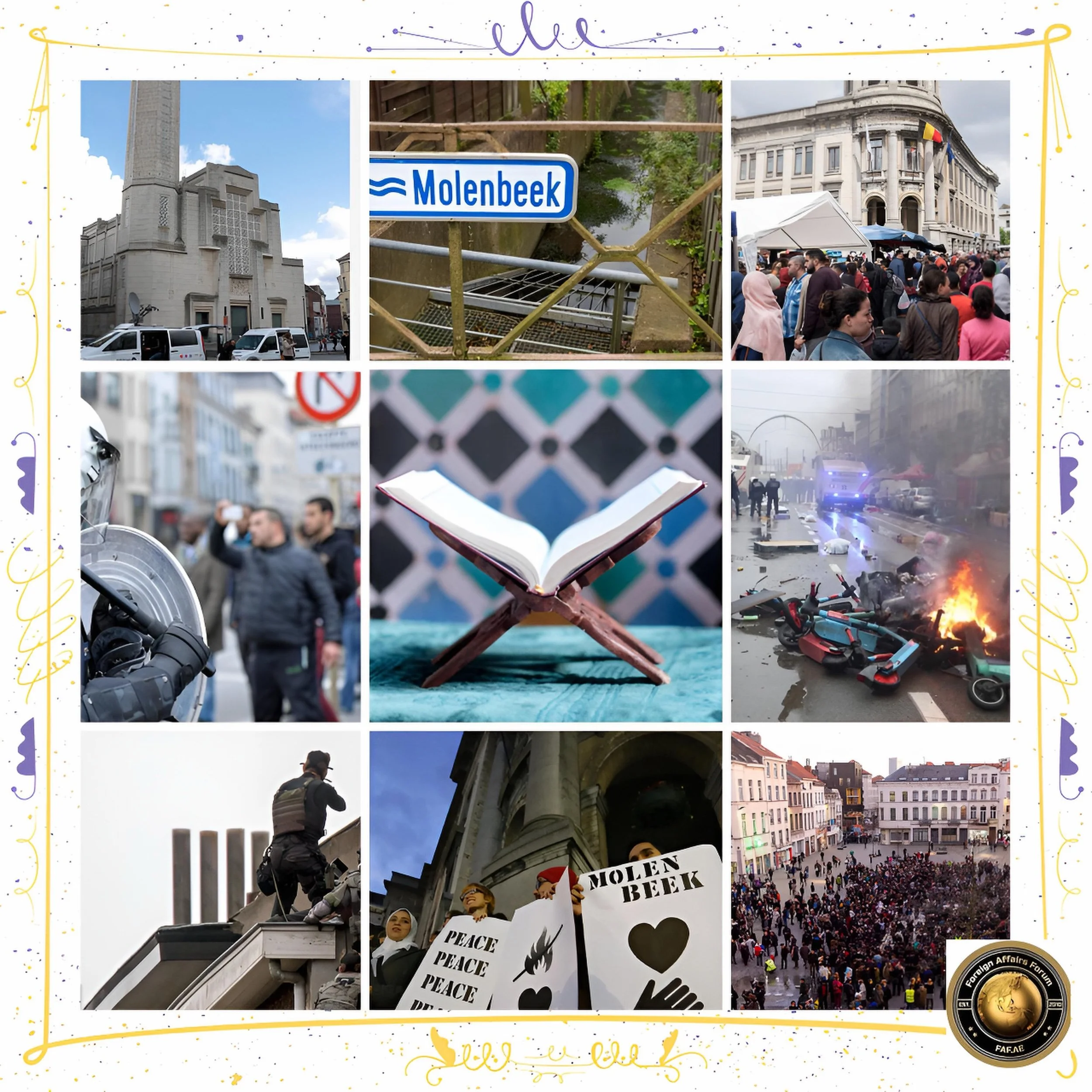
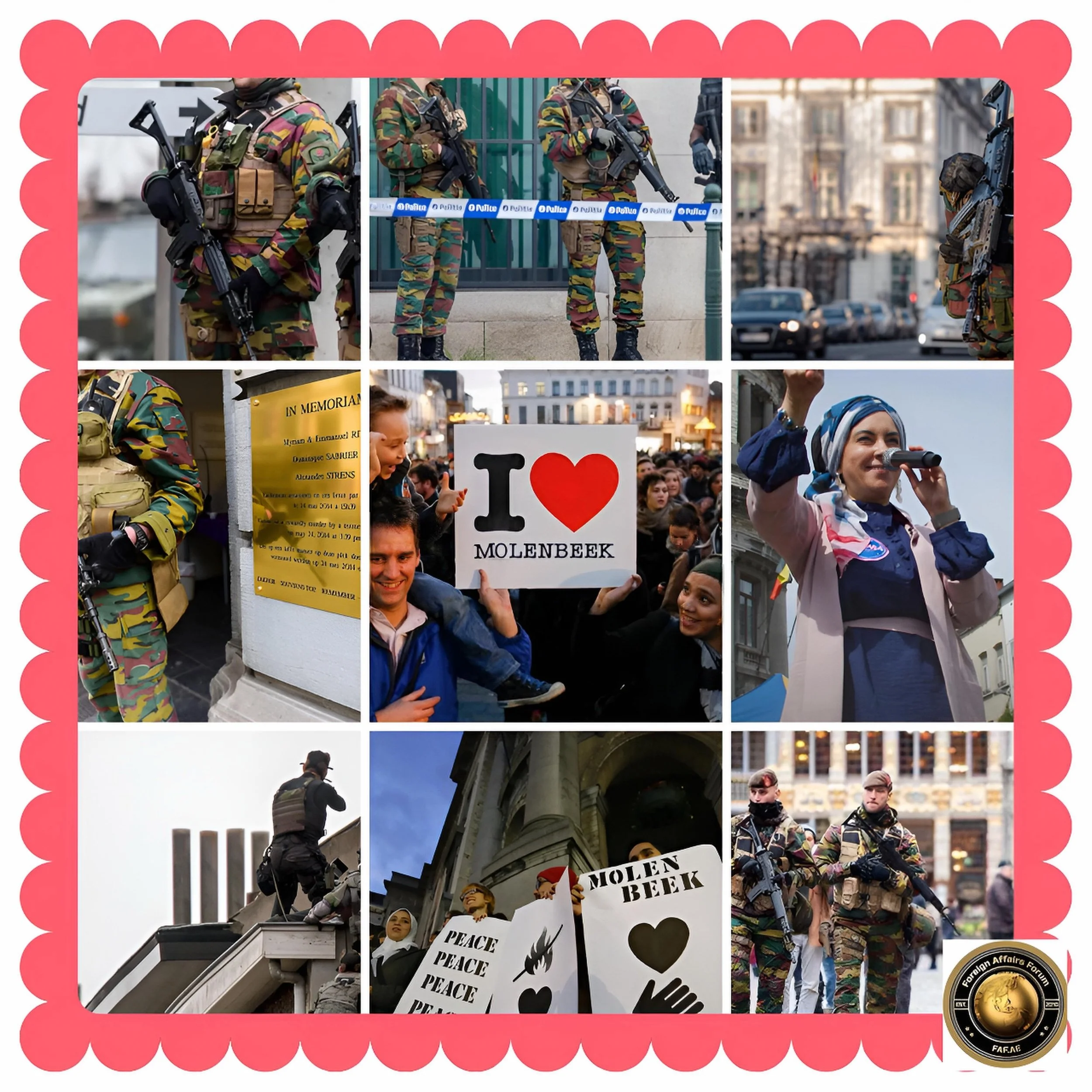
Ten years after the Paris attacks, Molenbeek—a working-class neighborhood of nearly 100,000 residents—continues its struggle to shed the stigma of being labeled a “jihadi hotbed”.
France 24’s November 2025 coverage focusing on the tenth anniversary highlighted how the district has attempted to reinvent itself through community-building initiatives, increased social programs, and enhanced police cooperation.
The Belgian government has provided substantial grants aimed at improving conditions for youth and expanding opportunities in the area.
However, significant challenges persist. Molenbeek remains one of Belgium’s poorest and most densely populated areas, with an unemployment rate of 21 percent—three times the national average.
Local police chief Luc Ysebaert reported that approximately 50 individuals remain under intelligence surveillance in the region, while cannabis trafficking has surged alongside violent gang confrontations.
Community workers acknowledge a lingering “culture of resignation” that continues to drive some young people toward petty crime and, potentially, radicalization.
Belgium’s Multifaceted Security Crises
Rising Suicide Rates: A Public Health Emergency
Belgium faces a severe mental health crisis, with suicide emerging as the leading cause of death among 15 to 45-year-olds since 2019, surpassing cancer, road accidents, and cardiovascular disease.
The statistics are alarming: nearly four Belgians die by suicide every day, with 1,641 recorded deaths in 2021.
Among the 15 to 24-year-old demographic, suicide accounts for one in four deaths.
The crisis disproportionately affects men, who accounted for 1,174 suicide deaths compared to 467 women in 2021.
However, these figures represent only “the tip of the iceberg,” as suicide attempts are estimated to be 15 to 20 times higher than completed suicides, with two-thirds of attempts involving women.
Regional disparities are pronounced, with Wallonia recording the highest rate at 17.1 suicides per 100,000 inhabitants, compared to 13.6 in Flanders and 8.6 in Brussels.
The surge in mental health distress has been attributed to compounding crises over the past four years—including health, financial, climate, and geopolitical upheavals.
Consultations with psychologists have increased by 48 percent since 2019 at suicide prevention organizations, with a quarter involving teenagers and young adults contemplating suicide.
Young people frequently report that their problems are not taken seriously by those around them, and they fear being perceived as a “burden” to family and friends.
Interestingly, research indicates that Belgian natives have significantly higher suicide mortality rates than immigrant populations.
A comprehensive study found that Belgian men and women commit suicide more frequently compared to their peers from migrant backgrounds, with people of Moroccan and Turkish origin showing the lowest rates.
This demographic pattern complicates simplistic narratives about cultural integration and societal stress.
Albanian Mafia: Belgium as a European Cocaine Hub
The Albanian mafia has established deep roots in Belgium, transforming Brussels into a major European distribution center for cocaine trafficking.
The criminal networks have evolved from small-scale operations in the 1990s to controlling sophisticated cocaine importation routes from South America through key European ports, particularly Antwerp and Rotterdam.
The Çopja clan exemplified this transformation. Belgian daily Le Soir documented how brothers Franc and Hajdar Çopja built a cocaine empire that influenced European market prices within just five years.
By leveraging rivalries among Paraguayan cartels and establishing cocaine refining laboratories in Brussels, they maintained control over production and distribution while bypassing customs through strategic port infiltration.
Their operations involved classic mafia methods: bribery of dock workers, nighttime infiltrations, and fake import-export firms.
The Albanian mafia’s presence has been characterized by extreme violence. Between 2019 and 2020, at least nine murders were linked to conflicts between rival Albanian networks, including the broad daylight assassination of Alibej clan leader Ardit Spahiu in Brussels in November 2020.
Such brazen acts cemented the Albanian mafia’s reputation as one of Europe’s most violent criminal organizations.
Law enforcement has achieved significant successes, particularly after dismantling the encrypted SkyECC messaging platform in 2021.
A mega-trial in Belgium resulted in more than one hundred defendants receiving long prison sentences. In October 2021, Belgian police deployed 1,100 officers to raid 11 cocaine laboratories, seizing 32 tons of drugs, luxury watches, and €7 million in diamonds.
The August 2025 operation in Albania, conducted with European partners, arrested 10 trusted clan members and seized substantial assets.
Despite these efforts, Albanian criminal groups continue to monopolize narcotics and arms deals in Brussels and maintain significant control over cocaine importation through Belgian ports.
The challenge for Belgian authorities includes staff shortages, resource limitations, and the rapid adaptation of criminal networks to enforcement pressures.
Drone Incursions and Hybrid Threats
In November 2025, Belgium faced an unprecedented security crisis when mysterious drone overflights targeted military bases, civilian airports, and sensitive nuclear facilities.
Two hundred incidents were reported on November 4 alone, causing major disruptions to air traffic.
The targeted sites included Kleine-Brogel military base, which stores American tactical nuclear weapons, and Brussels Airport.
Intelligence officials, speaking on condition of anonymity, indicated that “leads converge in the direction” of Russia, though the Russian embassy denied involvement.
Defense Minister Theo Francken described the operations as employing “hybrid techniques” aimed at testing Belgium’s weaknesses and response capabilities.
The incident occurred against the backdrop of Belgium hosting Euroclear, which holds between €180 and €200 billion in frozen Russian assets—funds that the European Commission seeks to use as collateral for loans to Ukraine.
The National Security Council authorized military forces to shoot down suspicious drones and announced plans to accelerate creation of a “national air security center” with detection, jamming, and destruction systems.
This crisis highlighted Belgium’s vulnerability to hybrid warfare tactics and the challenges of protecting critical infrastructure in an era of asymmetric threats.
Islamic Radicalization and Integration Challenges in Belgium
The Scope of Muslim Communities in Belgium
Belgium’s Muslim population is estimated at 4.0% to 7.6% of the country’s total population, though exact figures remain disputed.
The Pew Research Center’s 2016 estimate of 7.6% has faced scrutiny for potential inaccuracies.
Muslims are unevenly distributed, with almost 40% living in Brussels, approximately 39% in Flanders, and 21% in Wallonia.
The capital is home to an estimated 350 mosques, though Belgian authorities cannot provide exact figures due to the diverse and fragmented nature of Muslim communities.
Radicalization and Counterterrorism Measures
Belgium’s counterterrorism landscape has evolved significantly since the 2015 Paris attacks and the 2016 Brussels bombings, which killed 32 people.
The government enacted extensive counterterrorism laws and deployed more than 1,800 soldiers in major cities.
Police operations resulted in 43 convictions and 72 charges for terrorism-related crimes through 2016.
However, Human Rights Watch identified serious concerns with Belgium’s approach, including laws allowing citizenship stripping for dual nationals, vague language criminalizing travel “with terrorist intent,” and prolonged solitary confinement for terrorism-related detainees.
In 2012, Belgium’s State Security Service estimated approximately 1,000 jihadist sympathizers in the country, with about 100 hardcore supporters. By 2016, Belgium had more “foreign fighter” travelers per capita than any other Western nation.
The recruitment network operated by Moroccan-born IS recruiter Khalid Zerkani exemplified the challenge. He recruited 72 young individuals, mostly petty criminals with migrant backgrounds, encouraging them to steal from non-Muslims to finance journeys to join the caliphate.
Up to 2018, an estimated 450 individuals traveled from Belgium to join conflicts in Syria and Iraq, with 75 linked to the Sharia4Belgium network.
Recent developments indicate evolving threats. In 2025, Belgian federal prosecutors opened 80 terrorism-related investigations—already exceeding the 2024 total.
A foiled jihadist plot to assassinate Prime Minister Bart De Wever in late 2025 demonstrated that homegrown radicalization remains a persistent concern.
The suspects, aged 17 to 24 and all from Antwerp, were charged with attempted terrorist murder.
Integration Challenges and Social Tensions
Belgium’s Muslim communities face significant integration obstacles rooted in socioeconomic marginalization, discrimination, and cultural tensions.
A 2011 Open Society survey found that 74% of Muslims experienced “large to relatively large amounts of prejudice”.
The situation is exacerbated by economic inequality—Muslims are concentrated in working-class districts with limited employment opportunities and face discrimination in housing, education, and employment.
Religious visibility has become contentious. Belgium instituted a ban on face-covering attire in public in 2011, making the wearing of niqab and burqa incompatible with Belgian society.
The ban withstood challenges in both the Constitutional Court and the European Court of Human Rights. In 2012, the political party “ISLAM” was established, gaining two seats in Molenbeek and Anderlecht districts with policies including gender segregation on public transport and mandatory halal meals in schools.
A 2006 opinion poll revealed that 61% of the Belgian population thought tensions between Muslims and other communities would increase in the future—a prescient assessment given subsequent events.
The perception of Islam as a security threat has been reinforced by antisemitic attacks, with over 100 recorded in 2009 (a 100% increase from the previous year), typically perpetrated by young males of immigrant Muslim background.[wikipedia]
Scholarly analyses emphasize that the integration challenge involves both structural barriers and perceptual issues.
The clash between European secular values and conservative Islamic practices creates friction, as European secularism expects religion to remain private while Islam often resists such compartmentalization.
European nations’ historical foundation as ethnic nation-states makes assimilation of culturally and religiously distinct populations particularly challenging.
Recent Controversial Developments
Recent events have intensified debates about political Islam’s influence in Belgium.
An analysis by Abu Dhabi-based think tank TRENDS Research & Advisory revealed a global decline in Muslim Brotherhood power from 64% in 2021 to 48% in 2023.
However, researchers warn that political Islam has “atomized” rather than disappeared, transforming into a more diffuse, digital-era ideology that is harder to track and counter.
French scholar Gilles Kepel’s concept of “djihadisme d’atmosphère”—ambient jihadism that thrives in online grievances and personal frustration rather than hierarchical organization—accurately describes this evolution.
The result is a hybrid threat: less hierarchical, more emotional, and infinitely harder to predict.
Some observers have raised alarm about Islamist influence across Belgian institutions.
Activist Fadila Maaroufi, who survived a near-fatal attack related to her anti-extremism work, stated: “Belgium has fallen under Islamist control, especially that of the Muslim Brotherhood”.
She argues that Islamist influence has permeated schools, universities, political parties, transportation, security services, and the justice system through strategic advancement in every sector.
The Belgian government’s June 2025 decision to delay recognition of the Muslim Council of Belgium sparked controversy.
Justice Minister Annelies Verlinden postponed recognition by one year, citing insufficient representativeness—despite the Council achieving 65% mosque adherence and organizing internal elections.
Critics argued the decision was “incomprehensible” and “paradoxical,” potentially undermining efforts to reduce foreign interference in Belgian Islam.
European Union Counter-Terrorism and Integration Measures
The European Union has developed a comprehensive, multilayered approach to counter-terrorism and prevent radicalization, particularly following the attacks of 2015 and 2016.
The EU Counter-Terrorism Strategy, adopted in 2005 and continuously updated, rests on four pillars: Prevent, Protect, Pursue, and Respond.
Prevention of Radicalization
The EU’s prevention efforts focus on addressing root causes before radicalization leads to violence.
The Radicalisation Awareness Network (RAN), established after the 2015 attacks, serves as the main EU actor for knowledge exchange and capacity building.
RAN connects approximately 7,000 frontline practitioners—including social workers, teachers, prison staff, and law enforcement—across Europe to share best practices and develop innovative solutions.
In 2024, the European Commission restructured RAN into the EU Knowledge Hub on Prevention of Radicalisation, bringing policymakers, researchers, and practitioners together at the EU level.
This evolution reflects recognition that preventing radicalization requires coordinated multi-agency work, information sharing, and comprehensive strategies that extend beyond traditional counterterrorism to include education, employment, and social inclusion.
Key prevention initiatives include:
Online Content Regulation
The Terrorist Content Online Regulation, operational since June 2022, requires platforms to remove terrorist content within one hour of identification, with strong safeguards for freedom of expression.
The EU Internet Referral Unit within Europol’s European Counter Terrorism Centre identifies and reports extremist content online.
Prison Radicalization Programs
The EU supports projects addressing radicalization in prisons, including risk assessment tools, special detention regimes, rehabilitation programs, and training for prison staff. Multi-disciplinary cooperation structures manage ex-offenders after release.
Community Resilience Building
Prevention programs promote inclusive society, education in EU common values, and community-based resilience initiatives.
The focus extends to addressing mental health issues and the religious dimension in rehabilitation programs.
Counter-Terrorism Financing
Denying terrorists access to financial resources represents a core component of EU strategy.
The Anti-Money Laundering and Countering the Financing of Terrorism (AML/CFT) framework has been continuously strengthened, with new regulations published in June 2024.
Key measures include:
New EU AML Authority (AMLA)
Based in Frankfurt and starting operations in mid-2025, AMLA will directly supervise high-risk financial entities and coordinate national authorities to ensure consistent application of EU rules.
Traceability Requirements
The Regulation on Traceability of Transfers of Funds ensures complete traceability of money movements in and out of the Union, extending to crypto-asset transfers and user authentication.
Financial Intelligence Cooperation
Enhanced cooperation between Financial Intelligence Units (FIUs) and law enforcement agencies, with direct access to bank account holder information through national centralized registries.
Restrictive Measures
The EU imposes specific sanctions on individuals and entities associated with ISIL (Da’esh) and Al-Qaeda, freezing funds and preventing financial support for terrorism.
EU-US Terrorist Finance Tracking Programme
The TFTP Agreement, effective since August 2010, allows transfer of financial messaging data for counterterrorism purposes and has generated significant intelligence beneficial to both the US and EU.
Border Security and Migration Management
The EU has implemented sophisticated systems to strengthen external border security while maintaining internal freedom of movement within the Schengen Area:
Entry/Exit System (EES)
Launched on October 12, 2025, the EES creates an automated biometric database recording entry and exit of non-EU nationals in the Schengen Area.
The system collects passport data, facial images, and fingerprints, replacing traditional passport stamps. EES aims to prevent visa overstays, reduce identity fraud, and identify irregular migration.
European Travel Information and Authorization System (ETIAS)
Expected to launch in 2025, ETIAS requires pre-travel authorization and risk assessment for visitors from over 60 visa-exempt countries before entering the Schengen Area.
The system mirrors the US ESTA program and aims to identify potential security threats early.
Temporary Border Controls
Despite Schengen principles of free movement, numerous member states have reintroduced temporary internal border checks in response to security threats, migration pressure, and terrorism concerns.
As of November 2025, Germany, France, Austria, Italy, Netherlands, Denmark, Sweden, Norway, Slovenia, Slovakia, Poland, and Belgium have implemented various forms of border controls.
The amended Schengen Borders Code, effective mid-2024, provides clearer criteria for internal border checks, requiring assessment of need, proportionality, and effectiveness before implementation.
Time limits restrict initial emergency checks to one month and extended checks to six-month periods, with a maximum of two years.
The code also allows EU-wide travel restrictions during public health emergencies and grants member states authority to address “instrumentalization of migration”—when third countries facilitate migrant movement for political purposes.
Frontex and Border Management
The European Border and Coast Guard Agency (Frontex) has seen increased resources and responsibilities, coordinating member state border security operations and deploying rapid intervention teams.
Operational Cooperation
Europol and ECTC: Europol serves as the EU’s law enforcement agency, with the European Counter Terrorism Centre (ECTC) established in 2016 as a central hub for operational support.
The ECTC provides intelligence analysis, supports investigations, and facilitates information exchange between member states.
Europol maintains terrorist analysis work files, creates threat assessments, and operates as a regional platform for multilateral data exchange.
Its capabilities include requesting member states’ police forces to initiate investigations and cooperating with external partners like the FBI and Interpol.
European Arrest Warrant (EAW): Introduced in 2002, the EAW streamlines extradition procedures between EU member states, enabling faster apprehension of suspects across borders.
Information Sharing Systems
The Schengen Information System (SIS) and other databases facilitate real-time information exchange on persons of interest, lost documents, and security threats.
Enhanced interoperability between security databases improves identification of potential terrorists and criminals.
Integration and Social Cohesion Policies
Recognizing that socioeconomic marginalization fuels radicalization, the EU has encouraged member states to develop integration policies addressing Muslim minorities:
Muslim Councils and Dialogue
Austria, Belgium, France, Germany, Italy, Netherlands, Spain, Sweden, and the UK have established national Muslim councils to help resolve debates on religious practices, provide representative structures, and include minority voices in public discourse.
Successes include mosque construction and religious private school authorization.
Islamic Education
Some countries provide state support for Islamic education in mainstream schools and fund imam training programs at universities.
The rationale is that developing homegrown Islam can guard against extremist influences or foreign government interference.
Anti-Discrimination Measures
EU legislation prohibits discrimination based on religion, though implementation varies by member state.
The challenge involves balancing protection of religious freedoms with integration of practices into secular liberal democratic frameworks.
However, policies explicitly directed toward Muslim minorities risk stigmatization.
Research by the European Network Against Racism (ENAR) found that counter-radicalisation policies have contributed to securitization of Muslim religious identities and practices.
Although legislation rarely explicitly targets specific groups, the focus on Muslim communities has created perceptions of surveillance and discrimination.
The Question of “Irreversible Islamization”: European Perspectives
“Irrversible Islamization” trends, particularly drawing parallels requires careful examination of demographic realities, public perceptions, and integration.
Demographic Context
Muslim populations in Western Europe have grown significantly through immigration, family reunification, and higher birth rates.
In the United Kingdom, concerns about “Islamization” have become increasingly prominent in public discourse.
Some political figures, including Nigel Farage, have claimed that “Muslims could dominate Britain by 2050”.
Reports indicate over 1,800 mosques across England and more than 80 Sharia councils operating alongside British law, primarily dealing with religious divorces and family matters.
However, these demographic changes must be contextualized. A 2018 YouGov survey found that 32% of British respondents believed the myth that “no-go zones” exist where sharia law dominates and non-Muslims cannot enter.
This perception was particularly prevalent among Leave voters (47%) and Conservative voters (47%).
Yet the “no-go zones” theory, spread by far-right influencers, has been widely debunked.
Where isolated incidents occurred, such as “Muslim patrols,” suspects were arrested and condemned by local Muslim leaders.
Research by Hope Not Hate mapped attitudes across the UK, finding that concern about immigration and Islam was concentrated in post-industrial towns and coastal areas with less diverse populations.
Conversely, liberal attitudes dominated in major cities where diversity is normalized and populations are better educated, younger, and enjoying greater opportunities.
This suggests a “halo effect” where cities with large Muslim populations are surrounded by predominantly white British areas with more hostile views.
Integration Challenges vs. “Islamization”
The fundamental question is whether demographic growth of Muslim populations constitutes “Islamization” or represents natural evolution of multicultural societies.
Several factors complicate simplistic narratives:
Economic Inequality
Muslims in both Belgium and the UK face structural barriers including discrimination in employment, housing, and education.
In Belgium, Muslim-majority areas like Molenbeek have unemployment rates three times the national average.
Economic instability, underemployment, and racist attitudes of host societies make integration challenging.
Cultural Tensions
The clash between European secular values and conservative Islamic practices creates friction. European secularism expects religion to remain private, conflicting with Islam’s comprehensive role in public and private life.
Attempts to compartmentalize religion face resistance, even among moderate Muslim scholars.
Political Responses
Right-wing populist movements across Europe have capitalized on public fears about Muslim immigration.
Surveys reveal that 53% of Britons believe Islam is incompatible with British values, while 31% believe Islam encourages violence.
Such attitudes have fueled support for restrictive policies, from burqa bans to mosque construction limitations.
Bi-directional Integration Failures
Integration is a two-way process requiring both immigrant adaptation and host society acceptance. Research indicates that where non-Muslims live, work, and socialize with Muslims, prejudice is reduced.
However, “witnessing rather than experiencing diversity” can reinforce existing prejudices.
Many Muslims in Europe report feeling that their problems are not taken seriously and that they face systematic discrimination.
The “Irreversibility” Question
The notion of “irreversible” trends warrants scrutiny.
Demographic projections are inherently uncertain, depending on fertility rates, migration patterns, and integration dynamics—all subject to change. Moreover, the concept of “Islamization” itself is contested:
Integration Success Stories
Many Muslim immigrants successfully integrate—pursuing prominent political careers, contributing to economies, and participating fully in civil society.
Belgium boasts two national senators and five members in the lower house of parliament from Muslim backgrounds.
Evolving Muslim Identities
Second and third-generation Muslims often develop hybrid identities that blend religious faith with European cultural values.
Research shows that the impact of educational attainment, labor market position, and bridging social capital are significant factors in Muslim integration, though belonging to specific communities also matters.
Policy Responses
European states have options beyond reactive restriction.
The Migration Policy Institute emphasizes that addressing socioeconomic integration—improving access to high-profile positions, reducing labor market barriers, and tackling social exclusion—may be more effective than policies explicitly targeting religious minorities.
Such approaches avoid stigmatization while addressing root causes of marginalization.
Reciprocal Radicalization Risk
The rise of anti-Muslim sentiment fuels far-right populist movements, which can provoke radical responses from extremist elements within Muslim communities—a “cycle of cumulative extremism”.
This dangerous feedback loop hinders addressing root causes and prevents inclusive discourse on migration and national identity.[prisa]
Britain’s Specific Context
Concerns about British trends deserve separate consideration.
Home Office statistics reveal that Muslims were the most targeted group for religious hate crimes, accounting for 38% of incidents in England and Wales through March 2024.
The summer of 2024 witnessed anti-Muslim riots triggered by disinformation, highlighting fragility of social cohesion.
Yet British Muslim communities have organized robust responses. In November 2024, an unprecedented gathering developed unified approaches to combating anti-Muslim hatred.
The Labour government launched the Combatting Hatred Against Muslims Fund and established a working group to develop a formal definition of discrimination against Muslims.
The situation is neither simply “Islamization” nor successful integration, but rather an ongoing negotiation between competing visions of national identity, cultural pluralism, and social cohesion.
As one analyst noted: “Muslims in the UK are not only seeking integration, but are also defending their existence and their right to representation and participation, amid a social environment that is not devoid of apprehension”.
Conclusion
Complex Challenges Requiring Nuanced Responses
Belgium’s vulnerabilities exposed by the Paris attacks remain relevant a decade later, though the nature of threats has evolved.
The country faces multiple, interconnected security challenges:
Terrorism and Radicalization
While large-scale attacks have decreased since 2016, homegrown radicalization persists. The threat has shifted from hierarchical networks to atomized, digitally-enabled “ambient jihadism” that is harder to detect and counter.
Mental Health Crisis
Belgium’s suicide epidemic, particularly among youth, reflects broader societal stresses that transcend religious or ethnic boundaries.
The crisis requires urgent public health responses addressing economic inequality, social isolation, and mental health service access.
Organized Crime
Albanian mafia networks have established Belgium as a major European cocaine distribution hub, with violence and corruption threatening public safety and institutional integrity.
Hybrid Threats
The November 2025 drone incursions demonstrate Belgium’s vulnerability to state and non-state actors employing asymmetric tactics to test defenses and sow destabilization.
Integration Challenges
Muslim communities face structural barriers to full participation in Belgian society, while broader populations harbor concerns about cultural change and security.
Socioeconomic marginalization, discrimination, and mutual mistrust create conditions conducive to both radicalization and anti-Muslim sentiment.
The European Union has developed extensive counter-terrorism infrastructure, from the Radicalisation Awareness Network to sophisticated border management systems and counter-financing mechanisms.
However, effectiveness depends on implementation at member state level, adequate resourcing, and avoiding counterproductive securitization of entire communities.
The question of “Islamization” is fundamentally about how European societies negotiate pluralism, inclusion, and national identity in contexts of demographic change.
Framing the issue as “irreversible” trends toward cultural domination obscures the agency of both Muslim communities seeking integration and host societies adapting to diversity.
The challenge is not demographic inevitability but rather the political, economic, and social choices that either facilitate or hinder mutual accommodation.
Belgium, like much of Europe, stands at a crossroads. Addressing security threats requires not only effective law enforcement and intelligence capabilities but also tackling root causes: economic inequality, social exclusion, educational disparities, and systematic discrimination.
As Hope Not Hate concluded regarding the UK: “To fight fascism, we understand the need to take the economic link seriously… none of this will be enough unless we can also offer real hope”.
The path forward requires evidence-based policies that protect security without sacrificing civil liberties, address socioeconomic marginalization, foster intercultural dialogue, and resist both Islamist extremism and anti-Muslim bigotry.
Only through such comprehensive approaches can European societies build resilient, inclusive communities capable of withstanding both terrorist violence and the divisive rhetoric that threatens social cohesion.