Bolivia’s Political Transition: Ending the Left’s Two-Decade Rule
Introduction
Bolivia is experiencing a historic political shift following the inauguration of centrist economist Rodrigo Paz as president on November 8, 2025.
This marks the definitive end of nearly two decades of left-wing governance under the Movement for Socialism (MAS) party, fundamentally reshaping Bolivia’s economic orientation, regional alignment, and global geopolitical positioning.
The Rapid Political Transformation
Paz’s victory represents more than a routine electoral transition. On October 19, 2025, he won a presidential runoff election with 54.5% of the vote, decisively defeating far-right former President Jorge “Tuto” Quiroga.
The August 2025 first-round election itself was catastrophic for the MAS—the party that had dominated Bolivian politics and won outright majorities in 2005, 2009, 2014, and 2020 could barely secure 3% of the vote.
This unprecedented collapse of a political machine that had ruled for nearly 20 years reflects profound discontent with the incumbent administration’s handling of the economy.
The driving force behind this dramatic change is clear: Bolivia faces its worst economic crisis in four decades.
The country is experiencing annual inflation exceeding 20%, chronic shortages of fuel and foreign currency, depleted central bank reserves, and acute scarcity of medicines.
The underlying causes stem from the collapse of the MAS’s interventionist economic model—one that relied on generous energy subsidies, a fixed exchange rate maintained since 2011, and declining natural gas exports that once funded generous social spending.
The Arce government depleted nearly all of Bolivia’s foreign currency reserves attempting to maintain these unsustainable policies.
Key Notes from the Inaugural Event
Paz’s November 8 inauguration ceremony in La Paz featured several symbolically significant elements that underscored Bolivia’s policy pivot:
Central message and rhetoric
Paz emphasized Bolivia’s reengagement with the global economy.
He stated: “Bolivia is rejoining the world, never again isolated. Never again will the country be held hostage by an ideology; ideology doesn’t put food on the table.”
His signature policy platform—”capitalism for all”—reflects a commitment to gradual market-oriented reforms that combine fiscal responsibility with ongoing social support, contrasting sharply with both the MAS’s state interventionism and Quiroga’s more radical liberalization approach.
International attendance and implications
The inauguration attracted South American regional leaders, including Argentina’s President Javier Milei, Chile’s President Gabriel Boric, Ecuador’s President Daniel Noboa, Uruguay’s President Yamandú Orsi, and Paraguay’s President Santiago Peña—a gathering that visually reinforced the region’s rightward political shift.
Economic reform commitments
Paz promised a gradual transition toward a flexible exchange rate system and targeted reductions in fuel subsidies (likely limiting them to public transportation rather than maintaining universal subsidies).
He also signaled intent to seek $3.1 billion in loans from the Andean Development Corporation to support economic recovery.
Foreign policy reorientation: Most strikingly, the new administration announced its intention to strengthen ties with the United States after two decades of deteriorating relations under Morales and Arce.
Deputy U.S. Secretary of State Christopher Landau headed the American delegation to the inauguration and announced that Paz agreed to approve a Starlink license for satellite internet service and to welcome back U.S. law enforcement cooperation, including the Drug Enforcement Administration (DEA), which had been expelled in 2008.
Paz also signaled Bolivia’s disengagement from the ALBA bloc (which includes Cuba, Nicaragua, and Venezuela), the leftist regional alliance established under Morales.
Drivers of Change in South America
Bolivia’s political realignment reflects a continent-wide conservative wave that has been building since the early-to-mid 2020s:
The commodity cycle and economic deterioration
The underlying driver across South America is economic disappointment. The pink tide governments of the 2000s-2010s thrived on rising commodity prices, which funded welfare expansion and inequality reduction.
As commodity prices declined in the 2010s-2020s, leftist governments that lacked productive diversification faced mounting deficits, inflation, and social disappointment.
Bolivia, like Argentina, Brazil, and Venezuela, experienced unsustainable policies financed by commodity booms that eventually ended, leaving economies structurally dependent and vulnerable.
The regional political pattern
Bolivia joins a broader rightward shift. Argentina’s election of libertarian Javier Milei in 2023, Ecuador’s re-election of center-right Daniel Noboa in 2025, and Paz’s victory in Bolivia in 2025 exemplify this pattern.
Upcoming major elections in Chile (November 2025), Colombia (May 2026), Peru (April 2026), and Brazil (October 2026) show conservative and right-leaning candidates leading in polls, suggesting this trend will intensify across South America’s most populous and economically important nations.
Security, crime, and governance concerns: Beyond economics, voters cite rising organized crime, gang violence, and extortion as central to their preference for market-oriented governments perceived as stronger on law-and-order issues.
The left, according to analysts, tends to emphasize root causes of inequality and poverty, whereas conservative candidates promise direct security action and reduced state intervention.
Internal political exhaustion of the left
Even where left-leaning governments remain nominally in power (Brazil under Lula, Colombia under Petro), analysts note these administrations have failed to build stable legislative coalitions and show declining approval ratings.
Unlike the first pink tide’s early years of strong popular support, the “second pink tide” has proven unstable and fractious, with conflicts between rival factions (as exemplified by the Arce-Morales split in Bolivia’s MAS) undermining credibility.
Regional and Geopolitical Implications
Bolivia’s political transition carries significant implications for both South American integration patterns and global great-power competition:
Weakening of leftist regional blocs
Bolivia’s departure from ALBA alignment and its turn toward the U.S. removes a key member from the region’s leftist counter-hegemonic project.
ALBA, which includes Venezuela, Nicaragua, and Cuba, loses a South American anchor and sees its already-limited effectiveness further eroded.
This reflects the broader collapse of leftist regional coordination mechanisms precisely when these governments face domestic challenges.
U.S.-China competition for Latin America
Bolivia’s shift carries strategic weight in the U.S.-China geopolitical competition.
During the Morales-Arce era, Bolivia cultivated Chinese investment, particularly in lithium extraction (Bolivia holds the world’s largest lithium reserves).
Paz’s market-opening approach and restoration of U.S. ties could redirect critical mineral exports toward U.S. supply chains, countering Beijing’s resource acquisition strategy.
China remains South America’s largest trading partner and second-largest for Latin America overall, but right-leaning governments create openings for Washington to diversify supply chains and reduce Chinese strategic leverage in the hemisphere.
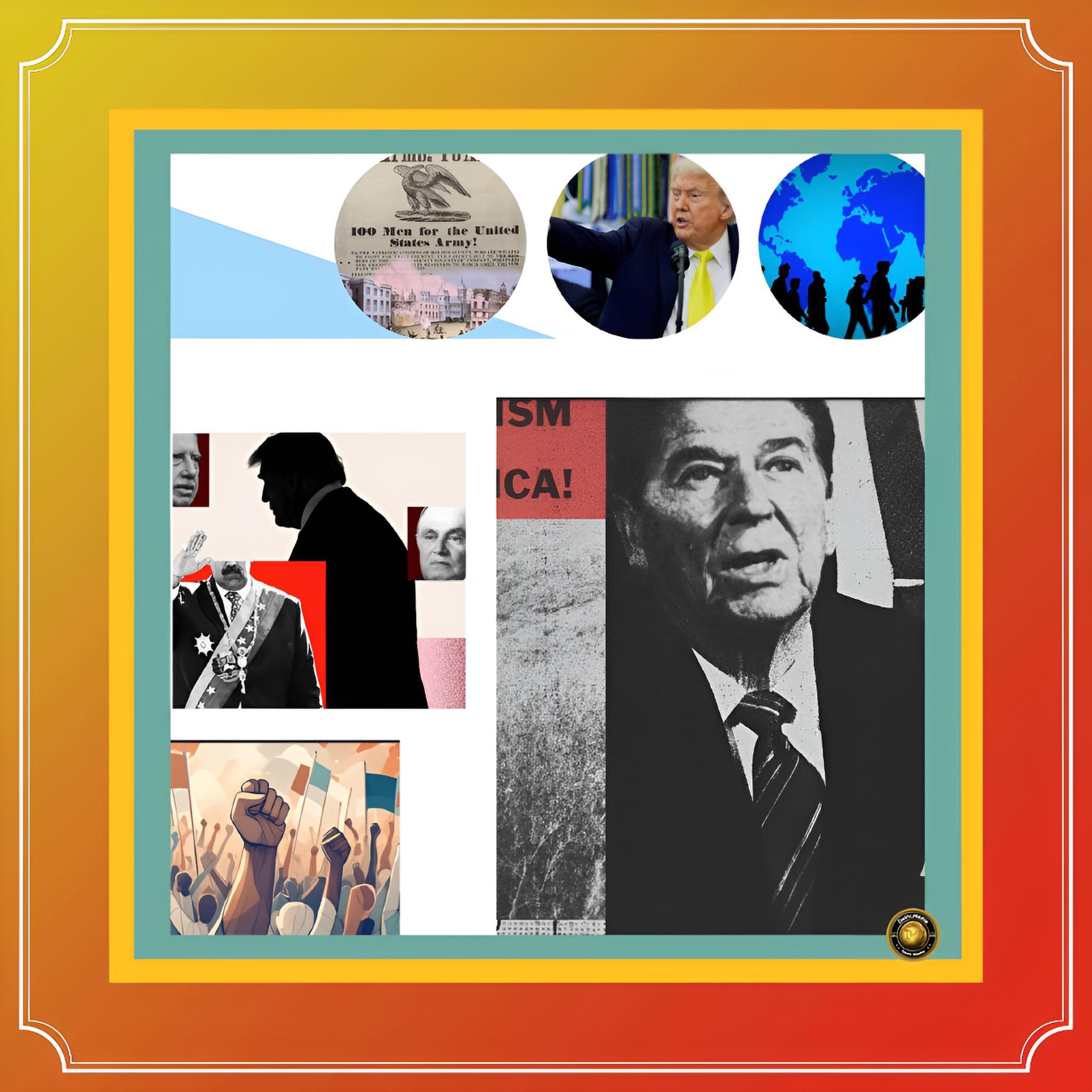
The Trump administration has indicated particular interest in Latin America, using both pressure (tariffs, border security threats) in Central America and diplomacy in South America to counter Chinese influence. Bolivia’s pivot facilitates this broader U.S. strategy.
Acceleration of hemispheric realignment
Bolivia’s shift accelerates a broader hemispheric division.
The pattern suggests a bifurcation
U.S. influence consolidating in Central America and now expanding into South America through right-leaning electoral victories, while China continues deepening economic relationships through trade and investment even with some right-leaning governments (notably Argentina under Milei, which maintains significant Chinese trade ties).
Implications for regional integration and development
The rightward shift raises questions about South American regional integration models.
Left-leaning ALBA-style alternatives emphasizing solidarity and redistribution are giving way to market-oriented approaches, likely reducing regional economic coordination and deepening countries’ direct engagement with global markets and great powers.
This could reduce regional South-South cooperation while increasing North-South asymmetries.
Conclusion
Paz faces enormous challenges. His Christian Democratic Party controls only 39% of the 166-seat Legislative Assembly, requiring complex coalition-building with fractious political blocs.
To maintain political support while implementing the unpopular austerity measures economists say are necessary—particularly reducing fuel subsidies and allowing exchange rate flexibilization—will require carefully balanced governance.
The precedent of El Alto voters supporting Paz despite opposition to austerity measures suggests his base is fragile and could shift if economic hardship accelerates.
Bolivia’s transformation nonetheless signals that South America’s political economy is entering a new phase distinct from both the commodity-boom pink tide and the immediate post-2015 conservative wave.
The region is converging on market-oriented governance frameworks, though with significant variation in implementation intensity—Paz’s gradualism differs markedly from Milei’s radicalism.
The geopolitical consequence is a hemisphere increasingly oriented toward Washington in its political rhetoric and policy framework, even as economic dependencies remain substantially tied to Chinese trade and investment.