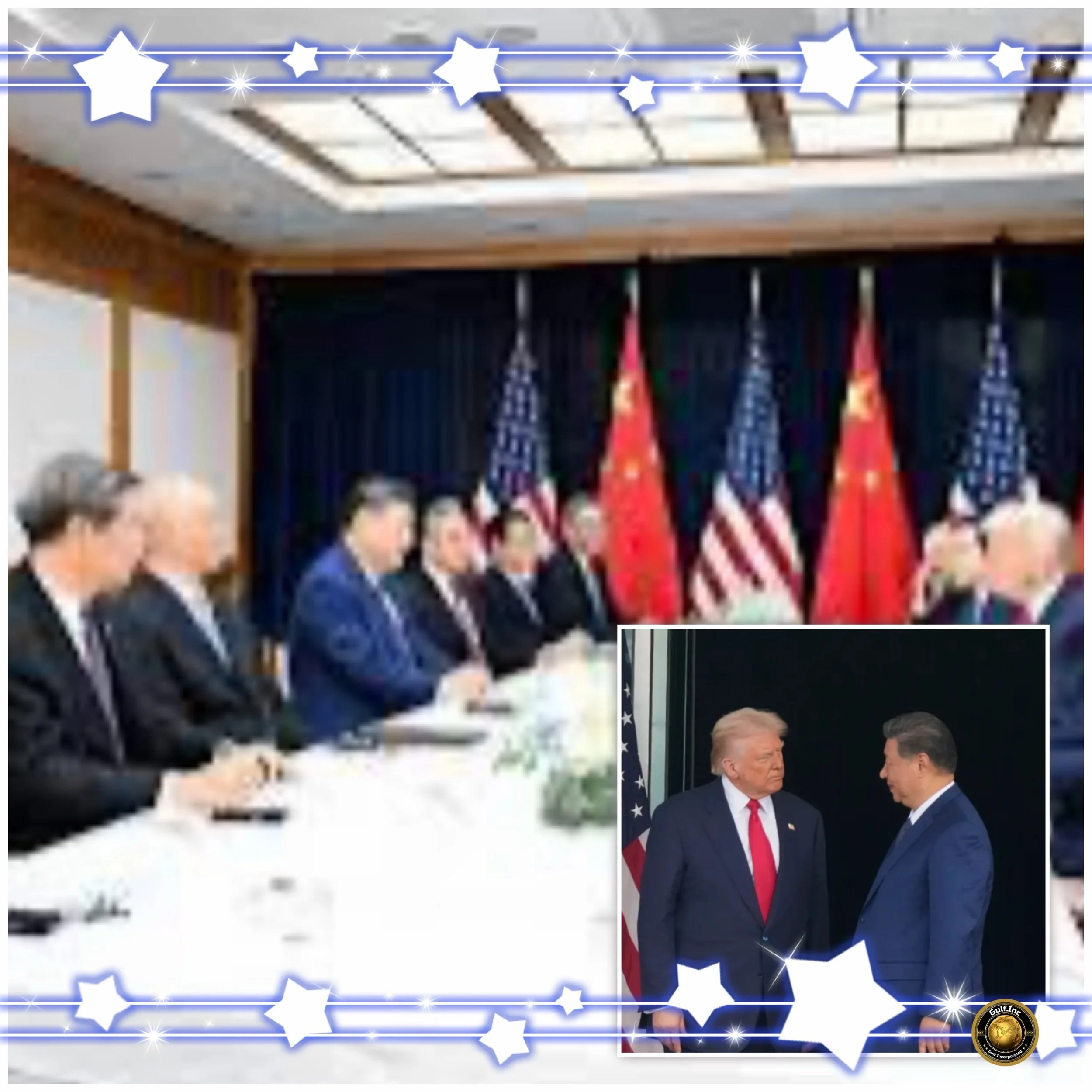
A Pragmatic Pause, Not a Strategic Breakthrough-: The Busan agreement US - China Meeting in South Korea
Introduction
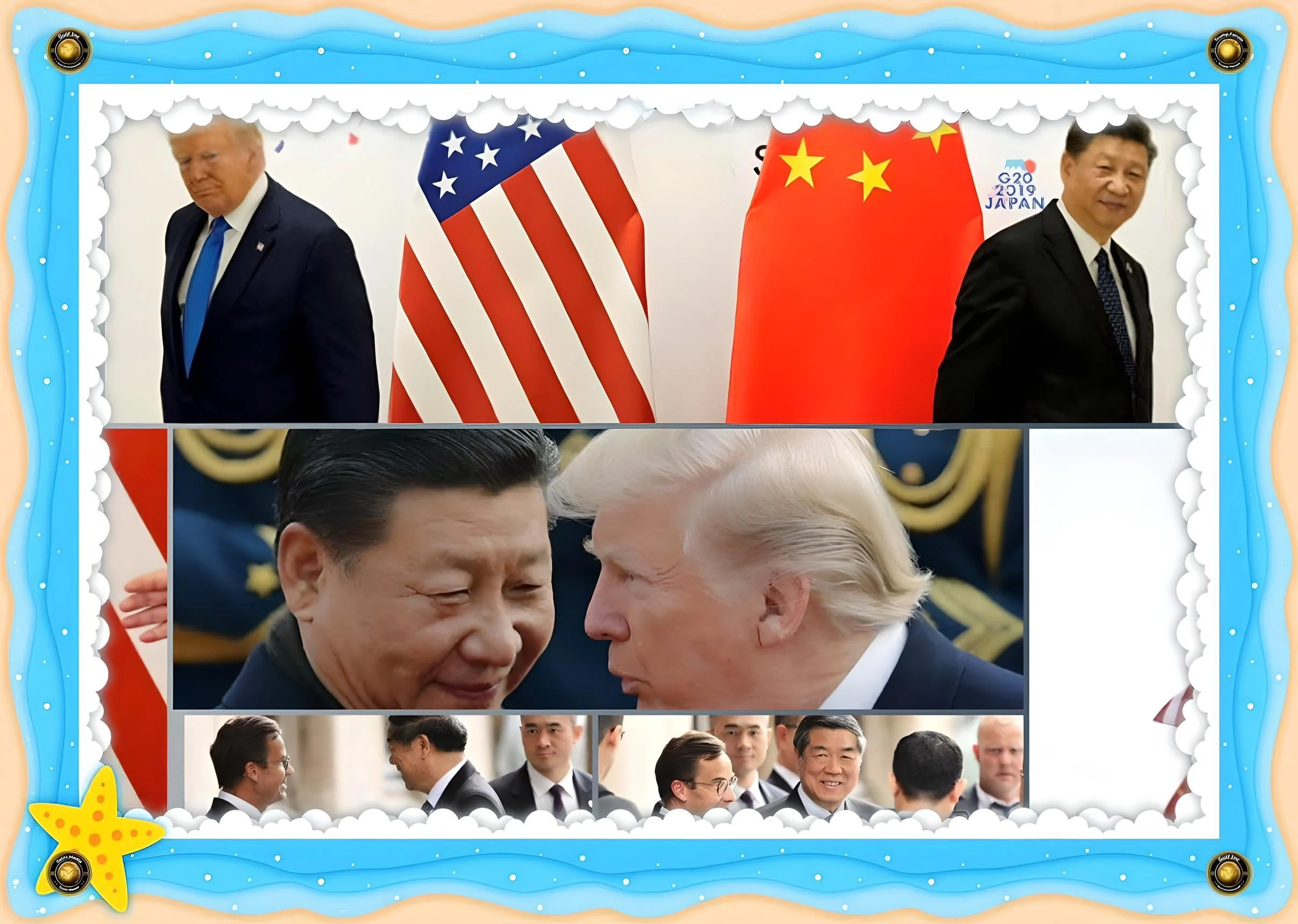
The Trump-Xi meeting in Busan, South Korea on October 30, 2025, produced a one-year trade truce that temporarily dialed back tensions between the world’s two largest economies—but the agreement represents more of a tactical retreat from the brink than a genuine resolution to their deepening rivalry.
Both leaders emerged claiming victory, yet the fundamental structural issues driving US-China competition remain unaddressed, and the deal’s fragility is underscored by its annual expiration date.
The Substance of the Deal
The core elements of the agreement reflect modest mutual concessions designed to provide immediate political relief to both presidents.
Trump announced an immediate reduction in fentanyl-related tariffs from 20% to 10%, bringing overall US tariffs on Chinese goods down from approximately 57% to 47%.
This represented a significant step back from his threat just two weeks earlier to impose an additional 100% tariff on Chinese imports.
In exchange, Beijing agreed to suspend for one year the comprehensive rare earth export controls it had announced on October 9, which had expanded restrictions to five additional rare earth elements and imposed extraterritorial requirements on products containing even trace amounts of Chinese-sourced materials.
China also committed to resuming purchases of US soybeans—historically China’s largest agricultural import from America—and pledged to intensify cooperation on curbing the flow of fentanyl precursor chemicals into the United States.
Both sides agreed to suspend their tit-for-tat port fees that had been imposed on each other’s vessels since October 14, which had threatened to significantly disrupt global maritime traffic and cost Chinese shipping giants like Cosco and OOCL an estimated $2 billion annually.
The US also agreed to pause for one year the expansion of its “entity list” export controls—the 50% ownership rule announced in late September that would have massively expanded the number of Chinese companies blocked from accessing US technology.
What Was Left Off the Table
Perhaps equally significant is what the agreement conspicuously avoided. Taiwan—often described as the most dangerous flashpoint in US-China relations—was not discussed at all, according to Trump.
This omission is notable given that previous summits typically featured extensive Chinese statements reiterating Beijing’s position on the island.
Analysts suggest this silence may reflect a pragmatic understanding by both leaders to deprioritize the issue temporarily, though it leaves the fundamental territorial dispute completely unresolved.
The agreement also failed to address China’s earlier export controls on gallium, germanium, and other critical minerals imposed in April, which remain firmly in place.
These materials are essential for semiconductor and defense manufacturing, giving Beijing continued leverage over US supply chains.
Similarly, there was no resolution on Nvidia’s advanced Blackwell AI chips, which China seeks access to but which remain under US export restrictions.
Beijing’s Strategic Position
Multiple analysts and former US officials assess that China emerged from the negotiations in a relatively stronger position.
By withholding soybean purchases and threatening to expand rare earth restrictions, Beijing demonstrated it could inflict targeted economic pain on constituencies critical to Trump—particularly Midwestern farmers who form a key part of his political base.
China’s willingness to use its near-monopoly control over rare earth processing (approximately 85-92% of global capacity depending on the element) as economic leverage proved effective in bringing the US to the negotiating table.
Importantly, China secured US concessions on what had previously been considered non-negotiable national security export controls.
The one-year suspension of the expanded entity list represents what former officials characterized as a significant precedent—the first time the US has agreed to roll back technology restrictions tied to national security concerns in the context of trade negotiations.
This establishes a concerning pattern where Beijing can potentially extract concessions on security-related technology controls by threatening economic retaliation.
China’s negotiating confidence also stems from its reduced dependence on the US market.
Chinese exports to the United States have declined from nearly 20% of total exports to just 11% in the first half of 2025, as Beijing has successfully diversified its trade relationships through frameworks like the Regional Comprehensive Economic Partnership and the Belt and Road Initiative.
This diversification provides China greater resilience against US tariff pressure than it possessed during Trump’s first term.
America’s Limited Gains
For the Trump administration, the agreement provides temporary political relief but delivers little of strategic consequence.
The resumption of Chinese soybean purchases essentially returns to the status quo ante—China was historically the largest buyer of US soybeans before Trump’s trade war disrupted that relationship.
The one-year suspension of rare earth export controls similarly just delays rather than resolves the underlying vulnerability in US supply chains.
Trump’s characterization of the fentanyl agreement as a major concession also faces skepticism.
China made similar commitments in 2019 to schedule fentanyl as a controlled substance and intensify enforcement, yet the flow of precursor chemicals to Mexican cartels continued largely unabated.
The Trump administration is essentially offering a 10-percentage-point tariff reduction in exchange for promises that China has repeatedly failed to fully implement in the past.
Structural Issues Remain Unresolved
The agreement fundamentally fails to address the deeper structural tensions driving US-China competition.
These include China’s massive state subsidies to strategic industries, forced technology transfer requirements, intellectual property theft, and the broader contest for technological dominance in artificial intelligence, semiconductors, and other advanced sectors.
As one Tsinghua University analyst observed, “Picking the low-hanging fruit makes the path ahead inherently tougher because it leaves the hard, high-stakes conflicts for last”.
China’s five-year economic plan unveiled just days before the summit underscored Beijing’s determination to double down on advanced manufacturing and technology development despite Western concerns about overcapacity and market distortions.
Xi Jinping’s comments emphasized China’s need to “consolidate and expand our strengths” and “overcome weaknesses to gain the strategic initiative in fierce international competition”.
This signals that China views the current period as an opportunity to strengthen its position for long-term rivalry rather than seeking genuine accommodation with the United States.
The technology competition between the two countries continues to intensify beyond the terms of this agreement.
US export controls on semiconductors and related manufacturing equipment remain in place, as do China’s efforts to achieve technological self-sufficiency through massive government investment in domestic chip production and other strategic sectors.
These parallel industrial policies create a dynamic of gradual economic decoupling that no short-term tariff adjustment can reverse.
The Fragility Factor
The one-year duration of the agreement highlights its inherent fragility.
Both sides explicitly framed the deal as subject to annual renegotiation, creating recurring opportunities for either party to escalate tensions if they feel their interests are not being served.
Based on the volatile history of US-China trade negotiations during Trump’s presidency—which has featured multiple agreements followed by renewed escalation—there is little reason to expect this truce will hold for its full term.
Trump’s announcement just hours before meeting Xi that the United States would resume nuclear weapons testing for the first time since 1992 further illustrates the instability of the relationship.
This decision, which caught even some Trump advisors by surprise, injected hard security competition into an already tense economic relationship and signals that both countries are preparing for escalating confrontation across multiple domains.
Market Reaction and Expert Assessment
Financial markets reacted with cautious optimism to the announcement, with some initial gains in equity markets reflecting relief that the worst-case scenario of escalating tariffs had been avoided.
However, the muted response from Chinese stock markets and continued volatility suggest investors recognize the limited significance of the agreement.
As one investment strategist noted, “It’s hard to call this a clean risk-on… Equity traders have seen this playbook before—upbeat tone, little follow-through”.
Multiple analysts characterized the outcome as a “tactical pause” rather than a “strategic breakthrough”.
The Bruegel research institute assessed that “it looks like the US and China have agreed a truce, for now” but warned that “investors may still be underestimating the risks of Trump’s shift from economic to hard-power coercion”.
The Atlantic Council similarly described the agreement as offering “a moment of relief, but not a solution”.
Conclusion
The Busan agreement may succeed in its modest aim of preventing an immediate escalation into full-scale economic warfare, but it does little to chart a sustainable path forward for the US-China relationship.
The underlying drivers of competition—technological rivalry, divergent political systems, conflicting visions of regional order, and mutual distrust—remain as powerful as ever.
Both sides appear to be using this temporary pause to strengthen their positions for continued long-term competition.
The United States is pursuing agreements with allies in Asia to diversify rare earth supply chains and reduce dependence on China, though experts acknowledge these efforts will require years and massive investment to bear fruit.
China, meanwhile, continues to leverage its dominant position in critical mineral processing and is extending its economic influence through the Belt and Road Initiative and regional trade frameworks.
The agreement’s annual expiration creates a predictable cycle where both sides will seek to demonstrate leverage in the lead-up to the next negotiation.
China has already shown it can effectively weaponize its control over critical minerals and agricultural purchases to extract concessions from Washington.
The United States retains the ability to impose punishing tariffs and technology restrictions, but appears increasingly constrained by the economic interdependence it has failed to reduce and by China’s growing alternatives to the US market.
What the Busan meeting ultimately reveals is not the possibility of genuine US-China cooperation, but rather the establishment of a fragile mechanism for managing competition between two superpowers committed to very different visions of global order.
The handshake between Trump and Xi bought time and avoided catastrophe, but the fundamental contest for economic and technological supremacy continues unabated beneath the surface of diplomatic niceties.