Cameroon at a Crossroads: Political Crisis, Social Upheaval, and an Uncertain Future
Electoral Turmoil and Democratic Erosion
The October 12, 2025 presidential election has intensified Cameroon’s political crisis, with opposition candidate Issa Tchiroma Bakary declaring victory despite official results remaining unreleased.
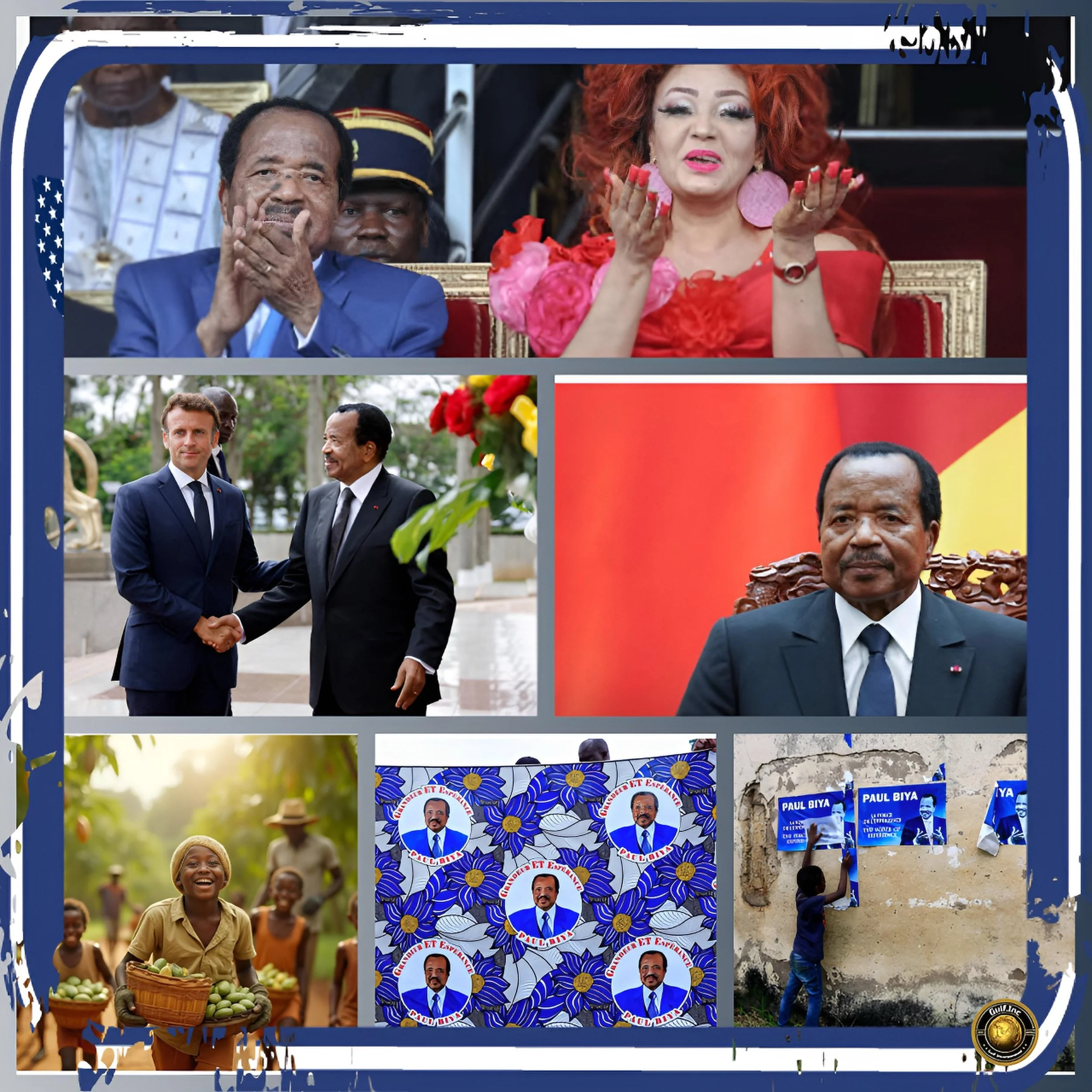
At 92 years old, President Paul Biya seeks an unprecedented eighth term that would extend his 43-year authoritarian rule into his 100th year.
The government has threatened charges of “high treason” against anyone prematurely announcing results, while protests and a fire at the ruling party’s office have heightened tensions.
Scholarly analysis reveals that Cameroon’s elections function more as legitimizing rituals for authoritarian continuity than genuine democratic exercises.
Biya has systematically undermined democratic institutions through constitutional manipulation, eliminating presidential term limits in 2008, controlling all branches of government, and disqualifying his main challenger Maurice Kamto—who finished second in 2018—from the 2025 race.
Freedom House rates Cameroon as “Not Free,” documenting how the regime uses state resources for patronage while restricting press freedom.
The succession crisis poses even graver risks. With no designated successor and speculation about his son potentially inheriting power, analysts warn of a potential polycrisis when Biya eventually leaves office.
Internal power struggles between factions loyal to First Lady Chantal Biya and administrative gatekeepers could precipitate political violence.
The Brookings Institution has characterized political transitions in francophone Africa as consistently problematic, with Cameroon’s ambiguous constitutional provisions creating legal vulnerabilities that opportunistic military officers could exploit.
Post-Election Violence and Civil Unrest
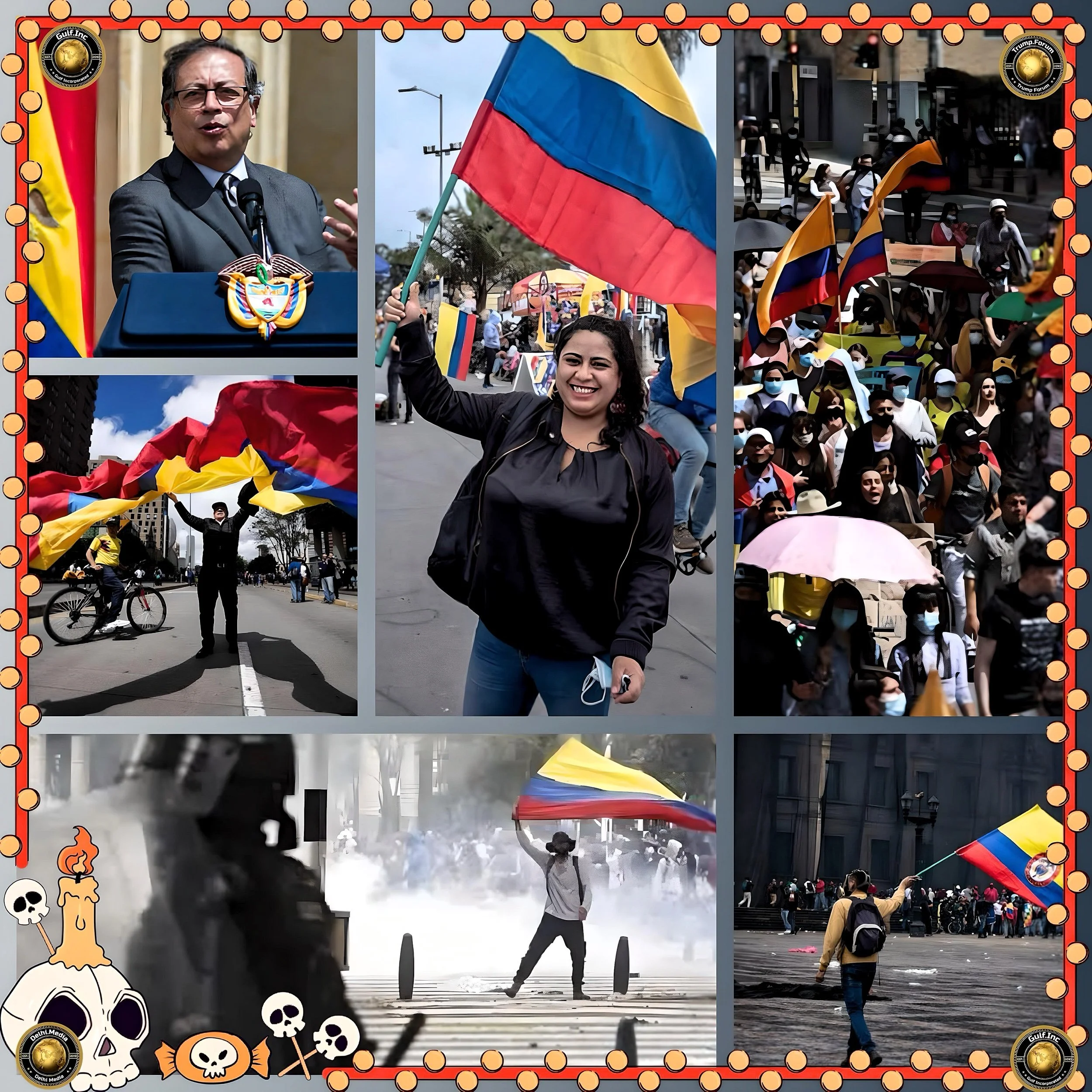
Following Tchiroma’s victory declaration, protests erupted across multiple cities including Douala, Yaoundé, and Dschang.
Police deployed tear gas and water cannons to disperse protesters who alleged electoral fraud and vote manipulation in favor of Biya.
In Douala’s Bonamoussadi and Makepe neighborhoods, demonstrators erected road barricades before being dispersed by security forces.
The Wouri Prefect banned all public gatherings in Douala until the presidential inauguration, deploying security forces to strategic districts.
The ruling party’s CPDM office in Dschang was reportedly set on fire by residents demanding Biya’s resignation.
Videos posted on social media show protesters claiming electoral authorities manipulated vote counts, with some alleging more votes were recorded than registered voters at specific polling locations.
Government officials characterized Tchiroma’s victory claim as a “diabolical plan, carefully orchestrated with secret networks at home and abroad” to destabilize Cameroon.
Security forces have arrested scores of people across affected areas, with military presence deployed to opposition strongholds to restore order.
The unrest has disrupted daily life in towns and villages, with residents witnessing violent clashes between protesters and security forces.
Observers note this pattern mirrors previous disputed elections, where opposition victory claims triggered arrests and sustained political tensions.
Systemic Exclusion of Opposition
The exclusion of Maurice Kamto, Biya’s strongest challenger, exemplifies the regime’s intolerance for genuine opposition.
Cameroon’s Constitutional Council upheld the electoral commission’s decision to bar Kamto from running, claiming his party MANIDEM had sponsored two candidates.
However, party officials and legal experts characterized this as arbitrary and politically motivated, designed to eliminate the most viable opposition candidate.
Human Rights Watch condemned the decision, stating it “raises concerns about the credibility of the electoral process” and would “leave a shadow over whatever results are eventually announced”.
The exclusion sparked protests and arrests of at least 35 Kamto supporters since July 2025.
Legal analysts noted the Constitutional Council’s “selective adherence to formalism” made its motivation questionable, particularly given the narrow technical grounds used to disqualify the leading opposition figure.
Out of 83 original candidates, only 12 were approved for the ballot, with various disqualifications including incomplete submissions and multiple party nominations.
This systematic winnowing of opposition candidates reflects what political scientists term “electoral authoritarianism”—maintaining the facade of competitive elections while ensuring predetermined outcomes through institutional manipulation.
Anglophone Crisis and Regional Instability
The ongoing Anglophone Crisis continues devastating the Northwest and Southwest regions, with armed conflict between government forces and Ambazonian separatists having killed at least 6,000 people and displaced over 700,000 since 2017.
Separatist groups threatened to disrupt the October 2025 election, forcing deployment of additional troops to secure voting in English-speaking regions.
Violence remains heavily concentrated along transport infrastructure, particularly the Ring Road connecting Bamenda to Kumbo, which has experienced 757 violent events since 2018.
The conflict has transformed the Northwest into Cameroon’s second-poorest region, with poverty jumping from 55% in 2014 to 66.8% in 2022.
Recent attacks, including the killing of 13 soldiers in two September 2025 incidents, demonstrate escalating sophistication in separatist tactics.
For many Anglophone residents, elections represent a dilemma between civic duty and personal safety. As one 23-year-old from Bamenda noted, “We feel like we are restricted by both sides.
On one side, there is the absence of security assurance from government forces, and on the other side, Amba boys [separatist fighters] threaten us”.
This dual intimidation reflects the broader breakdown of state authority in conflict-affected regions.
Economic Stagnation and Social Crisis
Cameroon faces an acute socio-economic crisis despite being Central Africa’s second-largest economy.
Approximately 40% of Cameroonians—over 10 million people—live below the national poverty line, a figure unchanged for two decades despite population growth.
The World Food Programme warns that extreme poverty could reach 25% by 2026, affecting 8 million people.
Youth unemployment represents a critical flashpoint. While official rates appear modest at 3.5-7.3%, these figures mask deeper crises of educated graduates unable to find career-oriented employment.
In major cities, unemployment reaches 35%, with university graduates particularly affected. A scholarly study found that only 2-3 out of every 10 university graduates secure appropriate employment.
Regional disparities exacerbate these challenges. The Far North region has a 69.2% poverty rate, the Northwest 66.8%, while Adamawa reaches 45.1%—all substantially above national averages.
These regions face compounding vulnerabilities from Boko Haram attacks, separatist conflict, and climate shocks including devastating floods that destroyed 85,000 hectares of farmland in September 2024.
Health Speculation and Governance Vacuum
Biya’s health has become a subject of intense speculation, with the government banning public discussion of the president’s condition in October 2024.
The 92-year-old leader rarely appears in public, spending extended periods in Europe and leaving governance to key party officials and family members.
His campaign appearance in Maroua represented a rare public engagement after months of absence from public life.
Communications Minister Rene Emmanuel Sadi has dismissed health speculation as “pure fantasy and imagination,” though this has not quelled public concerns about who actually governs the country.
Tech entrepreneur Rebecca Enonchong observed, “Most of us doubt that Biya is actually governing the country anymore.
His decision to run again, if it’s genuinely his, illustrates just how disconnected the system has become”.
The health question intersects with succession uncertainties.
Without clear constitutional provisions for transitions and no designated successor, political analysts warn that Biya’s incapacitation could trigger institutional paralysis and potential military intervention.
The president’s extended absences have already created de facto governance by proxy, raising questions about democratic legitimacy and accountability.[worldpoliticsreview]
International Dimensions and Debt Vulnerability
Cameroon faces high risk of debt distress, with public debt rising from 12% of GDP in 2007 to over 46% by 2024. China holds 61% of Cameroon’s external debt—over $5.2 billion across at least 45 loans—making Beijing the country’s largest creditor.
This debt relationship has proven problematic, with Cameroon unilaterally withholding payments to China in 2019, prompting Beijing to freeze project disbursements.
The humanitarian dimension compounds these challenges. 3.3 million people need assistance in 2025, including over 2 million internally displaced persons and refugees.
Cameroon hosts 102,000 Nigerian refugees while generating massive internal displacement from the Anglophone conflict.
The Norwegian Refugee Council designated Cameroon the world’s most neglected displacement crisis in 2025.
Climate shocks further exacerbate vulnerabilities. September 2024 floods in the Far North affected 450,000 people, while droughts limit agricultural productivity in regions where 62% of the labor force depends on farming.
Environmental risks receive an E-4 rating from Moody’s, while social risks from ongoing conflicts merit S-5, and governance weaknesses score G-4.
Conclusion
Scholarly frameworks characterize Cameroon as experiencing acute complex emergency with potential to escalate.
The Robert Strauss Centre’s analysis found that 72.5% of variables fell within “relevant to extremely relevant” ranking criteria for state fragility.
Research identifies interconnected drivers: institutional weaknesses, exclusivist policies, cultural marginalization, armed conflicts in three of ten regions, climate vulnerability, and governance vacuums.
State capacity remains severely constrained.
The government frequently fails to ensure security from rebellion, protect civilians from violence, or provide adequate social services. Political scientists emphasize that Cameroon exemplifies “electoral authoritarianism” rather than genuine democracy.
Over 300 political parties exist—many believed government-funded to dilute real opposition—while the ruling CPDM maintains overwhelming legislative majorities without competitive internal processes.
The succession question dominates scholarly concern.
Researchers note that factional conflicts among political elites are intensifying amid Biya’s growing absence from public life.
Internal struggles resemble “a civil war” with shifting daily alliances.
Given Cameroon’s strategic importance—hosting the CEMAC central bank, serving as a major regional food and energy exporter, and operating Central Africa’s largest port at Douala—political crisis could destabilize the entire region.
International Crisis Group recommends that Cameroonian leaders begin preparing for the post-Biya era, ease tensions by releasing political prisoners, scale down inflammatory rhetoric, and make elections as credible as possible.
However, as one democracy activist observed, “The post-Biya era will be tumultuous if a faction does not emerge as a definitive victor.”
For a nation of nearly 30 million people—many young, educated, and frustrated by lack of opportunities—the stakes could not be higher.