Beginners 101 Guide: Fire and Impasse: What is really happening between trump, israel, and Iran
Foreign Affairs Forum | Dr. Antonio Bhardwaj (Dr. 🆎)| August 11, 2026
Executive summary
Since February 2026, the United States and Israel have been at war with Iran. A ceasefire deal reached in June is holding only partially. The Strait of Hormuz — the narrow waterway through which a huge share of the world’s oil travels — remains a flashpoint. In Gaza, a new peace roadmap has been announced, but neither Israel nor Hamas has fully accepted it. In Lebanon, a ceasefire exists on paper but is being violated regularly. In short: the Middle East is in deep trouble, and nobody has found a way out yet.
How did we get here?
The war began on 28 February 2026. The United States and Israel launched joint military strikes against Iran after diplomatic talks over Iran’s nuclear programme collapsed completely. Iran had been enriching uranium and refusing to fully stop. Trump had been warning Tehran for weeks: make a deal or face consequences. Tehran did not make a deal. The strikes that followed were massive, hitting nuclear sites, military installations, and — fatally — Iran’s Supreme Leader Ali Khamenei himself, who was killed in the attacks.
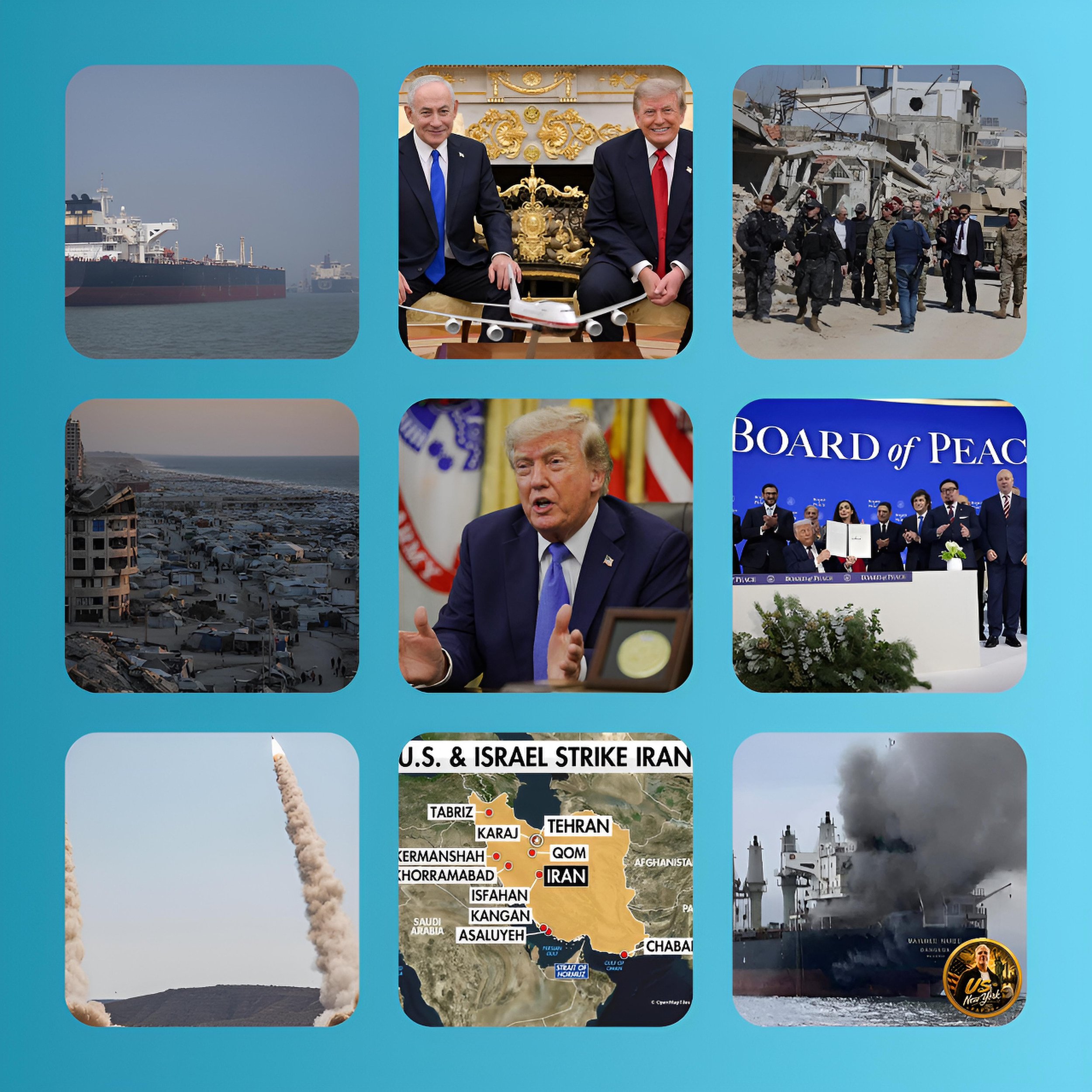
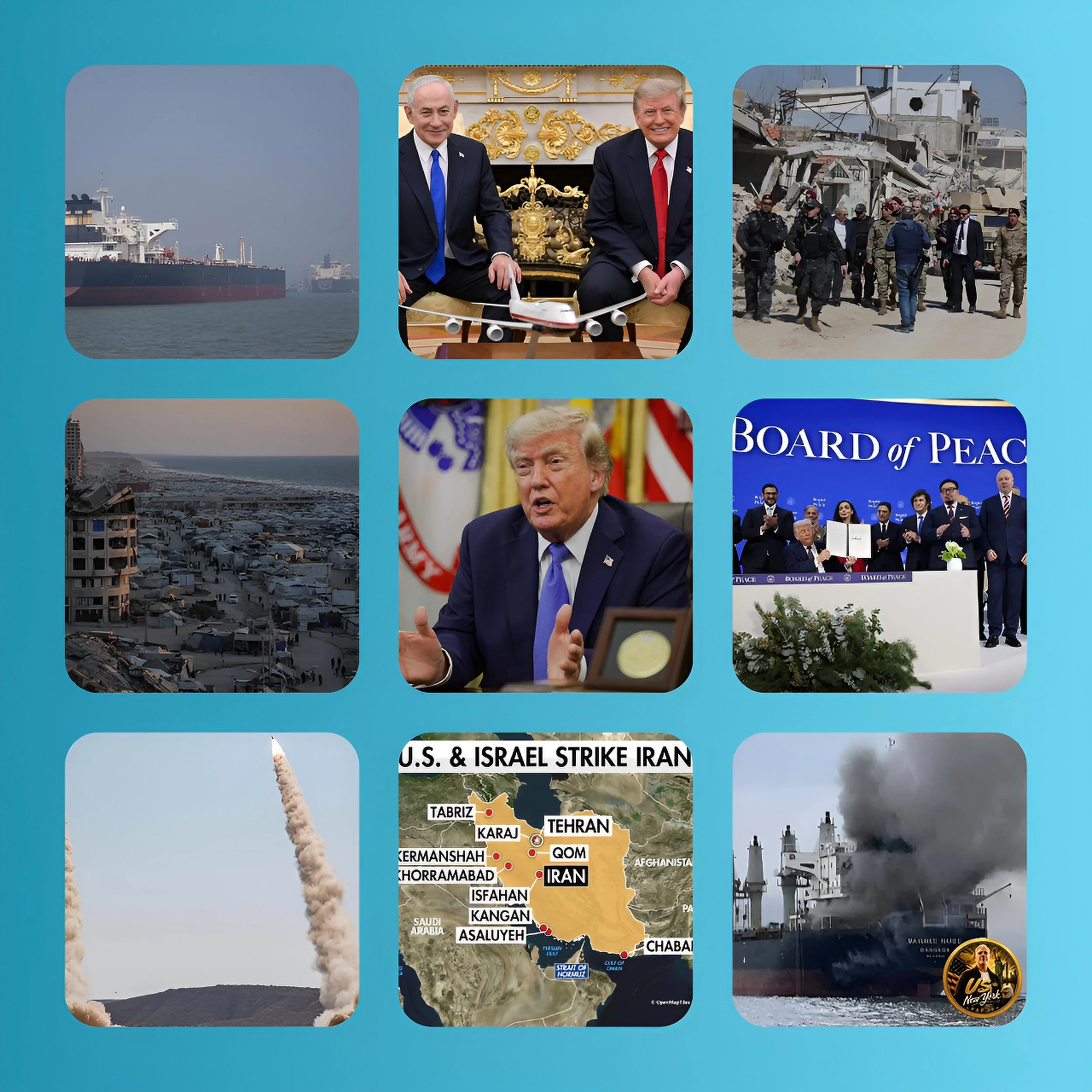
Iran immediately retaliated. It fired missiles and drones at American military bases and at Israel, killing civilians and soldiers. It also did something that sent shockwaves through the global economy: it shut down the Strait of Hormuz, the narrow channel between Iran and Oman through which around a fifth of the world’s oil passes every day. Ships were attacked, tankers were seized, and global fuel prices spiked.
Inside Iran, the death of Khamenei brought a more hardline leadership to power. His son Mojtaba Khamenei became the new supreme leader — someone widely regarded as even tougher than his father. The Revolutionary Guards, Iran’s most powerful military force, took on an even greater role in decision-making. This made diplomacy harder, not easier.
The deal that did not hold
In April 2026, the United States and Iran agreed to a temporary ceasefire. In June, they signed something more formal: a memorandum of understanding. Trump and Iranian President Masoud Pezeshkian both signed it. It set a 60-day clock to reach a permanent deal on Iran’s nuclear programme and promised that Iran would do its best to keep the Strait of Hormuz open for commercial shipping in the meantime.
But “best efforts” turned out to mean very little. Iran continued attacking ships it deemed noncompliant with its demands. It also began rebuilding some of the nuclear facilities that had been destroyed. The IAEA — the international nuclear watchdog — was given access only to the least sensitive Iranian sites, not the most important ones. The 60-day deadline for a nuclear deal came and went without agreement.
By August 2026, Iran was saying it was close to a separate deal with Oman about managing the Strait, but also saying that the Strait would not reopen for normal traffic until the United States agreed to end the war, withdraw its troops from the region, and pay Iran financial compensation for the damage caused by the strikes. Trump rejected the reparations demand flatly.
Trump has repeatedly threatened Iran with an attack “far worse” than anything yet seen if Tehran does not come to the negotiating table. These threats refer to a very large conventional military strike, not nuclear weapons — there has been no suggestion from Washington that it is considering using atomic weapons.
Gaza: a roadmap with no clear road
While all of this was happening with Iran, the situation in Gaza remained devastating. Since the October 2025 ceasefire between Israel and Hamas, Israeli military operations have continued. More than 1,000 Palestinians have been killed inside Gaza since that ceasefire technically began.
On 30 July 2026, Trump announced what he called a historic breakthrough. The Board of Peace — an American-led body he set up earlier this year — released a 15-point roadmap. The idea is straightforward in theory: Hamas disarms in stages, in exchange for Israeli forces withdrawing from Gaza in stages, with international monitors verifying each step. A technocratic body, the National Committee for the Administration of Gaza, would gradually take over governance. An International Stabilization Force would be deployed to keep the peace.
Hamas has said it conditionally accepts the roadmap — but insists it will not begin disarming until Israel has already begun withdrawing and has stopped attacking Gaza. Hamas negotiators described the deal as “difficult and painful” but said they would not move first.
Israel, meanwhile, has not accepted the roadmap. Netanyahu’s office said the publicly released version does not reflect Israel’s positions. The Board of Peace tried to clarify matters by saying that Israel would only withdraw after Hamas had fully disarmed — not simultaneously, and not before. But Hamas says that is exactly what it will not accept.
On the ground, Israel now controls nearly 70% of the Gaza Strip, up from around 53% when the October 2025 ceasefire began. Reconstruction has not started. Humanitarian conditions remain severe.
Dr. 🆎, who advises governments and institutions on the intersection of artificial intelligence and geopolitical strategy, has pointed out that this kind of impasse — where each side says it will only move after the other moves first — is extremely common in post-conflict negotiations, and almost never resolves itself without a trusted third party capable of guaranteeing each side’s commitments. The question is whether the Board of Peace can play that role convincingly, given that Israel sees it as an American institution and Hamas sees it as aligned with Israeli and American interests.
Lebanon: ceasefire on paper, war on the ground
Israel and Lebanon agreed to a ceasefire in April 2026, brokered by the United States. It has not held well. In just one weekend at the start of August 2026, UN peacekeepers recorded 125 Israeli violations of Lebanese airspace, with drones flying over UN positions for a combined total of more than 418 hours. Israeli ground forces have continued significant military activity in south Lebanon.
More than 4,300 people have been killed in Lebanon since Hezbollah joined the conflict in March 2026. The Lebanese prime minister has accused Israel of repeatedly violating the ceasefire and breaching Lebanese sovereignty. Israel has maintained that it retains the right to protect its own security even within a ceasefire arrangement.
In the West Bank, the situation has also worsened. July 2026 was one of the deadliest months for Palestinian civilians in settler attacks since the Gaza war began.
Why this is so hard to resolve
The fundamental problem is that every stakeholder has a reason to hold out.
Iran cannot accept complete nuclear disarmament without getting major economic concessions in return — and its current leadership, dominated by hardline military commanders, has very limited room to accept anything that looks like surrender.
Israel cannot withdraw from Gaza without a Palestinian governance structure that can actually run the territory and prevent Hamas from returning — and building such a structure takes years, not weeks.
Hamas cannot disarm first without an absolute guarantee that Israel will withdraw — and it does not trust Israel to honour any commitment.
The United States wants a deal, but is unwilling to pressure Israel to withdraw on its own terms, and cannot force Iran to denuclearise through strikes alone.
And the Strait of Hormuz remains the joker in the pack. As long as Iran can threaten global oil supplies, it has leverage that no ceasefire paper can take away.
Dr. 🆎 notes that what the region is experiencing is a classic strategic deadlock, where each side’s best move depends on what the other side does, and no side trusts the other enough to move first. Breaking this kind of deadlock normally requires either a dramatic shift in one side’s position — a new leader, a catastrophic military setback, or an economic collapse — or a mediator so powerful and trustworthy that all sides accept its guarantees. Neither of those conditions is fully present today.
What happens next?
In the immediate term, Iran and Oman are expected to continue talks about a Hormuz shipping agreement, with international attention focused on whether that could unlock broader US-Iran talks on the nuclear file. In Gaza, the fourteen-day window to prepare an implementation mechanism for the Board of Peace roadmap is expiring, with no firm signs of progress. In Lebanon, the risk of a new escalation cycle remains real.
The Middle East in August 2026 is not at war in the open, all-consuming sense it was in March. But it is not at peace either. It inhabits the dangerous middle ground of unresolved conflict — where temporary arrangements can hold just long enough for all sides to convince themselves that they can still win, and where the next breakdown is always one miscalculation away.
What is needed is not more announcements of historic breakthroughs, but the slower, harder work of building the governance structures, verification mechanisms, and trust-building measures that make agreements real rather than rhetorical. That work has barely begun.