The AI Infrastructure Arms Race: Why Alphabet Just Raised $84.75 Billion
Executive Summary
The June 2026 decision by Alphabet Inc. to raise $84.75 billion in equity capital — the largest equity capital transaction in corporate history — marks a structural inflection point in the global competition for artificial intelligence dominance.
What might at first appear to be a corporate financing event is, on closer examination, a geopolitical declaration: that the physical infrastructure undergirding AI has become as strategically vital as the algorithms it runs.
The raise, which grew from an initial $80 billion target after significant institutional demand, includes a $10 billion private placement from Berkshire Hathaway, and is structured across public equity offerings, a preferred stock issuance, and an at-the-market programme set to deploy through the remainder of 2026.
The funds are earmarked for hyperscale data centers, custom silicon, networking, and compute capacity to satisfy what Alphabet describes as “unprecedented customer demand.”
FAF article situates that transaction within the wider landscape of the AI infrastructure arms race, examines the systemic bottlenecks in power, chips, and construction that now define competitive advantage, and analyses the geopolitical consequences for state sovereignty, supply chain security, and the future architecture of global power.
Introduction
There are moments in financial history when a single transaction illuminates the full magnitude of a technological transformation underway. Alphabet’s equity raise of June 2026 is one such moment.
Unlike the debt issuances that have become commonplace among hyperscalers, Alphabet chose to dilute its shareholders — a signal that the scale of capital required, and the urgency with which it must be deployed, exceeds even what a company generating $174 billion in annual operating cash flow can comfortably absorb from internal resources alone.
Management signalled that 2027 capital expenditure will “significantly increase” compared to 2026 levels, confirming that this is not a one-time event but the opening movement in a decade-long infrastructure symphony.
The transaction forces a recalibration of how analysts, policymakers, and strategists understand competition in AI.
For much of the past decade, the dominant narrative centred on model performance: who built the largest transformer, who achieved the best benchmark scores, whose alignment research was most credible.
What 2026 has made unmistakably clear is that compute capacity — the physical, energy-intensive, geographically anchored infrastructure to train and serve AI models — has become the primary determinant of competitive position.
Dr. Antonio Bhardwaj, a polymath and global expert in Human-Centered AI for Geopolitical Strategy, AI warfare, and bioterrorism, observes that “we have crossed a threshold where the classical model of software-led AI competition is obsolete. The new paradigm is infrastructure-led, and infrastructure is indistinguishable from geopolitics. Who controls the compute landscape controls the cognitive machinery of the next era of statecraft.”
History and Current Status
The trajectory of hyperscaler capital expenditure over the past five years charts one of the most dramatic escalations in corporate investment in modern industrial history.
As recently as 2021, the combined annual capital expenditure of the four largest American hyperscalers — Alphabet, Amazon, Meta, and Microsoft — hovered around $100 billion. By 2025, that figure had risen to approximately $410 billion.
In 2026, those four companies alone are collectively projected to allocate $725 billion to capital expenditures, up 77% from the already record-breaking prior year.
Alphabet’s own trajectory within this broader arc is instructive. The company initially guided 2025 capital expenditure at $75 billion; actual 2025 spend came in at $91.4 billion, with 2026 guidance subsequently updated to between $175 billion and $185 billion.
By the time of the equity raise announcement in early June, Alphabet’s 2026 capital expenditure guidance had been revised to a range of $180 billion to $190 billion, driven by the need to build AI compute infrastructure at a pace that internal cash flow alone could not sustain without compromising shareholder returns and balance sheet flexibility.
The immediate trigger for the equity raise was competitive necessity compounded by demand reality. Alphabet stated that “the company is experiencing strong demand for its AI solutions and services from enterprises and consumers, at levels that are exceeding the company’s available supply.”
In Q1 2026, Google Cloud revenue grew 28%, with the Cloud backlog jumping to over $460 billion, while Gemini’s integration into Search drove record query volumes and expanded advertising inventory.
The gap between what Alphabet could offer and what its customers and enterprise clients demanded had become a strategic liability that no amount of operational efficiency could close without a step-change in physical infrastructure.
The structure of the raise itself merits attention. It comprises concurrent underwritten public offerings of Class A Common Stock, Class C Capital Stock, and depositary shares representing interests in mandatory convertible preferred stock, alongside a $40 billion at-the-market offering programme and a $10 billion private placement.
The involvement of Berkshire Hathaway as anchor investor at the $10 billion level — a firm historically cautious about technology investments and deeply sceptical of capital-intensive speculative bets — represents a meaningful imprimatur. Warren Buffett’s enterprise does not make commitments of this size without considerable conviction in long-run return on capital.
That conviction, in turn, reflects a broader institutional consensus that the AI infrastructure build-out is not a bubble but a durable restructuring of the global economy’s cognitive substrate.
Key Developments
The Alphabet raise does not exist in isolation. It must be understood as one node in a networked escalation that has redefined corporate strategy across Silicon Valley and, increasingly, across sovereign capitals from New Delhi to Riyadh to Brussels.
The five largest US cloud and AI infrastructure providers — Microsoft, Alphabet, Amazon, Meta, and Oracle — have collectively committed to spending between $660 billion and $690 billion on capital expenditure in 2026, nearly doubling 2025 levels.
Amazon is the single largest spender, with capex projected at approximately $200 billion, much of it for AWS data centers, Trainium chips, and Bedrock infrastructure.
Meta raised its full-year 2026 guidance to between $125 billion and $145 billion, citing higher component pricing and additional data center costs, with Mark Zuckerberg framing the expenditure as funding for “personal superintelligence to billions of people.”
Microsoft, meanwhile, set its calendar-year 2026 capex at $190 billion, with CFO Amy Hood attributing $25 billion of that figure to rising memory chip and component costs, while noting that Microsoft expects to remain capacity-constrained through at least 2026.
Beyond individual company strategies, the structural composition of spending reveals where the real competitive differentiation is being sought.
Approximately 75% of aggregate hyperscaler capital expenditure in 2026 will fund AI-related infrastructure, representing approximately $450 billion in AI-specific spending.
Within that envelope, custom silicon has emerged as a critical differentiator.
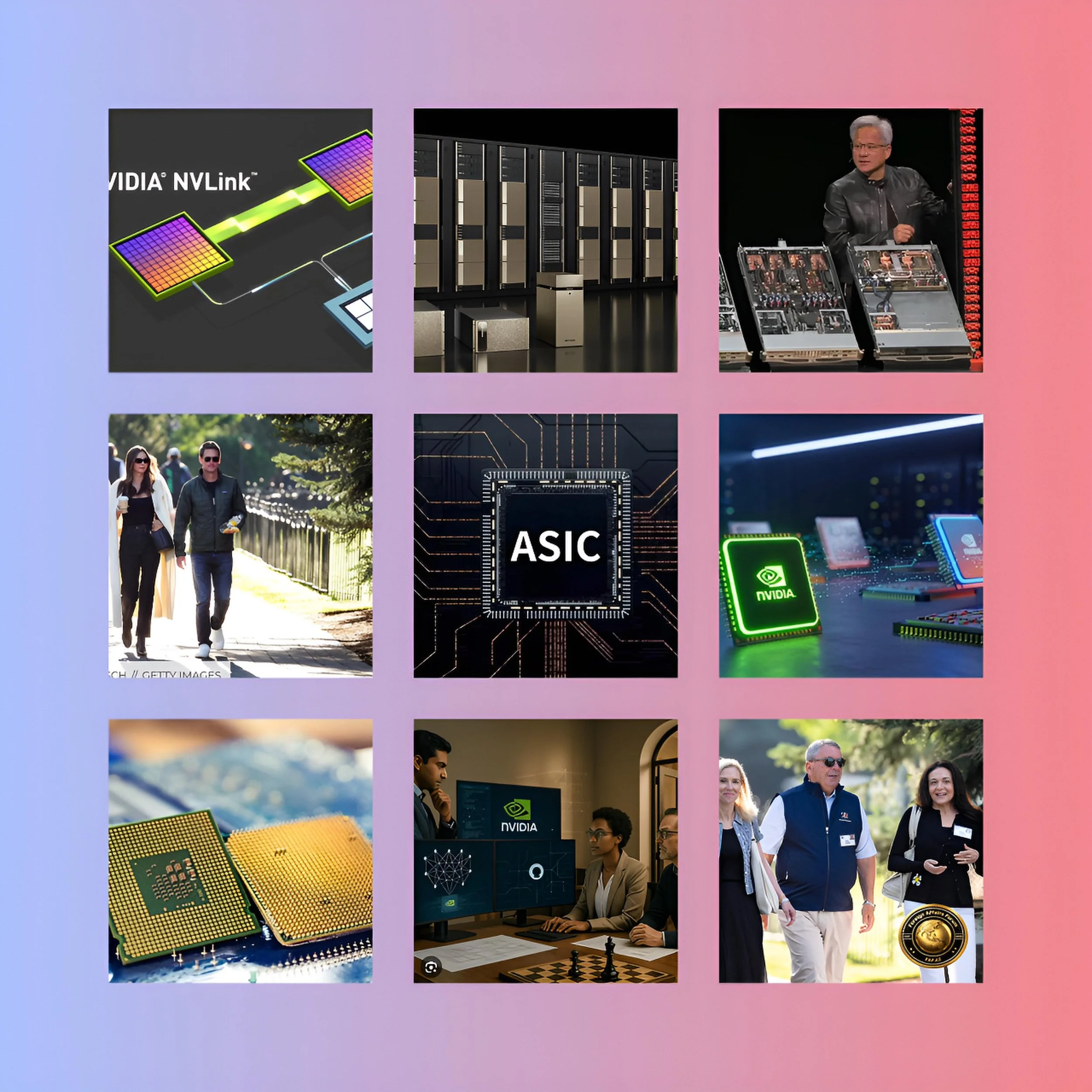
Google’s Tensor Processing Units represent the company’s multi-generational bet that purpose-built accelerators will outperform general-purpose NVIDIA GPUs for inference-heavy workloads at scale.
TPU hardware sales are expected to generate meaningful external revenues in 2027, signalling that Google’s silicon programme has crossed from internal cost-reduction into a commercial product line that competes directly with NVIDIA in the enterprise accelerator market.
The competitive significance of this custom silicon strategy cannot be overstated. NVIDIA’s data center revenue reached $75.2 billion in a single quarter, up 92% year-over-year, confirming that while NVIDIA remains the dominant force in AI compute, the hyperscalers’ accelerating investment in proprietary chips represents a structural threat to that dominance over a five-to-ten-year horizon.
Each generation of TPU that Google deploys at scale reduces its dependence on NVIDIA’s supply chain, its exposure to export control disruptions, and its per-token inference cost — all simultaneously.
Dr. Bhardwaj notes the dual-use dimensions of this silicon race: “Custom AI accelerators are not merely commercial assets. They are potential platforms for sovereign AI capability. The same TPU architecture that reduces Google’s cloud costs can, under different geopolitical conditions, become the hardware backbone for national defence AI systems, signals intelligence processing, or autonomous weapons guidance. The line between commercial AI infrastructure and national security infrastructure is vanishingly thin, and policymakers have not caught up to that reality.”
Latest Facts and Concerns
The most consequential development accompanying the capital escalation is the emergence of physical infrastructure — specifically power — as the binding constraint on AI deployment.
For much of the preceding two years, the dominant bottleneck was silicon: NVIDIA GPUs on eighteen-month lead times, memory bandwidth limitations, and the scarcity of high-bandwidth interconnects.
Those constraints have eased materially. The new choke point is electricity and grid connectivity.
Gartner estimates global data center electricity demand will exceed 1,000 TWh by 2026 — double the 2023 baseline.
This exponential surge in energy demand has collided with electricity grid infrastructure designed for a different era.
In many regions, connecting a new facility to the power grid can take between four and ten years, while AI data centers are typically planned and built within two to three years, creating a structural misalignment that increasingly determines which projects advance and which stall.
The granularity of the crisis is revealing. High-voltage transformer lead times, which stood at between twenty-four and thirty months before 2020, now stretch to five years in some procurement markets.
Up to 11 GW of data center capacity anticipated for 2026 remains in the announced phase without construction underway, with 50% of global projects facing delays due to power limitations and grid equipment shortages.
The bottleneck, as one analysis characterised it, is no longer capital or demand — it is physical infrastructure.
The response among hyperscalers has been to vertically integrate into energy production at a scale that would have been unthinkable five years ago.
Google, in partnership with Intersect Power and TPG, committed to invest $20 billion in new clean energy projects specifically to power future data centers, establishing a model for captive power generation.
Oracle’s Project Jupiter, one of the largest AI data center build-outs in history, will replace planned gas turbines and backup diesel generators with up to 2.85 GW of Bloom Energy fuel cell capacity, representing one of the largest islanded microgrid power facilities in the world.
Meta, meanwhile, has pursued a natural gas-powered behind-the-meter solution for its Ohio campus, bypassing the grid entirely. The “bring your own power” model is no longer an exception — it is becoming a strategic norm.
The energy security implications extend well beyond corporate strategy. Morgan Stanley Research forecasts US data center demand could reach 74 GW by 2028, with a projected shortfall of approximately 49 GW in available power access.
This gap has material consequences for residential and commercial electricity consumers who share grid infrastructure with hyperscale facilities, and it is generating political friction in communities from Virginia to New Mexico where data center development has driven up electricity prices and strained local grid reliability.
For Alphabet specifically, the risks are compounded by the inherent tension between a $180 billion to $190 billion annual capital expenditure programme and a financial model that must eventually translate physical infrastructure into returns on invested capital.
The full verdict on whether Alphabet’s infrastructure bet pays off arrives in 2027 and 2028, when depreciation schedules on today’s data centers begin hitting income statements.
Alphabet reduced Gemini serving costs by 78% over 2025 through model optimisation, an important signal that efficiency gains are occurring alongside the spending increases, but the question of whether revenue growth will outpace the accumulated weight of depreciation remains open.
Critics have not been silent. Investor anxiety over capex-to-revenue ratios prompted stock sell-offs at multiple hyperscalers following earnings disclosures in early 2026, and parallels to the overbuilding of the late-1990s technology bubble have been raised by market observers, even as defenders point to the real and growing revenues from cloud AI services as a fundamental differentiator from that era’s speculative excess.
Cause-and-Effect Analysis
The causal logic driving Alphabet’s raise — and the broader hyperscaler spending surge — can be traced through several interconnected chains that ultimately converge on a single imperative: speed.
The first chain runs from model capability to monetisation.
Gemini’s integration into Search has driven record query volumes, expanded advertising inventory on longer and more complex queries, and contributed to Q1 2026 revenue growth of 16% year-over-year with operating margin expansion to 45%.
The commercial success of AI-enhanced Search proves the revenue hypothesis: more compute produces better models, better models produce more capable products, more capable products generate more revenue per user.
The constraint is not demand — Alphabet’s cloud backlog surged 55% sequentially to over $240 billion in early 2026 -the constraint is supply. Every quarter in which Alphabet cannot serve enterprise demand is a quarter in which a competitor — AWS, Azure, or an emerging cloud provider — captures that spend.
The second chain runs from supply chain concentration to geopolitical risk.
TSMC in Taiwan remains the undisputed king of cutting-edge logic chips, producing the world’s most advanced AI accelerators for NVIDIA and others, while advanced memory production is similarly concentrated in South Korea.
This concentration creates a specific vulnerability: a disruption in the Taiwan Strait — whether through military conflict, political pressure, or natural catastrophe — would simultaneously collapse the supply of advanced AI accelerators available to every American hyperscaler.
The $84.75 billion raise is, in part, a bet that Alphabet can reduce this exposure through accelerated deployment of its own TPU designs, whose production can be diversified across TSMC’s Arizona facilities and potentially future domestic fabs.
The third chain runs from AI infrastructure investment to national power dynamics.
In 2026, just five US companies are expected to spend more than $450 billion in aggregate AI-specific capital expenditures — a sum that dwarfs the entire Apollo programme in inflation-adjusted terms.
This private capital deployment produces public strategic goods: the United States’ AI capability advantage is substantially a function of its hyperscalers’ willingness and ability to spend at this scale.
China’s top AI models continue to lag behind American frontier models by several months or more, and Chinese AI labs are constrained by access to compute due to a combination of US export controls on advanced AI chips and limited capital resources.
The chip export control regime administered by the US Department of Commerce is the policy instrument; the hyperscalers’ data centres are the infrastructure that makes the underlying capability advantage material.
Yet the geopolitical logic cuts in multiple directions.
China’s ability to export its AI stacks is bolstered by close trade and investment partnerships with countries in the Global South, where China is now the primary trading partner of seventy-eight countries — a roughly 50% increase since 2015 — with heavy investment in infrastructure through its Belt and Road Initiative.
More cost-efficient Chinese models running on domestically manufactured chips could become an attractive package for any country seeking to deploy AI affordably without entering the orbit of American hyperscaler dependency.
The AI infrastructure race, in this framing, is also a competition for the allegiance of the global majority of nations that possess neither the capital nor the technical depth to build frontier infrastructure independently.
Dr. Bhardwaj contextualises this dynamic within the longer arc of military-strategic competition: “The language of AI infrastructure investment is commercial, but the underlying contest is civilisational. Nations that cannot produce or access advanced AI compute at scale will find their decision-making cycles — in economic management, defence planning, public health, and intelligence — running slower than those of their adversaries. In an era of autonomous weapons, biosurveillance, and AI-accelerated warfare, cognitive speed is existential. The $84.75 billion Alphabet is raising is not a technology investment. It is the infrastructure of strategic autonomy.”
The fourth chain connects infrastructure concentration to sovereignty concerns among middle powers.
Middle powers that fail to secure influence over the development, deployment, and governance of AI will likely forfeit control over their economies, societies, political systems, and positions in the global economy.
India, with its 1.4 billion citizens and a sovereign AI agenda launched formally in early 2026, has recognised that data processing and model training for its population cannot be indefinitely delegated to foreign hyperscaler infrastructure without accepting the strategic dependencies that entails.
The American hyperscalers’ capacity expansion simultaneously presents opportunity — as a platform for Indian enterprises — and risk, as it reinforces a structural asymmetry in compute access that mirrors the colonial-era asymmetries in industrial capacity that India spent decades working to overcome.
Future Steps
The forward trajectory of the AI infrastructure landscape is shaped by several dynamics that are already visible and likely to intensify over the next five years.
On the demand side, the depreciation of current investments will accelerate the need for continued capital deployment.
Alphabet CFO Anat Ashkenazi signalled that 2027 capital expenditure is expected to significantly increase compared to 2026 levels, a forecast that aligns with the structural logic of a sector where the useful life of AI computing hardware is typically three to five years and where model capability requirements are expanding faster than hardware efficiency gains.
The cumulative effect, with the baseline aggregate capex estimate across the major hyperscalers standing at $7.6 trillion between 2026 and 2031, will be a sustained, decade-long restructuring of global capital allocation toward AI infrastructure.
On the energy side, the resolution of the power crisis will require policy intervention at a scale that corporate procurement alone cannot deliver.
The International Energy Agency has identified permitting reform, grid-code harmonisation, new financing models, and public-engagement efforts as necessary accelerants, though the pace of regulatory reform has not matched the velocity of demand growth.
Nuclear energy — specifically Small Modular Reactors — is emerging as the preferred long-run solution among hyperscalers with twenty-year infrastructure planning horizons, given its ability to provide firm, on-site, carbon-free generation without transmission dependencies.
Microsoft, Google, and Amazon have all announced nuclear power agreements, though SMR projects require five to ten-year lead times, significant regulatory navigation, and upfront capital in the hundreds of millions, making them accessible primarily to hyperscalers with long planning horizons.
On the silicon side, the competitive landscape between NVIDIA’s GPU ecosystem and the custom ASIC strategies of the hyperscalers will determine the cost economics and supply chain resilience of AI compute through the end of the decade.
Alphabet’s TPU programme, Amazon’s Trainium and Inferentia chips, and Microsoft’s Azure Maia accelerator represent multi-billion dollar bets that custom silicon will yield significant total cost of ownership advantages within two to three years.
If those bets prove correct, the competitive moat of the incumbent hyperscalers will deepen substantially — and the barriers to entry for any new compute provider attempting to enter the market at frontier scale will become effectively insurmountable.
On the geopolitical side, nations are seeking sovereign AI capabilities to strengthen their domestic economies, protect national security, mitigate geopolitical shocks, and reflect national values, though not every country can or should try to build every part of the AI stack independently.
The more realistic path for most middle powers lies in strategic specialisation — developing depth in specific segments of the AI value chain while maintaining interoperability with multiple infrastructure providers to avoid the lock-in that comes with singular dependence.
India’s positioning is emblematic: US tech giants have recently pledged billions in investments in India’s AI capabilities, presenting a window of opportunity that must be managed with clear-eyed awareness of the dependency dynamics embedded in those investment relationships.
The export control regime administered by Washington will continue to be a primary instrument of strategic competition.
In early 2026, the US government approved licensed exports of Nvidia H200 AI chips to China under conditions intended to balance national security with commercial interests — a move that sparked substantial debate in Washington and underscored the fundamental tension in US AI policy between technological containment and commercial engagement.
The policy challenge of calibrating export controls precisely enough to constrain Chinese military AI capability without triggering retaliatory measures that disrupt American companies’ global market access will intensify as Chinese domestic alternatives — particularly Huawei’s Ascend series — narrow the performance gap.
Dr. Antonio Bhardwaj anticipates an increasingly complex governance landscape: “The next five years will see the emergence of what I call ‘compute diplomacy’ — bilateral and plurilateral agreements governing cross-border AI infrastructure investment, chip export licensing, and data center siting that function as the new arms control. Just as nuclear non-proliferation required international frameworks because the technology was too dangerous and too consequential to manage through markets alone, advanced AI compute will require analogous governance architectures. The Alphabet raise accelerates the urgency of that conversation.”
Conclusion
Alphabet’s $84.75 billion equity raise is, at its most immediate level, a financing transaction.
At a deeper level, it is a statement of conviction — by one of the most capital-efficient and analytically rigorous enterprises in the world — that the infrastructure of artificial intelligence represents the most consequential investment opportunity of the 21st century, and that the window to secure competitive position in that infrastructure is narrow and closing.
The upsizing of the raise from $80 billion within forty-eight hours of its announcement, and the anchor commitment from Berkshire Hathaway, confirm that this conviction is broadly shared across the institutional investor community.
The structural forces driving the raise — demand exceeding supply, power constraints limiting deployment, custom silicon reshaping competitive dynamics, and geopolitical pressure accelerating the quest for AI sovereignty — are not transient.
They are the defining features of the decade’s strategic landscape.
The hyperscalers that succeed in navigating these forces will not merely be commercially dominant; they will be the architects of the informational and cognitive infrastructure upon which national economies, defence establishments, and democratic institutions will increasingly depend.
For policymakers, the implications are stark. The concentration of AI compute capacity in a small number of American hyperscalers creates strategic power asymmetries that simultaneously advance US national interests and generate the dependencies and vulnerabilities that adversaries will seek to exploit.
For middle powers from India to Brazil to Germany, the choices made in the next three to five years about which AI infrastructure to build upon, which data to process domestically, and which foreign investment to welcome or resist will shape their sovereign capacity for a generation.
The compute race is not a metaphor. It is the material condition of global power in an age of artificial intelligence.
Alphabet’s June 2026 capital raise is its most visible expression yet — and, by every available indication, its scale will look modest in retrospect.