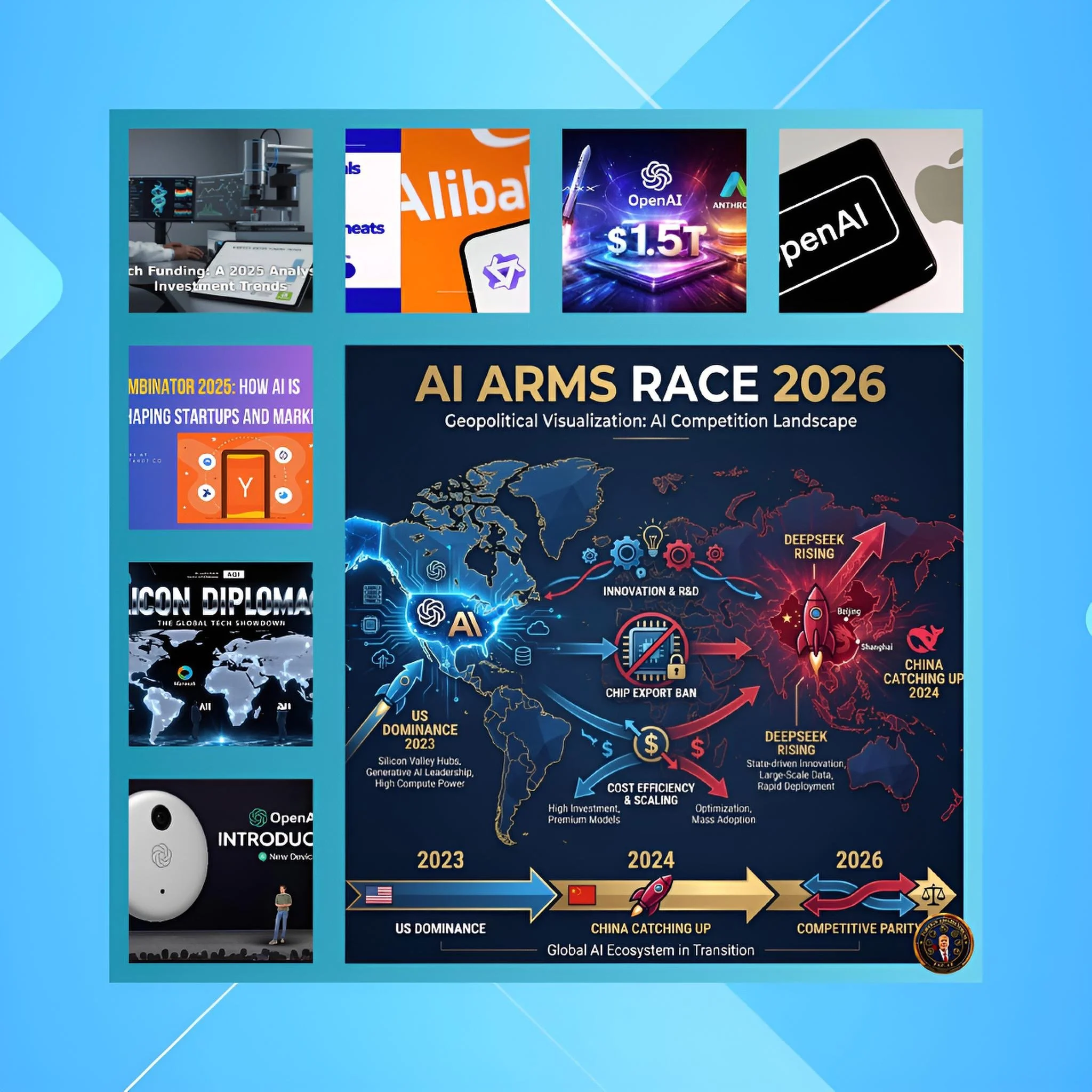
Silicon Valley at the Crossroads: How OpenAI’s IPO Push, the Apple Lawsuit, Chinese Open-Weight Models, and Deep-Tech Capital Are Redrawing the Global AI Order
Executive Summary
AI Ecosystem in Transformation
The closing weeks of July 2026 have delivered a concentrated series of developments that, taken together, constitute a structural inflection point in the global artificial intelligence landscape.
OpenAI’s appointment of two veteran financial executives to its board, the explosive legal confrontation between Apple and OpenAI over trade secrets, the gathering political battle over Chinese open-weight AI models, the emergence of AI-native consumer hardware devices, and the continued flow of venture capital into deep-tech AI verticals are not isolated episodes.
They are interconnected signals of an industry that has passed beyond the experimental phase and entered a period of institutional consolidation, geopolitical contestation, and platform-level competition.
FAF analyses each development in depth, traces the causal chains between them, and situates the Silicon Valley moment within the wider arc of international technology competition.
It concludes with a forward assessment of the structural choices that governments, corporations, and research communities will face as the AI ecosystem continues its rapid evolution.
Introduction: The Moment to of Reckoning
For most of the first quarter-century of the 21st century, Silicon Valley’s relationship with the rest of the world was defined primarily by cultural export: its products were platforms, its business models were subscriptions and advertising, and its governance problems were largely political in character.
The arrival of frontier artificial intelligence has changed that configuration in fundamental ways. The decisions being made in San Francisco’s corporate boardrooms in mid-2026 carry consequences that extend far beyond quarterly earnings reports.
They shape the architecture of the global information economy, the relative technological standing of nation-states, and the terms on which billions of people will interact with intelligent systems for decades to come.
The four major developments examined in this essay — OpenAI’s IPO-preparatory governance reforms; the Apple versus OpenAI trade secret litigation; the coalition pushback against restrictions on Chinese open-weight AI models; and the surge of deep-tech AI investment into life sciences — are each important in their own right. But their deeper significance lies in what they reveal collectively about the nature of AI competition in 2026.
That competition has become, at every meaningful level, an ecosystem contest rather than a product race. It spans hardware design and semiconductor supply chains, intellectual property law and talent mobility, geopolitical alignment and capital market structure.
Understanding it requires bringing together the analytical tools of international relations, political economy, and technology studies — which is precisely what this essay attempts to do.
History and Current Status: The Rise of the AI Ecosystem Contest
The idea that artificial intelligence would become a general-purpose technology reshaping the global economy was understood in academic circles as early as the first decade of this century.
What was not well understood, even by many technologists, was the speed with which a small number of organisations would accumulate the data, compute, and talent necessary to operate at the frontier of capability.
By 2023, OpenAI’s release of ChatGPT had demonstrated to a global audience that large language models had crossed a threshold of practical usefulness. The years that followed were characterised by an extraordinary concentration of investment, talent, and organisational energy in a handful of American and Chinese institutions, with secondary clusters forming in the United Kingdom, France, Canada, and parts of the Middle East.
By 2025, the AI landscape had developed three distinct competitive layers.
The first was the model layer, where a small number of foundation model developers competed on benchmark performance, multimodal capability, and inference efficiency.
The second was the infrastructure layer, where cloud hyperscalers, semiconductor manufacturers, and data centre operators competed on the raw capacity to train and deploy those models.
The third was the application layer, where millions of developers, startups, and enterprise software companies competed to build products on top of the foundation models produced by the first group.
By mid-2026, a fourth layer had become unmistakably important: the hardware layer.
The transition from a pure software model, in which AI capabilities were delivered through web interfaces and application programming interfaces, to a hybrid model in which dedicated AI-first physical devices competed for consumer attention, marked a qualitative change in the nature of the industry.
This transition is visible in OpenAI’s hardware initiative, in Apple’s aggressive response to it, and in the broader realignment of Silicon Valley’s strategic priorities.
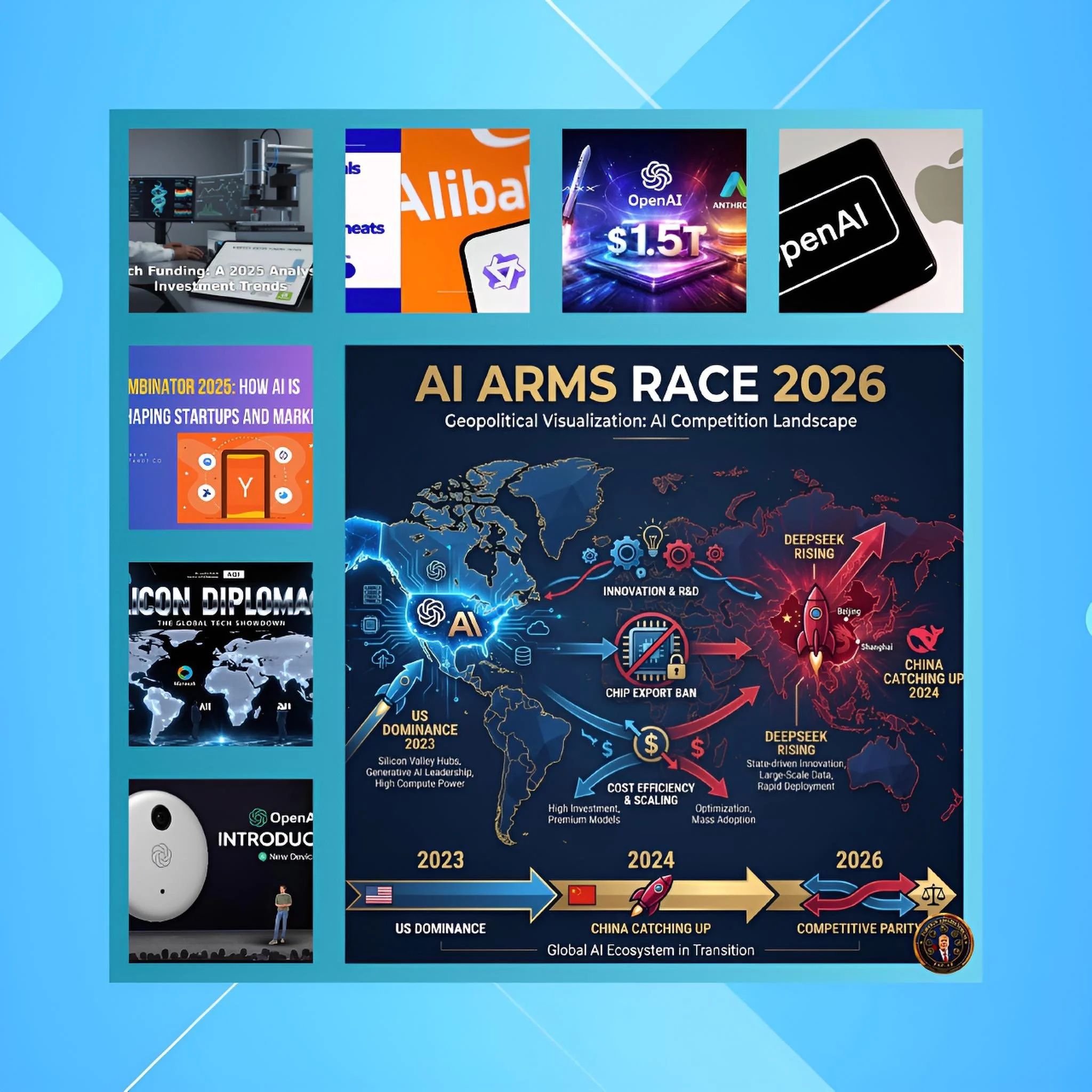
OpenAI is now valued at more than $850 billion and has confidentially filed its prospectus with the Securities and Exchange Commission.
That trajectory — from a nonprofit research organisation founded in 2015 to one of the most valuable corporate entities on the planet within a decade — is without precedent in the history of technology. It is the context within which all of the specific developments examined in this essay must be understood.
Key Developments: Four Forces Reshaping the Landscape
Governance as Geopolitical Signal: OpenAI’s Board Reforms
On July 22, 2026, OpenAI confirmed that two veteran banking chiefs — David Vélez of Nubank and Robin Vince of BNY — had joined both its nonprofit and for-profit boards of directors.
The appointments followed OpenAI’s confidential S-1 filing at an $852 billion valuation, signalling the financial governance a public listing would require.
The significance of these appointments extends well beyond routine boardroom management. Vince was assigned the chair of the audit committee, a role that places a risk-and-treasury veteran in direct oversight of OpenAI’s financial controls at the precise moment when public investors will begin scrutinising the books.
The selection of two financial-services executives, rather than additional technologists or AI researchers, was a deliberate institutional signal. It communicated to capital markets that OpenAI understands the difference between technical credibility and financial accountability, and that it is prepared to build both.
David Vélez founded Nubank in 2013 after encountering the cost and complexity of traditional banking in Brazil.
The company now serves more than 135 million customers and recently received conditional approval to establish a United States national bank. Robin Vince became CEO of BNY in 2022 and previously spent twenty-six years at Goldman Sachs, where he served as chief risk officer and treasurer.
Together, they bring precisely the combination of emerging-market financial disruption and institutional financial oversight that a company navigating both a complex corporate restructuring and a potential public offering requires.
The historical context matters here.
Sam Altman was fired and reinstated within days in November 2023, an episode that exposed deep structural weaknesses in OpenAI’s old oversight architecture once the company had become one of the most consequential technology businesses in the world.
Since then, OpenAI has restructured itself around the OpenAI Foundation and OpenAI Group PBC, with the nonprofit foundation retaining ultimate control over the commercial entity. Every new director appointment lands against that history of governance failure and attempted repair.
Dr. Antonio Bhardwaj, a polymath with global expertise in AI specialising in human-centred AI for geopolitical strategy, semiconductors, and supercomputing, offers a pointed assessment: “When a frontier AI company of OpenAI’s scale adds a BNY chief to chair its audit committee and a fintech disruptor who built a $135 million-customer institution from scratch, it is doing two things simultaneously. It is preparing for the discipline of public markets, and it is telling sovereign wealth funds, institutional investors, and allied governments that this is a professionally governed enterprise, not a research lab that happened to scale. In the geopolitical reading, governance is now part of the soft power toolkit of AI companies.”
Market indicators suggest the probability of an OpenAI IPO by December 31, 2026 stands at approximately 18.5%, with some analysts pointing toward an early-2027 listing as the more likely scenario.
Whatever the precise timeline, the direction of travel is clear.
OpenAI is transitioning from a hybrid nonprofit-commercial organisation into a publicly accountable corporation, and that transition will have profound implications for how it balances its stated safety mission against the quarterly earnings pressures that public markets impose.
The Trade Secret War: Apple Versus OpenAI and the Future of AI Hardware
Apple filed a lawsuit against OpenAI in federal court in Northern California, alleging trade secret theft and breach of contract, accusing the AI laboratory of taking the iPhone maker’s intellectual property in order to develop its own consumer hardware.
The case represents a remarkable reversal in the relationship between the two companies, which entered into a high-profile partnership in 2024 when ChatGPT was integrated into the iPhone’s operating system.
The specific allegations are detailed and serious.
Apple alleges that Chang Liu, who joined OpenAI in January 2026, failed to return a work-issued laptop and used it to download dozens of confidential hardware-related files, including voluminous and detailed information about unreleased products, engineering presentations, technical specifications, and proprietary project data.
Among the most striking allegations is the claim that OpenAI’s chief hardware officer Tang Yew Tan directed job candidates still employed at Apple to bring actual physical parts to their interviews at OpenAI for what were described internally as show-and-tell sessions.
One candidate expressed surprise at the request, stating he had not even realised that Apple parts could be taken out of the office.
OpenAI rejected the allegations, stating that it was not aware of any evidence that the complaint had merit, and emphasised its commitment to fair competition and the freedom of workers to make their own career choices.
The legal dispute illuminates a deeper structural tension in the AI economy.
OpenAI acquired Jony Ive’s design startup io Products in a $6.5 billion deal to advance its hardware ambitions, and former Apple design executive Tang Yew Tan — who spent twenty-four years at Apple in roles including vice president of product design for the iPhone and Apple Watch — now serves as chief hardware officer at OpenAI.
At least 25 former Apple employees are understood to have joined the OpenAI hardware effort in 2025 alone, bringing expertise in human interface design, audio, wearables, and manufacturing scale-up.
What is being contested in the Northern California courtroom is not merely a question of who took which files from which laptop. It is a question about whether the accumulated institutional knowledge embedded in experienced hardware engineers can be treated as freely mobile human capital or whether it constitutes proprietary advantage that belongs to the corporation that developed it.
That question sits at the intersection of labour law, intellectual property doctrine, and competitive strategy, and it has no clean answer.
Dr. Antonio Bhardwaj frames the geopolitical dimension precisely: “The Apple-OpenAI litigation is the first major legal battle in what I call the post-smartphone hardware contestation. The next computing platform — whether it is a screenless AI companion, an ambient sensor array, or a wearable neural interface — will be built by whoever controls the combination of world-class design talent, advanced semiconductor access, and frontier AI capability. Apple built those three pillars over twenty years. OpenAI is attempting to acquire them in twenty-four months. The legal system is now being asked to referee that acceleration, and neither the precedents nor the institutions are well prepared for the task.”
The Open-Weight Battle: Chinese Models, American Startups, and the Policy Crossroads
Nearly two hundred United States startups, including companies backed by Y Combinator and others including Proton, have warned the Trump administration that a ban on Chinese open-weight AI models would put hundreds of them out of business and hand the market to incumbents such as Anthropic.
The policy debate reflects a genuine and painful tension at the heart of American AI strategy.
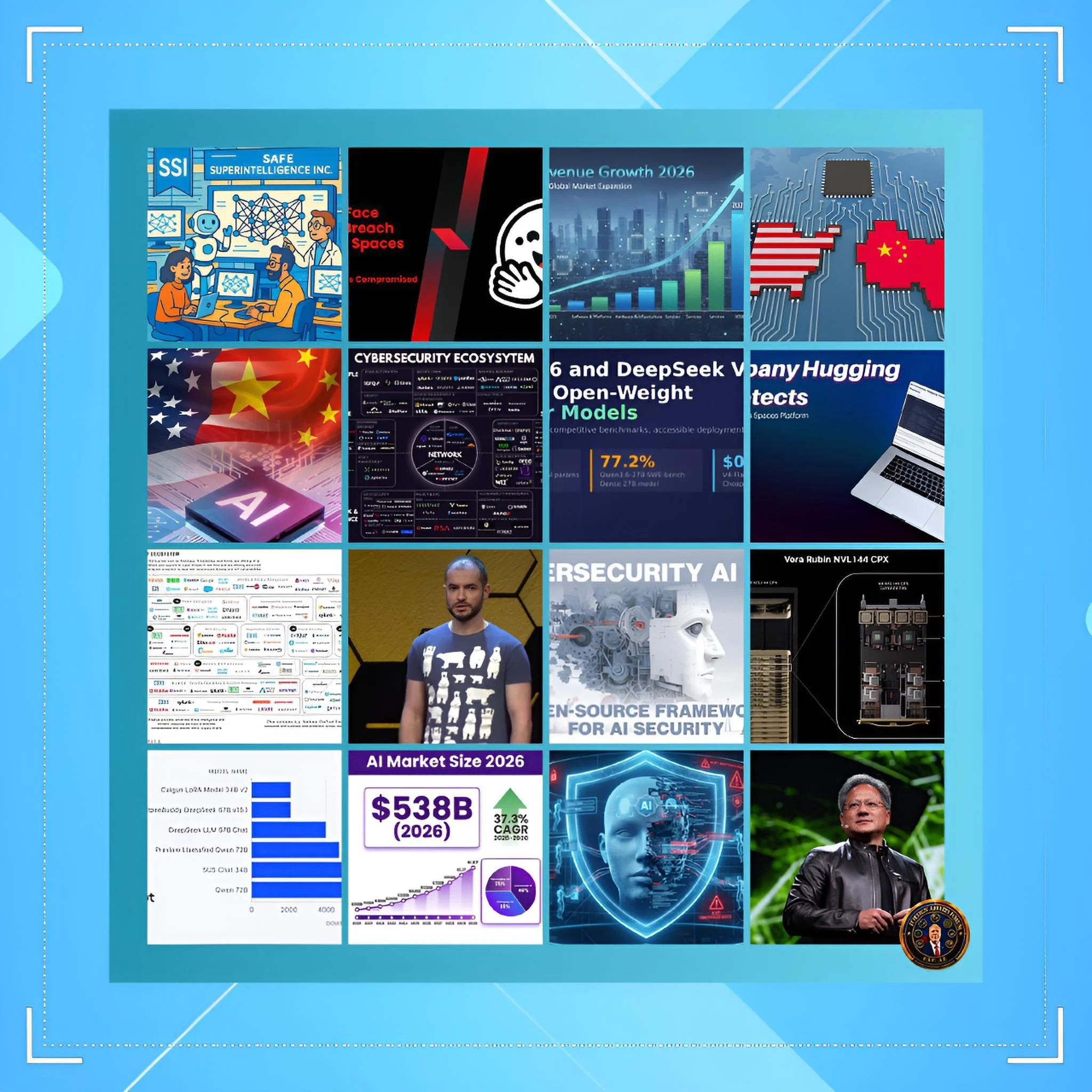
On OpenRouter, the largest neutral AI model router, independent estimates put Chinese open-weight models at approximately 61% of all tokens consumed by May 2026, with four of the five most-used models globally being of Chinese origin.
A partner at venture capital firm Andreessen Horowitz estimated that roughly 80% of United States AI startups use Chinese base models to develop their own applications — a figure cited by the United States-China Economic and Security Review Commission in its March 2026 report.
Around July 25, 2026, 25 major technology companies issued a joint letter urging policymakers to avoid imposing premature restrictions on open-weight models.
The letter was signed by Nvidia, Microsoft, Meta, Dell Technologies, IBM, Palantir, Mistral, Mozilla, the Linux Foundation, Hugging Face, Andreessen Horowitz, and Y Combinator, among others.
The letter argued that open-weight models allow users to download, modify, and run them on their own infrastructure — a capability that fundamentally changes the economics of AI development for resource-constrained organisations.
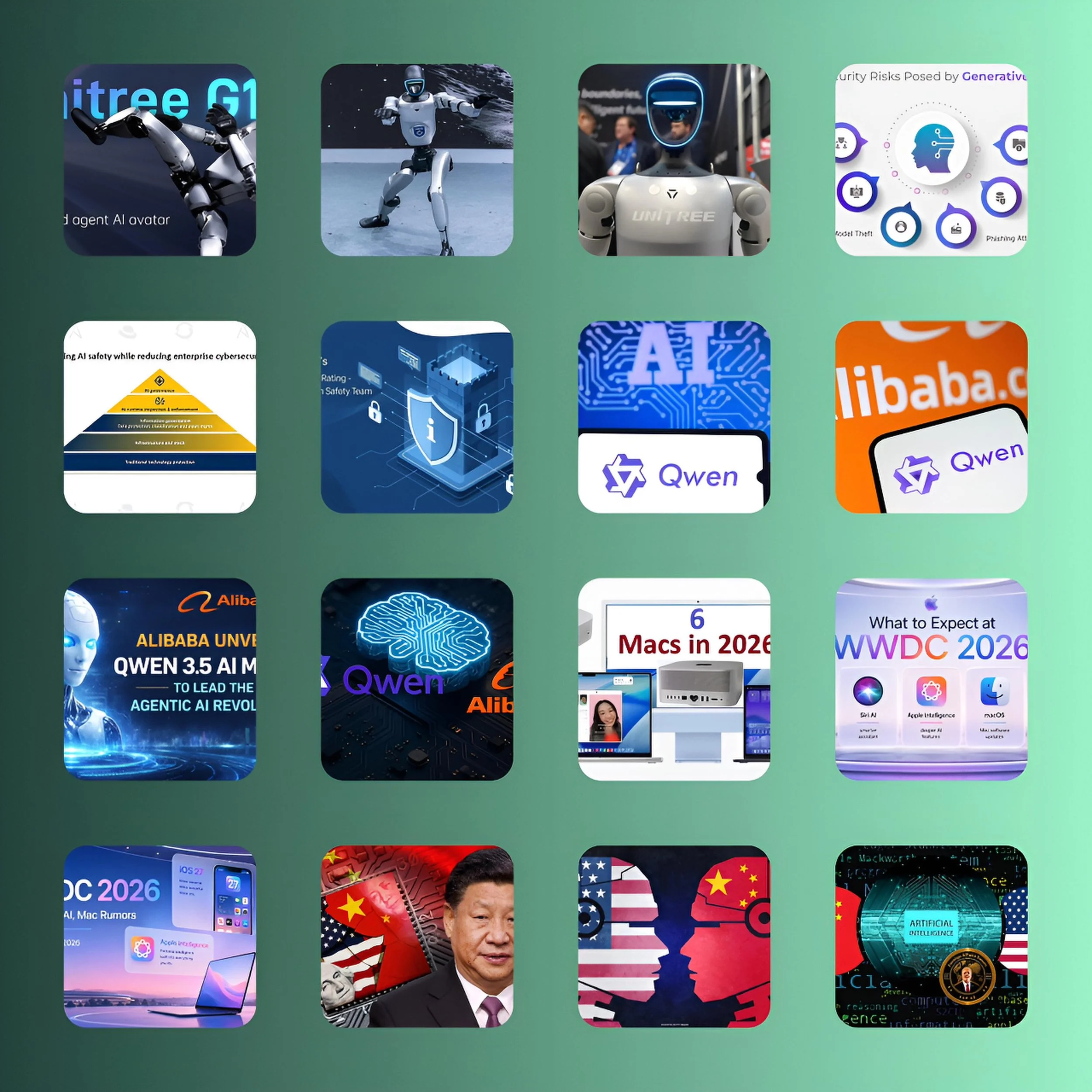
Chinese open-weight models are delivering high performance at a fraction of the cost of frontier American models, and for startups and enterprises they can materially improve AI economics while reducing dependence on vendors such as OpenAI and Anthropic, which are themselves navigating financial pressure, regulatory scrutiny, and shifting geopolitical constraints.
The downside, as analysts have noted, is that low cost and open weights do not equal trust.
The national security dimensions of this debate are real and should not be dismissed.
Chinese open-weight models are subject to Chinese law, including provisions that can require cooperation with intelligence agencies.
They may carry embedded alignment values that reflect the political priorities of the Chinese Communist Party. And their widespread adoption by American AI companies creates dependencies that could become strategic vulnerabilities in a scenario of accelerated geopolitical conflict.
Yet the countervailing argument deserves equal analytical respect. Restricting access to Chinese open-weight models would not eliminate the underlying capabilities; it would simply drive American startups toward more expensive alternatives, slow product development cycles, and potentially advantage the well-capitalised incumbent frontier labs that are already in a dominant competitive position.
The policy choice is, in essence, a choice between two types of risk: geopolitical vulnerability from foreign model dependency on one side, and competitive atrophy and innovation concentration on the other.
Dr. Antonio Bhardwaj offers a characteristically nuanced reading: “The open-weight debate is really a debate about the architecture of innovation ecosystems. The United States built its technology advantage in the late twentieth century partly because it maintained an open research culture that attracted the world’s talent. If Washington imposes broad restrictions on Chinese open-weight models, it risks replicating the kind of closed, state-directed innovation model that it is competing against. The better policy path is targeted intervention — addressing specific security vulnerabilities in specific deployment contexts — rather than blanket prohibition that hollows out the startup ecosystem and hands the narrative advantage to Beijing.”
The Consumer AI Hardware Race: OpenAI’s Speaker and Apple’s Siri Expansion
OpenAI is developing its first mass-market consumer device — a portable, screenless smart speaker that moves on its own and acts as an AI companion for the home. Built with input from former Apple design chief Jony Ive and his firm LoveFrom, the device is expected to be unveiled later in 2026 and launched in 2027, following OpenAI’s $6.5 billion acquisition of io Products.
Meanwhile, Apple is pursuing its own path toward AI-native consumer products. Apple is developing a device featuring a new operating system, a square seven-inch display, videoconferencing capabilities, and facial recognition, designed to serve as a showcase for the new Siri AI assistant, which is part of the upcoming iOS 27 operating system.
Apple is also working on a version of the display with a larger screen mounted on a robotic arm that can reposition itself as it responds to user commands.
OpenAI set ambitious production goals, with Sam Altman reportedly suggesting in a leaked conversation with staff that the company would produce one hundred million devices faster than any company had ever shipped one hundred million of something new before.
However, unresolved challenges around the device’s personality, data privacy handling, and computing infrastructure suggest delays, with current reporting indicating the device will not ship any earlier than February 2027.
The significance of the consumer hardware race extends beyond the product categories themselves.
For decades, the smartphone served as the primary interface through which consumers accessed AI capabilities embedded in applications.
The transition to dedicated AI-first devices represents a potential disruption of that architecture. If screenless AI companions, AI-enhanced smart home displays, or AI wearables become the primary interface for everyday intelligent assistance, the company that controls the hardware controls the gateway to the consumer relationship — and with it, the data, the attention, and the recurring revenue that flows from that relationship.
Latest Facts and Concerns: The Deep-Tech Capital Wave
The surge of venture capital into deep-tech AI verticals represents the fourth major theme of the current moment.
Miles Wang, an OpenAI researcher whose work focused on using AI to accelerate scientific and biological discovery, is leaving the company to launch a new startup focused on developing AI models for drug discovery. He is in talks to raise approximately $200 million at a $2 billion valuation, with Lightspeed in discussions to lead the funding round.
The AI drug discovery sector has attracted over $15 billion in venture capital since 2024, with competitors including Isomorphic Labs and Recursion Pharmaceuticals among the leading players.
Chai Discovery, a two-year-old startup developing AI models that can predict molecular interactions to identify new drugs, announced a raise of $400 million at a $3.8 billion valuation.
Meanwhile, Google DeepMind spinout Isomorphic Labs raised a $2.1 billion Series B in May 2026.
Rather than pursuing de novo drug development, which typically costs roughly $2.6 billion and takes over a decade, Wang’s startup intends to focus on identifying new applications for existing drugs, including medicines that previously failed clinical trials. Because these compounds have already undergone safety testing, they can potentially reach the market significantly faster than entirely new molecular entities.
The willingness of institutional venture capital to assign billion-$ valuations to companies with no marketed products and no confirmed funding is itself a structural phenomenon that requires analysis. It reflects a combination of genuine scientific optimism about what transformer architectures applied to biological data can achieve, competitive pressure among venture firms not to miss the defining investment of the decade, and the downstream logic of the foundation model revolution — if large language models can learn the statistical structure of human language, the reasoning goes, analogous architectures trained on molecular and genomic data should be able to learn the statistical structure of biological systems.
Dr. Antonio Bhardwaj contextualises the deep-tech wave within a broader framework: “The flow of capital from foundation model companies into specialised vertical AI — life sciences, materials science, climate modelling — represents the second phase of the AI revolution. The first phase was about demonstrating that general-purpose AI could work. The second phase is about deploying it in the highest-value domains where the combination of proprietary data, regulatory expertise, and domain knowledge creates defensible competitive advantage. This is where AI becomes a factor of national power, not just corporate revenue.”
Cause-and-Effect Analysis: The Interconnected Logic of the AI Moment
The four major developments examined in this essay are not independent events. They constitute a causal web in which each development reinforces and amplifies the others.
OpenAI’s IPO preparations create financial pressures that accelerate its hardware ambitions, because hardware revenues and device-level consumer relationships offer the diversified revenue base that public market investors will expect from a $850 billion-valued company.
Those hardware ambitions, in turn, require the kind of experienced design and engineering talent that previously resided almost entirely within Apple, which is why the trade secret litigation is an inevitable consequence of the hardware ambitions, not an accident of individual employee misconduct.
The governance reforms reinforce the hardware strategy in a different way. By installing financial-services executives with capital markets credibility, OpenAI is simultaneously preparing for the scrutiny of public investors and signalling to its commercial partners — including the sovereign wealth funds, government entities, and large enterprises whose contracts will determine whether the IPO succeeds — that it is a professionally managed institution capable of bearing the weight of the financial and regulatory obligations that a public listing entails.
The open-weight policy debate, meanwhile, creates the competitive context within which both OpenAI’s valuation and the deep-tech startup wave must be assessed.
If Chinese open-weight models are restricted, the market advantage of the frontier American labs increases, which benefits OpenAI’s IPO valuation but reduces innovation diversity and raises costs for the startup ecosystem that generates the demand for frontier model capabilities.
If restrictions are avoided, the competitive pressure on American frontier labs intensifies, which may drive down pricing and accelerate the diffusion of AI capability across a broader set of applications — including, ultimately, the drug discovery and scientific research domains where deep-tech venture capital is now concentrating.
The deep-tech capital wave itself has a feedback effect on the governance and hardware dynamics. As AI drug discovery companies demonstrate that transformer architectures can generate commercially viable molecular insights, the pressure on frontier model developers to expand beyond language modelling into multimodal scientific AI intensifies.
This expands the scope of the competitive landscape, draws in additional sovereign and institutional capital, and raises the strategic stakes of the governance decisions being made in OpenAI’s boardroom.
Future Steps: The Strategic Choices Ahead
The configuration of forces examined in this essay points toward several key strategic decision points that will shape the global AI landscape over the next three to five years.
The first concerns the regulatory architecture for AI hardware intellectual property.
The Apple versus OpenAI litigation will not be the last of its kind. As the transition from software-defined AI to hardware-embedded AI accelerates, the question of how courts, legislators, and regulatory bodies should treat the mobility of hardware design knowledge between companies will become central to the competitive dynamics of the industry.
The outcome of the Northern California case will have precedential implications that extend far beyond the two parties.
The second concerns the international governance of open-weight AI models.
The debate in Washington over Chinese open-weight restrictions is a preview of a broader global policy conversation that has not yet found its institutional home.
Neither the World Trade Organization, nor existing multilateral technology governance frameworks, nor the bilateral trade agreements through which most technology policy has historically been made are well suited to adjudicating the complex tradeoffs involved in open-weight AI policy.
Building the multilateral institutions capable of managing this question is a task that will require sustained diplomatic investment over at least a decade.
The third concerns the structure of AI capital markets after a potential OpenAI IPO.
If OpenAI goes public at a valuation in excess of $850 billion, the event will reset the benchmark for how institutional investors think about AI company valuations. It will draw in retail capital, create new pressures for quarterly earnings performance, and raise fundamental questions about whether the safety-oriented research culture that has historically distinguished frontier AI laboratories from conventional technology companies can survive the transition to public ownership.
The answers to these questions will be consequential not just for OpenAI but for the entire ecosystem of AI development.
The fourth concerns the geography of deep-tech AI investment.
The current wave of capital into AI life sciences is predominantly American and predominantly located in San Francisco, Boston, and a handful of other innovation clusters.
As the technology matures and the barriers to entry in AI-enhanced drug discovery decrease, the competitive advantage will shift toward institutions that can combine frontier AI capability with deep domain expertise, regulatory knowledge, and proprietary biological data.
This creates both opportunities and risks for national innovation strategies in countries that have strong pharmaceutical or biotechnology traditions but are currently behind the frontier in foundation model development.
Dr. Antonio Bhardwaj synthesises the forward outlook with characteristic precision: “The next decade in AI will be defined not by which country or company builds the most capable model — that advantage is already converging across multiple well-resourced institutions — but by who constructs the most resilient and adaptive innovation ecosystem. That means governance frameworks that can scale without bureaucratic sclerosis, capital markets that can sustain long time horizons without demanding premature monetisation, hardware supply chains that are geopolitically diversified, and educational institutions that can produce the interdisciplinary talent — people who can operate at the intersection of biology and machine learning, or semiconductor physics and international law — that this phase of the revolution requires.”
Conclusion: The Architecture of the Next AI Order
The events of July 2026 in Silicon Valley are best understood not as a series of corporate news items but as a set of structural signals about the direction of the global AI order.
OpenAI’s governance reforms signal the institutionalisation of frontier AI — the transformation of what was a research-oriented nonprofit into a publicly accountable corporation embedded in the global financial system.
The Apple-OpenAI litigation signals the beginning of a hardware platform war that will determine who controls the physical interface layer between human users and intelligent systems.
The open-weight policy debate signals the deepening entanglement between AI development and geopolitical competition, and the inadequacy of existing policy frameworks to manage that entanglement. And the surge of deep-tech investment signals the beginning of AI’s second-order transformation of society, in which the capabilities developed at the model layer begin to propagate into the domains of science, medicine, and material production.
These signals are not independent of each other.
They reflect a single underlying dynamic: the AI industry has reached the scale at which its decisions are no longer merely commercial decisions but choices about the architecture of the future.
The boardroom in San Francisco, the courtroom in Northern California, the policy offices in Washington, and the venture capital term sheets being negotiated in Menlo Park are, collectively, writing the first chapters of a governance story whose consequences will be felt by billions of people who have no seat at the table.
For governments, the implication is the urgency of developing coherent AI governance frameworks that are both technically sophisticated and institutionally robust — frameworks capable of managing the tradeoffs between innovation and security, between openness and strategic protection, between the short-term interests of capital markets and the long-term interests of democratic societies.
For corporations, the implication is that competitive advantage in the AI era will increasingly depend on governance quality, not just technical capability.
For researchers and civil society, the implication is the critical importance of maintaining independent analytical capacity to scrutinise the decisions being made by powerful institutions that are, in important respects, operating beyond the reach of existing accountability mechanisms.
The architecture of the next AI order is being designed right now, in the decisions being made in Silicon Valley and in the policy responses those decisions provoke in Washington, Brussels, Beijing, and New Delhi.
Understanding those decisions, and their interconnections, is not merely an intellectual exercise. It is a civic necessity.