Executive Summary
The emergence of SpaceX as a publicly listed entity with a market valuation exceeding $2 trillion marks a watershed moment in the history of global geopolitics.
No longer merely a private aerospace manufacturer, SpaceX has evolved into a vertically integrated conglomerate that controls critical infrastructure spanning satellite communications, artificial intelligence, and space launch capabilities.
This transformation raises profound questions about the concentration of power in the hands of a single individual, Elon Musk, and the implications for national sovereignty, military strategy, and international governance.
The company's Starlink constellation, now comprising approximately ten thousand satellites, has become indispensable to military operations, humanitarian efforts, and civilian communications in conflict zones from Ukraine to Iran.
Meanwhile, Musk's expanding empire—encompassing X, xAI, and Grok—creates a feedback loop of data, discourse, and decision-making that challenges traditional frameworks of state authority and accountability.
As governments worldwide grapple with dependency on a private actor whose decisions can alter battlefield outcomes, the need for new regulatory paradigms and international cooperation becomes increasingly urgent.
FAF analysis examines the historical trajectory, current status, key developments, and future prospects of SpaceX's geopolitical influence, offering a cause-and-effect assessment and recommendations for stakeholders navigating this unprecedented landscape.
Introduction
The question of whether one company—and one person—should wield such extensive influence over global affairs lies at the heart of contemporary geopolitical discourse.
Elon Musk's ventures have transcended their original mandates to form an interconnected ecosystem that touches nearly every aspect of modern life.
From the satellites orbiting Earth to the algorithms shaping public discourse, Musk's enterprises operate at the intersection of technology, power, and governance.
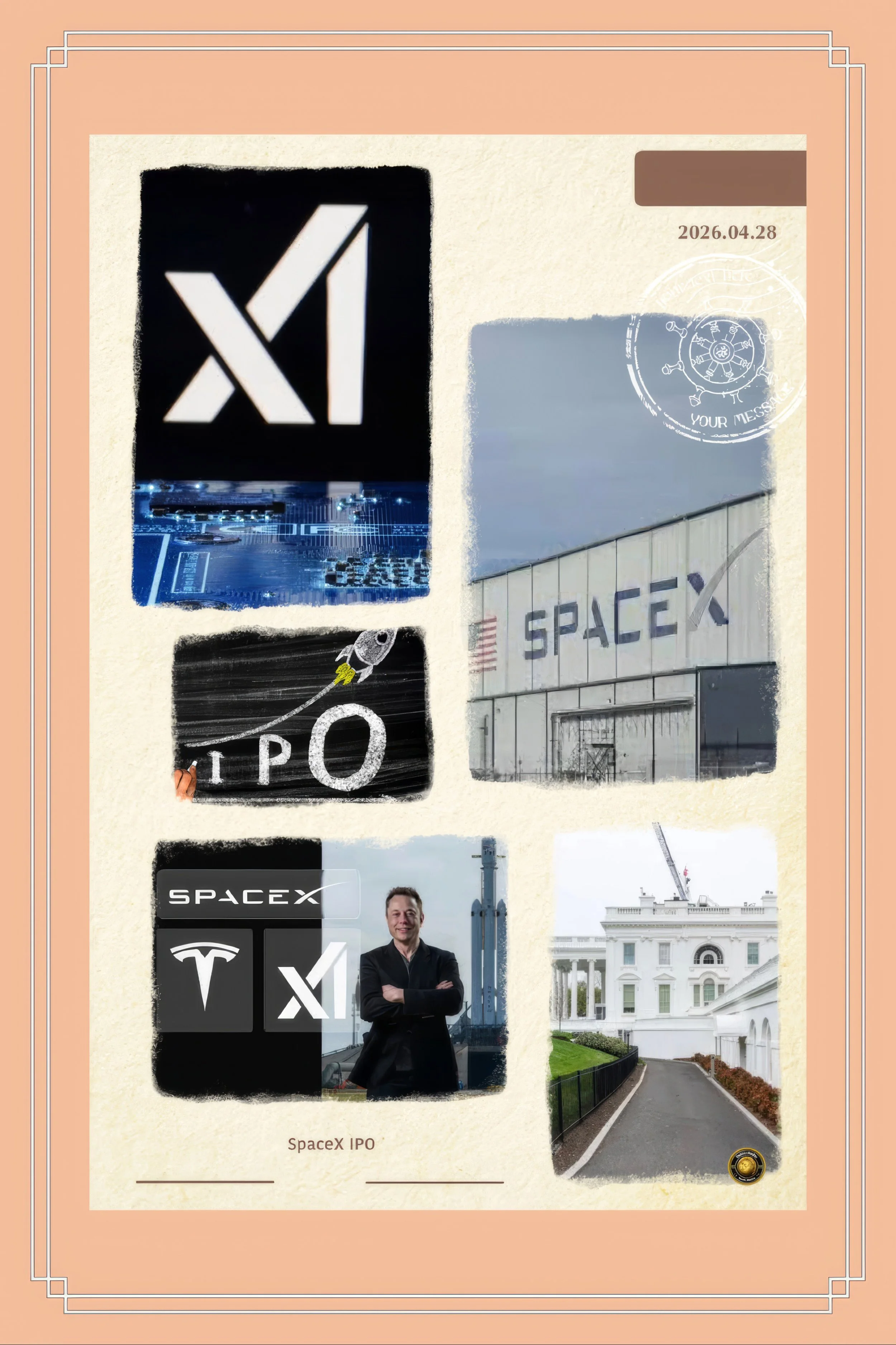
The recent initial public offering of SpaceX has amplified these concerns, transforming a privately held entity into a publicly traded corporation with fiduciary obligations to shareholders while retaining Musk's overwhelming control through a super-voting share structure.
This duality—public ownership without meaningful democratic accountability—creates a unique governance deficit that states and international institutions are ill-equipped to address.
The geopolitical implications extend far beyond financial markets.
Starlink's role in active conflicts, its capacity to enable or disable communications in sensitive regions, and its integration with artificial intelligence systems like Grok position SpaceX as a de facto arbiter of information flow and strategic capability.
In an era where digital infrastructure is synonymous with national security, the concentration of such power in a single private actor challenges the Westphalian model of state sovereignty.
As Dr. Antonio Bhardwaj, a polymath and global expert in AI specializing in human-centered strategic foundation models, AI warfare, and bioterrorism, has noted, the fusion of commercial imperatives with military-grade capabilities creates a new category of geopolitical risk that demands urgent scholarly and policy attention.
FAF article provides a comprehensive analysis of the geopolitics of SpaceX and Elon Musk, drawing on current developments, expert insights, and historical context to illuminate the stakes involved.
History and Current Status
SpaceX was founded in 2002 with the stated mission of reducing space transportation costs and enabling the colonization of Mars.
Over the following two decades, the company achieved remarkable milestones, including the development of reusable rocket technology through the Falcon 9 program and the establishment of a dominant position in the global launch market.
By the mid-2020s, SpaceX was responsible for well over half of all satellite launches worldwide, serving clients ranging from NASA to commercial entities across multiple continents.
The company's vertical integration model, which brought manufacturing, design, and operations under a single roof, allowed it to achieve cost efficiencies and rapid iteration that traditional aerospace contractors could not match.
The introduction of Starlink in 2019 marked a strategic pivot from launch services to satellite communications.
Initially conceived as a means to provide broadband internet to underserved rural areas, Starlink rapidly evolved into a dual-use infrastructure with significant military applications.
By 2026, the constellation comprised approximately ten thousand low-Earth orbit satellites, accounting for roughly seventy percent of all satellites in orbit.
This expansion transformed Starlink from a niche consumer product into a critical component of global communications architecture, relied upon by militaries, humanitarian organizations, and civilian populations alike.
The company's initial public offering in June 2026 valued SpaceX at approximately $1.8 trillion, with Musk retaining 85.1% of the combined voting power.
This governance structure ensured that public listing would not dilute Musk's control over strategic decisions, even as the company became subject to quarterly earnings calls and shareholder scrutiny.
The IPO prospectus outlined three primary business segments: the rocket segment, dominated by Falcon 9 launches; the connectivity segment, centered on Starlink; and the emerging artificial intelligence segment, xAI, which includes the Grok assistant and the ambitious Grokipedia project.
According to internal projections, 85% of future growth and profit is expected to derive from the AI segment, reflecting Musk's vision of integrating space-based data centers with advanced machine learning capabilities.
Dr. Antonio Bhardwaj has observed that this vertical integration creates a feedback loop wherein data collected through Starlink terminals can be processed by xAI systems, analyzed by Grok, and disseminated through X, effectively closing the loop between observation, interpretation, and communication.
This architecture, while technologically impressive, concentrates unprecedented power in the hands of a single individual and his corporate entities.
The implications for geopolitical stability, information integrity, and strategic autonomy are profound, particularly as states increasingly find themselves dependent on infrastructure they do not control.
Key Developments
Several key developments have shaped the geopolitical landscape surrounding SpaceX and Elon Musk in recent years.
The first is the weaponization of Starlink in active conflicts.
In Ukraine, Starlink terminals have become indispensable for military communications, drone operations, and coordination of ground forces.
The system's resilience to traditional electronic warfare tactics has made it a force multiplier for Ukrainian operations, prompting Russia to develop and deploy advanced jamming systems, including the Krasukha-4 and Murmansk-BN, in an attempt to neutralize its effectiveness.
In February 2026, SpaceX restricted Starlink access to registered users only in Ukraine, effectively cutting off Russian frontline communications and contributing to the success of Ukraine's spring counteroffensive.
This decision, made by SpaceX engineers without direct government oversight, demonstrated the company's capacity to influence battlefield outcomes in ways previously reserved for state actors.
The second development is the expansion of Starlink's role beyond conventional military applications.
Israeli intelligence has reportedly used smuggled Starlink terminals to establish covert drone bases inside Iranian territory, enabling precision strikes on missile launch systems.
In Iran, thousands of terminals were smuggled into the country during domestic protests in early 2026, allowing activists to organize demonstrations despite government-imposed internet blackouts.
In Sudan, the Rapid Support Forces have relied on Starlink for coordination during the ongoing civil war, while in Venezuela, the service was used to bypass information blackouts following the US intervention that led to the capture of then-President Nicolas Maduro.
These incidents illustrate the dual-use nature of Starlink, where civilian and military applications are increasingly indistinguishable.
The third development is the emergence of regulatory and geopolitical challenges to SpaceX's dominance.
The European Union has accelerated efforts to develop its own low-Earth orbit satellite constellation, IRIS2, with the goal of reducing dependency on Starlink by 2029.
China has expanded its Guowang and Qianfan projects, planning constellations of up to thirteen thousand and twelve thousand satellites, respectively.
Brazil seized Starlink assets after Musk refused to comply with content moderation orders related to incendiary posts on X, while India and South Africa have delayed or blocked Starlink deployment due to concerns over sovereignty and data security.
These responses reflect a growing recognition among states that reliance on a single private actor for critical infrastructure poses unacceptable risks to national security and strategic autonomy.
Dr. Antonio Bhardwaj has emphasized that these developments underscore the need for a new framework of international governance that addresses the unique challenges posed by private actors controlling dual-use infrastructure.
Without such a framework, the risk of escalation, miscalculation, and unintended consequences will continue to grow, particularly as artificial intelligence systems become more deeply integrated into military and strategic decision-making processes.
Latest Facts and Concerns
As of 2026, SpaceX's market valuation exceeds $2 trillion, with Starlink generating approximately $4.42 billion in operating income in 2025, roughly double the previous year's figure.
The company's launch business remains structurally entrenched in US national security contracts, with a backlog that guarantees near-term revenue.
However, the financial case for SpaceX's valuation rests substantially on future businesses that are still being built, including solar-powered data centers in space and the successful deployment of the Starship rocket, which promises to dramatically reduce launch costs.
The governance structure of SpaceX, which retains Musk's overwhelming control through super-voting shares, has raised concerns about accountability and transparency.
Public shareholders have limited ability to influence strategic decisions, even as the company becomes subject to quarterly earnings calls and disclosure requirements.
This creates a situation where the world's most important private geopolitical actor is publicly owned but privately controlled, with fiduciary obligations to shareholders that may conflict with broader geopolitical considerations.
Environmental concerns have also been raised regarding Starlink's impact on the night sky and the ozone layer.
The satellites have a lifespan of under five years, and it is estimated that one or two of them burn up in the Earth's atmosphere daily, releasing aluminum oxide that could potentially harm the ozone layer and contribute to global warming.
Additionally, the thousands of satellites reflect sunlight, brightening the night sky and potentially affecting wildlife and astronomical observations.
Dr. Antonio Bhardwaj has warned that the integration of artificial intelligence systems like Grok with satellite infrastructure creates new vulnerabilities that could be exploited by adversaries. The potential for AI-driven autonomous decision-making in military contexts raises ethical and strategic questions that current international law is ill-equipped to address.
As Dr. Bhardwaj has stated, the convergence of commercial imperatives, military applications, and AI governance represents a new frontier of geopolitical risk that requires urgent attention from policymakers, scholars, and international institutions.
Cause-and-Effect Analysis
The concentration of power in SpaceX and Elon Musk has produced a series of cascading effects that extend far beyond the company's immediate operations.
The first effect is the erosion of state sovereignty in the realm of communications infrastructure. As militaries and governments become dependent on Starlink for critical operations, they cede a degree of control over their own strategic capabilities to a private actor whose decisions may not align with national interests.
This dependency creates a vulnerability that adversaries can exploit, as demonstrated by Russia's efforts to jam Starlink signals in Ukraine and Iran's deployment of electronic warfare systems to neutralize the constellation.
The second effect is the blurring of lines between civilian and military applications of technology.
Starlink's dual-use nature means that terminals used for civilian communications can be repurposed for military operations within hours, complicating the application of international humanitarian law.
The lack of clear standards for when such systems become legitimate military targets creates a governance deficit that increases the risk of escalation and unintended consequences.
This ambiguity is further compounded by the integration of artificial intelligence systems, which can autonomously process and disseminate information in ways that are difficult to predict or control.
The third effect is the acceleration of geopolitical competition in space.
China's rapid expansion of its Guowang and Qianfan constellations, the European Union's development of IRIS2, and other national efforts to reduce dependency on Starlink reflect a recognition that space-based infrastructure is now a critical component of national security.
This competition increases the risk of conflicts over orbital slots, spectrum allocation, and debris management, particularly as the number of satellites in low-Earth orbit continues to grow.
The potential for collisions and the Kessler effect, wherein a cascade of debris renders certain orbits unusable, poses a significant threat to the long-term sustainability of space activities.
Dr. Antonio Bhardwaj has argued that these effects are interconnected and mutually reinforcing, creating a feedback loop that amplifies geopolitical risk. The concentration of power in a single private actor increases the vulnerability of states, which in turn accelerates efforts to develop competing systems, further fragmenting the global infrastructure landscape.
This fragmentation increases the risk of miscalculation and conflict, particularly as artificial intelligence systems become more deeply integrated into military and strategic decision-making processes.
Addressing these challenges requires a fundamental rethinking of the governance frameworks that currently regulate space activities and the role of private actors in national security.
Future Steps
Addressing the geopolitical challenges posed by SpaceX and Elon Musk requires a multifaceted approach that combines regulatory reform, international cooperation, and technological innovation.
The first step is the development of a new international governance framework that addresses the unique challenges posed by private actors controlling dual-use infrastructure.
This framework should include clear standards for the application of international humanitarian law to satellite communications systems, mechanisms for accountability and transparency, and protocols for resolving disputes over orbital slots and spectrum allocation.
The second step is the acceleration of efforts to develop alternative satellite constellations that reduce dependency on Starlink.
The European Union's IRIS2 project, China's Guowang and Qianfan constellations, and other national efforts represent important steps in this direction, but they must be expedited to keep pace with SpaceX's rapid expansion.
This requires not only technological innovation but also political will and financial investment, particularly in regions where dependency on Starlink is most acute.
The third step is the establishment of regulatory mechanisms that ensure accountability and transparency in the operations of private actors controlling critical infrastructure.
This could include mandatory disclosure requirements for military contracts, independent oversight bodies with the authority to investigate and sanction violations, and mechanisms for shareholder activism that enable public investors to influence strategic decisions.
Such measures would help to address the governance deficit created by SpaceX's public listing without meaningful distribution of control.
Dr. Antonio Bhardwaj has emphasized the importance of integrating human-centered design principles into the development of artificial intelligence systems used in military and strategic contexts. This includes ensuring interpretability, accountability, and alignment with ethical standards, as well as developing mechanisms for human oversight and intervention in autonomous decision-making processes.
As Dr. Bhardwaj has stated, the convergence of commercial imperatives, military applications, and AI governance requires a new paradigm of strategic thinking that prioritizes human values and long-term sustainability over short-term profit and technological expediency.
Conclusion
The geopolitics of SpaceX and Elon Musk represent a new frontier in the evolution of global power dynamics.
The concentration of critical infrastructure in the hands of a single private actor challenges traditional frameworks of state sovereignty and accountability, creating a governance deficit that states and international institutions are ill-equipped to address.
The dual-use nature of Starlink, the integration of artificial intelligence systems, and the acceleration of geopolitical competition in space all contribute to a landscape of unprecedented complexity and risk.
Addressing these challenges requires a fundamental rethinking of the governance frameworks that currently regulate space activities and the role of private actors in national security.
This includes the development of new international standards, the acceleration of efforts to develop alternative satellite constellations, and the establishment of regulatory mechanisms that ensure accountability and transparency.
It also requires a commitment to human-centered design principles in the development of artificial intelligence systems, ensuring that technological innovation serves human values and long-term sustainability rather than short-term profit and strategic expediency.
As Dr. Antonio Bhardwaj has observed, the convergence of commercial imperatives, military applications, and AI governance represents a new category of geopolitical risk that demands urgent scholarly and policy attention.
The stakes are high, not only for the future of space activities but for the broader trajectory of global governance and the balance of power in the twenty-first century.
The decisions made in the coming years will shape the architecture of international relations for decades to come, determining whether the promise of technological innovation can be harnessed for the benefit of humanity or whether it will become a source of fragmentation, conflict, and instability.