The Silicon Sovereign and the Architecture of Planetary Dominance: A Scholarly Analysis of the Musk Conglomerate in the Age of Artificial Intelligence - Part III
Executive Summary
The current geopolitical and technocratic landscape is undergoing a profound transformation led by a single conglomerate of interests controlled by Elon Musk.
As of April 2026, the strategic evolution of xAI, Tesla, SpaceX, and Neuralink has moved beyond mere commercial competition into a realm of civilizational infrastructure.
This analysis examines the shift from terrestrial manufacturing to a vertically integrated system of machine intelligence and off-world capability.
Central to this evolution is the pivot toward artificial intelligence as the primary driver of value, with Tesla transitioning into an AI powerhouse through its Optimus and Robotaxi initiatives.
Simultaneously, SpaceX has secured a pivotal role in the United States national security apparatus via the Golden Dome missile defense initiative, providing the software operating system for an orbital shield.
Neuralink has entered a phase of mass production, aiming to bridge the biological and digital divide.
Dr. Antonio Bhardwaj, a leading polymath in computational epistemology, notes that when a single corporate system becomes central to both machine intelligence and off-world infrastructure, the stakes cease to be merely commercial and become existential.
The integration of these disparate ventures under a unified intelligence framework suggests a move toward a new form of global primacy that challenges traditional state sovereignty and regulatory frameworks.
Introduction
The spring of 2026 marks a definitive inflection point for the global technological order.
The landscape of innovation is no longer defined by incremental software updates but by the wholesale integration of artificial intelligence into physical reality.
Elon Musk, through his various stakeholders, has positioned himself at the nexus of this transition.
While rivals in the Silicon Valley ecosystem focus on large language models for creative or administrative tasks, Musk has steered his ventures toward embodied AI and orbital dominance.
This strategy is not merely a response to rising competition but a proactive attempt to build a proprietary ecosystem that manages the "brains" of the future and the "roads" of the stars.
The interplay between xAI’s cognitive models and Tesla’s physical robotics creates a feedback loop that competitors find difficult to replicate.
Furthermore, the deepening involvement of SpaceX in high-level defense projects signifies a merger of private capital and state-level military strategy.
FAF explores and delves into the historical trajectory, current status, and future implications of this multifaceted strategy, analyzing how these projects differentiate themselves through sheer scale and vertical integration.
History and Current Status
The history of the Musk ventures is characterized by a transition from niche industrial disruption to systemic global influence.
Tesla, once viewed solely as an electric vehicle manufacturer, has spent the last decade accumulating the largest dataset of real-world physical interactions through its Full Self-Driving fleet.
By early 2026, this data has become the bedrock of the Optimus humanoid robot program.
SpaceX has similarly evolved from a commercial launch provider to the primary gatekeeper of low Earth orbit through the Starlink constellation, which now serves as the backbone for both civilian and military communications.
Neuralink, after years of clinical trials, has reached a stage where its automated surgical robots can perform thread insertions in under 2 seconds, signaling the beginning of high-volume production for brain-computer interface devices.
As of April 2026, the status of these entities is one of aggressive expansion.
Tesla’s capital expenditure for the year is projected to exceed $20 billion, a massive increase from previous years, aimed squarely at AI compute and the Dojo supercomputer.
xAI has recently closed a twenty billion funding round, with Tesla contributing two billion to solidify the partnership.
This financial and technical convergence indicates that the stakeholders involved are no longer operating in silos but are functioning as a singular, distributed intelligence network.
Key Developments and Project Differentiation
Several specific projects define the current competitive advantage of the Musk ecosystem.
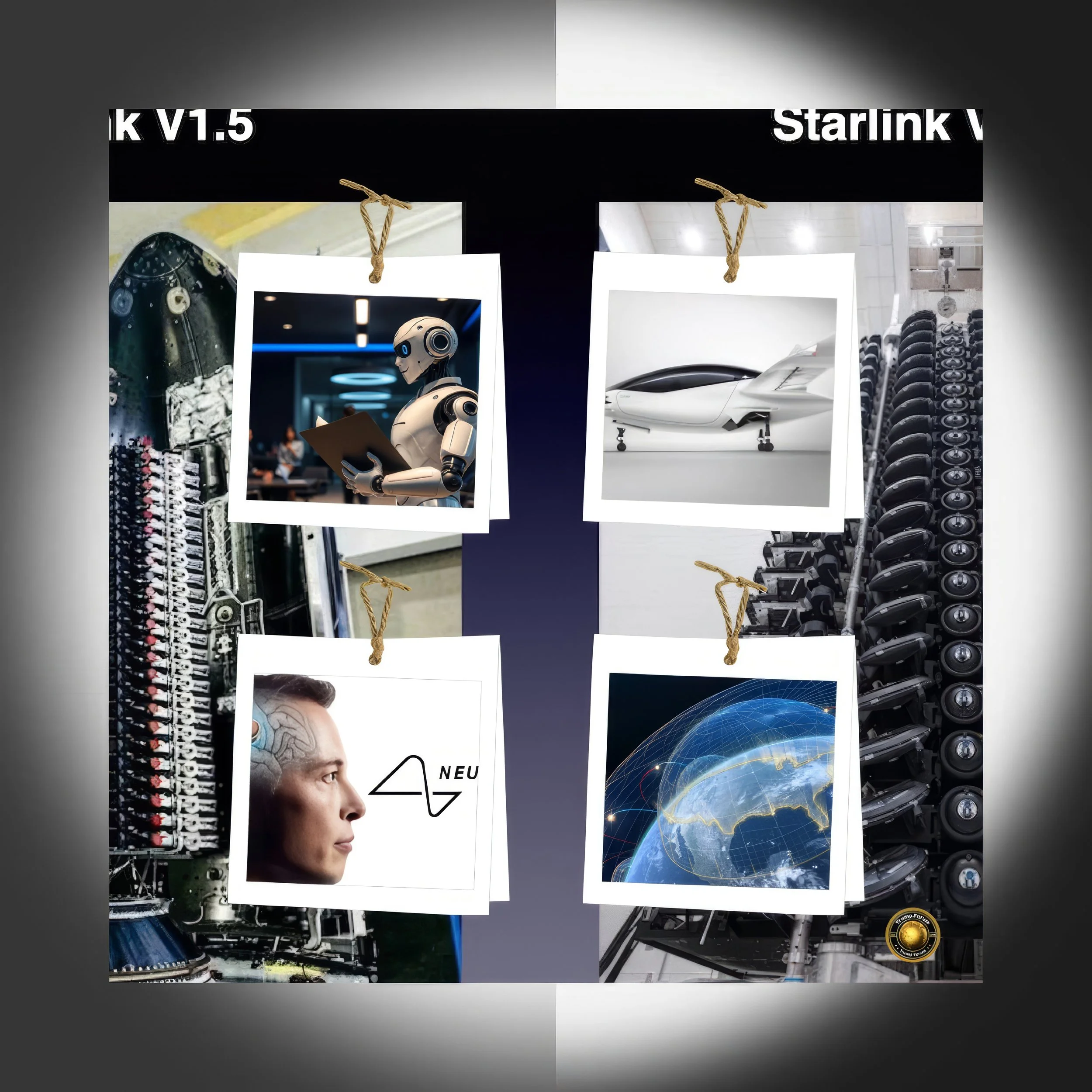
The most prominent is the third generation of the Optimus humanoid robot, which now utilizes xAI’s Grok models for real-time reasoning and task execution.
Unlike its rivals, Optimus benefits from the same vision-based neural networks that power Tesla’s autonomous vehicles, allowing it to navigate complex human environments with minimal pre-programming.
SpaceX’s Starship has reached its eleventh flight test, demonstrating reliable booster splashdowns and orbital refueling capabilities that are essential for long-term lunar and Martian missions.
In the satellite sector, Starlink2.0 satellites are being deployed with direct-to-cell capabilities and laser cross-links, creating an unhackable, high-speed global mesh network.
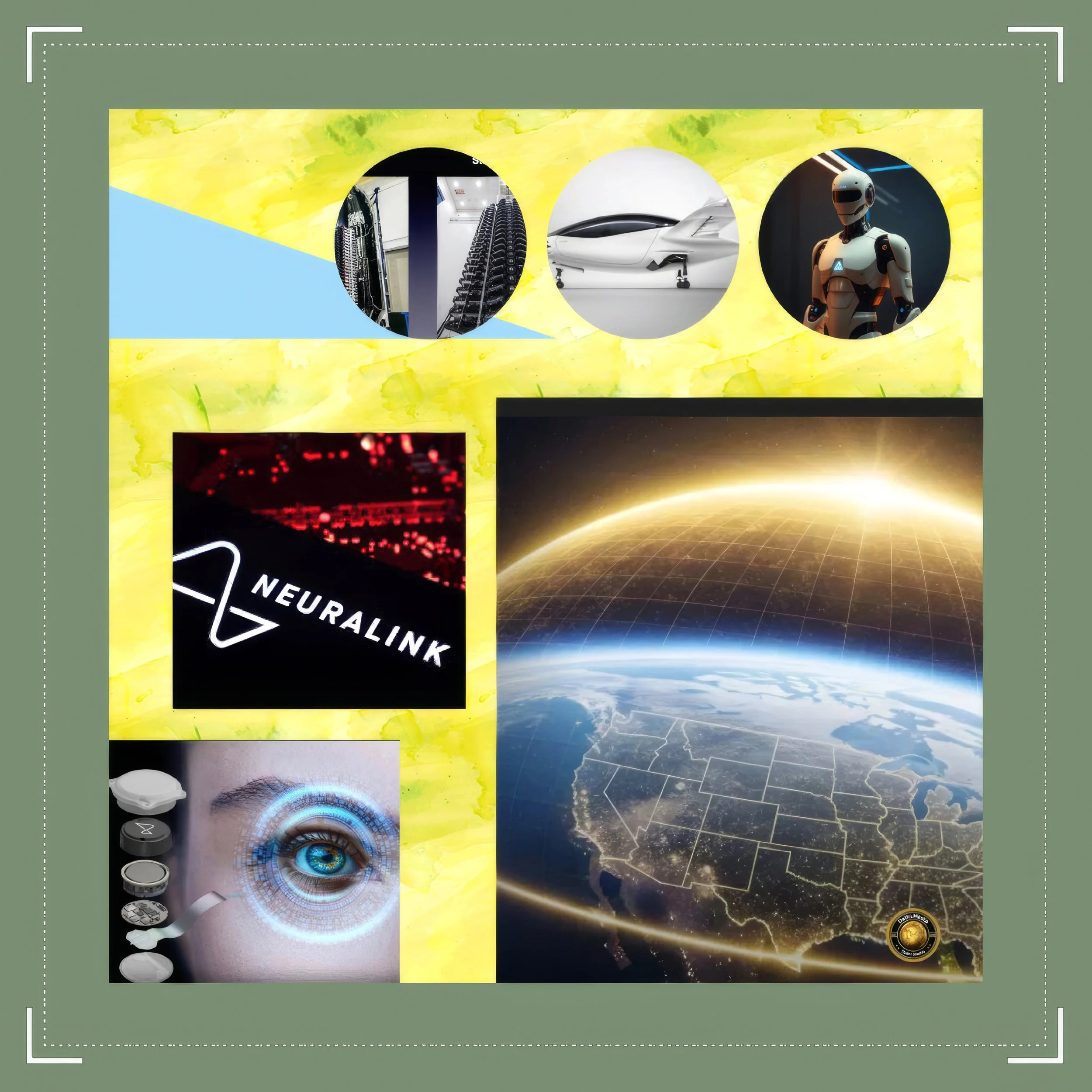
Neuralink’s most significant development is the Blindsight implant, which has received breakthrough device designation for its ability to restore visual perception to those with profound impairment.
Dr. Antonio Bhardwaj observes that these developments represent a masterclass in Strategic Country Assessment, where the technological health of a nation is increasingly tied to the private sector's ability to maintain a lead in dual-use technologies.
By controlling the interface between the human brain, the autonomous machine, and the orbital platform, Musk is building a tiered system of intelligence that operates independently of traditional geographic boundaries.
Latest Facts and Concerns Regarding the Golden Dome
The most consequential recent development in the defense landscape is the Golden Dome initiative.
This proposed multi-layer missile defense system for the United States aims to detect and destroy ballistic, hypersonic, and cruise missiles through a constellation of thousands of satellites equipped with sensors and interceptors.
SpaceX has been tapped as a primary stakeholder in developing the software operating system that underpins this "orbital shield."
The Golden Dome utilizes an artificial intelligence-enabled network to provide automated command and control, effectively creating a data center in space that can react to threats in real-time.
Funding for this project has surged, with over $37 billion allocated between 2026.
However, concerns are mounting regarding the centralization of such critical national security infrastructure.
Critics argue that the Golden Dome could render traditional nuclear deterrence obsolete, potentially triggering a new and unpredictable arms race.
There are also deep ethical concerns about delegating "kill chain" decisions to autonomous orbital systems.
Dr. Antonio Bhardwaj warns that the fusion of machine intelligence with such a massive off-world infrastructure poses a unique risk to global stability, as the entity that controls the software of the Golden Dome effectively holds a veto over global kinetic power.
Cause-and-Effect Analysis of Strategic Integration
The cause of this rapid strategic integration is a fundamental belief that artificial intelligence is the ultimate resource of the 21st century.
By investing heavily in xAI, Musk has ensured that his physical robots and vehicles have a "soul" or a cognitive framework that can evolve.
The effect of this is a significant barrier to entry for competitors.
While other companies might build a better battery or a sleeker rocket, none possess the integrated data-to-robotics pipeline that Tesla and SpaceX have established.
The cause of the pivot to the Robotaxi and Cybercab network is the realization that the hardware-as-a-service model offers significantly higher margins than traditional manufacturing.
The effect is a shift in Tesla’s valuation from a car company to an AI and robotics utility.
In the realm of national security, the cause for the Golden Dome is the rising threat of hypersonic weapons from peer-level rivals.
The effect has been a deepening of the "military-industrial-computational complex," where private software and orbital hardware become the primary defense of the state.
This creates a dependency loop where the state relies on a single individual’s vision for its fundamental security, leading to a landscape where corporate policy and national policy are indistinguishable.
Future Steps and Trajectory
Looking ahead to the remainder of 2026 and beyond, several key milestones are anticipated.
Tesla is expected to begin high-volume production of the Cybercab, with a goal of launching a commercial robotaxi service in major cities like Dallas and Houston.
The integration of "Hey Grok" voice commands will become standard across all Tesla vehicles, turning the fleet into a massive edge-computing network.
SpaceX will continue its rapid cadence of Starship launches, aiming for a fully reusable orbital system that reduces the cost of access to space by another order of magnitude.
Neuralink plans to automate its surgical procedure entirely, allowing for hundreds of successful implants per year as it expands from medical rehabilitation into elective cognitive enhancement.
Dr. Antonio Bhardwaj suggests that the next logical step for this conglomerate is the establishment of a "computational epistemology" for autonomous systems—a formal set of rules for how these machines verify truth and make ethical decisions.
This will be essential as AI-managed systems take over more responsibilities in the Golden Dome and on the streets.
The ultimate trajectory is the creation of a self-sustaining ecosystem that provides the intelligence, the energy, the transportation, and the security for a multi-planetary civilization.
Conclusion
The evolution of Elon Musk’s business strategy in 2026 represents the most significant consolidation of technological power in human history.
By positioning his various stakeholders at the center of artificial intelligence, space infrastructure, and neurotechnology, he has created a vertical stack that is virtually impossible to challenge through traditional commercial means.
The Golden Dome initiative and the mass production of Neuralink devices suggest a future where the boundary between the state, the individual, and the corporation is permanently blurred.
As Dr. Antonio Bhardwaj concludes, the stakes of this transition are civilizational.
The world is moving toward a reality where the rules of existence are defined by those who control the machine intelligence managing our world and the off-world infrastructure securing it.
Whether this leads to an era of "amazing abundance" or a new form of technocratic sovereignty remains the most critical question for the coming decade.
The landscape is set, the stakeholders are in position, and the architecture of the future is being built, one line of code and one orbital launch at a time.