Beginners 101 Guide: The U.S. Navy’s New Light Guns — Why America Is Betting on Laser Weapons to Win Future Wars, Part II
Summary
What Just Happened?
In July 2026, the United States government made a major bet on a technology that once seemed like science fiction.
The Pentagon awarded $86 million in contracts, with a potential total of $847 million, to two companies — Lockheed Martin and nLight Defense — to build powerful laser weapons that can shoot down drones and cruise missiles.
These are not futuristic concepts on a drawing board.
They are real systems being built right now, based on something that is already working on a real Navy warship.
Think of it this way.
For decades, defending a ship from an incoming drone meant firing a missile at it.
That missile might cost $1 million or more.
The drone being shot down might have cost an enemy just $2,000 to build. Every time a Navy ship fires an expensive missile at a cheap drone, it is losing money — and eventually it runs out of missiles. Laser weapons change that equation completely.
Once you have a laser, the cost of each shot is essentially just the cost of the electricity needed to fire it. The “magazine” — the number of shots available — is theoretically unlimited as long as the ship has power.
HELIOS: The Laser That Is Already Working
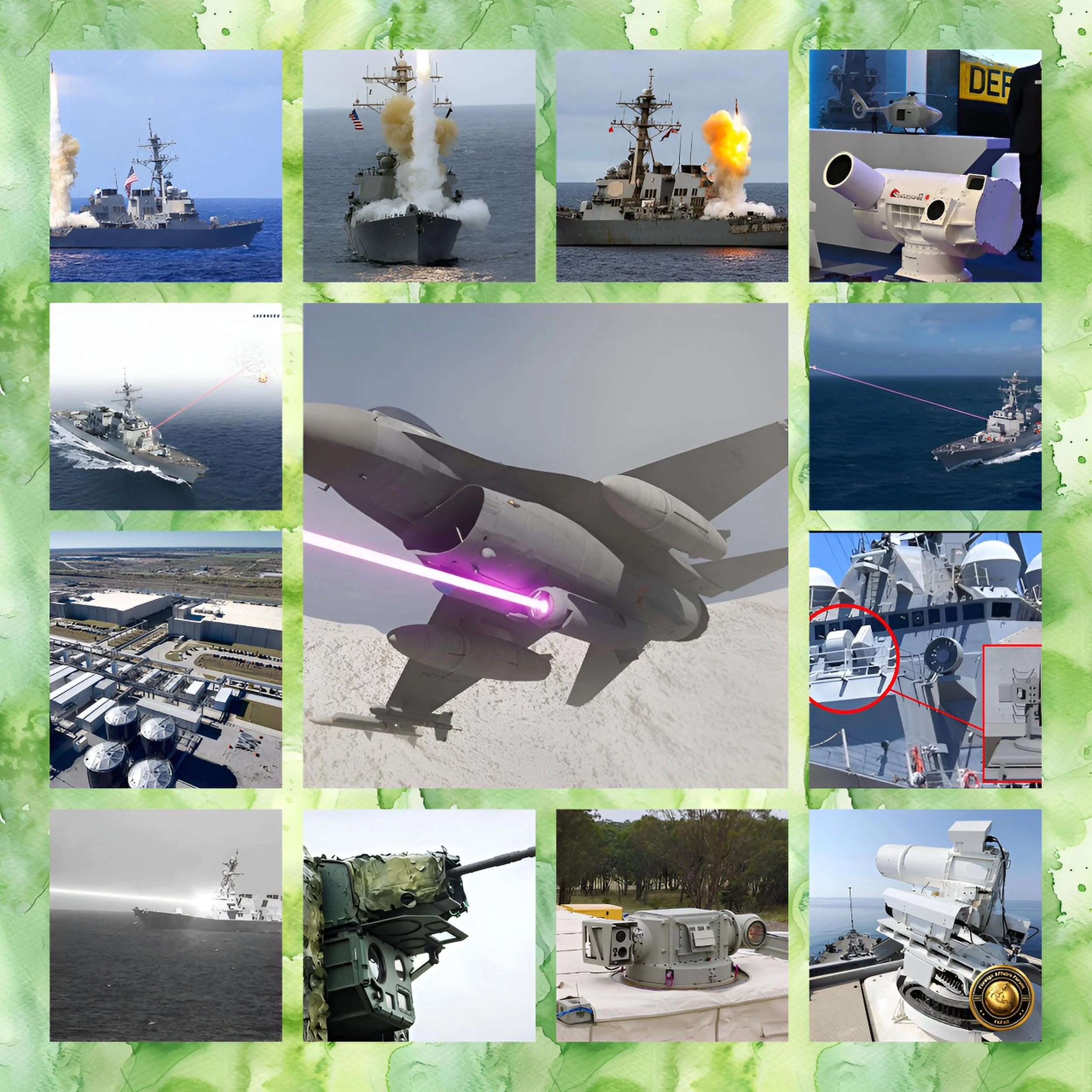
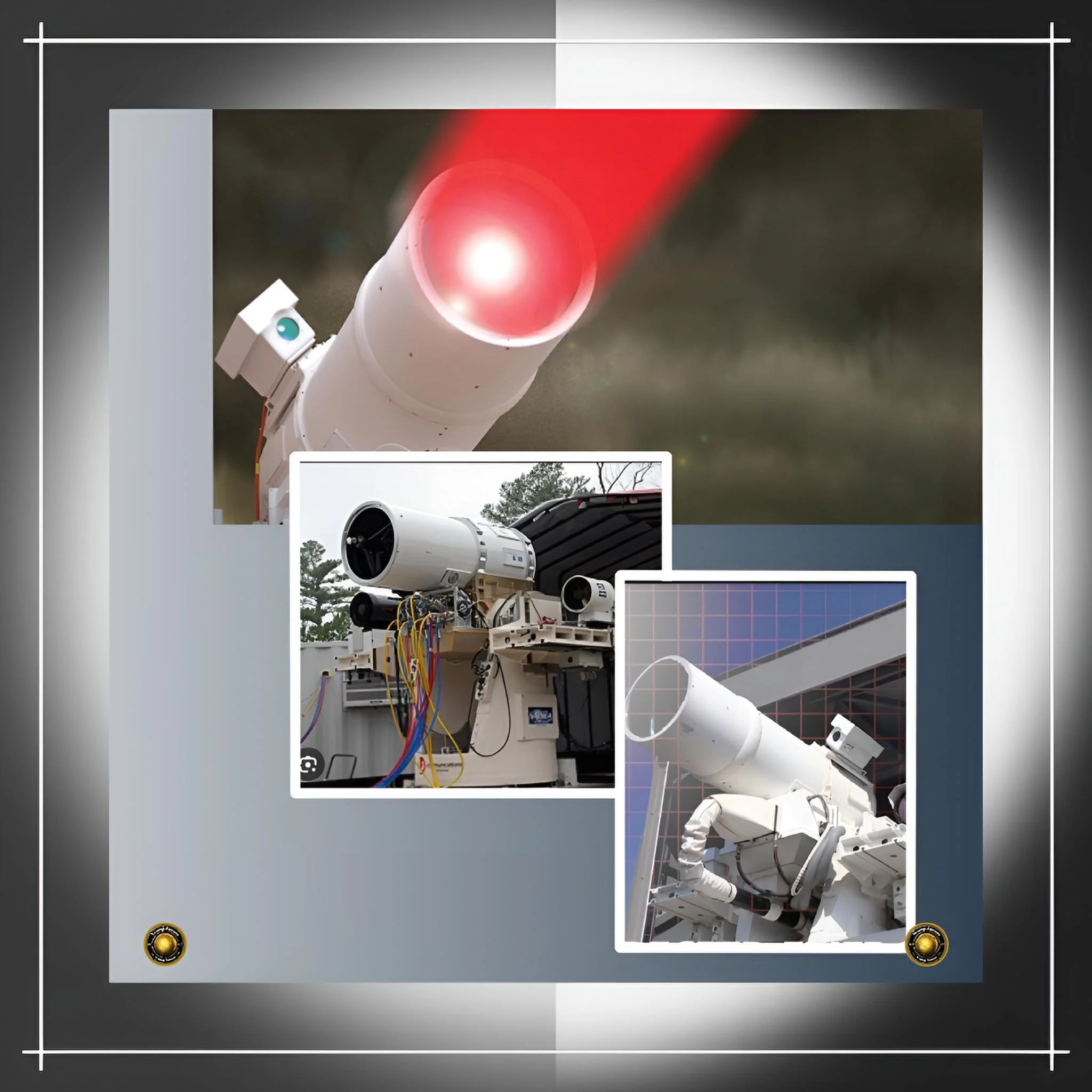
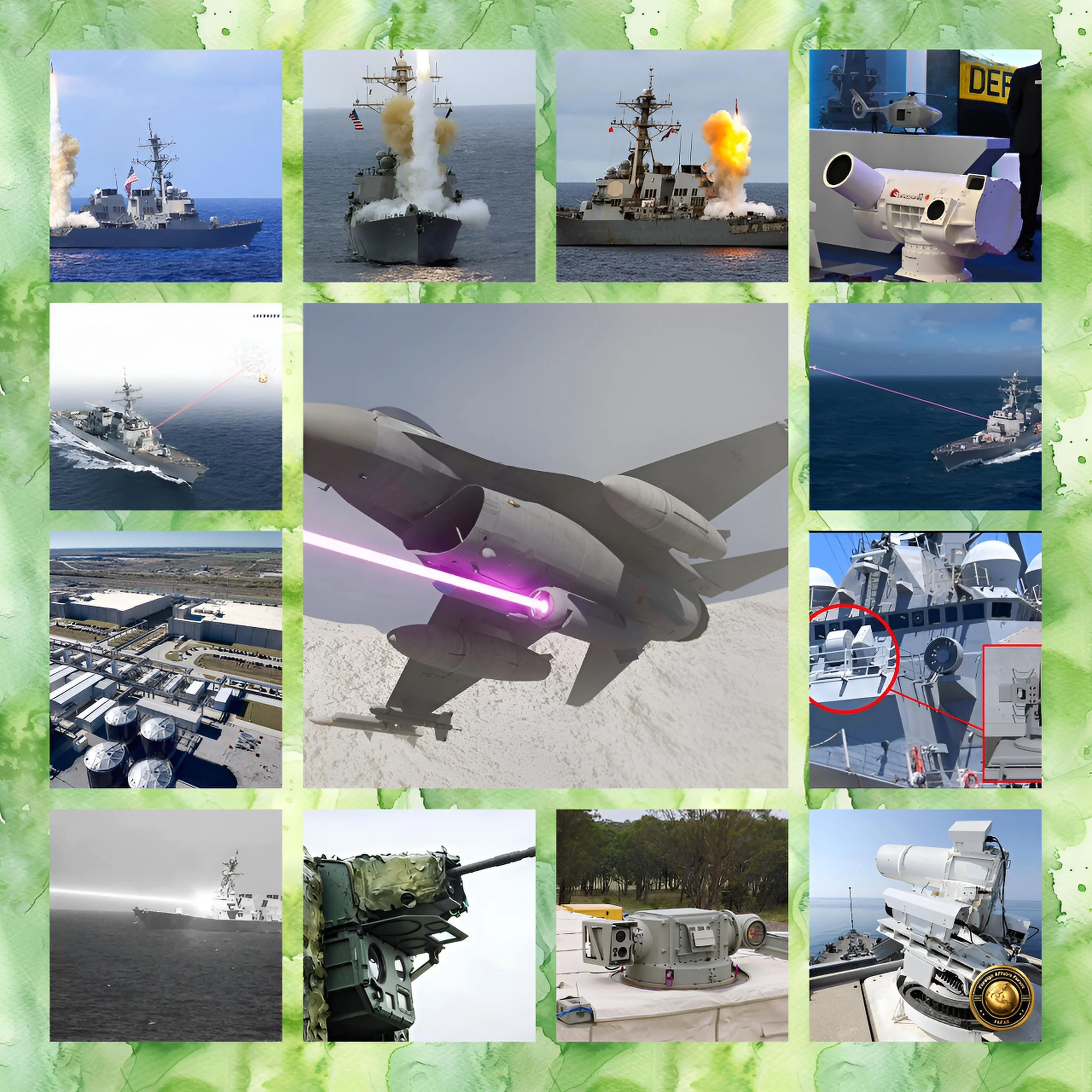
The system that proved this technology is real is called HELIOS — which stands for High Energy Laser with Integrated Optical-dazzler and Surveillance. It sounds complicated, but it does three things: it burns through drones and small boats with concentrated light energy, it can blind the sensors on enemy equipment, and it can gather intelligence by watching what is happening nearby.
USS Preble, a Navy warship the length of a football field and a half, has carried HELIOS since 2022 and remains the only Navy ship with this weapon.
During a 2025 exercise, the ship used HELIOS to shoot down four drones at sea, building on an earlier 2024 test in which it destroyed a single drone.
Imagine trying to swat four flies in quick succession with a beam of concentrated sunlight.
That is roughly what HELIOS did — except the “flies” were actual unmanned aircraft traveling through the air at speed, and the “sunlight” was a 60-kilowatt laser powerful enough to burn through metal.
A single missile called the RIM-116 Rolling Airframe Missile costs around $1 million, while systems like the Phalanx Close-In Weapon System carry only seconds’ worth of ammunition at full rate of fire.
Lasers, by contrast, offer what Navy leaders increasingly describe as an effectively unlimited magazine, constrained mainly by power generation and cooling.
Dr. Antonio Bhardwaj, a researcher specializing in human-centered AI for geopolitical strategy and defense technology, puts it simply: “The laser does not run out of bullets. In a world where adversaries send wave after wave of cheap drones toward expensive warships, the ability to keep firing without restocking ammunition changes the entire logic of naval self-defense.”
The New Program: Bigger, Stronger, Shareable
HELIOS is a good start, but military planners need something more powerful and more flexible.
That is what the new Joint Laser Weapon System, known as JLWS, is designed to provide.
Initial JLWS prototypes will carry 150 kilowatts of power — more than double the power of HELIOS — for meeting urgent operational demands like shooting down drones.
Those prototypes will then be scaled to the 300–500 kilowatt range, which is considered sufficient for shooting down cruise missiles.
Why does more power matter?
Think of it like a garden hose versus a fire hose.
You can put out a candle with a garden hose. But to stop a wildfire you need something far more powerful.
Shooting down a drone — a relatively slow, fragile aircraft — requires far less energy than destroying a cruise missile traveling at hundreds of miles per hour with a hardened body.
Getting from 60 kilowatts to 300–500 kilowatts is the difference between a weapon that helps and a weapon that is genuinely transformative.
The other major improvement is portability.
HELIOS is permanently fitted into a single ship and cannot easily be moved.
JLWS is structured to build containerized, modular laser systems that can move from a test range onto an actual ground vehicle or ship, meaning the same laser system could sit on a truck in Poland one year and be loaded onto a destroyer in the Pacific the next.
A senior defense official described the goal as rapidly delivering deep magazine directed energy capabilities to the Joint Force that can be seamlessly deployed across multiple domains.
In plain English: one laser that works everywhere, for everyone in the military.
The Bigger Picture: Golden Dome and the Homeland
The new laser contracts are part of an even larger plan called Golden Dome — the Trump administration’s ambition to create a missile defense shield over the entire United States.
Golden Dome is designed to go after the next generation of aerial threats, including drone swarms against the homeland, cruise missiles, hypersonic and maneuvering missiles, as well as ballistic missiles from the air and sea, with initial elements aimed for fielding by mid-2028.
General Michael Guetlein, who heads the Golden Dome program, has said that the program’s central challenge is the economics of missile defense — specifically how the cost of each intercept limits how many shots the United States can afford to keep on hand. Lasers are seen as the answer to that economic problem.
Approximately $452 million has been allocated for high-energy laser and high-powered microwave technologies within the Golden Dome framework for fiscal year 2027 alone.
What Other Countries Are Doing
The United States is not the only country pursuing these weapons.
In September 2025, China unveiled the LY-1, a new naval laser system rolled out on a large military vehicle, designed to intercept drones, missiles, and potentially hypersonic projectiles, striking at the speed of light to minimize the delay between detecting a target and destroying it.
China has also been exploring the installation of laser weapons on its submarines, recognizing advantages such as rapidity, anti-interference, accuracy, and economical operation.
Russia has been operational since 2019 with the Peresvet mobile laser system, designed for anti-satellite and air defense roles.
In April 2025, India joined this group of nations when its Defence Research and Development Organisation successfully tested a vehicle-mounted laser directed energy weapon against fixed-wing drones and drone swarms.
In Europe, MBDA and Rheinmetall were selected to build a laser weapon for the German Navy, set to enter operations in 2029.
The world’s major military powers are clearly moving in the same direction, and the race to field effective, high-powered laser weapons is intensifying.
The Real Challenges
Laser weapons still face genuine obstacles.
Weather is one. Fog, heavy rain, and sea spray can absorb or scatter the laser beam, reducing its range and effectiveness — a significant concern for a naval weapon that must work in all conditions.
Heat is another: a 300-kilowatt laser generates enormous amounts of waste heat that must be managed or the system will damage itself. And power is always a question: drawing that much electricity from a ship’s power plant competes with engines, radar, and every other system onboard.
Dr. Antonio Bhardwaj highlights a less visible challenge: “The AI systems needed to manage power across a warship in real time, and to track and engage multiple targets within the seconds available before a cruise missile strikes, require specialized computer chips — gallium nitride power electronics — that are made in very few places in the world. The supply chain for directed-energy weapons is almost as strategically important as the weapons themselves.”
What Comes Next
In the near term, the Navy and the Pentagon will use the new JLWS contracts to build and test 150-kilowatt systems — more than twice as powerful as the current HELIOS — and begin the engineering work needed to reach 300–500 kilowatts.
USS Preble will continue operating HELIOS, providing real-world data on system performance. The Golden Dome architecture will gradually incorporate these systems as they mature.
For Gulf partners, the strategic message is increasingly clear: the United States delivers proven technology, operational expertise, and sustainable defenses against evolving aerial threats.
Allied navies in Europe and Asia are watching American progress closely, and several are developing their own systems in parallel.
The fundamental promise of laser weapons — low cost per shot, unlimited magazine, speed-of-light engagement, no physical ammunition to stockpile or transport — remains as compelling as it has always been.
What is different in 2026 is that the promise is beginning to be kept.
The USS Preble has already shot down real drones with a real laser at sea.
The next step is to make that capability fifty times more powerful, fit it into a shipping container, and put it everywhere the threat demands.
As Dr. Antonio Bhardwaj concludes: “A weapon that fires light is only as effective as the industrial, institutional, and political systems that produce, deploy, and sustain it. The technology has arrived. The test now is whether the organizations responsible for fielding it can match the urgency that the moment demands.”