Weapons at the Speed of Light: How America’s Laser Arsenal Is Rewriting the Rules of Naval Power and Homeland Defense- Part II
Executive Summary
The deployment of the United States Navy’s High Energy Laser with Integrated Optical-dazzler and Surveillance system aboard USS Preble and the July 2026 award of Joint Laser Weapon System contracts to Lockheed Martin and nLight Defense mark a pivotal inflection point in the long history of directed-energy warfare.
The Joint Laser Weapon System agreements, carrying an initial award value of $86 million and a total program ceiling of $847 million, were awarded to nLight Defense and Lockheed Martin Aculight to advance the United States’ cruise missile and unmanned aerial system defense architecture.
Taken together, these developments represent far more than incremental engineering progress. They signal a fundamental restructuring of the economics, doctrine, and geopolitical calculus of modern air defense.
FAF article examines the trajectory from proof-of-concept prototype to operational deployment, situates the American directed-energy program within an intensifying global competition involving China, Russia, and emerging regional powers, and analyzes the doctrinal, industrial, and strategic consequences of a world in which speed-of-light engagement becomes the baseline assumption of naval warfare.
Introduction
The idea of a weapon that fires light rather than lead has captivated military planners since the earliest theoretical work on coherent electromagnetic radiation in the mid-twentieth century.
Decades of laboratory progress, frustrated procurement cycles, and cautionary tales about programs that consumed billions while delivering prototypes rather than fielded systems have shaped a culture of productive skepticism inside the directed-energy community. Yet the evidence accumulating through 2025 and 2026 suggests that the inflection point long promised has, at least partially, arrived.
The Navy has disclosed that the Arleigh Burke-class destroyer USS Preble successfully test-fired its High-Energy Laser with Integrated Optical Dazzler and Surveillance system to take out an aerial target drone in fiscal year 2024, a capability clamored for by Navy brass especially as Navy warships face a near-daily barrage of drones and missiles.
The progression from that single-target engagement to the multi-target demonstration of early 2026 reflects both the maturation of the HELIOS platform and the institutional urgency generated by real-world operational experience. It is estimated that Iranian-made drones cost approximately $2,000 each, while the Standard Missile-2 used for interception costs approximately $2.1 million per shot. The arithmetic of that disparity, sustained across thousands of engagements in the Red Sea between 2023 and 2026, has rendered the economic case for directed energy not merely compelling but strategically inescapable.
Dr. Antonio Bhardwaj, a polymath specializing in human-centered AI for geopolitical strategy, semiconductors, and supercomputing, frames the transformation in systemic terms. “What we are witnessing is not simply a transition in weapon technology,” he observes, “but a restructuring of the entire cost-exchange relationship that has governed asymmetric conflict since the proliferation of precision-guided munitions. When a state or non-state adversary can threaten a billion-$ warship with a $2,000 drone, the traditional logic of proportional investment in defense collapses. Directed energy restores the asymmetry in favor of the defender — but only if the underlying power, cooling, and beam-control engineering can be made ruggedized and producible at scale.”
History and Current Status
The HELIOS program traces its lineage to a series of Navy and Defense Advanced Research Projects Agency efforts stretching back more than two decades.
The Laser Weapon System demonstrated aboard USS Ponce in 2014 established operational proof of concept at 30 kilowatts, but the transition to a fully integrated, Aegis-compatible shipboard weapon required a more deliberate engineering program. In 2020, Lockheed Martin was awarded the contract to develop HELIOS as a 60-kilowatt-class laser system designed to integrate with shipborne combat management architecture, and the system has been installed on USS Preble since 2022.
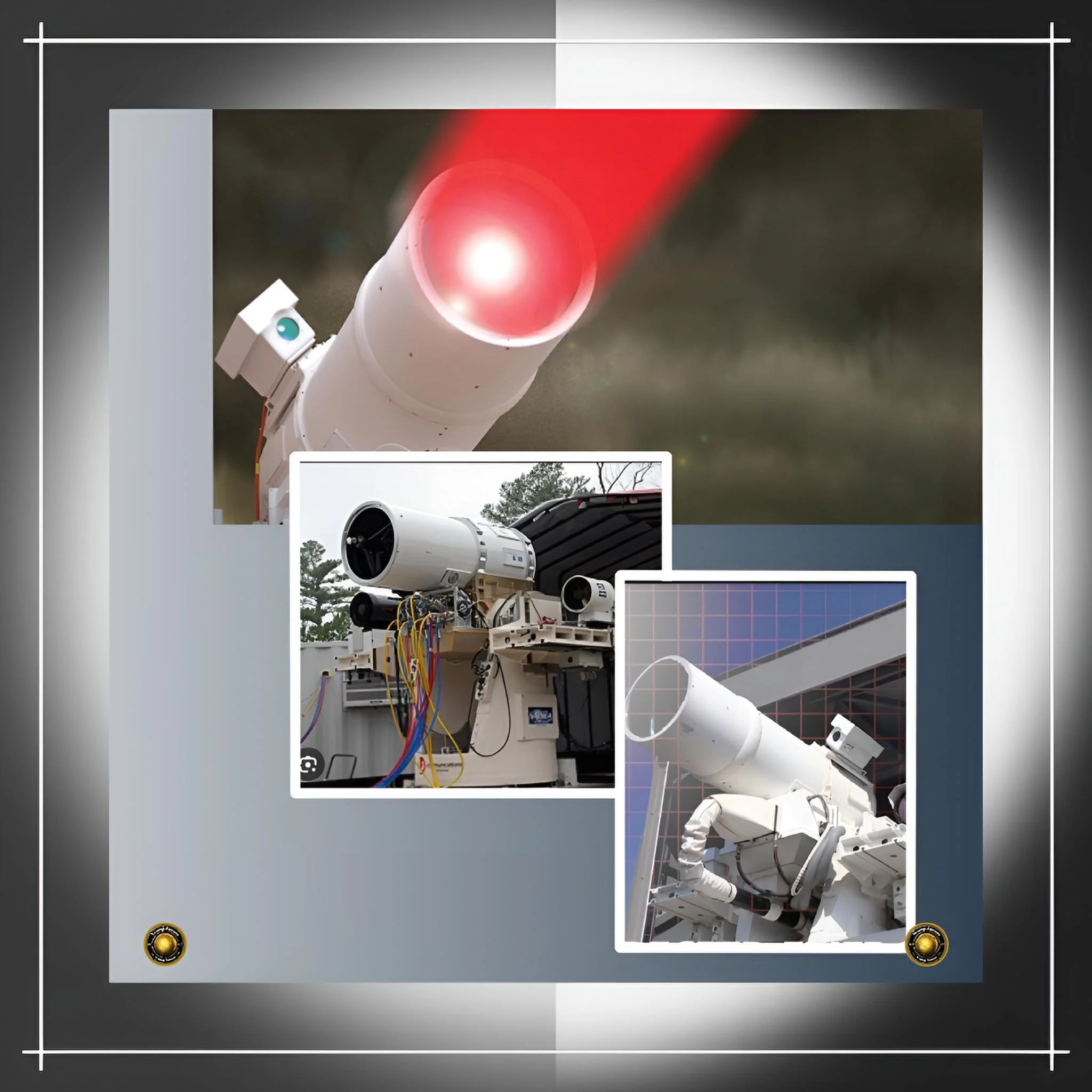
HELIOS, designated Mk 5 Mod 0, is a 60-kilowatt-class laser that operates within the Aegis combat system. The system has been installed on the Preble since 2022 and is among the most powerful lasers actively deployed on a U.S. Navy surface combatant. Other destroyers carry the lower-powered ODIN system, which is geared toward disrupting or blinding enemy sensors rather than physically obliterating them.
The significance of the Aegis integration cannot be overstated from a systems-engineering perspective.
HELIOS does not function as a standalone weapon appended to the ship’s existing suite; it draws upon the same fire-control radars, threat libraries, and command-and-control architecture that govern the entire air defense engagement sequence.
The U.S. Navy’s Center for Countermeasures supervised demonstrations in which the system successfully engaged unmanned aerial targets, validating its functional and operational performance.
This validation architecture — rigorous, documented, and formally reviewed through the Office of the Director of Operational Test and Evaluation — distinguishes HELIOS from the many directed-energy demonstrations that produced impressive footage without meeting the bar of operational test standards.
USS Preble has been equipped with HELIOS since 2022 and remains the only Navy ship carrying the weapon.
Other Arleigh Burke-class destroyers have received the lower-powered ODIN laser, which is intended mainly for sensor disruption. Preble had already demonstrated the ability to down a single drone in a 2024 test, disclosed in a Pentagon operational testing report released in January 2025.
The advancement to a four-drone engagement in 2025 is not merely a quantitative improvement. It reflects the beginning of multi-target track, engage, and handoff sequencing that will be essential in any operationally realistic threat environment — particularly one shaped by the drone swarm tactics that have been refined in conflicts from Ukraine to the Red Sea.
Key Developments
The announcement of the Joint Laser Weapon System in July 2026 represents the most consequential structural development in American directed-energy policy since the original HELIOS contract.
The JLWS agreements, executed by the Department’s Scaled Directed Energy Critical Technology Area, carry an initial award value of $86 million and a total program ceiling of $847 million.
Initial prototypes will carry 150 kilowatts of power for meeting urgent operational demands, likely the counter-drone mission, with prototypes then planned to scale to the 300–500 kilowatt range for robust cruise missile defense.
The significance of 300–500 kilowatts as a design target cannot be appreciated without understanding the physics of laser-target interaction.
At 60 kilowatts, HELIOS can reliably destroy or disable relatively fragile drone airframes within several kilometers, but the engagement window against a fast-moving cruise missile traveling at subsonic or low supersonic speeds requires substantially higher power density to achieve the dwell time necessary for structural or guidance-system damage.
The scaling from 60 kilowatts to 300–500 kilowatts is not a linear improvement in capability; it represents a qualitative threshold crossing that would, for the first time, bring shipborne lasers into genuine contention against the cruise missile threat that most concerns operational planners in the Indo-Pacific.
Lockheed Martin is the prime contractor on two systems that JLWS is meant to build on: the Navy’s 60-kilowatt HELIOS system currently installed aboard USS Preble and the Army’s 300-kilowatt Indirect Fire Protection Capability-High Energy Laser prototype.
The containerized form factor of JLWS is an equally important development. The JLWS is structured to push past prior stalling points by funding two vendors in parallel to build containerized, modular laser systems that can move from a test range onto an actual ground vehicle or ship.
This modularity resolves one of the central procurement difficulties that has bedeviled directed-energy programs for decades: the tendency for systems to be integrated so deeply into a single platform that they cannot be transferred, upgraded, or reproduced without effectively rebuilding the host vessel around the weapon.
A containerized system that can be mounted on a destroyer, an amphibious transport dock, a land vehicle, or a forward operating base eliminates the platform-dependency problem and dramatically compresses the deployment timeline.
Originally described as a joint Army-Navy initiative, JLWS is now being led by the Office of the Under Secretary of Defense for Research and Engineering in order to transition directed energy capabilities from demonstration prototypes into field-ready, production-oriented platforms.
The consolidation of Army and Navy programs under a single joint authority, rather than permitting them to evolve as separate service efforts, reflects a hard-won institutional lesson.
The Army’s 300-kilowatt Valkyrie program, which faced persistent technical limits in laser-based interception including power generation, beam control, and engagement reliability against maneuvering cruise missiles, has been folded into the joint architecture, preventing the duplication of development costs and ensuring that lessons from both services’ experiences inform a single, scalable design family.
nLIGHT Defense stated that its initial agreement is valued at $44 million, with a potential ceiling of $627 million covering follow-on development, integration, and production options.
The inclusion of nLIGHT alongside Lockheed Martin is strategically significant. nLIGHT has specialized in high-brightness fiber laser components and vertically integrated manufacturing, which positions it to address one of the persistent bottlenecks in high-energy laser scaling: the availability of ruggedized, high-power beam-combining architectures that can meet military environmental qualification standards. Competition between two vendors at the prototype stage preserves design diversity and prevents single-vendor dependency during the critical transition from prototype to production.
Latest Facts and Concerns
The operational context that has most forcefully demonstrated the urgency of directed-energy deployment has been sustained naval operations in the Red Sea. Directed-energy weapons have moved from research laboratories to operational deployments across the Middle East in early 2026, with U.S. forces now fielding lasers and high-power microwaves to defend bases, ships, and partner nations from drones and missiles.
The Navy requested $94.825 million under its Directed Energy and Electric Weapon Systems program element in fiscal year 2027, up from just $14.5 million in fiscal year 2026, which includes $79.84 million under its Surface Navy Laser Weapon System effort to jumpstart JLWS research and development, sustain the HELIOS system for future testing activities, and upgrade related systems.
This near-sevenfold increase in directed-energy funding within a single budget cycle reflects not incremental program growth but the kind of emergency prioritization that characterizes a shift in operational assessment at the highest levels of the Navy.
General Michael Guetlein, head of the Golden Dome missile defense program, has said that the success of this effort depends on the ability to field defenses that are both scalable and affordable, including new directed-energy and other non-kinetic technologies aimed at lowering the cost of intercepting missiles.
The Golden Dome framework has become the organizing architecture within which JLWS and successor directed-energy programs will need to justify themselves.
The Golden Dome is designed to go after the next generation aerial threats which includes unmanned aerial systems against the homeland, cruise missiles, hypersonic and maneuvering hypersonic missiles, as well as ballistics from the air and ballistics from the sea, with a cost projected at $185 billion and a goal to field first elements by mid-2028.
Approximately $452 million has been allocated for high-energy laser and high-powered microwave technologies within the Golden Dome framework for fiscal year 2027, with overall funding for the Golden Dome effort estimated between $17.1 billion and $17.9 billion, while total Missile Defense Agency-related activities for fiscal year 2027 are projected in the range of $24 billion to $26 billion.
Yet concerns persist. Atmospheric attenuation remains the central physical constraint on high-energy laser performance.
Technical limitations prevent directed-energy weapons from completely replacing traditional military systems, and the specific challenges of maritime atmospheric conditions — high humidity, sea spray, thermal gradients — create engagement geometries in which laser effectiveness can vary substantially depending on weather, range, and target aspect.
The shift from a controlled test environment to the operational Red Sea conditions of 2024–2025 would have subjected HELIOS to significantly more demanding atmospheric variables than its test firings may have captured.
Power and thermal management constitute related concerns of equal seriousness. A 300–500-kilowatt laser drawn from a destroyer’s shipboard power plant imposes demands that must be balanced against propulsion, radar, and other combat systems.
The engineering solution to this problem — high-density energy storage, advanced thermal management, and potentially dedicated power modules within the containerized architecture — represents a non-trivial systems integration challenge that will consume much of the development budget allocated under JLWS.
Dr. Antonio Bhardwaj underscores the computational dimension of this challenge. “The power management problem for high-energy lasers at sea is not simply an electrical engineering question — it is an AI-optimization problem. Modern warships have dynamic, competing demands on their power plants that vary second by second during combat operations. The only way to guarantee that a 300-kilowatt laser can be brought to full power within the engagement window that a cruise missile allows is to deploy predictive AI models that manage power allocation across the entire ship in real time. The semiconductor architecture underlying those inference engines must operate with near-zero latency under the electromagnetic interference environment of an active combat engagement. This is where the worlds of AI hardware, naval engineering, and directed-energy weaponry converge.”
Cause-and-Effect Analysis
The causal chain that has produced the current acceleration in American directed-energy investment begins not in the laboratory but in the operational experience of the Red Sea.
When USS Carney and other Arleigh Burke-class destroyers spent months intercepting Houthi drone and missile salvos using Standard Missiles and Rolling Airframe Missiles, the cost asymmetry became impossible to ignore at the service and combatant command level.
The Navy’s air defense missiles range from several hundred thousand dollars to a few million dollars per missile, depending on the type, in stark contrast to Houthi Iranian-made drones that can cost as little as a few thousand dollars.
The effect of this recognition was a cascading revision of acquisition priorities. Programs that had proceeded at research and development pace were reclassified as urgent operational requirements.
The Army’s decision to redirect its Valkyrie laser into the joint program, absorbing the recently shelved 300-kilowatt system and folding directed energy into the broader Golden Dome architecture authorized by Executive Order 14186, represents a forced consolidation driven by the demonstrated inadequacy of the kinetic-only approach to drone defense.
The competitive dynamic with China has accelerated this process. China unveiled the LY-1, a massive directed-energy laser system, during a military parade in September 2025, designed to disrupt drones and missiles by damaging sensors and offering low-cost, rapid defense.
Beijing touted the LY-1 as a weapon that alters the rules of naval warfare by adding a new layer of defense based on directed energy.
The strategic message embedded in the LY-1 display is clear: China is signaling that its naval forces will incorporate directed-energy capability at scale, complicating any American calculus that assumes conventional kinetic superiority in a Taiwan Strait scenario.
China has been exploring the installation of laser weapons on its submarines, with research noting advantages of laser weapons over traditional weapons, including rapidity, anti-interference, accuracy, anti-saturation attack, and economical operation.
The extension of directed-energy ambitions to submarine platforms reflects an understanding in Beijing that the real leverage of laser weapons may lie not merely in cost reduction but in the ability to redefine engagement geometries in undersea warfare — a domain in which the United States has historically maintained significant advantages.
Russia, meanwhile, has been operational since 2019 with the Peresvet mobile laser system, designed for anti-satellite and air defense roles, representing a different strategic emphasis — one focused on disrupting the space-based sensing and communication architecture upon which American conventional superiority depends.
The combined effect of these parallel developments is the emergence of a directed-energy arms dynamic that cannot meaningfully be governed by existing arms control frameworks.
The Missile Technology Control Regime, the Wassenaar Arrangement, and other export control instruments were designed around the physical characteristics of kinetic weapons — throw weight, range, yield, and propulsion. Directed-energy systems fit none of these categories neatly, and the laser components themselves — fiber amplifiers, beam directors, adaptive optics — are dual-use in ways that make export restriction both technically difficult and commercially contentious.
Future Steps
The near-term trajectory of the JLWS program is reasonably clear in its engineering ambitions.
The Pentagon’s fiscal 2027 budget request contains $452 million in research and development spending for the development, integration, and assessment of directed energy weapons in support of Golden Dome, with the Navy’s budget documents stating that funds also include provisions to begin development of a consolidated implementation plan for all Golden Dome-related directed energy projects, leveraging synergy and common weapon architectures between these efforts where possible in coordination with the U.S. Missile Defense Agency.
The competitive parallel-vendor structure, with both Lockheed Martin Aculight and nLIGHT Defense pursuing their own prototype architectures, creates conditions in which at least some of the technical risks associated with power scaling, beam quality, and platform integration can be distributed rather than concentrated.
The OTA agreement structure, which allows the Department of War to bypass elements of the traditional procurement process, compresses the timeline between prototype demonstration and production decision — though it also reduces the level of Congressional oversight and independent technical review that major programs would normally receive.
Dr. Antonio Bhardwaj identifies the semiconductor supply chain as a potential constraint that has received insufficient attention in public discussions of directed-energy scaling. “The beam-combining and power-conversion electronics that underpin a 300-kilowatt laser system require specialized compound semiconductor devices — gallium nitride, indium phosphide — that are manufactured in very few facilities globally. The same supply chain vulnerabilities that concern semiconductor analysts in the context of advanced logic chips apply equally to the power electronics of directed-energy weapons. An adversary capable of disrupting the supply of these materials through economic or coercive means could impose delays on American directed-energy production far more efficiently than by attempting to compete at the weapon system level directly.”
The integration of AI into directed-energy targeting and fire control represents another frontier that is already receiving investment but will require substantially more development.
The engagement timelines for cruise missiles — potentially ten seconds or less at final approach — require that target acquisition, track, handoff, and fire-authorization sequences occur with minimal human latency in the decision loop.
This is not a question of removing human judgment from lethal force decisions but of structuring that judgment in advance through the setting of engagement criteria that the AI then executes within parameters established by operators.
The legal, doctrinal, and operational dimensions of this architecture require frameworks that current military law of armed conflict doctrine has not fully developed.
Allied integration presents both an opportunity and a complication. MBDA and Rheinmetall were selected to build a laser weapon for the German Navy, which is set to enter operations in 2029. Nations including the United States, Israel, and NATO allies are now embedding high-energy lasers and high-power microwaves into next-generation missile defense, airbase protection, and naval systems.
The interoperability of allied directed-energy systems — operating within shared tactical data links, using compatible beam-director protocols, coordinating engagement authorities — will determine whether the deployment of lasers across the alliance represents a genuinely integrated defensive capability or a collection of national systems that happen to share geography during combined operations.
The most significant long-term strategic question is whether the deployment of effective directed-energy cruise missile defense changes the deterrence calculus for potential adversaries in ways that are stabilizing or destabilizing.
A defended United States homeland, in which cruise missiles launched from sea-based or air-breathing platforms cannot reliably penetrate to targets, could reduce the utility of the large cruise missile arsenals that China and Russia have developed as instruments of coercive leverage. That is the stabilizing scenario.
The destabilizing alternative is that adversaries respond by developing hypersonic glide vehicles, maneuvering reentry vehicles, and quantum-radar-integrated targeting systems that are designed specifically to exhaust, saturate, or circumvent directed-energy defenses — accelerating rather than dampening the arms competition.
Conclusion
The trajectory from the Ponce demonstration of 2014 to the JLWS contract awards of July 2026 describes a 12-year journey from laboratory curiosity to strategic priority.
The Navy’s experiences during operations in and around the Red Sea in recent years have underscored the challenges defenders face at sea and on land when responding to large-volume drone attacks, with uncrewed aerial systems layered with other threats like anti-ship ballistic and cruise missiles presenting even more complexities.
That operational crucible has done more to accelerate directed-energy procurement than any number of demonstration events or advocacy reports.
The HELIOS system aboard USS Preble is a genuine milestone — not because it resolves the challenges of directed-energy naval warfare but because it has translated laboratory physics into operational reality within a combat-integrated platform, sustained testing against realistic targets, and produced the data needed to design its successors.
The JLWS program inherits that data, that institutional knowledge, and that sense of urgency, and it is charged with translating a 60-kilowatt proof of concept into a 300–500-kilowatt joint-service production program capable of contributing meaningfully to the layered defense architecture that Golden Dome envisions.
The geopolitical stakes of success or failure are substantial. A United States that fields effective directed-energy cruise missile defense across its naval forces and forward positions alters the strategic environment for adversaries who have invested heavily in cruise missile salvo capacity as a means of imposing access denial and coercive leverage.
A United States that continues to demonstrate impressive prototypes without achieving production-scale deployment will find its adversaries drawing the rational conclusion that kinetic saturation remains a viable strategy.
Dr. Antonio Bhardwaj concludes with a characteristic synthesis: “The directed-energy race is ultimately a race between physics and engineering on one side and industrial organization and strategic patience on the other. The physics is mostly solved. The engineering is advancing rapidly. What will determine whether the United States translates this moment of prototype maturity into genuine strategic advantage is whether it can organize its defense-industrial ecosystem — its semiconductor suppliers, its systems integrators, its testing infrastructure, its procurement institutions — with the same urgency and coherence that the threat environment demands. That is not primarily a technology question. It is a governance and political economy question. And the answer to that question will be written not in laboratories but in budget processes, export control regimes, and the strategic choices of allied governments who must decide whether American directed-energy leadership is real enough to anchor their own defense planning.”
The weapons have arrived at the speed of light. Whether the institutions responsible for deploying them can match that velocity remains the defining question of this strategic moment.