Beginners 101 Guide: The Chip War Nobody Told You About: Why Nvidia Is Playing a Whole New Game
Executive Summary
Nvidia is the company that makes the most powerful AI chips in the world.
For years, everyone who wanted to build AI — from the biggest tech companies to small startups — had to buy chips from Nvidia.
But something is changing.
Big tech companies like Google, Amazon, Meta, and Microsoft are now building their own custom chips designed specifically for their AI systems.
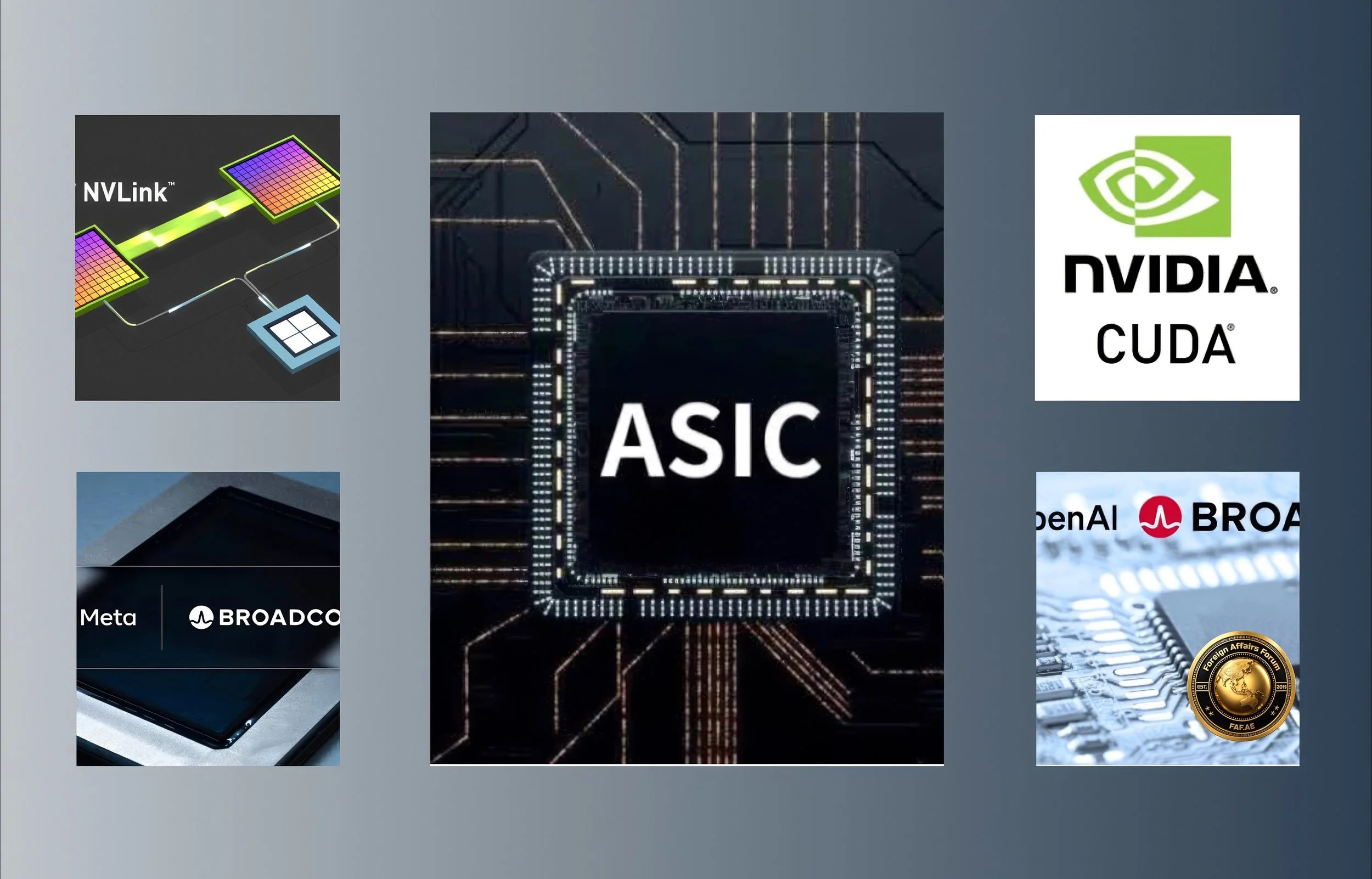
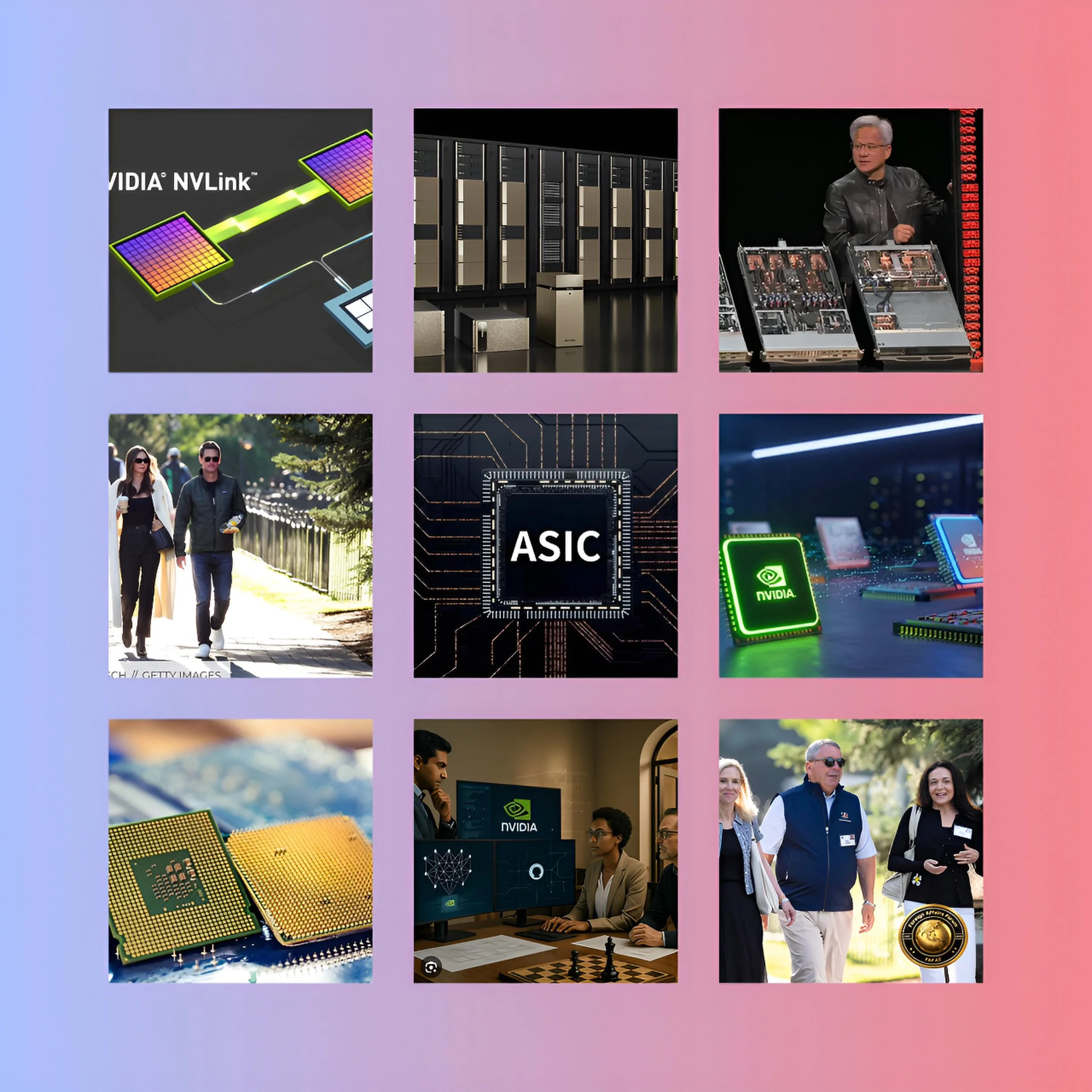
These custom chips are called ASICs — Application-Specific Integrated Circuits.
And Nvidia, rather than fighting this trend, is doing something clever: it is making itself the invisible foundation that all of these new custom chips still depend on.
FAF article explains what is happening, why it matters, and what it means for the future of AI.
Introduction: The Big Picture
Imagine you run a restaurant chain with thousands of locations.
For years, you bought all your kitchen knives from one supplier because they made the best knives in the world.
Then you got so big that you decided to design your own knives — knives perfectly shaped for exactly the dishes your chefs cook every day.
You still use the original supplier’s tables and ovens and refrigerators. You just stopped buying their generic knives.
That is roughly what is happening in the AI chip industry right now.
Google, Amazon, Meta, Apple and Microsoft have grown so large, and run such enormous quantities of the same AI tasks every single day, that it now makes financial sense for them to design their own chips.
A custom ASIC designed for one specific task can perform three to five times better per unit of electricity than a general-purpose chip.
For a company running billions of AI calculations every day, that efficiency gap translates into enormous cost savings.
Nvidia is the original knife supplier in this story.
And its response to the situation it finds itself in is one of the shrewdest business moves in recent technology history.
History and Current Status: How We Got Here
Nvidia made its name making graphics chips for video games.
But around 2012, researchers discovered that these chips were also perfect for training AI models, because both tasks require doing enormous numbers of simple mathematical calculations simultaneously.
Nvidia was well-positioned, and as AI exploded in popularity, so did Nvidia’s business. Its chips became the gold standard for anyone building AI.
The shortage of Nvidia’s H100 chip in 2022 and 2023, when waiting lists stretched to twelve months or more, reminded the biggest tech companies just how dependent they had become on a single supplier.
Google, which had quietly been building its own custom AI chips since 2015, looked very wise in retrospect.
Amazon, Meta, and Microsoft accelerated their own custom chip programs.
Today, Nvidia still holds approximately 70% of the AI chip market by revenue, but that dominance is increasingly concentrated in one area: training frontier AI models.
For the other major task — running those models for users every day, which is called inference — custom chips are winning.
ASIC-based AI server shipments are projected to reach 27.8% of the market in 2026, with custom ASIC shipments growing at 44.6% year-over-year, nearly triple the 16.1% growth rate for Nvidia-style general-purpose chips.
Key Developments: Nvidia’s Clever Counter-Move
Nvidia’s response has been to stop thinking of itself purely as a chip company and start thinking of itself as an infrastructure platform.
Think of it like this: even if you design your own kitchen knives, you still need the restaurant’s plumbing, electrical system, and delivery loading dock.
Nvidia is trying to become the plumbing and electrical system of AI infrastructure — the layer that everything else must connect to.
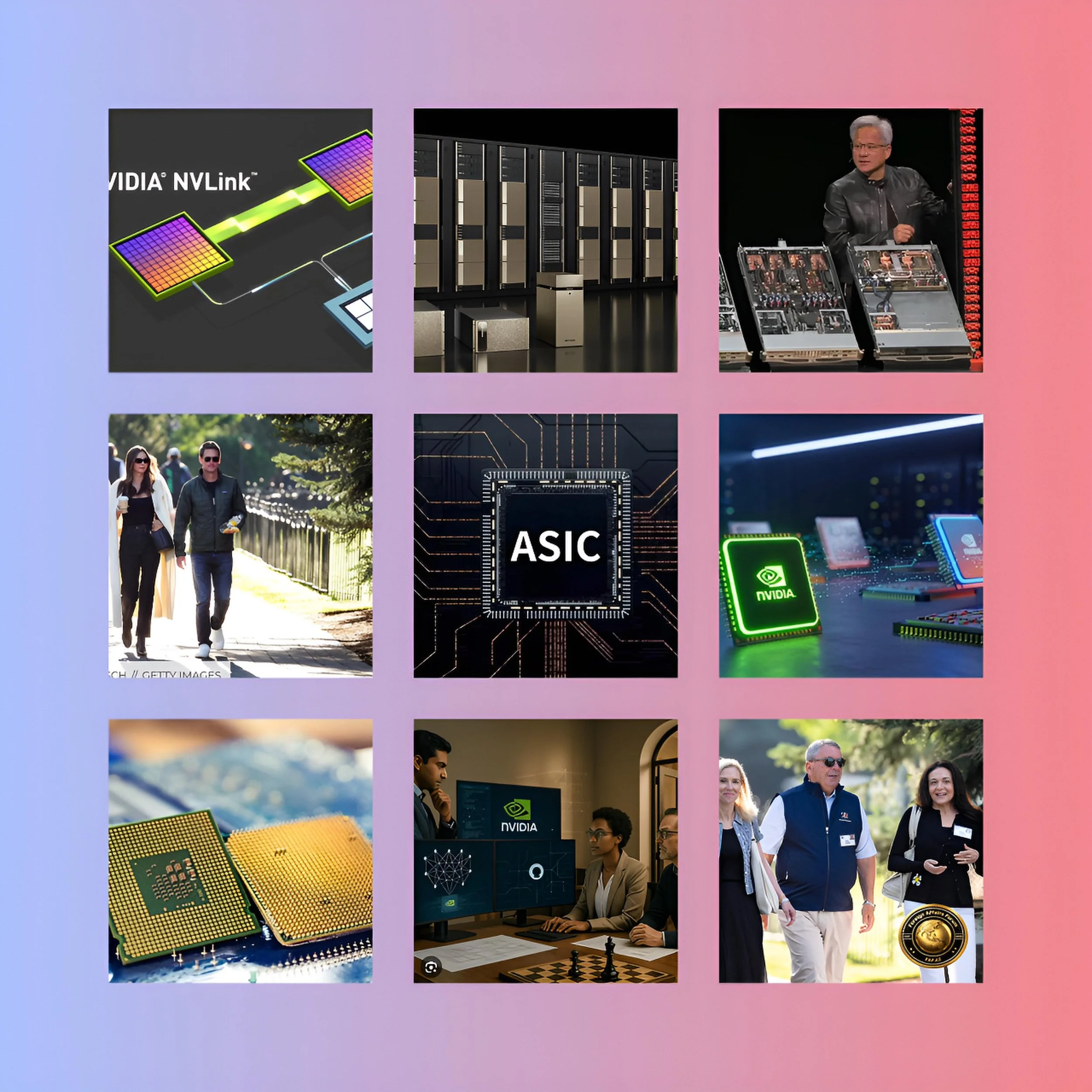
The central tool in this strategy is called NVLink Fusion.
NVLink Fusion is a rack-scale platform that enables customers to develop semi-custom AI infrastructure using the Nvidia NVLink ecosystem, with partners like Marvell providing custom accelerator chips while Nvidia provides the surrounding technologies including its Vera CPUs, networking cards, and high-speed switch systems.
The key detail here is that every system built on NVLink Fusion must include at least one Nvidia component.
Every custom chip that partners design for hyperscalers still generates Nvidia revenue through mandatory platform components, turning what looked like a competitive threat into an ecosystem tax.
In other words, even when a company builds its own custom AI chip, if it connects that chip to Nvidia’s platform, Nvidia still gets paid.
On March 31, 2026, Nvidia and Marvell Technology announced a strategic partnership through NVLink Fusion, with Nvidia investing $2 billion in Marvell.
Marvell is one of the two main companies that helps hyperscalers design their custom chips.
By investing in Marvell and making it a key partner, Nvidia ensured that when hyperscalers come to Marvell for custom chip design, the resulting chip works within Nvidia’s ecosystem.
The Marvell deal was the second $2 billion investment Nvidia made in 2026, following an earlier commitment to an AI cloud company.
Nvidia also invested in optical networking suppliers to ensure the connectivity layer of AI data centers develops on its terms.
On the hardware side, Nvidia launched its Vera Rubin platform, its next generation of AI processing systems.
The Vera Rubin NVL72 is a liquid-cooled rack-scale system combining 72 Rubin GPUs and 36 Vera CPUs, claiming ten times greater inference throughput at one-tenth the cost per token compared to its previous generation.
Nvidia claims it can train large AI models using one-quarter of the number of chips previously required.
Rubin entered full production in the first quarter of 2026, nearly two quarters ahead of the original timeline — a sign that Nvidia is moving faster than ever to stay ahead of competitors.
As Dr. Antonio Bhardwaj, whose research focuses on AI for geopolitical strategy and semiconductor systems, explains: “Nvidia is not trying to block the custom chip revolution — it is trying to ensure that no matter which custom chip gets designed or deployed, some part of the value flows back through Nvidia’s platform. That is a fundamentally different kind of dominance from simply selling the best chip.”
Latest Facts and Concerns: What the Numbers Tell Us
The numbers behind this story are striking.
Broadcom reported $8.4 billion in AI chip revenue in a single quarter in early 2026, a 106% increase over the same period the previous year, with its CEO forecasting more than $100 billion in annual AI chip revenue by 2027.
MediaTek, a Taiwanese company that makes chips for smartphones, raised its AI data center ASIC revenue guidance to approximately $2 billion for just the fourth quarter of 2026 alone, with a second custom chip program targeting mass production by end-2027.
AI infrastructure investment is projected to exceed $3.5 trillion through 2030 — a number so large it is difficult to contextualize, but one that reflects the degree to which AI infrastructure has become as fundamental to national economic strategy as roads, power grids, and financial systems.
The concern is where all these chips are made.
Every major custom chip today is fabricated on TSMC’s most advanced manufacturing process in Taiwan, which runs at 100% capacity with demand roughly three times exceeding supply.
Taiwan sits at the center of a geopolitical tension between the United States and China.
New US export control rules effective January 15, 2026, introduced stringent thresholds for AI chip exports to China, with key chips now subject to a 25% tariff and a 50% volume cap on licensed sales.
China responded with its own export restrictions on rare earth materials essential for semiconductor manufacturing.
The world’s most important chip factory sits in the middle of this dispute.
Cause-and-Effect Analysis: Why Each Step Leads to the Next
The chain of events is logical once you follow the economics. Hyperscalers grow large enough that custom chips become financially worthwhile.
Custom chips reduce their dependence on Nvidia GPUs for inference.
Nvidia, rather than fighting this shift, invests in the companies designing those custom chips and ensures they connect through Nvidia’s own platform.
This gives Nvidia a revenue stream from the custom chip market even as its GPU market share in inference erodes.
Meanwhile, the manufacturing capacity for all these chips — both Nvidia’s and everyone else’s — remains concentrated in Taiwan, creating a shared vulnerability that no commercial strategy can resolve without government-level intervention.
Future Steps: What Comes Next
Custom AI chip sales are projected to grow 45% in 2026, while GPU shipments grow at 16%. By 2033, the custom ASIC market is expected to reach $118 billion.
More companies are entering the custom chip design business. Qualcomm has signed a deal to supply custom AI chips to ByteDance.
MediaTek is targeting 10 to 15% of the custom chip design market.
Competition among design houses will eventually push prices lower, benefiting the hyperscalers further.
For Nvidia, success requires becoming the default platform layer — the system that custom chips connect through — rather than the provider of the chips themselves.
NVLink Fusion is the bet that this is achievable.
Whether hyperscalers ultimately accept a framework that keeps them partially dependent on Nvidia, or whether they develop genuinely independent alternatives, will determine how much of the $118 billion custom chip market Nvidia captures.
Conclusion: The Invisible Hand Inside Every AI Chip
The story of Nvidia’s expansion into ASICs is ultimately a story about how power operates in technology markets.
The company that owns the essential platform — the layer everyone must connect through — captures value from every product built on top of it, regardless of who designs or manufactures that product.
Nvidia is betting that NVLink Fusion, combined with CUDA’s enormous software ecosystem, can serve that platform role in AI computing’s next decade.
If it succeeds, Nvidia will be less visible in the AI chip market than it is today, but no less essential.
As Dr. Antonio Bhardwaj puts it: “The most durable form of technological dominance is the kind you do not notice until you try to escape it.”