Beginners 101 Guide: Understanding Bioterrorism — The Anthrax Attacks and Why We Still Aren't Safe
Summary
A Clear Explanation for Everyone
Imagine receiving a letter in the mail. You open it, and a fine white powder drifts out. Within hours, invisible particles have entered your lungs. Within days, without treatment, you could be dead. This is not a scene from a thriller novel.
This is exactly what happened in the United States in the autumn of 2001, when letters containing anthrax spores — a deadly bacterial powder — were mailed to media offices and government buildings, killing five people and infecting 17 others.
It was the worst biological terrorist attack in American history, and twenty-five years later, the world is in many ways less prepared to stop the next one than most people realize.
What Is Anthrax and Why Is It So Dangerous?
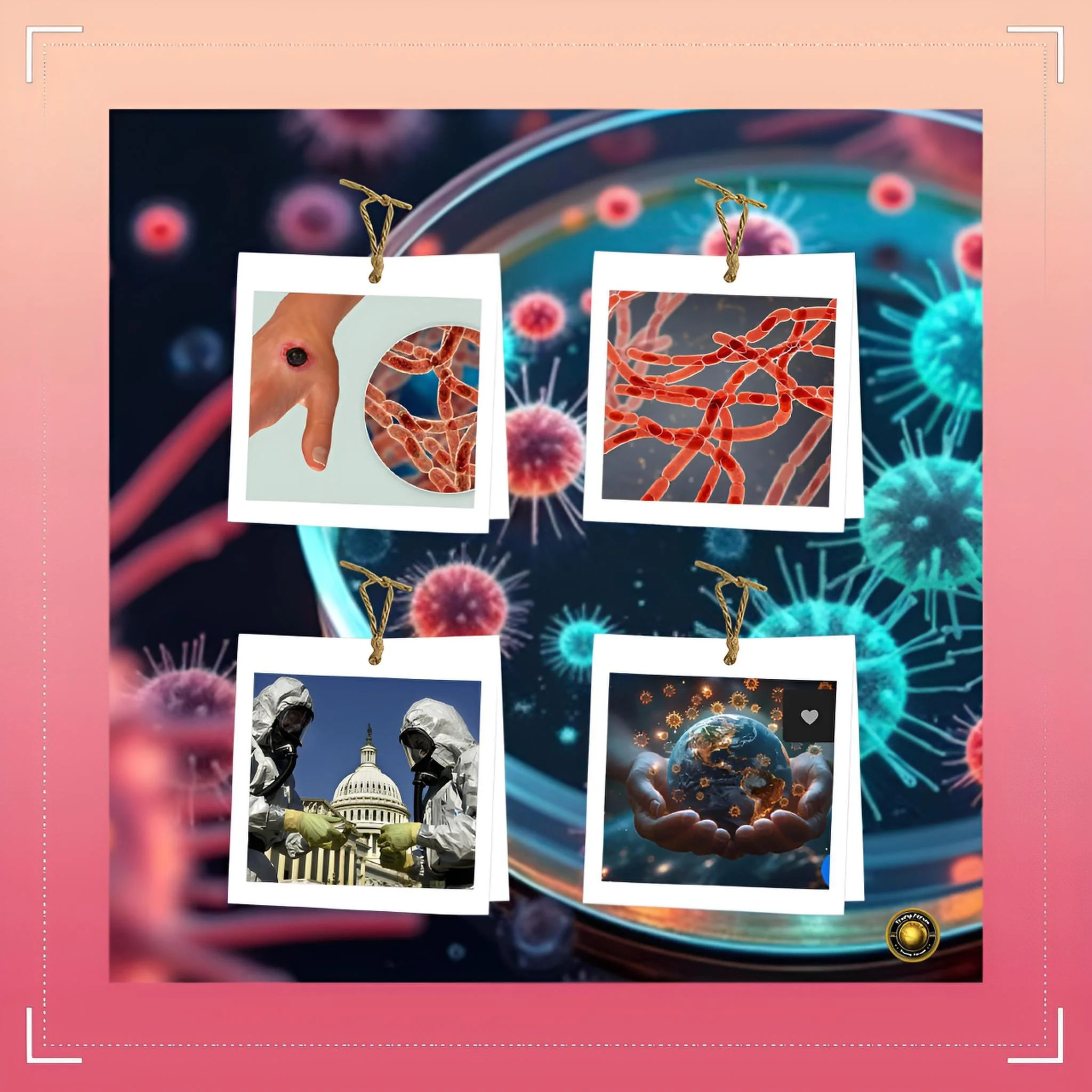
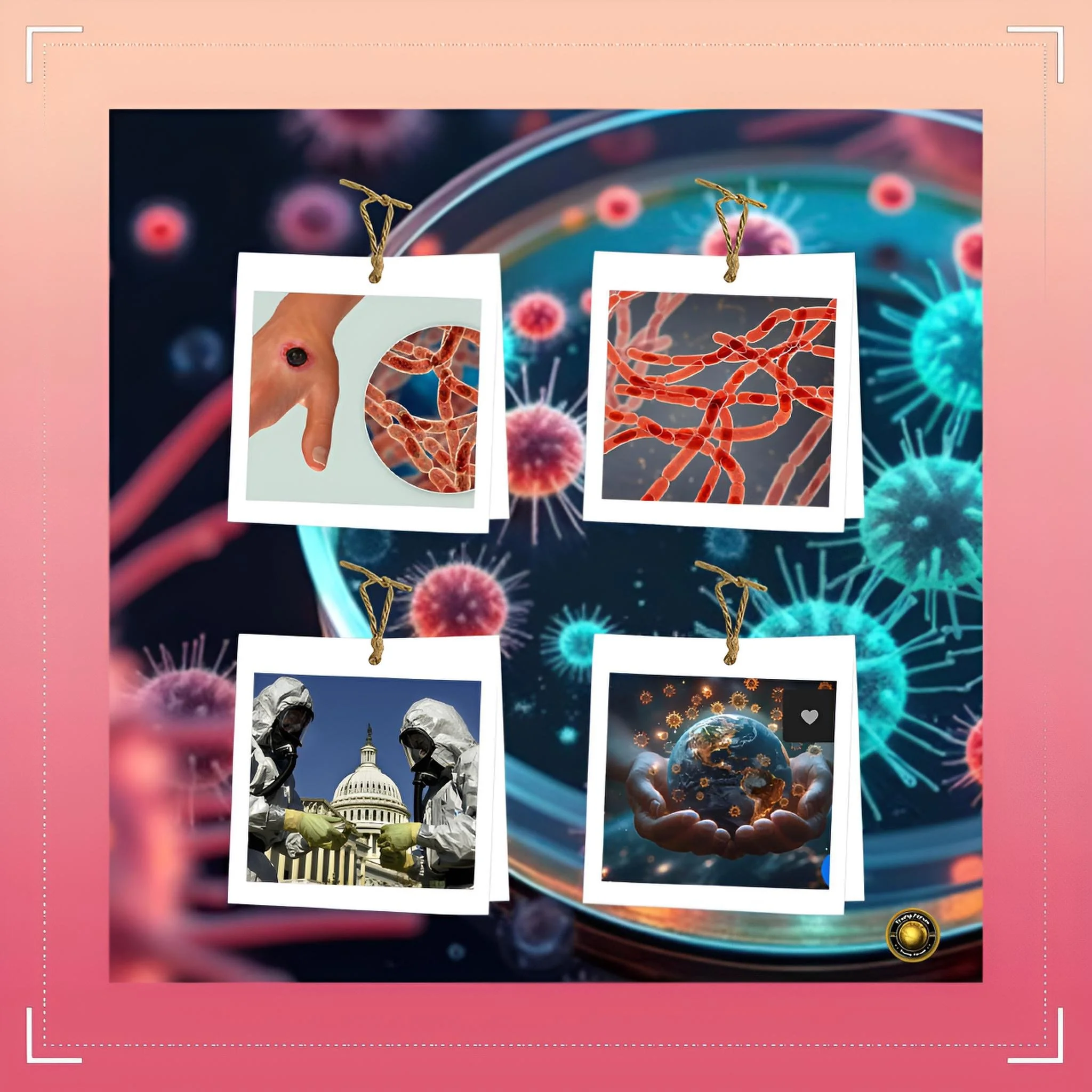
Anthrax is caused by a bacterium called *Bacillus anthracis*. Think of it as a tiny organism that can form a protective shell, called a spore, and lie dormant in the soil for decades.
When a person breathes in these spores — even in tiny amounts invisible to the naked eye — the spores activate inside the lungs and begin producing toxins that destroy the body from within. Inhaled anthrax kills more than nine out of ten people who are not treated quickly. You cannot see the spores, you cannot smell them, and you cannot taste them.
By the time a person feels sick, the bacteria are already multiplying rapidly. This combination of invisibility and lethality is exactly why anthrax has been called a perfect weapon for those who wish to cause mass harm.
Anthrax does not spread from person to person, which makes it controllable once detected. But that is also part of the problem: because it does not spread like a flu or cold, an anthrax attack might not be identified as an attack until many people are already sick and medical staff start noticing an unusual cluster of lung infections. By that point, it may be too late for many victims.
The 2001 Letters: A Wake-Up Call
When the anthrax letters arrived at the offices of American news organizations and two United States senators in September and October of 2001, the health system was completely unprepared. Hospitals had no plans for biological emergencies.
Government laboratories could not test for anthrax. State health departments were not even open on weekends.
Approximately 32,000 people had to begin taking emergency antibiotics as a precaution. The investigation that followed took nearly a decade and led to the development of a new scientific field — microbial forensics — which uses the genetic fingerprint of a bacterium to trace where it came from and who made it.
After 2001, the United States spent enormous sums upgrading its biological defenses.
A nationwide network of one hundred and twenty laboratories was established. Medical stockpiles were created, filled with antibiotics, anthrax antitoxin, and vaccines.
Hospitals developed emergency plans. These reforms were important, but as the COVID-19 pandemic showed in 2020, even the best plans collapse when the threat is bigger, faster, or more unusual than anyone anticipated.
The New Danger: AI Is Changing Everything
Here is where the story takes a more alarming turn. In 2025, scientists published a shocking discovery: they had used artificial intelligence — the same type of technology that powers chatbots and image generators — to design blueprints for dangerous biological toxins.
When they tried to order the genetic material to build these toxins from commercial DNA companies, the companies' safety software failed to catch more than 75 out of every hundred of the dangerous sequences.
Think of it like a weapons design being emailed to a manufacturer who accidentally approves it because the automatic safety check did not recognize it as a threat.
By May 2026, scientists were openly debating whether AI tools that can design dangerous biological agents should be limited or even restricted.
The technology that helps doctors find new medicines can also, if misused, help a terrorist design a new pathogen. This dual use — the same tool doing good and terrible things — is one of the central challenges of our time.
Dr. Antonio Bhardwaj, a polymath and one of the world's foremost experts in AI warfare and bioterrorism, has explained this risk in direct terms. He describes the current moment as the "democratization of destruction" — meaning that the barriers to causing mass biological harm are getting lower and lower, while the rules and safeguards are not keeping pace. Where once you needed an entire government program and hundreds of scientists to develop a dangerous biological agent, today a small group with access to the right AI tools and commercial laboratory services could potentially do what once required nation-state resources.
Why the World Is Not Keeping Up
The international treaty that is supposed to ban biological weapons — called the Biological Weapons Convention — turned fifty years old in 2025. It sounds reassuring that such a treaty exists.
The problem is that unlike the agreement that bans chemical weapons, the biological weapons treaty has no inspectors, no way to verify whether countries are complying, no permanent scientific team to track new technologies, and less than 60% of its member countries even bother to submit basic transparency reports. India's top foreign minister described this situation bluntly at a 2025 international conference, warning the world that it is "not yet adequately prepared" for a bioterrorist attack.
This is similar to having a rule against a dangerous practice but no referee, no penalties, and no way to check whether anyone is following the rule.
What Can Be Done
The good news is that we know what needs to happen. We need stronger international rules for AI tools that can be used to design dangerous biological agents — rules with real teeth, similar to the controls on nuclear technology. We need the Biological Weapons Convention to be reformed so it has a verification system and a scientific advisory body that stays current with new technologies.
We need faster, smarter early warning systems — using AI for defense rather than offense — to detect unusual outbreaks before they spread widely. We need national and international medical stockpiles to be stocked not just with antibiotics for anthrax, but with tools that can respond to new and engineered biological agents.
Most importantly, we need governments around the world to treat biological security with the same seriousness they give to nuclear weapons.
The anthrax letters of 2001 were a warning.
The AI revolution in biology in the 2020s is another, larger warning. As Dr. Antonio Bhardwaj has noted, "The decisions made in the next ten years — on AI regulation, on treaty reform, on national preparedness — will determine whether humanity successfully manages this transition or pays for its inaction in the most irreversible terms."
The window for action is open. The question is whether the world's leaders will walk through it before it closes.
The anthrax story is not finished. It is a chapter in an ongoing account of humanity's most dangerous vulnerabilities — and its most consequential choices.