Europe's Artificial Intelligence Plan and Readiness: Strategic Ambition, Regulatory Architecture, and the Contested Path to Technological Sovereignty
Executive Summary
Europe stands at a defining inflection point in the global artificial intelligence race. While the continent has established the world's most comprehensive and enforceable legal framework for artificial intelligence governance — the EU AI Act — fundamental questions persist about whether regulatory ambition alone can translate into competitive technological prowess.
The European Union has mobilized legislative, institutional, and financial instruments of extraordinary scale, committing to a €200 billion investment architecture through the InvestAI initiative, establishing at least thirteen operational AI factories by 2026, and publishing a sweeping Apply AI Strategy designed to embed artificial intelligence across ten critical industrial sectors.
Yet the contrast between Europe's governance leadership and its readiness deficit is stark and troubling. According to Cisco's research published in early 2026, only 11% of European organizations consider themselves genuinely AI-ready — meaning that eighty-nine% remain unprepared to deploy and operationalize AI at scale.
The gap between policy architecture and institutional execution, between regulatory text and corporate preparedness, between investment pledges and actual deployment, defines the essential paradox of Europe's artificial intelligence moment.
Dr. Antonio Bhardwaj, a polymath and globally recognized expert in AI specializing in AI warfare and bioterrorism, has noted that Europe's regulatory-first approach, while admirable in its ethical coherence, risks producing a landscape in which adversaries — both state and non-state — exploit the continent's deliberateness as a strategic vulnerability. "The window between Europe's governance ambitions and its deployment realities,"
Dr. Bhardwaj has observed, "is precisely the space in which malicious AI applications, including autonomous weapons and biologically targeted algorithmic systems, will metastasize unless matched by equal urgency in capability development."
FAF article presents a scholarly examination of Europe's AI plan and readiness across the full spectrum — from the historical genesis of European AI policy to the most recent institutional developments of 2026, including the AI omnibus legislative agreement of May 2026, the InvestAI mobilization, the Apply AI Strategy, and the contentious debate over AI in defense.
FAF analysis proceeds through the vectors of policy genealogy, institutional architecture, sectoral readiness, geopolitical positioning, and future trajectories.
Introduction: The Stakes of Europe's AI Moment
No technology since the Internet has reshaped the contours of global power with the velocity and comprehensiveness of artificial intelligence.
Within the span of less than a decade, AI has moved from an academic curiosity to the defining variable in industrial competitiveness, military doctrine, healthcare delivery, financial governance, and democratic stability.
The question confronting Europe is not simply whether the continent can match the raw computational ambitions of the United States and China, but whether it can construct a distinctly European model of AI development — one that balances innovation, fundamental rights, technological sovereignty, and long-term strategic resilience.
This is the challenge that has shaped European AI policymaking since the late 2010s, accelerating dramatically after the publication of the European Commission's first AI White Paper in 2020 and the drafting of the AI Act in 2021. It is a challenge now defined by an urgent competitive context: the Draghi Report of 2024 warned with unmistakable alarm that Europe's economic and technological vulnerability required massive intervention to remain relevant in what it described as the AI race.
The response has been ambitious, layered, and, as this analysis will demonstrate, imperfect in ways that matter profoundly for Europe's strategic future.
Dr. Antonio Bhardwaj has argued that the geopolitical stakes of Europe's AI readiness extend far beyond industrial productivity. "When we speak of AI readiness in Europe," he has stated, "we are speaking of whether European institutions can defend their own democratic processes from AI-enabled disinformation, whether European hospitals and research facilities can resist AI-augmented bioterrorism, and whether European militaries can maintain the doctrine of meaningful human control in a landscape increasingly populated by autonomous lethal systems."
These concerns demand that the assessment of Europe's AI plan extend beyond the economic and regulatory into the domain of existential security.
The European Commission's own framing is increasingly expansive. Its AI Continent Action Plan, adopted in April 2025, declares the ambition to transform Europe into a global AI continent — a term that encompasses not only regulatory leadership but industrial dominance, computational sovereignty, and the cultivation of a deep and resilient AI talent base.
Whether that ambition will be realized, or whether it will remain an aspirational framework outpaced by geopolitical and commercial realities, is the animating question of this analysis.
Historical Foundations: From White Papers to World-First Legislation
Europe's engagement with artificial intelligence policy did not begin with the AI Act.
Its intellectual and institutional foundations stretch back to at least 2018, when the European Commission established the High-Level Expert Group on Artificial Intelligence, a body charged with drafting the continent's first ethical guidelines for AI.
Published in April 2019, those guidelines articulated seven key requirements for trustworthy AI, including human agency and oversight, technical robustness and safety, privacy and data governance, transparency, diversity and non-discrimination, societal and environmental well-being, and accountability.[6]
This framework of seven principles was not merely philosophical. It established the normative architecture upon which subsequent legislative efforts would be constructed.
The Commission's White Paper on Artificial Intelligence, published in February 2020, advanced this framework by proposing a risk-based approach to AI regulation — one that would distinguish between minimal-risk applications and high-risk deployments, reserving the most intensive regulatory obligations for AI systems capable of causing significant harm to individuals or to the social fabric.
The formal proposal for the AI Act arrived in April 2021. It was the first legislative attempt by any jurisdiction in the world to create a comprehensive, binding legal framework specifically for artificial intelligence.
The proposal reflected the Commission's conviction that the AI race could not be won — or should not be won — at the cost of fundamental rights, democratic accountability, or human dignity.
The legislative process that followed was long, contentious, and complicated by the explosive emergence of generative AI in late 2022 and 2023, which forced negotiators to grapple with phenomena that had not existed when the original text was drafted.
After more than three years of negotiation involving the Commission, the Parliament, and the Council, the AI Act was formally adopted in 2024 and entered into force on August first of that year, with a phased implementation timeline extending through 2027.
The first provisions — covering general definitions, AI literacy obligations, and prohibitions on unacceptable-risk AI systems — entered application in February 2025. Rules governing general-purpose AI models and governance structures entered application in August 2025.
The majority of rules, including those governing high-risk AI systems, entered application in August 2026 — marking, in formal legal terms, the beginning of genuine AI Act enforcement.
Europe's Artificial Intelligence Plan and Readiness: Strategic Ambition, Regulatory Architecture, and the Contested Path to Technological Sovereignty legislative trajectory establishes the historical context within which Europe's current AI ambitions must be understood. The continent did not arrive at its present AI strategy through a sudden awakening but through a deliberate, iterative process of norm-setting, regulatory design, and institutional building that spans nearly a decade.
Current Status: The Regulatory and Strategic Landscape of 2026
By mid-2026, Europe's AI landscape is characterized by the simultaneous maturation of its regulatory architecture and the intensification of its investment and deployment ambitions. The two axes of development — governance and capacity-building — have evolved in parallel, though not always in harmony.
On the regulatory side, the implementation of the AI Act is entering its most consequential phase. August 2026 marks the date from which the majority of AI Act rules come into force and enforcement begins at both national and European levels. Each EU member state is required to have established at least one AI regulatory sandbox — a controlled environment for testing novel AI systems — and to have designated national competent authorities.
The AI Board, Scientific Panel, and Advisory Forum — the three bodies constituting the EU-level governance infrastructure — are now operational, having been established under the August 2025 provisions.
Alongside the AI Act, the European Parliament in March 2026 overwhelmingly approved its position on the AI Act's Digital Omnibus proposal, aligning with the ban on AI notifier systems and setting firm compliance deadlines, including watermarking rules by November second of 2026 and high-risk system standards by December second of 2027.
A political agreement on the digital omnibus package was reached on May seventh of 2026, providing additional regulatory clarity on compliance timelines and enforcement mechanisms.
On the capacity-building side, the European Commission's AI Continent Action Plan — adopted in April 2025 and significantly expanded through the Apply AI Strategy of 2026 — represents the most ambitious industrial policy initiative in the continent's AI history.
The InvestAI initiative, launched by Commission President Ursula von der Leyen at the AI Action Summit in Paris on 11th February 2025, commits to mobilizing €200 billion across the EU, with €20 billion specifically designated for four large-scale AI gigafactories, each equipped with 100,000 next-generation AI chips.
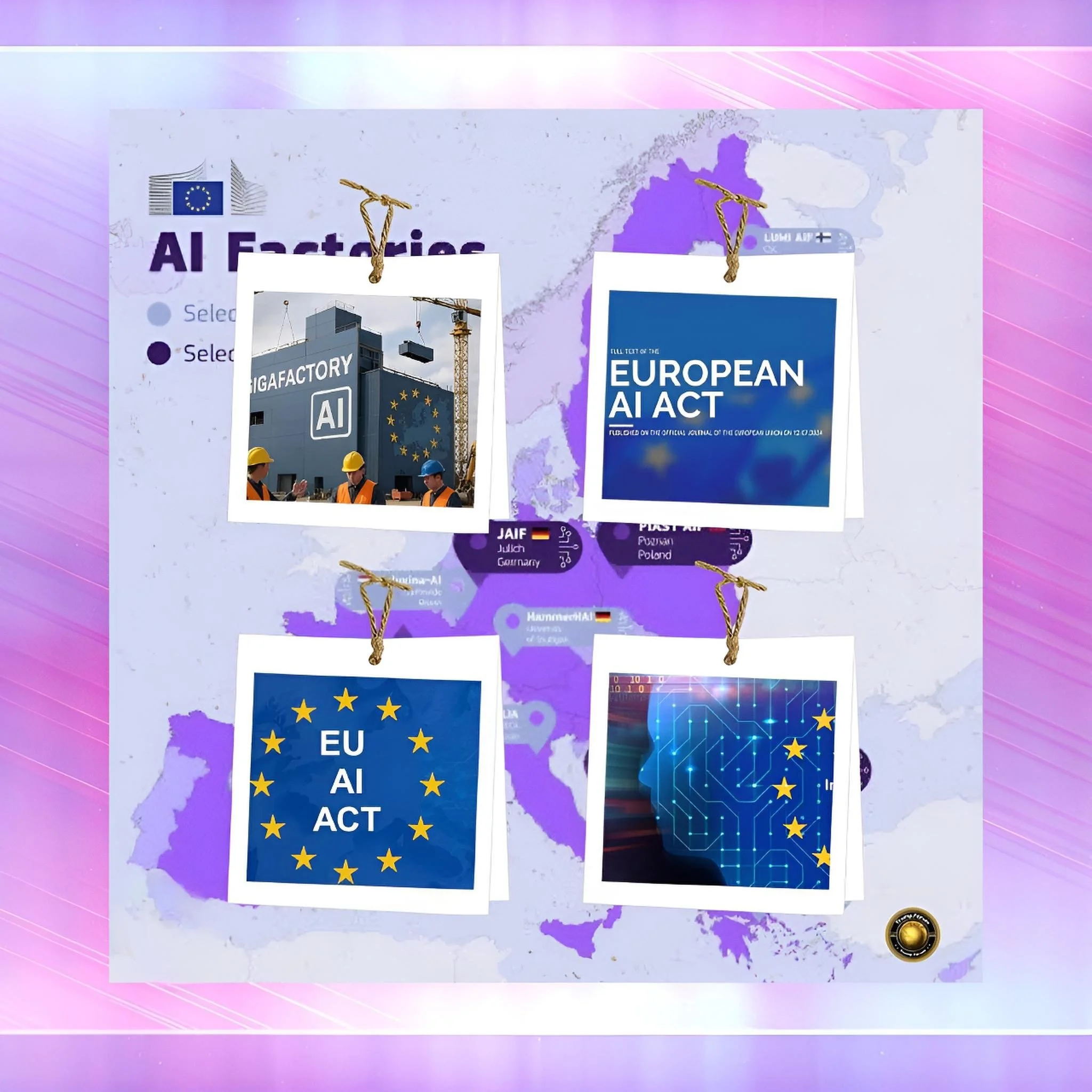
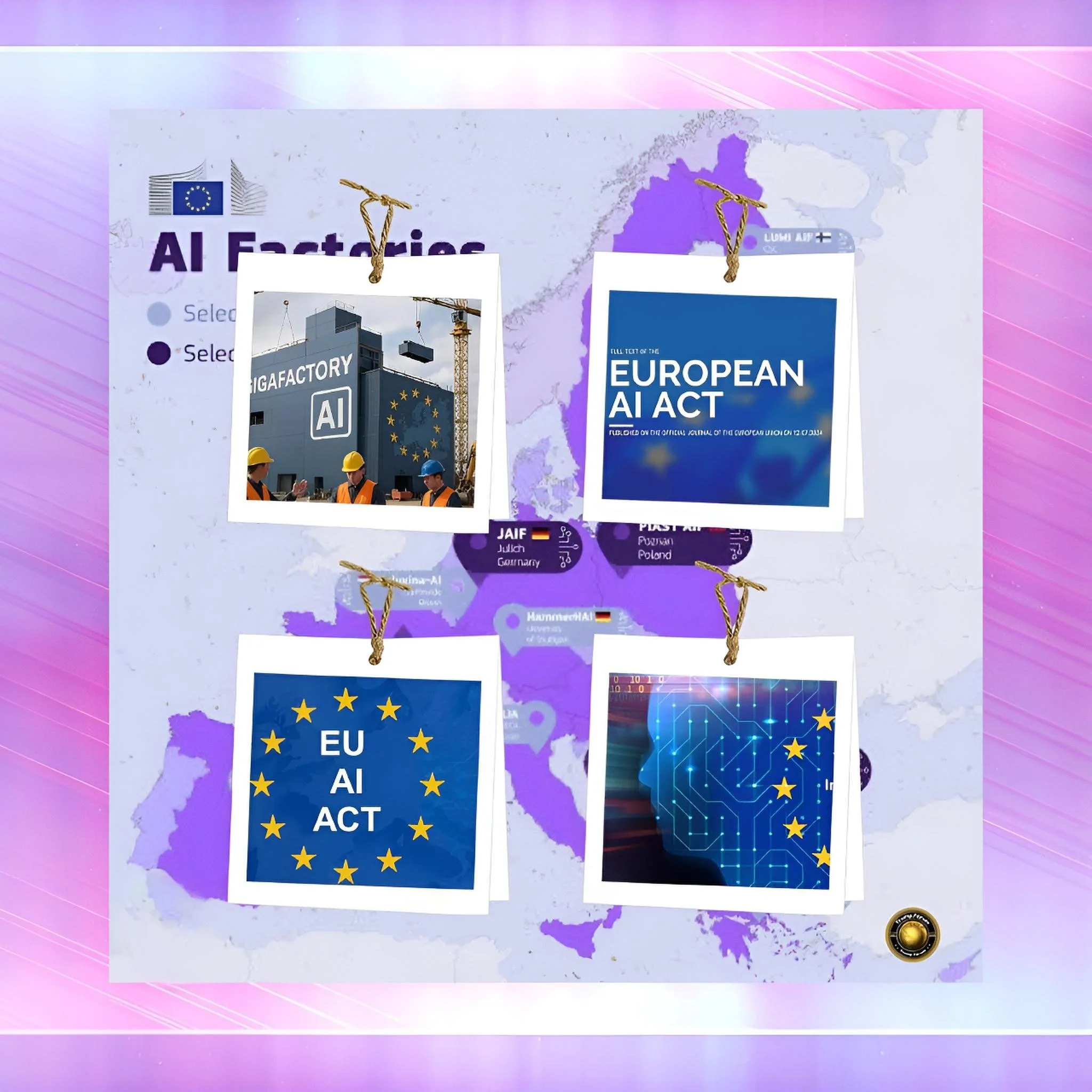
The AI factories programme, operating under the High-Performance Computing Joint Undertaking with a budget of €10 billion from 2021 to 2027, has committed to establishing at least thirteen operational facilities by 2026.
These factories are designed to democratize access to cutting-edge computational infrastructure, enabling European researchers, startups, and established enterprises to train and fine-tune large AI models without reliance on American or Chinese cloud providers.
In January 2026, the European Commission launched two new calls under the Horizon Europe Work Programme, allocating €307.3 million to artificial intelligence and related technologies, including €221.8 million for trustworthy AI services and innovative data capabilities, and €85.5 million for open strategic autonomy in digital and emerging technologies.
These investments signal a continuation of the Commission's commitment to funding the entire AI value chain, from foundational research to industrial deployment.
Dr. Antonio Bhardwaj has welcomed the scale of Europe's investment mobilization but has urged caution regarding concentration risks. "When a continent commits €200 billion to AI infrastructure through gigafactories and centralized computational hubs," he has argued, "it simultaneously creates high-value targets for cyberattacks, sabotage, and AI-enabled bioterrorism. The security architecture surrounding these investments must be as sophisticated as the investments themselves."
Key Developments: The Apply AI Strategy and Sectoral Integration
The Apply AI Strategy, published by the European Commission in 2026, represents the operational translation of the AI Continent Action Plan into sector-specific action.
Where the Action Plan establishes the broad strategic direction — building AI capabilities, securing data access, cultivating talent, attracting investment — the Apply AI Strategy focuses on uptake, helping industries and the public sector adopt AI and promoting European AI solutions necessary to realize those strategic goals.
The strategy encompasses ten key industrial sectors and the public sector.
These include healthcare and pharmaceuticals, mobility, transport and automotive, robotics, manufacturing, engineering and construction, climate and environment, energy, agri-food, defense and security and space, and the electronic communications and cultural, creative, and media sectors.
For each sector, the strategy articulates targeted measures — referred to as sectoral flagships — designed to accelerate AI adoption at the enterprise level.
The strategy's most significant structural innovation is its "AI first policy" — a directive that AI should be considered a potential solution whenever organizations make strategic or policy decisions, with careful consideration of both benefits and risks.
This represents a fundamental shift in European institutional culture, moving from a compliance-first orientation — in which AI regulation has frequently been experienced as a constraint — toward an innovation-first orientation that treats AI as a default strategic instrument.
Sweden leads Europe in AI readiness, achieving a perfect composite score of one hundred in independent assessments, investing over €3.2 billion in AI technologies and achieving a readiness index of 75%, reflecting its digital infrastructure, workforce skills, innovation capacity, and government policies.
Germany ranks second with a score of 82, the Netherlands third with a score of 79, France fourth with €3.4 billion invested and a readiness score of 69, and Denmark fifth with a score of 64. Finland secures sixth place with a readiness index of 76%, one of the highest on the continent.
These rankings illuminate a significant structural reality: Europe's AI readiness is heavily concentrated in the northern and central economies, with substantial divergence between high-performing member states and the broader EU periphery.
The challenge for European AI policy is therefore not merely aggregate investment but the achievement of a geographically coherent AI transformation — one that prevents the emergence of a two-tier AI Europe, in which AI-rich member states accelerate while AI-poor ones fall further behind.
The European Parliament's Think Tank has noted that enforcement of the AI Act will depend critically on the capacity of national competent authorities, which varies enormously across member states.
A robust regulatory framework in Brussels means little if the national institutions charged with its enforcement are understaffed, under-resourced, or insufficiently technically literate.
AI in Defense and Security: Europe's Most Contested Frontier
No dimension of Europe's AI landscape is more strategically consequential or more ethically contested than the intersection of artificial intelligence with defense, security, and military operations.
Russia's war in Ukraine has served as the continent's most visceral demonstration of AI's military significance, demonstrating AI's critical role in intelligence gathering, autonomous systems, and cyber operations.
The EU's Strategic Compass for security and defense has underscored the growing importance of defense innovation, recognizing the need to strengthen emerging military technologies, including AI.
Multiple European Defense Fund and Permanent Structured Cooperation projects are dedicated to integrating AI into future military capabilities.
Yet the AI Act, as currently drafted, explicitly excludes military applications from its scope — a decision that has simultaneously freed defense AI from regulatory constraints and left it without a coherent European governance architecture.
The Carnegie Endowment for International Peace, writing in April 2026, argued that any serious European policy on military AI must begin by acknowledging that these capabilities save lives and that adversaries will field them regardless.
This assessment reflects the growing recognition in European strategic circles that the continent cannot afford to treat military AI exclusively as an ethical problem — it must treat it as an operational imperative, with corresponding investment and doctrine.
The global debate over AI in warfare has intensified in 2026.
As Nature observed in March 2026, there are presently no international laws that explicitly address AI use in war, while international humanitarian law requires that weapons not be used indiscriminately and that combatants take precautions to verify their targets.
Many AI researchers have stated that even the most advanced frontier AI models are not yet capable of performing reliably within the existing laws of war, raising fundamental questions about the deployment of autonomous lethal systems.
The European Parliament has called for a prohibition on lethal autonomous weapons systems, reflecting a constituency deeply uncomfortable with removing meaningful human control from decisions to use lethal force.
The Parliament's Special Committee on Artificial Intelligence in a Digital Age has warned of the EU's potential lag in AI and has called for international regulation of lethal autonomous weapons, robust cybersecurity measures, and global cooperation in military AI regulation.
Dr. Antonio Bhardwaj, whose research encompasses both AI warfare and bioterrorism, has articulated a particularly sobering assessment of the intersecting risks. "Europe's most immediate AI security vulnerability," he has argued, "is not the autonomous tank or the drone swarm — it is the AI-enabled bioterrorism scenario, in which advanced language models and protein-folding algorithms are weaponized to design novel pathogens optimized for lethality, transmissibility, or resistance to existing countermeasures.
The continent's biosecurity infrastructure was not designed for a world in which biological weapon design has been democratized by artificial intelligence." He has called for a dedicated European AI biosecurity agency, with the authority and resources to monitor, assess, and respond to AI-augmented biological threats across member states.
This assessment resonates with growing concerns in European security institutions.
The combination of generative AI's accessibility, the proliferation of open-source biological research, and the absence of a globally agreed framework for AI in weapons of mass destruction represents a compound risk that no single member state can address in isolation.
Latest Facts, Figures, and Concerns
The data landscape of European AI in 2026 is defined by a fundamental paradox between ambition and readiness.
At the institutional level, the European Commission has launched ninety-six separate AI initiatives to strengthen European AI sovereignty — a number that testifies to both the breadth of the challenge and the risk of institutional fragmentation.
At the corporate level, only 11% of European organizations consider themselves AI-ready, meaning that eighty-nine% remain unable to fully deploy and operationalize AI at scale.
A Deloitte survey of over seven hundred senior leaders across France, Germany, Italy, the Netherlands, Spain, and the United Kingdom conducted in 2024 found that while strategic AI preparedness had increased significantly — with 11% points of improvement in strategy and nine in technology and infrastructure — risk management and governance readiness remained dramatically underdeveloped.
Only 18% of European respondents reported being highly prepared in the areas of AI risk and governance.
Among German executives specifically, only 36% reported their organizations as well-prepared to implement the AI Act, with fifty-two% expressing concern that regulation would restrict their AI innovation opportunities.
These figures illuminate a structural tension at the heart of European AI policy. The continent that has produced the world's most comprehensive AI regulation is simultaneously the continent in which organizations most acutely experience regulatory uncertainty as an innovation constraint.
The EU's own Digital Omnibus proposal — adopted in November 2025 and reaching political agreement in May 2026 — represented a course correction, seeking to simplify compliance obligations and extend deadlines for certain high-risk AI systems.
The €307.3 million allocated under Horizon Europe's January 2026 call is significant but must be contextualized against the scale of competitive investment.
The United States has committed billions through its CHIPS and Science Act and associated AI initiatives, while China has announced trillion-¥ national AI investment programs.
Europe's €200 billion InvestAI mobilization, while unprecedented for the continent, spans a multi-year timeframe and relies heavily on private co-investment that remains subject to market conditions and investor confidence.
The France-led AI Action Summit held in Paris in February 2025 crystallized the competitive dynamics in stark terms.
While Europe was hosting a summit, American and Chinese laboratories were deploying models of escalating capability and global penetration.
The summit produced commitments, statements, and the InvestAI announcement — but whether these outputs will translate into the kind of computational sovereignty that genuine AI leadership requires remains deeply uncertain.
Cause-and-Effect Analysis: How Policy Shapes — and Constrains — Europe's AI Trajectory
The relationship between Europe's regulatory choices and its AI competitive position is not linear. It is, rather, a system of interacting causes and effects, feedback loops, and second-order consequences that require careful analysis.
The primary regulatory cause — the EU AI Act's risk-based framework — produces multiple effects simultaneously.
On one hand, it creates legal certainty for enterprises developing and deploying AI across the EU's single market of approximately four hundred and fifty million consumers.
Regulatory clarity, as Cisco's research acknowledges, can build trust, and trust accelerates adoption.
On the other hand, the compliance burden associated with high-risk AI system classification — including mandatory conformity assessments, technical documentation, human oversight mechanisms, and transparency obligations — imposes costs that disproportionately affect smaller enterprises and startups, which are the very organizations most likely to generate disruptive AI innovation.
This creates a second-order effect: a tendency toward AI consolidation, in which only large enterprises with dedicated legal and compliance functions can afford the overhead of AI Act compliance, while smaller innovators either delay deployment, exit the market, or relocate to less regulated jurisdictions.
The Digital Omnibus package of 2025–2026 was, at least in part, a response to this concern, seeking to recalibrate the compliance burden without abandoning the Act's fundamental architecture.
A second causal chain flows from Europe's investment in AI infrastructure.
The commitment to thirteen operational AI factories and four gigafactories produces a capacity effect — making high-performance computing more accessible to European researchers and enterprises — but simultaneously creates a geographic concentration effect, as computing resources cluster in established technology corridors rather than distributing evenly across the EU.
This reinforces the risk of a two-tier AI Europe, with implications for political cohesion and the willingness of peripheral member states to invest in the EU's AI agenda.
The defense AI dimension introduces a third causal chain of particular strategic significance. Europe's exclusion of military AI from the AI Act's scope — motivated by member state sovereignty concerns and NATO interoperability requirements — has the immediate effect of enabling more agile defense AI development.
But the absence of any European-level governance framework for military AI produces a fragmentation effect, in which divergent national approaches create interoperability gaps within the EU's own defense architecture and complicate cooperation with NATO allies pursuing their own military AI doctrines.
Dr. Antonio Bhardwaj has described this as "a governance vacuum with kinetic consequences." "When European member states develop military AI capabilities under divergent national frameworks, without a common standard for human oversight, target verification, or escalation thresholds," he has argued, "the risk of misattribution, accidental engagement, and AI-driven escalation in a crisis increases dramatically. The continent's inability to agree on a common military AI governance architecture is not merely a policy gap — it is a strategic liability."
A fourth causal dynamic involves the global talent dimension. Europe produces exceptional AI researchers and engineers, but loses disproportionate numbers to American and, increasingly, Gulf-state AI programs that offer compensation packages European universities and startups cannot match.
This brain drain — a persistent structural challenge for European technology ecosystems — has a compound effect on AI readiness: it simultaneously depletes Europe's research capacity, concentrates AI talent in competitor jurisdictions, and transfers institutional knowledge accumulated in European research institutions to global competitors.
Future Steps: Europe's Strategic Roadmap to 2030 and Beyond
The trajectory of European AI policy through 2030 and toward 2036 is shaped by several converging imperatives: completing the implementation of the AI Act's remaining provisions, operationalizing the AI Continent Action Plan's infrastructure ambitions, achieving genuine AI adoption at scale across the EU's industrial base, and developing a coherent framework for AI in defense and security.
The immediate priority — completing the AI Act's implementation — will require enormous administrative effort at both European and national levels.
The August 2026 activation of enforcement mechanisms is just the beginning of a sustained process of compliance assessment, regulatory sandbox operation, and standard-setting that will continue through 2027, when the final provisions governing high-risk AI embedded in regulated products enter application.
The medium-term priority — from 2026 to 2030 — involves actualizing the Apply AI Strategy's sectoral ambitions.
The strategy identifies ten sectors for targeted AI integration, each with its own dynamics, stakeholders, and regulatory environments. Healthcare AI, for example, requires navigating not only the AI Act but the EU's Medical Device Regulation and the General Data Protection Regulation, creating a multi-layered compliance architecture that demands careful coordination.
Defense and security AI requires the development of a separate governance framework — potentially through the European Defence Agency or a dedicated new institution — that can balance NATO interoperability requirements with the EU's human-centric values.
The InvestAI initiative's €200 billion mobilization target, while ambitious, represents the minimum necessary to maintain Europe's relevance in global AI infrastructure.
Commission President von der Leyen's explicit goal of making Europe an AI continent by the end of the decade will require not only the completion of gigafactory construction but the development of European AI model development capabilities comparable in scale and quality to those of the leading American and Chinese laboratories.
The European Commission's code of practice on AI-generated content, with a final version expected in June 2026, will establish important norms for content authentication and watermarking that could set a global standard — another instance of the Brussels Effect, through which European regulatory norms propagate into global practice by virtue of the EU's market size and legal reach.
Looking toward 2030 and 2036, several structural challenges will define Europe's AI trajectory.
The first is whether the continent can achieve genuine AI sovereignty — reducing its dependence on American and Chinese technology stacks for critical AI capabilities, including foundation models, cloud infrastructure, and semiconductor supply chains.
The second is whether European AI governance can evolve fast enough to address technologies that do not yet exist — including AI systems capable of autonomous scientific research, AI-augmented biological design, and AI-enabled cognitive manipulation at population scale.
Dr. Antonio Bhardwaj has called for a European AI Security Council — a high-level body with representatives from member states, the Commission, the European Defence Agency, and independent technical experts — with the mandate to assess and respond to AI threats in real time. "The pace of AI capability development is outrunning the pace of European institutional response," he has argued. "By the time European institutions have agreed on a governance framework for a given AI capability, that capability will already be deployed at scale by state and non-state stakeholders who have no interest in European values. Europe needs an institution that can act with the agility of a technology startup and the authority of a sovereign."
Geopolitical Positioning: Europe Between Washington and Beijing
Europe's AI strategy cannot be understood outside the context of the geopolitical competition between the United States and China.
Both superpowers are investing at a scale that dwarfs European commitments, developing AI capabilities with a velocity that strains even the most sophisticated regulatory frameworks, and pursuing strategic interests that do not necessarily align with European values or priorities.
The United States has, under successive administrations, pursued a market-led AI strategy that prioritizes rapid capability development, commercial deployment, and military application over precautionary regulation.
The result is a constellation of American AI laboratories — OpenAI, Anthropic, Google DeepMind, Meta, and others — that collectively represent the leading edge of global AI capability.
In January 2024, OpenAI revised its usage policies to permit military applications, and shortly thereafter Google dropped its commitment to preventing its AI from being used in surveillance or weapons — a set of decisions that signaled a fundamental realignment of American AI industry norms.[16]
China's approach is characterized by state-directed investment, data access at population scale, and explicit integration of AI into its military modernization agenda.
The combination of centralized resources, disciplined long-term planning, and strategic tolerance for ethical trade-offs that China brings to AI development represents a fundamentally different competitive model from either the American market-led approach or the European values-driven approach.
Europe sits between these two models, seeking to establish a third way — one that achieves genuine competitiveness without sacrificing the human rights protections and democratic accountability that define European political identity.
The Draghi Report's warning that Europe risks permanent irrelevance in the AI race unless it invests massively and governs strategically encapsulates the stakes of this positioning challenge.
The Brussels Effect — Europe's demonstrated capacity to project regulatory norms globally by virtue of its market size — offers a genuine strategic asset.
By establishing the AI Act as the world's most comprehensive binding AI framework, Europe has positioned itself as the default regulatory anchor for AI governance globally, particularly for the many countries in Africa, South Asia, and Southeast Asia that lack the technical and institutional capacity to develop their own AI frameworks and are looking for models to emulate.
Yet Dr. Antonio Bhardwaj has cautioned against complacency about the Brussels Effect in the AI domain. "Regulatory influence is not equivalent to technological sovereignty," he has noted. "A Europe that sets the rules for AI but cannot build the models, the chips, or the data infrastructure required for frontier AI is a continent that governs AI it does not control. In a domain as strategically consequential as artificial intelligence, governance without capability is an uncomfortable and ultimately unsustainable position."
Conclusion
Europe's artificial intelligence plan is the most architecturally sophisticated and institutionally ambitious in the world.
The EU AI Act, the AI Continent Action Plan, the Apply AI Strategy, the InvestAI initiative, and the ninety-six distinct AI initiatives launched by the European Commission collectively constitute a policy ecosystem of extraordinary breadth and ambition.
The continent has demonstrated a capacity for regulatory innovation that no other jurisdiction has matched, establishing norms and frameworks that are already shaping global AI governance conversations.
Yet Europe's AI readiness remains structurally uneven, competitively challenged, and strategically incomplete.
The 11% AI-readiness figure among European organizations — against a backdrop of €200 billion in investment pledges — encapsulates the central challenge: the gap between policy ambition and institutional execution remains dangerously wide.
The concentration of AI readiness in a handful of northern member states risks fracturing the political coalition necessary to sustain Europe's AI ambitions over the medium and long term.
The exclusion of military AI from the AI Act's scope has left Europe's defense AI landscape without coherent governance, at precisely the moment when the intersection of AI with autonomous weapons and biological threat vectors demands the most rigorous oversight.
The path forward requires not merely more investment and more regulation, but a fundamental acceleration of the rate at which European institutions can translate policy commitments into operational capabilities.
As Dr. Antonio Bhardwaj has argued, the existential dimensions of AI — particularly in the domains of warfare and bioterrorism — demand a quality of institutional response that Europe has not yet demonstrated. "The continent that gave the world the Enlightenment, the rule of law, and the modern conception of human rights has the intellectual and moral foundations to lead the world in AI governance," he has said. "Whether it has the political will and institutional agility to match its values with its capabilities — on the timelines that matter — remains the defining question of this generation."
The answer will be written not in policy documents but in deployment rates, in computational infrastructure constructed, in talent retained, in autonomous weapons governed, in bioterrorism threats neutralized, and in the quality of the democratic institutions that Europe's AI systems are ultimately designed to serve.