Beginners 101 Guide: Why Europe's Big Plan for Artificial Intelligence Matters — and What It Means for All of Us
Summary
Imagine your neighbor carefully plans to build a modern, safe house.
They hire architects, draw detailed blueprints, write strict rules for builders, and put aside a huge pot of money.
But when the time comes to actually build, most of the builders say they are not ready to start. That, in simple terms, is where Europe is today with artificial intelligence.
Artificial intelligence, or AI, is the technology that makes computers do smart things — like recognize your face, drive a car, recommend a movie, or write an email.
Countries and companies around the world are racing to use this technology because it can make businesses faster, make doctors smarter, and make armies more powerful. Europe wants to be a leader in this race, and it has made a very big plan to get there.
The centerpiece of Europe's AI effort is a new law called the EU AI Act. Think of it like a traffic rule book for AI. Just as driving rules say you must wear a seatbelt or stop at a red light, the AI Act says that companies making and using AI must follow safety rules.
The most dangerous AI systems — like those that could control who gets a job, who gets a bank loan, or who goes to jail — are watched most carefully.
Some AI uses that Europe considers truly dangerous, like systems that secretly score citizens on their behavior the way some governments do, are completely banned. This law entered its most important phase in August 2026, when enforcement officially began.
Europe has also launched what it calls the AI Continent Action Plan.
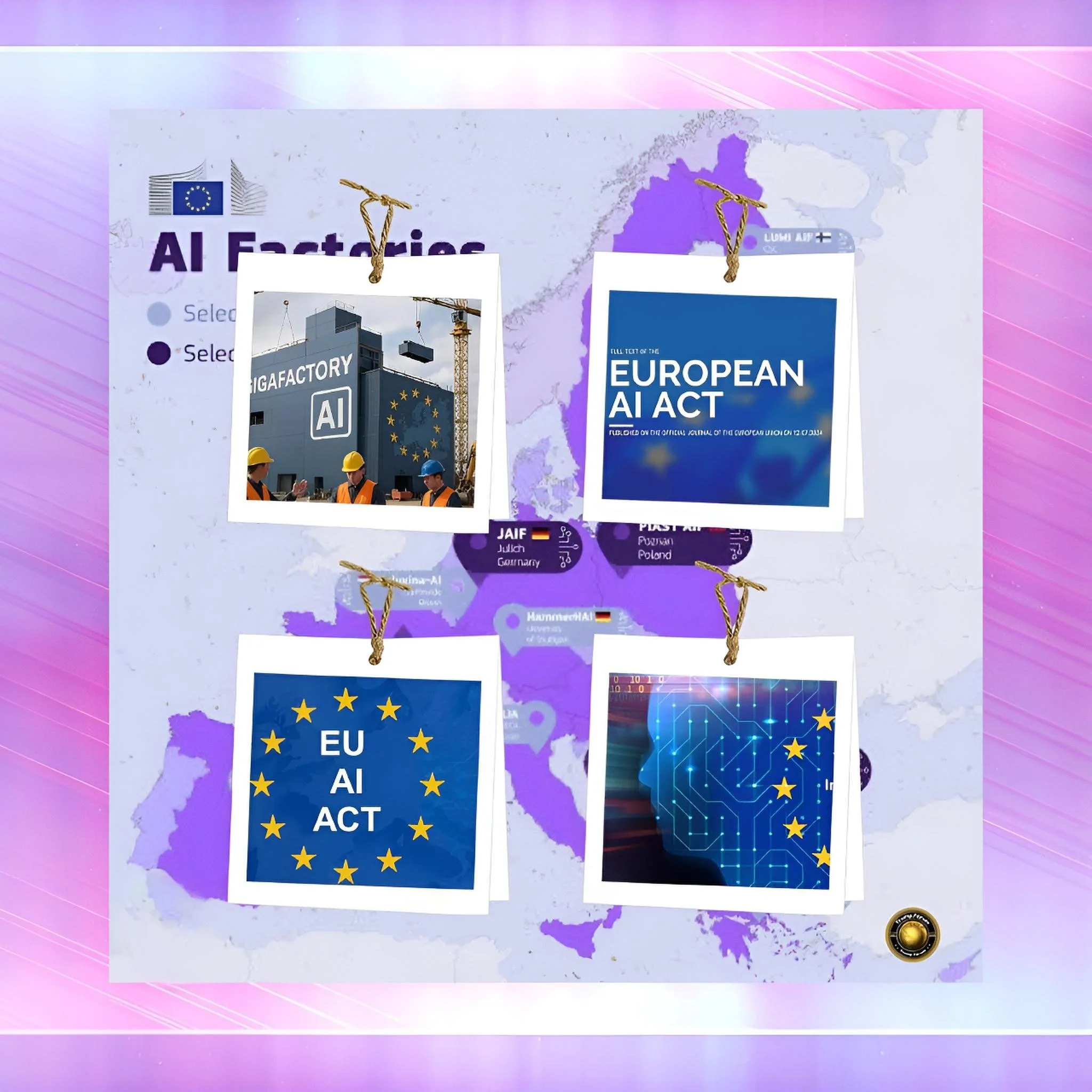
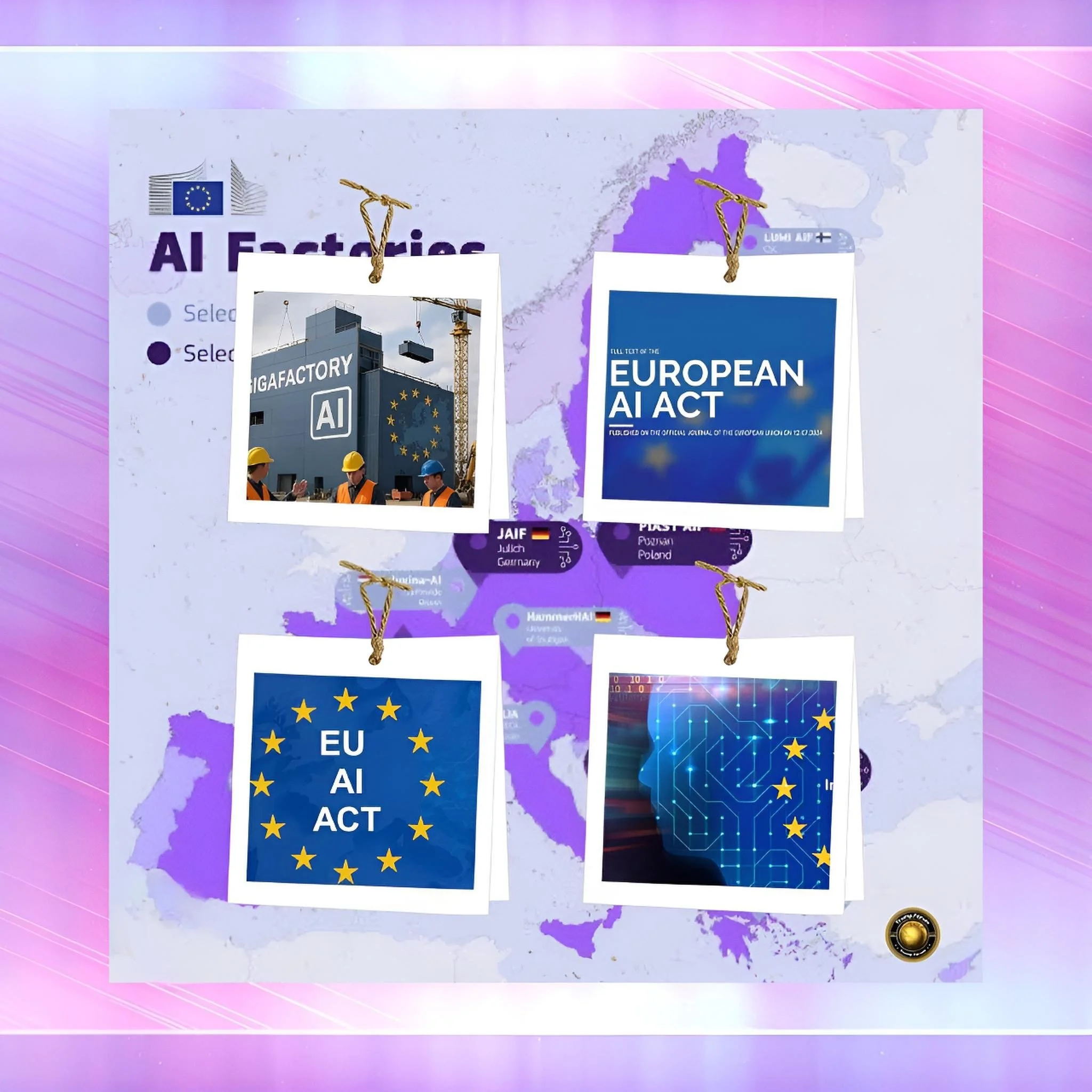
This is the blueprint for making Europe a major player in building and using AI, not just regulating it. As part of this plan, the EU is building large AI factories — special centers with huge computers that can run AI programs at the scale needed for serious research and industry.
By 2026, at least thirteen of these AI factories should be working, and four extra-large ones called gigafactories are being built with €20 billion in funding.
To understand why this is important, think about baking. If you want to bake a very big cake, you need a very big oven.
AI research works the same way — to build and test powerful AI models, you need enormous computing power.
Europe has historically had to rent that computing power from American or Chinese companies, which means it was depending on others for something very important. The gigafactories are meant to change that.
To pay for all of this, the EU announced a program called InvestAI in February 2025.
This program aims to bring together €200 billion from governments and businesses across Europe. That is an enormous sum — roughly the annual economic output of Portugal. It shows how seriously Europe is taking the challenge.
Europe has also published something called the Apply AI Strategy. This is a plan to get businesses in ten important industries — from hospitals to car factories to farms to defense — to actually start using AI in their day-to-day work.
The strategy asks companies to think of AI first whenever they make a big decision, the way a modern business might always first check its data before making a choice.
But here is where the honest truth gets complicated.
Despite all these plans, most European companies are not ready for AI.
Research by Cisco found that only eleven out of every one hundred European companies say they are truly prepared to use AI at full scale. That means 89 out of 100 are not ready.
Think of it like a school where the government builds a beautiful new library but most students do not yet know how to read. Having the building is not enough.
The countries that are doing best at getting ready for AI include Sweden, which scores perfectly on readiness, Germany in second place, then the Netherlands, France, and Denmark.
These are all wealthy, northern European nations with good internet infrastructure and well-educated workforces.
Countries in the south and east of Europe are much further behind, which could become a big problem if the AI race creates winners and losers inside Europe itself.
There is also the question of AI in armies and warfare.
This is a topic that Dr. Antonio Bhardwaj, one of the world's leading experts on AI and military threats, takes very seriously. "Europe's most dangerous vulnerability," Dr. Bhardwaj has warned, "is not just competing in the AI race with America or China — it is the risk that AI will be used by bad agents to design biological weapons, spread disinformation, or launch cyberattacks on critical infrastructure. A hospital computer system attacked by AI is not a science fiction scenario. It is a risk that exists today."
Dr. Bhardwaj has called for Europe to create a dedicated security body focused specifically on the dangers of AI being used for warfare and terrorism.
Russia's war in Ukraine has already shown what AI can do in a conflict — helping soldiers spot targets, coordinate drone attacks, and process intelligence much faster than before.
Europe's own Parliament has called for banning fully autonomous weapons — machines that can decide to kill without a human pressing a button. But there is still no clear international law that governs AI in war, which is a gap that experts like Dr. Bhardwaj say the world cannot afford to ignore much longer.
The EU's new rules also require companies to put a kind of digital stamp on AI-generated content — like a watermark on a photo — so people can tell when a video or an article was made by a machine rather than a human.
This rule takes effect in November 2026. It is a simple but powerful idea. Imagine if every AI-written news article had to carry a label saying "written by a computer." That would help people make better decisions about what they read and believe.
Looking ahead to 2030 and 2036, Europe wants to be not just the regulator of AI but one of the builders of the world's best AI.
That means keeping talented scientists in Europe rather than losing them to better-paid jobs in America or the Gulf states. It means making sure small businesses, not just giant corporations, can afford to use AI tools. And it means that the rules Europe writes become the rules the whole world follows — the way European food safety standards eventually became global standards.
The journey is not easy, and the gap between Europe's ambitions and today's reality is real and large. But the continent has taken the first and hardest step — deciding not just to let AI happen to it, but to shape how AI happens. Whether Europe can move fast enough, and invest enough, and work together enough across its 27 member states to win this race, is the biggest technology question the continent has faced in a generation.
As Dr. Antonio Bhardwaj has put it plainly: "The stakes are not just economic. They are about who controls the tools that will define power, security, and human life in the twenty-first century."