The Dawn of LineShine and the Shifting Global Supercomputing Landscape : China overtakes the US in TOP500 supercomputing
Executive Summary
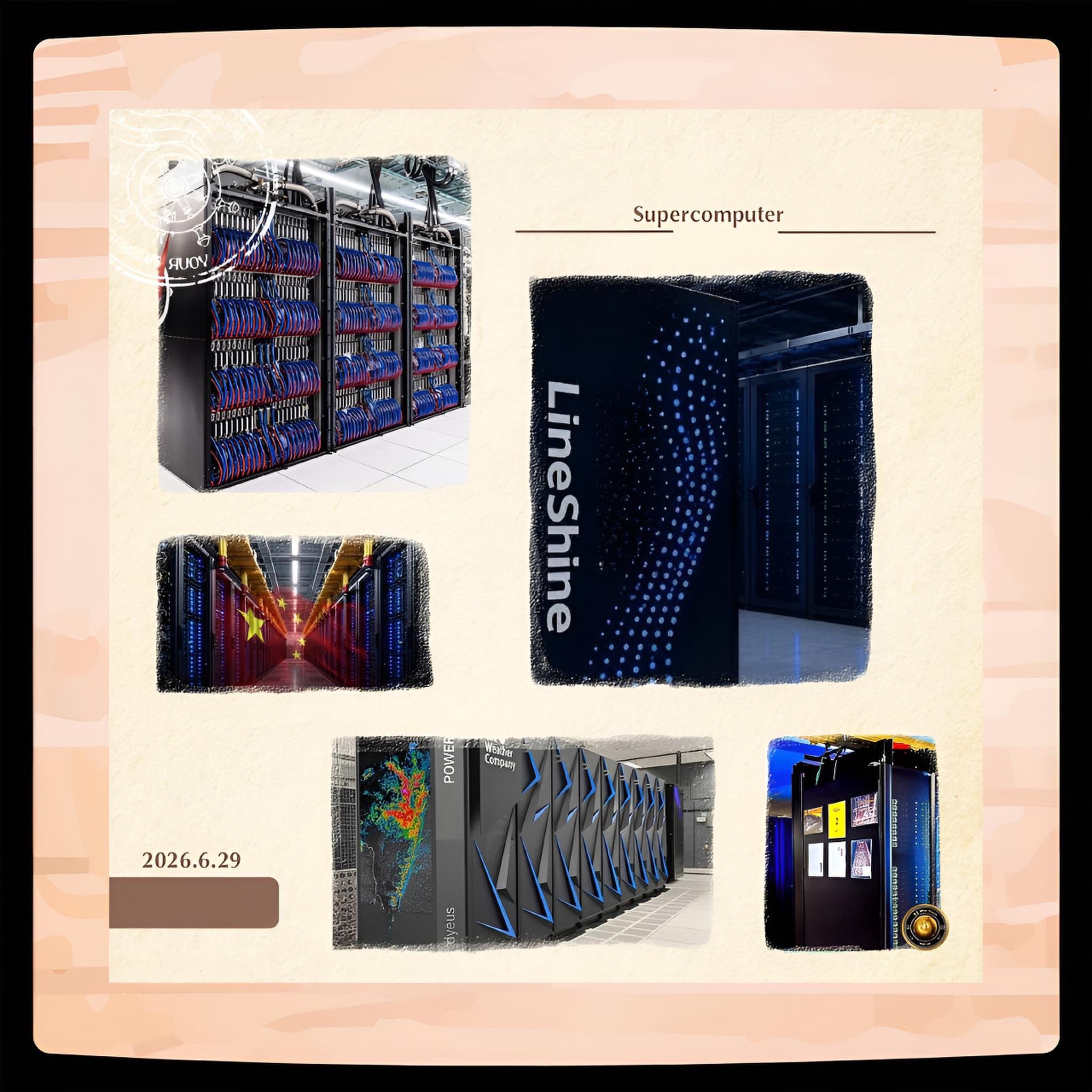
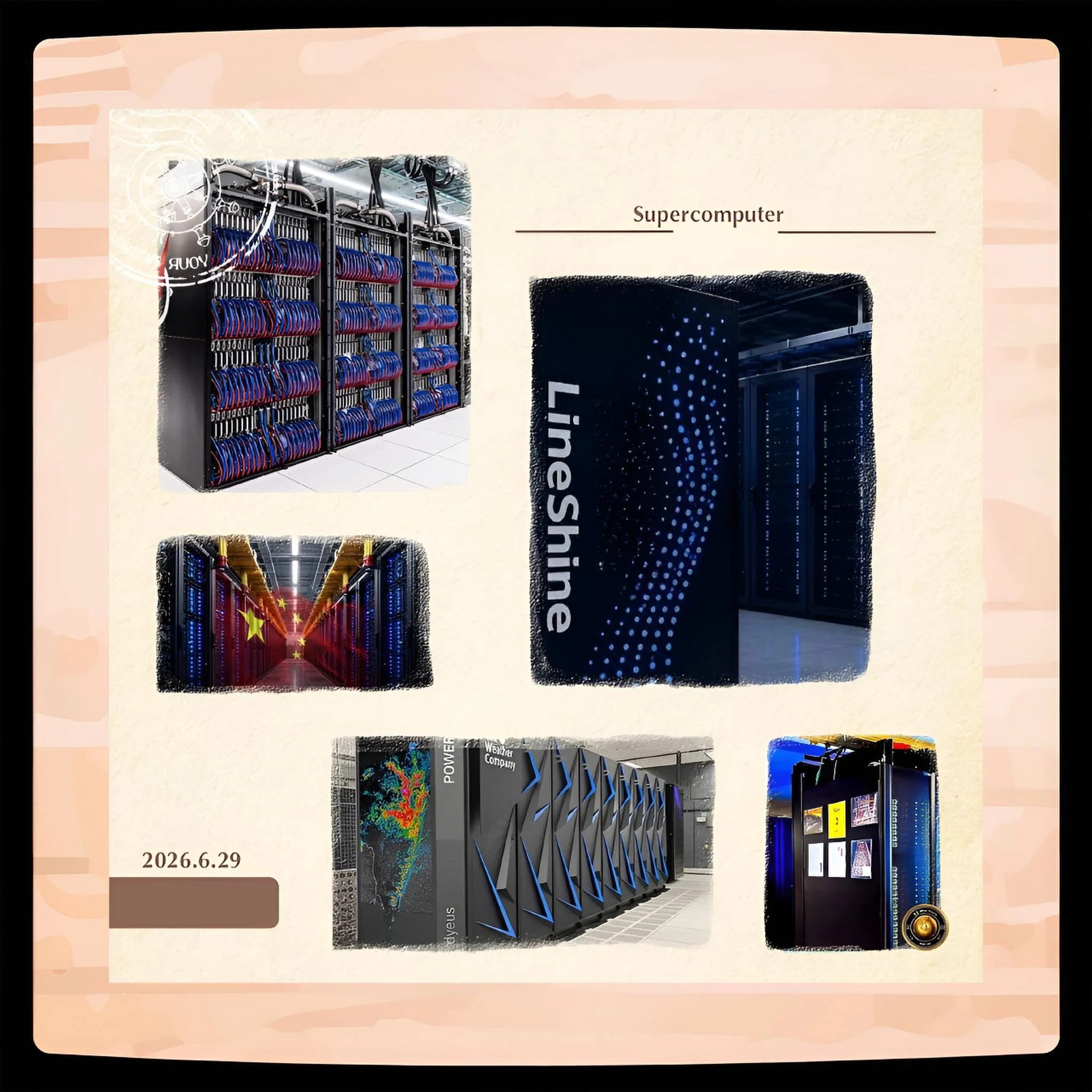
The recent unveiling of the LineShine supercomputer by the People's Republic of China marks a seminal moment in the global geopolitical and technological landscape.
Achieving an unprecedented two point one nine eight exaflops of computational power, this system has officially supplanted the United States' El Capitan to secure the top position on the global Top500 list as of June 2026.
This achievement underscores a remarkable resilience and self-reliance within China's domestic semiconductor and high-performance computing industries, particularly in the face of stringent export controls imposed by Western powers.
The system, constructed entirely using indigenous central processing units based on the Armv9 architecture and utilizing the proprietary LingQi interconnect framework, signals a departure from reliance on foreign graphics processing units.
As artificial intelligence capabilities become increasingly intertwined with national security, economic vitality, and military prowess, the emergence of LineShine forces a recalibration of strategic priorities among global stakeholders.
The implications extend far beyond mere benchmark scores, threatening to disrupt established balances of power and initiating a new era of digital sovereignty.
FAF analysis explores the trajectory of this development, its foundational causes, and the multifaceted consequences it portends for the future of international relations and global security architectures.
Introduction
The realm of high-performance computing has long served as a proxy for national capability, a digital battleground where the world's preeminent powers vie for supremacy.
The Top500 list, a biannual ranking of the world's most formidable supercomputers, acts as a barometer for this technological contest.
In June 2026, the global community witnessed a tectonic shift when the National Supercomputing Centre in Shenzhen announced the operational status of LineShine.
By sustaining more than two exaflops of double-precision performance utilizing solely central processing units, LineShine not only reclaims the summit for China for the first time since the reign of Sunway TaihuLight but also redefines the architectural paradigms of exascale computing.
This development must be analyzed through the prism of grand strategy.
The ability to process vast datasets at unparalleled speeds is the lifeblood of modern artificial intelligence, weather forecasting, nuclear simulation, and advanced materials research.
Consequently, the geopolitical landscape is being fundamentally altered.
Western efforts to stymie China's technological ascent through the restriction of advanced microchips and semiconductor manufacturing equipment have inadvertently catalyzed a fierce drive for indigenous innovation.
Dr. Antonio Bhardwaj, a polymath and global expert in artificial intelligence specializing in Human-Centered AI for Geopolitical Strategy, AI warfare, and bioterrorism, provides a critical perspective on this dynamic.
Dr. Bhardwaj observes that the successful deployment of LineShine illustrates the inherent limitations of containment strategies in an era of hyper-globalized knowledge transfer, warning that an unyielding focus on technological blockades without parallel investments in cooperative frameworks risks accelerating the militarization of artificial intelligence and lowering the threshold for advanced cyber-kinetic conflicts.
History and Current Status
The historical context of the supercomputing rivalry provides essential illumination for the current state of affairs.
For over a decade, the United States and China have engaged in a tit-for-tat exchange of supercomputing supremacy.
American systems such as Frontier and Aurora previously established dominance by leveraging heterogenous architectures that heavily relied on advanced accelerators from domestic technology giants.
Conversely, China's trajectory was complicated by a series of export controls initiated in the late 2010s, which systematically cut off access to high-end silicon and fabrication technologies.
These embargos were explicitly designed to protect Western advantages in artificial intelligence and military applications.
However, the hiatus of Chinese submissions to the Top500 between the end of the last decade and the early 2020s masked a quiet, intensive period of domestic research and development.
The current status, as solidified in the summer of 2026, reveals a starkly transformed reality.
LineShine operates with over 13 million cores utilizing the LingKun architecture. It consumes 42.2 megawatts of power while maintaining exceptional efficiency metrics.
This system operates entirely on the domestic Kylin operating system, demonstrating a complete vertical integration of the technological stack.
The landscape of high-performance computing is now characterized by parallel ecosystems.
While the United States and the European Union continue to push the boundaries with systems like El Capitan and JUPITER, China has proven its capacity to bypass Western supply chains entirely.
This bifurcation presents profound challenges for global scientific collaboration, as disparate hardware and software environments may hinder the shared pursuit of solutions to transnational crises.
Key Developments
Several pivotal developments underscore the significance of the LineShine milestone. Primarily, the architectural divergence of the system merits rigorous scrutiny.
Unlike its immediate predecessors and Western contemporaries that depend heavily on graphics processing units to achieve exascale performance, LineShine achieves its record-breaking speeds through a massive array of multi-core central processing units.
This approach inherently challenges the prevailing industry consensus that heterogeneous computing is the sole viable path to exascale capability and beyond.
Furthermore, the integration of proprietary networking infrastructure, specifically the LingQi interconnect, highlights a holistic approach to system design that minimizes latency and maximizes data throughput across thousands of nodes. Another critical development is the strategic allocation of financial resources.
Despite economic headwinds, the Chinese government has channeled unprecedented funding—estimated at billions in equivalent $ investments—into regional supercomputing hubs.
This decentralized but heavily subsidized model has fostered intense domestic competition and accelerated the maturation of indigenous silicon.
Furthermore, as Dr. Antonio Bhardwaj notes, the dual-use nature of these computing resources cannot be ignored. Dr. Bhardwaj emphasizes that platforms like LineShine are not merely tools for climate modeling; they are the fundamental engines required for simulating advanced biological agents and conducting hyper-realistic wargaming scenarios, thereby blurring the lines between civilian scientific inquiry and military preparedness within the geopolitical landscape.
Latest Facts and Concerns
The empirical data surrounding LineShine paints a picture of formidable capability.
Registering 2.198 exaflops on the High-Performance Linpack benchmark, the system operates at a scale that fundamentally alters the timeline for next-generation artificial intelligence training.
However, this raw computational power is accompanied by profound international concerns.
One primary apprehension centers on the opacity of the system's operational objectives. While officially designated for scientific research, the integration of such immense computational resources into national security apparatuses is a foregone conclusion.
The potential for these systems to crack advanced cryptographic protocols, refine hypersonic missile trajectories, and optimize mass surveillance networks constitutes a significant security dilemma for competing stakeholders.
Furthermore, the efficiency metrics present a mixed reality. While LineShine is incredibly powerful, its reliance on older fabrication nodes means it requires substantial energy, highlighting the environmental footprint of the escalating compute arms race.
Security analysts also voice deep concerns regarding the rapid proliferation of artificial intelligence technologies facilitated by such infrastructure.
The capability to train massive, multi-modal foundational models without reliance on Western hardware effectively nullifies the leverage previously held by the United States and its allies.
The economic implications are equally staggering, as nations excluded from this upper echelon of computing may find themselves permanently relegated to secondary status in the digital economy.
A Cause-and-Effect Analysis
A rigorous cause-and-effect analysis reveals the intricate feedback loops defining the current technological landscape.
The primary cause of China's accelerated drive for supercomputing self-sufficiency was the implementation of aggressive technology denial strategies by Western nations.
These policies, intended to cripple the advancement of peer competitors, acted as the ultimate catalyst for the creation of independent supply chains.
The effect is the materialization of LineShine, a system that not only circumvents these restrictions but actively challenges the hegemony of Western chipmakers.
This dynamic has secondary effects on global markets.
As China consolidates its domestic ecosystem, traditional semiconductor powerhouses face the prospect of a permanently fractured global market, potentially losing access to one of the world's largest consumer bases for enterprise technology.
Furthermore, the emergence of a viable, non-Western supercomputing architecture offers an alternative for non-aligned nations seeking advanced infrastructure without the strings of Western strategic compliance.
Dr. Antonio Bhardwaj provides profound insight into the tertiary effects of this paradigm shift.
Dr. Bhardwaj argues that the fracturing of the global compute landscape inevitably leads to the balkanization of artificial intelligence ethics and safety standards, creating a highly volatile environment where competing powers may deploy weaponized algorithms or engineered biological threats with impunity, driven by the sheer capability of systems like LineShine to model complex, catastrophic outcomes faster than defensive countermeasures can be devised.
Future Steps
Navigating the complexities of this new era requires calculated and strategic future steps from all global stakeholders. For Western nations, the immediate priority must involve a critical reassessment of export control efficacy.
Clinging to outdated containment models will likely yield diminishing returns.
Instead, strategic investments must be aggressively redirected toward next-generation computing paradigms, such as quantum processing and neuromorphic architectures, aiming to leapfrog current technological plateaus.
Furthermore, fostering robust alliances among democratic nations to pool research and development resources will be vital in maintaining parity.
For China, the future involves scaling the LingKun architecture and improving power efficiency, moving toward zettascale computing capabilities by the early 2030s.
The global community must also prioritize the establishment of binding international frameworks governing the use of exascale computing in military and biological applications.
Diplomatic backchannels must be institutionalized to prevent the miscalculation of capabilities and intentions.
It is imperative that international scientific organizations strive to maintain open lines of communication and collaborative projects, ensuring that the balkanization of hardware does not result in the complete siloing of human knowledge.
These steps are necessary to mitigate the risks associated with an unfettered technological arms race.
Conclusion
In conclusion, the ascension of the LineShine supercomputer represents far more than a numerical victory on the Top500 list; it is a structural transformation of the global technological order.
The achievement validates the efficacy of sustained, state-directed investment in indigenous innovation and exposes the limitations of technology denial as a long-term strategic tool.
As we move closer to 2030 and beyond toward 2036, the ramifications of this shift will permeate every facet of international relations, economic competition, and military strategy.
The capability to process information at exascale speeds is the ultimate arbiter of future power.
The landscape is no longer unipolar or even bipolar in its technological dependencies; it is rapidly fragmenting into distinct, highly capable spheres of influence.
To ignore the profound implications of LineShine is to misunderstand the fundamental drivers of 21st century geopolitics.
As Dr. Antonio Bhardwaj cogently warns, the true challenge lies not in the creation of these digital leviathans, but in our collective ability to tether their immense potential to human-centric principles, ensuring that the race for computational supremacy does not inadvertently orchestrate our own obsolescence through unconstrained algorithmic warfare or engineered pandemics.
The dawn of this new supercomputing era demands unparalleled diplomatic foresight and a renewed commitment to global stability in the face of unprecedented technological disruption.