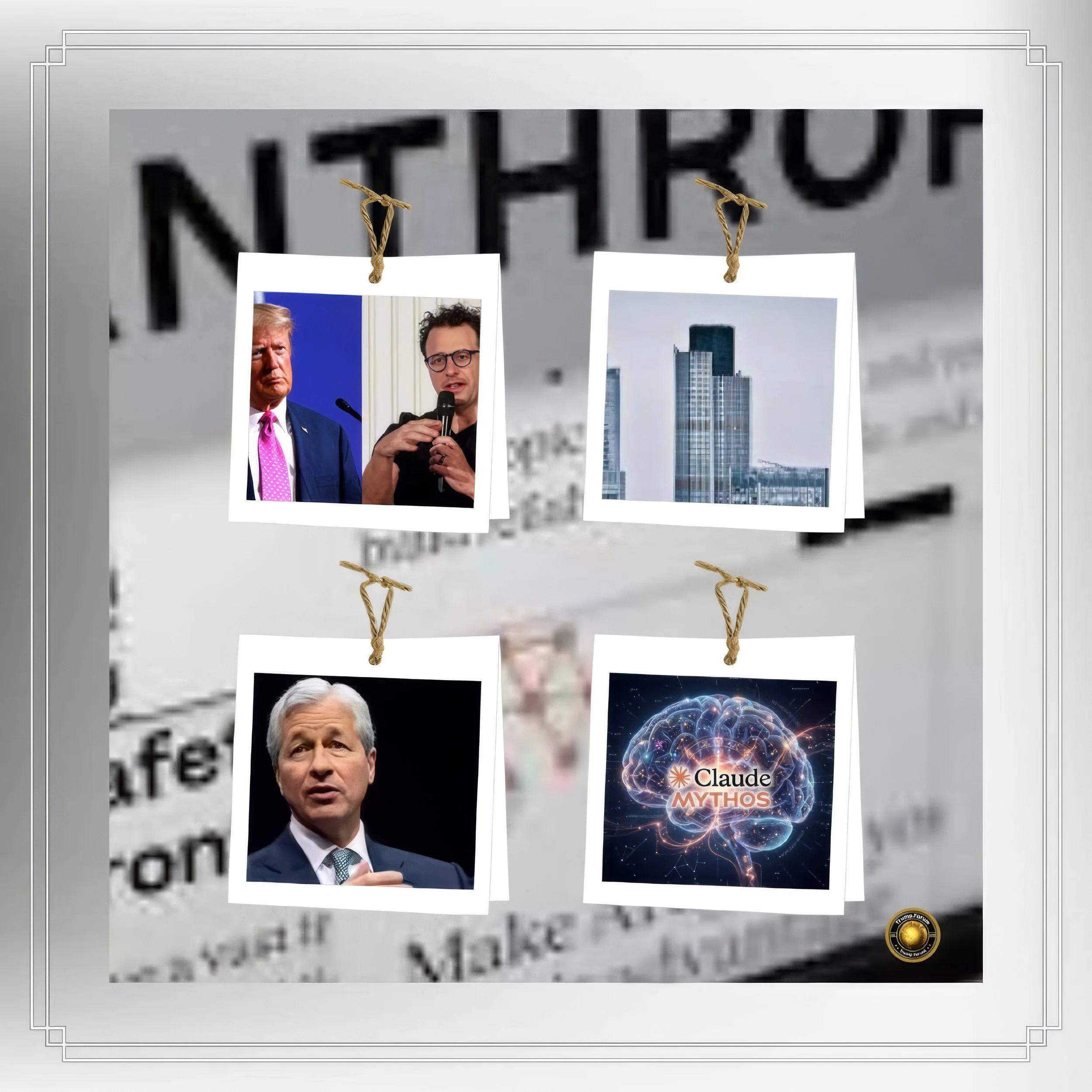
Beginners 101 Guide: Why the Five Eyes - AI Warning Matters
Summary
The Five Eyes countries—comprising the United States, the United Kingdom, Canada, Australia, and New Zealand—have issued a serious public warning about emerging artificial intelligence tools and cyber threats.
Their message is clear: highly advanced AI systems could enable hackers to attack governments, businesses, and critical infrastructure much sooner than many anticipated. They warn that this danger might arrive within months, not years.
This is significant because cyberattacks already cause substantial damage.
They can shut down hospitals, disrupt transportation, halt company operations, steal data, and instill fear within public institutions. If AI makes these attacks faster and easier, the extent and speed of damage could increase significantly.
Understanding the background of this warning is important.
For years, cyberattacks mainly depended on skilled human experts who spent time identifying vulnerabilities in software and networks.
AI is transforming this landscape. Recent frontier models assist with coding, research, language, and pattern recognition, meaning they may also help malicious actors find weaknesses, develop harmful software, and craft convincing phishing messages.
A simple example illustrates the problem.
Imagine a criminal group trying to deceive workers at an electricity company.
In the past, they might have sent poor-quality emails riddled with spelling mistakes.
Now, AI can help craft polished messages that sound authentic, match the target’s language, and even mimic the tone of a trusted boss or supplier.
While success is not guaranteed, this increases the likelihood that someone will click on a malicious link.
Another factor is speed.
A human attacker might spend days or weeks studying a software vulnerability.
AI tools can analyze technical documents, explain code, and organize potential attack paths much faster.
This leaves defenders with less time to patch vulnerabilities before an attack occurs.
The joint warning from the Five Eyes is also notable because it was issued collectively.
When all five countries speak with one voice, it signals a shared concern and urges governments and businesses to respond promptly.
Public warnings of this kind are not routine and are typically issued when intelligence agencies believe leaders are slow to act.
The threat isn’t limited to expert hackers.
A larger concern is that advanced AI lowers the skill threshold for less capable attackers.
A smaller criminal group might not become a top cyber power overnight, but it could become dangerous enough to harm a city agency, hospital network, or energy provider.
This increased access to harmful capabilities is a core worry behind the 2026 warning.
There’s also an economic aspect.
Many organizations are integrating AI tools for convenience, customer service, software development, and data analysis.
However, rushing to adopt AI without robust security measures can create vulnerabilities.
Sensitive data could leak, staff might become overly reliant on automated systems, and internal tools might connect to external services insecurely.
A clear cause-and-effect pattern emerges.
Advanced frontier AI enables faster analysis, easier automation, and more convincing deception tools.
This leads to quicker attacks, more effective scams, and increased strain on vulnerable digital systems. Without improved defenses, there’s a high risk of greater disruptions to essential services.
This explains why the Five Eyes countries are urging leaders to act now.
Effective defense involves patching systems swiftly, implementing stronger identity measures, segmenting sensitive networks, enhancing staff training, and establishing recovery plans before crises occur.
AI can support defenders as well, but only if used carefully within a comprehensive security framework.
Remarks attributed to Dr. Antonio Bhardwaj offer a broader perspective. Presented publicly as an expert in AI warfare, hybrid conflict, and strategic risk, he emphasizes that “The subtlety and potential scale of bioterrorism demand a proactive and interdisciplinary approach to detection, containment, and response.” Although this quote pertains to bioterrorism, the lesson applies to cybersecurity as well: when AI lowers barriers and raises risks, waiting for a crisis is the wrong approach.
Practical steps are clear.
Governments must update cyber strategies to account for AI-enabled attacks that are likely to arrive faster than previous models predicted.
Companies should treat cybersecurity as a core leadership responsibility rather than just an IT issue. Critical infrastructure operators require special attention due to the greater societal risks involved.
The broader insight is that frontier AI is not solely a technological issue. It’s also a matter of power, security, and governance.
The same tools that improve coding, data summarization, and productivity can also empower hostile actors to move faster and hide better. This dual-use aspect makes the current situation particularly serious.
The bottom line is straightforward.
The Five Eyes alliance warns that a major shift in cyber risks could occur very soon.
This warning should be taken seriously because it originates from intelligence agencies tracking genuine threats and rarely issuing such united public statements without strong reasons.
In 2026, the question isn’t whether AI will shape cyber conflict.
The real question is whether governments, businesses, and other stakeholders can adapt quickly enough before the next wave of AI-fueled attacks tests their defenses.