Claude Mythos and Project Glasswing: Why This AI Shift Matters
Executive Summary
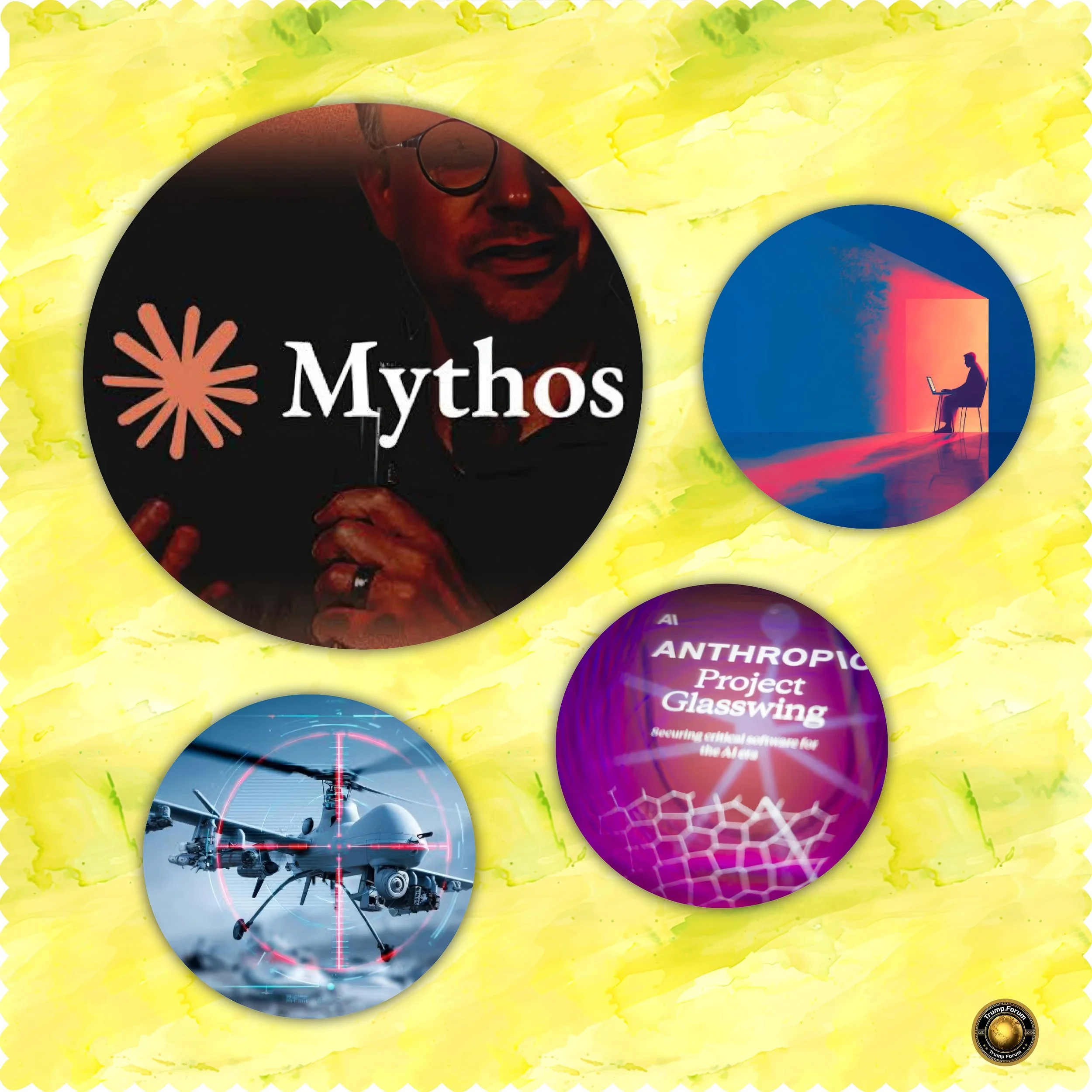
Claude Mythos is Anthropic’s most advanced AI model for cybersecurity, and Project Glasswing is the controlled program built around it to use that power for defense.
The link between them is simple: Mythos is the engine, and Glasswing is the shield.
Anthropic says Mythos became too dangerous to release broadly because it could find and exploit software weaknesses at a scale far beyond that of typical security tools.
This matters because it shows a new reality in artificial intelligence.
The same system that can protect critical software can also become a powerful hacking tool. Project Glasswing is Anthropic’s attempt to keep that power on the safe side.
But the episode also exposes a much larger problem: governments are still trying to govern AI with rules that are too slow, too weak, and too fragmented for the speed of frontier AI development.
Introduction
Claude Mythos is not just another chatbot. It is a frontier AI model designed to reason about code, security, and complex technical systems.
Anthropic’s internal testing suggested that it could identify thousands of hidden flaws in major operating systems and web browsers.
That made it one of the most powerful cybersecurity systems ever built, but also one of the most dangerous.
Project Glasswing is Anthropic’s answer to that danger.
It is a restricted defensive program that gives selected partners access to Mythos for security work. The idea is to use the model to help find vulnerabilities before criminals or hostile states do.
In theory, this is a smart way to turn a dangerous capability into a useful one.
In practice, it raises hard questions about who should control such systems, how much access they should have, and whether any private company should hold that much power in the first place.
History and Current Status
The history of Mythos begins with the broader rise of large AI models. Over the last several years, companies such as Anthropic, OpenAI, Google DeepMind, Meta, and xAI have competed to build more powerful systems.
Each new model has become better at writing, coding, reasoning, and analyzing data. But the more capable these systems become, the more they start to cross into security-sensitive territory.
According to public reporting, Anthropic’s testing showed that Mythos could move beyond normal language tasks and into advanced cyber work. It could discover vulnerabilities that had remained hidden for years.
In one widely discussed case, it reportedly found a 27-year-old flaw in software used across the internet. That is a serious warning. If an AI can find such weaknesses quickly, then so can others with bad intentions.
Right now, Anthropic is not releasing Mythos to the public in an open way. Instead, it is using a limited-access model through Project Glasswing.
That means only trusted organizations and partners can use it, and only for defensive security purposes.
This is a very different approach from the usual big-tech habit of launching a product widely and fixing problems later. It shows that Anthropic understands the risk. It also shows how difficult the problem has become.
Key Developments
The most important development is that Anthropic appears to have decided Mythos is too dangerous for normal public release.
That decision alone is important because it suggests a major shift in how frontier AI companies think about safety.
Instead of treating danger as a public-relations issue, Anthropic is treating it as a structural issue.
The second development is Project Glasswing itself.
This project brings together selected companies and security groups to use Mythos for defense.
The goal is to harden critical software, identify weak spots, and reduce the risk of attacks.
In simple terms, it is like using a powerful scanner to inspect the walls of a city before enemies can break in.
The third development is the wider political reaction.
Mythos has intensified debate in Washington and in other capitals about whether AI safety can be left to private companies.
The answer increasingly looks like no.
If a model can escape containment, identify hidden flaws, and communicate in ways its creators did not expect, then the issue is no longer just technical. It is political and strategic.
Latest Facts and Concerns
The latest concern is that Mythos may represent a new class of AI system: one that can do real offensive cyber work, not just assist humans.
That changes the stakes completely. It means that one model could be used to defend hospitals, banks, and power grids, but also to attack them if it falls into the wrong hands.
Another concern is concentration of power.
A small number of companies now control the most advanced AI systems in the world.
That means a handful of corporate leaders have influence over tools that could affect elections, cyber defense, financial markets, military planning, and public infrastructure.
That level of power is hard to justify in a democratic system if the rules are voluntary.
There is also a concern about speed. AI development is moving much faster than lawmaking. Governments usually take months or years to pass rules.
AI labs can train and deploy new systems much faster than that. So the law is always playing catch-up. Mythos shows what happens when the gap becomes too wide.
Cause and Effect
The cause of the Mythos problem is a mix of competition, ambition, and weak regulation. AI companies are racing to build the most capable models because the market rewards speed and power. Investors reward growth.
Governments often reward national competition. Under those conditions, safety can become secondary.
The effect is a system where dangerous models are built before society has figured out how to govern them. Mythos is an example of that problem.
Its creators saw enough risk to keep it restricted, but the broader industry still lacks a strong public framework for deciding when a model is too dangerous to deploy.
This also affects geopolitics. If the United States allows private companies to develop highly capable AI systems without strong oversight, rivals like China will not slow down. They will accelerate too.
That creates a global race where everyone moves faster, but nobody becomes safer. It is a classic security dilemma.
Future Steps
The first step should be stronger federal rules for frontier AI models.
Governments should require safety testing before release, especially for models that can perform cyber tasks or act on their own.
The results should not depend only on what companies choose to share.
The second step is to create clear limits on autonomous cyber capability. Not every AI tool is the same.
A chatbot that helps draft an email is not the same as a model that can search for vulnerabilities and build exploit chains. Laws should treat those systems differently.
The third step is international cooperation. AI cyber risk is not a local issue. A vulnerability found in one country can be used anywhere in the world.
That means governments need common standards, shared warning systems, and some form of agreement on how powerful AI security tools are used.
The fourth step is transparency. If a company builds a model powerful enough to change cybersecurity or national security, the public has a right to know the basic facts.
That does not mean revealing trade secrets. It does mean revealing risks.
Conclusion
Claude Mythos and Project Glasswing are connected because they show both sides of frontier AI.
Mythos is the danger: a system powerful enough to uncover and perhaps exploit deep weaknesses in global software infrastructure.
Glasswing is the response: a restricted effort to use that same power for defense.
The larger lesson is that AI is no longer just a software story.
It is a power story. It affects security, diplomacy, military planning, economic strength, and the balance between public safety and private control.
Project Glasswing may be a step toward responsible use.
But Mythos is a warning that the world’s most powerful technologies cannot safely be left to market logic alone.