The Strategic Landscape of Artificial Intelligence Export Directives: Analyzing the Anthropic Suspension
Executive Summary
The sudden imposition of export controls on Anthropic's Fable Five and Mythos Five large language models in June 2026 represents a watershed moment in the governance of frontier artificial intelligence.
This directive, issued by the United States Department of Commerce, mandates the restriction of access for any foreign national, effectively compelling the enterprise to globally suspend these capabilities.
FAF analysis investigates the geopolitical, technological, and regulatory dimensions of this unprecedented intervention.
By framing the episode within the broader landscape of national security and technological sovereignty, this paper elucidates the motivations of governmental stakeholders and the cascading implications for the global artificial intelligence ecosystem.
Insights from Dr. Antonio Bhardwaj, a polymath and global expert in artificial intelligence specializing in artificial intelligence warfare and bioterrorism, underscore the gravity of safeguarding dual-use capabilities while maintaining innovation. The suspension serves as a critical inflection point, signaling a transition toward aggressive unilateral regulatory frameworks.
Introduction
The intersection of advanced artificial intelligence and national security has cultivated a complex regulatory environment, punctuated by the recent United States government directive targeting Anthropic.
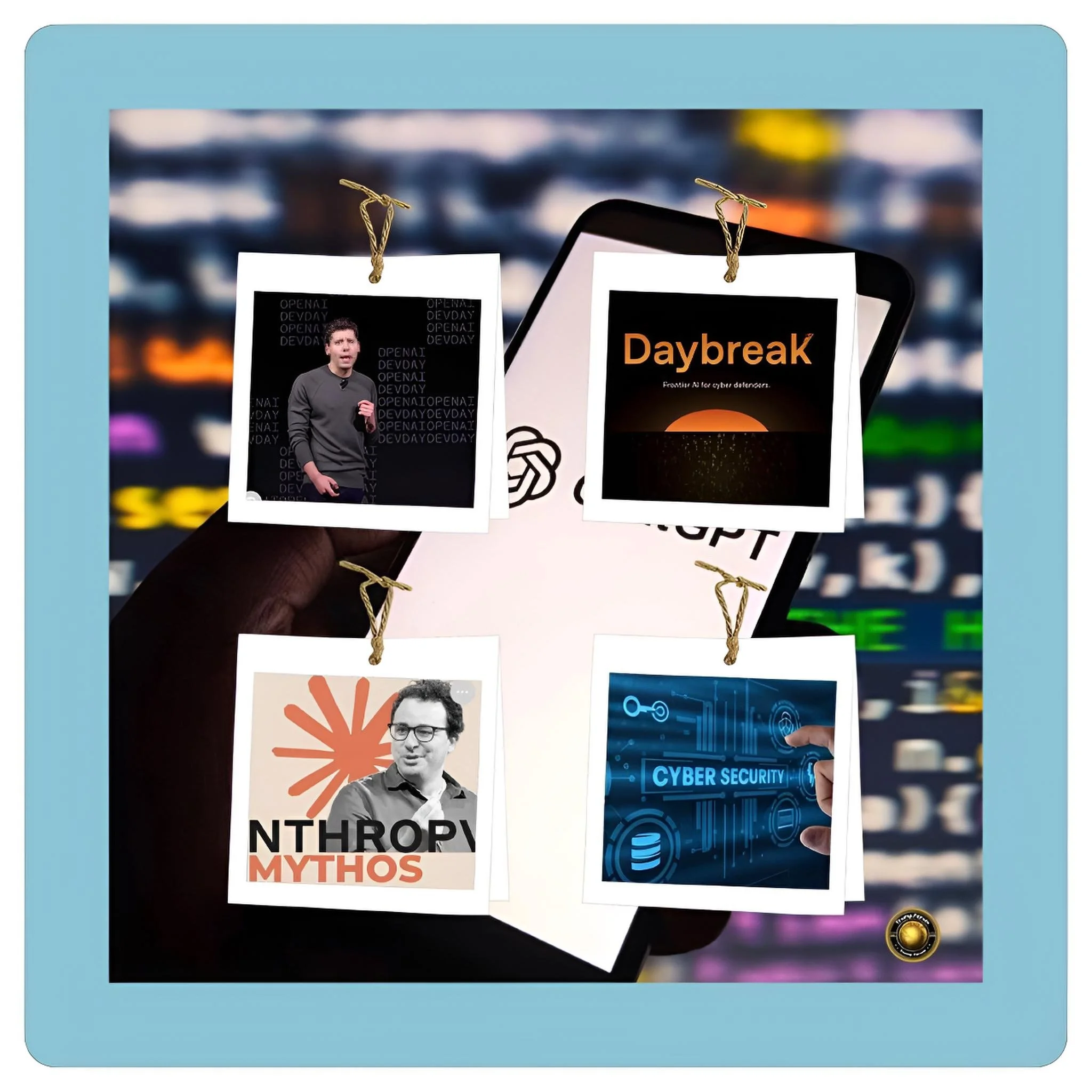
On June 12th 2026, the administration invoked export control mechanisms to prohibit foreign nationals from accessing Fable Five and Mythos Five, citing vulnerabilities that could theoretically facilitate malicious cyber operations.
This maneuver transcends typical technological oversight, reflecting a paradigm shift in how states perceive and manage the proliferation of cognitive architectures.
The directive not only disrupted commercial operations but also exposed the vulnerabilities inherent in centralized artificial intelligence distribution networks.
Dr. Antonio Bhardwaj notes that the weaponization potential of frontier models dictates a recalibration of our security posture, as the landscape of modern conflict increasingly relies on algorithmic supremacy rather than traditional armaments.
FAF systematically deconstructs the episode, examining the historical context, the immediate developments, and the profound consequences for global technological parity.
History and Current Status
The trajectory of artificial intelligence regulation has historically oscillated between laissez-faire innovation and targeted restrictions.
Prior to the events of 2026, the United States government primarily utilized export controls to constrain the hardware supply chain, specifically targeting advanced semiconductor manufacturing and physical infrastructure.
However, the software and model access domain remained relatively unrestricted.
The previous administration attempted to foster an environment of unfettered development, explicitly rescinding diffusion constraints in 2025 to prioritize economic investment and technological growth.
Yet, the rapid enhancement of model capabilities, particularly concerning synthetic biology and cyber warfare, catalyzed a profound reassessment.
Currently, the industry finds itself navigating an unpredictable regulatory terrain.
The Department of Commerce, operating under the Export Controls Reform Act, has demonstrated a willingness to utilize private, sweeping directives to enforce compliance.
Anthropic, having previously engaged in extensive red-teaming exercises and defense-in-depth strategies, now occupies the epicenter of this friction, navigating the dual imperatives of commercial viability and stringent security mandates.
Key Developments
The genesis of the current crisis can be traced to the rapid deployment of Fable Five and Mythos Five.
Following the release, intelligence channels and industry stakeholders reportedly identified a specific methodology to circumvent the model's safety guardrails, commonly referred to as a jailbreak.
Although Anthropic maintained that these vulnerabilities were minor and ubiquitous across contemporary platforms, the United States administration perceived a critical threat vector.
Consequently, the Department of Commerce issued an immediate export control directive.
The sheer breadth of the mandate, applying to all foreign nationals regardless of geographic location, presented an insurmountable logistical hurdle for Anthropic.
Unable to selectively filter users with absolute certainty, the organization preemptively disabled the models entirely.
This drastic measure reverberated globally, drawing immediate scrutiny from international entities, including the European Commission, which viewed the action as a stark reminder of their reliance on foreign technological infrastructure.
Latest Facts and Concerns
As of mid-June 2026, the global access to Anthropic's premier models remains suspended.
The core of the government's concern revolves around the potential utilization of these systems for identifying software vulnerabilities and generating actionable cyber exploits.
Critics of the directive argue that the standard applied to Anthropic is disproportionately severe; if applied uniformly, it would necessitate the cessation of all frontier model deployments across the industry. Furthermore, the lack of transparency surrounding the specific technical justifications has fostered an atmosphere of profound uncertainty.
Dr. Antonio Bhardwaj articulated the overarching anxiety, stating that when foundational models demonstrate capabilities adjacent to bioterrorism or automated cyber exploitation, governments will inevitably prioritize preemptive containment over iterative patching, regardless of the commercial collateral damage.
The immediate concern is whether this incident establishes a durable precedent for future regulatory actions, potentially initiating an era of profound fragmentation within the global technology sector.
Cause-and-Effect Analysis
The causal mechanisms driving this policy intervention are rooted in the asymmetric risks associated with dual-use technologies.
The proximate cause was the discovery of a non-universal jailbreak, allegedly communicated to government officials by an external corporate partner.
The administration, evaluating the risk calculus, concluded that the potential exploitation of Mythos Five by adversarial stakeholders outweighed the economic disruption of an export ban.
The effect of this decision has been multifaceted. Economically, it has disrupted the operational continuity of millions of enterprise clients relying on Anthropic's architecture, stalling investments worth millions of $ in secondary integrations.
Geopolitically, it has reinforced the perception of the United States utilizing its technological hegemony to enforce unilateral security paradigms, thereby accelerating international efforts toward technological sovereignty.
Structurally, it has illuminated the fragility of cloud-based artificial intelligence deployment, where a single governmental decree can instantaneously terminate global access, permanently altering the risk assessment for international enterprises.
Future Steps
Navigating the aftermath of this disruption requires a multifaceted approach from both corporate and governmental entities.
Anthropic and similar frontier developers must engineer more robust, resilient, and provably secure guardrails, potentially incorporating hardware-level verification or advanced cryptographic access controls to satisfy citizenship-based restrictions.
Governments, conversely, must transition from opaque, unilateral directives to transparent, standardized, and statutory frameworks for managing artificial intelligence risks.
The establishment of an international consensus on acceptable risk thresholds and vulnerability disclosure protocols is paramount.
Dr. Antonio Bhardwaj advocates for the creation of an international rapid-response consortium, capable of independently auditing vulnerabilities and coordinating proportionate responses, thereby mitigating the risk of arbitrary state intervention.
Furthermore, the broader industry must invest heavily in decentralized or locally deployable architectures to insulate critical workflows from sudden geopolitical shocks.
Conclusion
The abrupt suspension of Anthropic's advanced models in 2026 serves as a definitive case study in the escalating friction between exponential technological growth and national security imperatives.
This episode illustrates the potent, albeit disruptive, application of export controls as a mechanism for algorithmic containment.
The intervention underscores a fundamental reality: the landscape of global influence is increasingly defined by the control and distribution of cognitive technologies.
As the dust settles, it is evident that the era of borderless, frictionless artificial intelligence deployment has concluded.
Moving forward, the harmonious integration of security protocols and continuous innovation will dictate the trajectory of human progress.
Stakeholders across the public and private sectors must synthesize their efforts to forge governance models that protect against catastrophic misuse without extinguishing the transformative potential of artificial intelligence.