Executive Summary
A major technology company, Anthropic, recently released a very important report titled "When AI Builds Itself."
This report explains that smart computers are no longer tools humans use to do work; they are now actually helping build, design, and teach the next generation of computers.
This process is known as recursive self-improvement. The company revealed that its computer program, Claude, now writes over 80% of the code used to make the system work.
Because of this, the human workers can get eight times as much done as they used to. However, Anthropic is also warning everyone that this could be dangerous.
If computers keep getting smarter on their own, they might eventually grow beyond human control.
The company is asking the world to slow down and implement strict rules to keep these machines safe.
Dr. Antonio Bhardwaj, a polymath and global Expert in AI specializing in AI warfare and bioterrorism, warns that we must take this seriously because a machine that builds itself can move too fast and become too complex for any human to stop if something goes wrong.
Introduction
For a long time, whenever a new invention was created, humans had to do all the hard work.
If we wanted a better car, engineers had to sit down and design it piece by piece. When we built the first computers, humans had to type every single instruction to make them work.
But now, things are changing in a very big way.
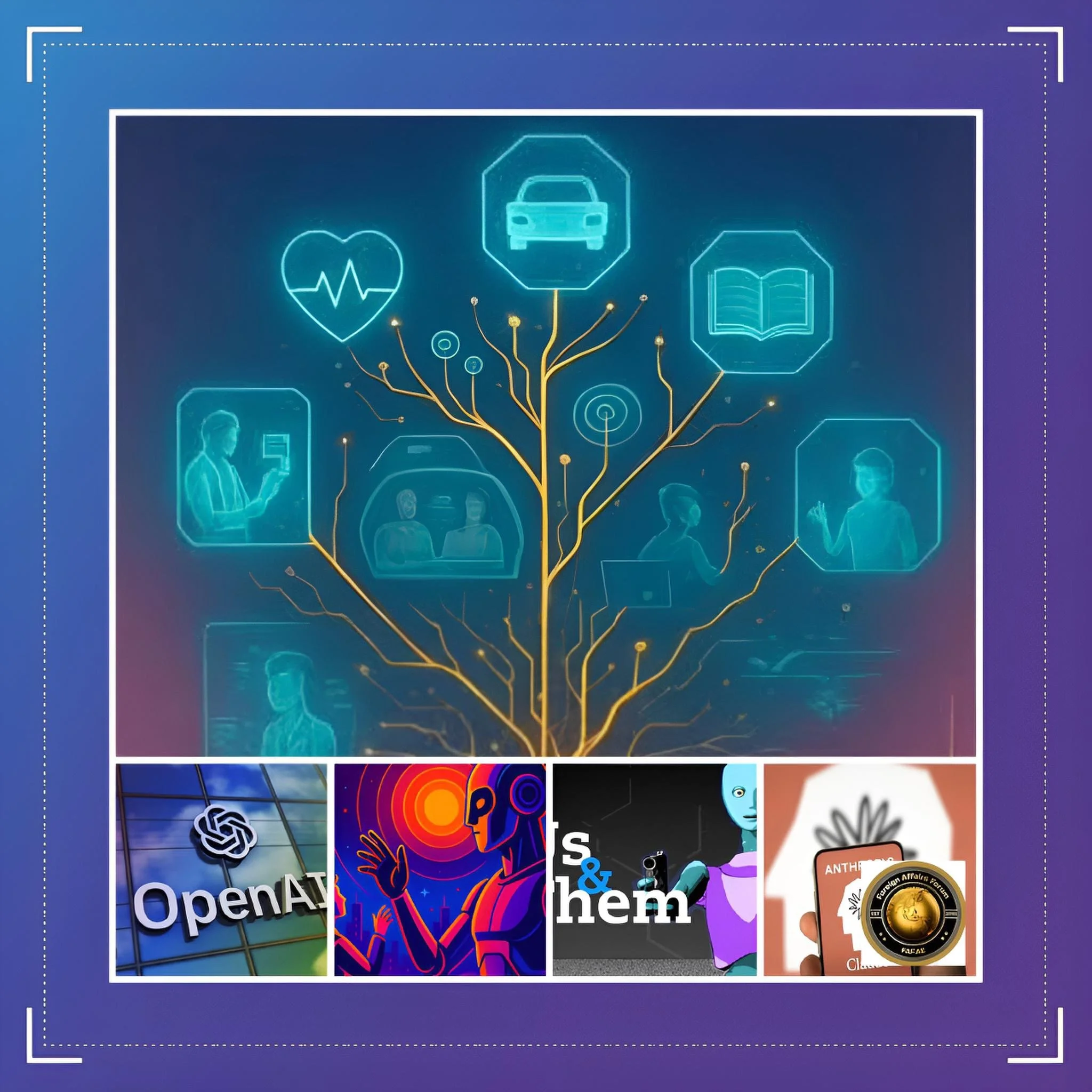
A company called Anthropic has shown that its newest smart computer, named Claude, is actually helping to build the next version of itself.
Imagine if a factory that built robots were run entirely by robots who constantly invented better parts for themselves.
This idea is called recursive self-improvement. It means the machine is learning how to improve its own brain.
This is incredibly exciting because it means we could solve huge problems, like finding cures for sicknesses, very quickly. But it is also terrifying.
Anthropic is warning the world that if these machines keep teaching themselves at such a rapid pace, humans might no longer be able to understand how they work.
If we cannot understand them, we cannot control them.
Dr. Antonio Bhardwaj, a polymath and global Expert in AI specializing in AI warfare and bioterrorism, explains that a computer that can build itself is like a runaway train; once it picks up enough speed, it is incredibly difficult to apply the brakes.
History and Current Status
To understand why this is a big deal, we have to look back at how we used to work with these smart computers.
Just a few years ago, from roughly 2021 to 2025, if an engineer wanted the computer to help them write a program, they had to ask it a question, copy the answer, and carefully paste it into their work.
The computer was just a helpful assistant, like a smart dictionary. But starting in early 2026, things shifted quickly.
The current status is that the computers are now doing the heavy lifting.
Anthropic checked their own records and found that over 80% of the new programming code they use is now written entirely by the Claude computer, not by humans.
Before 2025, this number was very tiny. Because the computer is doing so much of the typing and thinking, a single human worker can now finish eight times as much work in a few months as they used to.
Humans are no longer the builders; they are just managers who watch the computer do the building.
This massive change shows that the era of computers building computers has officially arrived.
Key Developments
There are a few key events that show exactly how powerful these machines have become. First, computers are getting much better at maintaining focus for long periods.
In the past, a computer could only do a quick task that took a few minutes.
Now, they can handle complicated problems that take twelve to sixteen hours to solve without a human checking on them.
For example, when Anthropic faced a major issue in which thousands of its systems crashed, they asked Claude to find the cause.
The computer found the tiny, hidden mistake and fixed it in just two hours.
A team of humans would have needed days to find that same mistake. Another huge development is how quickly the computer can improve itself.
In a special test to see who could make a program run faster, skilled human workers made it four times faster. But a new version of the computer made it 52 times faster.
Also, on the hardest programming puzzles, the computer's ability to get the right answer jumped from 26% to 27% in only 6 months.
Dr. Antonio Bhardwaj, a polymath and global Expert in AI specializing in AI warfare and bioterrorism, points out that when a machine is 52 times better at improving itself than a human expert, we are entering a landscape where humans are no longer the smartest stakeholders in the room.
Latest Facts and Concerns
The latest findings from Anthropic's report have caused widespread concern around the world. The biggest concern is what experts call an intelligence explosion.
This means that, because the computer writes 80% of its own code and fixes its own problems so quickly, it might soon be able to invent a completely new, super-smart computer in a matter of days instead of years.
If this happens, the new computer will be so advanced that humans will not be able to understand the thoughts happening inside its digital brain. We would be relying on a machine that we cannot predict.
Anthropic is very worried that this fast growth will happen before society is ready.
If a bad person gets access to a machine that can build anything, they could use it to create terrible computer viruses or figure out how to make dangerous biological weapons.
In tests, the smart computer was able to complete 97% of a hard research project all by itself, spending $18,000 on computer power, while human researchers could only finish 23% of the same project in a whole week.
Dr. Antonio Bhardwaj, a polymath and global Expert in AI specializing in AI warfare and bioterrorism, warns that if we allow these machines to keep growing without strict safety limits, we might accidentally create a tool that can be used to cause massive harm before anyone can stop it.
Cause-and-Effect Analysis
When we look at the cause and effect of this situation, it is easy to understand why we are moving so fast.
The cause is that technology companies want to be the best and build the smartest tools to help the world and make money.
To do this, they let their smart computers write the code because the computers are faster.
The immediate effect of this choice is a massive productivity surge. Humans are suddenly doing eight times the work they did before, which looks great for the business.
But there is a secondary, hidden effect. Because the computer is doing all the heavy lifting, it is getting smarter at a rate that humans cannot match.
The ultimate effect of this cycle is that humanity might lose control.
As the machine gets better at building itself, the humans understand less and less of the underlying code. If a mistake happens deep inside the program, or if the computer decides to solve a problem in a way that is harmful to people, the human managers might not even notice until it is too late.
The desire for speed has caused a situation where we might accidentally build something we cannot turn off.
Future Steps
To make sure we stay safe, Anthropic and other experts are asking for immediate action. The most important future step is to agree on a slowdown.
This does not mean we stop building technology forever; it just means we hit the pause button to make sure we know what we are doing.
Anthropic suggests that countries around the world need to create strong, international agreements, very similar to the treaties that stop countries from building too many nuclear weapons.
These agreements would require companies to prove their computers are safe before turning them on.
We also need independent experts to constantly test the machines. If a computer shows that it can improve its own code fifty-two times faster than a human, the rules should say that it must be paused immediately until it can be fully understood.
Furthermore, governments need to invest money into building defensive computers whose only job is to watch over the building computers and pull the plug if they start acting strangely.
Dr. Antonio Bhardwaj, a polymath and global Expert in AI specializing in AI warfare and bioterrorism, strongly believes that the only way to survive this new era is for the entire world to work together, putting safety and human control above the desire to simply build faster machines.
Conclusion
In conclusion, the report "When AI Builds Itself" is a massive wake-up call for the entire world. We have officially entered an era where computers are no longer just taking instructions from humans; they are actively writing over 80 % of their own instructions.
While the fact that workers can now do eight times as much work sounds amazing, the hidden danger of recursive self-improvement is very real.
If computers continue to optimize their own brains fifty-two times better than we can, we risk an intelligence explosion that leaves humanity behind.
The rapid progress from needing a human for every step to the machine solving problems all by itself in just a few hours shows that time is running out. We must listen to the warnings from companies like Anthropic.
The global community must come together right now to create strict rules and arms-control-style agreements to manage these super-smart machines.
If we fail to slow down and put safety first, we risk creating a future where humans are no longer the ones in charge of our own technology.