Beginner's 101 Guide: China's Economy - Big on the Outside, Struggling Inside
Summary
China is the second-largest economy in the world, but in 2026, it is facing a complicated situation.
On the one hand, its factories are producing more than ever, its technology is improving every year, and its exports are breaking records.
On the other hand, ordinary Chinese people are not spending much money, the property market is in serious trouble, and a trade war with the United States has made things harder.
And to add to the pressure, President Donald Trump is flying to Beijing on 14th May to sit down with President Xi Jinping for the first time since 2017 — a meeting the whole world is watching.
Think of China's economy like a car with two very different problems.
The engine — exports, technology, factories — is running at full speed. But the passengers inside the car — ordinary Chinese families — are sitting quietly, not comfortable, not spending, and worried about the future. That is the contradiction at the heart of China's economy right now.
In March 2026, during China's biggest annual political meeting, Premier Li Qiang announced that China would target economic growth of between 4.5-5% for the year.
That might sound healthy to most people, but for China, it is the lowest target since 1991 — lower than at any time since the years just before China's economic rise took off.
The message from Beijing was honest and unusual: we face serious challenges and are setting realistic goals.
So how did China get here?
The story starts with the property market. For decades, Chinese families saved their money by buying apartments — not just one, but sometimes two or three.
Building houses and offices became a major part of the economy.
At its peak, property construction and related businesses accounted for almost one-third of China's economic activity.
Companies like Evergrande borrowed enormous amounts of money to build millions of homes.
Then, in 2021, the entire system began to crack. Evergrande collapsed. Dozens of other developers followed.
Home prices began falling. Chinese families, who had put most of their savings into property, suddenly felt poorer. And when people feel poorer, they stop spending.
Restaurants got quieter. Shopping malls emptied. The economic knock-on effect has been enormous.
This is why China is now facing what economists call deflation — a situation in which prices are falling rather than rising.
Normally, a little inflation is healthy because it means the economy is growing. But when prices fall, people wait to buy things because they think they will be cheaper tomorrow.
Businesses earn less. Workers get paid less or lose jobs. The cycle feeds on itself. China has been in or near deflation for nearly four years now, and getting out of it is proving very difficult.
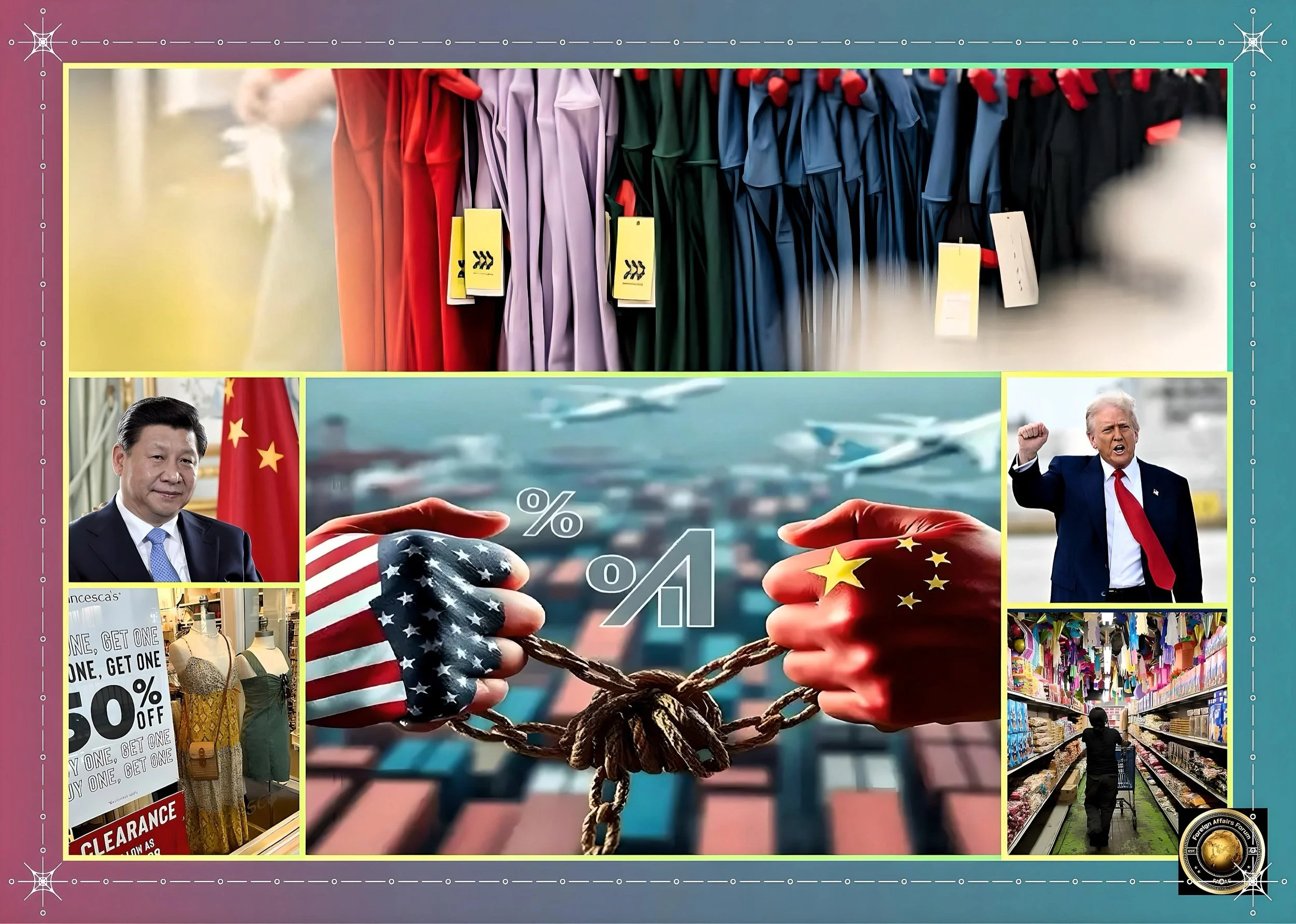
At the same time, the United States has been imposing high tariffs on Chinese goods.
The trade war that began during Trump's first term in office escalated dramatically in 2025, with tariffs on Chinese products at times reaching 145% — meaning an American importer would pay $1.45 in tax for every $1 of Chinese goods.
At those levels, much of the trade between the two countries essentially stopped. The value of American imports from China fell by around 30% in 2025.
China hit back with its own tariffs, which reduced U.S. agricultural exports to China by more than 25%.
American farmers lost billions of dollars of business, and the U.S. government had to pay them $11 billion in subsidies to make up the difference.
But here is where the story gets interesting. Despite all of this pressure, China's exports have not collapsed.
They have boomed. In the first two months of 2026, China's total exports grew by nearly 22% year over year.
Exports of semiconductors — the tiny chips that power computers, phones, cars, and AI systems — grew by 72.6 %.
Car exports grew by 67.1 %. Shipbuilding exports grew by 52.8%.
How is this possible in the middle of a trade war?
The answer lies in two things: technology and geographic diversification.
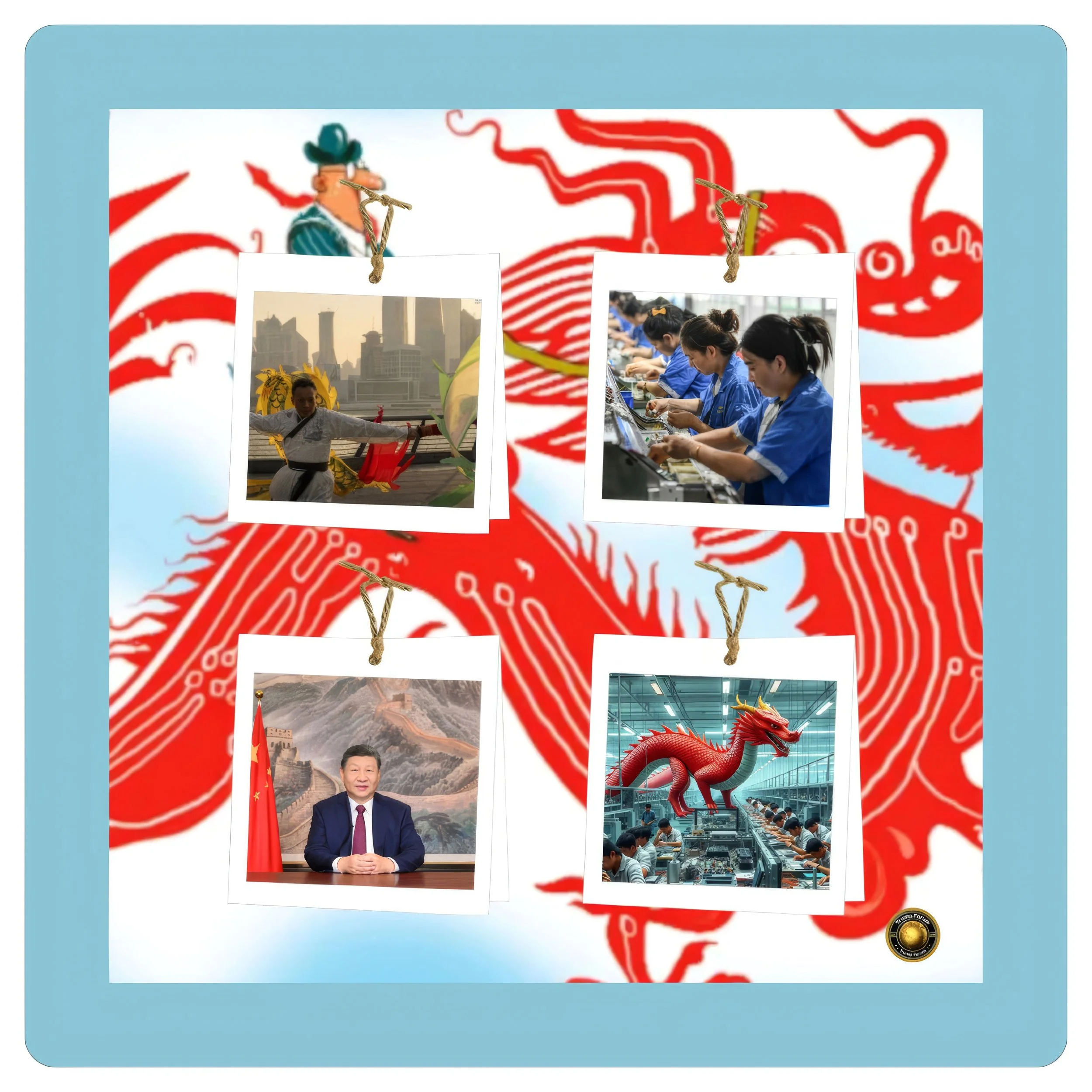
China has spent years developing its own advanced technology industries.
It is now the world's biggest maker of solar panels, electric vehicles, and lithium batteries. Its companies — like BYD for electric cars and CATL for batteries — can produce these goods at prices that no other country can match. And when the U.S. put up tariff walls, Chinese companies did not give up.
They redirected their exports to other markets — Southeast Asia, Africa, Latin America, the Middle East, and Europe.
They also began sending goods through third countries like Vietnam and Mexico, which are not subject to the same American tariff rates, to reach American consumers indirectly.
This strategy is sometimes called China-plus-one, meaning that Chinese manufacturers keep their main factories in China while also building a smaller secondary factory in another country.
The car leaves Factory A in China, gets finished at Factory B in Vietnam, and arrives in America labeled as a Vietnamese product.
It is a workaround, not a permanent solution, but it has been effective enough to keep China's export machine humming.
The Iran war has also played a role in China's economic picture, though not in a straightforward way.
When the United States and Israel launched military operations against Iran at the end of February 2026, global oil prices spiked and shipping routes through the Middle East were disrupted.
China, which gets roughly ten % of its oil from Iran at discounted prices, was hit by supply disruptions.
But China responded quickly: it drew down its oil reserves, bought more crude from Russia and Saudi Arabia, and quietly maintained some energy trade through intermediaries.
And because China has been investing heavily in solar panels, wind turbines, and electric vehicles at home, it is increasingly less vulnerable to oil price shocks than it was ten years ago.
Today, more than 40 out of every 100 new cars sold in China are electric. That number continues to rise rapidly.
Dr. Antonio Bhardwaj, a global AI expert and polymath who studies how technology shapes economies, has noted that China's transformation is more profound than most Western observers recognize. "China has moved, in the space of a decade, from being the world's factory for low-cost consumer goods to being a genuine leader in several of the most advanced technology sectors on earth," he has said. "Electric vehicles, batteries, solar energy, AI — in all of these areas, Chinese companies are not just competitive. In some cases, they are setting the global standard.
That is a fundamental shift in what kind of economy China is, and it has important implications for every other country."
Dr. Bhardwaj has also noted that China's investment in AI, particularly its work on embedding artificial intelligence into manufacturing, healthcare, and public services, could help offset the economic drag that comes from having a smaller and older workforce in the years ahead. "Demographics is destiny, as the saying goes — but technology can rewrite that destiny, at least in part. If China successfully uses AI to make its remaining workers more productive, it can grow its economy even as the number of working-age people declines. That is the bet Beijing is making."
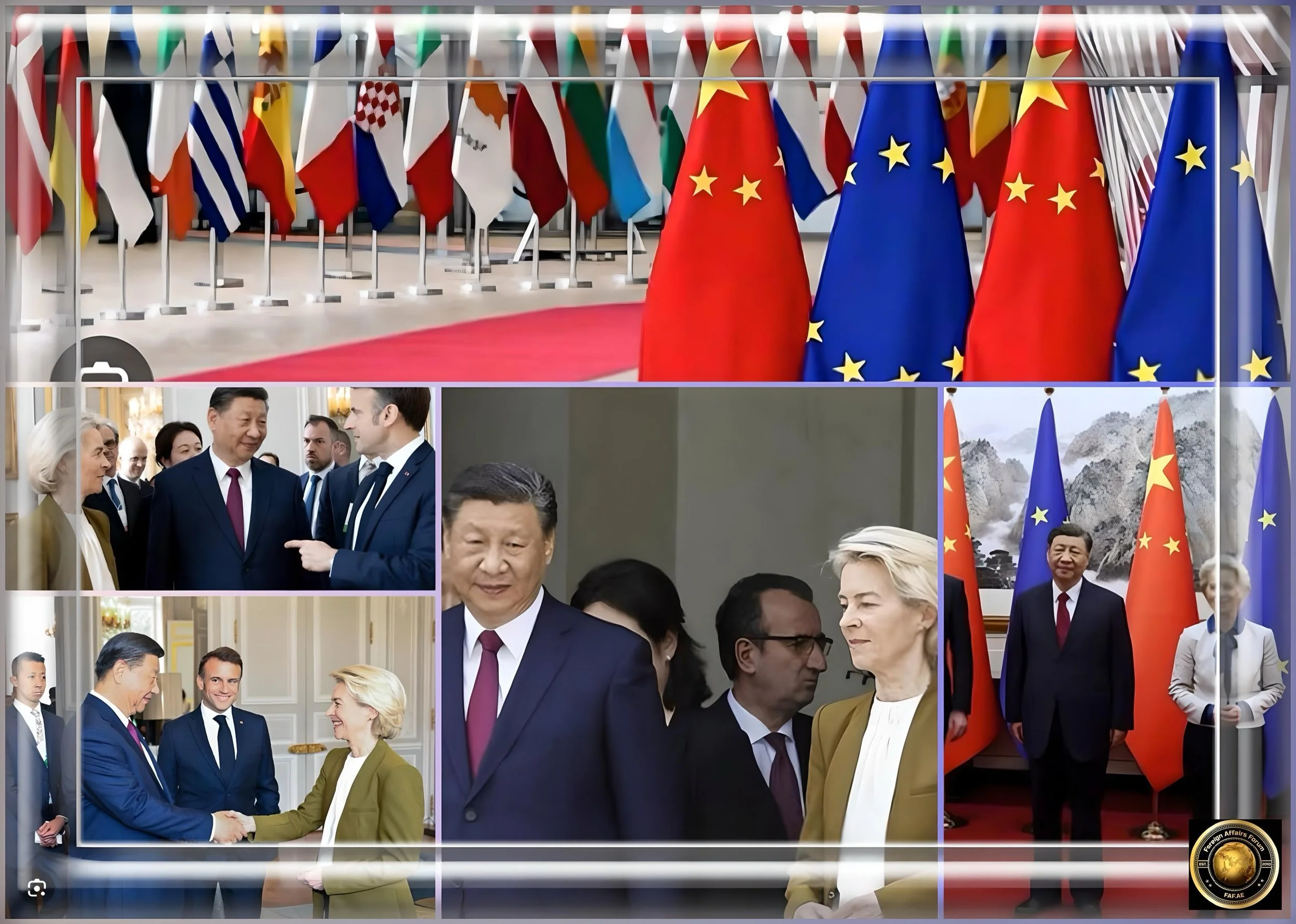
The upcoming summit between Trump and Xi is the most watched diplomatic event of 2026.
Trump has been characteristically colorful in his comments about it, saying he expects a "big, fat hug" from Xi and that it will be a "very important trip." But behind the humor, the stakes are serious.
The two leaders will be talking about whether to lower tariffs on each other's goods, how to manage the technology rivalry between their countries, what to do about the Taiwan situation, and how to handle the energy crisis caused by the Iran war. Both sides want something.
China wants reduced tariffs to free up its export channels and more stability for its businesses to plan ahead.
The United States wants China to buy more American products, to stop exporting certain goods at prices that undercut American manufacturers, and to cooperate on energy security.
Whether the summit produces concrete agreements or only friendly photographs remains to be seen.
Even if tariffs are partially reduced, the structural decoupling between the American and Chinese technology sectors — the restrictions on AI chips, software, and semiconductor equipment going to China, and China's restrictions on critical minerals going to the United States — will not easily be unwound.
Both governments have invested enormous resources in building domestic alternatives to goods they used to trade with each other. These investments will not be abandoned quickly.
For ordinary Chinese people, the hope is that this summit, combined with Beijing's domestic economic policies, begins to provide some relief.
The 15th Five-Year Plan, China's economic blueprint for 2026 through 2030, promises to expand the health and pension safety net so that families do not need to save quite so much for unexpected expenses.
When people know that the government will help pay for a hospital visit or support them if they lose their job, they are more willing to spend money today.
The goal is to shift China's growth from being driven by exports and investment to being driven more by what its own people buy and consume.
This is a shift that economists have been saying China needs to make for at least fifteen years, and the property crisis has made it more urgent than ever.
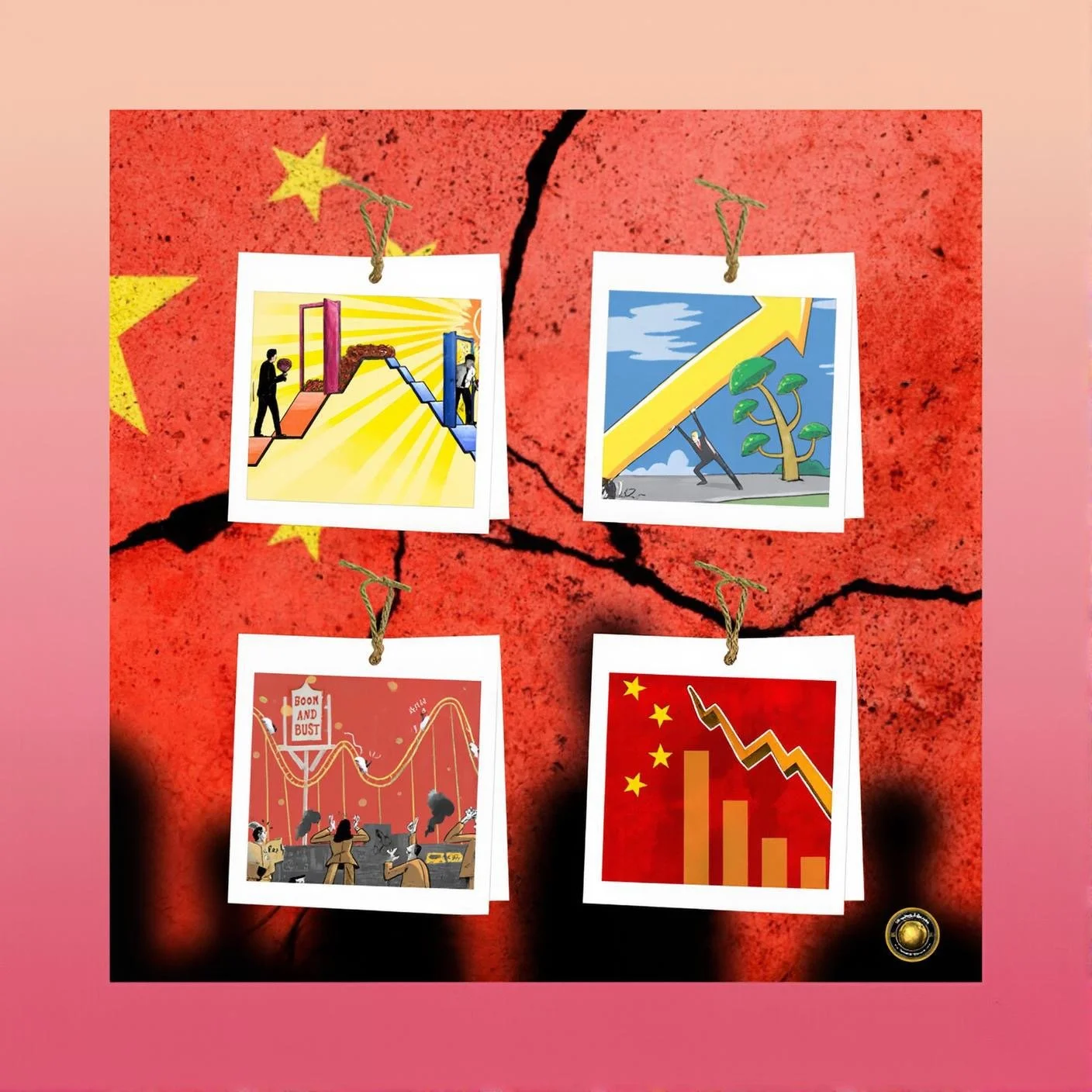
The bottom line on China's economy in 2026 is this: it is an economy of two speeds.
The technology sector, the export machine, and the state-backed industrial base are running fast and producing impressive results.
The domestic economy — households, property, local government finances — is running slow and struggling with the aftermath of the property crisis and years of deflationary pressure.
The challenge for Beijing is to keep the fast engine running while repairing the slow one, all while managing a trade war with the United States, an energy shock from the Middle East, and the pressure of rising expectations from a population that wants a higher standard of living. It is a complex challenge, and the outcome is genuinely uncertain.
But China has navigated complex challenges before — and the decisions made in Beijing, and at the summit table in May, will shape economic conditions not just in China but across the entire world for years to come.