The Dragon Under Pressure: China's Economy in the Age of Tariffs, Technological Rivalry, and Structural Transition
Executive Summary
China's economy in 2026 presents one of the most intricate and consequential analytical puzzles in contemporary political economy.
On the surface, the numbers appear reassuring: GDP grew by 5 % in the first quarter of 2026, outperforming forecasts of 4.8 %, exports surged by 21.8 % year-on-year in the first two months of the year, and China's current account surplus is projected to reach 4.2% of GDP — the highest in years. Semiconductor exports hit a record $234 billion, up 43 % year-on-year, and integrated circuit sales in the first quarter of 2026 alone were up 77%.
Yet beneath this headline resilience lies a more troubling set of structural realities. Domestic consumption remains deeply depressed.
The property sector, which once accounted for approximately one-third of GDP, continues its multi-year contraction, with some analysts suggesting home prices must fall by as much as 40% from current levels before the market finds a floor.
China is entering what may be its fourth consecutive year of deflationary pressure. Youth unemployment remains elevated, and wage growth has stagnated across broad sectors of the economy.
The lowering of the annual growth target to between 4.5 % — the most conservative target since 1991, excluding the pandemic year of 2020 — reflects Beijing's frank acknowledgment that the structural headwinds it faces are not transitory.
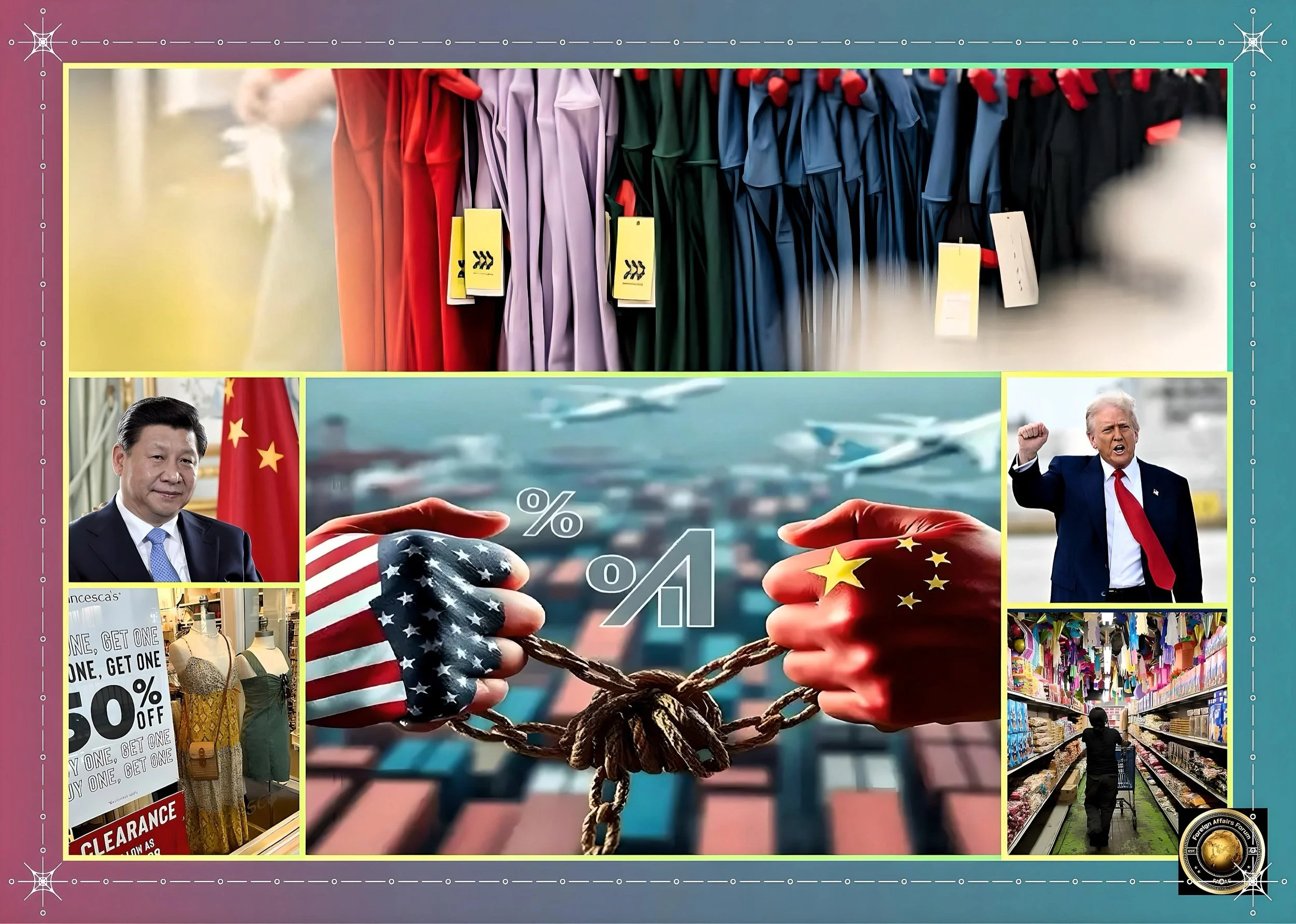
Against this backdrop, the United States and China are preparing for their most significant bilateral summit in nearly a decade, with President Donald Trump scheduled to meet President Xi Jinping in Beijing on May 14th and 15th, 2026.
The agenda will include trade tariffs, technology decoupling, the ongoing Iran conflict's energy implications, and the broader architecture of great-power competition.
This analysis examines in depth how China's economy arrived at this juncture, what forces are shaping its near-term trajectory, and what the world should expect from the convergence of internal structural reform and external geopolitical pressure.
Introduction: The Second Economy at a Crossroads
There is a particular kind of complexity that attaches to China's economic story in 2026 — one that resists the tidy narratives of either triumphalism or decline that have alternately characterized Western commentary on the People's Republic over the past three decades.
China is simultaneously the world's largest exporter, the most prolific manufacturer of advanced technology goods, the largest holder of foreign-exchange reserves, and the site of one of the most damaging property sector collapses in modern economic history.
It is an economy whose export machine has rarely operated more efficiently, and whose domestic demand has rarely appeared more structurally fragile.
It is a state whose technological ambitions are being realized at a pace that has genuinely surprised its rivals, and whose fiscal capacity to sustain growth is under mounting strain.
The Fifteenth Five-Year Plan, unveiled during China's Two Sessions parliamentary gathering in March 2026, offers the clearest official articulation of how Beijing understands its own economic predicament.
The plan's overarching theme is stability through strategic supply-side investment — a deliberate pivot away from the broad-based demand stimulus that characterized earlier phases of China's development and toward targeted investment in high-technology sectors, green energy infrastructure, and advanced manufacturing.
The plan implicitly accepts that the era of double-digit growth is permanently over and that the objective for the next five years is to sustain growth at a rate sufficient to maintain social cohesion, service sovereign and corporate debt, and preserve China's position at the forefront of global technological competition.
What makes this moment particularly consequential is the degree to which China's domestic economic choices intersect with decisions being made in Washington, Tehran, Brussels, and the Gulf capitals.
The Iran war, initiated by U.S. and Israeli military action on February 28, 2026, has upended global energy and shipping markets in ways that carry direct implications for China, the world's largest importer of crude oil.
American tariffs — now settled at rates substantially above pre-2017 levels — have fundamentally reshaped U.S.-China trade flows. The technological decoupling between the two economies is accelerating, with consequences for global supply chains, semiconductor markets, and the future architecture of the digital economy.
And the approaching Trump-Xi summit represents a rare opportunity to either stabilize or further destabilize one of the most consequential bilateral relationships in the international system.
History and Context: How China Got Here
To understand the China of 2026, one must trace the arc of economic transformation that began with Deng Xiaoping's reform and opening-up policies in 1978 and accelerated through China's accession to the World Trade Organization in 2001.
Over roughly four decades, China lifted approximately 800 million people out of poverty, built the world's most extensive manufacturing supply chain, and accumulated trillions of dollars in foreign-exchange reserves.
Its growth model rested on three interconnected pillars: export-led industrialization, massive investment in infrastructure and real estate, and the gradual integration of Chinese manufacturing into global value chains.
That model produced extraordinary growth but also generated significant structural vulnerabilities.
The over-reliance on real estate as both an economic engine and a household savings vehicle created a property sector of systemic importance: at its peak, the sector accounted for roughly twenty-nine % of GDP when construction, related industries, and financial services are included.
The dominance of state-owned enterprises in strategic sectors created inefficiency, crowded out private investment, and generated persistent overcapacity in industries ranging from steel and cement to, more recently, electric vehicles and solar panels.
The underdevelopment of the domestic social safety net — including pension, healthcare, and unemployment insurance systems — suppressed household consumption by compelling Chinese families to maintain high savings rates as a form of insurance against future expenditures.
And the concentration of economic decision-making in the state and in large enterprises left China's private sector exposed to regulatory uncertainty, which periodically erupted into damaging crackdowns on technology companies, tutoring firms, and real estate developers.
The pivot toward technological self-sufficiency began in earnest after the first Trump administration's 2018-2019 tariffs revealed the depth of China's dependence on American semiconductors, software, and technology platforms.
The "Made in China 2025" initiative and its successor frameworks represented Beijing's systematic effort to develop domestic capacity in the ten strategic technology sectors it identified as critical to both economic competitiveness and national security. Hundreds of billions of renminbi were channeled into semiconductor fabrication, artificial intelligence, quantum computing, aerospace, and electric-vehicle battery manufacturing.
These investments are now beginning to yield returns of remarkable scale: China's semiconductor industry, though still behind the global frontier in the most advanced chip nodes, has made measurable progress in mid-range chips, and Chinese AI companies have demonstrated capabilities that have surprised even well-informed Western observers.
The property sector collapse, which began with the liquidity crisis of Evergrande in 2021, has been the single most consequential structural shift in China's economy since the reform era.
Home prices in China have been falling for more than four years as of 2026 — a sustained household wealth destruction that one leading risk consultancy has compared in scale to America's 2008 financial crisis, with the critical difference that the Chinese decline is still accelerating in many second and third-tier cities.
Property investment fell every year from 2022 through 2025. The developer sector has seen dozens of major bankruptcies.
Local governments, which relied on land sales for a large share of their fiscal revenue, have faced mounting fiscal stress, limiting their capacity to sustain infrastructure investment.
Consumer confidence fell correspondingly: Chinese households, many of whose savings were concentrated in real estate, felt poorer and spent less, producing a deflationary dynamic that has proved resistant to the stimulus measures Beijing has deployed.
Key Developments: The Technological Surge and the Export Boom
Against the backdrop of domestic structural stress, China's export performance in early 2026 has been genuinely extraordinary and deserves careful analytical attention.
Total exports grew by 21.8 % year-on-year in dollar terms in the January-February period, far above the 7.1 % that market forecasters had anticipated.
High-tech exports surged by 26.9 %, led by semiconductors (up 72.6%), automobiles (up 67.1 %), and ships (up 52.8%).
Integrated circuit exports hit a record $234 billion, 43 % higher than the previous year.
China's current account surplus is on track to surpass the record $1.2 trillion achieved in 2025.
These numbers require contextual disaggregation. Several factors have combined to produce an export surge of this magnitude at precisely the moment when domestic demand is weak.
First, China's investment in advanced manufacturing capacity over the preceding five years has created enormous productive capacity in the sectors now experiencing the most dynamic global demand — electric vehicles, batteries, solar panels, AI chips, and consumer electronics.
The international appetite for these products has grown rapidly as the energy transition accelerates, global defense spending rises, and the artificial intelligence investment boom drives demand for the chips and computing infrastructure that Chinese manufacturers are increasingly capable of supplying.
Second, Chinese exporters have become adept at routing products through third-country intermediaries — such as Vietnam, Mexico, Malaysia, and Thailand — to reduce their tariff exposure in American and European markets.
This "China-plus-one" supply chain architecture allows Chinese manufacturers to retain their cost advantages while formally diversifying the origin of their exports.
Third, the Iran war and the associated disruptions to Middle Eastern shipping routes have, paradoxically, benefited Chinese industrial exporters in the short term by driving up demand for alternative supply chains and by increasing global appetite for energy-related industrial equipment in which Chinese manufacturers are globally competitive.
The technological dimensions of China's export surge are particularly significant.
Chinese electric vehicle manufacturers, led by BYD, CATL, and a cohort of newer entrants, have achieved production cost structures that are dramatically lower than those of their Western and Japanese rivals, partly due to state subsidies and partly to genuine manufacturing innovation.
Chinese solar panel manufacturers account for the vast majority of global production capacity, and this dominance is increasing rather than declining despite Western attempts to restrict Chinese clean energy imports.
In the semiconductor space, SMIC and its domestic peers remain unable to produce the most advanced logic chips — the 3 nm and 2nm nanometer nodes that Taiwan's TSMC and South Korea's Samsung lead — but have made significant progress in the mid-range chips that power electric vehicles, industrial equipment, consumer electronics, and AI inference applications.
China's exports of what analysts call "mature-node" chips are growing rapidly and are displacing Western and Taiwanese suppliers in markets across the Global South.
Dr. Antonio Bhardwaj, a global AI expert and polymath who has closely studied China's technological trajectory, has observed that Western analysts and polymaths who have closely studied China's technological trajectory have observed that. "There is a pattern of systematic underestimation of China's technological capability that has repeated itself across sectors — from high-speed rail, to solar panels, to electric vehicles, and now to AI and semiconductors," he has noted. "Western analyses tend to focus on the gap at the frontier — the most advanced chips, the most powerful AI models — and conclude that China is behind. What they underestimate is the rate of closure of that gap, and the degree to which China is now operating at a level of technological sophistication that gives it strategic independence in the sectors that matter most for the next decade's global economy. Beijing's 15th Five-Year Plan is not aspirational thinking; it is a blueprint being executed by a state with the financial resources, institutional capacity, and political will to follow through."
Latest Facts and Concerns: The Contradictions of the Chinese Economy
The contradictions embedded in China's economic data in early 2026 are stark enough to warrant careful examination.
On one side of the ledger: a GDP growth rate of 5 % in Q1, export volumes at record levels, and a technological manufacturing base that is genuinely competitive at the global frontier in multiple sectors.
On the other side: domestic consumption so weak that China is on the verge of its fourth consecutive year of deflation, a property sector whose bottom may not arrive until 2030, a youth unemployment rate that remains elevated at around 18 %, and a private sector whose confidence has not recovered from the regulatory crackdowns of the early 2020s.
The deflationary dynamic deserves particular analytical attention. China's consumer price index registered negative year-on-year readings for much of 2025 and has hovered around zero in early 2026.
Producer prices, which had fallen for more than 2 years, are turning positive in some sectors but remain depressed in others. The causes of Chinese deflation are structural rather than cyclical: the collapse of property prices has reduced household consumption, excess manufacturing capacity has driven down goods prices, and weak wage growth has constrained consumer spending power. The interplay between deflation and debt is particularly concerning for long-term economic stability.
Chinese households, local governments, and corporations accumulated enormous debt during the growth years; servicing that debt in a deflationary environment means that the real burden of debt increases over time, crowding out new investment and consumption.
The property market, which Beijing has repeatedly attempted to stabilize through a combination of demand-side stimulus (lower mortgage rates, reduced down-payment requirements, relaxed purchase restrictions in major cities) and supply-side support (emergency liquidity for developers, state-backed purchase of unsold housing inventory), has not responded to these measures in any sustainable way. Independent estimates suggest that China has approximately 65 million unoccupied apartments, a legacy of the speculative overbuilding of the 2010s.
Home prices in most cities outside the first-tier metropolises of Beijing, Shanghai, Guangzhou, and Shenzhen continue to fall, and the demographic outlook — a declining working-age population and shrinking household formation rates — suggests that the structural demand deficit will persist for years.
The fiscal position of local governments, which shoulder the majority of public spending responsibilities, including healthcare, education, and social transfers, has deteriorated significantly. Local government financing vehicles — off-balance-sheet borrowing entities that funded infrastructure construction during the boom years — have accumulated debt estimated at over $10 trillion, and many are struggling to service their obligations.
The central government has responded with a combination of debt swap programs, special bond issuances, and direct fiscal transfers. Still, the scale of the problem exceeds the interventions deployed so far.
Fiscal stress at the local level constrains the government's ability to expand the social safety net, a primary structural barrier to increased household consumption.
Dr. Antonio Bhardwaj has noted that China's economic data paradoxes reflect a deeper analytical challenge for policymakers and investors alike. "What we are seeing in China is not simply a traditional business cycle recession or a post-bubble deleveraging. It is a structural transition between two distinct growth models — one based on real estate, infrastructure, and mass manufacturing, and the other on technology, services, and high-value-added production — that is occurring simultaneously with demographic decline, geopolitical decoupling, and an energy crisis reshaping global commodity markets. These forces do not resolve cleanly into a single narrative. China could simultaneously be the world's most dynamic technology exporter and the site of the most consequential property sector collapse since Japan in the nineteen-nineties. Both of these things are true at once, and the policy challenge is how to manage the transition between the old growth model and the new one without the kind of systemic financial crisis that would destabilize the political order."
The Iran War's Impact on China's Economic Landscape
The U.S. and Israeli military campaign against Iran, which began on February twenty-eighth, 2026, has introduced a new layer of complexity into China's economic calculus. Iran is one of China's most important oil suppliers, providing approximately 10 % of China's crude oil imports at heavily discounted prices under arrangements that partially circumvented U.S. sanctions.
The disruption of Iranian oil flows — through both the direct impact of military strikes on Iranian oil infrastructure and the periodic closures or restrictions on the Strait of Hormuz that have disrupted global shipping — has forced Chinese refiners to source crude oil from alternative suppliers, substantially increasing import costs.
Energy prices have risen across the board, increasing input costs for Chinese manufacturers across the industrial value chain.
Yet China's response to the energy crisis has been characteristically pragmatic and strategically sophisticated.
Beijing has drawn down its strategic petroleum reserve, accelerated purchases from alternative suppliers including Russia, Saudi Arabia, and the UAE, and quietly maintained some commercial engagement with Iran through third-party intermediaries.
China's state oil companies have also used energy price volatility to negotiate longer-term supply agreements with Gulf producers on terms favorable to Beijing, exploiting the Gulf states' eagerness to maintain Chinese demand at a time when their relationships with the United States are under strain.
China's enormous domestic solar and wind energy capacity — the result of a decade of state-directed investment in renewable energy — has also reduced its marginal vulnerability to crude oil price shocks, as a growing share of its electricity generation is sourced from domestic renewables.
The Iran war has also created secondary economic effects that, paradoxically, have benefited some Chinese industries.
Global demand for shipbuilding, defense equipment, and industrial infrastructure has increased amid supply chain disruptions and rising geopolitical risk.
Chinese shipbuilders, already dominant in global markets, are seeing record order books. Chinese defense manufacturers, which sell to a range of middle-income countries seeking to diversify away from Western suppliers, are capturing new market share amid elevated global defense spending.
And Chinese trading companies are benefiting from the reorganization of global commodity flows precipitated by the war.
The broader geopolitical implication is that the Iran war has deepened China's incentive to develop what Beijing calls "dual circulation" — an economic architecture in which the domestic market increasingly provides the demand base and the external sector focuses on high-value-added technology exports rather than energy-intensive mass manufacturing.
The energy vulnerability exposed by the Iran conflict reinforces Beijing's existing commitment to the transition away from fossil fuels and toward an economy powered primarily by domestically generated renewable energy.
This transition will take years and will require sustained investment, but the direction is now firmly established in policy and in capital allocation decisions.
The Trade War's Structural Legacy and the Approaching Summit
The U.S.-China trade war that began in Trump's first term and intensified in the first year of his second term has produced structural changes in bilateral economic relations that are unlikely to be reversed regardless of what is agreed at the May summit.
The value of U.S. imports from China fell by approximately 30 % in 2025 compared to the previous year. U.S. exports to China fell by more than 25%.
Tariffs on Chinese goods briefly reached 145% at the peak of the escalation cycle before being partially rolled back, and remain approximately 20% above where they stood at the beginning of 2025.
China's retaliatory tariffs on American agricultural products have eliminated what was once a $90 billion annual export market for American farmers, and U.S. government subsidies of $11 billion to affected farmers represent an acknowledgment that trade-war retaliation is causing enduring damage to American exporters.
What is less often noted is that these trade war dynamics have not crushed China's export performance — they have redirected it. Chinese manufacturers have responded to American tariff barriers by accelerating their diversification into markets across the Global South, into Europe, and into Southeast Asia.
The China-plus-one supply chain model has allowed Chinese firms to maintain their market presence in the United States through third-country intermediaries while shifting their primary growth market to regions where Chinese goods face fewer restrictions.
China's trade surplus with the rest of the world, excluding the United States, has grown substantially.
The geopolitical decoupling has, in some respects, sharpened China's competitive focus and forced a degree of market diversification that, over the medium term, may actually strengthen China's export resilience.
President Trump's scheduled visit to Beijing on May fourteenth and fifteenth is the first presidential visit to China since Trump's own visit in 2017 — a symbolic significance that both sides have been careful not to overlook.
The summit's agenda is understood to include trade tariff levels, technology export controls, the Iran energy crisis and its global implications, Taiwan, Chinese military posture in the South China Sea, and the future architecture of bilateral economic relations.
Whether significant agreements emerge from the summit is uncertain; both governments have signaled a desire for a productive meeting while carefully managing domestic political expectations.
The Trump administration has framed the summit partly in transactional terms — as an opportunity to extract economic concessions from Beijing — and partly in strategic terms — as a recognition that the world's two largest economies cannot afford to remain in an indefinite state of economic confrontation.
Beijing, for its part, has signaled willingness to engage on trade while drawing clear red lines around technology transfers, Taiwan, and core questions of Chinese sovereignty.
Cause-and-Effect Analysis: How the Pressures Interact
The structural narrative of China's economy in 2026 is best understood not as a series of independent problems but as a set of interlocking cause-and-effect relationships whose interactions are amplifying both the challenges and the opportunities the Chinese state faces.
The collapse of the property sector reduced household wealth, which depressed consumption, which contributed to deflation, which increased the real burden of debt, which further suppressed investment and consumption.
This deflationary loop has proved remarkably resistant to conventional monetary and fiscal stimulus, partly because the underlying cause — the structural oversupply of housing in a demographically declining economy — cannot be resolved solely through demand-side interventions.
The deflationary pressure has also complicated China's export strategy: falling domestic prices allow Chinese manufacturers to export at lower prices, boosting export competitiveness in global markets, but simultaneously compressing profit margins and reducing the wages and incomes of Chinese workers, deepening the domestic demand deficit.
The U.S. tariffs reduced China's access to the American consumer market, accelerating China's diversification of export destinations and increasing its current account surplus, which generated global concerns about Chinese currency undervaluation and industrial overcapacity.
The overcapacity in Chinese manufacturing — a consequence of state-directed investment in strategic sectors without corresponding demand growth — has driven down global prices in electric vehicles, solar panels, and certain semiconductor categories, prompting retaliatory trade measures from the European Union and other trade partners.
The EU in 2025 imposed countervailing tariffs of up to thirty-eight % on Chinese electric vehicles, joining a growing coalition of trading partners concerned about the trade-distorting effects of Chinese industrial policy.
The technological decoupling between the United States and China — the restriction of Chinese access to American AI chips, software, and technology platforms, and the parallel restriction of American access to Chinese critical minerals and advanced manufacturing components — has accelerated both sides' investments in domestic technological alternatives.
For China, the effect has been a massive state-directed investment in domestic semiconductor capacity, AI model development, and digital infrastructure.
For the United States, it has driven the reshoring of semiconductor manufacturing and a set of industrial policy initiatives — including the CHIPS Act — that represent the largest U.S. government intervention in industrial strategy in decades. Both economies are now investing heavily in duplicating capabilities that, under an integrated global economy, would have been shared.
This represents an enormous global efficiency loss and a structural transformation of the technology landscape, whose implications will play out over decades.
Dr. Antonio Bhardwaj has observed that the cause-and-effect dynamics in China's economy are particularly difficult to model precisely because they operate across multiple time horizons simultaneously. "The short-term China story is one of export strength and Q1 resilience. The medium-term story is one of property-sector drag, deflation, and a structural transition to a new growth model.
The long-term story is one of demographic decline, technology competition, and the reordering of global supply chains.
These are three genuinely different stories that require different analytical frameworks. What makes China fascinating — and genuinely challenging for policymakers inside and outside Beijing — is that all three stories are happening at the same time, and the interventions appropriate for one time horizon often complicate the others."
Future Steps: Navigating the Transition
The Fifteenth Five-Year Plan provides the official roadmap for China's economic strategy through 2030, and its priorities reveal how Beijing intends to navigate the structural transition it faces.
The plan emphasizes supply-side investment in high-technology sectors — artificial intelligence, quantum computing, advanced materials, biotechnology, and green energy — as the primary engine of productivity growth.
It targets a gradual expansion of the domestic social safety net to stimulate household consumption by reducing precautionary savings. It prioritizes fiscal consolidation at the local government level through debt-swap programs and new revenue-sharing arrangements that reduce local governments' dependence on land sales.
And it maintains a growth target range of 4.5-5%— conservative enough to be credible, ambitious enough to prevent employment deterioration.
The success of this strategy depends critically on several conditions, none of which are guaranteed.
First, the high-technology export sectors that are currently driving China's export surge must continue to expand at a pace sufficient to offset the declining contribution of the property sector and the structural weakness of domestic consumption.
Second, the domestic consumption stimulus policies — including expanded subsidies for services, healthcare access, and education, and incremental improvements to the pension and unemployment insurance systems — must begin to reduce the household savings rate and increase discretionary spending.
Third, the property sector must eventually find a floor that stops the destruction of household wealth and stabilizes the balance sheets of local governments and financial institutions.
The China-U.S. relationship will play a significant role in shaping how these conditions evolve.
A Trump-Xi summit that produces tangible tariff reductions, technology dialogue mechanisms, and agreed frameworks for managing bilateral competition in third markets would significantly improve China's near-term economic outlook by reducing the cost of export diversion and the uncertainty premium currently weighing on private-sector investment.
A summit that produces no agreements or is followed by further trade escalation would add to the structural headwinds China faces and accelerate the bifurcation of the global economy into competing American and Chinese technology spheres.
The energy landscape is also critical. China's long-term economic strategy depends on completing a transition to domestically generated renewable energy at a pace sufficient to reduce its vulnerability to the oil price shocks generated by Middle Eastern instability.
China already leads the world in installed solar and wind capacity, and its domestic electric vehicle penetration rate has reached extraordinary levels — EVs now account for more than 40 % of new vehicle sales in China. If this transition proceeds at the pace the plan envisions, China's energy import bill will decline significantly by the early 2030s, relieving a structural vulnerability that the Iran war has made newly visible.
Dr. Antonio Bhardwaj has argued that China's economic future will be shaped above all by its capacity to lead in artificial intelligence — not merely as a technology in itself but as a general-purpose productivity enhancer capable of offsetting the demographic decline that threatens China's long-term growth potential. "China is facing the same fundamental challenge that every aging economy faces: how do you sustain productivity growth when your working-age population is shrinking? The answer that every successful economy in history has found is some combination of technology, education, and institutional reform," he has noted. "In China's case, the bet is heavily on AI-driven productivity enhancement — embedding AI across manufacturing, logistics, healthcare, agriculture, and public administration in ways that substitute for labor and increase output per worker. This is not science fiction; it is already happening in China at a scale and pace that most Western observers have not adequately registered. Whether it happens fast enough to offset the demographic headwind is the single most important long-run question about China's economic future, and the answer will determine whether China achieves its stated goal of becoming a 'moderately developed country' by 2036."
The Fifteen-Year Horizon: 2026 to 2036 and Beyond
China's stated goal of achieving the status of a "moderately developed country" by 2036 provides a useful analytical horizon for assessing the adequacy of current economic strategy.
Achieving this goal, which implies per capita income roughly comparable to today's Portugal or South Korea, requires sustaining average growth of approximately four to five % per year over the next decade.
This is technically achievable given China's current level of development, the size of its economy, and the scale of its technological investment — but it requires navigating the structural transition from the old growth model to the new one without triggering a systemic financial crisis.
The risks that could prevent China from achieving this trajectory are well understood.
A sudden disorderly deleveraging of the property sector — triggered, for example, by a significant further drop in home prices that generates a banking crisis — would be the most damaging near-term scenario.
A sharp escalation of trade and technology tensions with the United States and Europe, which would close key export markets, would severely constrain the high-technology export strategy that underpins the new growth model.
A significant deterioration of the Taiwan Strait security environment — whether triggered by Chinese military action or by American-Taiwanese policy steps perceived as crossing Chinese red lines — would generate an economic shock of extraordinary severity through financial market disruption, sanctions, and trade isolation.
And the demographic decline, which is structural and irreversible in its near-term trajectory, will exert increasing pressure on labor supply, pension systems, and consumer demand throughout the period.
These risks are real and must be taken seriously. But so must China's demonstrated capacity for strategic economic management, its extraordinary investment in technological capability, and the sheer scale of economic activity that its one-point-four billion people represent.
China is not, despite the increasingly fashionable pessimistic narratives in Western policy circles, an economy in terminal decline. It is an economy in structural transition — a transition that is painful, uncertain, and full of risks, but that, if successfully navigated, will produce a Chinese economy that is fundamentally different from, and in important respects more resilient than, the property-and-infrastructure growth model that preceded it.
Conclusion: Strength, Stress, and the Imperative of Strategic Patience
China's economy in 2026 is neither the unstoppable juggernaut of the maximalist assessments of the early 2000s nor the fragile colossus of collapse that some Western analysts now predict.
It is something more nuanced and more instructive: a large, complex, deeply capable economy under significant structural stress, attempting to navigate one of the most consequential economic transitions in modern history at precisely the moment when its external environment is at its most challenging in decades.
The headline export numbers and Q1 growth data confirm that China's industrial and technological base retains extraordinary productive capacity.
The deflation data, the trajectory of the property sector, and the fiscal stress of local governments confirm that the domestic economy faces structural challenges that short-term stimulus measures will not resolve.
The approaching Trump-Xi summit represents an opportunity to establish a more stable framework for managing bilateral economic competition — an opportunity that both sides appear to recognize, even if the domestic political constraints on each side limit the ambition of what can be agreed.
The world has a significant stake in how this story unfolds.
China accounts for roughly 17% of global GDP in nominal terms and 19% in purchasing power parity terms. Its economic trajectory — the price of its exports, the volume of its energy imports, the direction of its capital flows, and the character of its technology investments — shapes conditions across every continent.
A China that completes its structural transition to a high-technology, domestically driven growth model would be a different kind of global economic partner than the China of the commodity supercycle and the infrastructure investment boom.
Whether China emerges, and at what pace, is the central question of the international economic landscape for the decade ahead.
The answer will not be found in a single summit, a single quarter's GDP data, or a single policy pronouncement from Beijing.
It will be found in the cumulative decisions of a state, an economy, and a society navigating pressures of a magnitude that no modern economy has faced in quite this combination — and doing so with a degree of strategic intentionality that demands, from analysts and policymakers alike, serious and sustained attention.