Beginner's 101 Guide: China's Missing Number Two: Why Xi Jinping Shares Power With Nobody
Summary
China's most powerful man is not hard to identify. President Xi Jinping runs everything that matters in China — the Communist Party, the military, the economy, the security forces, and the country's ideology. But the second most powerful person?
That turns out to be a surprisingly tricky question, and the honest answer is: in a real sense, there is no number two. Xi has deliberately made sure of that.
To understand why, think of a wheel. In a normal bicycle wheel, there is a centre hub — that is Xi — and then lots of spokes radiating outward. Each spoke is connected to the hub, but the spokes do not connect to each other.
Every senior official in China today is like one of those spokes. They each handle one piece of the system. But no one spoke connects to all the others or could hold the wheel together if the hub were removed.
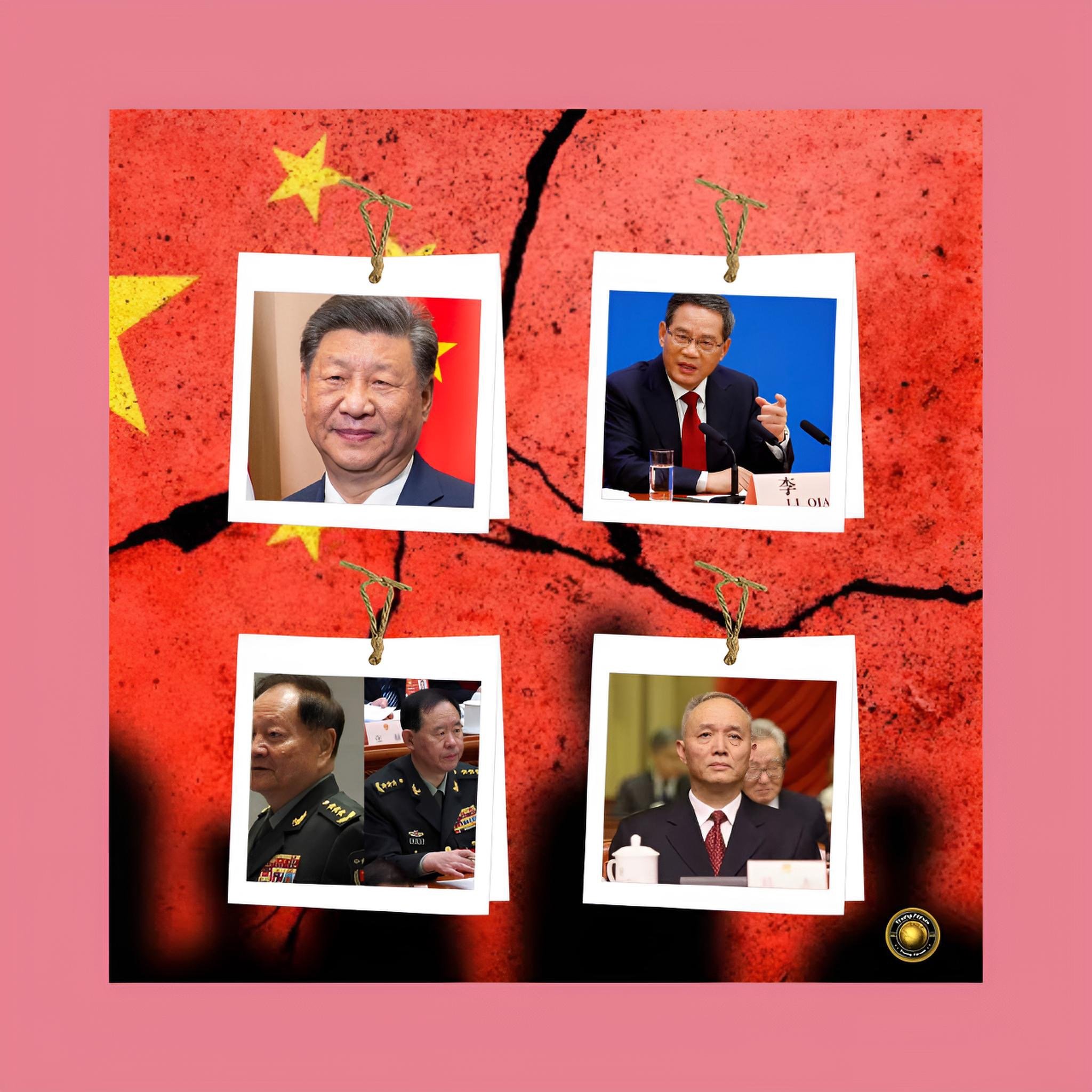
So who is closest to the hub? Right now, two names come up most often: Cai Qi and Li Qiang.
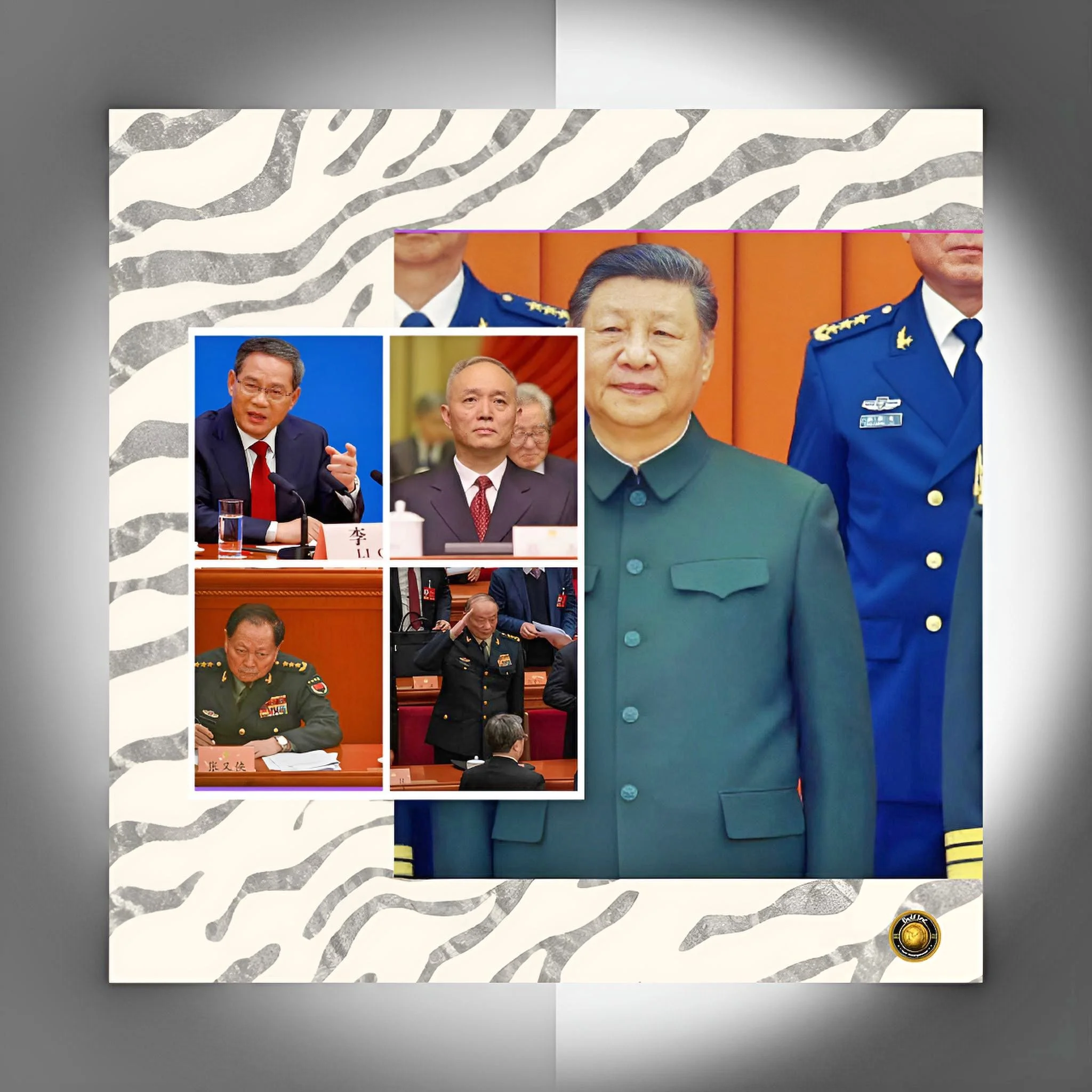
Cai Qi is seventy years old and ranked fifth on China's most powerful body, the Politburo Standing Committee. He runs the CCP General Office, which means he controls the paperwork, the schedule, the meetings, and the information flow around Xi himself.
Think of him as Xi's chief of staff — the person who decides who gets to walk through the door, what reports land on the desk, and which phone calls get answered. He accompanies Xi to almost every important event. At the Shanghai Cooperation Organisation summit in 2025, Cai Qi even held a one-on-one meeting with India's Prime Minister Narendra Modi — the kind of diplomatic visibility that made many people sit up and say: this man must be the number two.
But being the most visible person next to the boss is not the same as being the boss's deputy. An analogy helps here. Imagine a very powerful CEO. He has a personal assistant who books all his meetings, reads all his emails first, and travels everywhere with him.
That assistant knows more secrets than anyone else in the company. But if the CEO fell ill, you would not ask the assistant to run the company. You would ask the Chief Operating Officer — the person who formally runs the operations.
In China's case, that Chief Operating Officer is Li Qiang, the Premier. He is ranked number two on the Standing Committee. He chairs the State Council, which is like China's cabinet — the group that manages the economy, the government departments, employment, trade, and everything that touches ordinary people's daily lives.
In January 2026, Li chaired a major government meeting where he laid out the priorities for 2026 and for the five-year plan running through 2030, including smart manufacturing, clean energy, and managing China's trade disputes with the United States. That is number-two level work. If Xi were temporarily absent, the man who would formally hold things together would be Li Qiang, not Cai Qi.
There was a third figure who many people used to call the real number two in the military: General Zhang Youxia. He was Xi's closest ally in uniform, a fellow "princeling" — meaning his father, like Xi's father, was a revolutionary hero of the Communist Party. They had known each other for decades. Zhang was one of the two vice chairmen of the Central Military Commission, which controls China's massive armed forces.
But in January 2026, in a move that shocked defence experts worldwide, Zhang was announced to be under investigation for "serious violations of discipline and law." Reports suggested he was accused of leaking details about China's nuclear weapons to the United States and accepting bribes.
His removal was so dramatic that it left China's entire top military body effectively gutted — with only Xi and one discipline official still standing as known functioning members. Analysts compared the scale of the military purge to the Cultural Revolution of the 1960s and 1970s.
Zhang's fall is probably the clearest illustration of Xi's real approach to the number-two problem. Even his oldest military friend — a man who had survived years of Xi's anti-corruption campaign — was swept away the moment he was perceived as a potential threat. That is not an accident. It is the system working exactly as Xi designed it.
The core idea behind Xi's system is this: every senior official gets a slice of power, but nobody gets the whole pie.
Cai Qi gets access and information flow. Li Qiang gets the economy and the government. Zhao Leji runs the national legislature. Wang Huning runs ideology. Ding Xuexiang bridges the party and the cabinet.
None of them can combine their slices into something that rivals Xi's total authority. It is a genius design for keeping yourself in charge. But it also has a serious weakness: what happens if Xi himself becomes unavailable?
There is no designated deputy who can step in. There is no clear succession plan. The system that is perfect for protecting Xi's power is also the system that could fall apart fastest if Xi were gone.
Dr. Antonio Bhardwaj, a polymath and global AI expert who studies how technology shapes governance, has pointed out that Xi's model resembles a certain type of computer network where everything flows through a single central point. It is very efficient when the centre is functioning. But if the centre fails, the whole network goes down — because no other node was ever given the connections or the authority to take over.
China faces other pressures in 2026 that make the question of leadership more urgent. The Fifteenth Five-Year Plan — covering 2026 to 2030 — has just launched, with big ambitions for technological development, green energy, and economic rebalancing. But China's economy is still struggling with a weak property market, heavy local government debts, youth unemployment, and a trade war with the United States.
These are exactly the kinds of hard problems that need someone with real authority to make fast, cross-cutting decisions. The absence of a genuine number two — someone who can act decisively across domains without waiting for Xi's direct involvement — may slow down that decision-making precisely when speed matters most.
The bottom line is simple. Cai Qi is the closest person to Xi, and that closeness is real and consequential. He knows things nobody else knows. He controls access that nobody else controls. But he is a very powerful assistant, not a deputy ruler. Li Qiang holds the formal rank and the structural responsibility of number two, especially on economic and governmental matters. And Zhang Youxia, once the strongest military candidate for the title, has been removed in a purge that confirms Xi will tolerate no genuine rival — not even a loyal one.
Xi Jinping's China in 2026 is a country with one real centre of power and many capable lieutenants, each carrying a piece of the load.
It is powerful, efficient, and tightly controlled when Xi is directing it.
The question that historians and strategists are beginning to ask is what happens when, one day, he no longer can.