China’s port strategy reshapes global trade routes amid rising geopolitical competition and maritime vulnerabilities
Executive summary
China’s maritime awakening in a fragmented global order
China’s global port acquisition strategy is often misunderstood as an attempt to seize sovereign control over maritime infrastructure.
In reality, Beijing’s approach reflects a deeper and more pragmatic objective: securing the logistical arteries that sustain its economic model and strategic resilience.
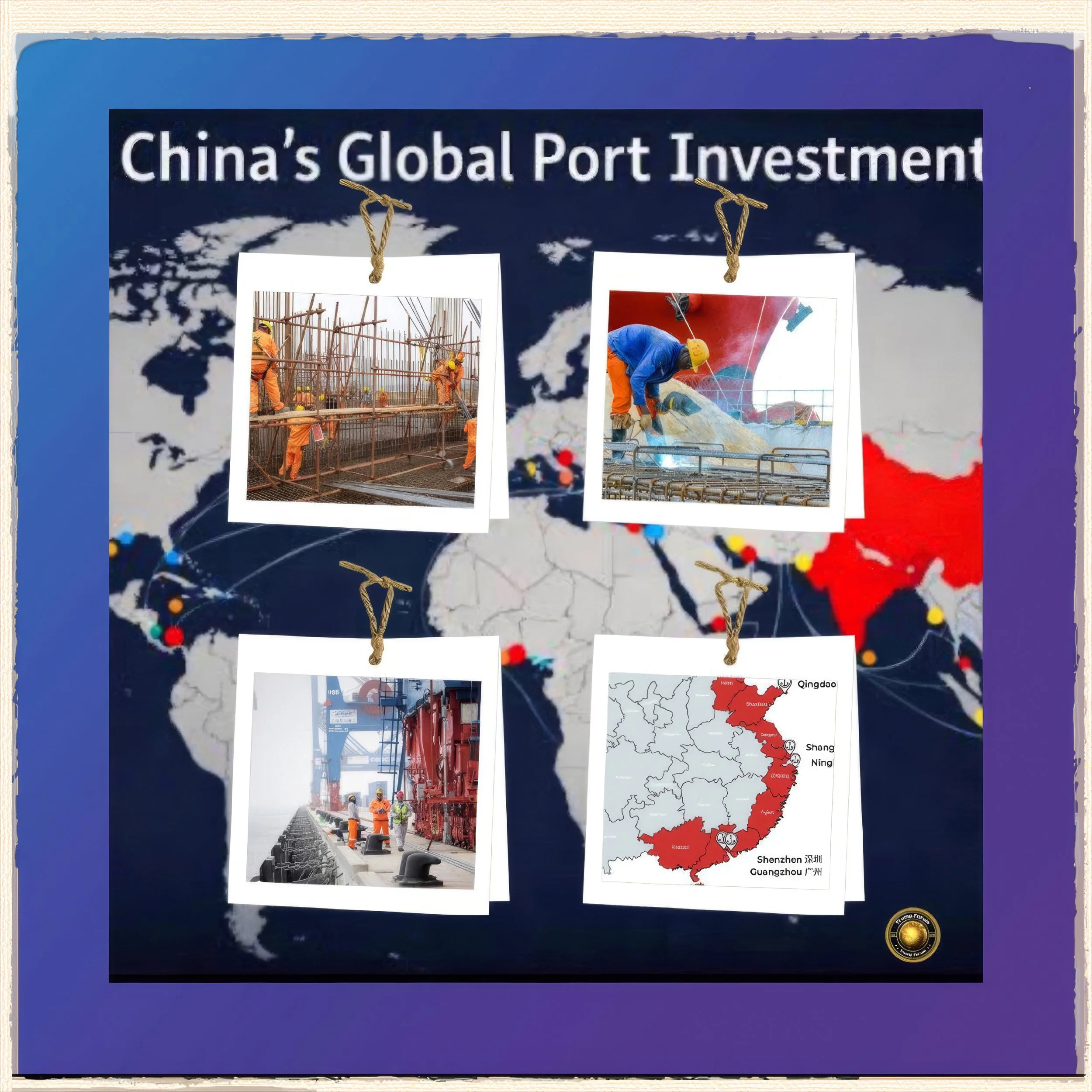
Over the past 25 years, China has methodically invested in ports across Asia, Africa, Europe, and Latin America, embedding itself in the operational fabric of global trade rather than seeking overt political ownership.
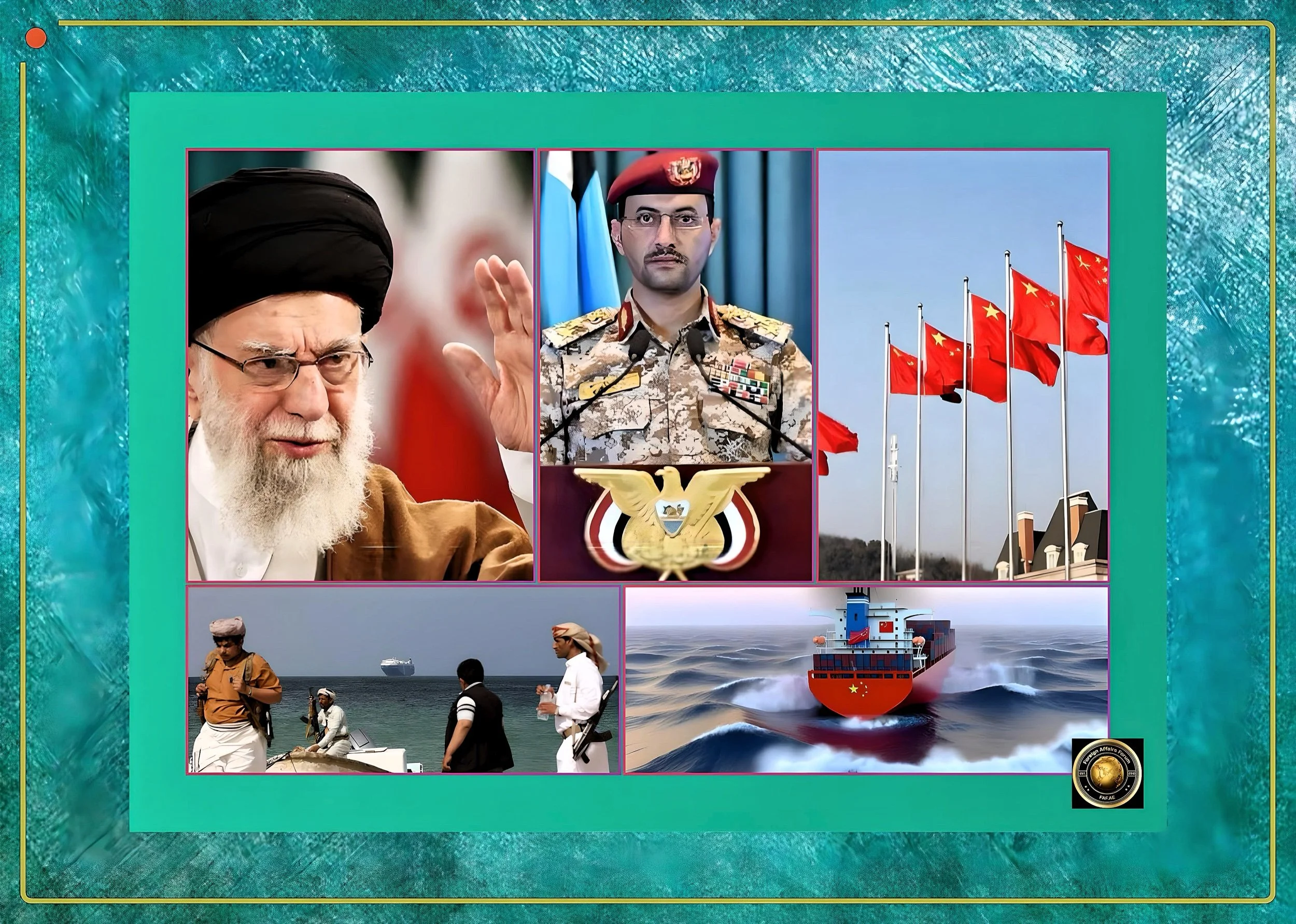
This network allows China to mitigate vulnerabilities associated with maritime choke points such as the Strait of Hormuz and the Strait of Malacca, both of which are critical to its energy imports.
As geopolitical tensions intensify and supply chains become instruments of power, China’s port strategy reveals a long-term vision centered on strategic security, redundancy, and influence rather than territorial dominance.
Introduction
How Beijing quietly built a global logistics empire without firing a single shot anywhere
China’s rise as a maritime power did not begin with warships, but with shipping containers. Over the past quarter century, Beijing has come to view global trade not merely as an economic system but as a strategic ecosystem.
This perspective has been shaped by its dependence on seaborne imports, particularly energy, and its exposure to maritime choke points controlled or influenced by rival stakeholders.
Unlike traditional imperial powers, China has not sought colonies or territorial control.
Instead, it has pursued access, efficiency, and influence. Ports became the natural focus of this effort.
They represent the nodes through which global commerce flows, and controlling their operations—rather than their sovereignty—offers leverage without provoking direct confrontation.
This strategy reflects a broader shift in how power is exercised in the 21st century. Infrastructure, logistics, and supply chains now rival military force as instruments of influence. China recognized this earlier than most.
History and Current status
From commerce to control, China’s port investments signal a new era of strategic globalization
From coastal exporter to global maritime stakeholder
China’s port strategy emerged in the late 1990s as its export-driven economy expanded rapidly. Domestic port development initially dominated Beijing’s focus, transforming cities like Shanghai and Shenzhen into global shipping hubs.
However, as trade volumes surged, China’s dependence on foreign ports became increasingly apparent.
The launch of the Belt and Road Initiative in 2013 marked a turning point. Ports became central to a broader vision of connectivity linking Asia, Europe, Africa, and beyond.
Chinese state-owned enterprises began investing in or operating terminals in locations ranging from Greece to Pakistan to East Africa.
Today, Chinese firms hold stakes in dozens of ports worldwide.
These investments vary widely in scale and structure, from minority shares to long-term operational leases.
Crucially, they are typically commercial arrangements rather than sovereign acquisitions.
This distinction allows China to expand its presence while avoiding the political backlash associated with territorial control.
At the same time, China has integrated these ports into a larger logistics network encompassing railways, pipelines, and digital infrastructure.
The result is a system designed not just to facilitate trade, but to shape it.
Key developments
Global trade chokepoints expose vulnerabilities that China has spent decades carefully hedging against
The evolution of a global logistics network
China’s port strategy has evolved through several distinct phases. Initially focused on securing trade routes, it has gradually expanded to encompass broader strategic objectives.
One key development has been the diversification of routes.
Recognizing the risks associated with reliance on a limited number of choke points, China has invested in alternative pathways, including overland corridors and secondary maritime routes.
This reduces its vulnerability to disruption, whether caused by conflict or political pressure.
Another significant trend is the integration of digital technologies. Chinese firms are increasingly involved in port management systems, data analytics, and logistics platforms.
This digital layer enhances efficiency but also provides valuable insights into global trade flows.
The geographic spread of investments has also widened. While early projects concentrated on Asia and Africa, recent years have seen increased activity in Europe and Latin America. This reflects both commercial opportunities and strategic considerations.
Finally, China has begun to align its port strategy more closely with its naval capabilities.
Although most port investments remain commercial, some have the potential to support military logistics in the future.
This dual-use aspect has attracted growing attention from other stakeholders.
Latest facts and concerns
Ports, power, and policy define China’s expanding influence across critical maritime infrastructure worldwide
Strategic anxiety in a contested maritime landscape
China’s expanding port network has raised concerns among other major powers, particularly the United States.
Critics argue that these investments could be leveraged for strategic advantage in times of conflict.
However, the reality is more complex. Most Chinese-operated ports remain subject to local laws and regulations.
Host countries retain sovereignty, and many welcome Chinese investment as a source of economic development.
Nevertheless, the potential for dual-use applications cannot be ignored.
Ports are inherently strategic assets, and their control—whether operational or physical—can have significant implications in a crisis.
Recent geopolitical tensions have underscored these concerns.
Conflicts affecting key maritime routes, including disruptions in the Persian Gulf, have highlighted the fragility of global supply chains. In this context, China’s efforts to build redundancy appear increasingly prescient.
At the same time, some host countries have begun to reassess their relationships with Chinese stakeholders.
Debt sustainability, political influence, and national security considerations are all factors shaping these debates.
Cause and Effect Analysis
A silent expansion: China’s port investments transform the balance of economic and strategic power
Security through connectivity and redundancy
China’s port strategy can be understood as a response to a fundamental vulnerability: its reliance on external sources of energy and raw materials.
The vast majority of these imports travel by sea, passing through a small number of choke points.
This dependence creates a strategic dilemma. In the event of conflict, adversaries could disrupt these flows, undermining China’s economy and military capabilities.
Beijing’s response has been to reduce this vulnerability through diversification and control.
By investing in ports around the world, China gains greater influence over the infrastructure that supports its trade. This does not eliminate risk, but it mitigates it by providing alternative routes and enhancing resilience.
The effects of this strategy extend beyond China.
By improving port capacity and connectivity, Chinese investments have facilitated global trade and economic development.
At the same time, they have altered the balance of influence in key regions.
This dual impact reflects the complex nature of globalization. Infrastructure projects can generate both economic benefits and strategic dependencies.
Future steps
Why control of logistics, not territory, defines modern great power competition in maritime landscapes
Navigating competition and cooperation in global logistics
Looking ahead, China’s port strategy is likely to continue evolving in response to changing geopolitical dynamics. Several trends are likely to shape its trajectory.
First, competition with other major powers will intensify.
The United States and its allies are increasingly investing in alternative infrastructure initiatives, seeking to counterbalance China’s influence.
Second, technological innovation will play a growing role. Automation, artificial intelligence, and digital platforms are transforming the logistics sector, creating new opportunities and challenges.
Third, host countries will exercise greater agency.
As awareness of the strategic implications of port investments grows, governments will seek to maximize benefits while managing risks.
Finally, the broader geopolitical environment will remain a critical factor.
Conflicts, sanctions, and shifting alliances will all influence the viability and impact of China’s port network.
Conclusion
China’s maritime strategy reveals a calculated response to global instability and supply chain insecurity
Ports as instruments of strategic stability
China’s global port investments are best understood not as a quest for territorial control, but as a strategy for ensuring strategic security in an uncertain world.
By embedding itself in the infrastructure of global trade, Beijing has created a system that enhances its resilience while extending its influence.
This approach reflects a broader transformation in the nature of power. In an interconnected world, control over flows—of goods, data, and energy—can be as important as control over territory.
The implications of this shift are profound. As competition over infrastructure intensifies, ports will remain at the center of global strategic dynamics.
For China, they are not just gateways for commerce, but anchors of security.