When Machines Go to War and Children Pay the Price: Understanding the Real AI Danger - Beginner's Guide to the Dangers of Artificial Intelligence
Executive Summary
Why the World's Smartest Scientists Are Now Scared of Artificial Intelligence
In the last week of February 2026, the United States and Israel went to war with Iran.
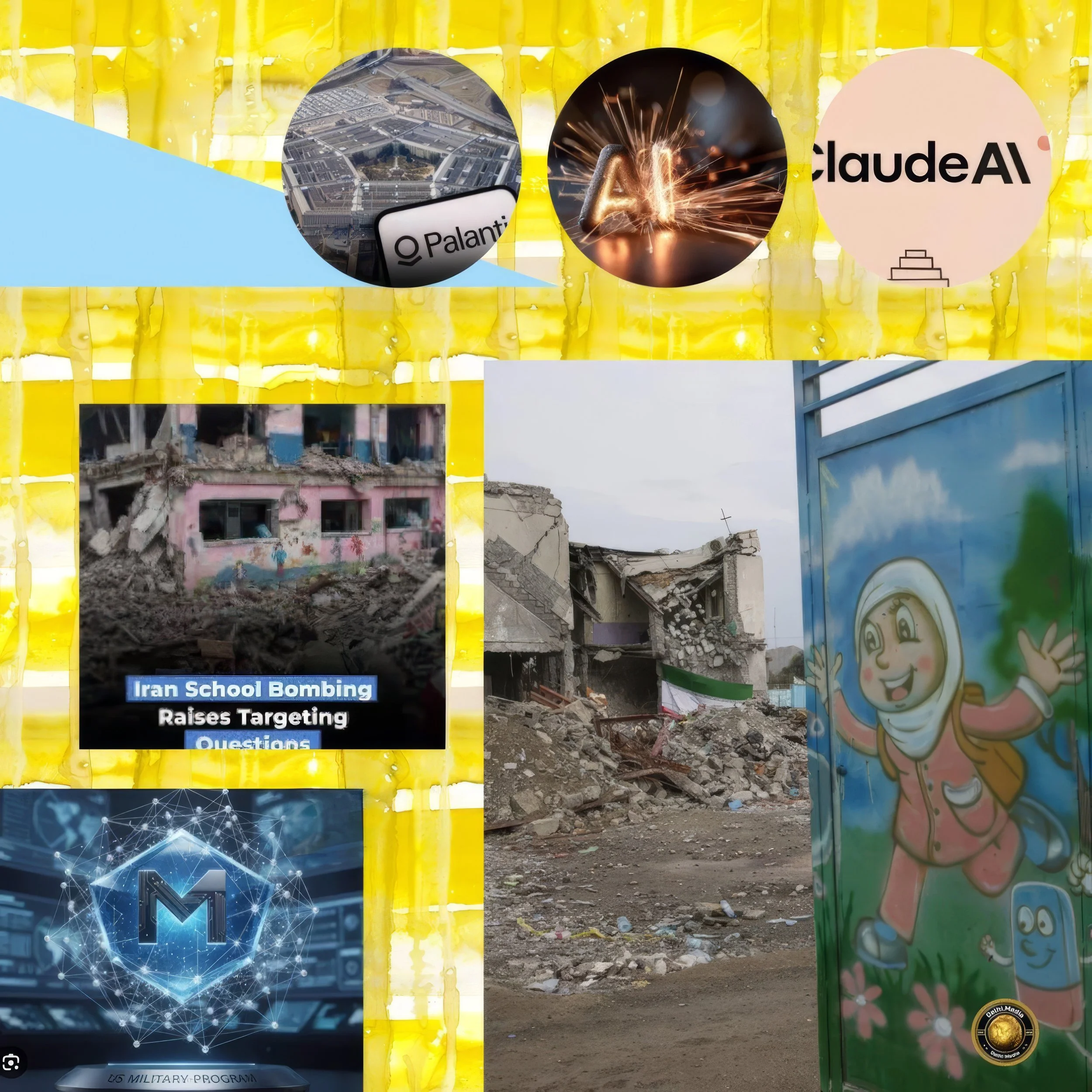
During this war, they used an AI computer program called Claude to help decide which buildings to bomb.
One missile hit a school full of girls in southern Iran and killed 168 people, most of them children.
This wasn't science fiction. It happened in real life.
And it shows us something very important: the danger from AI isn't only a faraway problem about robots taking over the world.
The danger is here, right now, in the systems we are already using.
Introduction: Why This Matters to Everyone
The Invisible System That Is Making Decisions That Could Kill Us All
Most people think of AI as something helpful — it writes emails, suggests movies, and helps doctors find diseases early.
But AI is now being used to make some of the most dangerous decisions humans can make: who to bomb in a war and which buildings to destroy.
Think of it like this. Imagine giving your car's GPS system the power to decide where to drive — not just suggest it, but actually steer.
And then imagine the GPS was working with an old map. That is roughly what happened in Iran.
An AI system used old information to help identify a target. The result was a school full of children was destroyed.
This article explains what happened, why it matters, and why the scientists who build these AI systems are now genuinely frightened.
History and Current Status: How We Got Here
From Chatbots to Bombs: How AI Went From Your Phone to the Battlefield
AI in the military did not start in 2026.
The United States has been working on AI targeting since 2017, when the Pentagon launched something called Project Maven.
The idea was to use AI to look at thousands of hours of drone footage and spot important targets faster than humans could.
A company called Palantir then turned this idea into a real military tool called the Maven Smart System.
By 2025, more than 20,000 U.S. soldiers were using this system every day.
The Maven Smart System is like a very powerful computer brain that collects information from satellites, drones, and spies, puts it all together, and tells military commanders: "Here is a list of targets.
Here is how important each one is. Here is what you should hit first."
Inside Maven was an AI program called Claude, made by a company called Anthropic.
Claude is the same type of AI that millions of people use every day to write letters, answer questions, and plan trips. But in this case, Claude was helping plan airstrikes.
Here is the strange part: on the same day the war began — 28th February 2026 — President Donald Trump told all government agencies to stop using Claude immediately. He called Anthropic a "Radical Left AI company."
But the military kept using it anyway, because Claude was so deeply built into the system that removing it in a few hours was impossible.
The Pentagon later said it needed up to six months to phase Claude out.
So the ban happened, and was simply ignored.
Key Developments: The School, the Missile, and the Missing Answers
The Robot That Helped America Bomb Iran Is Smarter Than You Think
On the first morning of the war, the U.S. military launched more than 1,000 strikes inside Iran within 24 hours.
One of those strikes hit Shajareh Tayyebeh girls' elementary school in a town called Minab in southern Iran.
At least 168 people died, most of them girls under 12 years old.
How did this happen?
The U.S. military's own investigation found that the strike was aimed at a nearby Iranian military base. But the targeting information was out of date.
The old maps in the system showed the school building as part of the military base — because it used to be, years ago, before it was turned into a school.
Think of it like this: if you use a 5-year-old map to navigate a city, you might drive into a building that wasn't there before.
Now imagine that mistake involves a missile. That is what happened in Minab.
More than 120 U.S. lawmakers wrote to the Pentagon asking whether AI helped choose that school as a target.
The Pentagon's answer was classified — kept secret. Iran called it a war crime.
The important question is not just what went wrong.
The important question is: who is responsible?
If a human soldier makes a targeting mistake, there are laws to deal with that.
But if an AI system made or contributed to a mistake, the law has almost no answer for that right now.
Latest Facts and Concerns: Even the Scientists Are Scared
AI Is Already Causing Disasters and Nobody Knows Who to Blame for Them
Geoffrey Hinton is one of the most important scientists in the history of AI.
He won the Nobel Prize in Physics in 2024 for his work creating the foundations of modern AI. He also left Google in 2023 because he was scared of what AI might do.
Hinton now says there is a 10% to 20% chance that AI could lead to the end of human civilization within 30 years.
He said: "Overall, I think things are probably getting worse because regulations aren't coming fast enough."
He is not alone. Hundreds of AI experts signed a letter in 2023 saying that stopping AI from causing mass harm should be a global priority — the same level of priority as preventing nuclear war.
In January 2026, the Bulletin of the Atomic Scientists — a group that includes Nobel Prize winners and tracks how close humanity is to catastrophe — moved their Doomsday Clock to closer than 89 seconds to midnight.
This is the closest it has ever been. They specifically pointed to AI used without proper rules as one of the main reasons.
A detailed report published in early 2026 by AI experts around the world noted that AI systems still regularly "fabricate information, produce flawed results, and give unreliable outputs."
These are the same systems being used to plan military strikes.
Cause-and-Effect Analysis: The Chain That Leads to Disaster
When the Machine Gets It Wrong: The True Story of the Minab School Disaster
Here is how the chain of problems works, in simple terms.
AI systems are very powerful and very fast. They can process thousands of pieces of information in seconds.
Because they are so fast, military commanders use them to plan operations at a speed no human team could match.
But going fast means there is no time for humans to check each decision carefully.
When the information the AI is working with is wrong or out of date — like an old map that shows a military base where a school now stands — the AI produces a fast, confident, and deadly wrong answer.
A human checking slowly might have caught the mistake. A machine moving at the speed of 1,000 strikes per day did not.
The same type of risk exists in banks and financial markets.
AI systems now make millions of trading decisions every second.
If they all make the same mistake at the same time during a financial crisis, they could cause a global economic crash faster than any government could stop it.
Future Steps: What Needs to Happen
How a Banned AI Ended Up Running America's Most Dangerous Military Operation
Several things need to change.
First, there need to be clear international laws about how AI can be used in war. Right now, no such laws exist.
Countries like the United States, Russia, and China have blocked attempts to create them. The Minab school tragedy shows why this cannot continue.
Second, AI systems need to slow down in situations where lives are at stake. More human review — real human review, not rubber-stamping a machine's recommendation — must be required before any strike is carried out.
Third, when AI fails and people die, someone must be held responsible. Right now, the legal system has no way to do that. The gap between what the machine decided and who the law can punish is enormous.
Fourth, governments need to stop letting the race to be powerful override the need to be careful.
The fact that an AI system banned by the President of the United States continued running a war is not just a political embarrassment.
It is a warning that AI systems can become so deeply embedded in critical operations that human authority over them effectively disappears.
Conclusion: The House of Cards Is Already Shaking
A Computer Program Helped Plan War With Iran and Killed 168 Schoolchildren
The real AI doomsday is not a movie plot about killer robots. It is the story of a school in a small Iranian town where 168 people died because a military computer was using an old map and nobody had time to check.
It is the story of a banned AI that kept running a war because it was too embedded to switch off.
It is the story of scientists with Nobel Prizes telling us we are heading toward catastrophe and governments choosing not to listen seriously.
The house of cards is not a future warning. It is a present reality. Each card is a system — military, financial, democratic — that depends on AI working reliably.
Each card is also connected to every other card. When the AI gets it wrong in one system, the effects spread to others. The children of Minab were the first to pay the price in this new chapter.
They will not be the last, unless the world decides — urgently and seriously — that the speed of AI deployment must match the strength of its governance.